


Think of a full health check as a comprehensive MOT for your body. It’s not about waiting for a warning light to flash on your dashboard; it's a proactive look under the bonnet to spot potential issues before they turn into serious problems. This kind of preventative screening is designed to assess your personal risk for common conditions like heart disease, stroke, and diabetes, empowering you with the knowledge to make positive lifestyle changes.
What a Full Health Check Actually Involves

Most of us tend to think about our health only when we feel unwell. A full health check completely flips that script, shifting the focus from being reactive to being proactive. It's a structured series of tests, measurements, and a conversation about your lifestyle that gives you a clear snapshot of your current wellbeing and a roadmap for improving it.
Think of it less as a tool for diagnosing an existing illness and more as a personal health audit. It’s about gathering those vital data points — your baseline numbers for blood pressure, cholesterol, and blood sugar. Knowing these figures helps you and your doctor spot subtle shifts over time, empowering you to make small but meaningful lifestyle changes long before something becomes a chronic condition.
The Core Purpose of Preventative Screening
At its heart, the main goal is to identify your individual risk factors for common health problems, many of which are "silent killers." Conditions like high blood pressure or type 2 diabetes can develop for years without any obvious symptoms, all while quietly damaging your body. A health check acts as a crucial early warning system.
For example, finding out you have slightly elevated blood sugar levels gives you a golden opportunity. This is a critical window where you can make changes. With medically sound advice on diet and exercise—such as reducing refined sugar intake and aiming for 30 minutes of brisk walking five days a week—you can often prevent or significantly delay the onset of type 2 diabetes. This simple principle—early detection leading to early intervention—is the cornerstone of modern preventative medicine.
"A full health check provides the knowledge you need to move from being a passenger to the driver of your own health journey. It's about making informed choices today to build a healthier tomorrow."
A Proven Strategy for Long-Term Health
This preventative model is so effective that it’s a key part of national public health strategy. Just look at the NHS Health Check programme in England, offered to adults aged 40 to 74. By flagging risks for heart disease, stroke, and diabetes early on, this programme is estimated to save around 650 lives every year and prevents thousands of new cases of diabetes annually. You can learn more about the impact of these preventative checks on public health directly from government findings.
Ultimately, a full health check takes the mystery out of your health. It translates complex bodily functions into understandable numbers and practical, actionable advice. It gives you the power to take control and make a real investment in a longer, healthier future.
Why Early Detection Is Your Best Defence
Some of the most serious health conditions we face—things like high blood pressure, type 2 diabetes, and high cholesterol—are often called "silent" for a very good reason. They can brew under the surface for years without a single noticeable symptom, quietly affecting your body long before you feel anything is wrong. This is precisely where a full health check becomes your greatest ally.
Think of it as a detailed map of your internal health. Without it, you're navigating blind. A proper screening acts as your early warning system, flagging potential hazards well before they become major problems. This insight gives you the power to change course with simple, effective lifestyle adjustments, rather than waiting for an issue to become a lifelong diagnosis.
Healthspan Versus Lifespan
In healthcare today, there’s a really important shift happening. We're moving away from just focusing on how long we live (lifespan) and thinking more about how many of those years are spent in good health (healthspan). After all, a long life filled with chronic illness isn't what any of us are aiming for. The real goal is to extend the period of vibrant, active, and fulfilling years.
Early detection is the secret to maximising that healthspan. By catching risk factors like borderline high blood sugar or slightly elevated cholesterol, you open up a crucial window of opportunity. It’s during this time that proactive lifestyle changes can slow, halt, or even reverse the progression of a condition. It’s all about protecting your quality of life for the long haul.
A full health check isn't about finding something wrong; it's about empowering you with the information to keep things right. It shifts your focus from treating illness to actively cultivating wellness.
This proactive mindset is fundamental for anyone wanting to take real control of their long-term wellbeing. If you'd like to dive deeper into these principles, our guide on what is preventive healthcare is a great place to start.
The Power of Proactive Lifestyle Changes
When a full health check flags a potential risk, it rarely means you need immediate medical treatment. More often than not, it gives you a personalised roadmap for making smart, medically-backed lifestyle changes that can have a huge impact.
Simple, evidence-based adjustments can make a world of difference. Here are a few examples of how you can turn your results into real action:
- Elevated Blood Pressure: Small dietary tweaks, like reducing your sodium intake by avoiding processed foods and eating more potassium-rich foods (like bananas, spinach, and sweet potatoes), can have a big effect. Regular brisk walking has been scientifically proven to help lower blood pressure naturally.
- High Cholesterol: Upping your intake of soluble fibre from oats, apples, and beans helps lower "bad" LDL cholesterol. Swapping saturated fats (found in red meat and full-fat dairy) for healthy unsaturated fats in avocados, nuts, and olive oil is another powerful move.
- Pre-diabetes (High Blood Sugar): Focusing on a balanced diet rich in whole grains, lean proteins, and vegetables while managing carbohydrate portions can improve your body's sensitivity to insulin. Combining this with regular physical activity can often stop the progression to type 2 diabetes in its tracks.
These aren't drastic overhauls but small, sustainable habits that build on each other over time to create a solid foundation of health. Beyond just detection, proactive health is also about understanding and reducing risks, like those connected with a sedentary lifestyle and its cancer risks.
The financial and personal impact of prevention is staggering. Recent 2025 analyses show that over 40% of chronic conditions in the UK population are preventable or could be significantly reversed if caught early. Each preventable chronic condition that develops around age 45 creates an estimated lifetime financial burden of over £2.5 million when you factor in lost productivity and care costs. By catching these issues early, you are making one of the wisest investments you can—an investment in your future self.
Navigating Your Full Health Check Appointment
Walking into any medical appointment can feel a little daunting, but a full health check is designed to be a straightforward and reassuring process. Think of it less as a test and more as a collaborative chat about your health, backed up by a few simple, non-invasive measurements. The real goal is to empower you with knowledge, not to cause any anxiety.
To help you feel completely at ease, let's walk through what you can expect from start to finish. The whole process is set up to be as efficient and comfortable as possible, giving you a clear picture of your current health without any surprises along the way.
The Initial Conversation: Your Health Story
Your appointment will almost always kick off with a conversation. A healthcare professional will sit down with you and ask about your lifestyle—things like your diet, how often you exercise, your alcohol intake, and whether you smoke. This isn't an interrogation; it's all about building a complete picture of the factors that shape your wellbeing. Be honest in this conversation, as accurate information allows for the best possible advice.
You’ll also chat about your personal and family medical history. Knowing if close relatives have had conditions like heart disease or diabetes, for instance, helps to pinpoint any potential hereditary risks. This context is vital for personalising your health advice and making sure the screening is right for you.
Taking Your Vital Signs
Next, you'll move on to a series of simple physical measurements. These are the foundational data points of your health check and they're quick and completely painless.
- Height and Weight: These are used to calculate your Body Mass Index (BMI), a general indicator of whether you're in a healthy weight range for your height.
- Blood Pressure Reading: A cuff will be placed around your arm to measure your blood pressure. This gives two numbers—the systolic pressure (as your heart pushes blood out) and the diastolic pressure (as it rests between beats). This simple check is one of the most effective ways to spot your risk for heart attack and stroke.
- Waist Circumference: Measuring your waist can offer extra insight into your health risks. Carrying excess weight around your middle is linked to a higher risk of heart disease and type 2 diabetes, so it's a useful number to know.
This infographic shows the simple, sequential flow of a typical appointment, from the initial discussion to the key tests.
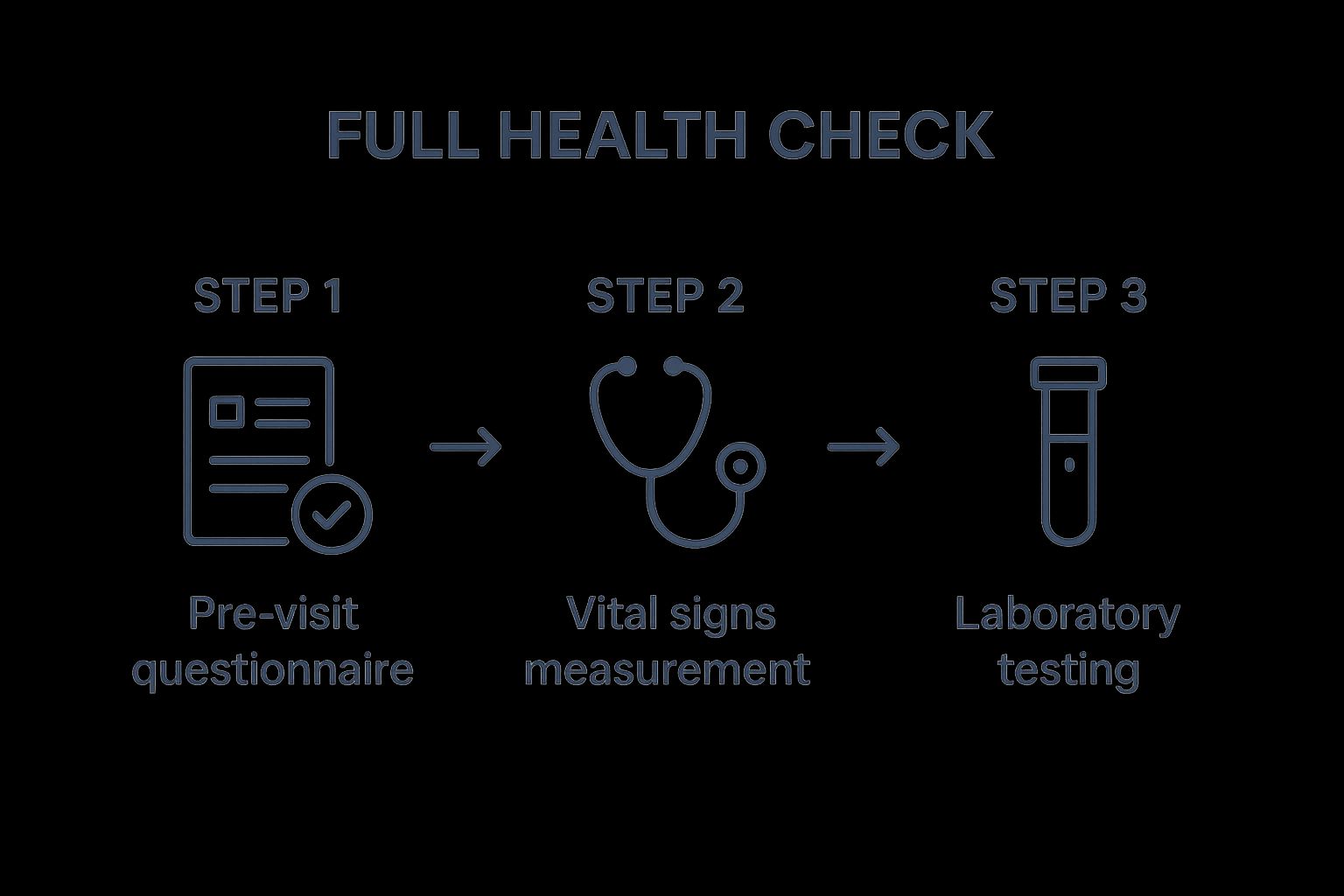
As you can see, each step logically builds on the last to create a comprehensive overview of your health markers.
Simple Laboratory Tests
The final piece of the puzzle is usually a straightforward blood test. A small sample of blood, typically taken from your arm, is sent to a lab for analysis. It's amazing how much this single sample can reveal about what’s really going on inside your body.
The real power of a blood test is its ability to see what you can't feel. It measures key markers that act as early warnings, giving you the chance to make positive changes before a potential issue becomes a serious problem.
Some of the key things your blood test will likely look for include:
- Cholesterol Levels: The test measures your total cholesterol, including "good" (HDL) and "bad" (LDL) types. Keeping these levels in balance is crucial for maintaining healthy arteries and cutting your heart disease risk.
- Blood Sugar (HbA1c): This test provides an average of your blood sugar levels over the past few months. It's the most reliable way to screen for pre-diabetes and type 2 diabetes.
- Kidney and Liver Function: Your blood can also be checked to make sure these vital organs are working as they should be.
These tests provide hard data that, when combined with your lifestyle information, gives a robust assessment of your health. For those wanting an even more detailed look, you can learn about the benefits of private blood testing in the UK and how it can offer deeper insights. Ultimately, the entire appointment is designed to be efficient, informative, and a positive step towards taking charge of your long-term wellbeing.
How to Understand Your Health Check Results

Getting your full health check report can feel a bit like being handed a technical manual for your own body. It's often a page full of numbers and medical terms that, while incredibly important, can look pretty overwhelming at first glance. But this is where the real power lies. Learning to understand these key figures is your first step towards taking genuine control of your health.
Think of this section as your personal translator. We'll walk through the big three – blood pressure, cholesterol, and blood sugar – and use some simple analogies to make sense of what they really mean for you. Armed with this knowledge, you can go into your follow-up appointment feeling confident and ready to have a much more meaningful chat with your doctor.
Decoding Your Blood Pressure Reading
Your blood pressure is one of the clearest signs of how hard your heart is working. It’s always presented as two numbers, one over the other, like 120/80 mmHg.
Imagine your circulatory system is a network of pipes, with your heart acting as the pump. It’s a beautifully simple way to look at it.
- Systolic Pressure (the top number): This is the peak pressure when your heart contracts to push blood out. Think of it as the maximum force hitting the walls of your arteries with each beat.
- Diastolic Pressure (the bottom number): This is the pressure when your heart is at rest, filling up between beats. It’s the constant, background pressure within the system.
Ideally, you want to see a reading below 120/80 mmHg. If your numbers are consistently creeping up over 140/90 mmHg, that’s considered high blood pressure (hypertension). This puts a long-term strain on your heart and arteries, which can raise your risk of heart attacks and strokes. The good news is that lifestyle changes, such as reducing salt intake, managing stress, and getting regular aerobic exercise like brisk walking or cycling, can significantly lower blood pressure.
Understanding Your Cholesterol Profile
Cholesterol often gets a bad rap, but we actually need it to build healthy cells. The trouble starts when there's too much of the "bad" kind floating around. Your report will break this down into a few different types.
Let's picture your bloodstream as a busy motorway.
- LDL (Low-Density Lipoprotein): This is the "bad" cholesterol. Imagine it as clumsy delivery lorries that are prone to breaking down and causing traffic jams (plaque) along the artery walls. This narrows the road, making it much harder for blood to flow smoothly.
- HDL (High-Density Lipoprotein): This is the "good" cholesterol. Think of this as the motorway's clean-up crew. Their job is to scoop up excess cholesterol and transport it back to the liver, where it can be safely removed.
A healthy total cholesterol level is generally 5 mmol/L or less. But what’s even more important is the balance – you want low LDL and high HDL. You can actively shift this balance in your favour by eating more soluble fibre (found in oats and apples) and choosing healthy unsaturated fats from sources like avocados, nuts, and olive oil instead of saturated and trans fats.
Making Sense of Blood Sugar (HbA1c)
The HbA1c test is a fantastic tool because it gives your doctor a picture of your average blood sugar levels over the last two to three months. It's not just a snapshot in time; it's a crucial screening test for identifying your risk of developing type 2 diabetes.
Instead of a single photo, the HbA1c test is more like watching a time-lapse video of your blood sugar control. It measures how much glucose (sugar) has become stuck to your red blood cells over their lifespan.
- A normal HbA1c level is below 42 mmol/mol.
- A level between 42 and 47 mmol/mol is a big red flag, indicating pre-diabetes.
- A level of 48 mmol/mol or higher (on two separate occasions) points to type 2 diabetes.
If your result lands in that pre-diabetes range, see it as a powerful call to action. It’s a window of opportunity where making mindful food choices (like prioritising complex carbohydrates over simple sugars) and increasing physical activity can improve insulin sensitivity and often stop the condition from progressing any further.
The table below breaks down some of these common metrics so you can familiarise yourself with the numbers before your consultation.
Understanding Your Key Health Metrics
| Metric | What It Is | Healthy Range (UK Guidelines) | What High/Low Levels May Indicate |
|---|---|---|---|
| Blood Pressure | The force of blood pushing against artery walls. | Below 120/80 mmHg is ideal. | High: Hypertension, increased risk of heart attack/stroke. Low: Can cause dizziness, fainting. |
| Total Cholesterol | A waxy substance in your blood needed for cell building. | 5 mmol/L or less. | High: Increased risk of plaque buildup in arteries. |
| LDL Cholesterol | "Bad" cholesterol that can clog arteries. | 3 mmol/L or less. | High: Contributes to atherosclerosis (narrowing of arteries). |
| HDL Cholesterol | "Good" cholesterol that removes excess cholesterol. | Above 1 mmol/L. | Low: Reduced ability to clear cholesterol from arteries. |
| HbA1c | Average blood glucose over the past 2-3 months. | Below 42 mmol/mol. | High: Indicates pre-diabetes or type 2 diabetes, which can lead to nerve and organ damage. |
Having this data at your fingertips helps you and your doctor work together on a plan that makes sense for you.
"Your results are not a final verdict; they are a starting point. They provide the data you need to build a personalised, proactive health plan with your doctor, focusing on small, sustainable lifestyle changes."
These individual numbers are just one piece of the puzzle, but they provide a vital baseline for tracking your progress and making smart decisions. Initiatives like the NHS Health Check are designed to catch these risks early and get you the right support when needed. As the NHS expands community diagnostic centres, this kind of joined-up thinking helps find problems sooner, which is proven to improve long-term health outcomes and reduce pressure on the health service. You can discover more about how the NHS is expanding diagnostic capacity on england.nhs.uk.
Turning Your Results into Actionable Change
Getting your full health check results is really just the starting line. Think of the numbers and data as the raw ingredients; what truly matters is how you use them to build a healthier, more resilient you. This is where your results become a practical roadmap for positive change, built on small, sustainable lifestyle shifts that pack a powerful, long-term punch.
Instead of feeling like you need a complete life overhaul, we'll focus on the four foundational pillars of health: Nutrition, Movement, Sleep, and Stress Management. By making smart, achievable adjustments in these areas, you can take real control over your wellbeing and turn that knowledge into meaningful action.
The First Pillar: Nutrition
What you eat is one of the most powerful levers you can pull to influence your health. If your results flagged up elevated cholesterol or blood sugar, for example, simple dietary tweaks can make a huge difference without you having to adopt a restrictive or complicated diet.
The trick is to think in terms of swaps, not sacrifices. For instance, if high LDL cholesterol is a concern, start by swapping saturated fats for healthier unsaturated ones. This could be as simple as using olive oil instead of butter for cooking, or snacking on a handful of almonds instead of a packet of crisps. Aim for a Mediterranean-style diet, rich in fruits, vegetables, whole grains, fish, and healthy fats.
Similarly, to get a handle on blood sugar, focus on upping your fibre. A simple switch from white bread to wholemeal, or adding more lentils and beans to your meals, helps slow down sugar absorption and keeps your energy levels on an even keel. To really nail down the dietary changes recommended after your check-up, you might find it helpful to look into finding the best app to track food for your health goals.
The Second Pillar: Movement
Being physically active is vital for almost every aspect of your health, from strengthening your heart to lifting your mood. The UK's physical activity guidelines suggest at least 150 minutes of moderate-intensity activity a week. That might sound like a lot, but it’s probably easier to hit than you think.
"Moderate intensity" just means your heart rate is elevated and you're breathing harder, but can still hold a conversation. This includes things like:
- A brisk 30-minute walk five times a week.
- Cycling to work a couple of days a week.
- A weekend session of gardening or a lively dance class.
The key is to find something you actually enjoy and weave it into your routine. If you’re short on time, remember that three 10-minute bursts of activity spread throughout the day are just as effective. When you're just starting out, consistency beats intensity every time.
The Third Pillar: Sleep
Sleep isn't a luxury; it’s a non-negotiable biological need that's fundamental to your body's recovery and long-term health. Skimping on sleep can disrupt hormone levels that control appetite, increase inflammation, and have a direct negative impact on your blood pressure and blood sugar control.
You should be aiming for seven to nine hours of quality sleep a night. A great way to get there is by creating a relaxing pre-bedtime routine. This could involve switching off all screens an hour before bed, reading a book, or taking a warm bath.
Think of good sleep as your body's nightly maintenance crew. It’s when your systems repair, recharge, and prepare for the day ahead. Consistently cutting it short is like skipping essential services for your health.
Making sure your bedroom is dark, quiet, and cool also sends a powerful signal to your body that it’s time to rest. If you constantly struggle to get enough sleep, it's a really important thing to bring up with your doctor, as it could be a sign of an underlying issue that needs sorting out.
The Fourth Pillar: Stress Management
Chronic stress takes a real, physical toll on the body. It can contribute to high blood pressure, poor sleep, and unhealthy eating habits. Learning how to manage stress is a critical part of any proactive health plan.
There’s no one-size-fits-all solution here, so it’s all about finding what works for you. Many people find huge relief through mindfulness practices like meditation or deep-breathing exercises. Even just five minutes a day can help lower your cortisol levels (the main stress hormone) and calm your entire nervous system.
Other brilliant strategies include:
- Spending Time in Nature: Even a short walk in a park is scientifically proven to reduce stress and improve mental clarity.
- Connecting with Others: Making time for friends and family provides a crucial emotional buffer against the pressures of life.
- Engaging in Hobbies: Carving out time for activities you love—whether it’s painting, playing an instrument, or cooking—gives your mind a much-needed break from daily stressors.
Your full health check has given you a personalised snapshot of your health. By focusing on these four pillars, you can use that information to make small, consistent efforts that add up over time, building a rock-solid foundation for lifelong wellbeing.
Your Path to Lifelong Wellbeing
Think of your full health check not as a finish line, but as a starting line. It’s not about getting a final grade on your health; it's about getting the first chapter of your personal health story. The real power of a health check is what you do with the information afterwards—using it as a blueprint to build a healthier, more vibrant future for yourself.
When it comes to your health, knowledge and prevention are your greatest allies. Understanding your own unique health data puts you firmly in the driver's seat. It's the difference between reacting to problems and actively making informed choices today that will pay off for decades.
Embracing a Proactive Mindset
Your health is your most valuable asset, period. Looking at it this way changes everything. It turns small, positive daily actions—like choosing a healthy meal or taking the stairs—into a long-term investment in your future. We know from countless scientific studies that consistent, healthy habits are the single most effective way to lower your risk of chronic diseases.
Your health check provides the data, but you provide the action. Each healthy meal, every walk, and each restful night's sleep is a deliberate step towards preserving your quality of life and maximising your 'healthspan'—the years you live in good health.
Following up with your doctor or healthcare provider is absolutely essential. This is where the numbers on the page are translated into a genuine action plan that works for you. It’s your chance to talk about your goals, understand what your risks really mean, and create a realistic strategy that actually fits into your life.
This proactive approach means you can get ahead of potential issues before they become serious problems. For instance, simple lifestyle adjustments today can dramatically lower your chances of developing conditions like type 2 diabetes or heart disease down the road. The key is to start now.
Your First Step to a Healthier Future
The journey to lifelong wellbeing begins with one clear decision. When you take control of your health, you're doing more than just preventing illness; you're actively creating a future filled with energy, vitality, and resilience. The information from a full health check is what makes all of this possible.
Don't wait for a symptom to be your wake-up call. Take the first step on your path to lasting health and book your full health check today. It is, without a doubt, the most important investment you can make in yourself.
Still Have Questions? Let's Clear Things Up
Getting your head around a full health check can bring up a few questions. It’s completely normal to want to know more, so let's walk through some of the things people often ask.
How Often Should I Get a Health Check?
The standard advice, and what the NHS Health Check programme suggests, is about once every five years for most adults between 40 and 74. But think of this as a starting point, not a strict rule.
If you have a known health condition, a strong family history of conditions like heart disease, or specific risk factors identified in a previous check, your GP may recommend more frequent monitoring. The real goal is to make this an ongoing part of looking after yourself, not just a one-time thing you tick off a list.
Is the Health Check Painful?
Not at all. The entire process is designed to be as easy and comfortable as possible. Most of it is just a conversation, followed by simple things like a blood pressure reading with a cuff on your arm.
The only part that feels even slightly medical is the blood test. It’s just a tiny pinprick that’s over in a second, but it gives an incredible amount of information about what’s happening inside your body. It's well worth that brief moment of discomfort.
What Happens If My Results Show a High Risk?
It’s natural to feel a bit anxious if your results point to a higher risk of something, but please don't panic. This is actually a positive outcome. It means you’ve caught something early, which is exactly the point of a health check—it gives you the power to take control and make changes.
Your doctor or nurse will sit down with you and explain everything clearly. They'll work with you to create a plan, which almost always starts with simple, manageable lifestyle adjustments rather than jumping straight to medication. You might get a referral to a local programme that can help with healthy eating, getting more active, or support for quitting smoking. It’s all about giving you the right tools to get your health back on track.
At The Lagom Clinic, our focus is on proactive, personalised care that puts you in the driver's seat of your long-term health. If you'd like to explore our tailored health screening and lifestyle consultations, you can find out more at https://www.thelagom.co.uk.


 Members Consultation