


If you're heading offshore for work, you'll need to pass a specific health assessment. This isn't just a routine check-up; it's a mandatory medical designed to confirm you're fit for the unique and often demanding conditions of working far from land. Think of it as a crucial safety measure for you and everyone you'll be working with.
Why Offshore Medicals Are So Important
Picture an aircraft's pre-flight check. Before it ever leaves the tarmac, every single system is rigorously tested to ensure a safe journey. An offshore medical works on the same principle. It verifies that you are physically and mentally robust enough to handle the pressures of working miles out at sea, where a doctor's surgery or hospital isn't just around the corner.
This isn't just box-ticking. It’s a cornerstone of the safety-first culture that defines the offshore industry. The environment out there is a world away from a typical onshore job, and the health standards reflect that reality.
The Unique Challenges of Offshore Work
Life offshore is tough. You're often dealing with long shifts, physically demanding work, and unpredictable, sometimes extreme, weather. It’s an isolated environment where even a minor health complaint can quickly become a serious issue.
This is why regulatory bodies like OEUK (Offshore Energies UK) have such stringent standards. The medical is specifically designed to flag any underlying health conditions that could put you or your colleagues at risk in a remote setting. A condition that's easily managed at home could become a major problem when you can't get immediate medical help.
An offshore medical isn’t a test you pass or fail. It’s about ensuring you can handle a high-stakes environment safely, without putting your own health—or the safety of your crew—on the line.
Safeguarding the Entire Workforce
Out on a platform or vessel, a single medical emergency can throw a huge spanner in the works, often leading to a complex and expensive evacuation. Making sure every person is medically fit is how the industry protects its most important asset: its people. It confirms that everyone is capable of taking part in an emergency drill, whether that's a helicopter evacuation or climbing into a lifeboat, without being a danger to themselves or others.
Ultimately, your fitness is a key part of your team's collective safety. Passing your medical is the first, non-negotiable step towards a safe and successful career offshore. To see how these medicals fit into the bigger picture of legal duties and employee care, it's worth reading up on comprehensive workplace safety procedures. These checks ensure that every single person stepping onto an offshore installation is genuinely ready for the job.
What to Expect During Your Medical Exam
Walking into a clinic for your medicals for offshore can feel a bit daunting, especially if it’s your first time. Knowing what the process involves can take a lot of that uncertainty away. It’s best to think of it less as a test you can pass or fail and more like a detailed health MOT, making sure you’re genuinely ready for the unique demands of an offshore environment.
Every single assessment is there for a specific, safety-critical reason. The doctor isn't just ticking boxes; they're building a complete picture to confirm you can work safely without putting yourself or your colleagues at risk in such a remote setting. Once you understand the ‘why’ behind each check, you can go into your appointment feeling much more confident.
This infographic gives a great visual breakdown of how your medical assessment fits into the bigger picture of offshore safety, connecting individual fitness to the well-being of the whole crew.
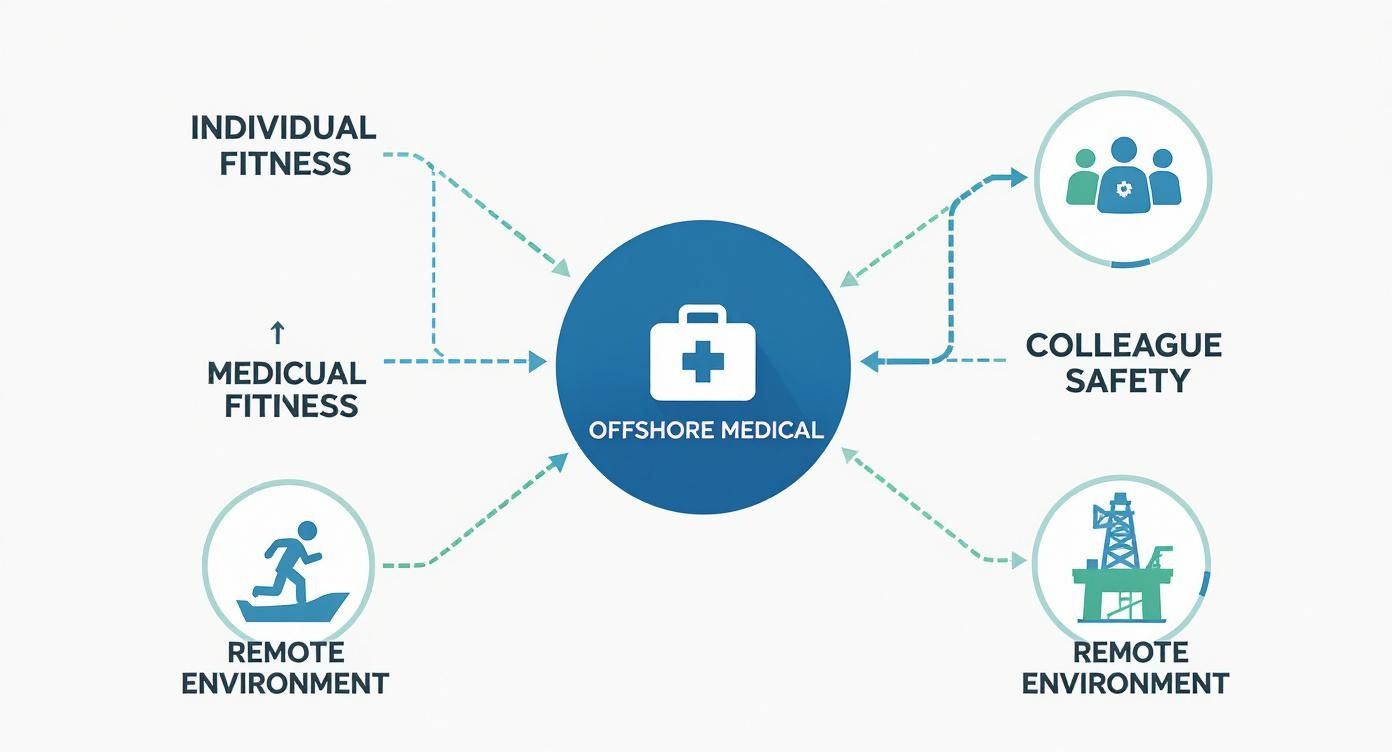
As you can see, the medical is the cornerstone of personal health, team safety, and operational readiness in a high-stakes world.
Key Components of the Medical Assessment
While the exact tests can vary a little depending on your role or location, most OEUK offshore medicals stick to a standard and proven structure. Here’s a rundown of what will almost certainly happen on the day.
Vision and Hearing Tests
Your senses are your first line of defence out there. The vision test checks your eyesight for both near and distance, and just as importantly, your colour perception. This is to make sure you can read safety signs, operate equipment panels correctly, and spot potential hazards from a distance.
The hearing test, or audiometry, is every bit as critical. Picture trying to hear a faint alarm over the constant thrum of heavy machinery—that’s precisely why your hearing needs to be sharp. The test involves listening to a series of tones at different frequencies and volumes to confirm you meet the required safety standard.
Cardiovascular and Respiratory Checks
Your heart and lungs will be put through their paces offshore, so they need to be in good working order.
- Blood Pressure: The doctor will take your blood pressure. If it’s consistently high it can be a concern, but it's often manageable. Simple, evidence-based lifestyle changes like reducing your salt intake, engaging in regular aerobic exercise, and practicing stress-reduction techniques like deep breathing in the weeks before your exam can significantly help lower your reading.
- Electrocardiogram (ECG): An ECG is a simple, painless test that traces the electrical activity of your heart. It’s a fantastic tool for spotting underlying heart conditions that could become dangerous in a remote environment where advanced medical help isn't immediately available.
- Lung Function Test (Spirometry): For this, you’ll be asked to breathe into a machine that measures your lung capacity. Strong lung function is vital, particularly for emergency situations that might require you to use breathing apparatus. If you smoke, quitting is the single most effective way to improve your lung function.
These checks are quite similar to what you’d find in a standard health check or a medical fitness for work, all designed to get a clear and accurate picture of your overall fitness.
Drug and Alcohol Screening
The offshore industry has a strict zero-tolerance policy on drugs and alcohol. It has to. As part of this, you’ll provide a urine sample to be screened for a wide range of substances. This is a non-negotiable part of the medical and underscores the absolute commitment to keeping everyone safe.
Health Tip: It is absolutely essential to be transparent about any prescription medications you're taking. The best approach is to bring a list from your GP to your appointment. This ensures the examining doctor has all the information they need to make an accurate assessment of your fitness.
Final Physical Examination
To wrap things up, the doctor will carry out a general physical examination. This is your chance to discuss your medical history, any current health issues, or medications you’re on. Being completely open and honest here is crucial. The doctor will check your reflexes, mobility, and general physical condition to make sure you are fit for all duties your role might entail.
The table below summarises the key tests you'll undergo and explains why each one is so important for working offshore.
| Test Component | What It Measures | Why It's Critical Offshore |
|---|---|---|
| Vision Test | Visual acuity, colour perception, and field of vision. | Essential for reading gauges, identifying warning lights, and spotting hazards in a complex industrial environment. |
| Audiometry | Hearing ability across a range of frequencies. | Crucial for hearing verbal commands, alarms, and equipment warnings over loud background noise. |
| ECG | The heart's electrical rhythm and rate. | Identifies underlying cardiac conditions that could be life-threatening without immediate access to a hospital. |
| Spirometry | Lung capacity and airflow. | Ensures you have the respiratory fitness to perform strenuous tasks and use emergency breathing apparatus if needed. |
| Urinalysis | Screens for health markers (like diabetes) and substances. | Confirms there are no hidden health issues and enforces the strict zero-tolerance drug and alcohol policy. |
| Physical Exam | Mobility, reflexes, and overall physical health. | Assesses your general fitness to handle the physical demands of the job, from climbing ladders to manual handling. |
Ultimately, each part of the medical is a carefully considered step in a process designed to protect you and everyone you work with.
Meeting the Fitness and BMI Standards
Let’s be honest, one of the biggest worries for anyone facing an offshore medical is the focus on fitness, especially the Body Mass Index (BMI). While it's a simple height-to-weight calculation, in the offshore world, it’s a critical shortcut to gauge your overall health and your ability to work safely in a demanding, isolated environment. This isn't about how you look; it’s about practical, life-or-death safety.
A high BMI is often a red flag for conditions like high blood pressure, heart disease, or type 2 diabetes. Back on land, managing these is one thing. But offshore, a sudden medical emergency becomes a huge logistical nightmare. We're talking helicopter evacuations and putting the entire crew at risk.
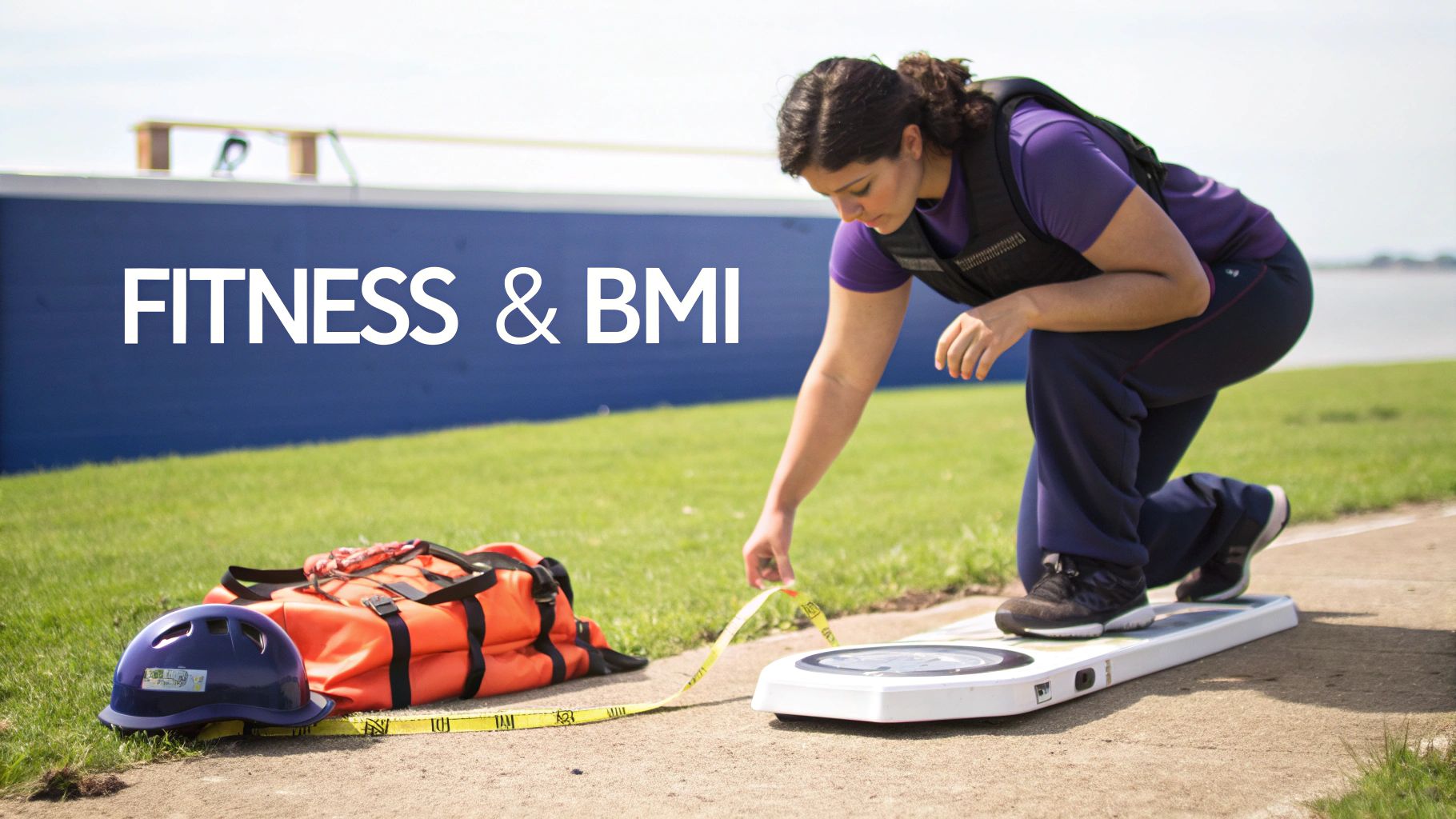
It also comes down to the nuts and bolts of safety equipment. Survival suits, lifeboats, and even helicopters have strict weight and size limits. When an alarm sounds, every second is vital, and that gear needs to work flawlessly for everyone.
The Growing Challenge of Offshore Weight
This isn't just an individual concern; it’s a trend that safety bodies and employers have been watching for years. The average weight of a UK offshore worker has shot up over the decades. Back in 1975, the typical worker weighed about 75kg. Fast forward to 2023, and that average has climbed to a hefty 99kg.
This shift has massive implications for life-saving equipment, much of which was designed for the lighter workers of the past. In fact, by 2022, nearly 20% of workers turning up for OEUK medicals had a BMI over 30, which is officially in the obese category.
This is exactly why the fitness standards are so strict. Passing your medical is a shared responsibility that keeps the whole crew safe.
Actionable Steps to Improve Your Fitness
The good news? You are absolutely in control. You can make a real difference to your health and fitness before your medical is due. The secret is to aim for sustainable lifestyle changes, not a last-minute crash diet.
Your goal should be to build a healthier lifestyle that not only helps you pass your medical but also supports a long and successful offshore career. This is a marathon, not a sprint.
Small, consistent changes are far more powerful than you think. For a more detailed look, our guide on achieving and maintaining medical fitness for work is packed with useful strategies.
Building a Balanced Nutrition Plan
You don't need a complicated, restrictive diet. The basics of healthy eating are simple and they work.
- Prioritise Whole Foods: Make lean proteins (chicken, fish, beans), complex carbs (oats, brown rice, wholemeal bread), and a ton of fruit and veg the foundation of your meals. These foods are nutrient-dense and provide sustained energy, unlike the sharp spikes and crashes from sugary foods.
- Reduce Processed Items: Try to cut back on sugary drinks, takeaways, crisps, and processed meats. They’re often loaded with calories, unhealthy fats, and sodium, which can contribute to weight gain and high blood pressure.
- Control Portion Sizes: A simple trick is to use smaller plates. It helps you visually manage how much you’re eating. Also, slowing down and eating mindfully helps your brain register fullness, preventing overeating.
- Stay Hydrated: Drink plenty of water throughout the day. Dehydration can sometimes be mistaken for hunger, leading to unnecessary snacking. Aim for 6-8 glasses daily.
Creating an Effective Exercise Routine
You don’t need a fancy gym membership to get fit. A solid mix of cardio and strength training can be done just about anywhere.
- Cardiovascular Exercise: Aim for at least 150 minutes of moderate-intensity cardio each week, as recommended by the NHS. That could be brisk walking, jogging, cycling, or swimming. This strengthens your heart, improves circulation, and is highly effective for weight management.
- Strength Training: Add in some bodyweight exercises like squats, press-ups, and lunges two or three times a week. Building lean muscle mass increases your resting metabolic rate, helping you burn more calories even when you're not active.
- Find Activities You Enjoy: The best exercise routine is the one you actually stick with. If you can’t stand running, don’t force it! Try a team sport, go hiking, or even take up dancing. Consistency always trumps intensity.
By taking these sensible, proactive steps with your food and fitness, you can walk into your medical with confidence, knowing you’ve done everything you can to prepare for the demands of working offshore.
How to Prepare for Your Medical Exam
Passing your medicals for offshore work isn't something that happens on the day you walk into the clinic. It really starts in the weeks leading up to your appointment. By making a few smart, simple lifestyle adjustments, you can have a surprisingly positive impact on your results and make sure you’re in the best possible shape for the assessment. This isn’t about last-minute crash diets or punishing gym sessions; it's about building healthier habits that benefit you long-term.
Think of it like getting your car ready for a long trip. You wouldn't just jump in on empty and hope for the best. You’d check the oil, top up the fuel, and make sure the tyres are right. Applying that same mindset to your health before a medical is just common sense.
This proactive approach is more important than ever. The industry is putting a huge focus on worker health and safety, and the numbers back this up. Over 164,000 offshore medical assessments were carried out globally in a single year, with a significant portion right here in the UK. These checks are absolutely essential for ensuring everyone is fit for the demanding conditions offshore. For a deeper dive into this, you can read more about industry health and safety trends on oeuk.org.uk.
Smart Lifestyle Adjustments Before Your Exam
A few weeks before your appointment is the perfect time to start making small changes that can make a big difference to key health markers like your blood pressure and cholesterol levels. These are always looked at closely during the exam, so giving your body a head start is a very good idea.
Your diet is a fantastic place to start. Simply cutting back on salt and saturated fats can directly improve your cardiovascular health.
- Ease off the Sodium: High sodium intake is a primary driver of high blood pressure. Avoid heavily processed foods, takeaways, and ready meals. Instead, flavour your food with herbs, spices, and citrus. This simple swap can have a measurable impact on your blood pressure.
- Limit Saturated Fats: These fats, found in red meat, butter, and processed snacks, can raise your LDL ("bad") cholesterol. Opt for heart-healthy unsaturated fats found in avocados, nuts, seeds, and olive oil. Choosing lean proteins like chicken and fish is also a smart move.
The Importance of Movement and Rest
You don't need to suddenly start training for a marathon. Just getting some regular, gentle physical activity into your daily routine is incredibly beneficial for improving cardiovascular fitness and managing both your weight and stress levels.
Try to get about 30 minutes of moderate activity in most days of the week. A brisk walk, a bike ride, or a swim is perfect. This helps lower blood pressure, improve circulation, and strengthen your heart and lungs.
Rest is just as crucial. In the week before your exam, really try to get 7-8 hours of quality sleep each night. Chronic sleep deprivation is linked to elevated cortisol and blood pressure, which could negatively affect your results.
Health Tip: For the 24-48 hours right before your appointment, it's a good move to avoid alcohol and excessive caffeine. Both can cause temporary dehydration and spike your blood pressure, potentially leading to a misleadingly high reading on the day.
Your Pre-Appointment Checklist
Being organised on the day of your medical will help everything run smoothly and keep any stress at bay. Get your documents together the night before so you’re not scrambling in the morning. This simple bit of prep means the focus stays entirely on your health assessment.
Here's a quick checklist of what to bring:
- Photographic ID: A valid passport or driving licence is a must-have for verifying your identity.
- Prescription Details: Bring a full list of any medications you’re on, including the dosages. If you can get a printout from your GP, that's even better.
- Corrective Eyewear: If you wear glasses or contact lenses, don’t forget to bring them for the vision test.
- Relevant Medical Letters: If you have any ongoing health conditions, bring along any recent letters or reports from your GP or specialist.
By taking these straightforward steps, you can head into your medical feeling prepared, confident, and ready to pass with flying colours.
So, You've Passed Your Medical – What Does Your Certificate Mean?
Getting that pass on your offshore medical is a great feeling, but the certificate you walk away with is more than just a piece of paper. It's your official ticket to work offshore, and it’s crucial to understand what it says about your fitness for duty.
For most people, a successful medical results in an unrestricted certificate. Think of this as the gold standard. It confirms you're in good health and fit to handle the demands of an offshore environment without any specific limitations. This certificate is typically valid for two years, at which point you'll need a renewal.
Unrestricted vs. Restricted Certificates
An unrestricted certificate is pretty self-explanatory. The doctor has given you a clean bill of health, finding no issues that could put you or your colleagues at risk in a remote setting.
But what if your certificate comes with conditions? This is known as a restricted or conditional certificate, and it’s important to realise this is not a fail. It simply means you have a health condition that needs managing, but with the right oversight, you're still safe to work.
A common example is someone with well-managed high blood pressure. They might be issued a certificate that's only valid for one year instead of two. The condition might be that they need to provide a letter from their GP at the next medical to confirm the condition is still stable. It’s a sensible system that allows people to keep working while making sure their health is properly monitored.
Keeping Yourself Fit for Renewal
Your medical certificate isn't a "one and done" deal. It's part of a continuous commitment to your health that goes hand-in-hand with your career. That two-year validity period is there for a reason – our health can change. The best way to breeze through your renewals is to stay on top of your well-being all year round.
Think of it this way: maintaining your fitness isn't just about passing the next medical. It’s about investing in your own long-term health to build a long and successful career offshore.
Adopting this mindset makes managing your health between check-ups feel less like a chore and more like a core part of your professional life.
Practical Tips for Staying Fit for Duty
Looking after yourself doesn't need to be a massive undertaking. Small, consistent habits make the biggest difference, especially if you’re already managing a health condition.
- Don't wait for your renewal: Schedule an annual check-up with your GP. Proactively monitoring key health metrics like blood pressure, cholesterol, and blood sugar levels allows you to address potential issues early, long before your next offshore medical is due.
- Take ownership of chronic conditions: If you have a condition like diabetes, asthma, or hypertension, actively partner with your doctor. Adhere to your treatment plan, take medications as prescribed, and understand the lifestyle choices that help keep your condition stable.
- Nail the lifestyle basics: The same advice for your first medical holds true for the long haul. A balanced, nutrient-rich diet, consistent physical activity, adequate sleep, and effective stress management are your most powerful tools for preventing new health problems.
By treating your health as a professional responsibility, you’re not just staying compliant with industry standards. You’re setting yourself up to be fit, healthy, and ready for work throughout your entire offshore career.
Common Questions About Offshore Medicals
Going for an offshore medical can throw up a lot of questions, especially if it’s your first time or you’re managing a specific health issue. We get it. Below, we’ve tackled some of the most frequent queries we hear, giving you clear, straightforward answers to help you know exactly what to expect.
What Happens If I Fail My Medical?
First, let's get one thing straight: hearing you haven't passed your medical is rarely the end of the road for your offshore career. Think of it less as a "fail" and more as a "pause." The examining doctor has a duty of care, and their job is to ensure you won't be a risk to yourself or others in a remote environment where advanced medical help is hours away.
Instead of just a simple refusal, you’ll be given clear, specific reasons for the decision. The doctor will explain exactly what the concern is—whether it's high blood pressure, an unusual ECG reading, or a high BMI—and talk you through the next steps.
This almost always involves creating a practical action plan. Typically, you'll be referred back to your own GP to discuss the findings. Your GP can then arrange further tests, start a treatment plan, or refer you to a specialist. For example, if high blood pressure was the issue, the plan might involve a period of monitoring, adopting lifestyle changes like a low-sodium diet and increased exercise, and then returning for a reassessment.
The key is to tackle the issues head-on. Once your GP can confirm that the condition is stable, resolved, or being managed effectively, you can be re-assessed for your certificate. The whole process is designed to get you offshore safely, not to keep you on the beach.
Can I Work Offshore with a Health Condition?
Absolutely. A surprising number of people work offshore successfully while managing long-term health conditions like well-controlled diabetes, asthma, or hypertension. Having a condition doesn't automatically rule you out. The crucial factor is stability and control.
The doctor’s main concern is whether your condition could flare up unexpectedly, requiring an emergency response that just isn't available on a rig or vessel. Because of this, the more evidence you can provide to show your condition is stable and well-managed, the smoother the process will be.
Health Tip: Bringing a detailed letter from your GP or specialist is one of the most helpful things you can do. This report should outline your diagnosis, current treatment plan, medication, and, most importantly, confirm that your condition has been stable for a significant period. Proactive management is key.
If your condition is under control, you might be issued a conditional or restricted certificate. For instance, someone with stable type 2 diabetes might get a certificate that’s valid for one year instead of the usual two. This simply means your health will be reviewed more frequently to ensure you can continue to work safely.
How Does Prescription Medication Affect My Medical?
It is absolutely essential to be completely open about any prescription medication you're taking. For the most part, medications for stable, chronic conditions like high blood pressure or cholesterol are perfectly fine and won't be a barrier to passing.
The main red flags are medications that could affect your alertness, coordination, or decision-making. This includes strong painkillers (especially opioids), some antidepressants, sleeping tablets, or other sedatives. Working offshore demands your full attention, not just for your own safety but for the safety of everyone around you.
To make this part of the medical go smoothly, just follow these simple steps:
- Make a list: Before your appointment, write down every medication you take, including the name and dosage. Don’t forget anything.
- Bring proof: If you can, get a printout of your repeat prescription list from your GP. This gives the doctor official verification.
- Be ready to talk: Discuss why you’re taking each medication. The doctor needs the full picture to make an informed decision.
Total transparency is the best policy. It allows the doctor to accurately assess your fitness and prevents any potential problems later on.
Are All Offshore Medicals the Same?
Not at all. While the OEUK (Offshore Energies UK) medical is the industry standard for the UK North Sea, it’s a common mistake to think it’s a golden ticket for working anywhere in the world. Different countries and regions operate under their own regulators, which means they have their own specific medical standards.
For example, if you're heading to work in Norwegian waters, you'll most likely need a Norwegian medical certificate. While it shares some similarities with the OEUK medical, the requirements aren't identical, and one certificate often can't be used in place of the other. The same goes for many other international locations, which may have unique standards set by their national authorities or even by the client you're working for.
Here’s the single most important piece of advice: always check with your employer to confirm which specific medical certificate you need for the job. Getting the wrong one is a recipe for frustrating delays, extra costs, and could even stop you from getting to work. A quick email or phone call beforehand will save you a world of hassle.
At The Lagom Clinic, we understand the unique health requirements of the offshore industry. We offer a full range of occupational health services, including medicals for offshore, providing thorough assessments and clear guidance to help you maintain your fitness for duty. Book your appointment with us today at https://www.thelagom.co.uk.


 Members Consultation