


Improving your mental wellbeing is a proactive process that involves making conscious, evidence-based choices in your daily life to support your emotional, psychological, and social health. This guide focuses on medically-sound health advice and practical lifestyle changes you can implement to build resilience, foster connection, and enhance your overall quality of life.
The Mental Wellbeing Conversation We're All Having
Maintaining positive mental health is a significant challenge in today's world. Fortunately, the public and medical conversation around this topic has evolved significantly. We have moved beyond generalised advice and are now focusing on the real-world, daily pressures that impact our psychological state.
This shift is crucial because it acknowledges that stress, anxiety, and burnout are common human experiences, not isolated personal failings. The focus is expanding from crisis intervention to preventative care, equipping individuals with practical, scientifically-backed skills to navigate life's challenges with greater stability.
The Numbers Tell a Sobering Story
Recent statistics paint a stark picture of why this conversation is so urgent. The demand for mental health services in England has skyrocketed, hitting a record 5.2 million referrals in the last year alone—a massive jump from pre-2019 levels.
Consider this: among young adults aged 17-19, the rate of probable mental disorders has leaped from 1 in 10 to a staggering 1 in 4. This surge places immense strain on GPs and specialist services, making it clear why proactive, lifestyle-based mental healthcare is essential. To understand the full scope, you can explore the full data on mental health pressures published by the BMA.
This guide provides actionable health advice to help you take control of your mental wellbeing.
Our goal is to empower you with medically-sound tools to build personal resilience. By focusing on small, sustainable lifestyle modifications, you can create a strong foundation for lasting mental health, helping you feel more balanced and in control.
It begins with understanding the powerful, biological link between your mind and body, learning evidence-based techniques to be more present, and knowing when and how to seek professional medical support.
Your Body's Role in Mental Fitness
It is a biological fact that your physical and mental health are inextricably linked. How you care for your body has a direct and measurable effect on your cognitive function and emotional state.
By focusing on three core pillars—nutrition, sleep, and physical activity—you can build a powerful foundation for mental resilience. This is not about a radical overhaul but about making small, sustainable lifestyle changes that work with your body’s natural physiology. The clinical impact of these minor adjustments can be profound.
Fuel Your Mind Through Nutrition
The food you consume directly impacts your mood and brain function, primarily through the gut-brain axis. This is a bidirectional communication pathway between your digestive system and your central nervous system. A healthy gut microbiome—rich in beneficial bacteria—is essential for producing key neurotransmitters like serotonin, which is a primary regulator of mood.
To support this vital connection, incorporate the following into your diet:
- Omega-3 Fatty Acids: Found in oily fish like salmon and mackerel, these fats are crucial for neuronal structure and function. Clinical studies have shown they can help manage symptoms of depression.
- Antioxidants: Berries, dark leafy greens, and colourful vegetables are rich in antioxidants, which combat oxidative stress—a process that can damage brain cells and contribute to cognitive decline and low mood.
- Probiotics: Foods like natural yoghurt, kefir, and kimchi introduce beneficial bacteria to your gut, supporting the healthy function of the gut-brain axis and neurotransmitter production.
A useful clinical analogy is to view your brain as a high-performance engine. Providing it with nutrient-dense foods is the most effective way to ensure it operates at its peak capacity.
The Restorative Power of Quality Sleep
Sleep is a critical period for brain maintenance. During sleep, your brain clears metabolic by-products, consolidates memories, and processes emotions. Chronic sleep deprivation disrupts these essential functions, often leading to irritability, poor concentration, and emotional dysregulation.
Establishing a consistent sleep schedule is one of the most effective health interventions you can make. Implement good sleep hygiene by avoiding screens an hour before bed and ensuring your bedroom is dark and cool. Aim for 7-9 hours of quality sleep per night—this is the clinically recommended duration for most adults to allow for complete brain restoration.
Taking time for mental rest through practices like mindfulness has a similar restorative effect.
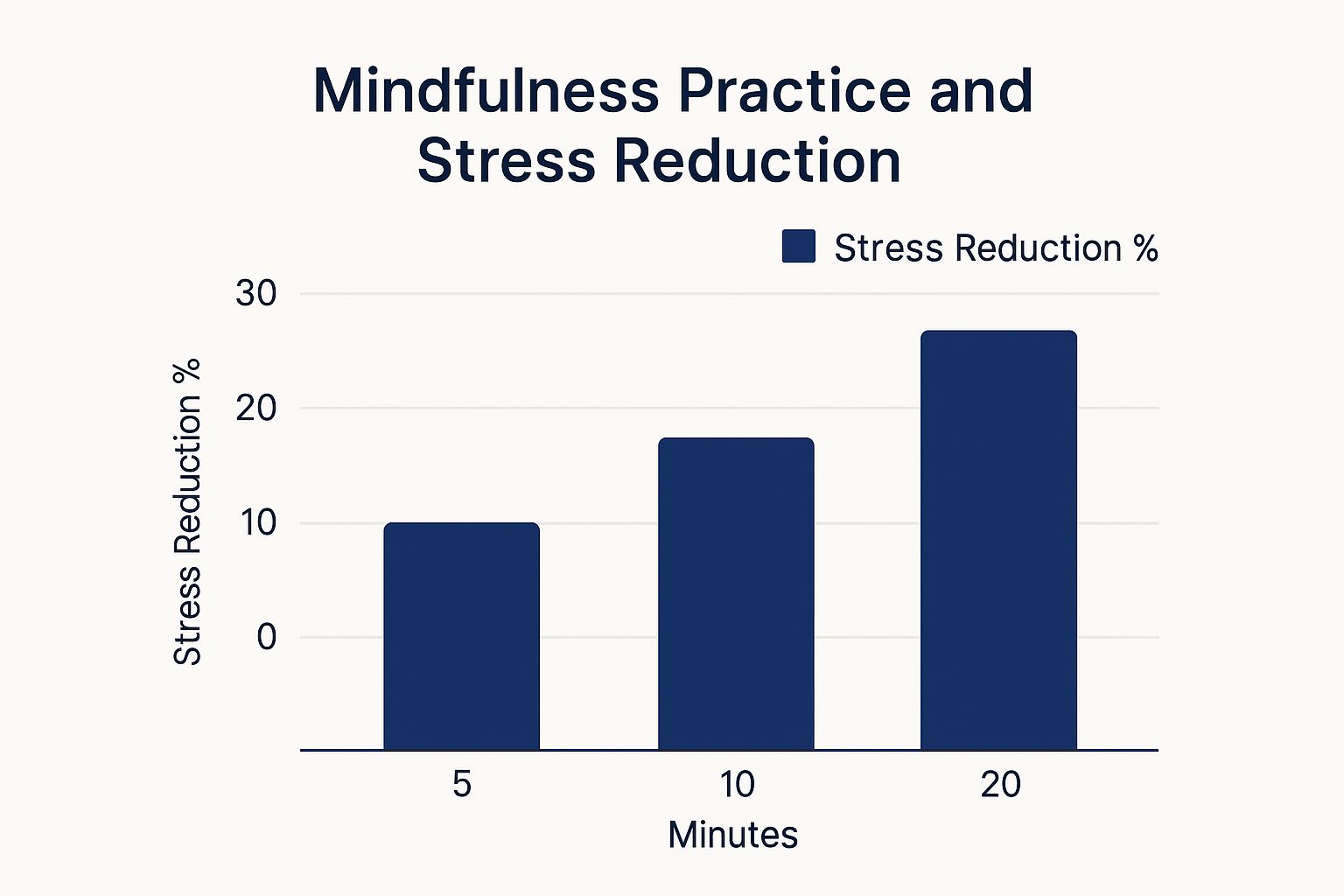
As the data shows, there is a clear correlation between dedicating time to mindful practice and a reduction in perceived stress, highlighting the physiological benefit of giving your mind a deliberate break.
Movement as a Natural Mood Booster
Physical activity is one of the most potent natural antidepressants available. Exercise stimulates the release of endorphins, neurochemicals that act as natural analgesics and mood elevators. You do not need to engage in high-intensity training to experience these benefits.
A brisk 20-minute walk, a gentle yoga session, or even dancing can trigger this positive neurochemical response. Regular physical activity also helps down-regulate the body's primary stress hormones, such as adrenaline and cortisol. For busy professionals, integrating short bursts of activity is a clinically effective strategy for managing daily physiological stress.
If you are unsure where to begin, we have a guide on finding the right kind of exercise for wellness and health. Consistency is the key; making movement a regular part of your routine helps build a stronger, more resilient mind.
The following table provides a summary of simple, actionable habits you can integrate into your daily life.
| Daily Habits for Improved Mental Wellbeing |
| :— | :— | :— |
| Lifestyle Pillar | Actionable Habit (15-30 mins) | Mental Wellbeing Benefit |
| Nutrition | Prep a smoothie with spinach and berries | Provides antioxidants to reduce brain fog |
| Sleep | Spend 15 minutes reading a book before bed | Improves sleep quality by reducing blue light exposure |
| Movement | Take a brisk 20-minute walk at lunchtime | Releases endorphins and lowers stress hormones |
By focusing on these small, medically-sound actions, you create a powerful ripple effect that supports your overall mental health, one habit at a time.
Building Resilience Through Mindfulness and Connection

While physical health provides a vital foundation, robust mental wellbeing is built upon emotional and psychological strength. This is often referred to as resilience, and it is not an innate trait but a skill that can be developed through consistent practice.
Two of the most effective, evidence-based tools for building this resilience are mindfulness and genuine human connection. These are practical strategies that can be integrated into any lifestyle. Consider them essential components of your mental health toolkit, helping you navigate life's inevitable challenges with greater calm and stability.
Demystifying Mindfulness for Daily Life
Mindfulness is often misunderstood as requiring lengthy meditation sessions. In clinical terms, mindfulness is the practice of paying attention to the present moment, intentionally and non-judgmentally. This practice creates a crucial cognitive gap between a stressful stimulus and your automatic reaction to it.
An excellent starting point is the '3-minute breathing space' technique. It’s a quick, discreet method for grounding yourself during moments of overwhelm.
Here is the process:
- Minute 1: Acknowledge. Observe your internal state. What thoughts and emotions are present? Notice them without judgment or any attempt to change them.
- Minute 2: Focus. Gently shift your full attention to the physical sensation of your breath. Feel the air as it enters and leaves your body. When your mind wanders, as it naturally will, guide it back to the breath.
- Minute 3: Expand. Broaden your awareness from the breath to your entire body. Notice physical sensations, then expand your awareness to the space you occupy.
This simple exercise is surprisingly effective at interrupting cycles of anxious thought, providing the mental clarity needed to proceed calmly.
Cultivating mindfulness is analogous to physical training. The more you practise redirecting your attention to the present, the stronger your ability to manage stress becomes, helping you feel less reactive and more in control of your emotional state.
The Protective Power of Social Connection
Humans are fundamentally social beings. Meaningful social connections are not merely pleasant; they provide a powerful buffer against the physiological effects of stress and loneliness. In an era of digital hyper-connectivity and real-world isolation, actively nurturing relationships is a direct investment in your mental health.
The need for this has never been clearer. Recent figures show that in England, 1 in 5 adults now live with a common mental health condition, a significant rise from previous years. This data underscores why proactive strategies like fostering social connection are so essential.
Making time for connection does not require grand gestures. It can be a phone call to a friend, a scheduled coffee with a colleague, or joining a local group that shares your interests. These acts of connection reinforce your sense of belonging and provide a crucial outlet for sharing life's challenges.
Beyond conventional socialising, it is also beneficial to explore different therapeutic activities for mental health that can contribute positively to your overall wellbeing.
Designing a Mentally Healthy Daily Routine
Your daily habits and environment significantly influence your mental state. Taking a proactive approach to structuring your day and physical space is one of the most powerful lifestyle changes you can make for your wellbeing. It involves making small, deliberate choices that reduce mental clutter and promote stability.
Simple actions can have a large impact. For example, decluttering your workspace is clinically shown to reduce cognitive load, freeing up mental energy. Similarly, setting clear boundaries on screen time can dramatically reduce the low-level anxiety associated with a constant influx of notifications and information.
Creating Structure and Stability
Routines are a cornerstone of good mental health. They provide a predictable rhythm to your day, which reduces 'decision fatigue'—the mental exhaustion that comes from making countless small choices. When your core schedule is established, you conserve mental energy for more significant challenges.
This structure is particularly vital for maintaining a healthy work-life boundary. Without firm limits, work can encroach on personal time, preventing the mental disengagement necessary for recovery and stress reduction.
Consider implementing these evidence-based practices:
- Bookend Your Day: Create a simple ritual to begin and end your workday. This could be a five-minute stretch before opening your laptop or a short walk after closing it. These actions signal to your brain when it’s time to focus and, crucially, when it’s time to rest.
- Time-Block Your Calendar: Intentionally schedule all activities, including breaks, lunch, and periods for deep, focused work. This practice discourages multitasking and promotes being present in each activity. If work is a major stressor, learning how to reduce workplace stress offers targeted strategies to protect your personal time.
- Schedule 'Worry Time': This cognitive-behavioural technique involves setting aside a specific 15-minute period to consciously address your worries. When an anxious thought arises outside this time, acknowledge it, write it down, and defer engagement until the scheduled slot. This can prevent anxious thoughts from dominating your day.
Building a mentally healthy routine is not about imposing rigid control. It is about creating an intentional framework that supports you, ultimately providing more freedom and mental space. You automate the mundane to be fully present for the meaningful.
Ultimately, designing a supportive routine means weaving moments of genuine rest and enjoyment into your week. Schedule a non-negotiable appointment with yourself for an activity you love, such as reading, listening to a podcast, or spending time in nature. These deliberate actions build a strong foundation for your mental health, making you more resilient.
How to Find the Right Professional Support

While positive lifestyle changes are foundational to mental wellbeing, it is vital to recognise when professional support is needed. Seeking help is not a sign of failure; it is a sign of strength and self-awareness.
Navigating the healthcare system does not have to be overwhelming. In the UK, there are clear, established pathways to access the right support. Understanding these options can empower you to take control of your health journey.
Your GP Is a Great First Step
For most individuals, a General Practitioner (GP) is the best initial point of contact. They provide a confidential setting to discuss your concerns and can outline all available support options, acting as a trusted guide to connect you with the most appropriate services, whether through the NHS or private care.
This initial consultation is a conversation. Your doctor will likely ask about your symptoms, their duration, and their impact on your daily life to build a clear clinical picture and determine the best course of action.
Remember, asking for help is a proactive step toward taking control of your wellbeing. Your GP is trained to support you without judgement and can unlock the door to effective treatment and recovery.
The scale of mental health challenges in England shows how common it is to need support. Statistics reveal that roughly 1 in 4 adults experiences a mental health problem each year, yet only about a third of them actually receive any treatment. Furthermore, data indicates a significant rise in self-harm and suicidal thoughts over the last two decades, highlighting the urgent need for accessible care. You can read more about these mental health statistics to get a fuller picture.
Understanding Your Treatment Options
Following a consultation, you will find there are several avenues for support. The optimal path depends on your individual clinical needs and personal preferences.
Here is a summary of the most common, evidence-based options:
- Talking Therapies: This category includes treatments like Cognitive Behavioural Therapy (CBT), counselling, and psychotherapy. These involve working with a trained professional to explore your thoughts and feelings, develop new coping strategies, and make lasting, positive changes.
- Medication: For certain conditions like depression or anxiety, psychotropic medication can be a highly effective treatment, often used in conjunction with talking therapies for optimal outcomes. Your GP can discuss the benefits and potential side effects with you.
- Self-Referral Services: In many parts of the UK, you can self-refer to NHS talking therapy services (often called IAPT services) without a GP consultation.
Beyond the NHS, reputable charities like Mind and the Samaritans offer valuable information and support. Private services, like those we offer at The Lagom Clinic, can provide faster access to specialist care with personalized treatment plans. The goal is to find the support that is medically appropriate and right for you.
A Few Common Questions About Mental Wellbeing
It is normal to have questions when beginning to focus on your mental wellbeing. Taking the first step can feel uncertain, so let’s address a few common queries with medically-sound information.
A primary question is often, "How long until I feel better?" There is no single answer, as progress is highly individual. Some people report noticing small, positive shifts within a few weeks of implementing lifestyle changes like improved sleep or regular exercise.
For others, particularly those engaging in therapy for more complex issues, it may take several months to feel a significant change. It is important to understand that progress is rarely linear; there will be good periods and setbacks. The clinical advice is to prioritise consistency over speed and to acknowledge small improvements as they occur.
Can I Improve My Wellbeing Without Medication?
Yes, in many cases, significant improvements can be made without pharmacotherapy. While medication is a vital and effective tool for many mental health conditions, it is not the only path to recovery. Lasting results are often achieved through lifestyle changes and psychotherapeutic support alone.
Many individuals build a strong foundation for their mental health without a prescription by focusing on a combination of these elements:
- Talking Therapies: Modalities like Cognitive Behavioural Therapy (CBT) have a strong evidence base for their effectiveness. They provide practical tools to challenge and reframe maladaptive thought patterns that fuel anxiety and low mood.
- The Lifestyle Basics: Foundational health behaviours are non-negotiable. Proper nutrition, consistent movement, and quality sleep provide the biological resources your brain needs to function optimally.
- Mindfulness and Grounding: Simple, evidence-based practices like meditation or mindful breathing exercises can help regulate the autonomic nervous system, reducing the physiological symptoms of stress and enhancing emotional regulation.
These strategies empower you to build resilience from within. For a deeper look into this holistic approach, I'd recommend reading about embracing mental health for inner peace.
Is There One ‘Best’ Solution?
While the idea of a single "magic bullet" solution is appealing, mental health does not work that way. Lasting wellbeing is built from a combination of small, sustainable, evidence-based habits that work synergistically.
An intervention that is highly effective for one person may have little impact on another. The most effective strategy is always one that is personalized to your life, your unique biological and psychological makeup, and your personal preferences.
The goal isn't to find the one perfect fix. It's to build a personalised toolkit of strategies—a little bit of movement, some mindful moments, strong social connections, and professional support when you need it—that you can rely on consistently over time. Consistency is the true magic bullet.
Ultimately, this is a journey that requires patience and self-compassion. By focusing on steady, consistent effort and identifying what works for you, you can build a robust, long-term foundation for your mental health.
At The Lagom Clinic, we believe in building a supportive, long-term relationship with our patients to help them achieve their health goals. If you're in Bristol and looking for personalised guidance on your mental wellbeing, book a consultation with us today. Find out more at https://www.thelagom.co.uk.
Related: Hormonal shifts during perimenopause and menopause can significantly affect mood, sleep, and mental wellbeing. Our menopause clinic in Bristol takes a holistic approach that addresses both physical and psychological symptoms.
Could ADHD Be Part of the Picture?
If improving your wellbeing feels harder than it should — despite trying the right things — difficulties with focus, organisation, and emotional regulation may point towards ADHD. Find out about private ADHD assessment in Bristol.


 Members Consultation