


So, what exactly is a pre-employment medical? It’s not about passing or failing a general health test. Instead, think of it as a specific check to make sure you can safely handle the core tasks of a particular job.
It’s less of an exam and more of a confirmation of your fitness for the role. This is all about keeping you and your future colleagues safe, which is why you’ll often see these checks in sectors like construction, transport, and healthcare.
Understanding the Purpose of a Pre Employment Medical Examination
At its heart, a pre-employment medical is about establishing a clear picture of your health before you start a new job. It helps confirm you have the physical and mental capacity to meet the demands of the role without putting yourself or others at risk.
This is a proactive step that benefits everyone. For you, the employee, it provides reassurance that the job won't aggravate an existing health issue. For the employer, it's a crucial part of fulfilling their legal duty to provide a safe workplace.
Crucially, this isn’t an open-ended look into your entire medical history. The assessment is always tailored to the job itself. Someone applying for an office job won't face the same physical tests as a construction worker who will be lifting heavy materials all day.
The Legal Framework in the UK
Here in the UK, these medicals are tightly regulated by the Equality Act 2010. This law is in place to make sure the whole process is fair and doesn't lead to discrimination. A key rule is that an employer can only ask for a medical assessment after they’ve made you a conditional job offer.
The fundamental principle is that the exam must be directly relevant to the tasks you'll be performing. This stops employers from unfairly screening out candidates with disabilities or health conditions that have absolutely no impact on their ability to do the job.
The focus is squarely on what you can do, not on finding a "perfect" health record. Many people with well-managed long-term conditions are more than capable of excelling in their roles. This is where it differs from a general health MOT or a more in-depth fitness for work assessment, which is typically used for existing employees.
Why Standardisation Is Crucial
Having a consistent, relevant standard for these medicals is absolutely vital. In the past, a lack of consistency created real problems in some industries.
A great example comes from the maritime world. Back in 1996, the UK P&I Club launched a standardised Pre-Employment Medical Examination (PEME) programme. They did this because they saw a spike in claims related to seafarers' undisclosed health conditions.
By creating standard forms and accrediting specific clinics, they made sure every medical was relevant and consistent for work at sea. This simple change protected crew members' health and reduced the employer's liability. The history behind these crew health initiatives really shows why getting this right became such a priority.
What to Expect During Your Medical Assessment
Walking into a clinic for a pre-employment medical can feel a bit nerve-wracking, but knowing what’s involved can make all the difference. Think of it less as a test and more as a structured health check-up, designed purely to confirm you’re a good fit for the physical demands of a specific role.
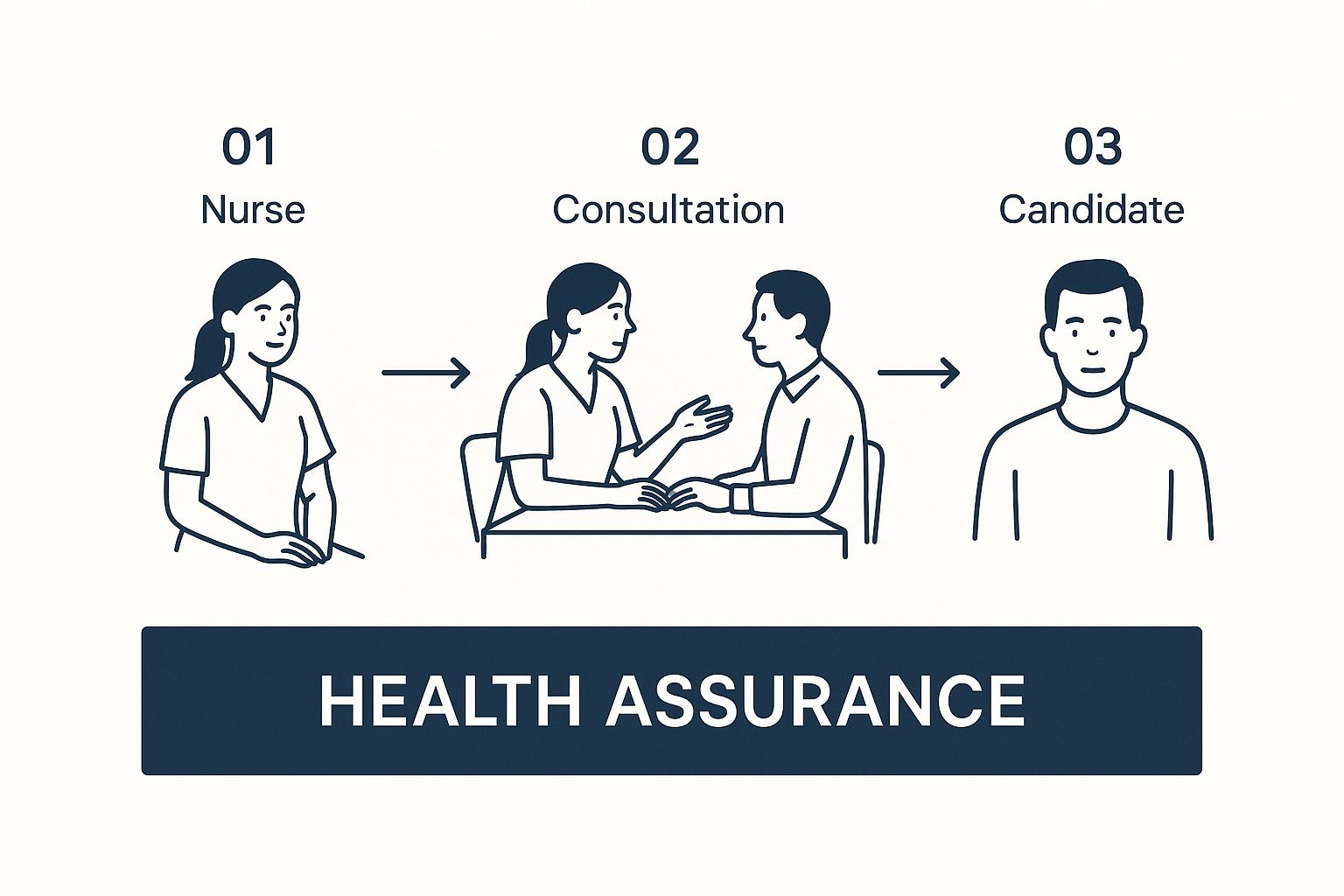
The process doesn't start with a stethoscope or any equipment. It starts with a conversation.
First, you’ll fill out a detailed health questionnaire. This is your chance to give a clear picture of your medical background—everything from past illnesses and surgeries to any current medications. Being open and honest here is key, as it gives the clinician the context they need to understand your overall health.
After the paperwork, you’ll move on to the physical assessment. This isn’t some gruelling fitness test; it’s just a series of straightforward checks to get a baseline of your physical condition.
The Physical Examination
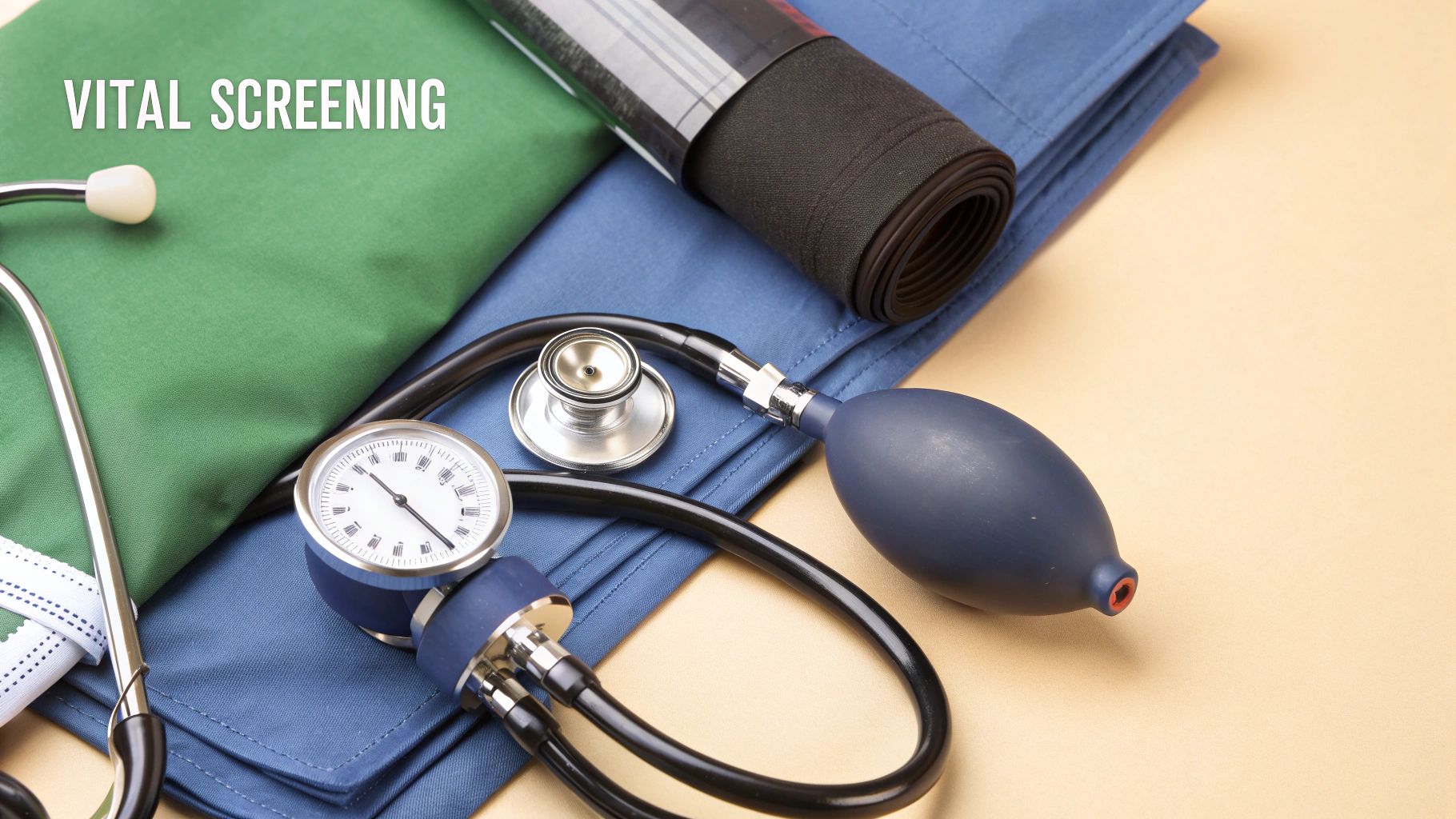
The physical part of the assessment is all about measuring your key vital signs. A nurse or doctor will quickly and easily record your:
- Height and Weight: These are used to calculate your Body Mass Index (BMI). A healthy BMI (typically 18.5-24.9) is associated with a lower risk of several chronic diseases. Focusing on a balanced diet and regular exercise is the best way to manage your weight.
- Blood Pressure: This measures the force of blood against your artery walls. An ideal reading is typically below 120/80 mmHg. Lifestyle factors like a low-salt diet, regular exercise, and stress management can significantly help maintain healthy blood pressure.
- Pulse Rate: A quick check of your resting heart rate, typically between 60-100 beats per minute, gives another simple clue about your heart's condition and fitness level.
These measurements are non-invasive and give a quick snapshot of where your health stands on the day.
Sensory and Laboratory Tests
Beyond the basics, the exam will likely include a few other tests tailored to the specific job you’re going for.
If the role involves driving, operating machinery, or requires sharp attention to detail, sensory checks are pretty standard. A vision test will check your eyesight, colour perception, and peripheral vision. Similarly, a hearing test (audiometry) makes sure you can hear clearly across different frequencies. It’s all about ensuring safety where clear communication and awareness are critical.
You’ll almost certainly be asked for a urine sample for a urinalysis. This simple lab test can reveal a surprising amount about your health, flagging potential signs of diabetes (via glucose levels), kidney problems (via protein), or even just dehydration. Staying well-hydrated by drinking plenty of water daily is a simple yet effective health habit.
Common Components of a Pre-Employment Medical Examination
To give you a clearer idea, here’s a quick rundown of the most common tests and why they’re included.
| Assessment Component | What It Measures | Common Job Relevance |
|---|---|---|
| Health Questionnaire | Your complete medical history, lifestyle, and past conditions. | Provides essential context for the clinician about your overall health status. |
| Vital Signs | Height, weight (BMI), blood pressure, and pulse rate. | Gives a baseline of your current physical fitness and cardiovascular health. |
| Vision Test | Visual acuity, colour perception, and peripheral vision. | Crucial for drivers, pilots, and machinery operators who need excellent eyesight. |
| Hearing Test | Your ability to hear sounds at various pitches and volumes. | Essential for roles in noisy environments or where verbal commands are vital. |
| Urinalysis | Checks for substances like protein, sugar, or signs of infection. | Can indicate underlying health issues like diabetes or kidney problems. |
| Drug & Alcohol Screen | Detects the presence of illicit substances or alcohol. | Standard for safety-critical roles to ensure a substance-free workplace. |
As you can see, each part of the exam has a very practical purpose tied directly to the job's requirements.
Some roles, especially those that are safety-critical, will include a screen for controlled substances. For a bit more detail on this specific check, you can find helpful information about drug test verification. It's a common step for employers aiming to maintain a safe and productive work environment.
Finally, depending on the job's nature, a blood test might be on the list to check for things like cholesterol levels, blood sugar, or liver function. Maintaining a diet rich in fibre and low in saturated fats is a proven way to support healthy cholesterol levels.
How to Prepare With Healthy Lifestyle Choices
Instead of seeing your upcoming pre-employment medical examination as a hurdle, try thinking of it as a positive checkpoint. It’s a chance to tune into your health and build good habits that will serve you long after you’ve settled into your new role. The weeks leading up to it are a perfect opportunity to focus on simple, sensible lifestyle adjustments.
This isn’t about making drastic, last-minute changes. It's more about gently guiding your body to its natural baseline so that key metrics, like your blood pressure and blood sugar, give an accurate picture of your typical health.
Nourish Your Body With a Balanced Diet
What we eat has a direct and surprisingly quick impact on our health readings. A diet high in processed foods, sugar, and salt can temporarily spike blood pressure and blood sugar, which could create a misleading impression during your medical.
Instead, shift your focus to whole, nutrient-rich foods. Think colourful plates filled with fruits, vegetables, lean proteins like chicken and fish, and whole grains. These foods give your body the vitamins and fibre it needs to function at its best and help stabilise your metabolic health.
Health Tip: Simple swaps can make a huge difference. For instance, eating more potassium-rich foods like bananas, spinach, and avocados helps your body balance its sodium levels—a big win for blood pressure management. Even small changes, like choosing whole-grain bread over white or grabbing a handful of almonds instead of crisps, contribute to better overall health.
Embrace Regular, Moderate Exercise
You don't need to suddenly start training for a marathon. The real goal is consistent, moderate activity that gets your heart pumping without putting you under too much strain.
Aim for the NHS-recommended 150 minutes of moderate-intensity activity a week. This could be 30 minutes of brisk walking, cycling, or swimming five days a week. Regular activity strengthens your heart, improves circulation, and helps manage your weight—all things that contribute to a healthier cardiovascular system and better readings at your appointment.
A heart-healthy lifestyle is one of the best investments you can make in your overall health, and it can certainly influence your medical assessment. To dig deeper, check out these effective lifestyle changes for heart disease for some great, sustainable ideas.
Prioritise Hydration and Quality Sleep
These two pillars of health are so fundamental that they're often overlooked. But they're incredibly powerful. Staying well-hydrated is crucial for everything from proper kidney function to maintaining stable blood pressure. Make water your go-to drink, aiming for 6-8 glasses a day. Ease off caffeine and alcohol in the days before your exam, as both can be dehydrating and affect blood pressure.
At the same time, good sleep is non-negotiable. Chronic sleep deprivation can increase stress hormones, which can temporarily push your blood pressure up. Aim for a solid 7-9 hours of quality sleep per night. Creating a relaxing bedtime routine—like reading a book or taking a warm bath instead of screen time—can signal to your body that it’s time to rest and repair.
Manage Stress and Understand the Nuances
Chronic stress isn't just in your head; it has a very real, physical impact on your body, affecting metrics like blood pressure and heart rate. Finding healthy ways to unwind is good for your mind and your medical results.
Why not try weaving a few simple stress-busters into your day?
- Mindful Breathing: Taking just a few minutes for slow, deep breaths can instantly calm your nervous system.
- Gentle Movement: Yoga or a good stretch can help release all that pent-up physical tension.
- Time in Nature: Even a quick walk in a local park has been proven to lower stress levels.
It’s also helpful to remember the context of these medicals in the UK. While screenings check for conditions like high blood pressure, the standards aren't always uniform across the board. In fact, there's an ongoing conversation among UK occupational health professionals about the need for clearer, evidence-based guidelines that are more relevant to the actual demands of a job.
By focusing on these healthy, sustainable choices, you're doing much more than just preparing for an appointment. You’re making a genuine investment in your long-term wellbeing.
Managing Pre-Existing Health Conditions
If you're heading into a pre-employment medical examination with a long-term health condition like diabetes, asthma, or high blood pressure, it's completely normal to feel a bit on edge. But remember, having a pre-existing condition is far from unusual and certainly doesn't mean you're out of the running for the job.
The real focus isn't on the condition itself, but on how well you manage it through consistent lifestyle choices and medical treatment. Think of the medical as your chance to demonstrate that you're in control and that your health won't get in the way of you performing your role safely and to a high standard.

Proactive Steps for Managing Your Condition
The weeks before your exam are the perfect time to double down on your health management. Consistent, proactive care doesn't just benefit your wellbeing; it also leads to the kind of stable, reassuring results that medical examiners look for. Your daily habits speak volumes about your overall health.
For instance, someone with hypertension who regularly monitors their blood pressure at home, follows a low-sodium diet, and takes their medication is clearly on top of their health. In the same way, if you have diabetes, keeping your blood sugar levels steady through careful diet, regular physical activity, and medication shows excellent control.
Here are a few practical lifestyle adjustments to focus on:
- Stick to Your Treatment Plan: Follow your GP’s advice to the letter. Take all your medications as prescribed, don’t miss any check-ups, and stick with any recommended lifestyle changes.
- Focus on Nutrition: A balanced diet tailored to your condition is crucial. A diet rich in fruits, vegetables, and whole grains while being low in sodium, for example, is a powerful tool for managing high blood pressure, just as monitoring carbohydrate intake is for diabetes.
- Get the Right Kind of Exercise: Regular physical activity that’s appropriate for your condition can make a world of difference. It can boost your cardiovascular health, help control blood sugar, and even lower stress levels.
Organising Your Medical Information
Being prepared with your paperwork is just as vital as managing your physical health. When you walk into your appointment with a well-organised file, it tells the examiner you’re diligent and take your condition seriously. It helps them build an accurate picture of your health without any guesswork.
Transparency is your greatest asset. An examiner's goal is not to catch you out but to assess your fitness for a specific role. Providing clear, verifiable information about your managed condition helps them make an informed and fair recommendation.
Pop everything into a simple folder that the examiner can easily review. This simple act of preparation can turn a potentially stressful conversation into a smooth and confident one.
Before your appointment, make sure you have:
- A recent letter from your GP or specialist that outlines your condition, confirms its stability, and details your current treatment.
- An up-to-date list of all medications you take, including the name, dosage, and why you take it.
- Any relevant recent test results, such as blood pressure logs, HbA1c levels for diabetes, or peak flow readings for asthma.
Communicating Confidently with the Examiner
When you discuss your health, be open, honest, and confident. Explain what your condition is, what you do to manage it, and how you ensure it never interferes with your ability to work safely.
And don't forget, the Equality Act 2010 is on your side. An employer can't legally withdraw a job offer because of a health condition unless it genuinely prevents you from performing the essential duties of the role, even after they've made reasonable adjustments. By clearly showing that your condition is under control, you're presenting yourself as what you are: a capable and reliable candidate.
Understanding Your Results and Your Rights
So, you’ve completed the medical assessment. Now comes the part that can feel a bit nerve-wracking: waiting for the results. But it helps to know what’s happening behind the scenes and, most importantly, what your rights are. The clinician's job isn't to give a simple pass or fail; it's to provide the employer with a clear, professional opinion on your fitness for the specific role you've applied for.
This recommendation will fall into one of three categories, all carefully weighed against the demands of the job. It’s all about making sure there’s a safe and sensible match between you and the work you'll be doing.
The Three Possible Outcomes
After looking at all the factors, the occupational health professional will make their recommendation. Think of it less as a test you pass and more as a professional assessment of suitability.
Here’s what they can conclude:
- Fit for Work: This is the green light. It’s the most frequent outcome and simply means the clinician sees no medical reason why you can't carry out the essential parts of the job safely and well.
- Fit for Work with Adjustments: This is also a positive result. It means you’re perfectly capable of doing the job, but the employer might need to make some reasonable changes to your role or workspace.
- Not Fit for This Specific Role: This outcome is the least common. It means that, in the clinician's professional opinion, the core tasks of the job would pose a serious risk to your health, or potentially the safety of others.
When adjustments are suggested, they’re usually practical and straightforward. For someone with a history of back pain in an office role, it might be something as simple as providing a proper ergonomic chair. For a warehouse job, it could mean tweaking how certain lifting tasks are managed.
What Are Your Legal Protections?
It’s really important to remember you have strong legal protections at this stage. This isn’t a process where employers can make arbitrary decisions; it's all governed by strict laws designed to ensure fairness and prevent discrimination.
Your personal medical details are confidential. Under the General Data Protection Regulation (GDPR), employers don’t get to see your medical history. All they receive is the final recommendation: whether you're fit for the role, fit with adjustments, or not.
The Equality Act 2010 is your biggest shield here. As we touched on earlier, this law makes it illegal for an employer to discriminate against you because of a disability. If you can do the main parts of the job, even with a few reasonable adjustments, a company can't legally pull a job offer just because of a health condition.
This keeps the focus squarely on your ability, not your disability. While these medicals are meant to protect workplace safety, their actual impact on preventing injuries is sometimes debated. Studies have shown that while job-specific exams might lead to more people being turned down, they don't always translate into a lower injury rate. This is precisely why the legal protections are so critical—to stop people from being unfairly screened out. You can read more about these occupational health findings to get a broader perspective.
If you feel a decision has been made unfairly, you have the right to question it. The best first move is to ask the employer for a written explanation. Getting the specific medical reasoning behind their decision is the key to figuring out what to do next. From there, you could seek guidance from organisations like Acas (the Advisory, Conciliation and Arbitration Service).
Your Questions Answered: The Pre-Employment Medical
It's completely normal to have a few questions buzzing around your head before a pre employment medical examination. Getting some clear, straight-to-the-point answers can make all the difference, helping you walk into your appointment feeling calm and prepared.
Let’s tackle some of the most common things people ask.
Can You Actually Fail a Medical?
This is probably the biggest worry for most people, but the idea of 'failing' is a bit of a myth. A pre-employment medical isn’t like a school exam where you get a pass or fail mark. It's simply an assessment of your fitness to do a particular job.
Think of it this way: the outcome is about suitability, not a verdict on your general health. The clinician's job is to see if you can handle the essential tasks of the role safely, sometimes with a few reasonable adjustments.
What Happens if You're Ill on the Day?
Woken up with a nasty cold, a fever, or a stomach bug? The best thing you can do is reschedule. Being unwell, even temporarily, can throw off readings like your blood pressure and heart rate, which means the results won’t reflect your true state of health.
Health Tip: Listen to your body. Postponing allows you to present your true baseline health and ensures the assessment is accurate. Just get in touch with the clinic or the employer as soon as you can. They’ll understand and will happily help you arrange another time. Being upfront is always the right move.
Is a Drug and Alcohol Test Part of Every Medical?
While drug and alcohol screening is fairly common, it isn't automatically included in every pre-employment medical. It really comes down to the employer's own policy and the specific demands of the job you're going for.
For any safety-critical role—think driving, operating heavy machinery, or looking after patients—a drug and alcohol test is usually a standard, non-negotiable step. It’s all about making sure the workplace is safe for you and everyone around you.
You will always be given a chance to declare any prescription medications you're taking that could flag up on a test. For example, certain powerful painkillers can show up as opioids. Being transparent and having proof of your prescription is key here, as it ensures the results are understood correctly and you aren't penalised for managing a health condition.
At The Lagom Clinic, we specialise in clear and supportive occupational health services, including pre-employment medicals. We focus on providing precise assessments while making sure every candidate feels informed and respected throughout the process. Find out more about our balanced approach to workplace health at https://www.thelagom.co.uk.
Need a pre-employment medical?
Pre-employment health assessments at The Lagom Clinic in Bristol. Same-week appointments, fast turnaround on reports.


 Members Consultation