


The moment you feel that sharp, searing pain in the back of your thigh, what you do next is absolutely critical. Getting the first 72 hours right sets the foundation for your entire recovery journey, while getting it wrong can turn a minor tweak into a major problem.
Your First 72 Hours: The Hamstring Injury Game Plan
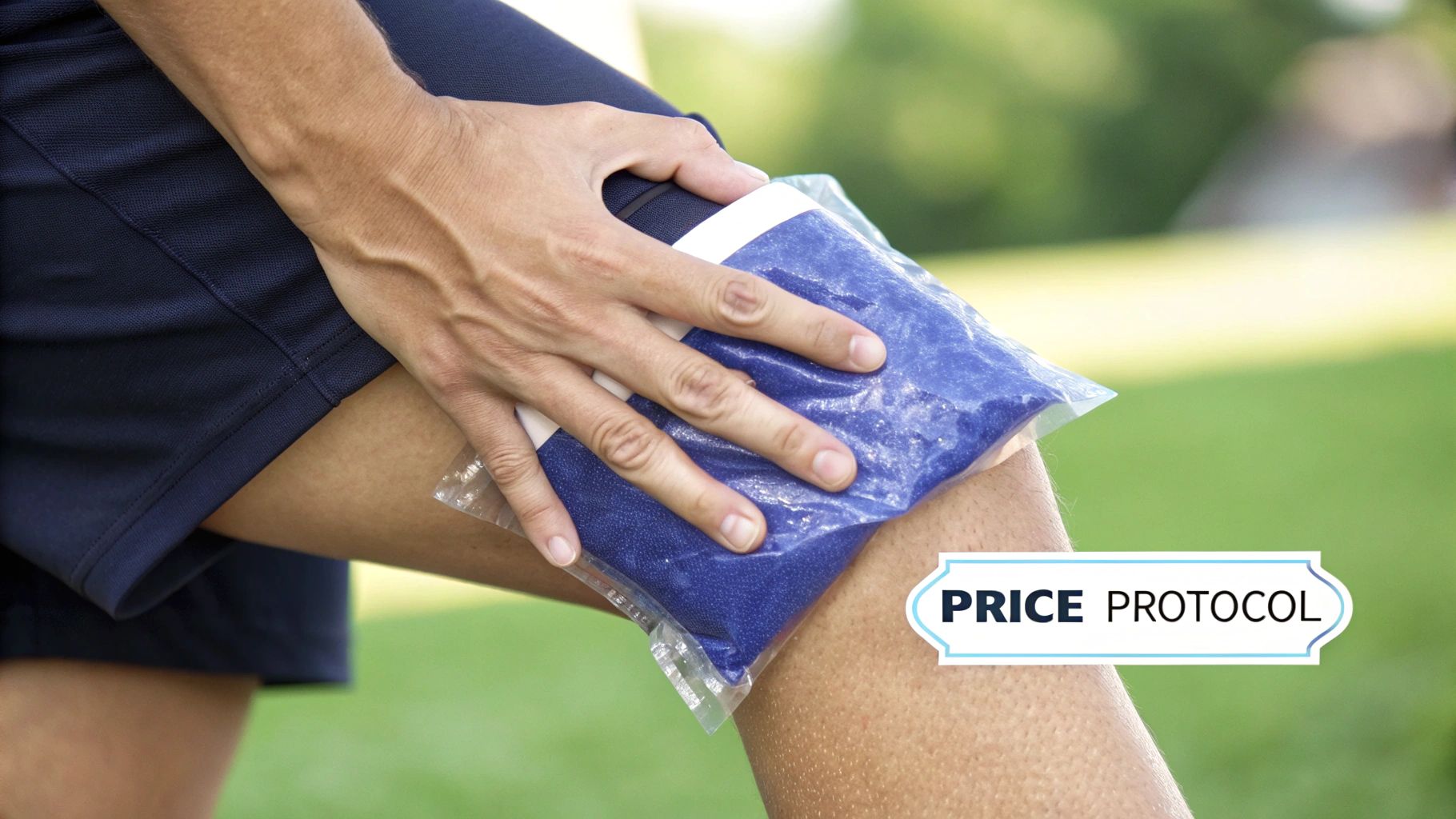
Whether you’ve pulled up short during a sprint or just overstretched reaching for something, that gut-wrenching "pop" or pull is a clear signal to stop. Immediately. The temptation to "walk it off" is a massive mistake that can lead to a longer, more complicated recovery.
In these first few days, your single most important job is to manage the body's natural, but sometimes excessive, inflammatory response. Swelling is part of the healing process, but too much of it creates a cascade of problems: more pain, restricted movement, and a sluggish start to tissue repair. This is where a simple, medically-proven method comes into play.
Mastering the PRICE Protocol
For decades, the gold standard for managing acute soft tissue injuries like a hamstring strain has been the PRICE protocol. It’s not fancy, but it is incredibly effective. Each letter represents a vital action you need to take to protect the muscle and kickstart the healing process.
Here's a quick breakdown of what to do as soon as the injury happens. Following these steps can significantly reduce your downtime.
The PRICE Protocol for Immediate Hamstring Care
| Action | Purpose | How-To Guide |
|---|---|---|
| Protection | Shield the injured muscle from any further damage or stress. | Stop your activity right away. If walking is painful, use crutches to take the weight off the leg. |
| Rest | Allow the body's natural healing mechanisms to begin their work without interruption. | Avoid any activities that cause pain. This means no running, jumping, or even walking long distances if it hurts. |
| Ice | Reduce blood flow to the area to minimise swelling, inflammation, and pain. | Apply a wrapped ice pack (or frozen peas) for 15-20 minutes every 2-3 hours. Never apply ice directly to the skin. |
| Compression | Manually limit swelling and provide light support to the injured tissue. | Gently wrap the thigh with an elasticated compression bandage. It should be snug, but not tight enough to cause numbness or tingling. |
| Elevation | Use gravity to help drain excess fluid away from the injury site, further reducing swelling. | Whenever you're sitting or lying down, prop your leg up on pillows so it's comfortably raised above the level of your heart. |
Think of this protocol as your emergency first aid. It’s simple, effective, and buys your body the time it needs to start repairing the damage properly.
"Mastering the first 72 hours is less about complex treatments and more about disciplined self-care. It's about giving your body the optimal environment to start its natural healing cascade without interruption."
Common Mistakes That Will Set You Back
Knowing what not to do is just as important. A few common missteps can sabotage a good recovery right from the start.
The biggest culprit? Heat. A hot bath or heat pack might feel comforting, but it does the exact opposite of what you need. Heat increases blood flow to the area, which ramps up swelling and inflammation in an acute injury. Save heat therapy for much later in the recovery process.
Another critical error is trying to stretch out the pain. It’s a natural instinct to want to "loosen" a tight, injured muscle, but you're dealing with torn fibres. Forcefully stretching a fresh hamstring tear is like pulling at the frayed ends of a rope – you’ll only make the damage worse, potentially leading to more scar tissue and a much longer layoff.
In the UK, physiotherapists often refer to frameworks like the British Athletic Muscle Injury Classification (BAMIC), which helps grade injuries and estimate recovery times—often around 3, 6, or 12 weeks depending on severity. Following the PRICE protocol is the universally accepted first step in any professionally guided rehab plan. To get a better grasp of how these injuries are categorised, you can discover more insights about hamstring injury classifications on iseh.co.uk. This structured approach is your best bet for a smooth and complete return to activity.
Understanding Your Hamstring Injury Grade
So, you've pulled your hamstring. The first, and most important, question is: how bad is it? The term "pulled hamstring" can mean anything from a minor tweak that feels better in a few days to a severe tear that puts you on the sidelines for months. Understanding the severity—or 'grade'—of your injury is the critical first step in building a realistic recovery plan.
Here in the UK, clinicians often use a system called the British Athletic Muscle Injury Classification (BAMIC) to get a precise picture of the damage. This isn't just about giving the injury a label; it’s about understanding exactly what’s happened to the muscle tissue so we can tailor the rehab accordingly.
Decoding the Grades of a Hamstring Strain
Let's break down what these grades actually mean in practice.
- A Grade 1 strain is the mildest form. This involves microscopic tears in the muscle fibres. You’ll feel a nagging tightness or ache at the back of your thigh, but you can likely still walk around without much of a limp.
- A Grade 2 strain is a definite step up. This involves a partial tear of the muscle. The pain is sharper, more localised, and you’ll probably see some swelling and bruising appear over the next day or two. Walking will be painful, and you’ll notice a significant loss of strength.
- Finally, a Grade 3 tear is a complete rupture of the muscle. This is a serious injury. The pain is usually intense and sudden, and many people report hearing or feeling a "pop" when it happens. Swelling and bruising are often substantial, and walking without help is nearly impossible.
This infographic gives a great visual summary of the grades and what you can generally expect in terms of recovery time.
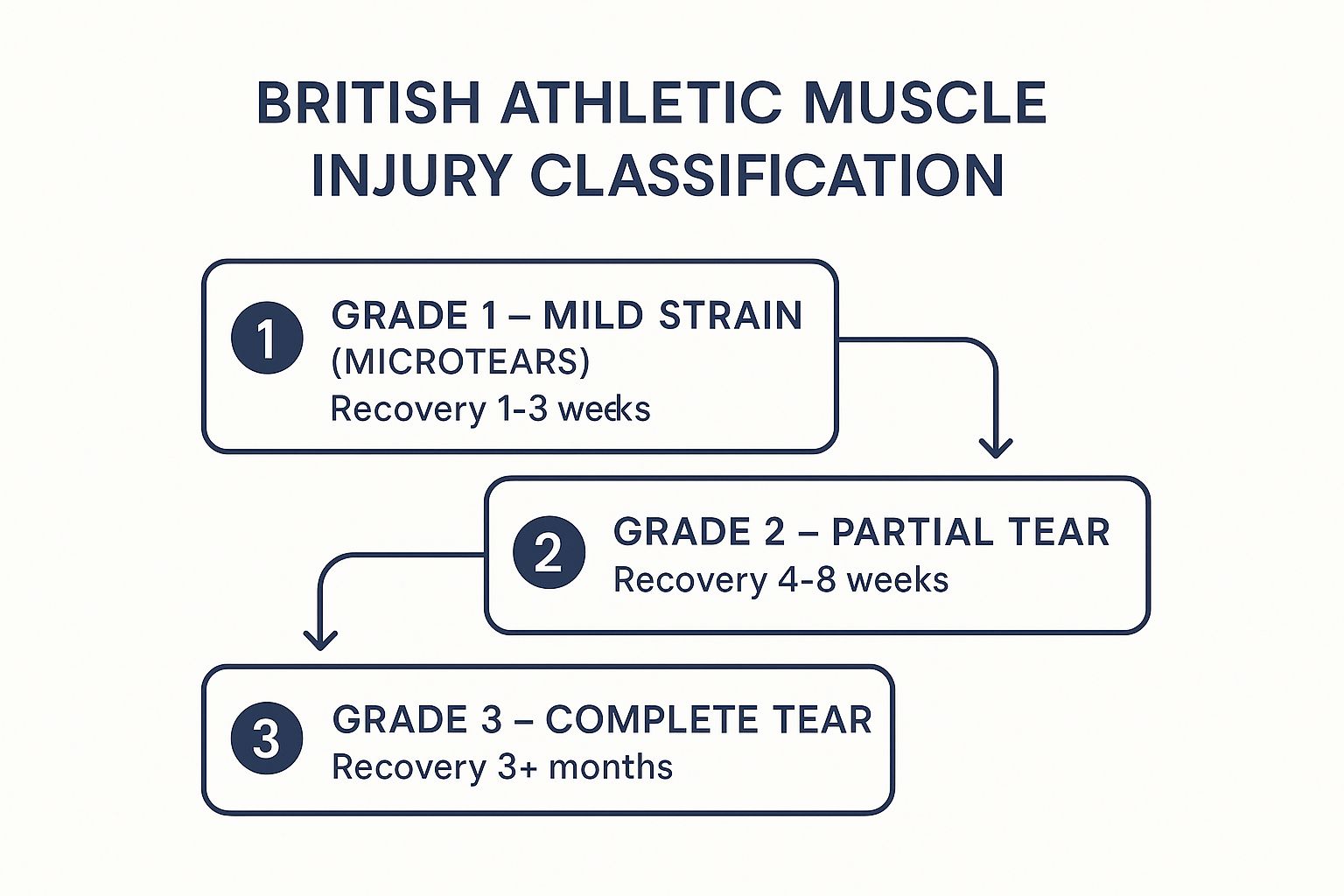
As you can see, the more severe the damage, the longer and more carefully you need to manage your return to activity.
Why Some Injuries Are More Stubborn Than Others
Now, here's where it gets a bit more complex. Even within the same grade, not all hamstring injuries are created equal. The location of the tear is a massive factor in your recovery.
Injuries that involve the intramuscular tendon—the tough connective tissue that runs through the muscle belly—are notoriously difficult. Within the BAMIC system, these are classified as a '2c' injury.
An injury to the intramuscular tendon is like a tear in the seam of a pair of jeans, not just the fabric. It affects the structural integrity of the muscle more deeply, which is why it demands a more cautious and patient approach to rehabilitation.
These '2c' injuries have a high reinjury rate if you return to your sport too soon. The simple truth is that tendon tissue heals much more slowly than muscle tissue. It needs a very specific and gradual loading programme to rebuild its strength without failing again.
The data backs this up loud and clear. UK studies using the BAMIC system show a huge variation in recovery times. One study looking at 61 hamstring injuries found the average time to return to full training was 18 days. But dig into the details, and the picture changes. Athletes with minor '1a' injuries were back in just 8 days with no reinjuries. In stark contrast, those with the tricky '2c' tendon injuries took a median of 37 days to recover and had a staggering 40% reinjury rate.
You can read the full research about these injury outcomes here. This is precisely why a one-size-fits-all approach to hamstring rehab just doesn't work. Knowing exactly what you're dealing with is everything.
Your Roadmap Through the Three Phases of Active Rehab
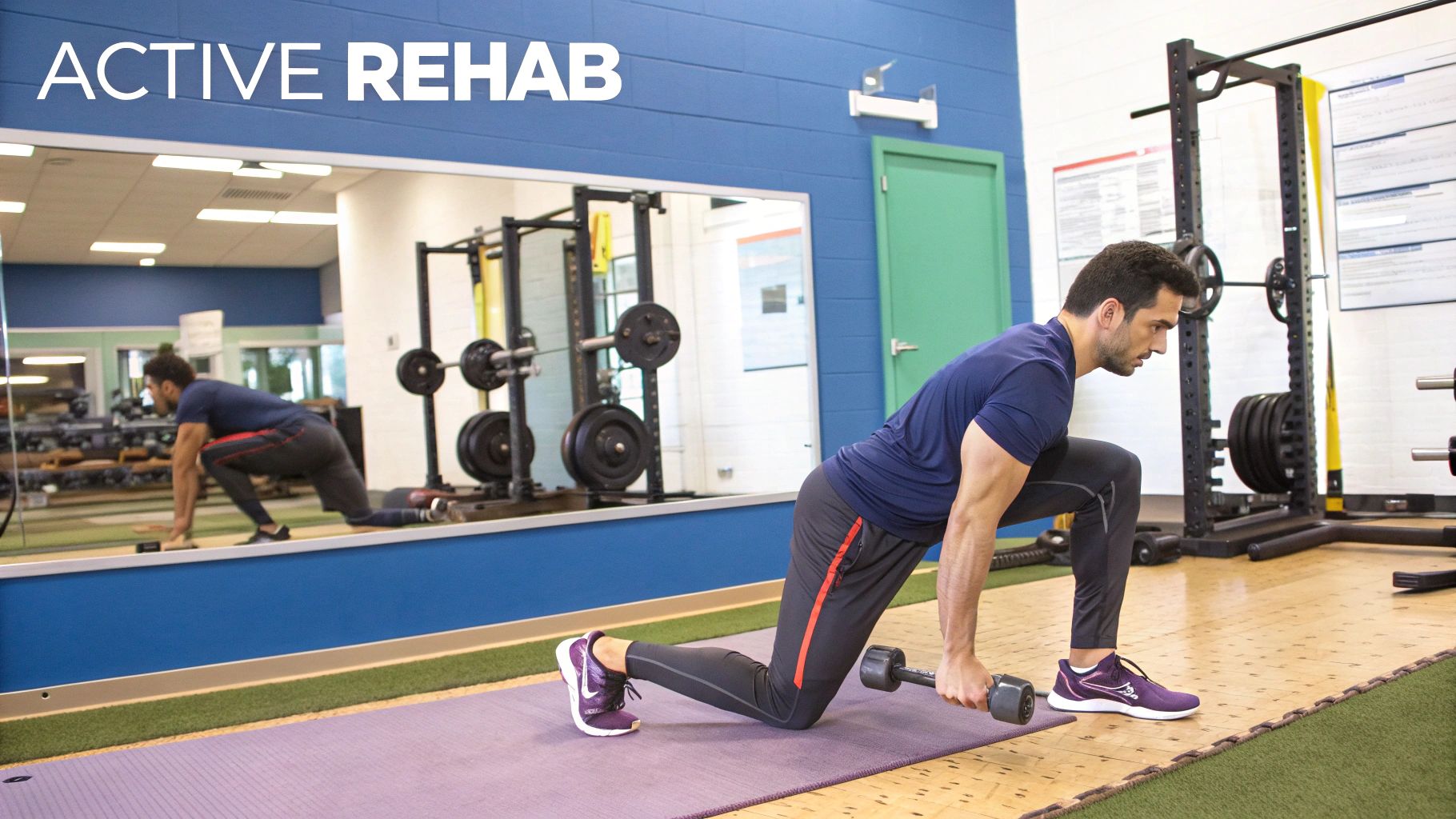
Once the initial pain and swelling have calmed down after a few days, the real journey of recovering from a hamstring injury begins. This isn't about sitting around and waiting; true recovery is an active process. It’s a structured plan to methodically rebuild strength and resilience from the ground up.
This journey can be broken down into three distinct, progressive phases. Each one has its own specific goals and exercises. Moving through these stages properly is the absolute key to not just healing, but to building a stronger, more injury-resistant hamstring for the future. We're aiming to gradually reintroduce load and movement, encouraging the muscle fibres to repair themselves in an organised, functional way. Rushing this or skipping a phase is the number one reason people end up with frustrating reinjuries.
Phase 1: Protect and Gently Awaken
The first phase of active rehab can start as soon as that initial, sharp pain has subsided. The goal here is simple: protect the healing tissue while preventing the muscle from wasting away. You aren't trying to build strength just yet. Instead, you're gently reminding the muscle of its job without putting it under any real strain.
This is where isometric contractions are your best friend. These are exercises where you tense the muscle without actually moving your leg. Think of it as gently "waking up" the hamstring fibres.
Here’s a simple one to start with:
- Isometric Hamstring Squeeze: Lie on your back with your knees bent and feet flat on the floor. Gently press one heel into the ground as if you’re about to drag it towards your bottom. Hold that gentle contraction for 5-10 seconds—making sure there’s no pain—and then relax.
The golden rule is pain-free activation. If you feel any sharp twinges, you’re pushing too hard, so back off. It’s also a good idea to keep the surrounding joints, like your hips and ankles, moving to stop stiffness from setting in. As you progress, keeping an accurate log of your flexibility using range of motion measurement tools is a great way to ensure you're healing properly.
Phase 2: Build Back Strength and Resilience
When you can walk comfortably without pain and do your isometrics with ease, it’s time for Phase 2. This is the heart of your rehab, where you start to methodically rebuild the strength and flexibility your hamstring has lost. The focus shifts from pure protection to controlled loading.
This means introducing dynamic exercises that take the muscle through a fuller, more functional range of motion. The key is to perform them slowly and with perfect form. This ensures the hamstring is doing the work correctly and not letting other muscles compensate.
Key exercises in this phase often include:
- Glute Bridges: A classic for a reason. Lying on your back with knees bent, lift your hips towards the ceiling, squeezing your glutes and feeling your hamstrings engage at the top.
- Controlled Lunges: Step forward into a lunge, keeping your torso upright. Make sure your front knee doesn't travel past your toes. This gently loads the hamstring in a pattern that mimics everyday movement.
- Nordic Hamstring Curls: This is a more advanced eccentric exercise, but it's fantastic for building strength as the muscle lengthens—which is often when it's most vulnerable to injury.
It’s during this phase that getting professional guidance can make all the difference. A deep understanding of what is musculoskeletal physiotherapy can help a therapist guide you through the right progressions, ensuring you challenge the muscle enough to adapt without overloading it and causing a setback.
The goal of Phase 2 isn't just to make the hamstring strong again, but to make it smart. We're re-educating the muscle to handle loads through its full range of motion, which is the foundation for preventing future injuries.
Phase 3: Returning to Full Function
The final phase is all about getting your body ready for the specific demands of your sport or daily life. The strength you’ve carefully built in Phase 2 now gets put to the test with more complex, dynamic, and sport-specific movements. This is where you bridge the gap between the controlled environment of the gym and the unpredictable nature of the real world.
Here, you'll start to incorporate agility, coordination, and power, moving from simple straight-line exercises to multi-directional drills.
Activities might involve:
- Agility Drills: Weaving through cones or performing side-shuffling exercises to challenge your stability and control.
- Plyometrics: Gentle hopping or jumping exercises to safely reintroduce explosive force.
- Sport-Specific Movements: Mimicking the actions of your sport, like practising kicking a ball lightly or going through sprinting mechanics at a reduced intensity.
Interestingly, research really backs up a well-rounded approach over just focusing on the injured muscle. UK-based studies have shown that rehab programmes including progressive agility and core stabilisation exercises lead to a much faster and safer return to activity.
One trial found athletes using this integrated approach returned to play in just 22.2 days with a reinjury rate of only 7.7%. This was a massive improvement over those who used isolated stretching and strengthening alone; they took 37.4 days to get back and had a staggering 70% reinjury rate. This evidence really hammers home the importance of treating the body as a connected system, not just an isolated injury.
Here is a quick overview of how the exercises progress through the phases.
A Phased Guide to Rehabilitation Exercises
This table breaks down the recommended exercises for each recovery phase, helping you progress safely from initial healing to full functional strength.
| Rehabilitation Phase | Objective | Example Exercises |
|---|---|---|
| Phase 1 | Protect tissue, gentle activation, pain-free movement | Isometric hamstring squeezes, gentle glute bridges (small range) |
| Phase 2 | Build strength, improve range of motion, controlled loading | Full glute bridges, controlled lunges, bodyweight Romanian Deadlifts |
| Phase 3 | Develop power, agility, sport-specific function | Nordic hamstring curls, cone drills, gentle plyometrics, sprinting drills |
By following a structured, phase-based approach like this, you give yourself the best possible chance of a full recovery and a confident return to the activities you love.
How Lifestyle and Nutrition Accelerate Healing

True recovery from a hamstring injury goes far beyond the physio clinic. The lifestyle choices you make—especially what you eat and how you rest—create the internal environment your body needs to properly repair damaged tissue.
Think of it this way: your rehab exercises are the construction crew, but your nutrition provides the high-quality building materials. Without those essential nutrients, the healing process can stall. A few smart adjustments to your daily habits can give your body a powerful advantage in managing inflammation, rebuilding muscle fibres, and getting you back on your feet faster.
Fuelling Your Recovery With the Right Foods
Your diet plays a direct, scientifically-proven role in how quickly your muscle tissue can heal. When you're injured, certain nutrients become non-negotiable for rebuilding what’s been damaged.
Top of that list is protein. Protein provides the amino acids that are the literal building blocks for new muscle tissue. Insufficient protein intake means your body simply can't mend the torn hamstring fibres efficiently.
To support this process, aim for a source of high-quality protein with every meal. Great options include:
- Lean Meats: Chicken breast, turkey, and lean cuts of beef.
- Fish: Fatty fish like salmon and mackerel also contain omega-3 fatty acids, which have anti-inflammatory properties.
- Dairy and Eggs: Greek yoghurt, cottage cheese, and eggs are fantastic, easily digestible choices.
- Plant-Based Options: Lentils, chickpeas, tofu, and quinoa provide excellent protein for those following a vegetarian or vegan diet.
Beyond protein, your next goal is to keep inflammation in check. While some inflammation is a necessary part of healing, when it becomes chronic or excessive, it causes more pain and slows down recovery. Anti-inflammatory foods can help manage this response.
Many people are surprised by how much food choices influence the body's inflammatory state. If you want to dive deeper, you can explore our guide on what causes chronic inflammation to better understand the connection.
Simple additions like a handful of berries, leafy greens like spinach and kale, nuts, and seeds can make a huge difference. And don't forget to stay hydrated. Drinking plenty of water is vital for transporting all these crucial nutrients to the injury site and flushing out waste products.
The Power of Restorative Sleep
You can do all the right exercises and eat the perfect diet, but if you're not getting enough quality sleep, your recovery will hit a wall. Sleep is when your body does the vast majority of its repair work.
During deep sleep, your body releases Growth Hormone, a key player in tissue regeneration. Skimping on sleep literally robs your body of this critical healing window, effectively putting the brakes on your progress.
"Sleep is not downtime; it's prime time for recovery. It's the most powerful, and often most neglected, tool you have for healing an injury like a hamstring strain."
Aim for 7-9 hours of solid, quality sleep each night. To get there, try to establish a consistent routine—go to bed and wake up at roughly the same time every day, even on weekends.
Practical Tips for Creating a Healing Environment
Putting all this into practice doesn't have to be complicated. Small, consistent actions are what really add up over your recovery timeline.
- Meal Prep for Success: Have protein-rich snacks ready to go. Think hard-boiled eggs or individual pots of Greek yoghurt so you're never caught out.
- Create a Sleep Sanctuary: Make your bedroom as dark, cool, and quiet as possible. Step away from screens for at least an hour before bed; that blue light really can interfere with your body's sleep signals.
- Mindful Hydration: Keep a water bottle with you all day as a visual reminder to drink. If you find plain water a bit boring, try adding a slice of lemon or a sprig of mint.
By focusing on these foundations—protein for building, anti-inflammatory foods for control, and sleep for repair—you create a complete strategy. This approach supports your physical rehab from the inside out, ensuring your body has everything it needs to heal properly and come back even stronger.
Staying in the Game: A Long-Term Plan to Prevent Reinjury
Getting back to your sport or favourite activity after a hamstring injury feels fantastic, but the real win is staying there for good. Hamstrings have a high reinjury rate, with some studies showing rates as high as 30% within the first year of returning to sport. This usually happens because the muscle hasn't quite regained its full strength or ability to handle stress, leaving it exposed.
The good news? You can absolutely break this frustrating cycle. The trick is to shift your mindset from short-term healing to building long-term resilience. This means creating a smart, sustainable plan that gets to the root cause of the initial injury, making sure your hamstrings are not just repaired, but fundamentally stronger than they were before.
Master Your Warm-Up and Cool-Down
Those few minutes before and after your workout are your best defence. So many people either rush through these routines or skip them entirely, leaving their muscles cold and unprepared for the work ahead, or unable to recover properly afterwards.
Before you start, your focus should be a solid dynamic warm-up. We're talking about active movements that get your blood flowing, raise your muscle temperature, and essentially wake up your nervous system for exercise. Holding long, static stretches before activity is an old-school approach that can actually reduce your power output, so save those for later.
Instead, get moving with things like:
- Leg Swings: Forward, backward, and side-to-side. These do wonders for opening up the hips.
- High Knees and Butt Kicks: Perfect for mimicking running mechanics and firing up your hamstrings and quads.
- Walking Lunges: A brilliant all-in-one movement to warm up the glutes, quads, and hamstrings together.
The cool-down is just as crucial. It’s your body's transition from high gear back to neutral. Gentle, static stretches for your hamstrings, quads, and hip flexors—holding each for about 20-30 seconds—can help restore muscle length and improve your overall flexibility over time.
Correcting the Real Culprits: Muscular Imbalances
Your hamstrings don't work alone. More often than not, a hamstring strain is just a symptom of a weak link somewhere else in the chain. The two most common culprits? Weak glutes and an unstable core. When these bigger, more powerful muscle groups aren't pulling their weight, the hamstrings are forced to step in and overcompensate, taking on a burden they were never designed to handle.
Think of it like this: your glutes are the engine, and your hamstrings are the transmission. A weak engine will eventually burn out the transmission.
To build truly bulletproof hamstrings, you have to look beyond the hamstrings themselves. Strengthening your core and glutes isn't just a nice extra—it's the absolute foundation of any effective prevention plan.
Start working exercises like glute bridges, clamshells, planks, and bird-dogs into your regular strength routine. These movements train your body to fire up the right muscles, taking all that unnecessary strain off your hamstrings when you sprint, jump, or kick.
Get Smart About Your Workload
One of the biggest traps people fall into is doing too much, too soon. I see it all the time. After weeks of careful rehab, the temptation to jump right back to your old training intensity is huge. But that sudden spike in workload is a classic recipe for reinjury.
You have to reintroduce that intensity gradually and methodically. A great guideline to follow is the 10% rule: aim to increase your training volume or intensity by no more than 10% per week. This gives your muscles and tendons the time they need to adapt to the new stress without getting overloaded.
Above all, listen to your body. Pay close attention to any little warning signs, like fatigue or tightness in your hamstrings. It is always better to take an extra rest day than to push through and find yourself right back where you started. A huge part of staying healthy for the long run is having a robust plan to sidestep future problems. For a deeper dive into managing your training volume, explore these proven strategies to prevent running injuries.
Common Questions About Hamstring Recovery
Working your way back from a hamstring injury can feel a bit like navigating in the dark. It’s completely normal to have a million questions running through your head. Am I doing too much? Too little? Is this feeling normal? Let's clear up some of the most common queries we hear from people, so you can feel more confident in your recovery.
Getting your head around these details is a huge part of learning how to recover from a hamstring injury properly. It helps you take back control and make smarter decisions day-to-day.
Should I Use Heat or Ice on My Hamstring?
This is probably the number one question we get, and the answer is all about timing. Think of it in two distinct phases.
For the first 48-72 hours after you’ve done the damage—what we call the acute phase—ice is your best friend. The whole point of icing is to constrict the blood vessels, which helps to minimise swelling and take the edge off the pain. Slapping a heat pack on at this stage is the last thing you want to do; it'll just increase blood flow and make the inflammation worse, potentially dragging out your recovery.
Once you’re past that initial window and the swelling has gone down, you can start introducing heat. A warm compress or a soak in a warm bath can be brilliant. Heat helps to boost blood flow, bringing fresh oxygen and nutrients to the area to help with tissue repair. It’s also fantastic for loosening up tight muscles before you ease into any gentle stretching or rehab exercises.
Key Takeaway: It’s simple: ice for the first couple of days to manage the initial pain and swelling. After that, switch over to heat to encourage blood flow and relax the muscle before you get moving. Just remember never to apply ice or heat directly to your skin.
Is Some Pain Normal During Rehab Exercises?
Figuring out the difference between "good pain" and "bad pain" is one of the toughest parts of rehab. A bit of a mild stretching sensation or that feeling of a muscle working hard is usually a good sign. It tells you that you're challenging the tissue enough to get stronger.
However, any sharp, shooting, or sudden pain is a massive red flag. That’s your body screaming "stop!" This "bad pain" means you’re pushing the healing tissue way too far. If you feel it, stop the exercise immediately. Trying to push through that kind of pain is one of the quickest ways to set yourself back or, even worse, re-injure the muscle completely.
The golden rule here is to listen to your body. Rehab should feel challenging, but it should never be acutely painful. If a particular exercise always brings on that bad pain, it's time to talk to your physio about finding an alternative.
How Do I Know My Hamstring Is Fully Healed?
This is a big one. Knowing when you’re genuinely ready to go back to your sport or full-on activity is a crucial judgement call, and it’s about so much more than just not feeling pain when you walk. To really be considered good to go, you need to tick a few key boxes.
Here’s a practical checklist to run through with your healthcare provider:
- Full Range of Motion: You need to have the same flexibility in your injured leg as your uninjured one, with zero pain or tightness.
- Symmetrical Strength: Your injured hamstring should be at least 90% as strong as the healthy one. A physio can use specific tests to get an accurate measure of this.
- Pain-Free Functional Tests: You have to be able to sprint, jump, and cut at full pelt without any pain or even a hint of hesitation.
- No Swelling or Tenderness: The area should be completely free of any lingering swelling, and it shouldn't be tender when you press on it.
Just "feeling okay" isn't the green light. I've seen so many people rush back before hitting these milestones, and it’s a huge gamble. It's the main reason hamstring injuries have such a frustratingly high rate of coming back.
When Should I See a Doctor or Physiotherapist?
While you can often manage very minor strains at home, some signs are clear indicators that you need to get professional help, and fast.
You should get yourself checked out if you experience any of these:
- You heard a distinct "pop" or a tearing sensation when the injury happened.
- You can't walk without significant pain or put your full weight on the leg.
- You notice a lot of bruising and swelling that comes on very quickly.
- The pain is severe and just isn't getting better with rest and ice.
- You can feel a noticeable gap or a lump in the muscle at the back of your thigh.
These could be signs of a serious Grade 3 tear or even an avulsion fracture, where the tendon has pulled a piece of bone away. Both require immediate medical attention. Honestly, even for what seems like a milder strain, seeing a physiotherapist is always a smart move. They can give you a proper diagnosis and build a rehab plan that’s right for you, which makes all the difference for a successful, long-term recovery.
At The Lagom Clinic, we specialise in creating personalised recovery plans that get to the root cause of your injury. If you're struggling with a hamstring problem or just want expert guidance to get back to your activities safely, we're here to help. Visit us at The Lagom Clinic to book your consultation and start your journey back to full strength.

 Members Consultation