


Let’s be honest, the very idea of ‘meal planning’ can feel like just another chore on an already overflowing list. But what if we reframe it? Instead of a rigid set of rules, think of it as a proactive lifestyle choice that acts as your secret weapon against the daily dinner-time panic.
It’s about creating a simple, repeatable system that clears mental clutter. A good plan means you can finally stop asking "What's for dinner?" every night and replace that stress with a calm, organised routine that gets your family eating wholesome, home-cooked food. The real wins? You save a surprising amount of time and money, while making a significant investment in your family's long-term health.
Laying the Groundwork for Healthy Family Meals
The key is to build a flexible system that genuinely simplifies your life, rather than adding to the chaos. You're not aiming for perfection here; you're aiming for consistency, which is the foundation of any positive lifestyle change.
A solid plan acts like a roadmap for the week. It helps you dodge those last-minute, less-healthy takeaways and puts you back in control of what your family eats. It’s all about making small, sustainable tweaks that fit your schedule and support overall well-being.
Figuring Out What Your Family Actually Needs
Before you even think about a shopping list, take a quick inventory of who's sitting around your table. A toddler’s nutritional needs are worlds away from a teenager’s, and a successful plan has to be medically sound and cater to everyone.
- Toddlers & Little Ones: Focus on nutrient density. Small portions should be packed with iron for cognitive development, calcium for bone growth, and healthy fats (like those from avocado and oily fish) for brain health.
- School-Aged Kids: Energy for learning and activity is key. A balanced intake of complex carbohydrates (like wholemeal bread and oats), lean proteins, and a wide variety of fruits and vegetables will help maintain stable energy levels and focus throughout the school day.
- Teenagers: Growth spurts demand increased calories and specific nutrients. Prioritise protein for muscle development and calcium and vitamin D for building peak bone mass.
- Adults: Nutritional needs vary based on activity levels and health goals, but a diet rich in whole foods, lean protein, and abundant fibre is universally beneficial for maintaining a healthy weight and preventing chronic diseases.
This doesn't mean you have to cook three different meals every night. The trick is to think in ‘build-your-own’ components. A taco night is a perfect example – you lay out all the healthy ingredients, and everyone can assemble their own plate to meet their specific needs and preferences.
A great starting point is to just observe your current habits, without any judgment. What are your go-to meals on a Tuesday night? How often do you grab a takeaway? Knowing your baseline makes it so much easier to identify small, achievable lifestyle changes that will yield the biggest health benefits.
Get Everyone Involved
One of the best ways to make healthy meal planning for families stick is to turn it into a team sport. When kids have a say in what’s on the menu, they’re so much more likely to actually eat it without a fuss. This lifestyle change can transform mealtimes from a battleground into a fun, collaborative part of the day.
Give out age-appropriate jobs. A little one can help wash the veggies or stir a sauce, while an older kid could be in charge of picking one meal for the week (from a list of healthy options you’ve approved, of course!) or even helping you cook it. Sharing the load not only helps you out, but it also teaches your kids essential life skills and fosters a positive relationship with food.
This is more relevant than ever. Recent trends in the UK show that by 2023, more of us were eating at home thanks to flexible working and the rising cost of living. And while cooking from scratch is still big, many families are happy to spend a little more on convenient options to claw back some time. You can discover more about UK in-home eating trends and see how people are balancing cost and convenience. It just goes to show that any meal plan has to be both nutritious and realistic for the way we live now.
How to Create Your Weekly Meal Plan
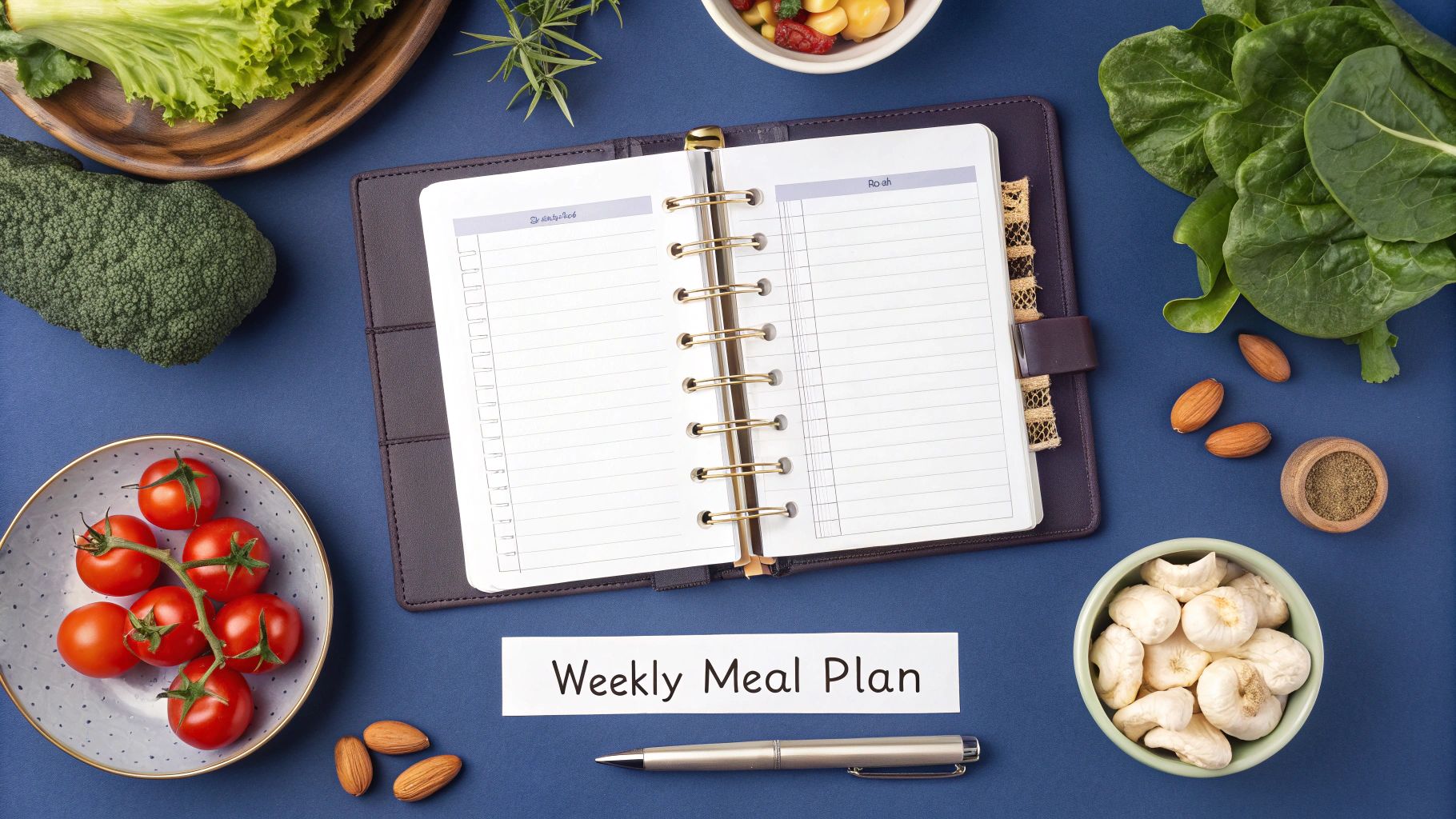
Alright, with the groundwork sorted, it’s time to actually build your plan. This is where your ideas become a real, practical guide for your week. The aim here isn’t to create a rigid, set-in-stone schedule, but a flexible framework that makes healthy eating the easy choice, even on the most chaotic days.
A plan is only successful if you can stick with it. So, forget trying to cook brand-new, complicated recipes every single night. Start by leaning on reliable, family-approved meals you can pull off without breaking a sweat. This builds momentum and makes the whole process feel much less daunting.
Embrace Flexible Planning Methods
One of the biggest mistakes I see is the all-or-nothing approach. Life is unpredictable, and your plan needs to be able to bend without breaking. Adopting a more fluid method that fits your family's real rhythm is one of the best lifestyle changes you can make.
A brilliant way to get started is with theme nights. It’s a simple concept: assign a food category to each day. This immediately narrows down the overwhelming number of choices and makes planning so much faster. It's also a fantastic way to bring a bit of fun and predictability to your week.
For example, your week might look a little something like this:
- Meat-Free Monday: A great chance to increase fibre intake and explore plant-based proteins like lentils and beans.
- Taco Tuesday: Always a winner—kids love building their own, and it's easy to load up with salad and vegetables.
- Warming Wednesday: Perfect for a hearty soup, stew, or a comforting cottage pie with a vegetable-packed base.
- Pasta Thursday: Versatile and quick. Opt for wholewheat pasta to increase fibre and support digestive health.
- Stir-fry Friday: A fantastic way to use up any leftover veg from the week, ensuring you get a wide range of vitamins.
This kind of structure offers a gentle guide without boxing you in. It takes the decision fatigue out of the equation, which is often the toughest part of healthy meal planning for families.
The Power of Component Prepping
Here's another strategy that has been a game-changer for so many families: component prepping. Instead of cooking entire meals in advance, you just prepare the individual ingredients. Think of it as creating your own personalised recipe kits for the week ahead.
Just an hour or two on a Sunday can completely transform your weeknights. You could cook a big batch of quinoa, roast a tray of mixed vegetables, grill some chicken breasts, and wash and chop your salad greens. With these bits ready and waiting in the fridge, pulling together a healthy, balanced meal takes minutes, not hours.
A medically sound approach to nutrition is built on consistency, not perfection. Having healthy components ready to go makes it far easier to build a balanced plate, ensuring you get a good mix of lean protein, complex carbohydrates, and fibre-rich vegetables at every meal, which is crucial for stable blood sugar and sustained energy.
Plan for Real Life, Not an Ideal Life
Let’s be honest: there will be evenings when you’re running late or just don’t have the energy to cook. A realistic meal plan has to account for this. It’s so important to build in backup options so you’re not caught scrambling for a less healthy option.
This means planning for leftovers. When you make a roast chicken on Sunday, intentionally cook a bigger one so you have extra for lunch wraps or a quick chicken salad on Monday. Cooking once and eating twice is one of the smartest lifestyle habits you can adopt.
It also means having a few 'emergency' meals in your back pocket. These are quick, nutritious options you can turn to in a pinch. Things like wholewheat pasta with a good quality jarred sauce and a bag of frozen peas, or eggs on wholemeal toast with a side of sliced avocado. These simple meals are far superior nutritionally to a last-minute takeaway and can be on the table in under 15 minutes.
When you plan for these moments, you remove the stress and guilt, turning a potential disaster into just another part of your routine.
A Sample One-Week Healthy Family Meal Plan
To help you see how all these ideas come together, here’s a sample plan. It’s designed to be nutritious and budget-friendly, with plenty of flexibility and planned leftovers built right in.
| Day | Breakfast | Lunch | Dinner |
|---|---|---|---|
| Monday | Porridge with berries and seeds | Leftover Lentil Bolognese with a side salad | Meat-Free Monday: Veggie Lentil Bolognese with wholewheat pasta |
| Tuesday | Scrambled eggs on wholemeal toast | Chicken and avocado wraps (using leftover chicken) | Taco Tuesday: Build-your-own tacos with lean mince & veggies |
| Wednesday | Greek yoghurt with fruit and granola | Leftover taco mince in a salad bowl | Warming Wednesday: Shepherd's Pie with a sweet potato topping |
| Thursday | Wholemeal toast with peanut butter | Soup and a wholemeal roll | Pasta Thursday: Chicken & broccoli pasta bake |
| Friday | Smoothie with spinach, banana, and milk | Leftover pasta bake | Stir-fry Friday: Quick prawn stir-fry with brown rice |
| Saturday | Pancakes with fruit and a little syrup | Sandwiches with salad | Homemade pizza on wholemeal bases with lots of veggie toppings |
| Sunday | Boiled eggs with wholemeal soldiers | Use-it-up frittata with leftover veggies | Sunday Roast: Roast chicken with plenty of vegetables |
Remember, this is just a template to get you started. The real magic happens when you adapt it to your own family's tastes, creating a system that gives you back precious time, money, and mental energy.
Shopping Smarter for Healthy Family Meals
A brilliant meal plan is only half the battle; the real magic happens when you turn it into a smart, efficient shopping list. This isn't just about what you buy, but how you buy it. It's a fundamental lifestyle change that helps you stick to your goals, save money, and keep your kitchen stocked with nutritious food.
Once you have a well-organised list based on your week's meals, you can walk into the supermarket with a clear mission. Forget wandering the aisles and falling for tempting "special offers" on things you don't need. This simple act of preparation is one of the most powerful tools for making healthy meal planning for families a long-term success.
Navigating the Supermarket Aisles
Let's be honest, supermarkets are cleverly designed to make us spend more, and often on foods that don't quite fit our health goals. A medically sound strategy is to primarily shop the perimeter of the store. The outer edges are almost always where you find the fresh, whole foods—fruit and vegetables, lean meats and fish, and dairy.
The centre aisles are where things get tricky. While you'll need to dip in for staples like rice, pasta, and tinned goods, this is also where highly processed foods, often high in sugar, salt, and unhealthy fats, are located. Your shopping list is your best defence here, keeping you focused on what you came for and helping you make conscious, healthier choices.
Understanding Food Labels for Healthier Choices
Learning to quickly scan a nutritional label is a crucial skill. It allows you to see past marketing claims on the front of the packaging and understand what you're actually feeding your family.
You don't need to analyse every single number, just focus on a few key areas:
- The Ingredients List: Ingredients are listed by weight, from most to least. As a rule of thumb, if sugar or an unfamiliar chemical is in the top three, it’s probably best to choose an alternative. Look for short lists with recognisable, whole-food ingredients.
- Sugar Content: Under "Carbohydrates," look for the "of which sugars" line. Be mindful that anything over 22.5g of total sugars per 100g is considered high. Look for hidden sugars disguised with names like glucose syrup, dextrose, or maltodextrin.
- The Traffic Light System: In the UK, the red, amber, and green coding on the front of packs is a fantastic at-a-glance guide. It instantly shows you if a product is high in fat, saturates, sugars, or salt. Your goal? Fill your trolley with as much green and amber as you can.
This infographic breaks down just how beneficial it is to mix seasonal, frozen, and pantry items into your shopping.
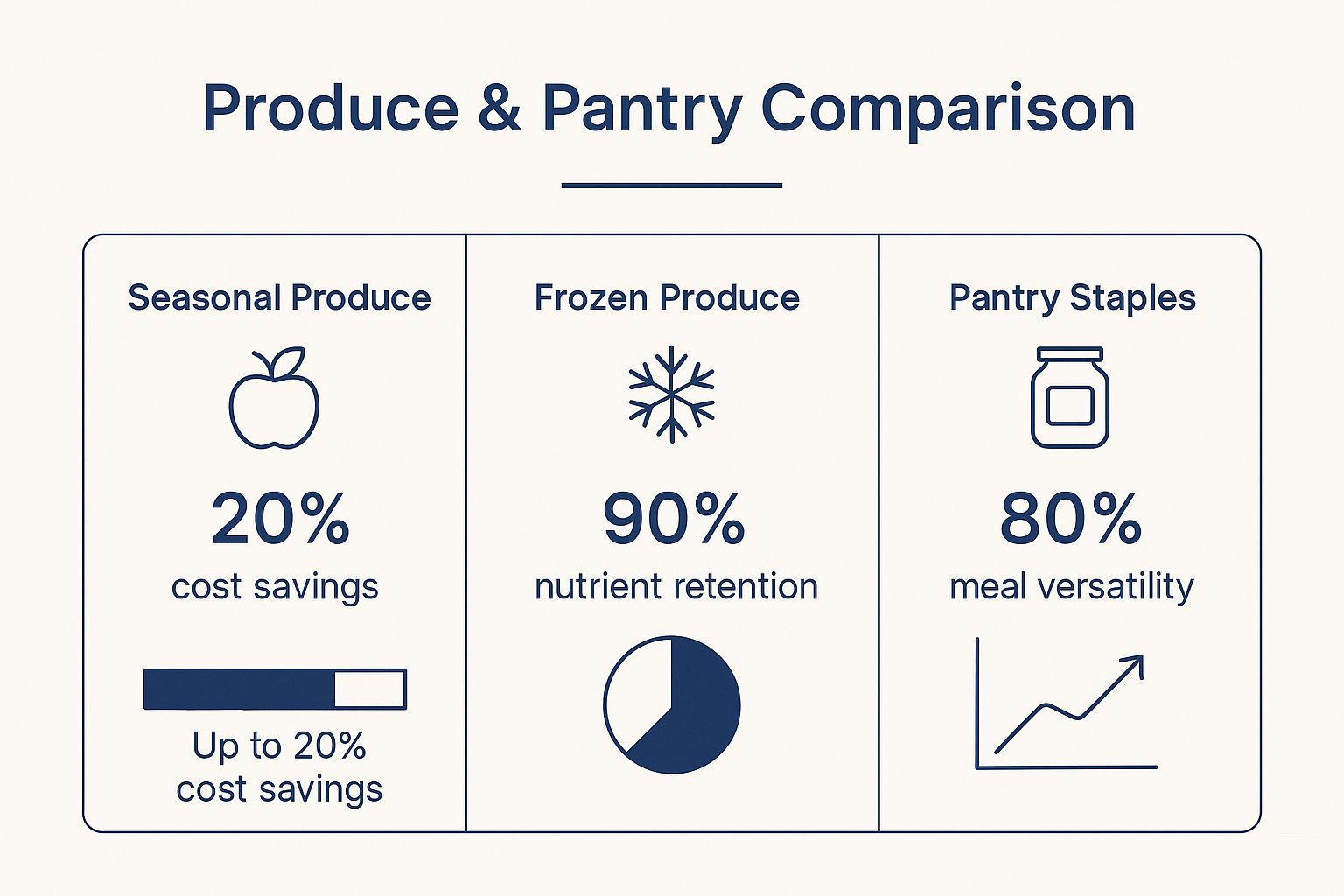
As you can see, a balanced approach—leveraging seasonal bargains, the fantastic nutrient retention of frozen produce, and the sheer convenience of pantry staples—is the key to a resilient and healthy kitchen.
Making Healthy Eating Affordable
There’s no getting around it: the cost of food is a major concern for many families in the UK. Healthy eating can feel expensive, and the numbers back that up. Research from The Food Foundation shows that by early 2024, the cost to follow the government's recommended Eatwell Guide had risen to about £9.00 per adult per day. For many households, that's a significant chunk of the weekly budget.
One of the best lifestyle tips to combat rising costs is to embrace seasonal and frozen produce. Buying fruit and veg when they're in season is nearly always cheaper and more nutrient-dense. And don't shy away from the frozen aisle! Frozen produce is picked and flash-frozen at its peak, locking in vitamins and minerals, and it offers great value year-round.
Building a Smart Pantry
A well-stocked pantry is your secret weapon for whipping up quick, healthy meals on busy nights. It's your backup plan, your foundation, and your saviour when the fridge is looking a little empty.
Here are a few essentials to keep on hand:
- Whole Grains: Brown rice, quinoa, oats, and wholewheat pasta for filling, fibre-rich, energy-boosting meals.
- Tinned Goods: Lifesavers like tinned tomatoes, beans, lentils, and fish (tuna or salmon are great) provide an instant, affordable source of protein and fibre.
- Herbs, Spices, and Oils: A solid collection can turn the simplest ingredients into something special. A good quality olive oil, dried oregano, smoked paprika, and cumin are great starters.
- Nuts and Seeds: Fantastic for snacking, sprinkling on porridge, or adding healthy fats and crunch to salads.
Having these staples available makes it significantly easier to create a nutritious meal from scratch, reducing reliance on less healthy convenience options.
Time-Saving Meal Prep for Busy Weeknights
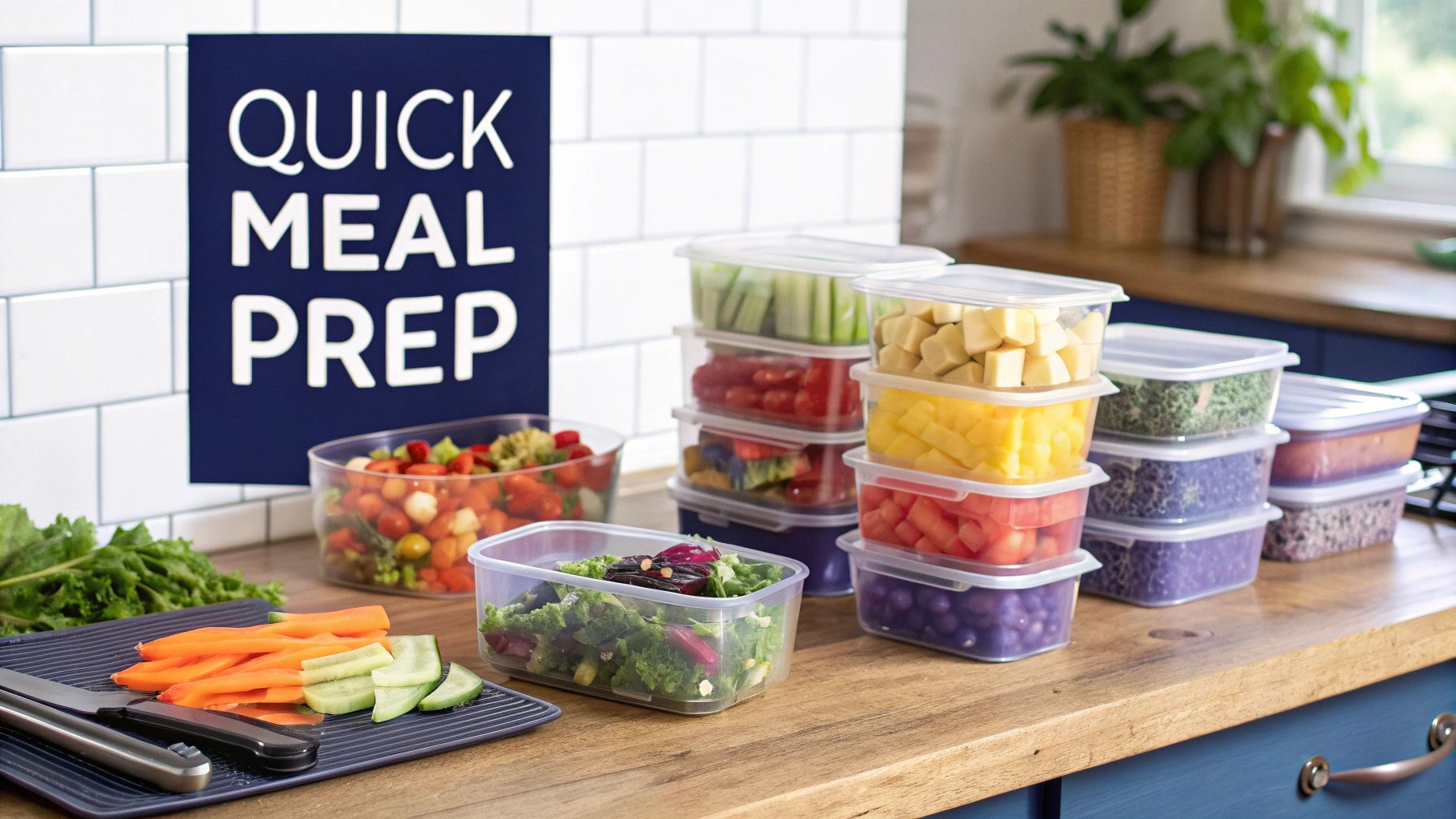
Let's be honest, weeknights can feel like a frantic race against the clock for most families. The thought of cooking a healthy meal from scratch after juggling work, the school run, and after-school clubs can seem impossible. This is where making meal prep a regular lifestyle habit doesn't just save time—it saves your sanity.
Meal prep isn't about being a perfect parent; it's about being a practical one. Think of it as investing just an hour or two on a Sunday to make a significant positive impact on your weeknights. It ensures that even on the most chaotic Tuesday, a nutritious dinner is only minutes away.
Moving Beyond Basic Batch Cooking
When most people hear "meal prep," they picture endless stacks of identical containers. While batch cooking can be effective, it’s not the only way. For families with varied tastes and preferences, it can lead to mealtime boredom pretty quickly.
A much more flexible and family-friendly approach is component prepping. Instead of cooking five complete chicken and broccoli dinners, you simply prepare the individual parts. This clever method gives you the building blocks for several different meals, which is a total game-changer for variety and picky eaters.
A Sunday prep session might look something like this:
- Get Your Grains Ready: Cook a big batch of brown rice or quinoa. This can be the base for stir-fries, salad bowls, or just a simple side dish.
- Wash and Chop Your Veg: Dice onions, slice peppers, and chop broccoli. Store them in airtight containers in the fridge, ready to be tossed into a pan at a moment's notice.
- Prepare Your Proteins: Grill a few chicken breasts to slice for salads or wraps, or brown some lean mince for a quick bolognese or shepherd's pie.
- Mix Up Marinades and Dressings: Whisk together a simple vinaigrette or a tasty marinade. A homemade dressing avoids the high sugar and salt content often found in shop-bought versions.
This simple shift in thinking means you're not starting from scratch on a busy weeknight. You're just assembling, which can easily cut your active cooking time by more than half.
Choosing a Prep Style That Fits Your Family
When it comes to healthy meal planning for families, there's no one-size-fits-all solution. The best method is always the one you can stick with. Your schedule, kitchen space, and your family's eating habits will all play a part in figuring out what works for you.
The clinical goal of meal prep is to reduce decision fatigue and make nutritious choices easier. By having healthy components readily available, you support stable blood sugar levels and consistent energy throughout the week, preventing the common energy dip that leads to reaching for high-sugar, low-nutrient convenience foods.
Finding the right meal prep style is key to making it a sustainable habit. Let's look at a few popular methods to see which might be the right fit for your household.
Comparing Meal Prep Styles for Families
| Prep Style | Best For | Pros | Cons |
|---|---|---|---|
| Batch Cooking | Individuals or couples with predictable schedules. | Ultimate convenience; grab-and-go meals are ready. | Can become repetitive; requires more freezer/fridge space. |
| Component Prepping | Families, especially those with fussy eaters. | High flexibility and variety; reduces nightly cooking time. | Still requires some assembly and cooking each night. |
| Freezer Meals | Families who want a stash of 'emergency' meals. | Perfect for days when you have zero time; reduces food waste. | Requires a decent amount of freezer space and upfront prep. |
Remember, you don't have to commit to just one style. Many families find a hybrid approach works wonders. You could try component prepping for Monday to Thursday, plan a fun 'fakeaway' like homemade pizza for Friday, and keep a couple of freezer meals on standby for those inevitable curveball days.
This kind of strategic preparation is a powerful lifestyle adjustment. It's about finding a rhythm that works for your family so you can reclaim your weeknights from stress and chaos. Ultimately, it makes space for what really matters—enjoying a healthy, delicious meal together.
Balancing Nutrition with Real Family Life
Let's be honest, even the most perfectly curated meal plan can get derailed by real life. An evening meeting runs late, you're stuck in traffic, the kids’ football practice goes into extra time, or you’re just plain exhausted. In those moments, a takeaway or a supermarket ready meal can feel like the only option.
The secret is to change your perspective as part of a healthier lifestyle. Healthy eating isn't about perfection; it’s about the bigger picture. One takeaway doesn't undo all your hard work. By planning for these moments, you can make them a conscious choice instead of a last-ditch effort, folding them into an overall balanced approach.
Making Healthier Takeaway Choices
Ordering in doesn't have to mean throwing your nutritional goals out the window. It’s all about being savvy with the menu. With a few smart, simple lifestyle changes, you can still enjoy the convenience without the negative health impacts.
Before you order, consider these medically sound tips:
- Go for tomato-based sauces on pasta or in curries instead of creamy ones. They are typically lower in saturated fat and calories.
- Look for grilled, steamed, or baked proteins like chicken or fish rather than anything fried or battered.
- Ask for dressings and sauces on the side. This simple request puts you in control of portion sizes.
- Pile on the veg. Actively choose dishes that contain plenty of vegetables, or order an extra side of steamed greens or a large salad for everyone to share.
It’s not just about what you eat, but how you eat it. A UK study of 189 families found that 73% get everyone involved in choosing the takeaway. This simple act turns it from a quick fix into a proper family event.
Upgrading Convenience Foods
Supermarket ready meals can be a lifesaver on those hectic nights, but they are often lacking in key nutrients. The good news? You can easily give them a healthy 'upgrade' with almost no extra effort. Just think of the ready meal as your base.
A fantastic, medically-sound tip is to focus on adding fibre and extra nutrients. Try tossing a large handful of spinach into a curry as it reheats, stirring a tin of lentils or beans into a bolognese sauce, or serving a ready-made pie with a large portion of steamed broccoli and carrots. This simple habit can significantly boost the meal's vitamin, mineral, and fibre content.
This tiny lifestyle change makes a massive difference, helping to ensure your family gets those crucial nutrients, even when time is tight. If you’re ever worried that your hectic schedule might be affecting your family’s nutritional intake, it’s worth knowing how to spot the signs of vitamin deficiency.
The 80/20 Approach to Family Nutrition
When it comes to building healthy habits that actually last, strict rules are a recipe for failure. This is where the 80/20 approach becomes a game-changer for families. The idea is simple: you focus on making nutritious, whole-food choices 80% of the time, which leaves a comfortable 20% for flexibility.
This built-in balance makes room for birthday cake, Friday night pizza, and ice cream in the park without guilt. More importantly, this lifestyle approach teaches children a healthy, non-restrictive relationship with food and shows them that all foods can fit into a balanced diet.
It's this kind of balanced thinking that builds healthy habits for life. For a brilliant example of this in action, you can explore the principles of the Mediterranean diet and olive oil's role. It’s a perfect illustration of how delicious, whole foods can form the foundation of a healthy lifestyle that’s both sustainable and genuinely enjoyable for the whole family.
Answering Your Meal Planning Questions
Diving into meal planning for the first time? It's totally normal to have questions pop up as you go. Think of these early wobbles not as problems, but as part of the process of figuring out a system that truly clicks for your family.
Below, I’ve tackled some of the most common queries I hear from families, with practical, evidence-based advice to help you make this a lasting lifestyle change.
"How Do I Handle Fussy Eaters Without Cooking Separate Meals?"
This is the big one, isn't it? The secret is to stop being a restaurant chef and start being a food guide. Bring your kids into the decision-making process. Simply letting your child choose between two healthy dinner options for, say, Wednesday night gives them a sense of control and ownership over the meal.
A great tip is to serve meals 'deconstructed'. Think of a fajita night where all the components are separate – chicken, peppers, cheese, salsa. This allows them to build their own plate with things they like while being exposed to new foods in a non-threatening way. This reduces mealtime anxiety for everyone.
From a medical standpoint, remember that it can take 10-15 exposures before a child even considers trying a new food. The key lifestyle change for parents is to remain patient and maintain a relaxed atmosphere at the dinner table. You are the role model; if you eat and enjoy a variety of foods, they are more likely to become curious over time.
"What’s the Best Way to Manage Leftovers So They Don’t Go to Waste?"
The trick is to make a conscious lifestyle change: stop thinking of leftovers as an accident and start planning for them on purpose. They're a gift to your future, busier self!
If you're roasting a chicken on Sunday, just buy a slightly larger one. That extra meat is your shortcut to quick chicken wraps on Tuesday or an easy protein boost for your lunch salads. It is also sound practice to cook double the amount of rice or quinoa you need. It takes no extra time and gives you a ready-made base for another meal later in the week.
We also have a "use-it-up" night at our house, usually the day before the weekly shop. It’s a bit of a creative challenge. Those leftover roasted veggies? They can become a creamy blended soup, get thrown into an omelette, or bulk out a pasta sauce. It’s a brilliant way to cut down on food waste and save money.
"My Schedule Is Unpredictable. How Can I Make Meal Planning Work?"
If your diary looks different every week, a rigid, day-by-day meal plan is just setting you up for failure. The key is to build flexibility into the system from the start as a sustainable lifestyle habit.
Instead of locking in 'Spaghetti on Monday', 'Tacos on Tuesday', just create a list of five or six meals you have all the ingredients for. Each morning, take a quick look at the day ahead and your energy levels, then pick the meal from your list that makes the most sense. You get the structure without feeling trapped.
Another fantastic habit is 'component prepping'. Just spend an hour on a Sunday getting a few core things ready: cook some chicken breasts, chop a load of vegetables, and maybe make a versatile sauce. With these bits waiting in the fridge, you can throw together a healthy stir-fry, a substantial salad, or a quick pasta dish in minutes. This is the ultimate strategy for making healthy meal planning for families stick, no matter what life throws at you.
At The Lagom Clinic, we believe that proactive, personalised healthcare is the foundation of family wellness. Our private GP services in Bristol focus on building lasting relationships to provide guidance on nutrition, exercise, and stress management that fits your real life. To learn how we can support your family's health journey, come and see how we can help.


 Members Consultation