


To effectively strengthen your pelvic floor, you first need to understand the muscles you're working with. These muscles aren't like your biceps; you can't see them, which makes connecting with them a little tricky at first.
Strengthening them involves a combination of targeted, consistent exercises—often called Kegels—and a few mindful lifestyle adjustments. This guide provides scientifically sound advice and practical tips to help you build a stronger pelvic floor.
Getting to Know Your Pelvic Floor Muscles
Before jumping into the "how-to," let's cover the "what" and "why." Think of your pelvic floor as a strong, flexible hammock of muscles stretching from your pubic bone at the front to your tailbone at the back. It’s the literal foundation of your core.
This muscular sling is responsible for holding up your key pelvic organs—your bladder, bowel, and uterus.
Its job is more dynamic than just passive support. These muscles are your control centre for bladder and bowel function, preventing leaks when you cough, sneeze, or exercise. They are also integral to your core stability and play a significant role in sexual function.
Why Do Pelvic Floor Muscles Weaken?
Several common life events can stretch or weaken these crucial muscles, making them less effective. Understanding the potential cause is a key first step toward improving their function.
Here are some common contributing factors:
- Pregnancy and Childbirth: Carrying a baby and the process of childbirth can place significant strain on the pelvic floor.
- Ageing and Menopause: Like other muscles, the pelvic floor can lose tone with age. The hormonal changes during menopause also affect muscle elasticity and strength.
- Chronic Strain: Any activity that puts repeated downward pressure on your core can contribute to weakness. This includes a persistent cough, straining on the toilet due to constipation, or regularly lifting heavy weights.
- Being Overweight: Carrying excess body weight places a constant, increased load on these muscles, which can lead to weakening over time.
It is medically important to recognise the signals your body is sending. Bladder leaks are a well-known sign, but not the only one. Other symptoms can include a frequent or urgent need to urinate, pelvic pain, or a sensation of heaviness or a bulge in the vagina.
These are not symptoms you should simply accept. They are clear medical signs that your pelvic floor muscles require attention and strengthening.
A strong, healthy pelvic floor is the bedrock of core stability, continence, and day-to-day comfort. Ignoring the early signs of weakness can allow small problems to become more significant, but being proactive can make a world of difference to your quality of life.
Despite how vital these muscles are, there’s a surprising gap between awareness and action. A 2023 UK poll found that while 88% of women know what the pelvic floor is, a full quarter (24%) have never performed exercises to strengthen it.
This number is even higher among younger women, and a third admit they lack confidence in performing the exercises correctly. You can read more about these findings from the Royal College of Obstetricians and Gynaecologists.
This data highlights a need for clear, reliable guidance. My goal is to empower you with medically sound information to find and connect with the right muscles—the most important first step you can take.
Mastering Core Pelvic Floor Exercises
Now that you understand the anatomy, it's time to put that knowledge into practice. Strengthening your pelvic floor comes down to performing specific, controlled contractions, commonly known as Kegels. Mastering the correct technique is far more important than the number of repetitions. Quality will always trump quantity.
The first hurdle is ensuring you’re engaging the right muscles. It's easy to accidentally tense your buttocks, thighs, or abdominal muscles instead. The goal is a subtle, internal lift – not a powerful squeeze involving your entire lower body.
This visual guide breaks down the simple mental cues to help you find and feel your pelvic floor muscles contracting properly.
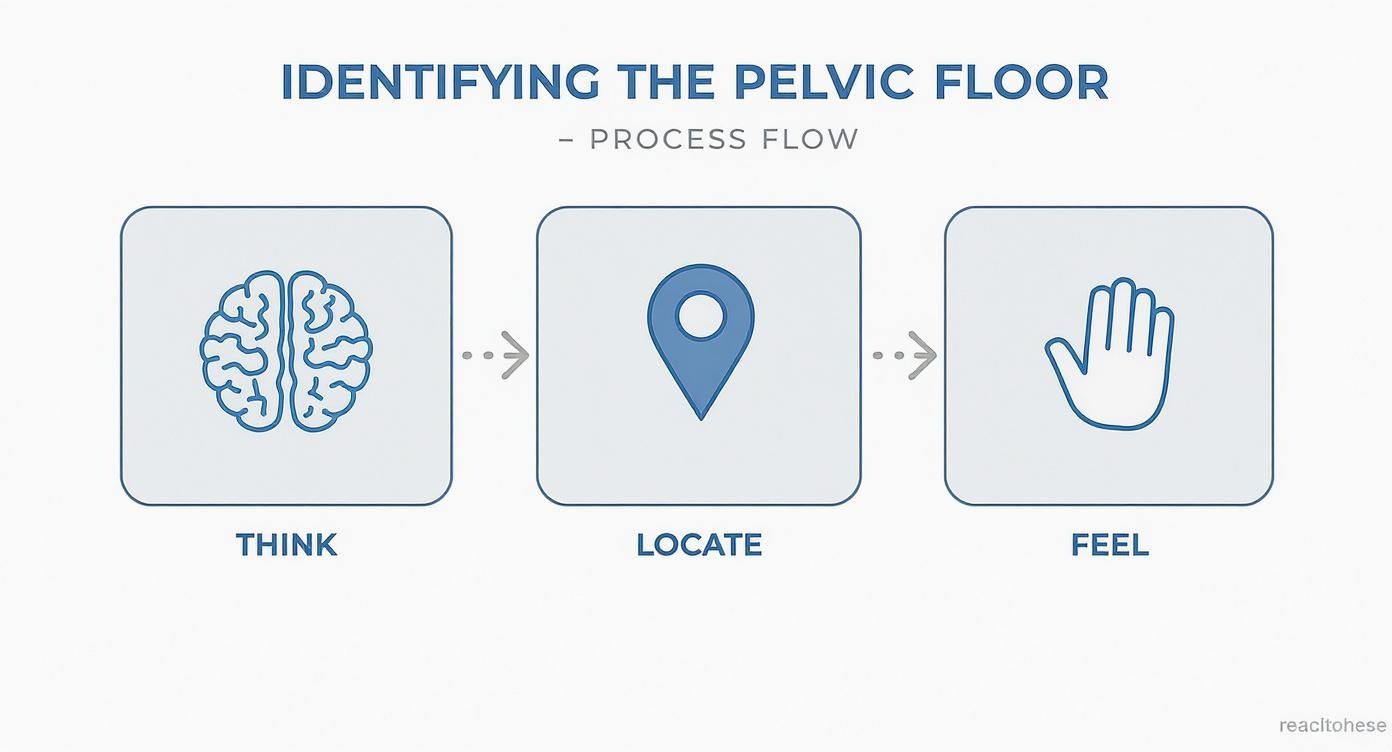
Working through this process helps you create that mind-muscle connection, ensuring your efforts are effective from the start.
The Two Essential Contraction Types
To build a pelvic floor that's both strong and responsive, you need to train it for two different functions: endurance and rapid reactions. This is why exercises are split into slow and fast contractions.
- Slow Contractions (Endurance): These build the stamina needed to support your organs all day, whether you're sitting, standing, or walking. They are foundational for overall pelvic health.
- Fast Contractions (Reaction): These are quick, powerful squeezes that train your muscles to react instantly to sudden pressure—like a cough, sneeze, or laugh—which is crucial for preventing stress incontinence.
For new mothers, it's especially important to resume activity safely. You can find excellent advice on postpartum fitness and gentle recovery exercises that integrate well with a pelvic floor routine.
Health Tip: Do not hold your breath. It's a common mistake that increases abdominal pressure, pushing down on the very muscles you're trying to lift. This makes the exercise counterproductive. Always breathe out as you lift and contract, and breathe in as you relax.
Integrating Exercises Into Your Daily Life
A significant advantage of these exercises is that they can be done discreetly anywhere. The secret to consistency is linking them to existing daily habits, which removes the "no time" barrier.
Consider performing a set of contractions when you're…
- Waiting for the kettle to boil
- Stopped at a red light in your car
- Brushing your teeth
- Watching TV during a commercial break
For example, build a routine into your morning. As you brush your teeth, perform 10 fast contractions. Then, follow with 10 slow contractions, holding each for a count of five before relaxing for five. With this simple habit, you’ve completed a full pelvic floor workout before your day has even truly begun.
Mastering the Correct Form
Let's walk through the technique for each contraction. You can do these lying down, sitting, or standing, but it is often easiest for beginners to start lying on their back with knees bent and feet flat on the floor.
Slow Contractions: The Endurance Hold
First, breathe out as you gently squeeze and lift your pelvic floor muscles. The sensation is similar to stopping the flow of urine and holding back wind simultaneously. Hold this gentle contraction for 3-5 seconds initially, ensuring you can still breathe normally. Then, breathe in as you slowly and completely relax for the same duration. The full release is as crucial as the contraction. Aim for 10 repetitions in a set.
Fast Contractions: The Quick Flick
For this exercise, you'll squeeze and lift your pelvic floor muscles quickly and strongly without holding your breath. Hold for just one second before letting go completely. Immediately begin the next repetition. Aim to perform 10-15 quick flicks in a row.
By practising both types, you're preparing your pelvic floor for all of life's demands.
Building a Consistent Strengthening Routine
Knowing how to perform a Kegel is the first step. Turning that knowledge into a consistent habit that builds real strength is where the magic happens. A structured routine removes guesswork and ensures steady progress.
The secret to getting stronger is progressive overload. This principle involves gradually increasing the challenge for your muscles. For the pelvic floor, this means increasing the hold time, adding more repetitions, or adjusting the frequency of your sessions, not using weights.
Your Starting Framework
When starting, consistency is more important than intensity. The goal is a manageable routine you can stick with even on busy days. This is about focused, regular effort, not gruelling workouts.
A scientifically supported starting point is three short sessions a day. Each session should include both slow, endurance-focused contractions and fast, reactive ones. This combination is crucial for training your muscles for both long-term support and sudden moments of pressure.
The easiest way to make this stick? Link it to something you already do every day.
- Morning: Do a set while the kettle boils.
- Afternoon: Squeeze in a set during a screen break.
- Evening: Finish your last set while brushing your teeth.
By piggybacking onto existing habits, the exercises become an automatic part of your day.
Progressing Safely and Effectively
Once you can comfortably complete your starting routine for a full week, it's time to gently increase the difficulty. This gradual progression signals to your muscles that they need to adapt and grow stronger.
The most effective training is individualised and consistent. Evidence from medical studies shows that structured programmes lead to significant, long-term improvements in symptoms and can even reduce the need for more invasive treatments down the line.
This isn’t just theory. A major UK study followed women with pelvic organ prolapse who undertook a structured pelvic floor muscle training (PFMT) programme. After two years, an impressive 77% were still doing their exercises regularly and had significantly better symptom control. You can read more about these positive findings on the NIHR website.
Sample Pelvic Floor Progressive Training Plan
Here is a sample plan illustrating how to structure your progression. This is a guide; listen to your body and only move to the next level when the current week’s exercises feel easy.
| Week | Slow Contractions (Hold/Rest) | Fast Contractions (Repetitions) | Sessions Per Day |
|---|---|---|---|
| 1 | Hold 3-5s / Rest 5s (x10) | 10 quick flicks | 3 |
| 2 | Hold 5-7s / Rest 7s (x10) | 12 quick flicks | 3 |
| 3 | Hold 8s / Rest 8s (x10) | 15 quick flicks | 3 |
| 4 | Hold 10s / Rest 10s (x10) | 20 quick flicks | 3 |
Health Tip: Always rest for at least as long as you hold the contraction to allow the muscles to fully recover before the next repetition.
Meaningful results take time. It may take several weeks or a couple of months of consistent work to notice a significant change. Be patient and recognise that this is a powerful investment in your long-term health.
Supportive Lifestyle Habits for Pelvic Health

While targeted exercises are the engine of your strengthening program, your daily habits are the fuel. Lasting results depend on a holistic approach that considers how your lifestyle affects these crucial muscles.
Simple, conscious adjustments can dramatically reduce strain and amplify the results of your exercises. Constantly straining on the toilet or carrying excess weight places a continuous downward load on your pelvic floor. This pressure can counteract the benefits of your exercises.
Managing Strain and Pressure
One of the most effective lifestyle changes is managing daily pressure on your pelvic floor. A few small tweaks can make a world of difference.
- Prevent Constipation: Straining during bowel movements is a major cause of pelvic floor dysfunction. To combat this, adopt a diet rich in fibre from fruits, vegetables, and whole grains, and ensure adequate hydration by drinking plenty of water.
- Adopt Proper Toilet Posture: Using a small stool to elevate your feet while on the toilet is a game-changer. This position, known as "the squat," straightens the rectum, allowing for a smoother, less strenuous bowel movement.
- Maintain a Healthy Weight: Excess body weight places a constant load on your pelvic floor muscles. Medical evidence shows that even modest weight loss can significantly improve symptoms like stress incontinence by reducing this persistent pressure.
Staying active is vital, but how you stay active matters. If you need help getting started, finding some good motivation for exercise can help you build a sustainable routine.
Choosing Pelvic-Floor-Friendly Exercise
Not all exercise is equally beneficial, especially if your pelvic floor is weak. High-impact activities involving jumping, running, or heavy lifting create significant downward force that can exacerbate weakness.
This doesn’t mean you must give up being active. It's about making smart swaps, particularly while you are building foundational strength.
Lifestyle Tip: Modify your exercise routine to work with your body. Choose activities that build core strength without adding unnecessary strain to your pelvic floor. This is not about limitation but about smart, effective training.
To help you make healthy choices, here is a comparison of activities and their typical impact on the pelvic floor.
Pelvic Floor Friendly vs High-Impact Activities
| Activity Type | Pelvic Floor Friendly Examples | High-Impact Examples to Modify or Avoid |
|---|---|---|
| Cardio | Swimming, brisk walking, cycling (on a flat surface), elliptical | Running, jumping jacks, skipping, high-intensity interval training |
| Strength Training | Pilates, bodyweight exercises (e.g., glute bridges), light weights | Heavy squats, deadlifts, overhead presses, Olympic lifting |
| Group Fitness | Yoga, aqua aerobics, barre classes (with modifications) | High-impact aerobics, CrossFit, boot camp-style classes |
| Recreational | Hiking on even terrain, dancing (low-impact styles) | Tennis, volleyball, basketball, trampolining |
Choosing activities from the "friendly" column helps you build fitness without overloading your deep supportive muscles. These lifestyle adjustments, combined with your exercises, create a holistic, medically sound approach. For a broader look at overall well-being, exploring topics around empowering women's health and wellness can provide additional context for your health journey.
When It's Time to Call in a Professional
Consistent home exercises are an excellent first step and may be all that is needed. However, sometimes professional support is required. Knowing when to seek help is as important as the exercises themselves.
If you have been following a routine for several weeks without noticing any improvement—or if your symptoms worsen—it is a clear signal to get a professional opinion. Pain is another red flag; pelvic floor exercises should never be painful. Discomfort is your body's way of telling you something isn't right.
Uncertainty is also a valid reason to seek expert guidance. If you're unsure whether you're engaging the right muscles or can't feel the 'lift and let go', an expert assessment can provide the clarity and confidence needed to progress.
What to Expect from a Consultation
Seeing a specialist, such as a women’s health or musculoskeletal physiotherapist, can make a significant difference. These experts can diagnose the root cause of your issue and create a tailored treatment plan. If you'd like to learn more, we have a helpful guide on what is musculoskeletal physiotherapy.
Your first appointment will likely involve a detailed discussion about your symptoms, medical history, and lifestyle. The physiotherapist may then assess your posture and core muscle function externally.
They may also recommend an internal examination. While this can sound intimidating, it is a gentle and highly effective method for the therapist to accurately assess your pelvic floor muscle function. It provides a precise picture of your muscle strength, tone, and coordination, allowing for a highly targeted treatment plan.
A personalised plan from a professional removes guesswork. It provides targeted exercises, biofeedback, and the confidence that you are performing every movement correctly for maximum benefit and safety.
Some clinics use technology like biofeedback. This involves small, painless sensors that display your muscle contractions on a screen in real time, providing instant visual confirmation that you're using the right muscles. This can significantly accelerate your progress.
The results of supervised training are well-documented. Scientific studies show that a guided Pelvic Floor Muscle Training (PFMT) programme can lead to a 29% to 59% improvement in symptoms, highlighting how professional guidance can significantly boost your outcomes.
Your Pelvic Floor Questions, Answered
Starting a new health routine naturally brings questions. Here are answers to some of the most common queries about pelvic floor health to help you feel confident.
"How can I be sure I’m doing these exercises correctly?" This is the most frequent question. You're aiming for a gentle squeeze and an internal lifting sensation. If you feel your buttocks clenching or your thigh and stomach muscles tensing, you are likely compensating. Focus on a subtle, internal lift, not a full-body effort.
"How long will it take to see results?" Every individual is different, but with consistent daily practice, you should start noticing improvements in bladder control within 4 to 6 weeks. Building more substantial strength can take a few months, so patience and consistency are essential.
Troubleshooting Your Routine
What should you do if you've been exercising for a while but aren't seeing changes?
First, re-evaluate your technique. It is common to accidentally hold your breath or bear down instead of lifting up. Ensure you are breathing naturally and, crucially, that you fully relax the muscles between each contraction. This relaxation phase is just as vital as the squeeze for building strong, functional muscles.
Medical Advice: If you have been performing your exercises with proper form for three months and still see no improvement, it is time to seek a professional opinion. A physiotherapist can provide a proper assessment and a personalised plan to ensure your efforts are effective.
Finally, "Is it too late for me to start?" The answer is an emphatic no. Pelvic floor muscles can be strengthened at any age, just like any other muscle. Whether you are postpartum or dealing with issues decades later, starting these exercises can genuinely improve your quality of life. The most important step is to begin.
At The Lagom Clinic, we believe in a proactive and personalised approach to health that supports you through every stage of life. If you have persistent concerns about your pelvic floor or wish to discuss a tailored wellness plan, we invite you to book a consultation. Discover our balanced approach to your wellbeing at https://www.thelagom.co.uk.


 Members Consultation