


If you want to stop craving chocolate, the first step is to understand the root cause. A persistent urge for chocolate isn't a sign of weakness; it's a complex signal from your body. By identifying whether the craving stems from a nutritional deficiency, blood sugar imbalance, or an emotional habit, you can address the underlying issue effectively.
Once you know the real reason, you can begin to implement targeted lifestyle changes that tackle the problem at its source.
Why You're Really Craving Chocolate
So, what's driving that urge for a chocolate bar? It’s rarely just a simple 'sweet tooth'. Cravings are complex physiological and psychological signals, often a combination of deeply ingrained habits and genuine physical needs.
For many of us, chocolate is associated with comfort. After a long, stressful day, the brain seeks a quick release of feel-good neurotransmitters like serotonin. Chocolate, with its combination of sugar and fat, provides a temporary boost, quickly forming a powerful habit: feel stressed, bored, or sad? Reach for chocolate. This is a learned behavioural response that can be modified over time.
Is Your Body Trying to Tell You Something?
Beyond the emotional aspect, your body might be signalling a need for specific nutrients. An intense, recurring urge for chocolate—especially dark, bitter varieties—can sometimes indicate a magnesium deficiency.
Magnesium is an essential mineral involved in over 300 enzymatic reactions in the body, including energy production and mood regulation. When levels are low, your body may instinctively seek out magnesium-rich foods. If you suspect this might be the case, it’s worth looking into other common signs of a vitamin deficiency to see if your symptoms align.
Blood sugar instability is another major physiological trigger. Consuming a meal high in refined carbohydrates can cause a rapid spike in blood glucose, followed by a sharp crash. This hypoglycemic state triggers an urgent signal for a fast energy source to restore balance, and sugary chocolate fits the bill perfectly.
The key is to learn to differentiate between an emotional craving triggered by stress and a physical signal for energy or nutrients. Addressing this is the first practical step towards regaining control, allowing you to fix the underlying issue instead of just managing the symptom.
Here in the UK, chocolate is a popular indulgence, with 60% of people reporting it as their go-to treat. Interestingly, when new regulations were introduced to reduce the visibility of high-sugar snacks in supermarkets, chocolate sales dropped by 3%. This highlights the significant influence our environment has on consumption habits.
Smart Food Swaps That Actually Work
Combating a craving isn’t about sheer willpower or deprivation. A more effective and sustainable strategy is to make smart, satisfying food swaps that stabilise blood sugar levels and promote satiety. This is a foundational step when learning how to stop craving chocolate for good. The goal is to prevent the dramatic blood sugar fluctuations that lead to urgent searches for a quick fix.
The secret? Prioritising protein, healthy fats, and fibre in your meals and snacks. These macronutrients slow down digestion and the absorption of glucose into the bloodstream, providing a steady, reliable supply of energy. This approach trades a fleeting sugar high for sustained fuel that lasts for hours.
Choose Nourishing Alternatives
Instead of battling the urge for a chocolate bar, try reaching for a snack that works synergistically with your body's needs. These are not bland substitutes; they are strategic, nutrient-dense additions designed to nourish you and reduce the intensity and frequency of your cravings.
Here are a few evidence-based options that work:
- A handful of almonds or walnuts provides a combination of healthy fats, protein, and fibre that promotes satiety and helps stabilise blood sugar.
- An apple with a spoonful of peanut butter offers fibre and pectin from the apple and protein and healthy fats from the peanut butter, a combination that slows sugar absorption.
- Incorporating magnesium-rich foods like spinach, avocado, or pumpkin seeds into your meals can help address potential nutritional gaps that may be driving cravings.
This infographic breaks down how cravings can be sparked by emotional, nutritional, or even habitual triggers.
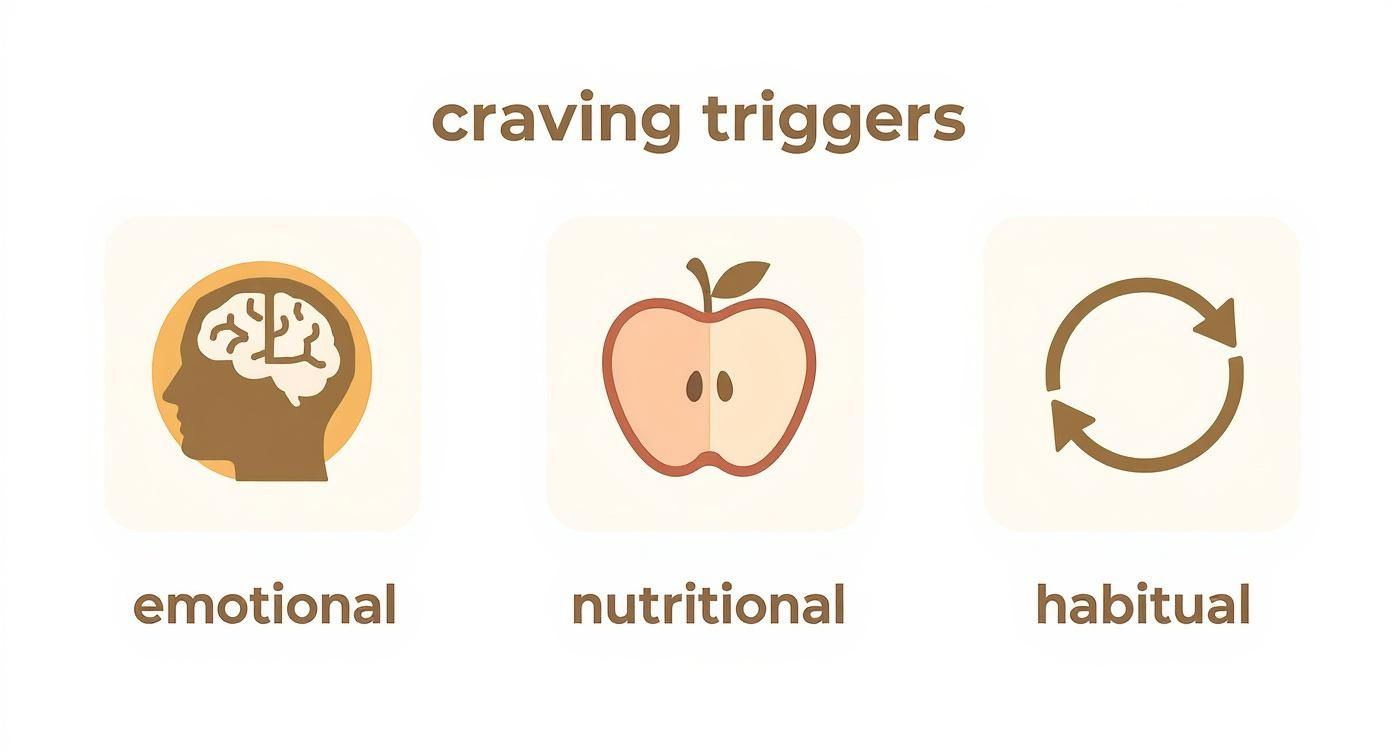
Once you understand what's really driving your craving, you can choose the right food swap for that specific moment. These small dietary adjustments can lead to significant improvements over time, reducing your reliance on sugary, ultra-processed foods. To understand their broader impact, you can learn more about why ultra-processed food is so bad for us in our detailed guide.
Smart Swaps to Combat Chocolate Cravings
Making a better choice doesn't have to be complicated. It often just means swapping one common snack for a more supportive alternative. Here’s a quick comparison to get you started.
| Instead of This (High Sugar/Low Nutrient) | Try This (Nutrient-Dense/Stabilising) | Why It Works |
|---|---|---|
| Milk chocolate bar | A small square of 70% (or higher) dark chocolate | Lower in sugar, higher in beneficial flavanols and magnesium. |
| Sugary breakfast cereal | A bowl of Greek yoghurt with berries and seeds | Packed with protein and fibre to keep you full and stabilise blood sugar. |
| Fizzy drink or sweetened coffee | A peppermint or ginger tea | Hydrating and can satisfy a desire for flavour without the sugar crash. |
| Biscuits or a slice of cake | A handful of mixed nuts and a piece of fruit | Provides a mix of fats, protein, and natural sugars for slow-release energy. |
The key is to focus on incorporating more nutrient-dense foods, rather than solely on restriction. This mindset shift makes the process feel less prohibitive and more sustainable long-term.
Remember, the aim is to crowd out less healthy options by adding delicious, nutrient-dense foods to your diet. This positive approach feels empowering, not punishing.
If you want to keep tabs on your progress and see how far you've come, a sugar intake sobriety calculator can be a really useful tool. By making these simple changes, you'll likely find your desire for chocolate naturally diminishes as your body begins to receive the balanced nutrition it truly needs.
Lifestyle Changes That Naturally Tame Cravings
Learning how to stop craving chocolate often requires looking beyond your diet. Your daily habits significantly influence your body's hormonal balance and, consequently, what you crave. A few key lifestyle adjustments can make a substantial difference in reducing the urge for a sugary hit. These are not drastic overhauls, but small, powerful, and evidence-based shifts.
Sleep deprivation is a major culprit. Insufficient sleep disrupts the regulation of appetite hormones. Levels of ghrelin, the "hunger hormone," increase, while leptin, the hormone that signals satiety, decreases. This hormonal imbalance creates the perfect storm for intense cravings, particularly for high-calorie, high-sugar foods like chocolate that promise a quick energy boost.
Prioritising a consistent seven to nine hours of quality sleep per night is one of the most effective strategies for maintaining hormonal balance and keeping cravings in check.
Find Better Ways to Handle Stress
Stress is another significant physiological trigger. When you experience stress, your body releases cortisol. Chronically elevated cortisol levels can increase appetite and drive cravings for "comfort foods" high in sugar and fat. Grabbing a chocolate bar can easily become a conditioned response to a difficult day.
The solution is to develop a toolkit of alternative stress-management techniques that do not involve food. By having simple, accessible strategies ready, you can break the stress-craving cycle.
- Step outside for five minutes: A short walk and exposure to natural light can help lower cortisol levels and reset your mental state.
- Practice deep breathing: Just a few minutes of slow, diaphragmatic breathing can activate the parasympathetic nervous system, promoting a state of calm and reducing the frantic feeling that often precedes a craving.
- Listen to calming music: Music has a direct effect on mood and can be a powerful tool for quickly shifting your emotional state away from the desire for a sugary snack.
The goal is to replace the automatic habit of reaching for chocolate with a new, healthier coping mechanism. Every time you consciously choose a different action, you are weakening the old neural pathway linking stress and sugar.
Regular physical activity is also crucial. Exercise is a natural mood elevator and an excellent way to regulate energy levels. Whether it's a brisk walk, a yoga class, or a home workout, movement helps improve insulin sensitivity and stabilise blood sugar, preventing the energy slumps that can trigger a search for a chocolate fix.
Using Mindful Eating to Change Your Mindset
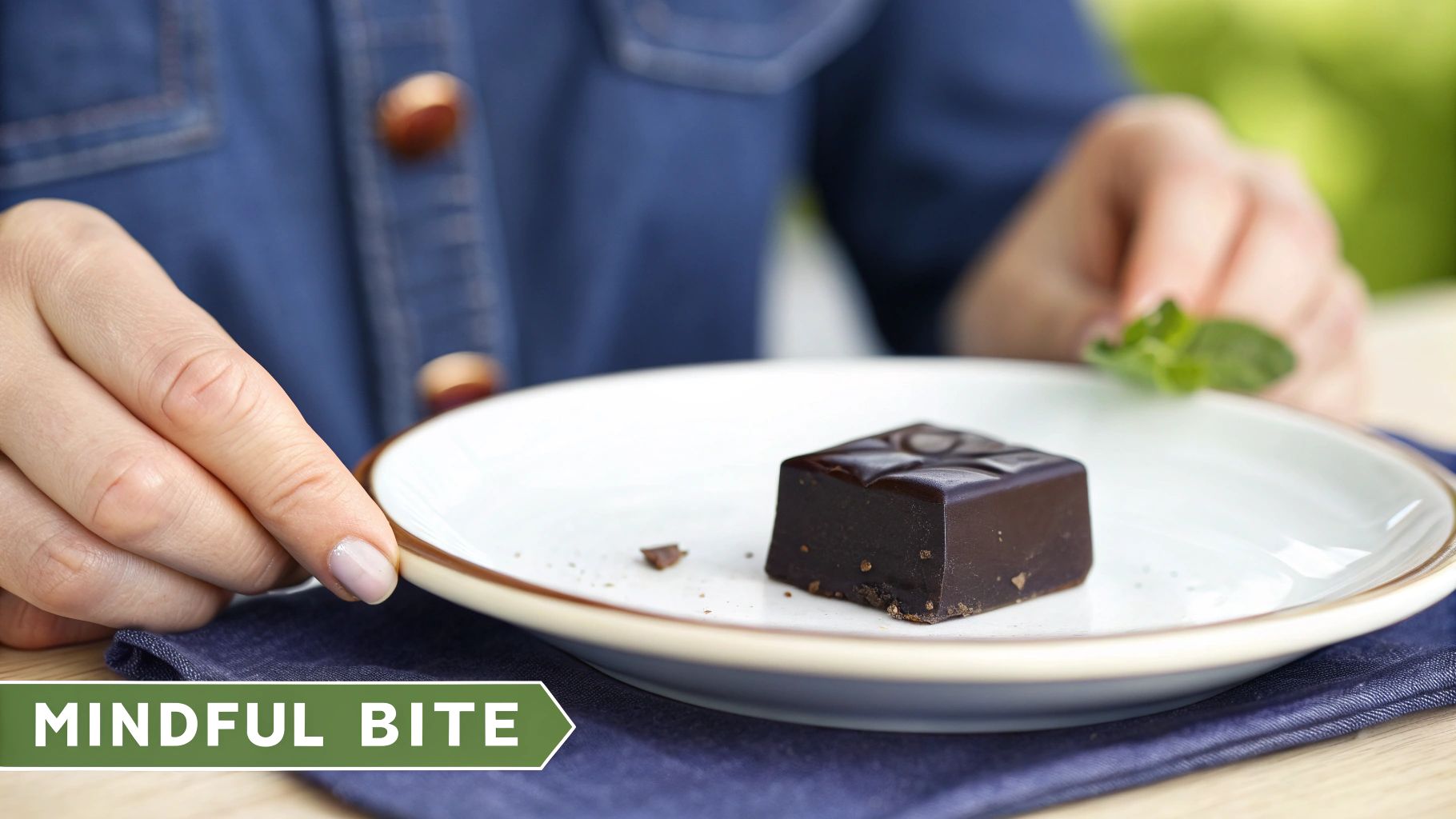
Often, the battle against cravings is won in the mind. Mindful eating is a powerful practice that shifts the focus from resisting an urge to understanding its origin. It’s not about fighting the craving, but about becoming curious about it.
The core principle is to tune into your body’s signals and learn to distinguish between true physiological hunger and cravings that arise from boredom, stress, or habit. Before you automatically reach for chocolate, pause. Ask yourself, "What am I really feeling right now?" This simple moment of self-inquiry can be incredibly effective at disrupting the mindless habit loop.
Try a Mindful Chocolate Exercise
Instead of demonising chocolate, this exercise allows you to engage with it differently. Take one small square of high-quality dark chocolate—at least 70% cocoa—and give it your full attention.
- Observe it: Notice its colour, sheen, and texture.
- Smell it: Bring it close and inhale its rich aroma. What distinct notes can you identify?
- Taste it: Place it on your tongue and allow it to melt slowly without chewing immediately. Pay close attention to how the flavours evolve and change.
When you fully savour the experience, you often find that a much smaller amount is deeply satisfying. This is a powerful technique for breaking the cycle of mindless consumption, proving that quality can be more fulfilling than quantity.
A critical part of this process is releasing guilt. When chocolate is reframed as a conscious, occasional choice rather than a forbidden 'cheat', it loses its psychological power over you.
This mindful approach is reflected in broader consumer trends. While milk chocolate remains the favourite for 54% of UK consumers, dark chocolate is gaining popularity. Currently, 30% of people are choosing it, often citing its perceived health benefits.
This data suggests that consciously shifting preferences towards a more intense, less sugary option is a realistic strategy. If you're curious, you can discover more about UK consumer cocoa insights to see how tastes are evolving. Ultimately, building this healthier, more conscious relationship with food is key to lasting control.
Building Your Long-Term Anti-Craving Plan
To successfully manage chocolate cravings long-term, you need a proactive strategy that goes beyond simply resisting temptation in the moment. The secret lies in building a lifestyle where healthier choices become the default. It’s about creating a supportive system that works for you.
A key component of this is mitigating decision fatigue. When you are mentally or physically exhausted, your willpower is at its lowest. This is when old habits are most likely to resurface. By planning your meals and snacks in advance, you remove the burden of making food choices when you're vulnerable, ensuring a nourishing option is always readily available.
Set Up Your Environment for Success
Your physical environment profoundly influences your daily choices. By making small, strategic adjustments, you can significantly reduce the triggers for chocolate cravings. This isn't about deprivation; it's about engineering your surroundings to make the healthy choice the easy choice.
Here are a few practical, evidence-based actions you can take:
- Out of sight, out of mind: This simple principle is highly effective. Avoid keeping multipacks of tempting treats in your home. If you want chocolate, purchase a single, high-quality bar to enjoy mindfully.
- Make healthy options visible and accessible: Keep a bowl of fresh fruit on your kitchen counter. Store pre-portioned bags of nuts and seeds at eye level in the pantry for a convenient grab-and-go snack.
- Plan non-food rewards: Re-wire your brain's reward system. Instead of using chocolate to de-stress or celebrate, cultivate other rewarding activities. This could be a walk in nature, calling a friend, or listening to your favourite podcast.
This proactive approach is gaining traction. In 2022, around 16% of chocolate consumers in the UK were already reducing their intake, driven by health concerns. With 40% of shoppers actively seeking healthier alternatives, it is clear that these practical, wellbeing-focused strategies resonate.
Remember, consistency is more important than perfection. There will be days when you eat chocolate, and that is perfectly acceptable. A single indulgence does not negate your progress.
The key is to acknowledge it without guilt and return to your healthy habits with your next meal. This balanced mindset fosters a sustainable, positive relationship with food. To help maintain consistency, exploring effective habit tracking apps can be a great way to monitor your progress and stay motivated.
Got Questions About Chocolate Cravings? You're Not Alone.
As you implement these strategies, questions will likely arise. This is a normal part of the process. Understanding what to expect can help you stay motivated and navigate challenges as you build new, healthier habits. Let's address some of the most common queries.
A frequent question is, "How long will this take?" There is no universal timeline, as individual physiology and habits vary. However, many people report a noticeable reduction in the intensity and frequency of cravings within a couple of weeks of consistent effort. The most significant, lasting changes typically occur over a few months as new dietary patterns and lifestyle habits become automatic.
So, Can I Never Eat Chocolate Again?
Absolutely not. The goal is not complete deprivation or to banish chocolate forever. The objective is to shift from being controlled by cravings to a position of mindful choice.
It's about reaching a point where you can consciously decide to enjoy a piece of high-quality dark chocolate, savour it fully, and not have it trigger an uncontrollable desire for more.
When you learn how to stop craving chocolate, you regain control. You decide when and how to enjoy it, rather than being subject to an intense, unpredictable urge. This is what true food freedom means.
Navigating social situations can also be challenging initially. A practical tip is to eat a balanced, protein-rich snack before you go to an event. This helps stabilise your blood sugar, ensuring you don't arrive overly hungry and susceptible to making impulsive choices from the dessert table. It’s a simple but effective preventative measure.
Remember, this is a journey of building new, sustainable habits that will benefit your health and wellbeing for years to come.
At The Lagom Clinic, we specialise in creating personalised, proactive health plans that fit seamlessly into your life. If you're ready to understand your body on a deeper level and create a truly balanced lifestyle, take a look at our wellness consultations. Visit us at https://www.thelagom.co.uk to see how we can support you.


 Members Consultation