


When you’re looking to lower your cortisol levels naturally, the best place to start is with your daily habits. Things like getting better quality sleep, moving your body with moderate exercise, and weaving in a few simple stress-reduction techniques can make a world of difference. These aren't complicated fixes, but powerful, medically-sound strategies that help reset your body's stress response and bring your hormones back into a healthy balance.
Understanding Cortisol and Why It Matters
Cortisol often gets painted as the bad guy, but it’s not the enemy. It's your body's built-in alarm system. This crucial hormone, produced by your adrenal glands, is designed to manage your "fight or flight" response. It helps you react to immediate threats by flooding your system with energy and sharpening your focus.
A short-term spike in cortisol is completely normal—it’s what helps you slam on the brakes to avoid an accident or power through a tough deadline. The real trouble begins when that alarm system gets stuck in the "on" position. The constant hum of modern life, with its endless pings, pressures, and deadlines, can trick your body into a state of chronic stress, leading to persistently high cortisol levels.
The Impact of Chronic Elevation
When cortisol stays high for too long, it can disrupt several essential bodily functions. Keeping your body in this constant state of high alert can lead to a host of health issues that many of us chalk up to just being "busy" or "tired".
- Sleep Disruption: High evening cortisol is a classic culprit for tossing and turning. It can make it difficult to fall asleep or cause you to wake up in the middle of the night, robbing you of restorative rest.
- Mood Fluctuations: Ever feel perpetually on edge? Persistent stress can fuel irritability, anxiety, and that all-too-familiar feeling of being completely overwhelmed.
- Weakened Immunity: Chronically elevated cortisol can suppress your immune system, making you more susceptible to infections and illnesses.
- Weight Management Issues: It can increase cravings for sugary, fatty foods and signal your body to store visceral fat, particularly around your abdomen.
This infographic breaks down the basic chain of events, from a stress trigger to your body's hormonal reaction.
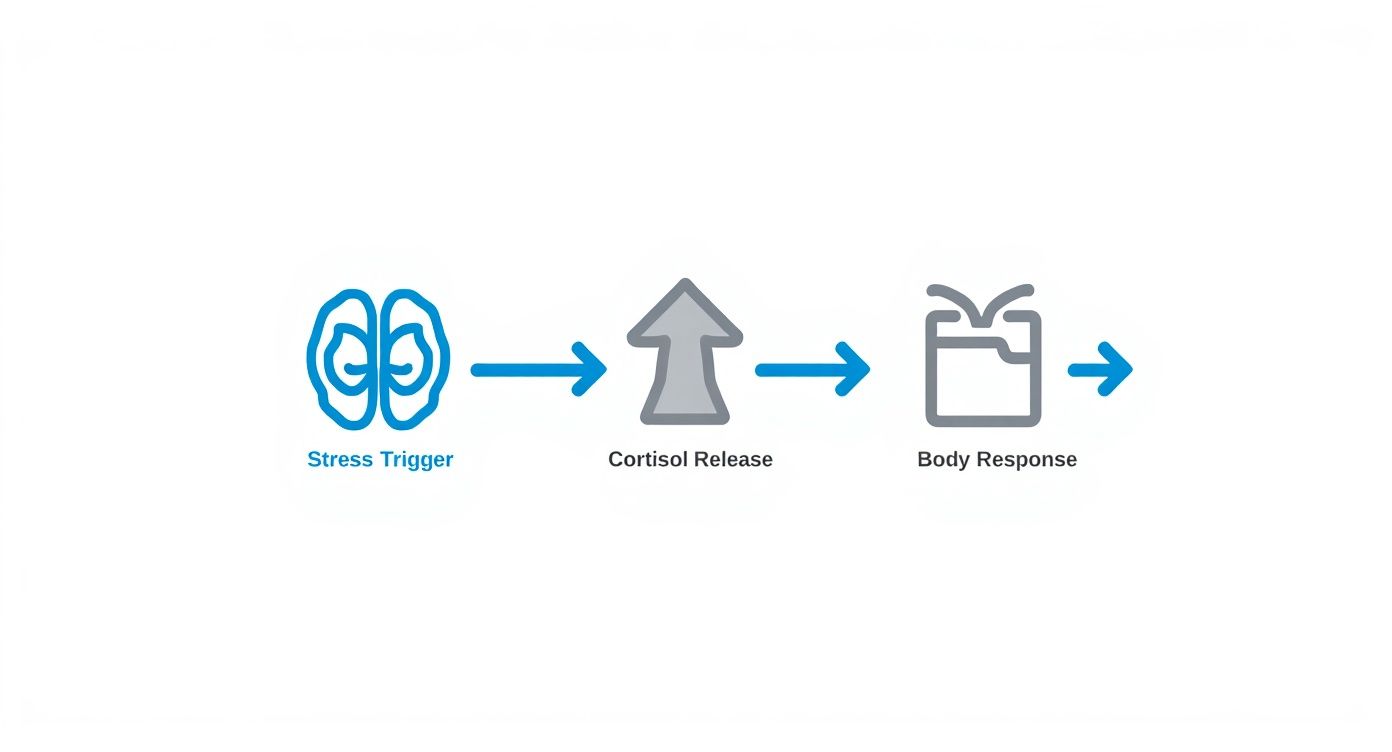
As you can see, a mental or physical trigger sets off a hormonal cascade designed to get you ready for action. It's a brilliant survival mechanism, but it becomes problematic when it never gets a chance to switch off.
A Widespread Concern in the UK
This is not a rare condition; it's a reality for millions. In the UK, a staggering 1 in 5 adults report feeling stressed every single day, and over 85% of us feel stressed at some point. These figures from a study on stress in Great Britain show just how much modern life is pushing our bodies to their limits, highlighting why proactive, evidence-based lifestyle changes are so vital.
The link between chronic stress and physical symptoms is scientifically established. When your body is constantly in 'emergency mode', functions like digestion and immune defence take a backseat, which can lead to fatigue and other health issues over time.
This constant state of alert is also a key reason so many people ask, can stress cause fatigue? The answer is a resounding yes.
By understanding how your daily lifestyle choices directly influence your cortisol levels, you can start taking targeted, practical steps to find your balance again.
To simplify these concepts, here’s a quick-reference table outlining the core areas we’ll be exploring.
Your Quick Guide to Natural Cortisol Reduction
This table summarises the foundational pillars for managing cortisol. Think of it as your cheat sheet for building a more resilient, balanced lifestyle.
| Lifestyle Pillar | Key Action | Why It Helps Lower Cortisol |
|---|---|---|
| Mindful Nutrition | Eat whole, anti-inflammatory foods; stay hydrated. | Provides the body with stable energy and key nutrients, preventing blood sugar fluctuations that trigger cortisol release. |
| Regular Movement | Engage in moderate exercise like walking, yoga, or swimming. | Burns off excess stress hormones and releases endorphins, which act as natural mood elevators and stress relievers. |
| Restorative Sleep | Aim for 7-9 hours of quality sleep per night. | Allows the nervous system to repair and reset, regulating the circadian rhythm of cortisol production. |
| Stress Management | Practise mindfulness, deep breathing, or journaling. | Directly activates the body's relaxation response (parasympathetic nervous system), counteracting the "fight or flight" mode. |
Each of these pillars works synergistically. The following sections will provide practical health advice for each one, giving you strategies you can start using today.
How Your Diet Can Tame Stress Hormones

What you put on your plate has a direct and measurable impact on your body's stress response. Strategic food choices can help calm your nervous system and regulate hormone production, while a diet high in processed foods and sugar can send your cortisol levels on a rollercoaster. This isn't just about "eating healthy" in a general sense—it's about making specific dietary choices to support your hormonal balance.
A scientifically-backed approach is to focus on anti-inflammatory foods. Chronic inflammation acts as a persistent physical stressor, signalling the adrenal glands to release more cortisol. By reducing inflammation through diet, you can help dampen this constant stress signal.
Embrace Anti-Inflammatory Powerhouses
Some of the most effective anti-inflammatory foods are those rich in omega-3 fatty acids, which are essential for brain health and play a key role in managing your body's inflammatory response.
- Oily Fish: Salmon, mackerel, and sardines are excellent choices, packed with EPA and DHA, two potent forms of omega-3.
- Vibrant Berries: Blueberries, strawberries, and raspberries are loaded with antioxidants called anthocyanins, which are fantastic at fighting inflammation.
- Leafy Greens: Spinach and kale are nutritional powerhouses, providing vitamins and minerals that bolster your body's natural defences against stress.
Incorporating these foods into your diet is a simple lifestyle change. A grilled salmon fillet with a side of steamed spinach or a handful of berries in your morning porridge can make a real, tangible difference over time.
Your diet is one of the most powerful tools you have for managing daily stress. Every meal is an opportunity to either fuel the stress cycle or help break it.
Beyond fighting inflammation, keeping your blood sugar stable is a crucial strategy for lowering cortisol naturally. When your blood sugar plummets after a sugary snack or a meal full of refined carbs, your body interprets this as a crisis and releases cortisol to stabilise it, triggering an unnecessary stress response.
Maintain Steady Blood Sugar for Hormonal Harmony
To avoid these spikes and crashes, prioritise foods that provide a slow, steady release of energy. This helps keep your hormones on an even keel throughout the day.
A practical tip is to pair complex carbohydrates with a source of protein or healthy fat. Complex carbs, found in foods like oats, quinoa, and sweet potatoes, break down slowly. Adding protein and fat further slows digestion, keeping you feeling full, energised, and balanced for longer.
Consider these simple food swaps:
- Instead of a white bread sandwich, try rye bread with chicken and avocado.
- Swap a sugary breakfast cereal for a bowl of porridge topped with nuts and seeds.
- Instead of a packet of crisps, choose apple slices with a spoonful of almond butter.
A Cortisol-Lowering Shopping List for UK Supermarkets
Certain nutrients are particularly effective at calming the nervous system. Magnesium, for example, is often called the "relaxation mineral" because it helps regulate cortisol and promotes a sense of calm.
To make things easier, here’s a practical shopping list to guide your next supermarket visit:
- Magnesium-Rich Foods: Dark chocolate (look for over 70% cocoa), almonds, spinach, and avocados.
- Omega-3 Sources: Tinned mackerel, salmon fillets, and chia seeds.
- Complex Carbs: Rolled oats, sweet potatoes, and wholegrain rice.
- Antioxidant-Packed Produce: A punnet of mixed berries and a bag of kale.
Making these simple, targeted additions to your weekly shop gives your body the building blocks it needs to become far more resilient to stress.
Using Movement to Regulate Cortisol Levels
When it comes to hormonal balance, physical activity is a powerful tool. The right kind of movement can soothe your nervous system and help lower cortisol. However, an inappropriate exercise regimen can act as a significant stressor, causing cortisol levels to rise.
The key is to make movement work for you, not against you.
High-intensity workouts like sprinting or heavy lifting are a form of physical stress that, by design, temporarily spikes cortisol. If you're already experiencing chronic stress, adding intense workouts can be counterproductive, leaving you feeling depleted rather than energised.
Aligning Workouts with Your Body's Rhythm
A more effective strategy for lowering cortisol is to engage in restorative, moderate-intensity activities. These forms of movement help burn off excess nervous energy and release endorphins—your body’s natural mood boosters—without over-stressing your system.
The goal is to shift your mindset from pushing to your absolute limit to finding a sustainable, enjoyable rhythm that leaves you feeling balanced and refreshed.
We know that long-term stress takes a physical toll. A UK study during the pandemic, for example, found that cortisone levels in hair samples—a marker of long-term cortisol exposure—increased by 23%. This underscores the importance of finding sustainable stress management tools, like mindful movement. You can review the full findings on the long-term impacts of pandemic stress.
What Does Restorative Movement Look Like?
So, how do you put this into practice? Choose activities that actively calm your nervous system and promote a genuine sense of well-being.
Try incorporating these into your weekly routine:
- Yoga: The combination of gentle movement, deep breathing, and mindfulness directly activates your body’s relaxation response.
- Tai Chi: Often called "meditation in motion," this slow, flowing practice has been shown to reduce stress.
- Walking in Nature: Spending time walking in a park or woodland can have a profound calming effect, lowering both cortisol and blood pressure.
- Light Cycling or Swimming: These rhythmic, low-impact activities are excellent for cardiovascular health and won't over-tax your adrenal glands.
Are You Doing Too Much? Recognising the Signs
It is vital to listen to your body and know when you’re pushing too hard. The goal is to finish your workout feeling better, not worse.
Watch for these signs that your exercise routine might be increasing your cortisol:
- You feel constantly tired or experience a "wired but tired" sensation.
- You struggle to sleep or wake up feeling unrefreshed.
- You are more irritable than usual or experiencing mood swings.
- You seem to be getting sick more often.
- You have nagging aches or minor injuries that are slow to heal.
If these symptoms sound familiar, it may be a sign to reduce the intensity of your exercise. Try swapping a high-impact session for a restorative walk or a gentle yoga class. By building a movement routine that you enjoy and that respects your body’s needs, you are creating a powerful, sustainable habit for long-term hormonal health.
Improving Sleep and Mindfulness for Stress Resilience
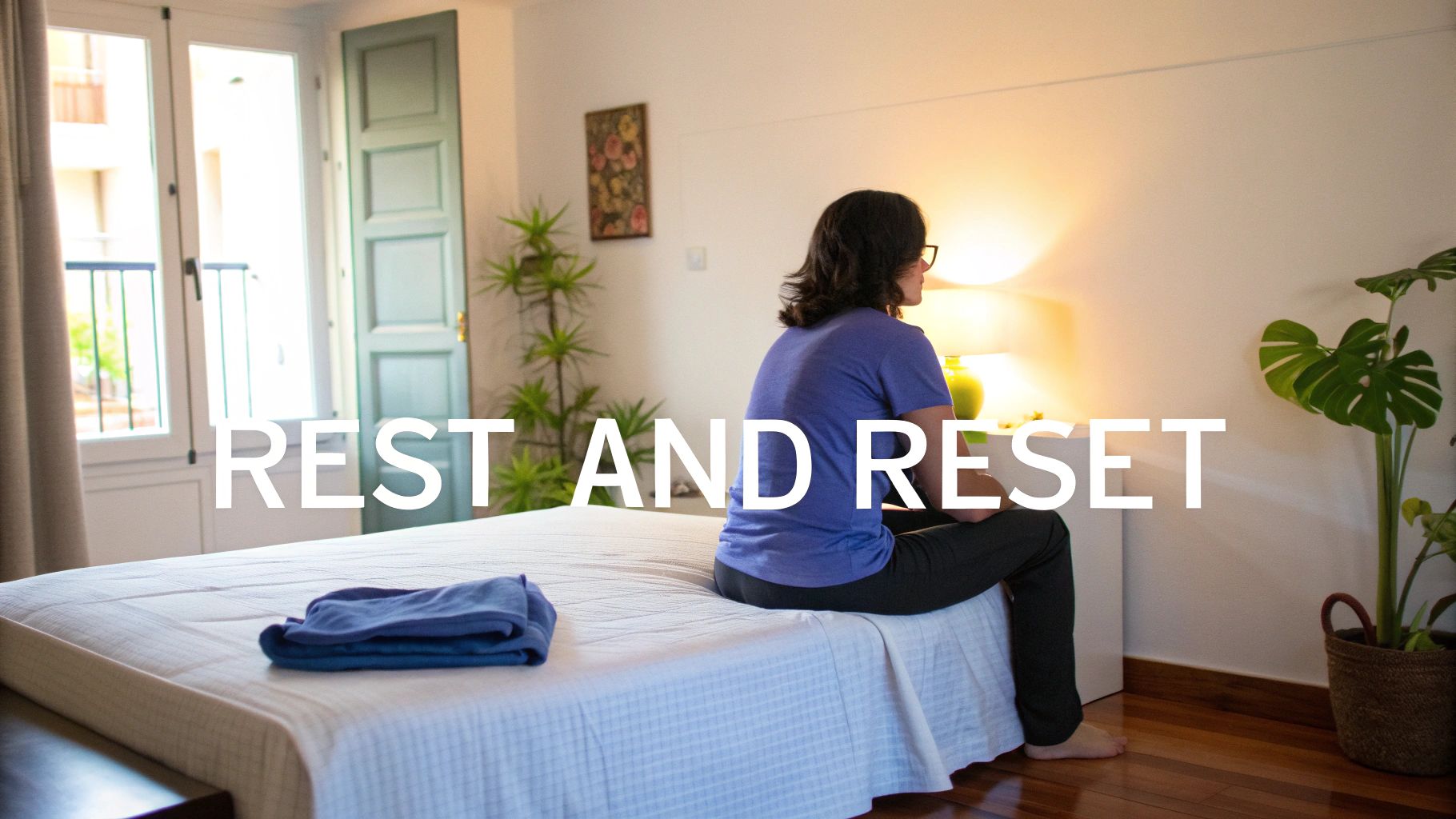
A single night of poor sleep can cause stress hormone levels to spike, leaving you feeling frazzled and overwhelmed. Prioritising sleep hygiene is one of the most effective lifestyle changes you can make to build resilience against daily pressures.
Equally important are the small moments you take to pause and breathe during a hectic day. Simple mindfulness practices can soothe your nervous system in real-time, effectively lowering cortisol and helping to restore hormonal balance.
Create Your Sleep Sanctuary
Your body thrives on routine. A consistent wind-down ritual each evening signals to your brain that it’s time to prepare for deep, restorative sleep. This isn't about enforcing strict rules, but about creating a peaceful transition from day to night.
Your health tip is to treat your bedroom as a sanctuary for rest. This means keeping it cool, dark, and quiet. Blackout curtains and a white noise machine can be highly effective. The most important change, however, is to make your bedroom a screen-free zone for at least an hour before sleep. The blue light from screens can interfere with melatonin production, the hormone that regulates sleep.
As part of your nightly ritual, consider incorporating calming herbal teas for bedtime. A warm, soothing drink can help ease you into a restful state.
Weave Mindfulness into Your Day
Mindfulness doesn't have to be a lengthy meditation session. It is simply about bringing a gentle awareness to the present moment, which can be done in just a few minutes, even at your desk. These brief pauses are surprisingly effective at resetting your body’s hormonal response to stress.
One of the easiest and most powerful techniques is the box breathing exercise. It’s a discreet tool you can use anywhere to instantly calm your nervous system.
- Inhale slowly through your nose for a count of four.
- Hold your breath gently for another four counts.
- Exhale slowly through your mouth for a count of four.
- Hold again at the bottom of the breath for four counts.
Repeating this cycle for just one or two minutes can make a tangible difference. It works by directly activating your body's relaxation response (the parasympathetic nervous system), pulling you out of a stressful "fight or flight" state.
Mindfulness is about finding pockets of calm in the midst of life's storms. Even five minutes of intentional breathing can be enough to interrupt the cortisol spike and bring your body back to a state of balance.
Spending time in nature has a similar grounding effect. A short walk in a local park on your lunch break can dramatically lower cortisol levels. The combination of gentle movement and fresh air is a potent, evidence-based recipe for stress relief.
Learning how to improve mental wellbeing often begins with small, deliberate adjustments like these. By prioritising both quality sleep and mindful moments, you're building a powerful, natural defence against the chronic stress that keeps cortisol elevated.
Fine-Tuning Your Lifestyle for Hormonal Harmony
Your diet and exercise routine are foundational, but other daily habits also play a crucial role in your hormonal health. Building strong social connections and making time for enjoyable hobbies are not just pleasantries; they are powerful buffers against the relentless stress of modern life.
A good laugh with a friend, for example, triggers a release of endorphins—your body’s own feel-good chemicals—which directly counter the effects of cortisol. Similarly, engaging in a hobby you love, whether it's gardening, painting, or playing an instrument, provides a much-needed mental break from the cycle of worry that keeps stress levels high.
Caffeine and Alcohol: A Closer Look
It is important to honestly assess your intake of caffeine and alcohol. While a morning coffee can feel essential, excessive caffeine can over-stimulate your adrenal glands, leading to an overproduction of cortisol. If you often feel "wired but tired," your caffeine intake may be disrupting your body's natural stress rhythm.
Alcohol has a similarly complex relationship with stress. While a glass of wine might seem to help you unwind, it often disrupts sleep quality later in the night. This poor-quality sleep acts as a significant physical stressor, signalling your body to produce even more cortisol the next day, creating a vicious cycle.
It helps to understand what a normal baseline looks like. In the UK, average cortisol levels are around 370.1 nmol/L. The NHS often prioritises lifestyle adjustments for stress management because they are a proven, effective way to manage cortisol levels and prevent them from contributing to other health issues. You can read more about UK cortisol level data on forthwithlife.co.uk.
Can Supplements Lend a Hand?
While lifestyle changes should always be your foundation, some supplements, often called adaptogens, have shown promise in helping the body become more resilient to stress. It is vital to view these as supportive tools, not as a replacement for a healthy lifestyle.
Two well-researched options include:
- Ashwagandha: An herb used in Ayurvedic medicine, it's known for helping to regulate the body's stress response system. Scientific studies suggest it can significantly lower cortisol levels in some individuals.
- L-theanine: An amino acid found in green tea, it promotes a sense of calm without causing drowsiness. It helps to reduce anxiety by influencing calming neurotransmitters in the brain.
Natural Cortisol Management Supplements: A Snapshot
Navigating the world of supplements can be overwhelming. This table provides a quick comparison of some common options.
| Supplement | Potential Benefit | Important Consideration |
|---|---|---|
| Ashwagandha | Helps the body adapt to stressors and may lower cortisol. | Can interact with certain medications; quality varies widely. |
| L-theanine | Promotes a sense of calm and focus without sedation. | Generally well-tolerated, but best sourced from a reputable brand. |
| Magnesium | Often called the "relaxation mineral," it helps regulate the nervous system. | Different forms have different effects (e.g., glycinate for calm). |
The quality and dosage of supplements can vary enormously. It is essential to consult with a doctor or a qualified healthcare professional before starting any new supplement. They can provide personalised advice, ensure it is appropriate for you, and check for any potential interactions with other medications or health conditions.
Answering Your Questions About Cortisol
When you start making lifestyle changes to balance your cortisol levels, it's natural to have questions. Knowing what to expect, understanding the risks, and recognising when to seek professional medical advice will help you manage your health safely and effectively.
How Long Does It Take to Lower Cortisol?
There is no single timeline, as it varies for everyone. The speed at which you notice a difference depends on your starting cortisol levels and the consistency of your new habits.
Some people report feeling more energetic or less on-edge within a few weeks of improving their sleep and incorporating gentle movement. For others, particularly if chronic stress has been a long-term issue, it may take a couple of months to experience more significant shifts, such as consistently sleeping through the night or a greater sense of overall calm.
The key to success is consistency, not intensity. Small, sustainable lifestyle changes made every day will always be more effective than a drastic, short-term approach.
Is It Possible for Cortisol to Go Too Low?
While high cortisol is a more common issue, it is possible for levels to become too low. This is a medical condition known as adrenal insufficiency (the most severe form being Addison's disease), which requires a doctor's diagnosis and treatment.
However, it is extremely unlikely that the natural lifestyle strategies discussed in this article would cause a dangerous drop in cortisol. Healthy habits like a balanced diet, moderate exercise, and mindfulness are about helping your body find its natural equilibrium, not shutting down a vital hormone. The risk of abnormally low cortisol is associated with specific medical conditions, not with healthy self-care practices.
When Should I Talk to a Doctor?
It’s crucial to distinguish between the effects of everyday stress and symptoms that could indicate a more serious medical problem. While lifestyle adjustments are powerful, they are not a substitute for a proper medical evaluation when necessary.
You should book an appointment with your GP if you experience persistent symptoms, including:
- Significant, unexplained weight gain, particularly around your abdomen and face.
- Deep, relentless fatigue that is not relieved by sleep.
- Noticeable muscle weakness, high blood pressure, or skin that bruises easily.
These could be signs of Cushing's syndrome, a condition caused by an underlying medical issue leading to excessive cortisol production. A doctor is the only one who can perform the necessary tests to determine the cause and recommend the appropriate medical treatment.
At The Lagom Clinic, we focus on building a clear, complete picture of your health. If you're concerned about your stress levels or any persistent symptoms, our private GPs are here to listen and provide expert guidance. We offer comprehensive health screening and personalised consultations to help you understand your body and create a sustainable plan for long-term wellbeing. Discover a balanced approach to your health by visiting us at The Lagom Clinic.
Related: Cortisol levels can be influenced by hormonal changes during perimenopause and menopause. If you think your symptoms may be hormone-related, our menopause clinic in Bristol offers specialist assessment, HRT prescribing, and hormone blood testing.
Struggling with stress or fatigue?
If persistently high cortisol is affecting your sleep, energy or mood, a private GP consultation can help identify the cause and build a plan that works for you.


 Members Consultation