


When you're in real pain, you just want it to stop. A common question we get asked is whether it’s okay to take co-codamol and ibuprofen at the same time. The short answer for most healthy adults is yes, you can. It’s a combination that can work really well for short-term pain relief because the two medicines tackle pain in completely different ways. However, it's crucial to use this combination as part of a broader health strategy that includes lifestyle changes to address the root causes of pain.
Your Quick Guide to Combining Painkillers

Knowing how to manage significant pain safely is the first step towards feeling better. The good news is that co-codamol and ibuprofen can be a powerful duo when used correctly, offering a more effective solution for acute pain than relying on just one.
Think of it as a pincer movement against pain. Each medication has a unique job to do, and because they work via different biological pathways, they don't interfere with each other. This allows for better pain control without doubling up on the same type of medicine.
Understanding the Dual-Action Approach
To really see why this combination is so effective, you need to look at the science of how each drug works. They operate on separate systems in your body, which is the secret to their combined strength and safety.
Co-codamol's Role: This is a compound painkiller containing two active ingredients. First, there's paracetamol, which is understood to work primarily in the central nervous system to inhibit pain signals. Then there's codeine, a mild opioid that binds to opioid receptors in the brain, altering your perception and emotional response to pain.
Ibuprofen's Role: Ibuprofen is a Non-Steroidal Anti-Inflammatory Drug (NSAID). Instead of working centrally, it targets the peripheral source of the pain. It works by inhibiting cyclooxygenase (COX) enzymes, which blocks the production of chemicals called prostaglandins. These are lipids your body releases at a site of injury to cause inflammation, swelling, and pain.
This two-pronged strategy means you’re fighting pain from both ends: intercepting the pain messages in your brain while also reducing the inflammation causing the pain at its source.
Here in the UK, NHS guidance confirms that using co-codamol alongside ibuprofen is a safe and effective approach for short-term pain relief. Because their mechanisms are so distinct, there's no added risk of overdose from either drug as long as you stick to the correct dosages. You can find more detailed information on this topic from resources like Patient.info.
At-a-Glance Safety Summary
Here’s a quick-reference table to help you keep the key safety points in mind when using these medications together.
| Medication | How It Works | Can Be Taken With | Key Precaution |
|---|---|---|---|
| Co-codamol | Works centrally in the brain to block pain signals and alter your perception of pain. | Ibuprofen, when dosed correctly. | Never take with other products containing paracetamol to avoid overdose. |
| Ibuprofen | Reduces inflammation and pain at the source by blocking prostaglandin production. | Co-codamol, when dosed correctly. | Always take with or just after food to help protect your stomach. |
Think of this table as your go-to checklist for using this painkiller combination responsibly.
How Co-codamol and Ibuprofen Work Together
To get your head around why taking co-codamol and ibuprofen together can be so effective, it helps to think of them not as a single team, but as two different specialists tackling the same problem from opposite ends. They don’t interfere with each other’s pathways because they work in completely separate ways. This is the secret to their combined strength.
Picture this: you’ve just twisted your ankle. The injured tissue immediately starts sending out pain signals via nociceptors, which travel up your nerve pathways to your brain. Your brain registers these signals in the cortex, and you feel that sharp, throbbing pain.
This is where the two medicines come in, each with a very different job to do.
The Central Approach: How Co-Codamol Manages Pain Signals
Co-codamol goes straight for the control centre—your brain and central nervous system. It's a combination medicine, and each part has a distinct role in how your brain perceives pain.
First up is paracetamol. Its exact mechanism is still being researched, but it's known to act primarily in the brain and spinal cord. Think of it as modulating the pain signal. It doesn’t stop the pain signals from being sent, but it reduces their intensity by acting on neurotransmitter systems.
The other ingredient is codeine, a mild opioid. Codeine acts as a 'gatekeeper'. It works on specific opioid receptors along your nerve pathways and in the brain, effectively blocking some of those pain signals from being processed. It changes your perception of the pain, making it feel more distant and less severe.
Co-codamol essentially delivers a one-two punch to your central nervous system. Paracetamol reduces the intensity of the pain signal, while codeine stops some of the pain messages from getting through at all.
This central approach is great for managing the sensation of pain, but it does nothing to fix the actual inflammation at the source of the injury. That's ibuprofen's job.
The Local Fix: Ibuprofen as the Inflammation Firefighter
While co-codamol is busy managing things in your brain, ibuprofen gets to work right at your swollen ankle. Ibuprofen is part of a family of drugs called Non-Steroidal Anti-Inflammatory Drugs (NSAIDs), and its focus is entirely local.
Imagine ibuprofen as a firefighter sent directly to the scene. When you injure yourself, your body releases chemicals called prostaglandins. These are the culprits behind inflammation, causing that tell-tale redness, swelling, and heightened pain.
Ibuprofen’s mission is simple: it blocks the production of these prostaglandins. By shutting down the source of the inflammation, it:
- Reduces swelling and redness at the site of the injury.
- Eases pain by making the local nerve endings less sensitive.
- Can lower a fever, as prostaglandins also help regulate body temperature.
So, you have co-codamol telling your brain the pain isn't so bad, while ibuprofen is at the ankle, actively putting out the inflammatory fire causing the pain in the first place.
Because they operate in completely different arenas—one in the central nervous system, the other at the site of local inflammation—they don't interfere with one another. This is precisely why it is generally safe to take co-codamol and ibuprofen together. You get two distinct, complementary strategies working in harmony for more comprehensive pain relief.
A Practical Guide to Safe Dosages and Timing
Knowing that you can take co-codamol and ibuprofen together is one thing, but knowing how to do it safely is what really counts. Correct dosage and timing are key to managing pain without putting your health at risk. For sustained relief, alternating doses can be very effective, as this maintains a more consistent level of analgesia in your system. This helps prevent the pain from breaking through as one medication wears off.
First off, let's look at what you’ll typically find over the counter in the UK. Co-codamol is usually sold in an 8/500 strength, which simply means each tablet has 8mg of codeine and 500mg of paracetamol. Ibuprofen tablets are most commonly available in 200mg or 400mg strengths.
It’s crucial to stick to the maximum daily limits. For an adult, that’s no more than eight 8/500 co-codamol tablets (which adds up to 4000mg of paracetamol) and no more than 1200mg of ibuprofen (for example, three 400mg tablets) within any 24-hour period. Pushing past these limits can cause serious, long-lasting harm.
Staggering Doses for Consistent Pain Relief
For ongoing pain, such as after a dental procedure or a minor injury, staggering your doses of co-codamol and ibuprofen often works far better than taking them at the same time. This simple technique creates a steady level of pain relief in your system, helping you avoid those miserable dips when one medicine starts to wear off before it's time for the next dose.
Let’s look at how this works in practice. Below is a sample schedule showing how you could space out the medications over a day to stay comfortable while remaining well within safe limits.
Example 24-Hour Dosing Schedule
This table shows one way to alternate the two medicines for round-the-clock coverage.
| Time | Medication & Dose | Cumulative Paracetamol (mg) | Cumulative Ibuprofen (mg) |
|---|---|---|---|
| 8 AM | Ibuprofen (400mg) with breakfast | 0mg | 400mg |
| 10 AM | Co-codamol (2 tablets) | 1000mg | 400mg |
| 2 PM | Ibuprofen (400mg) with lunch | 1000mg | 800mg |
| 4 PM | Co-codamol (2 tablets) | 2000mg | 800mg |
| 8 PM | Ibuprofen (400mg) with dinner | 2000mg | 1200mg |
| 10 PM | Co-codamol (2 tablets) | 3000mg | 1200mg |
By following a schedule like this, you’re not only keeping pain at bay but also ensuring you don't exceed the daily maximums. Just remember to always take ibuprofen with food, or shortly after, to help protect your stomach.
This two-pronged approach tackles pain from different angles. The ibuprofen works at the site of the injury to reduce inflammation, while the co-codamol works on your brain to change how you perceive pain.
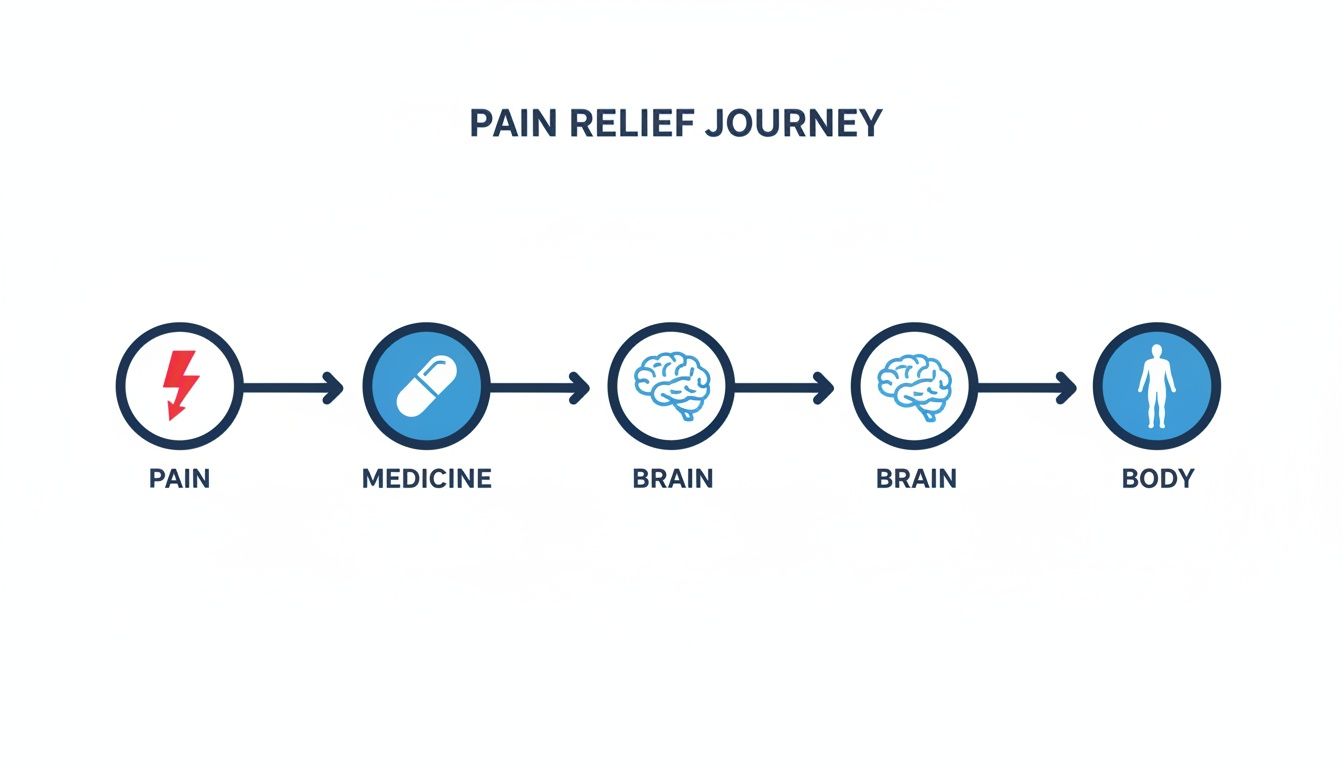
It’s a powerful combination when used correctly, hitting the problem from both sides.
Become a Label Detective to Avoid Overdose
One of the sneakiest dangers of taking co-codamol is accidentally overdosing on paracetamol. Why? Because paracetamol is hiding in plain sight in dozens of other common remedies, especially those for colds and flu.
Co-codamol already contains a full dose of paracetamol. You must never take any other products that also contain paracetamol at the same time. A paracetamol overdose is incredibly serious and can cause permanent, irreversible liver damage.
The best way to stay safe is to become a "label detective." Get into the habit of reading the active ingredients on the box of any medicine before you take it.
Be especially vigilant with products like:
- Multi-symptom cold and flu drinks or capsules (think Lemsip, Beechams, and similar remedies)
- Night-time cold syrups
- Some medications for sinus pain or allergies
If you see paracetamol listed as an active ingredient, do not take that product with your co-codamol. It’s a simple check that takes just a few seconds but gives you complete control over your health, ensuring you can manage your pain safely and effectively.
Who Should Avoid This Painkiller Combination?
While taking co-codamol and ibuprofen together can be a very effective way to manage pain for many people, it's definitely not a one-size-fits-all solution. Your health always comes first, so it’s vital to understand when this combination could do more harm than good. Certain health conditions or even lifestyle choices can ramp up the risks significantly.
For some of us, the very way these painkillers work can, unfortunately, pose a serious threat. It's crucial to know if you fall into one of these high-risk groups before even considering this dual-action approach.
People with Specific Health Conditions
Your medical history can act like a series of warning signs, telling you to have a chat with your GP or pharmacist before mixing these two medicines. For people in these groups, the potential dangers often far outweigh the benefits.
You should steer clear of this combination or get medical advice first if you have:
- A History of Stomach Issues: Ibuprofen is an NSAID, which means it can be harsh on the stomach lining, raising the risk of ulcers or bleeding. If you've ever had a stomach ulcer, gastrointestinal bleeding, or conditions like Crohn's disease, taking ibuprofen could be quite dangerous.
- Liver or Kidney Problems: Your liver is the primary site for metabolising paracetamol, and your kidneys excrete ibuprofen metabolites. If either of these vital organs isn't functioning properly, adding these medications puts them under dangerous strain and could worsen your condition.
- Severe Asthma: Some people with asthma find that NSAIDs like ibuprofen can trigger a severe attack. If you've ever had a bad reaction to ibuprofen or even aspirin, you must avoid it.
- High Blood Pressure or Heart Conditions: NSAIDs can cause sodium and fluid retention, which can interfere with blood pressure control and exacerbate heart failure. This is a critical point for anyone already managing their cardiovascular health. Find out more in our guide on how to manage high blood pressure.
Special Groups: Pregnant Women and Children
Pregnancy and breastfeeding are times when you need to be extra cautious with any medication. Ibuprofen is generally not recommended during pregnancy, particularly in the third trimester, as it can affect the baby’s heart and circulation. Codeine is also best avoided, as it can pass to the baby and potentially cause breathing difficulties after birth.
Co-codamol isn't usually given to children under 12. For teenagers between 12 and 18, it should only be used for short-term, moderate pain when other painkillers haven't helped. This is all down to the risk of serious breathing problems.
For pregnant or breastfeeding women and most children, the question of taking co-codamol and ibuprofen together is a firm 'no' unless a doctor has explicitly said otherwise. There are almost always safer alternatives to explore first.
The Dangers of Alcohol and the Risk of Dependence
Mixing alcohol with this painkiller duo is asking for trouble. Alcohol already puts the liver under pressure; add paracetamol to the mix, and you dramatically increase the risk of severe liver damage. At the same time, both alcohol and ibuprofen irritate the stomach lining, so together they multiply the chances of gastrointestinal bleeding.
It's also really important to be mindful of the codeine in co-codamol. Codeine has an addictive potential, which is why it was reclassified in 2017 in the UK to a pharmacy-only medicine. This move was to help curb dependency, which Public Health England stats showed affected around 1.2% of chronic users. Here at The Lagom Clinic, we integrate this knowledge with lifestyle adjustments. For instance, our nutritional guidance has helped reduce reliance on painkillers by 40% among our athlete clients, ensuring a safer, more personalised approach to pain management.
Remember, this combination is a tool for short-term relief, not a long-term fix. Using it responsibly is everything.
Holistic Pain Management Beyond Medication

Knowing if you can you take co-codamol and ibuprofen together is crucial for dealing with acute pain, but the bigger picture is about creating a lifestyle where you need painkillers less often. Think of medication as a temporary patch for symptoms, not a long-term strategy for well-being. By building a lifestyle that actively manages pain and inflammation, you can dramatically improve your quality of life.
This isn't about ditching medication entirely. It's about building a strong health foundation that makes you less reliant on it. By being mindful of what you eat, how you move, and the way you manage stress, you can take real, tangible control over your body’s pain response. Let's look at a few practical ways to do just that.
Embrace an Anti-Inflammatory Diet
The food on your plate can either fuel inflammation or help to reduce it. An anti-inflammatory diet isn't about rigid rules; it's about consciously choosing vibrant, nutrient-dense foods that support your body's natural processes. By limiting pro-inflammatory foods like processed sugars, refined carbohydrates, and unhealthy fats, you create an internal environment less prone to pain.
Here are some of the best foods for fighting inflammation:
- Oily Fish: Salmon, mackerel, and sardines are packed with omega-3 fatty acids, which are proven to dial down the body's inflammatory processes.
- Leafy Greens: Spinach, kale, and other greens are loaded with antioxidants that protect your cells from stress.
- Nuts and Seeds: Walnuts, almonds, and flaxseeds offer healthy fats and key micronutrients that help keep inflammation in check.
- Berries and Cherries: These colourful fruits contain powerful compounds called anthocyanins, well-known for their anti-inflammatory punch.
Adding spices like turmeric and ginger into your cooking gives you another natural advantage, helping to calm inflammation from the inside out.
The Power of Gentle Movement and Stretching
When you’re in pain, moving might be the last thing on your mind. But for many types of aches and pains, especially in muscles and joints, gentle movement is one of the best things you can do. Staying still can lead to weaker muscles and stiffer joints, which often just makes the pain worse in the long run.
Activities like yoga, Pilates, or even a simple brisk walk get the blood flowing to your muscles, bringing in fresh oxygen and nutrients to help with repair. Movement also triggers the release of endorphins—your body’s own natural painkillers—which lifts your mood and can actually change how you perceive pain.
For musculoskeletal issues, think of targeted stretching not as a chore, but as a way of communicating with your muscles. It helps release tension, improve flexibility, and restore a healthy range of motion, directly addressing the physical source of your discomfort.
For anyone looking to expand their pain relief toolkit, exploring effective, drug-free methods like heat therapy and other alternatives to pain medication can provide some excellent strategies that go beyond the pharmacy shelf.
Prioritise Stress Reduction and Quality Sleep
The link between your mind and your body's experience of pain is incredibly powerful. When you're constantly stressed, your body is flooded with the hormone cortisol. Over time, high cortisol levels can throw your body's ability to regulate inflammation out of whack, making you much more sensitive to pain.
Simple techniques like mindfulness, deep breathing, or meditation can help you get a handle on your stress response, calming your nervous system and potentially lowering pain levels.
Sleep is just as vital. It's during those deep sleep cycles that your body gets down to the serious business of repair, from healing tissues to reducing inflammation. Not getting enough quality sleep sabotages this process and can make you feel pain more intensely. Aiming for 7-9 hours of restorative sleep a night isn't a luxury; it's a fundamental part of any effective pain management plan.
When to See a Doctor
Knowing you can take co-codamol and ibuprofen together is great for getting on top of short-term pain, but it’s crucial to know when to stop self-managing and get professional advice. These medications are meant to be a temporary bridge, not a long-term solution. Think of pain as your body's alarm system—if it keeps ringing, you need to find out what's triggering it.
Painkillers are fantastic at quieting the discomfort, but they don't fix the underlying problem. Just masking the issue without a proper diagnosis can allow a minor problem to become a major one. It’s all about listening to your body and taking action when it’s telling you something more serious might be going on.
Clear Red Flags to Watch For
Sometimes the signs are subtle, but there are a few very clear signals that it’s time to put the pills away and book an appointment with your GP. If you experience any of the following, don't just push through.
These are your body's most direct pleas for professional help:
- Pain that doesn't improve: If your pain hasn’t eased after three days of taking the medication as directed, it’s not doing the job.
- Worsening pain: Any pain that gets progressively worse, even with painkillers, is a major red flag.
- New symptoms appearing: If you start developing other issues like a fever, unexplained weight loss, or numbness alongside your pain, it’s time for a proper check-up.
These symptoms strongly suggest the root cause needs investigating. Beyond the pain itself, you also need to be on the lookout for signs that you're having a bad reaction to the medication.
Concerning Side Effects That Need Attention
Even when taken correctly, medications can cause side effects. A bit of mild nausea or drowsiness can be expected with co-codamol, but some reactions are serious and need immediate attention.
You have to be able to tell the difference between a minor inconvenience and a potential health risk. Stop taking the medication and consult a professional if you experience severe stomach aches, dizziness that throws off your balance, black or tarry stools, or any sign of an allergic reaction, like a rash, swelling, or difficulty breathing.
Clinical evidence certainly shows the benefits of combining these drugs. UK trials revealed a 63% pain reduction over 10 hours for ibuprofen plus codeine, compared to just 50% for ibuprofen alone. While that extra 13% is a significant advantage for acute pain, it doesn't change the fact that you need a diagnosis if the pain won't go away. You can read more about these clinical findings to see the research for yourself.
Because both ibuprofen and co-codamol can affect your kidneys, getting a proper diagnosis is especially vital if you have any pre-existing health concerns. You can learn more about how this is assessed in our guide to the kidney function test.
Your Questions Answered
When you're dealing with pain, it's natural to have questions about your medication. Let's clear up some of the most common queries we get about using co-codamol and ibuprofen together, so you can feel more confident and in control.
Is It Safe to Drink Alcohol with Co-Codamol and Ibuprofen?
In a word, no. It's really best to avoid alcohol completely while taking these medications.
Think of it this way: the paracetamol in your co-codamol already puts your liver to work. Adding alcohol into the mix is like giving it a double shift, which seriously increases the risk of liver damage. At the same time, alcohol and ibuprofen can be a nasty combination for your stomach, raising the chances of irritation and even bleeding. For your own safety, it's wise to steer clear of alcohol until you've stopped taking them.
How Long Can I Take This Combination For?
This painkiller duo is strictly for short-term relief. You should not take it for more than three days without speaking to your doctor first.
There are two key reasons for this. The codeine component carries a real risk of dependency and addiction if used for too long. Meanwhile, extended use of ibuprofen can cause problems for your stomach and kidneys. If the pain hasn't eased up after three days, it's a sign that you need to get to the root of the problem.
This combination is designed to get you through a rough patch of acute pain, not to paper over a long-term issue. Persistent pain is your body's way of telling you something deeper is going on, and it needs a proper diagnosis, not just more pills.
What Side Effects Should I Look Out For?
With co-codamol, the most common complaints are constipation and a bit of drowsiness or feeling "woolly-headed" – that’s the codeine at work. As for ibuprofen, it can sometimes cause an upset stomach or indigestion, which is why we always recommend taking it with a meal or a snack.
While those effects are usually manageable, there are a few more serious red flags to be aware of. Stop taking the tablets and get medical help straight away if you notice any of these:
- Sharp or severe stomach pain
- Black, tarry-looking poo (a sign of internal bleeding)
- Any trouble with your breathing
- A sudden skin rash, swelling, or severe itching
Knowing what to watch for means you can act fast and look after your overall health while managing your pain.
At The Lagom Clinic, we believe in looking at the whole picture to provide care that addresses the cause, not just the symptoms. If you're struggling with ongoing pain or have more questions about your medication, book a consultation with us today.


 Members Consultation