


If you’re active in any sport, from Sunday league football to marathon training, you know that injuries can be part of the game. But they don't have to be. The most effective way to stay in the action is to build a body that’s resilient before you even step onto the field or into the gym. This involves a lifestyle shift from reacting to injuries to proactively preventing them through consistent, healthy habits.
Understanding the True Cost of Sports Injuries

For anyone active in the UK, the risk of getting hurt can feel like a given. But the scale of the problem is much bigger than just a few days of soreness. We’re talking about significant disruptions to your health, your work, and your daily life.
The numbers don't lie. Sports injuries are a major public health issue. Each year, the National Health Service (NHS) treats roughly 2 million people in A&E departments for sports-related problems, ranging from minor sprains to severe fractures. High-impact sports like football and rugby, unsurprisingly, are major contributors.
Moving from Reactive to Proactive
Most people only start thinking about injury prevention after they're already sidelined. The typical cycle is reactive: get hurt, rest, recover, and just hope it doesn’t happen again. This approach often leads straight to recurring issues and chronic pain.
A much smarter, medically sound strategy is to be proactive. This means focusing on building a body that’s less likely to get injured in the first place. It requires a deliberate, consistent effort through lifestyle changes that prepare you for the specific demands of your sport.
By focusing on preparation, conditioning, and recovery, you're not just avoiding downtime; you're investing in your long-term athletic performance and overall health. Injury prevention is performance enhancement.
Key Pillars of Injury Prevention
To seriously reduce your risk, it helps to focus on a few core principles. These are the foundational lifestyle habits that make the biggest difference in the long run.
- Smart Preparation: This isn't just a half-hearted stretch. It means dynamic warm-ups and mobility work that are tailored to your activity.
- Functional Strength: It’s about building muscle that actually supports your joints through the specific movements of your sport.
- Proper Technique: Mastering the correct form reduces unnecessary strain on your body, whether you're lifting, running, or swinging a racquet.
- Active Recovery: Prioritising sleep, nutrition, and proper rest gives your body the chance to repair and adapt.
Getting specific helps, too. For instance, understanding how to prevent tennis elbow gives you practical strategies for a very common ailment. This guide will give you a framework built on these pillars, with actionable steps to help you create a more resilient, injury-resistant body. It’s about taking control of your health, not leaving it to chance.
Prepare Your Body for Peak Performance
Jumping straight into a workout or a match without preparing your body is one of the fastest ways to get sidelined. Think of your body like a high-performance engine; it needs to be warmed up properly before you can expect it to perform at its best without breaking down.
A thoughtful warm-up isn't just a formality—it's a critical, evidence-based health practice to prevent injuries.
For years, the standard advice was to hold static stretches, like touching your toes for 30 seconds. We now know this can do more harm than good before activity. Cold muscles don't respond well to being pulled and held; it can actually reduce your power output and leave you less prepared for explosive movements.
Instead, the focus has shifted to dynamic warm-ups. These are active movements that take your joints and muscles through their full range of motion, mimicking the actions you're about to perform. It's the difference between telling your body you're about to play and actually showing it.
The Power of Dynamic Movement
A dynamic warm-up is all about preparing your body for the specific demands of your sport. The goal is to gradually increase your heart rate, blood flow, and body temperature while mobilising key muscle groups. This ensures your muscles are pliable and your joints are lubricated, ready for the stresses ahead.
This active preparation primes the communication lines between your brain and your muscles (the neuromuscular system). It’s like a dress rehearsal, ensuring signals fire quickly and accurately when the real action begins. This heightened readiness can significantly reduce your risk of strains and tears.
A good warm-up should last between 10 to 15 minutes, starting with some light cardio before moving into more sport-specific movements.
Sport-Specific Warm-Up Routines
Your warm-up should never be generic. A runner has completely different physiological needs to a weightlifter, and a footballer requires a different preparation from a tennis player. Tailor your warm-up to your activity for maximum benefit.
Here are a few examples of what that looks like in practice:
- For Runners: The focus is on activating the hips and glutes. Think leg swings (forward and sideways), walking lunges with a torso twist, and high knees to prepare the lower body for the impact of running.
- For Footballers: You need to prepare for multi-directional movements. Incorporate exercises like side shuffles, carioca (grapevine steps), and walking hip openers (sometimes called 'opening the gate') to prime your body for those quick changes of direction.
- For Weightlifters: The aim is to mobilise the specific joints you'll be loading. If it’s a squat day, this means bodyweight squats, hip circles, and thoracic spine rotations to get your hips and upper back ready for the bar.
These targeted routines make sure the exact muscles and joints you’re about to use are warm, activated, and ready to go.
Going Beyond Flexibility with Mobility
It's easy to get flexibility and mobility mixed up, but they're not the same thing. Flexibility is the passive ability of a muscle to lengthen—like in a static stretch. Mobility, on the other hand, is your ability to actively move a joint through its full range of motion with control.
True athletic performance and injury resilience depend not just on how far a muscle can stretch, but on how well you can control your joints through their entire movement pattern. This is the essence of mobility.
Poor mobility in key areas like the hips, shoulders, and ankles forces your body to find a workaround, often leading to strain elsewhere. For instance, if your ankles are stiff, your knees might take on extra stress during squats or jumps, putting you at a much higher risk of a knee injury.
Targeted mobility drills can address these weak links. Simple exercises like ankle circles, controlled hip rotations, and shoulder pass-throughs with a resistance band can make a huge difference. Adding these to your warm-up helps you build a more resilient athletic body from the ground up.
Build Strength for Real-World Resilience
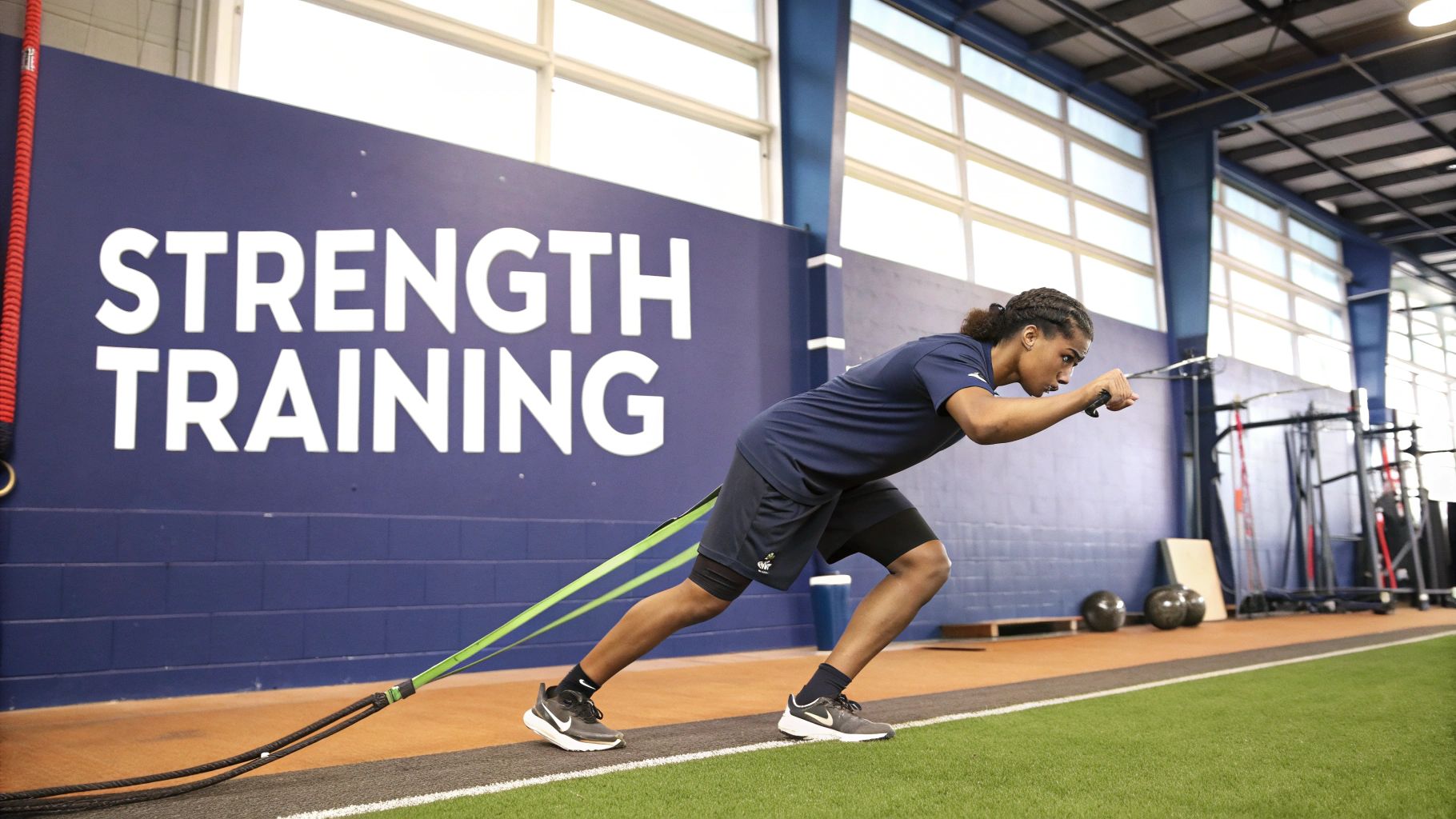
A stronger, more conditioned body is your single best defence against getting sidelined. When we talk about strength, it’s not just about building bulky muscles for show. It’s about creating functional strength—a robust framework that supports your joints, absorbs impact, and powers the explosive movements your sport demands.
Think of this kind of training as building your own personal body armour. It makes you fundamentally harder to break by preparing your muscles, tendons, and ligaments for the sudden stresses of sprinting, jumping, and twisting. That's where most acute injuries happen.
The Principle of Progressive Overload
To get stronger and more resilient, your body needs a reason to adapt. That’s the core physiological principle behind progressive overload, which simply means you gradually increase the demands you place on it. Without a consistent challenge, your body has no incentive to build back stronger.
Applying this principle is straightforward. You can:
- Increase the weight: If you squatted 50kg for eight reps last week, try for 52.5kg this week.
- Increase the repetitions: If you hit eight reps, push for nine or ten with the same weight.
- Increase the volume: Add another set to your exercises.
- Decrease rest time: Shorten the break between sets to make your workout more intense.
This systematic approach is the secret to long-term injury prevention. It ensures you’re consistently building resilience without pushing your body past its limits.
Foundational Movements for Total-Body Strength
You don't need a convoluted routine to build a solid foundation. A handful of compound exercises, which work multiple muscle groups at once, will give you the biggest bang for your buck. These are the movements that translate directly to athletic performance out on the field or court.
Focus on mastering these key lifts:
- Squats: The undisputed king of lower-body exercises. Squats build your quads, glutes, hamstrings, and core, improving your ability to jump, land, and absorb force safely.
- Deadlifts: A powerhouse for your entire posterior chain (glutes, hamstrings, back). A strong deadlift is crucial for explosive power and protecting your lower back from strain.
- Presses and Rows: For a balanced and healthy upper body, you need both pushing (overhead press, bench press) and pulling (pull-ups, bent-over rows) movements. This balance is non-negotiable for good shoulder health.
A well-rounded strength programme isn’t about isolating muscles. It’s about teaching your body to work as a single, coordinated unit. That integration is what protects you during those unpredictable moments in your sport.
Don't Neglect Your Core
Your core is so much more than a six-pack. It’s a complex web of muscles that stabilises your entire body, acting as the bridge between your upper and lower halves. It’s no surprise that a weak core is a common culprit in injuries, particularly those affecting the lower back and hips.
Think of your core as the central anchor for every movement. When it's strong, it allows energy to transfer efficiently through your body. Exercises like planks, bird-dogs, and dead bugs are fantastic for building that deep, stabilising strength that really counts.
The reality is, injuries are incredibly common. Research from UK Sport on elite British athletes found that 43% sustain at least one injury per season, leading to an average of 17 days lost from training. This just goes to show how vital a proactive approach to conditioning is. You can read more in their report on the battle against injury in elite sport.
Sharpening Your Neuromuscular Control
Lifting weights does more than just build muscle—it fine-tunes the communication between your brain and your body. This is called neuromuscular control, and it's your ability to react, stabilise, and control your movements without even thinking about it.
Every time you train, you're teaching your body to anticipate and respond to forces. For instance, balance-challenging exercises like single-leg deadlifts improve your proprioception—your body's awareness of its position in space.
This sharpened control is what helps prevent those devastating non-contact injuries, like an ACL tear, which often happens during a sudden stop or change of direction. A well-conditioned nervous system can fire up the right muscles at the right time, turning a potentially disastrous movement into a controlled one.
Choose and Maintain Your Protective Gear
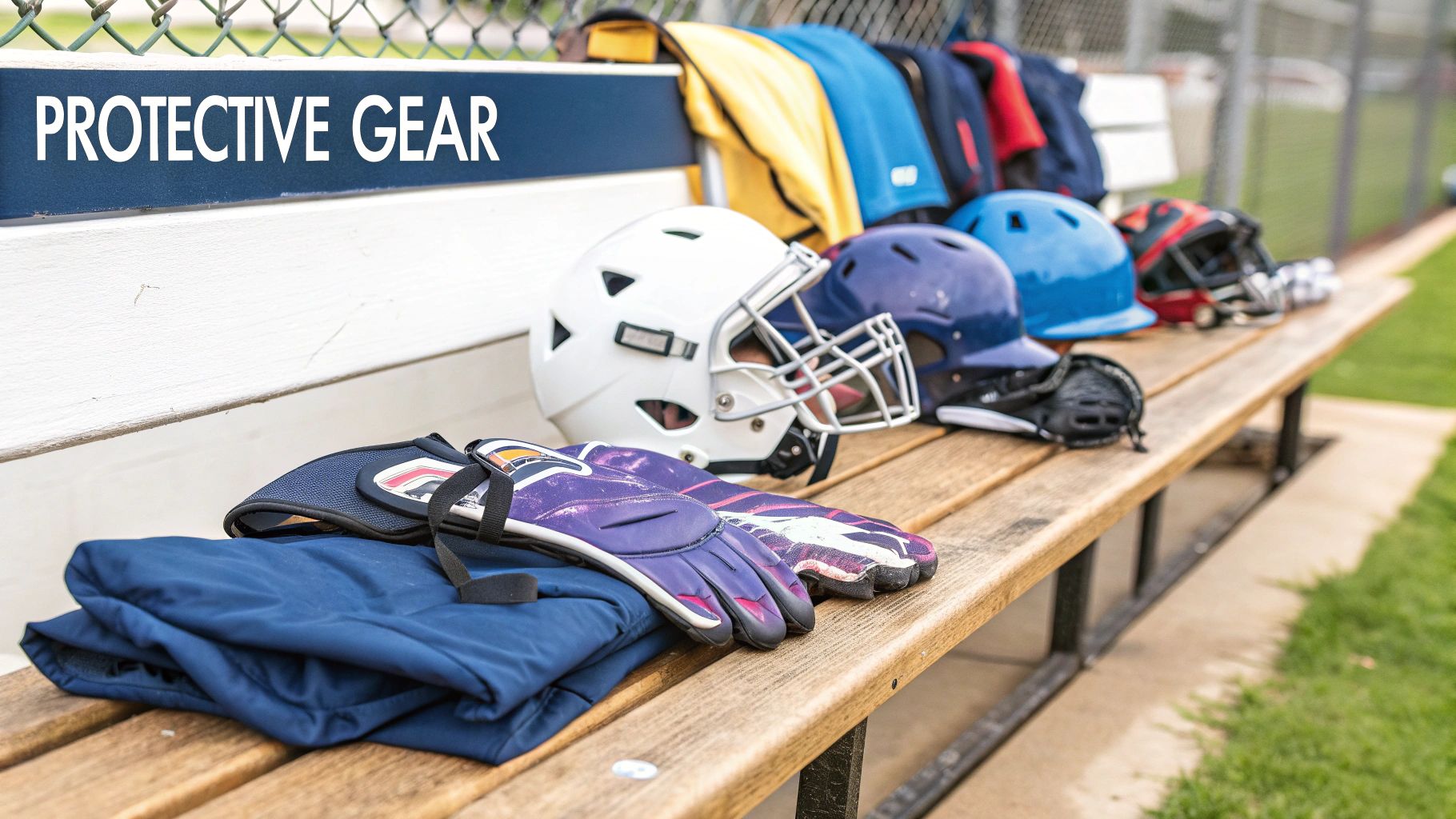
Your gear is your most direct line of defence against injury, but it's only as good as its fit and condition. Think of it this way: ill-fitting or worn-out equipment doesn't just fail to protect you; it can actively cause problems. Poorly chosen kit can alter your movement patterns or give you a false sense of security, which is often when injuries happen.
Shifting your mindset to see your kit as a critical performance tool, not just an afterthought, can dramatically lower your risk. This goes beyond the obvious helmets and pads. It includes the very foundation of your movement—your footwear—and even smaller items like mouthguards that prevent serious trauma.
And the risk of serious trauma is real. While we often think of sports injuries as sprains and strains, a UK-based study revealed that hospitals treated 11,702 major trauma injuries from sports over just five years. This stark figure highlights why proper gear is non-negotiable. You can read more about the research on sports-related trauma injuries to understand the full picture.
Footwear: The Foundation of Movement
Your shoes are arguably the most important piece of gear you own, especially in running and court sports. They’re the interface between your body and the ground, and getting this wrong can send shockwaves of stress up your ankles, knees, and hips.
Choosing the right shoe has nothing to do with brand loyalty or how it looks. It's all about matching the shoe to your foot type, your running gait, and the surface you play on. A trail running shoe with deep lugs is perfect for gripping soft ground but will feel clumsy and unstable on a hard tennis court. Likewise, a minimalist running shoe might be ideal for someone with a strong, neutral foot arch, but it could easily lead to shin splints for someone who overpronates.
A professional gait analysis at a specialist running shop can be a game-changer. Discovering whether you have a neutral, overpronated, or supinated foot strike is key to choosing a shoe that offers the right support and prevents repetitive strain.
Beyond the Basics: Essential Protective Items
For contact and high-impact sports, the right protective gear is a must. But "right" means more than just having it—it has to fit you perfectly.
- Mouthguards: In sports like rugby and hockey, a custom-fitted mouthguard from a dentist offers vastly superior protection compared to a "boil-and-bite" version. It stays put, makes breathing easier, and provides far better protection against dental trauma and even concussions.
- Helmets: A helmet only works if it fits snugly and is certified for your specific sport. Crucially, a helmet should be replaced after any significant impact, even if there's no visible damage. The internal protective foam could be compromised.
- Pads and Guards: For sports like cricket or football, shin pads and other guards must be the correct size. If they're too loose, they can shift during play and leave you exposed right when you need them most.
To help you get this right, here's a quick checklist for some of the most common sports.
Essential Equipment Checklist for Injury Prevention
This table offers a quick guide to selecting and maintaining key protective gear for various sports, ensuring you're always well-protected.
| Sport Category | Essential Equipment | Key Selection Tip | Replacement Guideline |
|---|---|---|---|
| Running/Court Sports | Sport-Specific Shoes | Get a gait analysis to match shoe type (neutral, stability) to your foot mechanics. | Every 500-800 km or when midsole feels compressed. |
| Contact Sports (Rugby, Hockey) | Custom-Fitted Mouthguard | A dentist-made guard offers the best fit and protection. | Annually, or if it becomes loose or damaged. |
| Impact Sports (Cycling, Skiing) | Certified Helmet | Ensure it meets current safety standards (e.g., MIPS) and fits snugly without movement. | Immediately after any significant impact, or every 3-5 years. |
| Stick/Ball Sports (Cricket, Football) | Shin Guards, Pads | Choose guards that cover the entire target area and secure firmly without restricting movement. | When straps are worn, padding is cracked, or they no longer fit securely. |
Remember, this gear is your first line of defence, so investing time and money in the right equipment is one of the smartest things you can do for your athletic longevity.
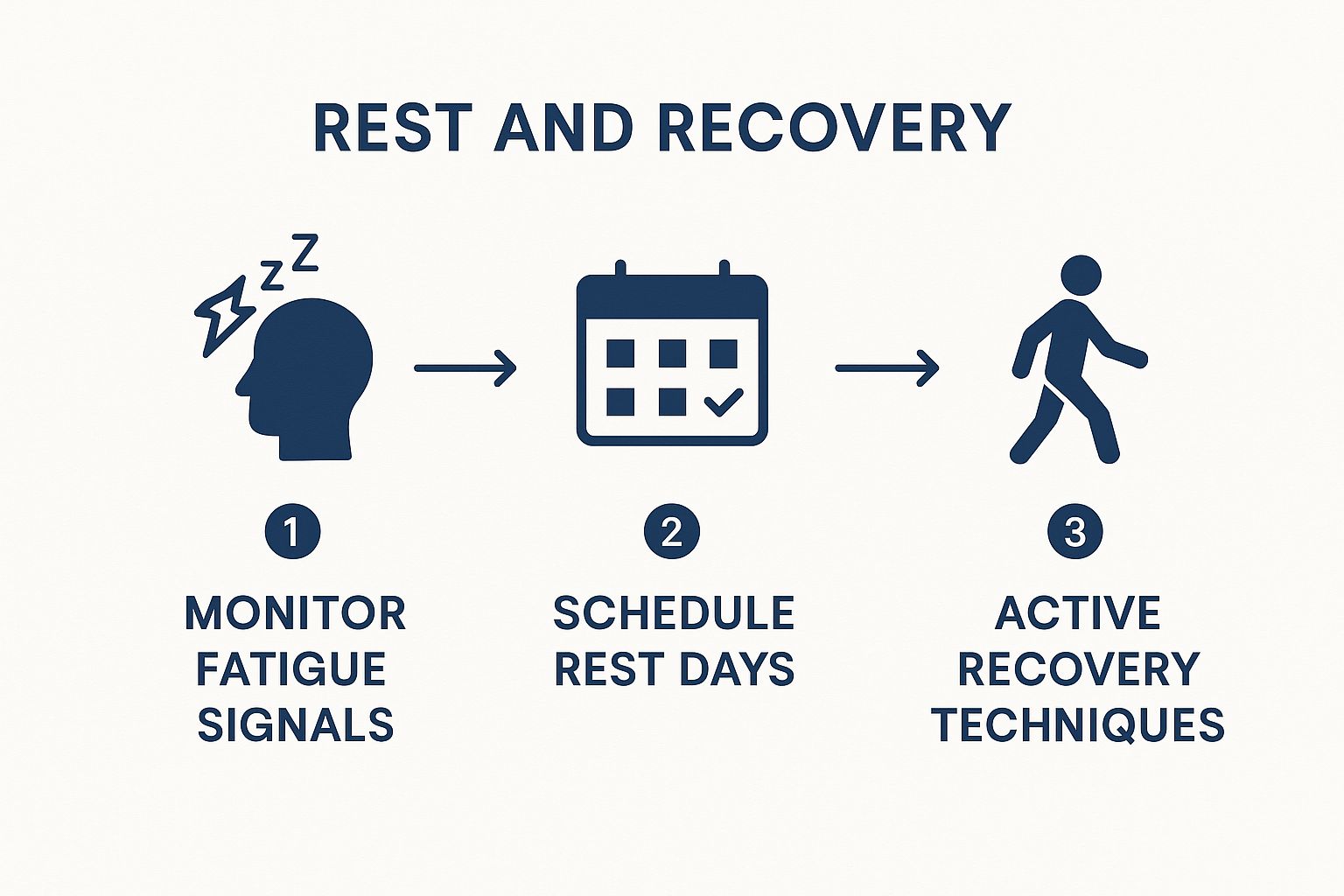
As this infographic shows, your physical gear is just one part of the puzzle. Combining it with smart recovery strategies is what truly builds a robust defence against injury.
Knowing When to Retire Your Gear
Even the best equipment has a sell-by date. Pushing your gear past its prime is a common mistake that can easily lead to an injury you could have avoided. You need to learn how to spot the subtle signs of wear and tear before they become a real problem.
For running shoes, the 500-800 kilometre (300-500 mile) rule is a decent starting point, but you should also keep an eye out for tell-tale signs like compressed midsole foam or uneven wear on the tread. For helmets, inspect them regularly for any cracks or dents. A quick audit of your kitbag now and then ensures your first line of defence is always up to the job.
Fuel and Recover Like a Pro
What you do off the field, court, or track is just as critical for injury prevention as your training. A resilient body isn’t just built in the gym—it’s forged through smart nutrition and dedicated recovery. These are the lifestyle changes that form the bedrock of long-term athletic performance.
Your diet isn’t just about managing weight; it’s about providing the raw materials your body needs to repair, adapt, and get stronger. Ignoring nutrition is like asking a construction crew to build a house without any bricks. Proper fuelling gives your body the energy to perform and the nutrients to heal, directly impacting how well you can fend off injuries.
The Building Blocks of a Resilient Body
To understand how diet prevents sports injuries, you need to think about macronutrients—protein, carbohydrates, and fats. Each one plays a distinct, vital role in keeping you healthy and performing at your peak.
- Protein for Repair: Think of protein as the repair crew for your muscles. After any intense activity, your muscle fibres have tiny micro-tears. Protein provides the amino acids needed to rebuild these fibres stronger than before, reducing your risk of strains and tears over time.
- Carbohydrates for Energy: Carbs are your body's primary fuel source. When you run low, your energy plummets, and fatigue sets in. This is a massive contributor to injury because it causes your technique to fall apart, putting unnecessary stress on joints and ligaments.
- Fats for Overall Health: Healthy fats are essential for reducing inflammation and supporting hormone production, both of which are crucial for long-term joint health and recovery. Focus on sources like avocados, nuts, seeds, and oily fish.
Focusing on a balanced intake of these three from whole-food sources gives your body the best possible foundation to build on.
The Unsung Heroes: Micronutrients
Beyond the big three, micronutrients—vitamins and minerals—play a massive role in tissue health. You don't need large amounts, but deficiencies can seriously compromise your body's ability to stay healthy under stress.
For instance, calcium and Vitamin D are non-negotiable for bone density, helping to prevent stress fractures. Iron is essential for getting oxygen to your muscles, and low levels can lead to premature fatigue. Vitamin C is a key player in collagen synthesis, which is vital for keeping your tendons and ligaments strong.
Eating a varied diet full of colourful fruits and vegetables is the simplest and most effective lifestyle choice to cover all your micronutrient bases. This one habit is a seriously powerful tool in your injury prevention arsenal.
The Science of Smart Recovery
Recovery is where the physiological adaptations from training occur—it’s when your body adapts and gets stronger. Skipping it is a fast track to overtraining syndrome. This state of chronic fatigue leaves you performing poorly and highly susceptible to injury.
Effective recovery strategies are just as important as the workout itself. They ensure your body is ready for the next challenge and help you avoid those nagging overuse injuries. It’s worth exploring some smarter post-workout recovery strategies to see how you can optimise this crucial phase of your training.
Sleep: The Ultimate Performance Enhancer
If there's one "magic bullet" for recovery, it's sleep. During deep sleep, your body releases human growth hormone (HGH), which is absolutely essential for repairing muscle tissue and strengthening bones. It’s also when your brain cements motor patterns, helping you perfect your technique.
Aiming for seven to nine hours of quality sleep per night isn't a luxury; it's a fundamental part of any serious training plan. Poor sleep doesn’t just slow down physical recovery—it also dulls your reaction time and decision-making, increasing your risk of an accident on the field.
Active Recovery and Listening to Your Body
Recovery doesn't always mean collapsing on the sofa. Active recovery—think light activity like walking, swimming, or a gentle cycle on your rest days—can be hugely beneficial. It gets blood flowing to your muscles, which helps flush out metabolic waste and deliver fresh nutrients, speeding up the healing process.
Ultimately, the most important skill you can develop is learning to listen to your body. Pay attention to the signals it’s sending. Persistent soreness, a lack of motivation, or a dip in performance are all signs that you might be pushing too hard without enough rest.
Don't be afraid to take an unscheduled day off. A single day of rest is far better than being forced into weeks of downtime because of an injury that could have been avoided. This mindful approach is what separates athletes who enjoy long, healthy careers from those who are constantly battling setbacks.
Your Injury Prevention Questions, Answered
Even the most dedicated athletes run into questions during their training. To help you stay on track and out of the physio’s office, we've tackled some of the most common concerns we hear about preventing sports injuries.
Should I Use Ice or Heat on a Minor Tweak?
This is probably one of the most frequent questions out there, and the answer all comes down to timing.
For a fresh, acute injury—think a rolled ankle or a pulled muscle that just happened—ice is your best friend for the first 48 to 72 hours. A cold pack constricts blood vessels, which is exactly what you want to reduce that initial swelling, inflammation, and pain. It's like a first-response team for your body, calming everything down. Heat, on the other hand, does the opposite by increasing blood flow, which would only make the swelling worse in a new injury.
After about three days, or for chronic muscle soreness and stiffness without any swelling, it's time to switch to heat. A warm compress or a hot bath helps relax those tight muscles and improve circulation, which promotes healing. So, the golden rule is simple: ice for new injuries, heat for old aches.
How Do I Know if I Am Overtraining?
Feeling a bit tired after a tough workout is normal. Overtraining is a different beast entirely. It’s a state of prolonged fatigue that your body just can't shake off with a good night's sleep. Spotting the signs early is the key to preventing a small issue from spiralling into a serious injury or complete burnout.
Keep an eye out for these red flags:
- Persistent Muscle Soreness: If your muscles are constantly aching and never seem to feel fresh between sessions, your body is screaming for a break.
- A Drop in Performance: Are you struggling with weights you used to lift easily? Is a pace that felt comfortable now a real slog? A consistent performance decline is a classic symptom.
- Elevated Resting Heart Rate: Check your heart rate first thing in the morning before you get out of bed. If it’s consistently five to ten beats per minute higher than usual, your system is under stress.
- Irritability and Poor Sleep: Overtraining messes with your hormones, which can tank your mood and disrupt your sleep patterns, making recovery even harder.
If this sounds familiar, the solution is simple but non-negotiable: take more rest. That could mean an extra day off or even a full week of light, active recovery.
Is Pain During Exercise Ever Okay?
This is a critical distinction every athlete needs to learn. There's a world of difference between the discomfort of muscle fatigue and the sharp, alarming signal of true pain.
That burning sensation you get during the last few reps of a tough set? That's generally fine—it's the feeling of your muscles working hard and getting stronger. However, you should never, ever push through sharp, stabbing, or radiating pain.
Pain isn't a sign of weakness; it's your body's alarm system telling you to stop and figure out what’s wrong. Learning to listen is one of the most important skills you can develop.
If you feel a pain that forces you to change your technique or gets worse as you continue, you need to stop immediately. Pushing through it is the fastest way to turn a minor issue into a major injury.
Can I Prevent Injuries From a Previous Sport?
Absolutely. Many of us carry imbalances from sports we played years ago. For example, a former tennis player might have one shoulder that’s far stronger and more mobile than the other, which can eventually lead to back or neck problems.
The trick is to identify and address these asymmetries head-on. A great way to do this is by adding unilateral exercises to your strength training. These are movements that work one limb at a time, forcing your weaker side to pull its weight.
A few effective examples include:
- Single-arm dumbbell presses and rows
- Bulgarian split squats
- Single-leg deadlifts
By programming these into your routine, you encourage your weaker side to catch up. The goal is to build a more symmetrical and resilient body that's ready for whatever you throw at it today, not one that's held back by old habits.
At The Lagom Clinic, we believe in building a strong foundation of health to keep you active and performing at your best. If you're looking for expert guidance on sports performance, injury prevention, or personalised healthcare in Bristol, our team is here to help you achieve your goals with a balanced, sustainable approach. Learn more about our private GP services and book your consultation today.


 Members Consultation