


Cystitis, a common and often painful type of urinary tract infection (UTI), can cause significant disruption to daily life. While antibiotics are a primary medical treatment, a proactive approach incorporating lifestyle changes and evidence-based natural strategies can provide immediate relief and, more importantly, help prevent future episodes. This guide moves beyond temporary fixes to explore a holistic strategy for managing long-term bladder health.
We will delve into eight scientifically supported remedies for cystitis, providing clear, actionable health advice and lifestyle tips to help you regain control and find lasting comfort. Our focus is on practical methods that work alongside conventional treatments to support your body's natural defences.
From the critical role of hydration and the targeted action of supplements like D-mannose, to behavioural modifications that reduce recurrence risk, this listicle offers a comprehensive plan for both acute care and prevention. Understanding these powerful options is the crucial first step toward building a resilient urinary system and enjoying a healthier, symptom-free future. This article will equip you with the knowledge to actively manage your bladder health, turning reactive treatment into proactive wellness.
1. Increased Water Intake and Frequent Urination
One of the most effective and immediately accessible remedies for cystitis is to significantly increase your water intake. This simple yet powerful lifestyle change works by diluting your urine and encouraging more frequent urination. This creates a mechanical flushing action that helps to expel bacteria from your bladder and urinary tract before they can multiply and worsen the infection.
This method is often the first line of defence recommended by healthcare professionals. Its effectiveness lies in its ability to physically reduce the bacterial load in the bladder, providing rapid relief from symptoms like burning and urgency. Think of it as actively rinsing out your urinary system to support your body's natural healing process.
Lifestyle Tips for Effective Hydration
To maximise the flushing effect, a structured approach is more beneficial than sporadic sipping. Consider these actionable health tips:
- Be Proactive: At the very first sign of cystitis symptoms, begin increasing your fluid intake immediately. Aim to drink a glass of water every 20-30 minutes for the first few hours.
- Monitor Urine Colour: A reliable indicator of your hydration level is the colour of your urine. Your goal should be a very pale, straw-like yellow. Darker urine indicates it is too concentrated, which can irritate the bladder lining.
- Never "Hold It In": It is crucial to urinate as soon as you feel the urge. Holding urine in allows bacteria more time to adhere to the bladder walls and multiply. Make this a consistent habit.
- Maintain Hydration: Continue this high-fluid-intake regimen for at least 24 to 48 hours after your symptoms have completely resolved to ensure any lingering bacteria are flushed out.
Health Advice: The goal is not just to drink more water, but to create a constant, low-concentration flow of urine through your system. This makes it difficult for bacteria to establish a foothold and helps to soothe the inflamed bladder lining.
2. D-Mannose Supplementation
For those seeking scientifically-backed natural remedies for cystitis, D-mannose offers a compelling option. This simple sugar, which is related to glucose, works in a unique mechanical way. It specifically targets the E. coli bacteria responsible for up to 90% of urinary tract infections by preventing them from attaching to the walls of the bladder and urinary tract.
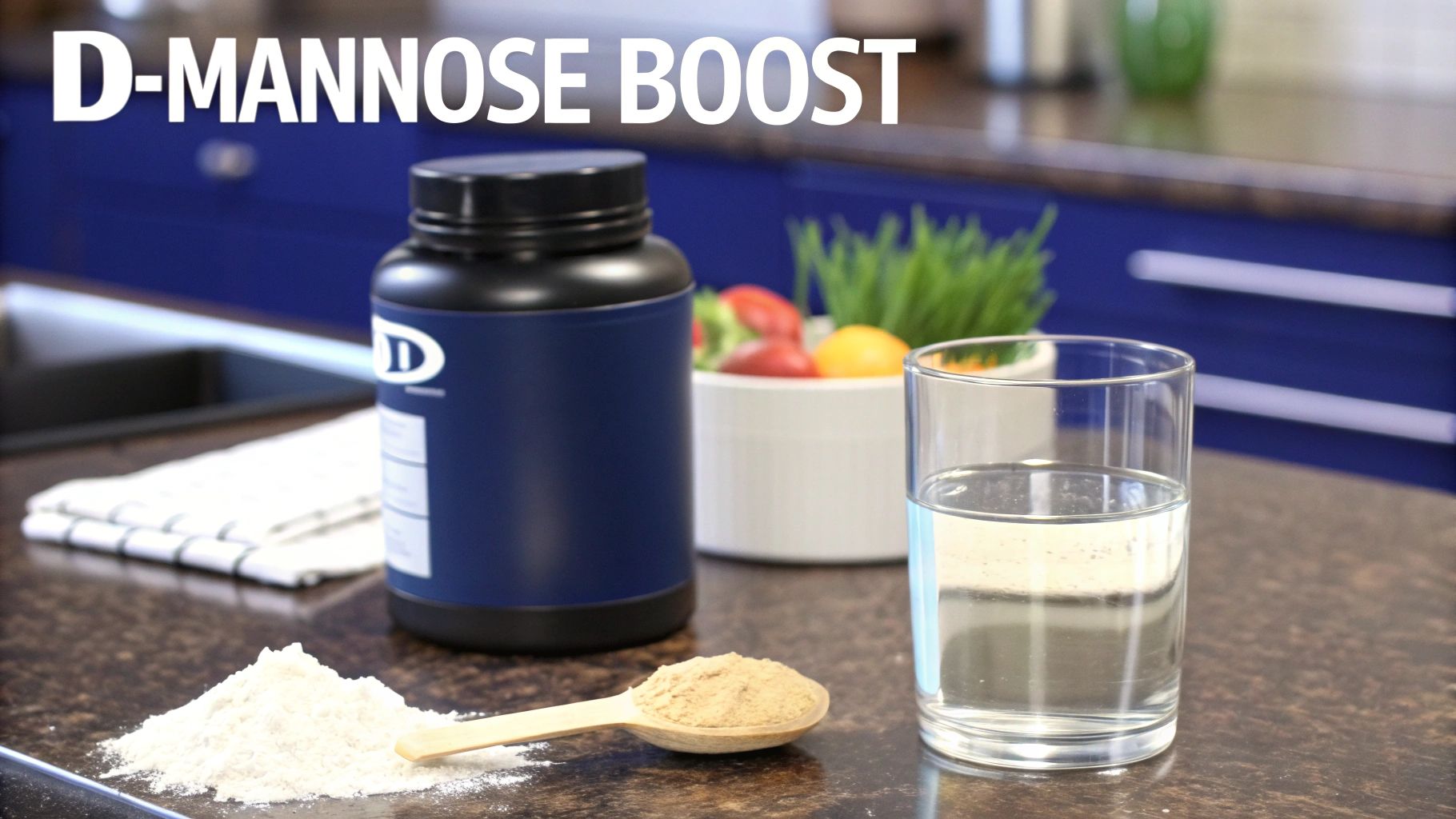
Instead of killing the bacteria, D-mannose binds to their surface lectins, effectively neutralising their ability to adhere. This allows the bacteria to be naturally and easily flushed out of the system during normal urination. This targeted, scientifically-supported approach has made it a popular recommendation among integrative medicine practitioners and a go-to preventative measure for individuals who suffer from recurrent infections.
Lifestyle Tips for Using D-Mannose
To use D-mannose effectively, particularly during an acute infection, timing and dosage are crucial. A structured approach ensures the concentration in your urine is high enough to be effective.
- Act Quickly: Begin taking D-mannose at the first hint of symptoms. For an acute infection, a common, evidence-based regimen is to take 2-3 grams mixed into a glass of water every 2-3 hours for the first day.
- Optimal Absorption: Take D-mannose on an empty stomach to ensure it is absorbed rapidly into the bloodstream and excreted into the urine without being processed as a food source.
- Taper and Continue: After the first 24-48 hours, as symptoms improve, you can reduce the frequency. It is vital to continue taking a maintenance dose for at least 2-3 days after symptoms have completely gone to prevent a recurrence.
- Combine with Hydration: D-mannose works best when paired with increased water intake. The flushing action of frequent urination is essential for carrying the D-mannose-bound bacteria out of your body.
Health Advice: D-mannose does not disrupt the body's natural gut flora like antibiotics can. Its mechanism is purely mechanical, addressing the cause of the infection without the side effects associated with broader-spectrum treatments, making it an excellent tool for both acute management and long-term prevention.
3. Cranberry Products (Juice and Supplements)
Cranberry products have long been a cornerstone of traditional and modern home remedies for cystitis. Their effectiveness stems from unique compounds called A-type proanthocyanidins (PACs), which possess an anti-adhesion property. These PACs work by preventing harmful bacteria, particularly E. coli, from sticking to the walls of the bladder and urinary tract, making it easier for them to be flushed out during urination.

This mechanism is a well-researched phenomenon. Used for centuries by Native Americans and now a standard recommendation in many healthcare settings, cranberries are particularly noted for their preventative benefits. Multiple scientific reviews, including those from Cochrane, have found evidence supporting their role in reducing the frequency of recurrent UTIs, making them a valuable tool for proactive management.
Lifestyle Tips for Using Cranberry
To harness the benefits of cranberries effectively, the form and dosage are crucial. Simply drinking any cranberry-flavoured beverage will not suffice. Consider these practical guidelines:
- Choose Wisely: Opt for pure, unsweetened cranberry juice rather than sweetened cocktail varieties, which are often high in sugar that can feed bacteria. If the tartness is too much, dilute it with water. Alternatively, high-strength supplements are an excellent sugar-free option.
- Check for PACs: When selecting supplements, look for products that are standardised to their PAC content. A daily dose of at least 36 mg of PACs is generally considered the therapeutic threshold for preventing bacterial adhesion.
- Be Consistent: For prevention, a healthy lifestyle habit is to aim for a daily intake of 240-300 ml of pure cranberry juice or an equivalent supplement. If you are using it to support an active infection, consistency is key to maintaining the anti-adhesion effect.
- Manage Side Effects: Cranberry products are acidic and can sometimes cause stomach irritation. Taking supplements with a meal can help to minimise any potential discomfort.
Health Advice: Cranberry's power lies in prevention. While it can support acute treatment by making it harder for bacteria to linger, its primary strength is in creating an inhospitable environment for bacteria to initiate an infection in the first place.
4. Probiotics (Lactobacillus Species)
While flushing bacteria out is crucial, another powerful lifestyle strategy involves rebalancing your body's internal ecosystem to prevent harmful bacteria from thriving in the first place. Probiotics, particularly specific strains of Lactobacillus, are beneficial bacteria that help restore a healthy balance to the vaginal and urinary tract flora. This creates an environment that is naturally hostile to the pathogens, like E. coli, that commonly cause cystitis.

This approach is particularly valuable for those experiencing recurrent UTIs, as it addresses the underlying imbalance rather than just the acute infection. Scientific research has identified strains such as Lactobacillus rhamnosus GR-1 and Lactobacillus reuteri RC-14, which are now recommended by healthcare professionals for their proven ability to support urinary health.
Lifestyle Tips for Probiotic Use
To effectively use probiotics as one of your remedies for cystitis, a targeted approach is necessary. To gain a deeper understanding of these beneficial microbes and how they can support your body, read our comprehensive guide on What Are Probiotics.
- Choose Clinically Studied Strains: Look for supplements that specifically list L. rhamnosus GR-1 and L. reuteri RC-14. The effectiveness of probiotics is highly strain-specific.
- Optimal Timing: For best results and improved bacterial survival, make it a habit to take your probiotic on an empty stomach, such as first thing in the morning or just before bed.
- Be Consistent: Probiotics need time to colonise and exert their effects. Continue supplementation for at least 4 to 6 weeks to fully establish a healthy flora.
- Proper Storage: Follow the manufacturer's instructions for storage. Some probiotics require refrigeration to maintain their potency and viability.
Health Advice: The primary goal of using probiotics for cystitis is not to directly kill bacteria, but to create a robust and healthy microbiome that acts as a natural defensive barrier. This makes it significantly harder for pathogenic bacteria to attach to the bladder wall and initiate an infection.
5. Sodium Bicarbonate (Baking Soda) Alkalinisation
A long-standing home remedy for cystitis involves using sodium bicarbonate, more commonly known as baking soda, to alkalinise your urine. This simple chemical process temporarily raises the pH level of your urine, making it less acidic. This change in the urinary environment can provide significant relief from the characteristic burning and stinging sensation during urination, which is often exacerbated by acidic urine irritating the inflamed bladder lining.
While not a cure that eliminates bacteria, this method is medically sound for rapid symptom management. By creating a less favourable alkaline environment, it may also help to slow the multiplication of certain bacteria, such as E. coli, which thrive in acidic conditions. It's a supportive measure that can make the infection more bearable while your body's immune system or antibiotics work to clear the pathogens.
Health Tips for Safe Use
Using sodium bicarbonate requires careful measurement and should be viewed as a short-term intervention. Follow these specific steps for safe and effective use:
- Correct Dosage: Mix half to one level teaspoon of sodium bicarbonate into a full glass (around 250ml) of water. Ensure it is fully dissolved before drinking.
- Timing: Take this mixture up to three times per day, but do not continue this remedy for more than 48 hours. It is intended for immediate, short-term relief only.
- Health Considerations: Do not use this remedy if you have high blood pressure, heart disease, or kidney problems, or if you are on a sodium-restricted diet. Consult your GP if you have any pre-existing health conditions.
- Listen to Your Body: If you experience any adverse effects such as stomach cramps, increased gas, or swelling, discontinue use immediately and seek medical advice.
Health Advice: The primary benefit of sodium bicarbonate is its ability to rapidly neutralise urine acidity, offering almost immediate relief from the painful burning symptom of cystitis. It acts as a powerful palliative tool, not a standalone cure.
6. Heat Therapy Application
When dealing with the intense discomfort of cystitis, applying controlled heat to the lower abdomen or back can be a profoundly effective remedy for pain relief. This non-invasive method works by relaxing the bladder and surrounding pelvic muscles, which often cramp and spasm during an infection. The warmth increases blood flow to the area, which helps to ease inflammation and reduce the pain signals sent to the brain.
This form of soothing therapy is a standard comfort measure used in both home and clinical settings to manage acute pelvic pain. Its value lies in its simplicity and ability to provide immediate, localised relief from the persistent ache and pressure that characterise a bladder infection, making it an excellent complementary treatment alongside other remedies for cystitis.
Lifestyle Tips for Using Heat Therapy
To safely and effectively use heat therapy, a careful approach ensures you get maximum benefit without risking skin irritation or burns. Follow these practical steps:
- Choose Your Heat Source: A hot water bottle, a heated gel pack, or a warm, damp towel are all excellent options. Electric heating pads are also effective but should be used with caution, especially overnight.
- Protect Your Skin: Always place a barrier, such as a thin towel or a layer of clothing, between the heat source and your skin to prevent burns. Never apply heat directly to bare skin.
- Time Your Sessions: Apply the heat for 15-20 minutes at a time. You can repeat this every few hours as needed, but give your skin a break of at least 20 minutes between applications to allow it to return to its normal temperature.
- Target the Pain: Place the heat pack on your lower abdomen to soothe bladder pain and cramping, or on your lower back if you are experiencing referred pain in that area.
Health Advice: Heat therapy provides symptomatic relief by tackling muscle tension and pain directly. While it does not cure the infection itself, it can significantly improve your comfort and ability to rest, allowing your body to focus on fighting the bacteria.
7. Uva Ursi (Bearberry) Herbal Treatment
Harnessing a long history in traditional medicine, uva ursi (also known as bearberry) is a well-regarded herbal remedy for cystitis. This botanical solution works thanks to its active compound, arbutin, which has powerful antimicrobial properties. Once ingested, your body metabolises arbutin into hydroquinone, a substance that is effective against the common bacteria responsible for urinary tract infections.
The use of uva ursi for urinary tract ailments dates back centuries and is scientifically recognised in official pharmacopoeias, including the German Commission E monographs, which approve its use for inflammatory conditions of the lower urinary tract. It serves as a potent, short-term natural alternative for managing uncomplicated cystitis.
Health Tips for Safe Herbal Use
Correctly using uva ursi is crucial for its effectiveness and safety. Its antimicrobial action is highly dependent on the pH of your urine, making a structured approach essential.
- Create an Alkaline Environment: Uva ursi’s active component, hydroquinone, is only released in alkaline urine. You can help achieve this by taking a small amount of sodium bicarbonate (baking soda) or focusing on an alkaline-ash diet rich in vegetables and fruits.
- Adhere to Short-Term Use: This is not a long-term preventative. Uva ursi should only be used for a maximum of 5 to 7 days at a time, and no more than five times in a single year, to avoid potential liver stress.
- Time Your Doses: To minimise the chance of stomach irritation, it is best to take uva ursi supplements or tinctures between meals rather than on a full stomach.
- Consult a Professional: Before starting any herbal treatment, especially one as potent as uva ursi, it is vital to consult with a healthcare provider or a qualified herbalist to ensure it is appropriate for your situation.
Health Advice: The effectiveness of uva ursi is directly linked to urine alkalinity. Without an alkaline environment, the active compound arbutin will not convert to antimicrobial hydroquinone, rendering the remedy ineffective. This makes pH management a non-negotiable part of the treatment.
8. Proper Hygiene and Behavioural Modifications
Preventing bacteria from entering the urinary tract in the first place is a cornerstone of managing cystitis. Strategic lifestyle changes in personal hygiene and daily behaviours can dramatically reduce the risk of initial infection and subsequent recurrences. This approach focuses on minimising the transfer of bacteria, particularly E. coli from the rectal area, to the urethra.
This method is universally endorsed by medical professionals as a fundamental part of a comprehensive plan for cystitis prevention. These lifestyle adjustments work by creating an environment that is less hospitable to bacterial growth and by physically blocking the primary routes of contamination, making them powerful, proactive remedies for cystitis.
Key Lifestyle Changes for Prevention
Adopting these habits consistently can offer long-term protection. Focus on incorporating these practices into your daily and post-activity routines:
- Practise Post-Coital Urination: Always aim to urinate within 30 minutes after sexual intercourse. This simple action helps to flush out any bacteria that may have been introduced into the urethra during activity.
- Avoid Irritating Products: Steer clear of harsh or scented products in the genital area, such as douches, feminine hygiene sprays, scented soaps, or powders. These can disrupt the natural pH balance and irritate the sensitive urethral opening.
- Choose Showers Over Baths: When you have an active infection, or if you are prone to them, taking a shower instead of a bath can prevent bacteria in the bathwater from entering the urethra.
- Maintain General Urogenital Health: Your overall vaginal microbiome plays a supportive role. For instance, understanding the 5 Reasons Why You Should Take Your Vaginal Health Seriously During Your Period can highlight practices that support a healthy environment, indirectly reducing cystitis risk.
- Wear Appropriate Clothing: Opt for breathable cotton underwear and avoid wearing tight-fitting trousers for extended periods. This helps to keep the area dry and prevents the creation of a warm, moist environment where bacteria thrive.
Health Advice: These modifications are not just about cleanliness; they are strategic interventions designed to disrupt the pathway of bacteria. By making these small, consistent lifestyle changes, you actively reduce the opportunities for an infection to begin.
Remedies for Cystitis: Top 8 Comparison
| Remedy | Implementation Complexity | Resource Requirements | Expected Outcomes | Ideal Use Cases | Key Advantages |
|---|---|---|---|---|---|
| Increased Water Intake and Frequent Urination | Very low – simple habit change | Minimal (water) | Reduces bacterial concentration, mechanical flushing | Mild cystitis, prevention | Natural, safe, immediate, cost-free |
| D-Mannose Supplementation | Low – requires dosing adherence | Moderate (supplements) | Prevents E. coli adherence, aids bacterial elimination | E. coli UTIs, recurrent infections | Targeted action, safe for diabetics |
| Cranberry Products (Juice & Supplements) | Low – consumption routine | Moderate (juice/supplements) | Prevents bacterial adhesion, provides antioxidants | Prevention, mild infections | Researched, nutritional benefits |
| Probiotics (Lactobacillus Species) | Moderate – requires consistent use | Moderate (special supplements) | Restores healthy flora, supports immunity | Recurrent UTIs, immune support | Addresses root cause, immune support |
| Sodium Bicarbonate Alkalinization | Very low – easy preparation | Minimal (baking soda) | Rapid pain relief, urine alkalinization | Symptom relief, short-term use | Fast-acting, low cost |
| Heat Therapy Application | Very low – simple physical method | Minimal (heating pad or warm bath) | Immediate pain relief, muscle relaxation | Symptom relief, comfort measure | Safe, inexpensive, repeatable |
| Uva Ursi (Bearberry) Herbal Treatment | Moderate – requires proper dosing and urine alkalinization | Moderate (herbal supplements) | Antimicrobial and anti-inflammatory effects | Acute UTIs, resistant bacteria | Natural antimicrobial, traditional use |
| Proper Hygiene and Behavioral Modifications | Very low – habit and behavior changes | None | Reduces bacterial introduction and recurrence risk | Prevention and adjunct treatment | No cost, preventative, addresses causes |
Creating Your Personalised Cystitis Management Plan
Navigating the discomfort of cystitis can be a frustrating experience, but as we have explored, a diverse toolkit of effective remedies is at your disposal. From the fundamental lifestyle change of increased hydration to flush out bacteria, to the targeted support of supplements like D-mannose and probiotics, you have numerous proactive steps you can take. The key is to move beyond a reactive approach and build a comprehensive, personalised strategy that addresses your unique triggers and lifestyle.
This article has highlighted a spectrum of powerful remedies for cystitis, encompassing immediate relief techniques, long-term preventative measures, and evidence-based natural options. We have seen how simple lifestyle adjustments, such as heat therapy for pain relief and sodium bicarbonate for temporary symptom reduction, can provide crucial comfort during an acute episode. Simultaneously, long-term strategies like incorporating specific probiotic strains (Lactobacillus), considering herbal options like Uva Ursi under professional guidance, and making consistent hygiene modifications are foundational to preventing recurrence.
Weaving Remedies into a Cohesive Strategy
The true power of this knowledge lies not in trying every remedy at once, but in understanding how they can work together. Your personalised lifestyle plan might look something like this:
- Immediate Action Plan (First Signs of Symptoms):
- Immediately increase water intake to dilute urine and flush the urinary tract.
- Begin a short course of D-mannose as directed to help inhibit bacterial adhesion.
- Use a hot water bottle or heating pad on your lower abdomen for pain management.
- Ongoing Prevention Plan (Daily & Weekly Habits):
- Maintain consistent hydration throughout the day, not just during an active infection.
- Integrate a daily high-quality probiotic into your routine to support a healthy urinary microbiome.
- Strictly adhere to best-practice hygiene, such as wiping from front to back and urinating after sexual intercourse.
Key Takeaway: The most effective approach to managing cystitis is a dual one. Combine immediate, symptom-soothing remedies with consistent, long-term lifestyle adjustments to break the cycle of infection.
Mastering these concepts is invaluable because it empowers you to take control of your urinary health. Instead of feeling helpless when symptoms arise, you will have a clear, actionable plan. This proactive stance not only reduces the physical discomfort and disruption caused by cystitis but also provides significant peace of mind.
While these home and lifestyle-based remedies for cystitis are highly effective for many, it is crucial to recognise their limitations. Self-management is appropriate for uncomplicated cases, but professional medical advice is non-negotiable if your symptoms are severe, persist beyond 48 hours, or are accompanied by fever, chills, or back pain. Persistent or recurrent infections require a thorough medical investigation to rule out underlying issues and establish the most effective treatment pathway, which may include antibiotics. A healthcare professional can provide a definitive diagnosis and ensure you receive the correct care, preventing potential complications like a more serious kidney infection.
Don't let recurrent cystitis control your life. For a truly personalised and proactive approach that gets to the root cause of your symptoms, contact The Lagom Clinic. Our private GPs in Bristol specialise in creating comprehensive wellness plans that integrate lifestyle medicine with expert medical care to help you achieve lasting urinary health. Book your consultation at The Lagom Clinic today and take the first step towards a future free from cystitis.
Recurrent cystitis?
If cystitis keeps coming back, a private GP consultation can investigate underlying causes and prescribe effective treatment.


 Members Consultation