


Yes, stress is a direct cause of fatigue. That profound, persistent exhaustion you feel isn't just a sign of being busy—it's a real, physiological response to chronic stress. When your body's alert system is stuck in the "on" position, it rapidly depletes your energy reserves, leading to a state of mental and physical weariness that a single good night's sleep can't fix.
Why You Feel So Drained From Stress

Think of your body’s stress response as its built-in alarm system. When you face a threat—whether it’s a looming work deadline or a difficult family argument—this system activates the classic ‘fight-or-flight’ response. It releases hormones like adrenaline and cortisol to prepare you for immediate action.
This is a brilliant evolutionary mechanism for short-term crises. The problem arises when stress becomes a constant companion, and the alarm never switches off. It’s like leaving a power-hungry app running in the background on your phone; eventually, it drains the entire battery. This perpetual state of high alert consumes a tremendous amount of energy, leaving you feeling utterly depleted.
If this sounds familiar, you're not alone. An incredible 86% of adults in the UK report feeling stressed at least once a month. On average, UK adults feel weighed down by stress for about 10.3 days every month—that’s more than twice a week. Each of those days triggers the very responses that sap your energy and lead to that feeling of chronic tiredness. You can find more insights about workplace stress statistics and their impact on our wellbeing.
The Ripple Effect on Your Body
That constant surge of stress hormones doesn't just make you feel tired in the moment. It sets off a domino effect that impacts your entire system, disrupting the very functions you need to stay energised.
Here are a few of the key areas that take a hit:
- Sleep Disruption: High cortisol levels, especially at night, can interfere with your natural sleep-wake cycle. This often prevents you from getting the deep, restorative rest your body needs, so you wake up feeling just as tired as when you went to bed.
- Hormonal Imbalance: The relentless demand for stress hormones can throw other crucial systems out of balance, including thyroid function and blood sugar regulation, both of which are major players in managing your energy levels.
- Mental Fog: That foggy-headed feeling where you can't focus, remember things, or make a clear decision? That's a classic symptom of stress-induced exhaustion, as your brain struggles with the cognitive load of constant stress.
So, the answer to "can stress cause fatigue?" is a resounding yes. It’s far more than just feeling a bit worn out; it's a deep-seated exhaustion that’s wired directly into your body’s biology.
How Your Body's Alarm System Leads to Burnout
To understand why stress leaves you feeling so completely drained, it helps to view your body’s stress response as a sophisticated alarm system. This system, known as the hypothalamic-pituitary-adrenal (HPA) axis, is brilliant at its job: protecting you from immediate danger.
Imagine a threat appears—a car swerving towards you, or an aggressive email from your boss. Instantly, the HPA axis floods your body with hormones like cortisol and adrenaline. This chemical surge is a lifesaver in short bursts, sharpening your focus and preparing your muscles for action. It's your survival instinct at work.
The problem is, our modern lives are filled with chronic stressors—relentless work deadlines, financial worries, or difficult relationships—that keep this alarm blaring all day long. This is akin to running a car engine in the red for weeks on end. Sooner or later, the system starts to malfunction, and that’s when burnout hits.
The Energy Drain of Constant High Alert
When your body is stuck in a "fight or flight" state, it burns through a phenomenal amount of energy. Cortisol, our main stress hormone, is responsible for mobilising your energy reserves, primarily by releasing glucose into your bloodstream.
This is highly effective for handling a sudden crisis. But when cortisol levels remain elevated day after day, your body is constantly draining its battery without a chance to recharge. This often leads to unstable blood sugar levels, causing those familiar energy crashes and cravings that only worsen the fatigue cycle.
When the body's alarm system never shuts off, it creates a cascade of physiological changes. This constant state of emergency depletes resources, fuels inflammation, and disrupts the very systems responsible for energy production and rest.
To really appreciate how this internal alarm can lead to total burnout, it’s worth looking into the nervous system's role in chronic stress and burnout, which explains how it disrupts our sleep, hormones, and energy levels.
The diagram below maps out the direct path from chronic stress to your body's alarm system being activated, which ultimately results in your energy stores being depleted.
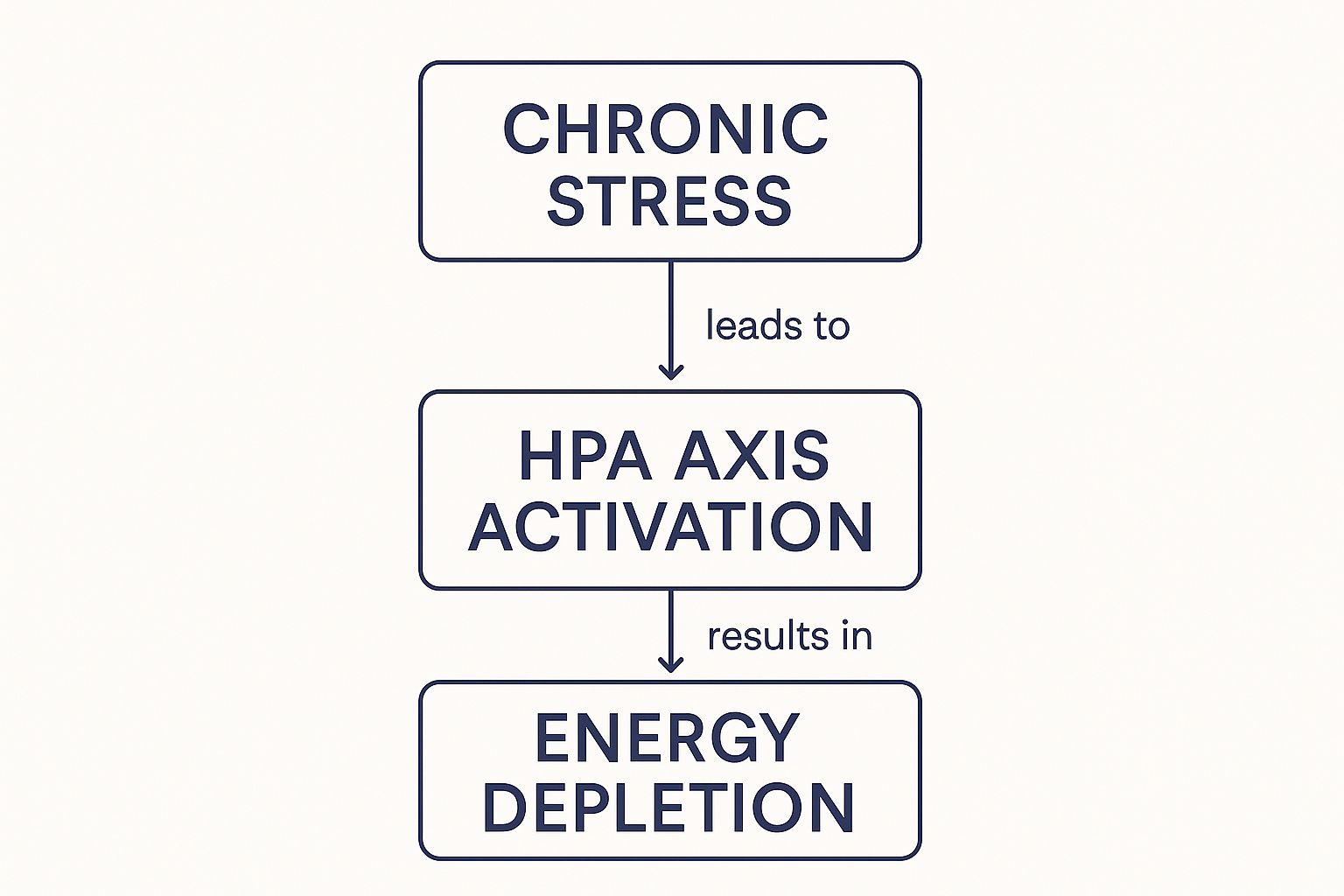
This visual shows that persistent stress isn't just a feeling in your head—it's a trigger for a real biological chain reaction that ends in exhaustion.
How Other Body Systems Start to Falter
This constant hormonal flood has knock-on effects that only add to the feeling of exhaustion. Over time, chronic stress and persistently high cortisol can cause several systemic problems that are a direct cause of fatigue.
- Weakened Immune Response: Your immune system requires significant energy to function optimally. When all your resources are being diverted to the stress response, your immunity suffers. This leaves you more vulnerable to infections and illnesses, which drain you even further.
- Increased Inflammation: Long-term stress promotes low-grade inflammation throughout the body. This inflammatory state is a major cause of fatigue in its own right, as your body uses up energy trying to manage it.
So, the answer to "can stress cause fatigue?" is deeply rooted in our biology. Your body’s alarm system was built for short sprints, not the marathon of modern stress. When it's pushed too hard for too long, it leads to a state of complete physical and mental exhaustion.
Recognising the Warning Signs of Stress Exhaustion

It’s all too easy to dismiss constant tiredness as a normal part of a busy life. But the fatigue that stems from chronic stress is different. It’s a profound exhaustion that sleep doesn’t seem to resolve. Learning to spot the specific signals your body is sending is the crucial first step to regaining your energy.
Stress exhaustion isn't simply feeling sleepy. It's a whole-body state that affects you physically, emotionally, and mentally. A classic sign is waking up after a full night's sleep feeling just as drained as when you went to bed. This indicates that your body’s stress response system is stuck in the ‘on’ position, preventing truly restorative rest.
This profound lack of energy inevitably impacts every corner of your life. Hobbies you once loved may feel like a chore. Socialising with friends or even making dinner can seem overwhelming. This isn’t laziness—it’s a clear signal that your energy reserves are critically low.
The Physical Toll of Stress
When your body is trapped in a state of high alert, it starts sending out physical distress signals beyond just tiredness. Think of them as flashing warning lights, telling you your nervous system is struggling to cope with the constant pressure.
Keep an eye out for these common physical symptoms:
- Persistent Muscle Aches: Unexplained soreness and tension, especially in your neck, shoulders, and back, often occur because your muscles are constantly braced for a threat.
- Frequent Headaches: A tight, band-like feeling around your head is the classic tension headache, a very common symptom of chronic stress.
- Digestive Issues: Stress can wreak havoc on your gut, leading to symptoms like stomach cramps, bloating, or a complete loss of appetite.
The link between our minds and our bodies is incredibly strong. Unchecked stress doesn't just stay in your head—it shows up as real, physical symptoms that can seriously impact your quality of life.
Emotional and Cognitive Symptoms
Beyond the physical drain, stress exhaustion takes a heavy toll on your mental and emotional wellbeing. You might find your patience is shorter than usual, causing you to snap at loved ones over minor issues. This emotional volatility isn’t a character flaw; it's the direct result of an overloaded brain struggling to regulate mood.
Mentally, brain fog is one of the most common complaints. This frustrating state can make it incredibly difficult to concentrate on your work, recall important information, or make simple decisions with clarity.
Stress at work is a particularly powerful driver of this. Recent figures show that around 776,000 workers in Great Britain suffered from work-related stress, depression, or anxiety, leading to a staggering 16.4 million lost working days. This kind of sustained pressure is a direct cause of chronic fatigue, as it keeps those stress pathways firing day in and day out. You can explore more detailed statistics about the impact of stress from the Priory Group.
Why Your Job Is Leaving You Drained
For many of us, the workplace is the primary source of chronic stress. This isn't just about navigating a tough week; it's the kind of relentless pressure that slowly leads to burnout—a state of total physical, mental, and emotional exhaustion.
When your job is the main driver of this stress, it systematically depletes your energy reserves.
This constant demand keeps your body's alarm system permanently activated. Unmanageable workloads, never-ending deadlines, and a lack of control over your tasks are powerful triggers. Each one signals your HPA axis to keep the cortisol flowing, burning through your energy and leaving you utterly depleted before the workday is even over.
It's no surprise that burnout and chronic workplace stress are now widely recognised as major causes of fatigue among UK employees. A recent report revealed that nearly 9 in 10 UK workers said they experienced high or extreme stress over the past year. Furthermore, data shows a staggering 65% of UK workers reported symptoms of burnout, which equates to over 16 million full-time employees. You can dig deeper into these figures in the Mental Health UK Burnout Report.
When Work Follows You Home
In our hyper-connected world, the boundaries between work and personal life have become blurred. The unspoken expectation to be available after hours—answering emails from the sofa or taking calls during dinner—means our brains never truly get a chance to switch off and recover.
This lack of a clean break prevents your nervous system from shifting into its crucial "rest and digest" mode.
A job that consistently demands more energy than it allows you to recover is, by its very nature, unsustainable. This imbalance is a direct route to chronic fatigue because it denies your body the essential downtime it needs to repair and restore itself.
This constant connection to work pressures is a huge contributor to stress-related fatigue. Without proper time to recharge, your body stays on high alert. This makes it incredibly difficult to get the deep, restorative sleep you need, leaving you feeling permanently exhausted. Learning how to reduce workplace stress isn't just about feeling better at your desk—it’s about reclaiming your energy and your life.
Common Workplace Triggers for Fatigue
Certain aspects of work are particularly effective at draining our energy. Identifying them is the first step toward addressing the root cause of your exhaustion.
- High Demands, Low Control: A heavy workload is challenging, but when you feel you have no say in how you manage it, the stress multiplies. This is a classic recipe for feeling overwhelmed.
- Lack of Support: Feeling isolated, without backing from your manager or colleagues, can make every small challenge feel insurmountable.
- Unclear Job Expectations: If you’re not sure what’s expected of you, your brain is constantly trying to solve a puzzle. This ambiguity creates a background level of uncertainty that is incredibly mentally taxing.
Since the pressures of our jobs are such a huge factor in burnout, discovering effective managing work stress strategies is absolutely essential for a healthier, more balanced life.
Actionable Lifestyle Changes to Rebuild Your Energy

Recognising that stress is the culprit behind your exhaustion is the first step. The next, and most important, is to actively rebuild your energy reserves. This doesn't require a radical overnight life overhaul. Instead, it’s about making small, sustainable lifestyle changes that begin to refill your tank.
Each of these tips is a practical tool you can use to calm your nervous system, stabilise your energy, and reclaim your vitality from the grip of stress-induced fatigue.
Nourish Your Body to Stabilise Energy
When you're chronically stressed, your body works overtime, burning through essential nutrients like B vitamins and magnesium—the very things you need for energy production. The constant release of cortisol also disrupts your blood sugar, causing those familiar energy crashes.
To counter this, focus on a balanced diet rich in whole foods. Your goal is to provide your body with a steady, slow-burning fuel source, not quick, sugary fixes that lead to a bigger slump later on.
- Complex Carbohydrates: Foods like oats, brown rice, and sweet potatoes release glucose into your bloodstream slowly, preventing sharp spikes and dips in your energy.
- Lean Proteins: Including chicken, fish, beans, or lentils with every meal is key for stabilising blood sugar. It also provides the amino acids needed to build mood-regulating neurotransmitters.
- Healthy Fats: Incorporate avocados, nuts, and olive oil. These are excellent for supporting brain health and helping to reduce the inflammation caused by chronic stress.
Small tweaks to what you eat can make a huge difference in your resilience. By nourishing your body properly, you’re giving it the raw materials it needs to manage stress hormones and keep your energy on an even keel.
Incorporate Gentle Movement to Calm Your System
When you’re utterly exhausted, the thought of a high-intensity workout is likely the last thing on your mind—and for good reason. The key isn't to push your already depleted system further. It's about using gentle movement to soothe your overactive nervous system.
Activities like a slow walk in nature, gentle stretching, or restorative yoga can help your body shift out of the "fight-or-flight" state and into "rest-and-digest" mode. This type of movement helps lower cortisol and release physical tension held in your muscles, directly addressing the physical symptoms of stress fatigue.
Even just 15-20 minutes a day can have a surprisingly powerful effect on both your energy and your mood.
Optimise Your Sleep for True Restoration
It’s a cruel irony: stress makes you tired, but it also disrupts your sleep. High cortisol levels in the evening can make it incredibly difficult to fall asleep and stay asleep, robbing you of the deep, restorative rest your body and brain desperately need to repair.
Prioritising your sleep hygiene is absolutely crucial for breaking this cycle.
- Create a Wind-Down Routine: An hour before bed, put away screens. Instead, read a book, take a warm bath, or listen to calming music. This signals to your brain that it's time to power down.
- Stick to a Consistent Schedule: Going to bed and waking up at roughly the same time every day—even on weekends—helps regulate your body's internal clock, or circadian rhythm.
- Make Your Bedroom a Sanctuary: Keep your bedroom dark, cool, and quiet. Reserve it for sleep and intimacy to strengthen the mental association between your bed and rest.
These simple, consistent habits pave the way for deeper, more refreshing sleep. Honing these routines is a fundamental step in learning how to improve mental wellbeing and building lasting resilience against stress.
To make this even more straightforward, here’s a simple plan you can start using today.
Your Daily Action Plan for More Energy
This table breaks down simple habits you can incorporate into your day to effectively fight back against stress-induced fatigue.
| Lifestyle Area | Small Actionable Step | Benefit for Energy Levels |
|---|---|---|
| Nutrition | Add a source of lean protein (e.g., a handful of nuts, Greek yoghurt) to your breakfast. | Stabilises blood sugar from the start of the day, preventing a mid-morning crash. |
| Movement | Take a 15-minute walk during your lunch break, preferably outside. | Lowers cortisol, releases muscle tension, and provides a natural mental reset. |
| Sleep | Set an alarm for 30 minutes before your intended bedtime to start your wind-down routine. | Creates a consistent cue for your brain to begin relaxing, making it easier to fall asleep. |
| Mindfulness | Practise 5 minutes of deep belly breathing when you first feel stress levels rising. | Immediately activates the 'rest-and-digest' nervous system, reducing the physical toll of stress. |
By weaving these small actions into your daily life, you start to regain control, building a solid foundation of energy and resilience one step at a time.
When You Should Talk to Your Doctor About Fatigue
While making proactive lifestyle changes is a powerful way to combat stress-induced fatigue, it is crucial to know when to seek professional medical advice. Sometimes, what feels like exhaustion from stress can be a symptom of an underlying health issue. Knowing when to book an appointment with your GP is a key part of taking care of yourself.
If your fatigue is relentless and does not improve despite adequate rest, it's time to make that call. A major red flag is exhaustion that persists for several weeks, even after you’ve made a genuine effort to improve your sleep and manage stress. This profound, unshakable tiredness warrants a medical evaluation.
Similarly, if the fatigue comes on suddenly and severely, or if it is accompanied by other worrying symptoms, you should seek medical advice promptly.
Signs That Warrant a GP Visit
Pay close attention if your tiredness is coupled with any of the following, as these can sometimes point to other medical conditions:
- Unexplained weight loss or gain
- Persistent shortness of breath
- Night sweats or recurring fevers
- Noticeable changes in your bowel habits
- Swollen lymph nodes in your neck, armpits, or groin
It is important to remember that seeking medical advice is never an overreaction when it concerns your health. Your GP is there to help rule out other potential causes and ensure you get the right support, whether your fatigue is from stress or another condition.
What to Expect From Your Doctor's Appointment
When you see your GP, they will likely begin by asking detailed questions about your symptoms, lifestyle, and any stressors you are facing. This conversation is essential for them to understand what might be going on. Be prepared to talk openly about your sleep patterns, diet, and emotional state.
To rule out common physical causes of tiredness, your doctor may recommend routine blood tests. These can check for conditions such as anaemia (iron deficiency), thyroid disorders, or vitamin deficiencies, all of which are well-known causes of persistent fatigue.
Based on their findings, your GP can then guide you toward the appropriate next steps. This could involve medical treatment for a diagnosed condition, a referral to a mental health professional for talking therapies, or reassurance that your symptoms are indeed linked to stress. Whatever the outcome, this step provides clarity and a clear path forward.
Frequently Asked Questions
It's completely normal to have questions when you're trying to unravel the link between stress and fatigue. Here are some straightforward answers to the things we get asked most often, designed to give you a bit more clarity on your journey back to feeling like yourself.
Is Adrenal Fatigue the Same as Stress-Induced Fatigue?
You may have encountered the term 'adrenal fatigue' online, but it is important to know that this is not a recognised medical diagnosis. While the symptoms it describes—exhaustion, brain fog, and cravings—are very real, the term is a misnomer.
The underlying mechanism is more accurately described as HPA axis dysfunction. This is a scientifically supported concept explaining that chronic stress has dysregulated the body's main stress response system. So, rather than blaming tired adrenal glands, the focus is on the communication breakdown between the brain and the hormonal system. 'Stress-induced fatigue' is the clinically accurate term because it correctly identifies chronic stress as the root cause of the problem.
How Long Does Recovery from Stress-Related Fatigue Take?
This is a very common question, and the honest answer is that it varies for everyone. There is no set timeline for recovery. The duration depends on factors like how long you've been under stress, the intensity of that stress, and your individual life circumstances.
Some people may start to feel a noticeable improvement within a few weeks of making consistent lifestyle changes. For others, it might be a journey of several months to fully restore their energy levels. The most important thing is to be patient with yourself. Your body has been running on empty for a long time, and it needs adequate time to heal and recalibrate.
Recovery isn't a race. Think of it as a gentle recalibration. Focus on making small, sustainable changes and celebrate the little wins along the way—like waking up feeling a bit more rested or having the energy for a walk.
Can Supplements Help with Stress and Fatigue?
Supplements can play a supportive role in managing stress and fatigue. Nutrients like magnesium and the B-complex vitamins are crucial for your body's energy production processes. Adaptogenic herbs like ashwagandha have been traditionally used to help the body build resilience to stress.
However, supplements are not a substitute for foundational lifestyle changes. It's vital to view them as part of a comprehensive approach that includes a balanced diet, quality sleep, and effective stress management techniques. You should always consult your doctor before starting any new supplements. A healthcare professional can ensure they are safe for you, will not interact with other medications, and are appropriate for your specific needs.
At The Lagom Clinic, we specialise in getting to the bottom of what's causing your fatigue. If you're tired of feeling exhausted, our private GPs take the time to build a complete picture of your health and create a recovery plan that’s tailored to you. You can learn more about our approach to proactive healthcare at https://www.thelagom.co.uk.


 Members Consultation