


Personalised medicine is, quite simply, healthcare that’s all about you. It uses your unique genetic code, lifestyle choices, and environment to shape how we approach your health. It’s a move away from the old ‘one-size-fits-all’ way of thinking, focusing instead on creating a health strategy as individual as you are.
What Is Personalised Medicine Really?
Think about buying a suit. The traditional method is to grab one off the rack in a standard size and hope it fits reasonably well. Personalised medicine, however, is like going to a bespoke tailor. They take your exact measurements and craft a suit that fits you perfectly.
Instead of treating diseases based on how they affect the average person, this approach tailors prevention, diagnosis, and treatment to your specific biological and lifestyle blueprint.
This modern medical model is proactive, not reactive. It digs deep to understand the root causes of health issues by looking at the complete picture of who you are. The focus shifts from just managing symptoms to optimising your overall wellbeing for the long haul. By understanding your unique predispositions, you can make specific, medically sound lifestyle changes—like targeted dietary tweaks or a particular exercise routine—to manage your health long before problems even have a chance to start.
The Core Components of Your Health Profile
To build a truly comprehensive view of your health, personalised medicine organises your information into three key areas. These pillars work together to inform a healthcare strategy that is genuinely yours.
This infographic shows how personalised medicine is built upon these three foundational pillars.
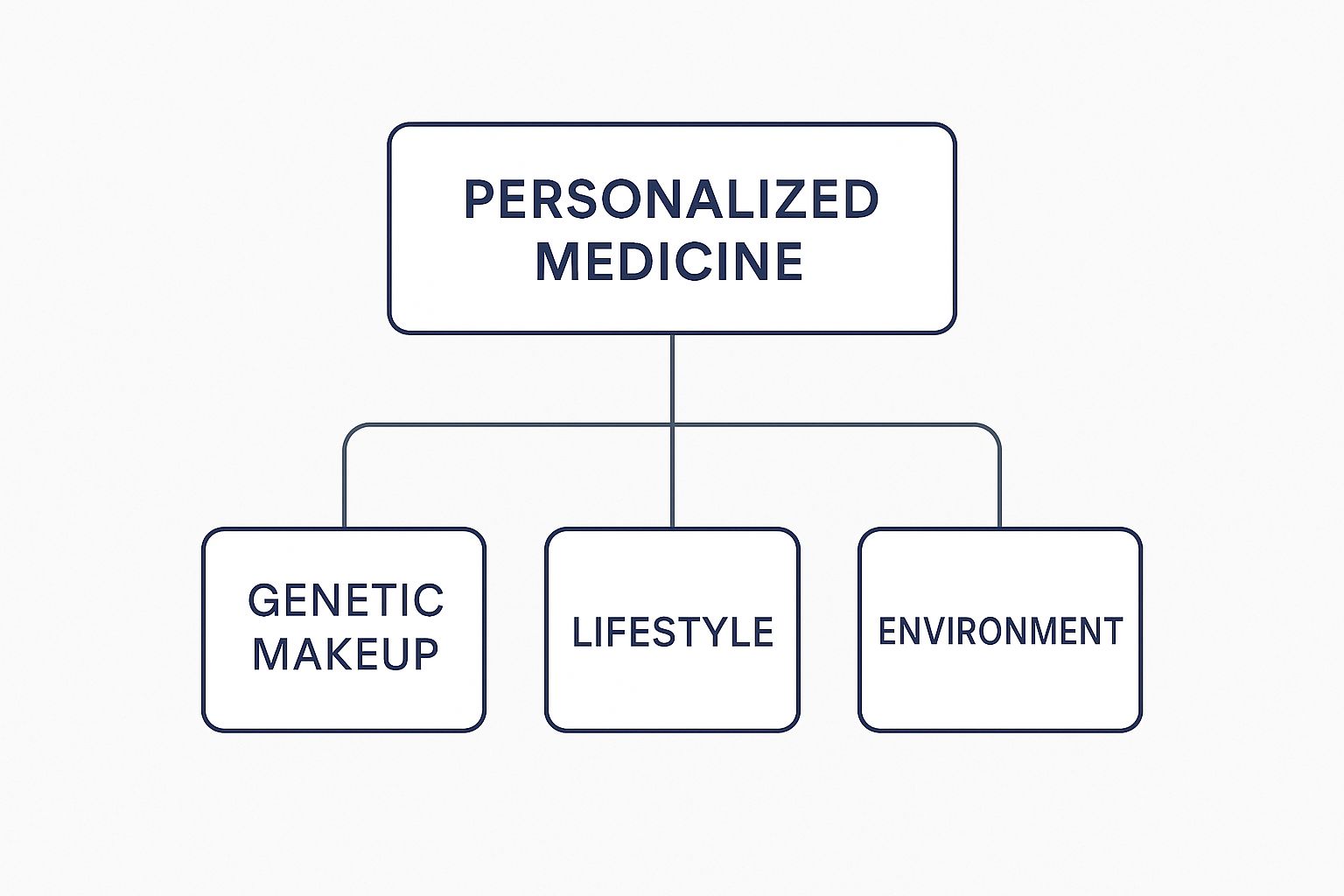
The diagram really brings home the point that your health isn't determined by just one thing. It's the complex, interwoven relationship between your genes, your daily habits, and the world you live in.
This approach is more than just a theory; it’s rapidly becoming a cornerstone of modern healthcare. Let’s look at the key differences between the old and new models.
Traditional vs Personalized Healthcare
| Aspect | Traditional Healthcare | Personalized Medicine |
|---|---|---|
| Approach | Reactive, "one-size-fits-all" | Proactive, "n-of-1" (individual-focused) |
| Diagnosis | Based on symptoms and standard tests | Based on genetic, lifestyle, and environmental factors |
| Treatment | Standardised treatments for the general population | Customised treatments for the individual patient |
| Focus | Managing disease and symptoms | Preventing disease and optimising wellness |
| Patient Role | Passive recipient of care | Active partner in health decisions |
As you can see, the shift is profound. It moves you from being a passenger in your healthcare journey to being an active, informed participant.
This is clearly reflected in its growth. The UK personalised medicine market was valued at around $21,832.5 million in 2024 and is expected to climb to over $47,127.8 million by 2033. This surge shows a significant move towards more precise and effective healthcare, fuelled by incredible advances in genomic technology and a growing demand for treatments that actually work for the individual. You can read the full research on UK market trends to see the data for yourself.
At its heart, personalised medicine is about empowerment. When you understand your individual risk factors, you and your doctor can build a proactive plan to prevent illness, rather than just reacting when it happens. This puts you firmly in the driver's seat of your long-term health.
Decoding Your Personal Health Blueprint
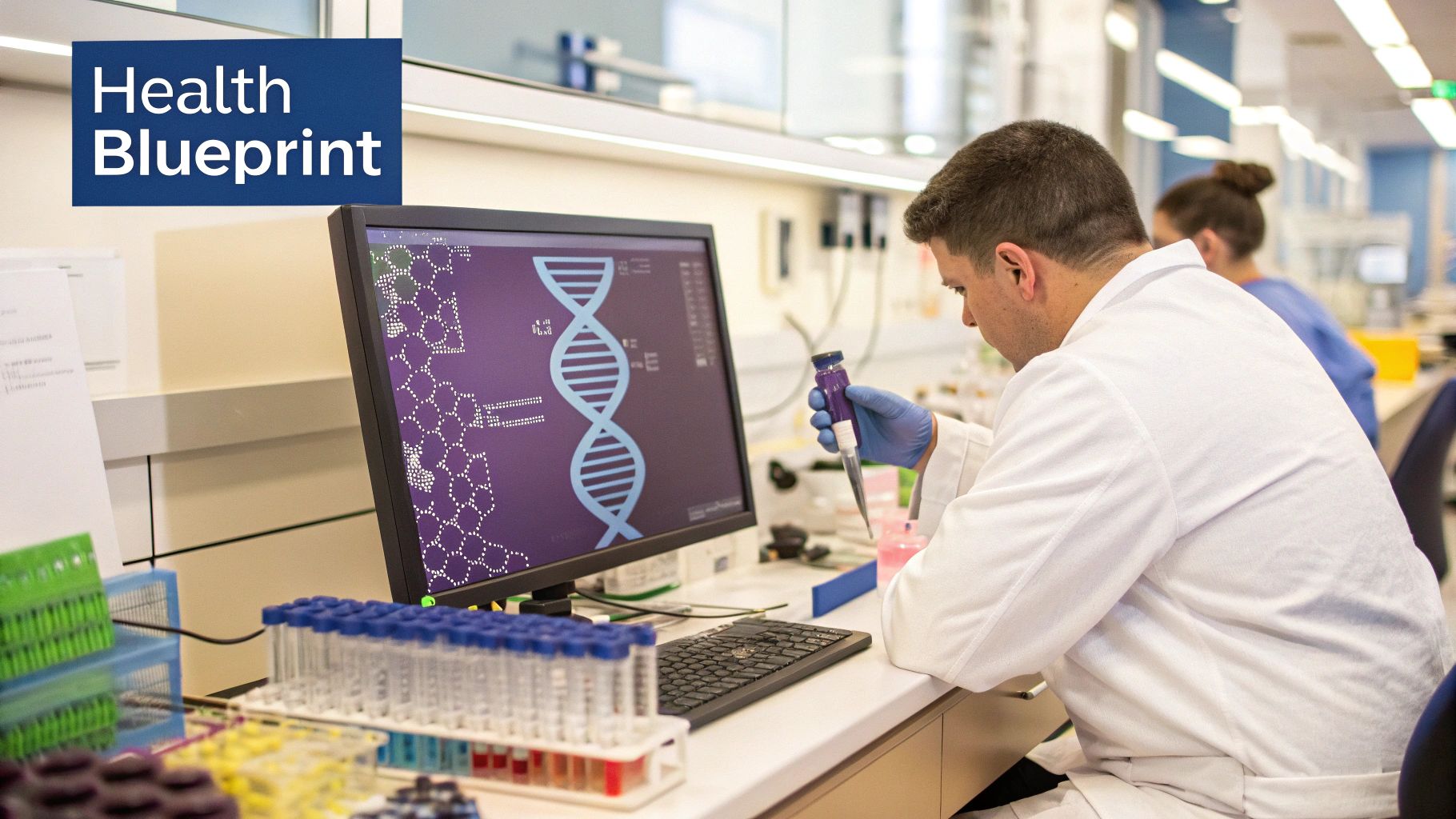
So, how does personalised medicine actually work in practice? Think of your health as a complex puzzle. For years, medicine has often worked by looking at just a few of the most obvious pieces. Personalised medicine, on the other hand, is all about gathering as many pieces as possible before trying to solve it, giving us a far clearer picture.
This process is a bit like being a health detective, gathering clues from a whole range of sources. These clues come from specialised fields of study that often end in "-omics," which simply means the study of a complete set of something. By combining these different layers of insight, your doctor gets a deeply detailed, multi-dimensional view of your unique biology.
The Key '-Omics' Explained
At the heart of this approach are three main areas of investigation that help build your personal health blueprint. Each one provides a different, yet equally vital, layer of information about you.
- Genomics: This is the study of your entire set of DNA—your genetic code. Consider it the original instruction manual your body was built with. Genomics helps us spot genetic variations that might make you more susceptible to certain conditions or influence how you react to different medications.
- Proteomics: This looks at all the proteins currently at work inside you. If your genes are the instruction manual, then proteins are the workers actually carrying out those instructions. This tells us what’s happening in your body right now, in real-time.
- Metabolomics: This analyses the small molecules, or metabolites, produced by your body's chemical processes. It’s a direct window into your metabolism, revealing a huge amount about your diet, lifestyle habits, and even your exposure to things in your environment.
By piecing together information from your genes, proteins, and metabolic activity, doctors can move beyond guesswork. They can make highly informed predictions about your health risks and determine the most effective treatment strategies, specifically for you.
From Data to Diagnosis
All this information comes together to create an incredibly detailed profile of your health. Understanding an individual's unique health profile is paramount in personalised medicine. This process is greatly advanced by utilising technologies like AI in Electronic Health Records, which help manage and interpret this complex data. Armed with this profile, your GP can make much more accurate diagnoses and design truly preventative health plans.
The rapid progress in these technologies is attracting major investment. In the UK alone, the personalised medicine market was valued at around $26.9 billion in 2024 and is projected to more than double to $59.3 billion by 2035. This growth is a direct response to the clear need for more effective, individualised treatments.
Interestingly, many of these profound insights begin with simple yet powerful diagnostic tools. You can learn more about how a private blood test in the UK can provide a window into your body’s unique processes, often serving as a foundational step on your personalised health journey.
How Personalised Medicine Is Used Today

Personalised medicine isn't some far-off concept anymore; it's right here, making a real difference in clinics and hospitals. It has successfully made the leap from the research lab into everyday medical practice, delivering tangible benefits for a growing list of conditions.
These applications show just how powerful it is to understand someone's unique biological makeup. It's all about finding the right treatment for the right person at exactly the right time.
A New Era in Cancer Treatment
Oncology is probably the best-known example of personalised medicine in action. Rather than treating all cancers of a certain type with a one-size-fits-all approach, oncologists now use genetic profiling to pinpoint the specific mutations driving a tumour’s growth.
Think of it as finding the tumour's Achilles' heel. For instance, we know that some lung cancer patients with a particular gene mutation respond incredibly well to targeted therapies designed to block it. These treatments are often far more effective and come with fewer side effects than traditional chemotherapy because they attack the cancer's specific weak points.
The Science of Pharmacogenomics
Ever wondered why the same medicine can be a lifesaver for one person but do very little for another, or even cause nasty side effects? The answer is often written in our DNA. This is where pharmacogenomics comes in – the science of using your genetic blueprint to predict your response to specific drugs.
By looking at your genetic information, a doctor can:
- Choose the best drug: Identify which medication is most likely to work for you from the very beginning.
- Find the right dose: Avoid doses that are too high and cause side effects, or too low and have no effect.
- Prevent bad reactions: Flag potential sensitivities to certain medicines before they're ever prescribed.
This approach takes so much of the guesswork out of prescribing. Your treatment becomes safer and more effective from day one, skipping the frustrating and sometimes risky trial-and-error process. It's personalised medicine in a nutshell.
This field is moving forward at an incredible pace, especially in the UK. New regulations now allow for the rapid, small-batch production of bespoke treatments like gene therapies much closer to where patients are. This means treatments can be prepared on-site at hospitals, dramatically slashing waiting times. For some cancer patients, this change means getting care that’s tailored to them in days, not months. You can learn more about how these cutting-edge personalised treatments are delivering care more quickly.
Proactive Heart Health
Personalised medicine is also having a huge impact in cardiology, helping to shift the focus from treatment back to prevention. We know that certain genetic variations can significantly raise your risk of developing conditions like high cholesterol or heart disease.
If you know you carry a higher genetic risk, it empowers you and your GP to take decisive action. This could mean specific lifestyle advice, such as adopting a diet low in saturated fats or starting a tailored exercise program to strengthen your heart. Instead of waiting for symptoms, you're actively managing your risk with a scientifically-backed plan to safeguard your long-term health.
The True Benefits For Your Health
Once you start to understand your own unique health blueprint, the advantages become crystal clear. It's a fundamental shift, moving healthcare away from simply reacting to problems and towards a genuine, proactive partnership in your own wellness. A personalised strategy cuts through the noise of generic advice, paving the way for clearer and more effective routes to feeling good.
The most obvious benefit is simply more effective treatment. When a therapy is selected based on your specific genetic markers or how your body metabolises things, its chances of success shoot right up. This targeted approach means you're not wasting time on treatments that were never going to work, and you can get on the path to recovery much faster.
Safer Prescribing and Fewer Side Effects
One of the biggest leaps forward with personalised medicine is how it helps us avoid bad reactions to medication. By looking at your genetic makeup, a practice known as pharmacogenomics, doctors can actually predict how your body will handle certain drugs.
This knowledge is incredibly powerful. It means your GP can:
- Pinpoint the medication most likely to work for you, right from the beginning.
- Figure out the perfect dose, so you're not getting too much or too little.
- Completely avoid drugs that your body might react badly to.
This makes your entire treatment journey not only more efficient but also a whole lot safer. You can feel genuinely confident in the prescriptions you're given.
By taking the guesswork out of prescribing, personalised medicine ensures your treatment is optimised for your body's unique chemistry. This minimises risk and maximises the potential for a positive outcome.
A Powerful Shift Towards Prevention
Perhaps the most profound benefit of all is the move from just treating illness to actively preventing it in the first place. Finding out you have a genetic tendency towards a certain condition doesn't seal your fate—it empowers you to do something about it.
For example, if genetic screening reveals a high risk for type 2 diabetes, you can take specific lifestyle actions. Your plan might include focusing on a low-glycaemic diet, incorporating regular strength training to improve insulin sensitivity, and more frequent blood sugar monitoring. This proactive mindset, guided by your personal data, is at the very heart of preventive healthcare and its long-term benefits.
Personalised medicine offers significant advantages by tailoring healthcare to the individual. The table below summarises these key benefits, showing how this approach impacts everything from treatment effectiveness to long-term health.
| Benefit Category | Description | Patient Impact Example |
|---|---|---|
| Treatment Efficacy | Therapies are selected based on an individual's genetic or molecular profile, increasing the likelihood of a positive response. | A patient with a specific tumour mutation receives a targeted drug that is highly effective against that mutation, avoiding broad-spectrum chemotherapy. |
| Enhanced Safety | Pharmacogenomics predicts how a patient will metabolise a drug, helping to avoid adverse reactions and incorrect dosages. | Genetic testing reveals a patient is a "poor metaboliser" of a common blood thinner, so the doctor prescribes a lower dose to prevent dangerous bleeding. |
| Proactive Prevention | Genetic risk factors for diseases are identified early, allowing for targeted lifestyle interventions before illness develops. | A person with a high genetic risk for type 2 diabetes works with their GP on a personalised diet and exercise plan to manage their risk proactively. |
| Informed Decisions | Patients gain a deeper understanding of their health, empowering them to participate more actively in their healthcare choices. | Understanding their cardiovascular risk profile, a patient feels more motivated to stick to lifestyle changes and monitor their blood pressure. |
Ultimately, this focus on prevention helps you lead a longer, healthier life. It also contributes to a more sustainable healthcare system for everyone by catching risks early and making smart changes, helping us avoid more complex and expensive treatments down the road.
Your Role In Your Personalised Health Journey

Personalised medicine isn't a treatment that a doctor simply gives you. It's a partnership, and you are the most important member of the team. The real power of this approach is unlocked when you shift from being a passive patient to an active participant in your own wellbeing. Your history, your daily choices, and your commitment are what make a truly personal health strategy possible.
This starts with a simple but profound realisation: your everyday life is one of the most powerful tools you have for shaping your health. The food on your plate, how you handle a stressful day, and your activity levels all interact with your unique biology. When you embrace this, you can start taking meaningful, medically-guided steps towards a much healthier future.
Understand Your Family's Health History
Long before any advanced genetic testing, one of the most valuable parts of your personal health puzzle is your family's medical history. This is where we find crucial clues about the health conditions you might be predisposed to, like heart disease, diabetes, or certain cancers.
Think of it as your own personal early warning system. If you know a close relative struggled with a particular condition, you and your GP can be far more proactive. This knowledge helps shape decisions around screening, lifestyle changes, and preventative strategies, giving you a valuable head start.
Make Lifestyle Changes That Matter
Your genes might be the blueprint, but your lifestyle choices are the builders. Making smart, medically-sound adjustments to your daily routine can have a massive impact on whether those genetic predispositions ever become a reality. We're not talking about generic advice here, but targeted actions that support your specific biology.
- Nutrition: Forget fad diets and focus on a balanced plate packed with whole foods. A diet rich in fruit, vegetables, lean protein, and healthy fats is brilliant for reducing inflammation and supporting your body on a cellular level, which can help offset genetic risks for many chronic illnesses.
- Exercise: The goal is at least 150 minutes of moderate activity (like a brisk walk) or 75 minutes of vigorous activity (like jogging) each week. Regular physical activity is a game-changer for cardiovascular health, weight management, and mental clarity.
- Stress Management: We all have stress, but chronic, unmanaged stress can actually trigger negative genetic responses. Simple practices like mindfulness, deep breathing exercises, or even just a regular walk in a park can do wonders for regulating your body's stress response.
Your daily actions are a form of biological communication. By making conscious, healthy choices, you are actively sending positive signals to your body that can influence your health outcomes for years to come.
Partnering With Your GP
A strong, open relationship with your GP is the cornerstone of any personalised health plan. Think of them as your expert guide, there to help you interpret complex information and make sense of your options. Never be afraid to ask questions or share what you hope to achieve with your health.
The next time you have an appointment, you could ask:
- Based on my family history, are there any specific screenings we should be thinking about?
- How can we use lifestyle changes to tackle my personal health risks head-on?
- Are there any particular tests that could give us a clearer picture of my unique health profile?
By taking these proactive steps, you put yourself firmly in the driver's seat of your own health story.
Answering Your Questions About Personalised Medicine
Even as personalised medicine becomes a bigger part of modern healthcare, it’s completely normal to wonder what it all means for you and your family. Getting to grips with the concept is the best way to feel confident about your health decisions. So, let's clear up some of the most common questions.
At its heart, this approach is simply about using your unique health information to make smarter choices, finally moving us away from the old one-size-fits-all model.
Is Personalised Medicine Just for Cancer Treatment?
That's a common misconception, and for good reason—oncology was one of the first areas to really embrace this approach. But its principles are now being applied across a huge range of health concerns. The idea of using an individual's unique profile to guide care isn't limited to one specialism.
Its use is growing all the time. Today, it’s making a real difference in:
- Cardiology: We can assess your genetic risk for things like heart disease and build a proactive prevention plan that’s right for you.
- Pharmacogenomics: This is a big one. It involves analysing your DNA to predict how you’ll respond to certain medications, helping us avoid nasty side effects and find the right drug first time.
- Rare Genetic Disorders: For families dealing with complex conditions, it offers precise diagnoses and much clearer management strategies.
- Preventative Health: It allows us to give genuinely specific advice on lifestyle and diet based on your unique genetic makeup, not just general guidelines.
Ultimately, the goal is to weave this tailored thinking into every aspect of medicine, from staying well to treating illness.
How Can I Access Personalised Medicine in the UK?
Getting access to personalised medicine is becoming much more straightforward. The NHS is bringing more of these approaches into routine care, especially through its Genomic Medicine Service, which has a strong focus on cancer and rare diseases.
Your first port of call should always be your GP. They are your best guide for figuring out your options, advising if specific genetic testing makes sense for your situation, and referring you to a specialist if needed. Alongside the NHS, many private GP clinics now offer advanced genomic testing and personalised health assessments, which can be another excellent route to take.
A good, open conversation with your doctor is the most important first step. By sharing your health concerns and family history, you can work together to decide if a personalised approach is the right move for you.
What About the Privacy of My Genetic Data?
That’s a crucial question. Yes, the privacy of your genetic information is a serious consideration, and it's protected by very strict rules. The UK has robust data protection laws, including the GDPR, which sets out how all personal information—especially sensitive health data—must be stored, handled, and used.
Any reputable healthcare provider, whether it's the NHS or an established private clinic, will have stringent security measures and a crystal-clear consent process. Before you agree to any genetic testing, you should be given detailed information explaining exactly how your data will be protected. Never be afraid to ask your provider about their specific data protection policies; you need to feel completely comfortable.
What's the Difference Between 'Personalised' and 'Precision' Medicine?
You'll often hear these two terms, and it's easy to get them mixed up. They are very closely related—think of them as two sides of the same coin.
Personalised medicine is the big-picture idea. It’s the broad philosophy of tailoring every part of healthcare—prevention, diagnosis, and treatment—to the individual, taking into account their genetics, environment, and lifestyle.
Precision medicine is the powerful science that makes it all happen. It’s the work of identifying which specific treatments will be most effective for certain groups of people, based on their genetic or molecular makeup. In short, precision medicine gives us the detailed data and targeted tools we need to deliver a truly personalised healthcare experience.
At The Lagom Clinic, we believe that truly understanding your unique health profile is the foundation of exceptional care. We combine advanced diagnostics with a deep commitment to building lasting doctor-patient relationships, helping you navigate your health journey with confidence. Explore how our personalised approach can support your wellbeing by visiting us at https://www.thelagom.co.uk.


 Members Consultation