


Sustaining a knee injury can feel like a significant setback, impacting everything from your daily routine to your long-term fitness goals. However, a proactive and informed approach to rehabilitation can make all the difference. The key isn't to remain immobile, but to engage in specific, controlled movements that support healing, rebuild strength, and restore function without causing further harm. This guide focuses on medically sound, evidence-based exercises for knee injury recovery that are foundational to most physiotherapy programmes. We'll explore why simply resting isn't enough and how targeted lifestyle adjustments and exercises can significantly accelerate your return to activity.
This is about taking control of your recovery, understanding the 'why' behind each movement, and building a resilient knee for the future. As you embark on your recovery journey, it's beneficial to explore various strategies, such as understanding the impact of cross-training on injury recovery. By focusing on foundational strength and stability, you can actively participate in your healing process. It's crucial to consult a medical professional before starting any new exercise regimen to ensure it's appropriate for your specific condition and to receive a personalised recovery plan.
1. Straight Leg Raises
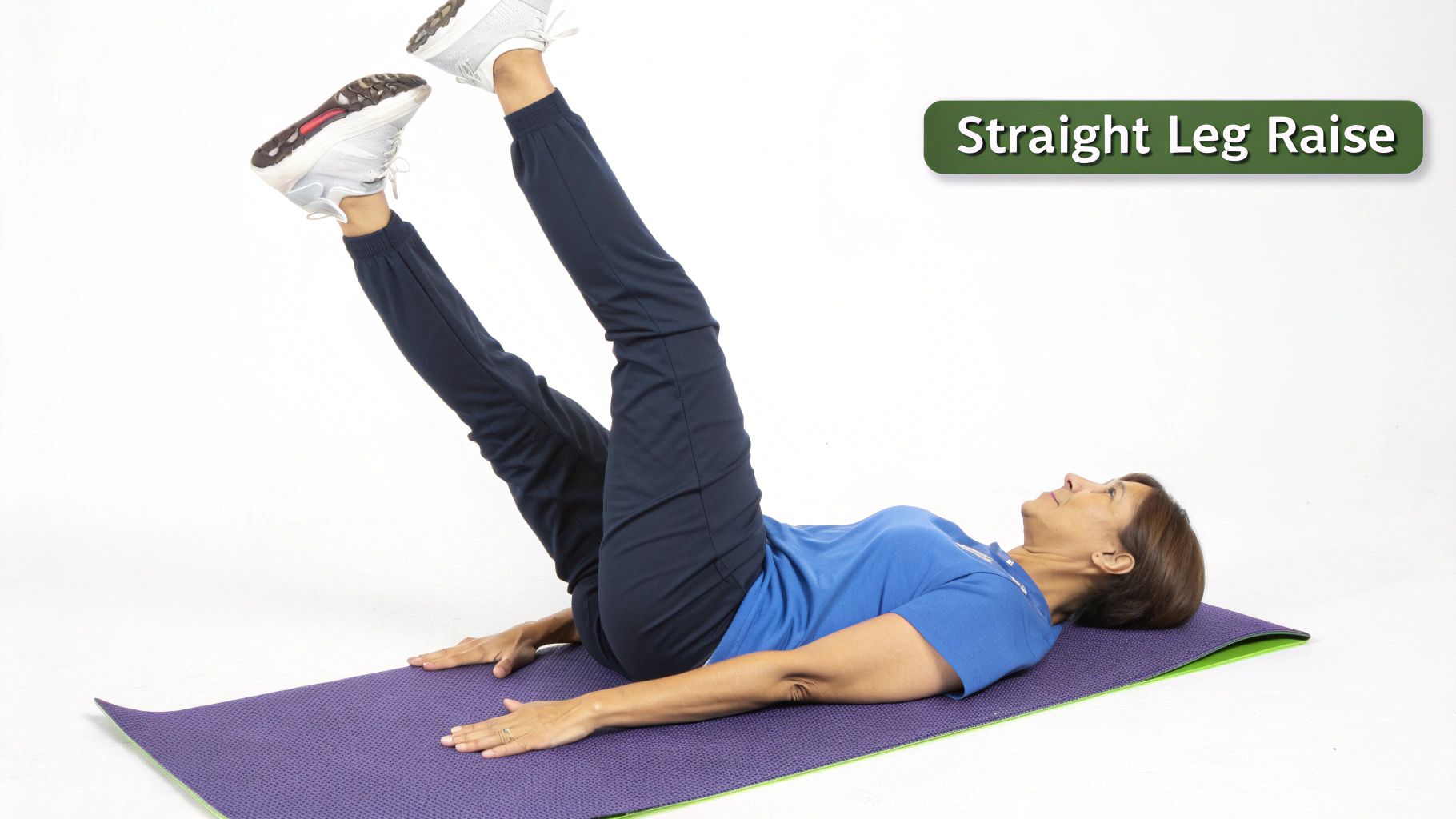
The straight leg raise (SLR) is a foundational exercise for knee injury rehabilitation, recommended for its ability to strengthen the quadriceps muscles without putting direct strain on the sensitive knee joint. This makes it an ideal starting point in the early stages of recovery, helping to re-establish muscle control and stability around the knee. The movement isolates the quadriceps, particularly the vastus medialis obliquus (VMO), a key muscle for patellar tracking and overall knee health.
Why It's a Staple in Knee Rehabilitation
The SLR is a cornerstone of recovery protocols for a reason. It is heavily featured in post-operative plans from major orthopaedic centres, like the Hospital for Special Surgery, and is a standard component of ACL reconstruction rehabilitation. The exercise allows for the safe re-engagement of the quadriceps after surgery or injury when the knee itself cannot yet tolerate load-bearing movements like squats or lunges. This early activation is crucial for preventing significant muscle atrophy (wastage) and preparing the leg for more demanding exercises later in the recovery process.
Expert Insight: "Early quadriceps activation is paramount for a successful knee rehabilitation outcome. The straight leg raise is one of the safest and most effective exercises for knee injury recovery, allowing us to build a solid foundation of strength without compromising the healing joint."
How to Perform a Straight Leg Raise
Follow these steps to ensure correct form and maximise benefits:
- Starting Position: Lie on your back on a firm surface, like a floor mat. Bend the knee of your uninjured leg, placing your foot flat on the floor for stability. Keep the injured leg straight out in front of you.
- Engage Muscles: Tighten your core by pulling your navel towards your spine. Actively contract the quadriceps muscle of your straight leg. You should feel the muscle tense and your kneecap pull slightly upwards. Point your toes towards the ceiling.
- The Lift: Slowly lift your straight leg about 6-12 inches (15-30 cm) off the floor. The height should be no higher than the bent knee of your other leg.
- Hold and Lower: Hold the leg at the peak of the lift for 3-5 seconds, keeping the quadriceps engaged throughout. Slowly and with control, lower the leg back to the starting position.
Actionable Tips for Success
- Mind Your Back: Keep your lower back pressed gently into the floor. If you feel it arching, place a small rolled-up towel under your lumbar spine for support.
- Quality Over Quantity: Focus on slow, deliberate movements. Avoid using momentum to "swing" your leg up, as this reduces the muscular benefit.
- Progressive Overload: Begin with 2-3 sets of 10 repetitions. Once this becomes easy, you can add light ankle weights (0.5 to 1 kg) to increase the challenge, but only after you have mastered the bodyweight version with perfect form.
- Health Advice: To aid muscle recovery, ensure you are well-hydrated throughout the day and consuming adequate protein, which is essential for repairing and building muscle tissue.
2. Quad Sets (Quadriceps Isometric Contractions)
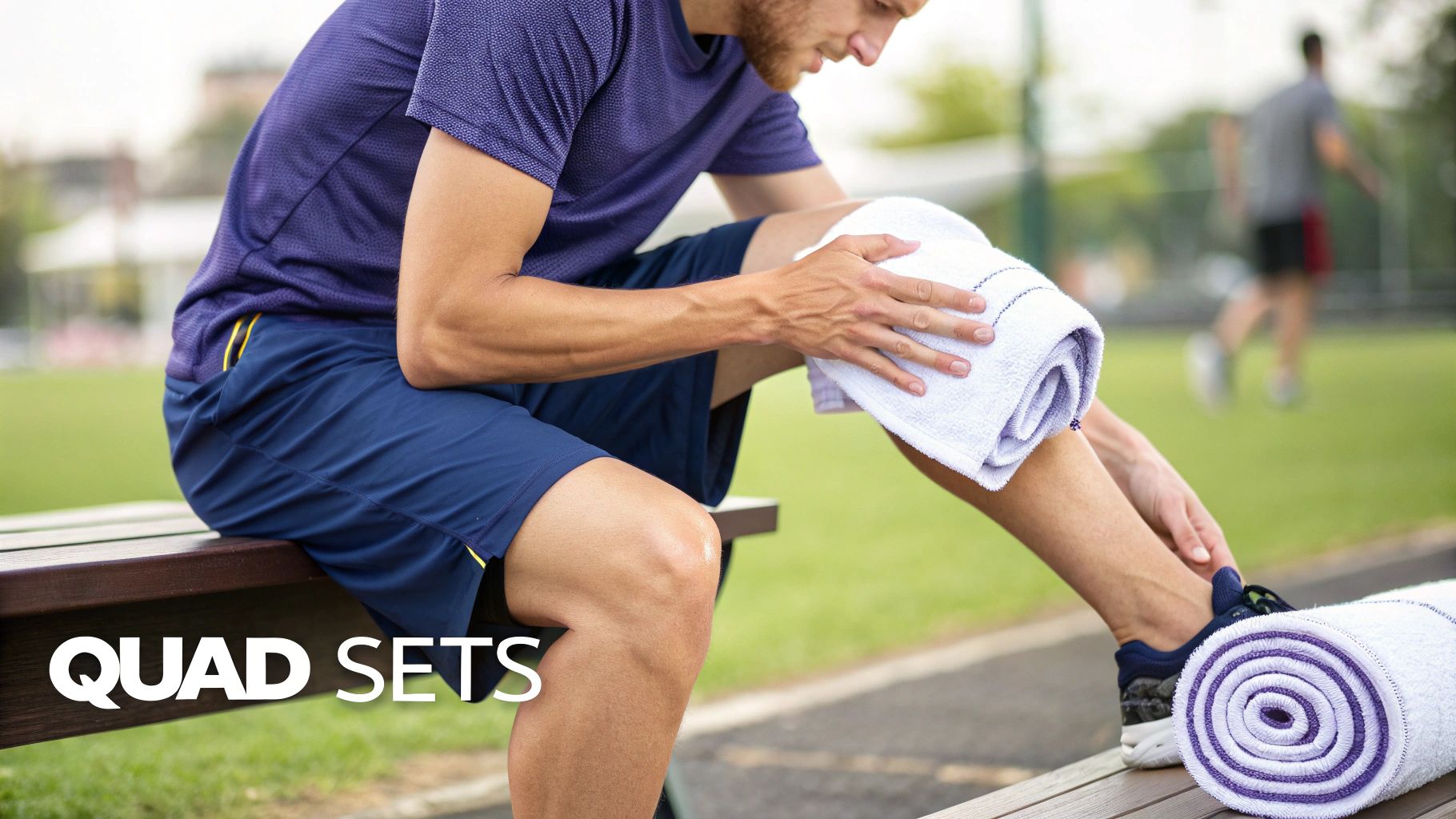
Quad sets, or quadriceps isometric contractions, are one of the most fundamental exercises for knee injury recovery. This exercise involves tightening the quadriceps muscle without moving the knee joint itself, making it exceptionally safe for the early, acute phase of rehabilitation. It is designed to re-establish the crucial mind-muscle connection, prevent significant muscle atrophy, and improve knee extension without placing any stress on the healing joint structures.
Why It's a Staple in Knee Rehabilitation
The quad set is often the very first exercise prescribed following knee surgeries like a total knee replacement or ACL reconstruction. Its value lies in its simplicity and safety. Protocols from world-renowned institutions like the Mayo Clinic and surgeons such as Dr. James Andrews prioritise this movement to maintain quadriceps function when the joint is too painful or swollen for dynamic exercises. This gentle muscle activation helps control inflammation and pain by promoting fluid movement, which is a key principle in modern musculoskeletal physiotherapy.
Expert Insight: "A quad set is the first step in waking up the muscles that support the knee. It's a non-negotiable exercise in the initial 48-72 hours post-injury or surgery to combat the rapid onset of muscle wastage and inhibition that can delay recovery."
How to Perform a Quad Set
Follow these steps for a correct and effective contraction:
- Starting Position: Lie on your back on a firm surface or sit with your injured leg extended straight out in front of you. You can place a small, rolled-up towel under your ankle to help facilitate full knee extension.
- Engage Muscle: Focus on the large muscle group at the front of your thigh (the quadriceps).
- The Contraction: Slowly and deliberately tighten this muscle as hard as you comfortably can. Imagine you are trying to push the back of your knee down into the floor. You should see your kneecap move slightly upwards towards your hip.
- Hold and Release: Hold the peak contraction for 5-10 seconds, then slowly and completely relax the muscle.
Actionable Tips for Success
- Towel Support: Placing a small rolled towel under the knee itself can provide tactile feedback, helping you focus on pushing down into it.
- Visualise: If you struggle to feel the muscle working, place your hand on your thigh. Visualise the muscle fibres tensing and feel the contraction under your fingers.
- High Frequency: In the early stages of recovery, your physiotherapist may recommend performing 10-15 repetitions every hour you are awake to maximise neuromuscular re-education.
- Health Advice: This exercise can be performed anywhere. Use downtime, like watching television or sitting at a desk, to complete a few sets. Consistency is key for neuromuscular re-education.
3. Wall Squats (Wall Sits)
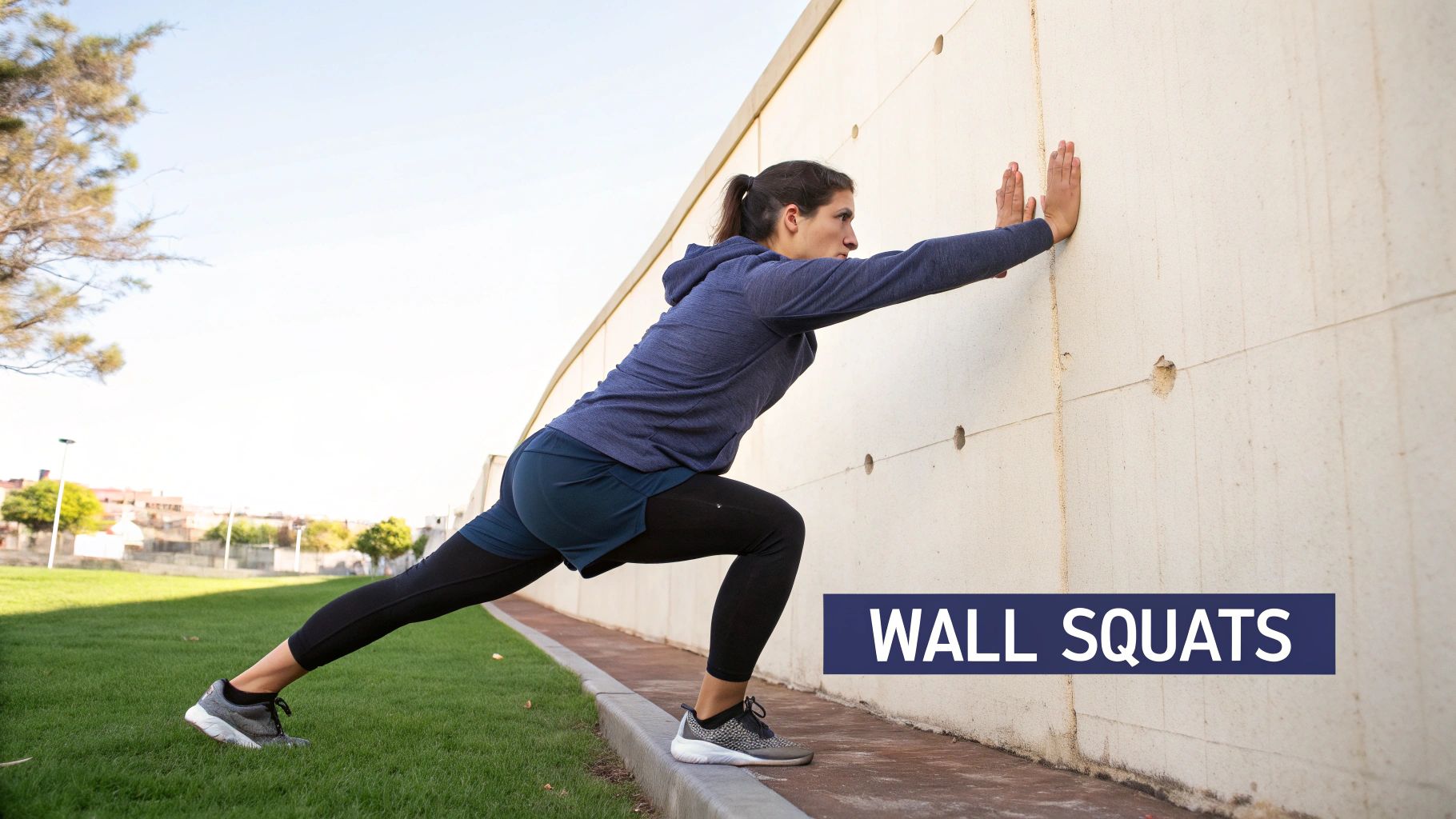
The wall squat, also known as a wall sit, is a superb isometric exercise for strengthening the muscles that support the knee. By using a wall for support, this exercise allows you to build strength in your quadriceps, glutes, and hamstrings in a controlled, stable manner. It is a closed-chain exercise, meaning your feet remain planted, which provides functional loading through the knee joint without the instability of a free-standing squat, making it one of the safest and most effective exercises for knee injury recovery.
Why It's a Staple in Knee Rehabilitation
The wall squat is a cornerstone of physiotherapy for its ability to re-establish lower body strength while protecting the healing joint. It features in conditioning programmes for professional athletes, including those in the NFL and NBA, as a tool for both injury prevention and rehabilitation. The static hold challenges muscle endurance and stability, which is crucial for activities that require sustained leg strength, such as skiing or hiking. The controlled nature of the movement allows you to precisely manage the angle of knee flexion, ensuring you work within a pain-free range.
Expert Insight: "Isometric exercises like the wall squat are invaluable in rehabilitation. They allow for significant muscle recruitment and strengthening with minimal joint movement, which reduces the risk of aggravating the injured knee. It’s a fantastic way to build a robust foundation for more dynamic movements later on."
How to Perform a Wall Squat
Follow these steps to ensure correct form and maximise benefits:
- Starting Position: Stand with your back flat against a smooth wall. Place your feet shoulder-width apart and step them forward about 18-24 inches away from the wall.
- Engage Muscles: Tighten your abdominal muscles to support your lower back. Keep your chest up and shoulders back.
- The Slide: Slowly slide your back down the wall until your thighs are parallel to the floor, as if sitting in an invisible chair. Ensure your knees are directly above your ankles, not extending past your toes.
- Hold and Return: Hold this position for 20-30 seconds, breathing steadily. To finish, engage your glutes and quads to slowly slide back up the wall to the starting position.
Actionable Tips for Success
- Mind Your Depth: Start with a shallower squat (a 45-degree knee bend) and gradually increase the depth as your strength improves. Never go past a 90-degree bend at the knee.
- Knee Alignment is Key: Actively ensure your knees track in line with your second toe. Do not let them collapse inward, as this places undue stress on the knee joint.
- Progressive Overload: Begin with 3 sets of 20-30 second holds. As you get stronger, aim to increase the duration of the hold rather than the number of repetitions. Stop immediately if you feel sharp pain.
- Health Advice: Maintain consistent, diaphragmatic breathing during the hold. Holding your breath can increase blood pressure unnecessarily and create tension that hinders performance.
4. Hamstring Curls (Prone or Standing)
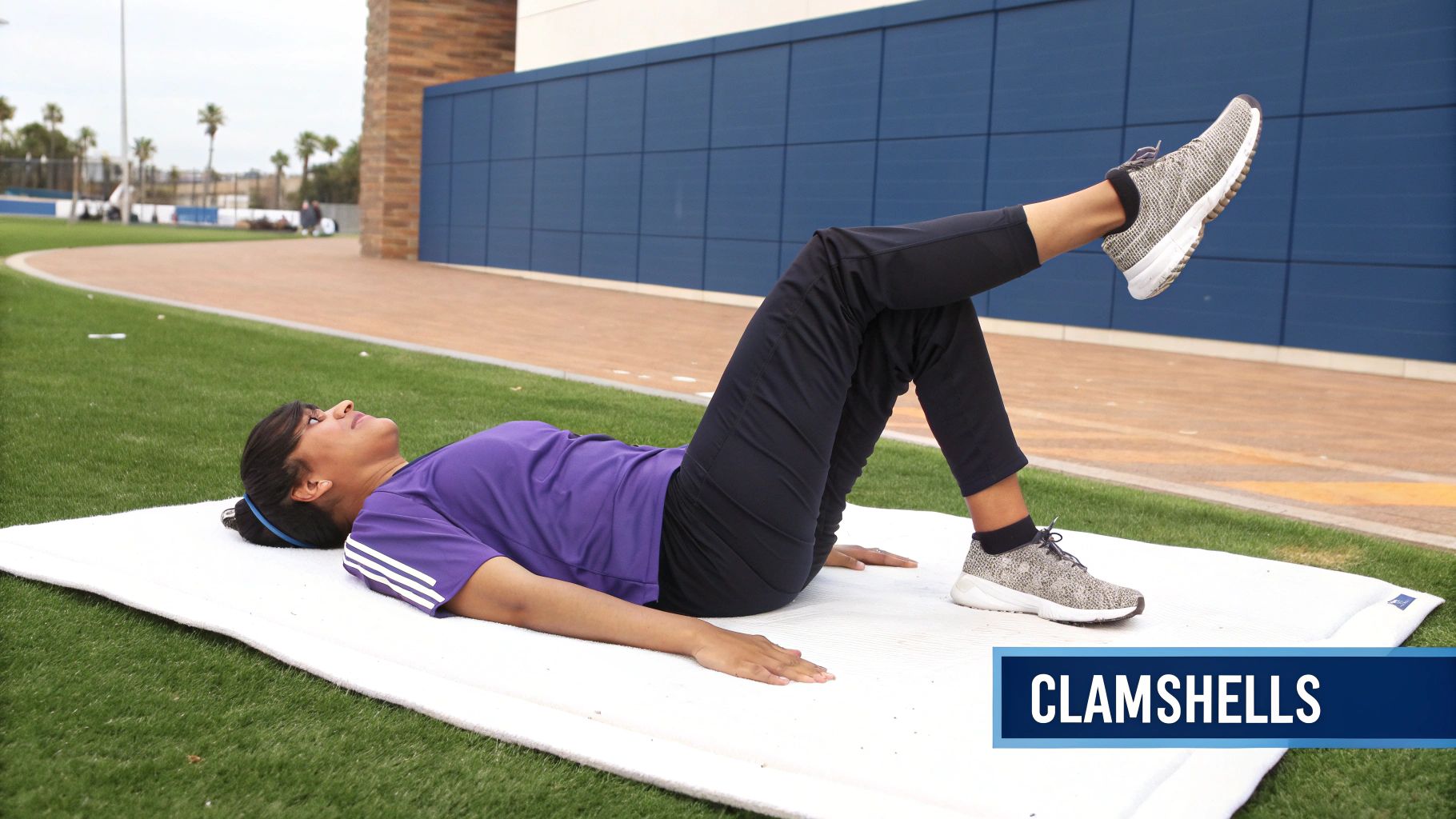
Hamstring curls are a crucial isolation exercise for strengthening the muscles on the back of your thigh. These muscles play a vital role in stabilising the knee joint, acting as a dynamic counterpart to the quadriceps. By strengthening the hamstrings, you improve the knee's ability to withstand rotational forces and sudden stops, which is why this exercise is a cornerstone of recovery and prevention programmes, especially for ACL injuries.
Why It's a Staple in Knee Rehabilitation
The importance of hamstring strength in protecting the knee cannot be overstated. Elite sports medicine facilities, like the Andrews Institute for Orthopaedics & Sports Medicine, integrate hamstring curls early in ACL rehabilitation protocols. Furthermore, research popularised by sports scientists has shown that stronger hamstrings significantly reduce injury risk, leading to their inclusion in prevention programmes for organisations like English Premier League football clubs and NCAA athletic departments. This exercise safely targets the hamstrings without placing compressive load on the knee joint, making it ideal during recovery phases.
Expert Insight: "A balanced strength ratio between the quadriceps and hamstrings is non-negotiable for knee health. Hamstring curls are one of the most direct and controlled exercises for knee injury rehabilitation, allowing us to rebuild this essential posterior support system and protect ligaments like the ACL from excessive strain."
How to Perform a Prone Hamstring Curl
Follow these steps for the prone (lying down) variation, often done with a resistance band:
- Starting Position: Lie face down on a mat. You can place a small, rolled-up towel under your forehead for comfort. Loop one end of a resistance band around a sturdy anchor point (like a table leg) and the other end around the ankle of your injured leg.
- Engage Muscles: Gently brace your core muscles to stabilise your lower back and hips. Keep your hips pressed firmly into the floor throughout the movement.
- The Curl: Slowly bend your knee, pulling your heel towards your glutes against the band's resistance. Focus on using only your hamstring muscle to create the movement.
- Hold and Lower: Squeeze the hamstring at the top of the movement for 1-2 seconds. With deliberate control, slowly lower your foot back to the starting position, resisting the pull of the band.
Actionable Tips for Success
- Slow and Controlled Tempo: Focus on the muscle contraction. A good tempo is a 2-second count as you curl your heel up (concentric) and a 3 to 4-second count as you lower it (eccentric).
- Keep Hips Down: Avoid lifting your hips or arching your lower back as you perform the curl. This isolates the hamstring and protects your spine.
- Progressive Resistance: Begin with a light resistance band. As you get stronger, you can progress to a heavier band or add light ankle weights. Aim for 3 sets of 12-15 repetitions with perfect form before increasing the challenge.
- Health Advice: To improve hamstring flexibility and reduce stiffness, incorporate gentle hamstring stretches into your daily routine, but only after your acute injury phase has passed and with guidance from a professional.
5. Clamshells (Hip Abduction Exercise)
The clamshell is a targeted hip-strengthening exercise crucial for comprehensive knee rehabilitation. It works by isolating and activating the gluteus medius and other hip external rotators, muscles that are fundamental for maintaining proper lower limb alignment. Weakness in these hip muscles can lead to poor biomechanics, causing the knee to drift inwards during activities like running or squatting, thereby placing excessive stress on the knee joint and its surrounding structures.
Why It's a Staple in Knee Rehabilitation
The connection between hip strength and knee health is well-established, making clamshells a key component of many recovery plans. Research, notably from biomechanics experts like Dr Christopher Powers at USC, has highlighted how poor hip control is a primary contributor to conditions like patellofemoral pain (runner's knee) and iliotibial (IT) band syndrome. This exercise is featured in countless physical therapy protocols because it directly addresses this muscular imbalance without loading the injured knee, making it one of the safest and most effective exercises for knee injury recovery and prevention.
Expert Insight: "A stable knee starts with a strong hip. The clamshell exercise is an excellent, low-impact way to re-educate and strengthen the gluteal muscles that control knee alignment, which is often the root cause of many non-traumatic knee injuries."
How to Perform a Clamshell
Follow these steps to ensure correct form and maximise benefits:
- Starting Position: Lie on your side with your hips and knees bent at approximately a 45-degree angle. Rest your head on your lower arm and use your top arm to stabilise your torso by placing your hand on the floor in front of you. Stack your hips and shoulders vertically, one directly on top of the other.
- Engage Muscles: Engage your core muscles to keep your spine in a neutral position. Ensure your heels are together and remain in contact throughout the movement.
- The Lift: Keeping your feet touching, slowly raise your top knee towards the ceiling as high as you can without your hips rolling backwards. The movement should be initiated from your glutes, not by arching your back.
- Hold and Lower: Hold the top position for 2-3 seconds, feeling the contraction in the side of your hip. Slowly and with control, lower the knee back to the starting position.
Actionable Tips for Success
- Prevent Rolling: The most common mistake is rolling the hips back to lift the knee higher. Place your top hand on your hip to feel for any movement and keep it perfectly still.
- Slow and Controlled: Avoid using momentum. The benefit comes from a slow, deliberate contraction of the gluteus medius muscle.
- Progressive Overload: Begin with 2-3 sets of 15-20 repetitions. When this becomes easy with perfect form, add a resistance band around your thighs, just above your knees, to increase the challenge.
- Health Advice: Strong hips are essential for protecting your knees in daily life. Be mindful of your posture when standing, aiming to distribute weight evenly and avoid letting your hips sag to one side.
6. Step-Ups and Step-Downs
Step-ups and their counterpart, step-downs, are functional exercises that directly mimic daily activities like climbing stairs. They are crucial for bridging the gap between basic, isolated strengthening and the demands of real-world movement, making them a key component of intermediate and advanced knee injury rehabilitation. This exercise trains the quadriceps, hamstrings, and glutes to work together, improving strength, balance, and neuromuscular control.
Why It's a Staple in Knee Rehabilitation
Step-ups and step-downs are integral to recovery protocols because they reintroduce load-bearing in a controlled, progressive manner. They are commonly introduced 6-8 weeks post-operatively in total knee replacement plans and are a standard in return-to-sport protocols for athletes. The slow, controlled nature of the step-down (eccentric phase) is particularly effective for strengthening the quadriceps and improving patellar tendon health, while the step-up (concentric phase) builds functional power for ambulation.
Expert Insight: "Functional strength is the goal of any successful rehabilitation. Step-ups and step-downs are non-negotiable exercises for knee injury recovery as they safely retrain the body for everyday tasks, building both the strength and the confidence needed to move without fear."
How to Perform Step-Ups and Step-Downs
Use a sturdy step or box, starting at a low height (around 4 inches).
- Starting Position: Stand facing the step. If you need support, stand next to a wall or railing. Keep your feet hip-width apart and engage your core.
- The Step-Up: Place your affected leg fully onto the centre of the step. Press through your heel to straighten your leg and lift your body up, bringing your other foot to meet it on the step.
- The Step-Down: Leading with your non-injured leg, slowly lower it back to the floor. The movement should be controlled, taking 3-5 seconds to descend. Maintain control with the leg that is still on the step.
- Repetition: Bring your injured leg back down to the floor to complete one repetition. Perform all repetitions on one side before switching to the other.
Actionable Tips for Success
- Start Low, Go Slow: Begin with a low step (4 inches) and prioritise a slow, controlled descent on the step-down. As you get stronger, you can progress to a standard stair height (7-8 inches).
- Knee Alignment is Key: Keep your knee aligned over your second toe throughout the entire movement. Avoid letting your knee collapse inwards, as this can indicate hip weakness and place undue stress on the joint.
- Use Support Initially: Do not hesitate to use a wall or railing for balance. This allows you to focus purely on the quality of the movement and muscle engagement.
- Health Advice: To improve balance and proprioception, which are vital for this exercise, try standing on one leg for 30 seconds at a time during daily activities like brushing your teeth.
To ensure your joints are prepared for these movements, it's beneficial to understand broader strategies for joint care. For a deeper dive into this, you can learn more about how to improve joint health on thelagom.co.uk.
7. Heel Slides (Knee Flexion Exercise)
Heel slides are a fundamental range-of-motion exercise designed to restore and maintain knee flexion (the ability to bend the knee). Performed gently while lying down, this movement helps to reduce stiffness and prevent the formation of scar tissue without placing significant weight or stress on the healing joint. It is a cornerstone of early-stage knee injury rehabilitation, allowing for safe, controlled movement that is crucial for a full recovery.
Why It's a Staple in Knee Rehabilitation
Regaining the ability to bend the knee is a primary goal after almost any knee surgery or significant injury. Heel slides are a standard component in post-operative protocols, including those for ACL reconstruction and total knee replacements, as recommended by the American Academy of Orthopaedic Surgeons (AAOS). By encouraging synovial fluid circulation within the joint, the exercise helps to nourish cartilage and reduce swelling. This gentle, active movement is particularly vital for managing and preventing arthrofibrosis, a condition where excessive scar tissue limits mobility.
Expert Insight: "Restoring knee flexion early is non-negotiable for long-term function. Heel slides are one of the most effective exercises for a knee injury because they empower the patient to safely and progressively reclaim their range of motion, setting the stage for more complex, load-bearing activities."
How to Perform a Heel Slide
Follow these steps to ensure correct form and maximise benefits:
- Starting Position: Lie on your back on a firm, comfortable surface like a floor mat. Keep both legs extended straight in front of you.
- Engage and Slide: Keeping your heel on the floor, slowly slide the heel of your injured leg towards your buttocks, bending your knee as far as you comfortably can. The movement should be smooth and controlled.
- The Hold: Gently hold the bent position for 3-5 seconds. You should feel a light stretch in and around the knee, but not sharp pain.
- Return to Start: Slowly and deliberately slide your heel back down until your leg is straight again in the starting position.
Actionable Tips for Success
- Reduce Friction: Perform the exercise on a smooth surface. Wearing a sock or placing a small towel or plastic bag under your heel can help it slide more easily.
- Use Assistance: If your muscles are weak or the movement is difficult, loop a towel or a resistance band around your foot. Gently pull on the ends to help guide your heel towards you.
- Listen to Your Body: A mild stretching sensation is normal, but you should stop if you feel sharp or severe pain. The goal is to gradually increase your range, not force it.
- Health Advice: To manage swelling that may limit your range of motion, try gently elevating your leg for 15-20 minutes after completing your exercises. This uses gravity to help reduce fluid buildup.
7 Knee Injury Exercises Comparison Guide
| Exercise | Implementation Complexity | Resource Requirements | Expected Outcomes | Ideal Use Cases | Key Advantages |
|---|---|---|---|---|---|
| Straight Leg Raises | Low | None (optional ankle weights) | Quadriceps strengthening without knee stress | Early-stage knee rehab, post-surgery | Minimal knee joint stress; easy to learn; progressive |
| Quad Sets (Isometric) | Very Low | None | Quadriceps activation without joint movement | Immediate post-injury/surgery | Safe for acute phase; reduces swelling; improves neuromuscular control |
| Wall Squats (Wall Sits) | Moderate | None | Strengthens quads, hamstrings, glutes; knee proprioception | Mid to late rehab stages; functional strengthening | Functional closed-chain exercise; supports proper form |
| Hamstring Curls (Prone/Standing) | Moderate | Resistance bands, weights, or machines | Hamstring strengthening; improves knee stability | ACL injury prevention/recovery; muscle balance | Targets posterior chain; reduces re-injury risk |
| Clamshells (Hip Abduction) | Low | Minimal (optional bands) | Hip abductor and rotator strengthening; improves knee alignment | Knee pain due to hip weakness; patellofemoral pain | Addresses hip-related knee issues; low joint impact |
| Step-Ups and Step-Downs | Moderate to High | Stable elevated platform | Functional single-leg strength, balance, eccentric control | Late rehab; return to activity/sport | Task-specific; improves confidence; measurable progression |
| Heel Slides (Knee Flexion) | Very Low | None (optional strap/towel) | Restores knee flexion range of motion | Early rehab; prevents stiffness | Gentle ROM exercise; patient-controlled; reduces adhesions |
Beyond the Exercises: Embracing a Holistic Recovery Lifestyle
You now have a foundational toolkit of seven effective exercises for knee injury recovery, from foundational Straight Leg Raises to functional Step-Ups. Mastering the correct form for each movement is your primary objective, as this ensures you are strengthening the essential supporting muscles around the knee, such as the quadriceps, hamstrings, and glutes, without placing undue stress on the joint itself. Remember, the goal is not to push through sharp pain but to work within a range that feels challenging yet safe. Consistency is far more valuable than intensity, especially in the early stages of rehabilitation.
The real key to a resilient and lasting recovery, however, lies in integrating these targeted exercises into a comprehensive wellness strategy. Your body's ability to heal is profoundly influenced by your daily habits, extending far beyond your dedicated exercise sessions. Adopting a holistic approach accelerates your physical recovery and builds a stronger foundation for long-term joint health. This means viewing your knee injury not as an isolated problem, but as a signal to optimise your overall well-being.
Key Pillars of a Holistic Knee Recovery
To truly support your body’s healing mechanisms, consider these crucial lifestyle adjustments:
- Anti-Inflammatory Nutrition: Your diet is a powerful tool. Prioritise foods rich in omega-3 fatty acids, such as salmon, mackerel, walnuts, and flaxseeds, which help to naturally regulate inflammation. Additionally, load your plate with colourful fruits and vegetables packed with antioxidants, like berries, leafy greens, and bell peppers, to combat cellular stress. A diet lower in processed foods and refined sugars can further help reduce systemic inflammation.
- Prioritise Restorative Sleep: Healing doesn't happen when you're active; it happens when you rest. During deep sleep, your body releases growth hormone, which is critical for tissue repair and regeneration. Aim for 7-9 hours of quality, uninterrupted sleep per night to give your knee the best possible chance to mend. Establishing a regular sleep schedule can significantly improve sleep quality.
- Manage Stress Effectively: Chronic stress elevates cortisol levels in the body, which can suppress the immune system and impede the healing process. Incorporate simple mindfulness practices, such as deep breathing exercises or meditation, into your daily routine to keep stress in check and promote a healing-friendly internal environment. Even a few minutes a day can make a difference.
- Embrace Active Recovery Methods: Gentle activities and therapeutic modalities can significantly enhance your rehabilitation. Techniques like foam rolling can help release muscle tightness around the knee. Furthermore, exploring the benefits of using a sauna after exercises can aid muscle relaxation and improve circulation, delivering more oxygen and nutrients to the injured area. Listen to your body and choose methods that feel restorative, not strenuous.
Ultimately, this journey is about listening to your body and responding with intelligent, consistent action. The exercises for knee injury detailed in this guide are your roadmap, but your lifestyle choices are the fuel that powers your recovery. By combining targeted strengthening with supportive nutrition, adequate rest, and mindful stress management, you are not just fixing a problem; you are investing in a more resilient, mobile, and healthier future for your knees and your entire body.
Ready to create a personalised recovery plan that addresses your specific injury and lifestyle? The expert team at The Lagom Clinic in Bristol specialises in comprehensive musculoskeletal health and lifestyle medicine to guide you from injury back to peak performance. Book your consultation today and take the first step towards a confident and complete recovery.


 Members Consultation