


Living with a suspected allergy can feel like you’re constantly trying to solve a puzzle with missing pieces. The good news is, getting a clear answer is the first step towards feeling better and taking control of your health. Here in the UK, you have access to a number of scientifically proven allergy tests, available through both the NHS and private clinics, designed to pinpoint your specific triggers. Understanding which test is right for you is the key to creating a lifestyle plan that works.
The Rising Need for Allergy Testing in the UK
The day-to-day uncertainty of a potential allergic reaction is a reality for millions of us. Whether it’s the seasonal misery of hay fever or the ever-present worry of a severe food reaction, unexplained symptoms can really disrupt your quality of life. And it’s a situation that’s becoming more and more common across Britain.
Think of your immune system as a finely-tuned security alarm. In most people, it correctly identifies harmless things like dust mites or peanuts and simply ignores them. But if you have an allergy, your system gets its wires crossed. It flags a harmless substance as a major threat, launching a full-blown defensive attack that leads to symptoms like hives, wheezing, or an upset stomach.
Finding Your Specific Triggers
Trying to manage these symptoms without knowing the exact cause is a bit like fumbling in the dark for a light switch. You might get lucky and find a temporary fix, but you’ll waste a lot of time and energy on things that don’t really work. An allergy test is like someone handing you the map; it pinpoints the precise allergen causing all the trouble, allowing you to make targeted, effective lifestyle changes.
Getting that clear diagnosis isn’t just a medical step—it’s the bedrock for building a practical, personalised plan to manage your health and get back to living your life.
An Escalating Public Health Concern
The need for accurate diagnosis has never been more critical. Allergies are now one of the most common chronic conditions in the UK, affecting roughly one in three people at some point in their lives. The problem has intensified over the past couple of decades, with NHS data revealing a dramatic rise in hospital admissions for severe allergic reactions.
In fact, between 2002 and 2022, hospital admissions for food-related anaphylaxis and other adverse reactions shot up by an astonishing 154%. This sharp increase points to a growing public health issue and really underscores how vital reliable allergy testing and management services are across the country. You can dive deeper into these concerning trends on the National Allergy Research Foundation’s website.
Identifying your specific triggers is the most powerful first step you can take. It shifts the focus from simply reacting to symptoms to proactively managing your environment and lifestyle for long-term wellbeing.
Ultimately, seeking out professional allergy testing in the UK is about swapping uncertainty for clarity. It empowers you to make informed decisions that lead to a healthier, more comfortable life.
The Different Types of Allergy Tests Explained
Figuring out what allergy test you need can feel a bit like navigating a maze. The good news is, it’s far simpler than it looks. Think of it as a toolkit, where each test is a specific tool designed for a particular job. Getting a handle on how each one works is the first step to having a productive chat with your doctor about what’s right for you.
Often, the journey starts with noticing a pattern of symptoms. That’s your cue to investigate further.
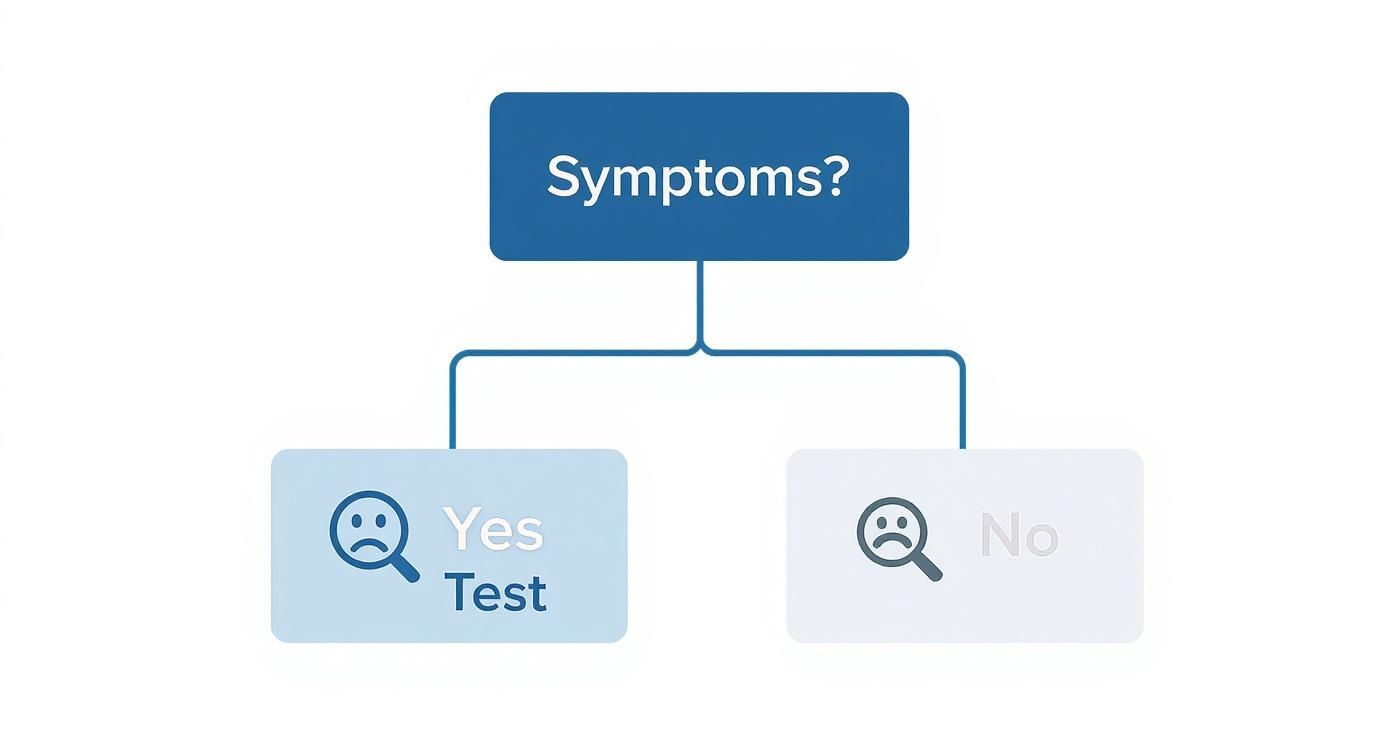
The key takeaway here? Once you suspect an allergy is affecting your life, getting tested is the logical next step.
The Skin Prick Test: Getting an Immediate Answer
The Skin Prick Test (SPT) is often the first port of call for allergies that cause an immediate reaction. It’s a straightforward and incredibly fast way to see what your body reacts to. Imagine it as asking your skin a direct question and getting a visual answer on the spot.
A clinician places tiny droplets of different liquid allergens—things like pollen, dust mite extracts, or food proteins—onto your arm or back. They then use a tiny, sterile lancet to make a minuscule prick on the skin’s surface through each drop. It’s so shallow you barely feel it, and it’s certainly not like having an injection.
If you’re allergic to one of the substances, your immune system will sound the alarm. Within just 15-20 minutes, you’ll see a small, itchy, raised bump (called a wheal) appear, looking much like a mosquito bite. This tells the clinician your body has specific allergy antibodies, known as Immunoglobulin E (IgE), ready to fight that particular substance.
This test is brilliant for pinpointing triggers for:
- Hay fever (grass, tree, and weed pollens)
- Year-round indoor allergies (dust mites, pet dander, mould)
- Many common food allergies (like milk, eggs, and peanuts)
The biggest plus is its speed. You walk out of your appointment with clear, visual results, giving you immediate clarity.
Blood Tests: A Look Behind the Scenes
Sometimes, a skin prick test isn’t the best option. If you have a skin condition like severe eczema or can’t stop taking antihistamines, a blood test is a fantastic alternative. Think of this method as sending a detective into your bloodstream to find the specific antibody clues that point to an allergy.
It starts with a simple blood draw, and the sample is sent off to a lab. There, technicians analyse it to measure the exact amount of specific IgE antibodies your immune system has created in response to different allergens. A high level of IgE linked to, say, birch pollen, strongly suggests you’re sensitised to it.
It’s crucial to understand that being sensitised isn’t the same as having a clinical allergy. A positive blood test needs to be matched with your actual symptom history to confirm a true allergy.
Blood tests are extremely versatile and can help diagnose a massive range of allergies, from foods and environmental triggers to insect stings. The results take a little longer—usually a few days to a week—but they provide precise, quantitative data that’s incredibly useful for creating a tailored management plan. If you’re weighing up your choices, learning more about private blood testing in the UK can offer some really helpful insights.
Patch Tests: Uncovering Delayed Reactions
Not all allergic reactions are fast and furious. Some sneak up on you, causing skin issues like contact dermatitis hours or even days later. This is where patch testing shines. You can think of it as a stakeout to catch those slower-moving culprits red-handed.
This test is the gold standard for identifying substances that trigger a delayed reaction when they touch your skin. Common culprits include:
- Metals like nickel (often in costume jewellery or belt buckles)
- Fragrances and preservatives found in skincare and cosmetics
- Certain chemicals or medications
A specialist will tape small, self-contained patches—each holding a tiny amount of a potential allergen—onto your back. You’ll wear these for 48 hours, making sure to keep the area dry. When you go back to the clinic, the patches are removed, and your specialist will examine your skin for any reaction, like redness, blistering, or swelling. A final check is often done another day or two later, just to be sure no even more delayed reactions have appeared.
To help you see how these common tests stack up, here’s a quick side-by-side comparison.
Comparing Common Allergy Tests in the UK
This table breaks down the key differences between the main testing methods, helping you understand which might be best suited for your situation.
| Test Type | How It Works | Best For Identifying | Time to Get Results | Patient Experience |
|---|---|---|---|---|
| Skin Prick Test | Tiny amounts of allergens are pricked into the skin’s surface. A raised bump (wheal) indicates a positive reaction. | Immediate-type allergies like hay fever, pet dander, and many food allergies. | 15-20 minutes | Quick and minimally uncomfortable. A slight itching sensation at positive sites. |
| IgE Blood Test | A blood sample is analysed in a lab to measure specific IgE antibodies to various allergens. | A wide range of food and environmental allergies. Ideal if skin tests aren’t possible. | A few days to a week | A standard blood draw from a vein in your arm. |
| Patch Test | Patches containing allergens are taped to the back for 48 hours to check for delayed skin reactions. | Delayed-type allergies (contact dermatitis) from things like metals, fragrances, or chemicals. | 48-96 hours | Patches must be worn for two days and kept dry, which can be slightly inconvenient. |
Ultimately, each test provides a different piece of the puzzle. An allergist will use your history and symptoms to recommend the most logical and effective test to get to the bottom of what’s causing your issues.
How to Prepare for Your Allergy Test
Getting ready for an allergy test is key to making sure the results are as accurate as possible. Think of it like preparing a canvas before painting; you need a clean, clear surface to get a true picture. A few simple steps beforehand can make a world of difference, not just for the reliability of your results, but also for easing any nerves you might have about the appointment.
Walking into the clinic prepared doesn’t just help the test run smoothly; it gives your specialist the full story. Good preparation starts long before you step foot in the clinic.

Pausing Certain Medications Is Crucial
One of the most important things you’ll need to do is stop taking certain medications that could interfere with the test. If you don’t, it’s a bit like trying to test a fire alarm after you’ve taken the batteries out—it just won’t work properly. You could end up with a false negative, which isn’t helpful for anyone.
The main culprits are antihistamines. This covers everything from common over-the-counter tablets for hay fever and hives to some prescription drugs and even ingredients lurking in cold and flu remedies. Your clinic will give you a specific timeline, but as a rule of thumb, you’ll likely need to stop taking them for about three to seven days before your test.
Important: Always speak to your doctor or the allergy clinic before you stop taking any prescribed medication. They’ll give you clear instructions based on your medical history and the specific test you’re having.
What to Bring for a Productive Consultation
Your own experiences are the most valuable clues an allergist has. When you arrive with detailed information, you help them connect the dots between your symptoms and potential triggers. This context is just as crucial as the physical test itself.
Here’s a quick checklist of what to gather:
- A Detailed Symptom Diary: For a couple of weeks before your appointment, jot down any symptoms you have. Note when they happen, what you were eating or doing, and your surroundings. This log is worth its weight in gold.
- Photographs of Reactions: If your symptoms are visible—like a rash, hives, or swelling—a quick photo on your phone during a flare-up can be incredibly insightful for the specialist.
- A List of All Medications: Write down everything you take regularly. This includes prescriptions, over-the-counter medicines, and even vitamins or herbal supplements.
Coming prepared like this helps your specialist conduct a much more focused and effective investigation.
Simple Steps for the Day of Your Test
On the day of your appointment, a couple of final, practical steps will help everything go smoothly, especially if you’re having a skin prick test.
First off, don’t apply any lotions, creams, or moisturisers to the skin on your arms or back. These products can act as a barrier, potentially skewing the test results by preventing the allergens from properly interacting with your skin.
Secondly, dress for comfort and convenience. Wear loose clothing, maybe a top with sleeves that roll up easily or a button-up shirt. This makes it simple for the clinician to access the test area without you having to feel awkward. These small things make a big difference, ensuring you and your doctor get the clear answers you’re looking for.
Navigating NHS vs Private Allergy Testing
If you think you have an allergy, getting a proper diagnosis is the first crucial step. In the UK, you generally have two routes to get tested: through the National Health Service (NHS) or by going private.
Think of it as two different ways to travel to the same destination. The NHS route is the reliable, free public transport service—it will get you there, but you might have to wait and follow a set schedule. The private route is like taking a taxi—it’s direct, fast, and works around your schedule, but you pay for the convenience. Deciding which path is right for you comes down to your personal needs, how urgently you need answers, and your budget.
The NHS Route to Allergy Testing
For most of us, the journey to an allergy diagnosis starts at our local GP surgery. This is your gateway to any specialist care on the NHS.
Your GP will have a chat with you about your symptoms and medical history. If your case seems straightforward, they might suggest some initial management strategies. But if your symptoms are more severe or puzzling, they’ll refer you to a dedicated NHS allergy clinic.
This process is incredibly thorough, which is a huge plus. The downside? You’ll need a bit of patience. Waiting lists for specialist appointments can be quite long, depending on where you live and how urgent your case is. The obvious and most significant benefit, however, is that the consultation and any tests you need won’t cost you a penny.
The Private Allergy Testing Route
Choosing to go private is the shortcut. The main draws here are speed and convenience. You can usually book an appointment directly with a private clinic, which means no need for a GP referral and a much shorter wait to see an expert.
Private clinics often have more flexible appointment times and might offer a wider range of tests upfront. For anyone with a packed schedule or symptoms that are really affecting their quality of life, this direct access can make a world of difference.
The private route is all about getting answers quickly. It’s a clear, streamlined path for anyone who needs a diagnosis without the wait and is prepared to cover the cost.
Of course, this speed and convenience come with a price tag. You’ll be paying for the specialist’s time, the tests themselves, and any follow-up appointments. Costs can vary wildly from one clinic to another, so it’s vital to get a clear breakdown of the fees before you commit. To get a better feel for what you’re paying for, it’s worth understanding the advantages of private blood tests and the detailed insights they can provide.
Making an Informed Decision
So, which is it to be? NHS or private? Honestly, there’s no right or wrong answer—it’s a completely personal choice based on your situation.
The demand for allergy services has shot up in recent years. With around 44% of UK adults now living with at least one allergy, the need for both accessible NHS care and responsive private options has never been clearer. This trend is set to continue, with the allergy diagnostics market projected to grow by 10.3% each year between 2025 and 2030. It shows just how much we’re all focusing on getting an early and accurate diagnosis.
When you’re weighing your options, ask yourself these key questions:
- How urgent is it? If your symptoms are making daily life difficult, the speed of the private route might be worth the cost.
- What’s my budget? If paying out-of-pocket is a major concern, the NHS pathway is the clear choice.
- How complex are my symptoms? For really unusual or hard-to-pinpoint issues, the multi-disciplinary team at a specialist NHS centre could be a huge advantage.
If you’re leaning towards the private sector, our guide on private healthcare comparison in the UK can give you some more practical tips. In the end, whether you choose the steady, publicly funded path or the faster, self-funded one, the goal is exactly the same: getting a reliable diagnosis so you can manage your health and live better.
Turning Your Results Into an Action Plan
Getting your allergy test results is a huge step. For many, it’s the moment the fog of uncertainty lifts and a clear path forward finally appears. But the report itself isn’t the finish line; think of it as the starting block for building a healthier, more comfortable life.
Your results are like a detailed, personalised map. On its own, it’s just data. But when you pair that data with your own real-world experience—your specific symptoms and triggers—it becomes an incredibly powerful guide. The real goal is to turn this clinical information into a practical, day-to-day action plan.

Understanding Sensitisation vs. a True Allergy
One of the first and most important things to get your head around is that a positive test result shows sensitisation, not necessarily a clinical allergy. This is a crucial distinction.
Sensitisation means your body has produced IgE antibodies to a substance. It’s a sign of potential reactivity, but it doesn’t automatically mean you’ll have a reaction every single time you encounter it.
For a doctor to diagnose a true allergy, that sensitisation has to be linked directly to your symptoms. For example, your blood test might show you’re sensitised to birch pollen. If you also happen to get dreadful hay fever every spring when the birch trees are pollinating, that confirms a clinical allergy. A positive test is one piece of the puzzle; your personal history is the other.
Collaborating With Your Doctor
Your GP or allergy specialist is your co-pilot on this journey. They’ll sit down with you to go through the results, looking at them in the context of your medical history and the symptoms you’ve been experiencing. This conversation is where your action plan really starts to take shape.
This isn’t some generic handout. It’s a personalised strategy built around your specific triggers and your lifestyle. It will cover three essential areas: avoidance, medication, and emergency preparedness.
A positive allergy test result is a scientific clue. When combined with your symptom history, it transforms into a clear diagnosis, forming the foundation of your personal management plan.
This partnership is what makes the plan medically sound and, just as importantly, practical enough for you to actually follow.
Mastering Practical Allergen Avoidance
The most powerful part of your action plan is learning how to minimise contact with your triggers. This doesn’t mean living in a bubble; it’s about making smart, targeted changes to your daily life.
For food allergies, this means becoming an expert at reading food labels. In the UK, the 14 major allergens must be clearly highlighted in ingredients lists, which makes spotting them much easier. Your plan will likely include:
- Label Reading Skills: Knowing what to look for beyond the obvious (e.g., casein for milk, or tahini for sesame).
- Dining Out Confidence: Learning how to talk to restaurant staff clearly and effectively about your needs.
- Safe Cooking Practices: Understanding how to prevent cross-contamination in your own kitchen.
For environmental allergies, like pollen or dust mites, your strategy will focus on creating a ‘safe haven’ at home. This could involve:
- Pollen Management: Keeping windows closed on high-pollen days and timing your outdoor walks for when counts are lower.
- Dust Mite Control: Using allergen-proof covers on your bedding, washing it at 60°C, and using a vacuum with a HEPA filter.
- Mould Prevention: Making sure bathrooms and kitchens are well-ventilated to keep dampness at bay.
These small, consistent actions can drastically reduce your daily allergen load, helping to keep your symptoms under control.
Creating Your Emergency and Treatment Plan
The next layer of your plan is about managing symptoms if and when they do pop up. This is all about being prepared, not paranoid.
Your doctor will recommend the best medications for you. This might be daily antihistamines for hay fever or an adrenaline auto-injector (like an EpiPen® or Jext®) for severe food allergies. A vital part of this is creating a written emergency action plan that clearly states:
- Your name and specific allergy.
- The signs of a mild versus a severe reaction.
- Exactly what medication to use and when to use it.
- Who to contact in an emergency.
For some people, longer-term treatments like immunotherapy (sometimes called allergy shots) might be an option. This involves exposing your body to tiny, gradually increasing doses of an allergen over time to build up your tolerance. It can be a fantastic way to reduce the severity of allergies to things like grass pollen or insect stings. Your specialist will be able to tell you if this is a suitable path for you, helping to turn a diagnosis from a label into a truly manageable condition.
Practical Lifestyle Changes to Manage Your Allergies
While medication can be a lifesaver for tackling allergy symptoms, the real power lies in making smart, proactive lifestyle changes. Think of it as your long-term strategy for feeling better. It’s all about reducing your daily run-ins with known triggers, turning your home and routine into a safe haven.
Once you’ve got your allergy test results in hand, you can start making these practical adjustments. This might involve optimising your home environment by understanding the best HVAC filters for allergies to filter out airborne irritants. These small, consistent efforts can make a huge difference, often reducing how much you need to rely on medication.
And this is a big deal in the UK. Allergy-related conditions are now at epidemic levels, affecting roughly one in four of us. This goes far beyond a few sniffles; we’re talking about chronic conditions that can seriously impact quality of life and put a real strain on both personal finances and the NHS.
Creating a Low-Allergen Home Sanctuary
Your home should be a refuge, especially your bedroom where you spend a huge chunk of your time. For indoor allergies, a few simple changes to your housekeeping routine can be transformative.
If you have a dust mite allergy, these actions are your first line of defence:
- Encase Your Bedding: Zip up your mattress, duvet, and pillows in allergen-proof covers. This creates a physical barrier that dust mites can’t get through.
- Wash Bedding Hot: Get into the habit of washing all your bedding weekly. A hot wash at 60°C or higher is what you need to kill the mites and wash away the allergens.
- Declutter and Clean Smart: Less clutter means fewer places for dust to settle. When you clean, use a damp cloth to trap dust instead of sending it airborne, and use a vacuum with a HEPA filter.
For mould allergies, the key is to control dampness. Always use extractor fans in kitchens and bathrooms, get any leaks fixed as soon as you spot them, and try to avoid drying laundry on radiators indoors.
Proactive Strategies for Outdoor and Food Allergies
Of course, managing allergies doesn’t stop at your front door. For hay fever sufferers, timing is everything. Keep an eye on the daily pollen forecast and try to plan outdoor activities for when counts are lower, which is often on cooler, damp days.
A simple but brilliant tip for hay fever is to shower and change your clothes as soon as you get home. This washes off all the pollen that’s collected on your hair, skin, and clothing, stopping you from spreading it all over your house.
If you’re dealing with a food allergy, being vigilant is non-negotiable. Always read food labels carefully—in the UK, the 14 major allergens must be clearly highlighted by law. When you’re eating out, be upfront with the staff about your needs. Don’t be shy about asking detailed questions on ingredients and how food is prepared to avoid cross-contamination. Building these habits is what empowers you to eat out with confidence.
Your Allergy Testing Questions, Answered
When you’re dealing with suspected allergies, it’s natural to have a lot of questions. Let’s tackle some of the most common ones that come up, so you can feel clear and confident about your next steps.
Are At-Home Allergy Kits Actually Reliable?
It’s tempting to reach for an at-home kit for a quick answer, but honestly, their reliability is a major concern among experts. Many of these kits look for IgG antibodies, which are a red herring—they often just show you’ve been exposed to a food, not that you’re allergic to it.
Basing your diet on these results can lead you down a rabbit hole of cutting out foods unnecessarily. The most trustworthy approach, the one doctors rely on, combines your personal medical history with proper IgE-specific tests (like a skin prick or blood test). That way, any plan you make is built on solid medical evidence, not a shot in the dark.
What’s the Cost of Private Allergy Testing?
The price for private allergy testing in the UK really depends on the path you take. You could go for a full consultation with an allergy specialist or choose a more direct lab-testing service.
Here’s a rough idea of what to expect:
- The Initial Consultation: This is for the doctor’s time and expertise and usually falls between £150 and £300.
- The Tests Themselves: These are priced separately. A comprehensive blood test panel might run from £100 to £400, whereas skin prick tests are often priced individually for each allergen tested.
My best advice? Always ask for a detailed, itemised breakdown of costs before you commit. It helps you avoid any nasty surprises and know exactly what you’re paying for.
Can I Suddenly Develop an Allergy as an Adult?
Absolutely. It’s surprisingly common for people to develop new allergies in adulthood, even to foods or substances they’ve been around their entire lives without a problem. We call this adult-onset allergy.
While we don’t know the exact “why,” we do know that certain triggers can shake up the immune system. Things like a major life change, a nasty viral infection, or even moving to a new part of the country with different pollens can cause your body to react differently. Your immune system isn’t set in stone; it can and does adapt throughout your life, sometimes leading to brand-new sensitivities.
At The Lagom Clinic, our focus is on getting to the bottom of your symptoms with accurate, medically proven diagnostics. If you want clear answers and a plan that’s tailored just for you, have a look at our private GP services. You can learn more at https://www.thelagom.co.uk.


 Members Consultation