


Recovering from rotator cuff surgery isn't a race; it's a marathon. You need to think in terms of months, not weeks. The first 4-6 weeks are all about one thing: protecting the surgical repair. After that, a carefully planned physiotherapy programme kicks in, but getting back to full strength can take a significant amount of time.
What to Expect Immediately After Surgery
Waking up from surgery can be a bit of a blur, but knowing what's coming next helps you feel more in control. This initial stage isn't about actively doing exercises; it's about creating the optimal environment for your body to begin healing. Think of this period as preparing the ground for the real work that comes later.
You’ll be going home with a sling, and it’s going to be your best friend for a while. It’s not just for show or comfort – its main job is to keep your shoulder completely still to protect the delicate repair work your surgeon just did. It’s absolutely crucial that you fight the urge to use your arm, even for what seems like a simple task.
Getting on Top of Pain and Rest
Let's be realistic: you will have some pain after surgery. The key is to make sure it's manageable. Your hospital team will send you home with a plan for pain relief, likely a mix of different medications. Take them as prescribed, especially for the first few days. The trick is to stay ahead of the pain, not wait for it to build up into something unbearable.
Medication isn't your only tool, though. A few simple lifestyle changes can make a world of difference:
- Ice is Your Friend: An ice pack on the shoulder for 15-20 minutes a few times a day is a powerful, drug-free way to reduce swelling and dull the ache. Just be sure to wrap it in a thin tea towel to protect your skin.
- Embrace the Downtime: Your body is working overtime to heal, and that takes a lot of energy. Proper rest and sleep aren't optional luxuries; they are a core part of your recovery. You’ll probably feel more tired than you expect. Listen to your body and don't push through fatigue.
A Quick Look at the Recovery Timeline
Understanding the different phases of recovery can help you set realistic expectations. Each stage has a specific goal, gradually building on the progress of the last one.
Here is a general outline of what to expect:
Rotator Cuff Surgery Recovery Timeline at a Glance
| Recovery Phase | Typical Duration | Primary Goal | Permitted Activities |
|---|---|---|---|
| Phase 1: Passive Motion | 0-6 weeks | Protect the repair, minimise pain and swelling. | Wearing a sling at all times, pendulum swings, gentle assisted movements guided by a physio. No active use of the arm. |
| Phase 2: Active Motion | 6-12 weeks | Restore active range of motion, begin light strengthening. | Coming out of the sling, actively moving the arm without assistance, isometric exercises, light resistance band work. |
| Phase 3: Strengthening | 12-24 weeks | Build strength and endurance in the shoulder muscles. | Progressing with resistance bands, light weights, functional movements against gravity. |
| Phase 4: Return to Activity | 6+ months | Full return to sport, work, and high-demand activities. | Sport-specific drills, advanced strengthening, gradual return to pre-surgery activities under guidance. |
Remember, this is just a guide. Your surgeon and physiotherapist will create a timeline that’s specific to your surgery and your progress.
Adapting to a One-Armed Life
The simple things you take for granted will suddenly seem like major operations. Preparing for this in advance will save you a lot of stress and protect your shoulder from any accidental movements.
"The first week is about surrender. You must accept that you need help and that your only job is to rest and protect the shoulder. Pushing through it is the worst thing you can do for your long-term recovery."
Getting dressed, for example, needs a new approach. When putting on a top, always gently slide your operated arm into the sleeve first, using your good arm to do all the work. To take it off, do the opposite. You'll quickly realise that loose, button-front shirts or zip-up hoodies are a lifesaver.
Finding a Way to Sleep Comfortably
Getting a good night's sleep can be one of the biggest challenges. Lying flat on your back often puts a painful strain on the shoulder. Many people discover that sleeping in a recliner chair is the only way to get comfortable for the first few weeks. If you're in bed, propping yourself up with a wedge pillow or a big stack of pillows can work wonders. Building a little pillow fort around you can also stop you from rolling onto your sore side in the middle of the night.
In the UK, rotator cuff surgery is a very common procedure, with over 10,000 operations performed each year, most of them using minimally invasive keyhole techniques. Standard practice involves wearing a sling for up to six weeks to protect the repaired tendon. During this time, you'll start very gentle, guided movements with a physiotherapist. This structured beginning is vital for setting you up for the more intensive strengthening that usually starts around the 12-week mark. To get a better sense of what's involved with UK-based procedures, you can find out more from shoulder specialists on Top Doctors.
Your Phased Physiotherapy Plan: A Step-by-Step Guide
Once you're through the initial rest period, the real work on your rotator cuff surgery recovery begins with physiotherapy. This isn't just a list of exercises; it's a carefully planned journey to get your shoulder's strength, movement, and function back on track safely. Think of your physiotherapist as your personal guide, leading you through each distinct recovery phase, with every stage building on the one before.
This whole process is a team effort. Your commitment to the plan is every bit as important as your therapist's expertise. Success really comes down to doing your exercises consistently, paying attention to what your body is telling you, and keeping an open line of communication about your progress and any hurdles you hit.
The infographic below shows the foundations of your early care, which pave the way for a successful physio programme.
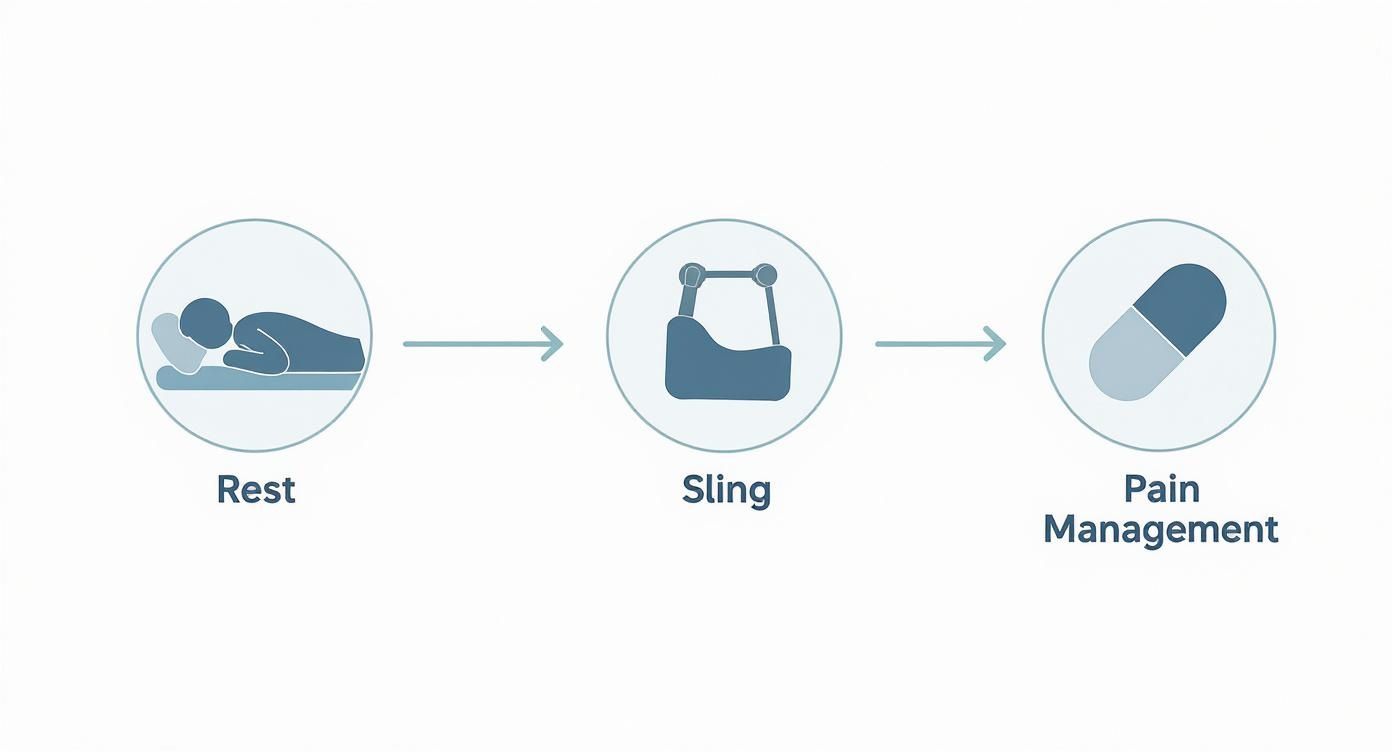
As you can see, before any active work starts, your recovery hangs on proper rest, using your sling correctly, and managing pain. It's all about protecting that delicate surgical repair.
The Early Days: Protecting the Repair
The first phase, which can last up to six weeks, is all about one thing: protection. Your repaired tendon is incredibly fragile at this point, almost like wet cement that needs time to cure. The main goal here is to stop stiff scar tissue from forming without putting any strain on the healing tendon.
During this time, any movement will be passive. This means your physio will gently move your arm for you, or you'll learn specific exercises where your uninjured arm does all the heavy lifting. I know it can feel painfully slow, but this is hands-down the most critical period for making sure the tendon heals properly to the bone.
A classic exercise you'll likely do is the pendulum swing. You’ll simply bend over at the waist, let your operated arm hang freely, and then use your body’s own momentum to make small, gentle circles. Your shoulder muscles aren't firing at all, which is precisely the point.
Reawakening Your Muscles
Once your surgeon gives you the all-clear, usually around the 6 to 12-week mark, you'll move into the active-assisted and then active motion phase. This is an exciting milestone because you finally get to start moving your shoulder yourself. Your physio will introduce exercises designed to gently wake up the muscles around your shoulder joint.
Here’s a taste of what to expect:
- Isometric Exercises: These get your muscles contracting without actually moving the joint. A common example is standing in a doorway and gently pressing the back of your hand into the frame for a few seconds.
- Active-Assisted Range of Motion: You’ll start using your good arm, a pulley, or even a light stick to help guide your operated arm through different movements. This gives your muscles the support they need as they relearn how to work.
- Gentle Active Motion: Eventually, you’ll start lifting your arm on your own, but only as far as you can without pain. The focus is purely on regaining control and coordination.
Patience is key here. Your shoulder will feel weak and a bit clumsy at first—that's completely normal. Consistent, gentle effort is what rebuilds those connections between your brain and your muscles.
Building Strength and Function
From about 12 weeks onwards, the game changes and the focus shifts to building strength. This is where you really start to notice big improvements in your ability to do everyday things. Your physiotherapist will start adding resistance to your exercises to challenge the healing tissues and build the robust strength needed to protect your shoulder for the long haul.
Your recovery is a marathon, not a sprint. This strength-building phase is where many people get impatient, but rushing can easily lead to setbacks. Trust the process and your physiotherapist's guidance.
The exercises become much more functional, mimicking the movements you need for daily life. This might involve:
- Resistance Bands: Using light elastic bands for exercises like external rotation (turning your forearm out to the side) is a cornerstone of rotator cuff rehab. It directly targets the muscles that were repaired.
- Light Weights: As you get stronger, you might start using very light dumbbells for movements like scaption, which is lifting your arms at a slight angle away from your body.
- Functional Movements: You’ll begin practising reaching for things, lifting, and carrying light objects, all while focusing on perfect form to retrain your shoulder for the demands of the real world.
Grasping the 'why' behind these exercises is so important. If you want to dive deeper into how experts tackle this stage, our guide on what musculoskeletal physiotherapy involves is a great resource.
It's also quite common to hit a plateau during this phase, so don't get discouraged. Sometimes progress is more of a slow, steady burn than a steep climb. This is the perfect time to chat with your physio; they can tweak your programme to keep you moving forward. Staying motivated is a huge part of recovery, and celebrating the small wins—like reaching that top shelf or getting dressed without pain—can make all the difference.
Getting to Grips with Pain and Daily Life
Once you're home, a huge part of your rotator cuff surgery recovery hinges on how you manage pain and adapt your day-to-day life. Your physiotherapy is crucial for building strength, but what you do in between sessions plays a massive role in keeping discomfort down and helping those tissues repair. This is about more than just taking prescribed medication; it's about making smart, conscious lifestyle choices that create the best possible environment for your body to heal.
Getting pain under control isn't just for comfort's sake. It allows you to engage properly with your exercises, which prevents stiffness and actually speeds up your progress. On the flip side, trying to "push through" the pain is a recipe for a setback. The goal is to find a sweet spot using a mix of targeted relief, clever adjustments to your surroundings, and good old-fashioned nutrition.

Smart Pain Relief Beyond the Prescription
While your prescribed painkillers are a lifeline, especially in the early days, you have other powerful tools at your disposal. Adding these non-medical strategies to your routine can make a world of difference in managing inflammation and taking the edge off the pain.
The undisputed champion here is ice therapy. A cold pack is brilliant because it constricts the blood vessels, which helps to numb that sharp, nagging pain and bring down post-operative swelling. To get the most out of it, wrap an ice pack in a thin tea towel and apply it for 15-20 minutes at a time. Do this several times a day, particularly after a bout of physiotherapy.
The Art of Sleeping After Shoulder Surgery
One of the biggest frustrations I hear from patients is the struggle to get a decent night's sleep. Lying flat is often the culprit. Gravity puts a dragging, throbbing stress on the repaired joint, which is enough to keep anyone awake. The secret is finding a supported, semi-upright position.
Many people swear by one of these setups:
- The Recliner: For the first few weeks, sleeping in a recliner can be a godsend. It keeps your upper body elevated and supported without you having to think about it.
- The Pillow Fort: If you're determined to stay in bed, create a 'fort' with a wedge pillow or a big stack of regular pillows to prop up your head and torso.
- The Anti-Roll Barrier: The last thing you want is to roll onto your operated shoulder in your sleep. Place extra pillows around you to act as a buffer and keep you in place.
Sleep isn't a luxury; it's when your body does its most important repair work. For more great ideas on making your house a recovery-friendly zone, this practical guide to recovering from surgery at home is full of useful tips.
Making Everyday Life Shoulder-Friendly
You'd be surprised how everyday tasks, like working at a computer or even making a brew, can put a strain on your healing shoulder. Small ergonomic tweaks can prevent this kind of accidental sabotage. If you're at a desk, make sure your chair supports your back properly and your keyboard is positioned so your forearms are parallel to the floor—no hunching or reaching.
"Your posture and daily habits directly impact the load on your shoulder. Think of every action as an opportunity to either protect or provoke the repair. Small, mindful adjustments throughout the day make a significant difference."
Even when you're relaxing on the sofa, pop a cushion under your operated arm. This simple move stops the weight of your arm from pulling down on the delicate surgical work. Stay mindful of how you stand, sit, and move, always aiming for a relaxed, neutral shoulder posture.
Fuelling Your Body for Repair
Never underestimate the power of nutrition in your recovery. What you eat and drink directly affects how well your body can manage inflammation and rebuild tissue. Your dietary choices can either promote or hinder healing.
Try to build your meals around foods that fight inflammation and give your body the right building blocks:
- Lean Proteins: Think chicken, fish, beans, and lentils. They provide the amino acids your body needs to reconstruct muscle and tendon fibres.
- Omega-3 Fatty Acids: Oily fish like salmon, walnuts, and flaxseeds are packed with these healthy fats, which are known for their powerful anti-inflammatory properties.
- Vitamins and Antioxidants: Load up on colourful fruits and veg like berries, leafy greens, and bell peppers. They're full of vitamins (especially Vitamin C) that help create collagen—the foundation of tendon tissue.
- Hydration: Keep a water bottle handy and sip throughout the day. Water is essential for transporting nutrients to the cells that are working overtime to mend your tendon. Dehydration can slow down healing and make you feel tired and sluggish.
By weaving these lifestyle adjustments into your recovery, you’re doing more than just waiting to get better. You're taking an active role in the process, giving yourself the best shot at a strong, successful outcome.
Setting Realistic Expectations for Your Healing
Right, let's talk about what really happens after your rotator cuff surgery. The single most important thing to grasp is that this is a marathon, not a sprint. I've seen countless patients get disheartened by comparing their progress to someone else's, but honestly, every single recovery journey is different.
How quickly and how well you heal comes down to a whole host of factors. Many of these were set in stone long before you even saw the inside of an operating theatre, like the size of the original tear, your age, and your general health. Your active participation is the real game-changer, but we have to work within the biological reality of your situation.
Why the Size of the Tear and Your Age Are So Important
Tendon-to-bone healing is a slow, complex biological process. Think about it this way: a small tear often has a better blood supply and less tension pulling at the stitches, giving it a solid head start. On the other hand, a large or massive tear is under far more strain, and sometimes the tissue quality isn't great to begin with. This just makes the biological repair process a much tougher challenge for your body.
Age plays a big part, too. As we get older, our body's natural repair mechanisms slow down, and our tendon tissue can lose some of its elasticity and robustness. This doesn’t mean you can't get a fantastic result if you're a bit older! It just means your healing timeline might be longer, and you'll need to be extra disciplined with your rehabilitation plan.
If you're keen to give your body every advantage, it's worth looking into broader strategies that can help. For some great insights, you can explore these top strategies for quick healing and recovery.
The Hard Numbers Behind Healing
Let's ground this in reality by looking at some data. It’s not about worrying you; it’s about understanding the process. UK studies have given us a clear picture of healing rates, and the numbers are quite revealing.
At the 12-month mark, the overall healing rate was found to be 56%. But here's where it gets interesting—the success rate was heavily influenced by the size of the tear:
- Small tears healed at 66%
- Medium tears at 68%
- Large tears dropped to 47%
- Massive tears came in at just 27%
You can dig into the specifics of these UK-based rotator cuff repair findings on PubMed if you like.
These numbers aren't a prediction of your personal outcome. They're the reason your surgeon gives you such specific instructions and why your physio is so particular. It’s all designed to give your repair the absolute best shot at success, whatever the odds.
It's also crucial to know that "healing" on a scan doesn't always equal "function" in real life. Many people get brilliant pain relief and a fully working shoulder even if a scan shows the tendon hasn't perfectly reattached to the bone. The ultimate goal is getting you back to your life.
You Are the Most Important Part of Your Recovery Team
You can't change your age or how bad the tear was to begin with, but you have incredible influence over almost everything else. Your commitment to positive lifestyle choices will move the needle more than anything else.
Here’s where you can make a real difference:
- Follow the Rules: In those early weeks, sticking to your sling schedule and activity limits is non-negotiable. It protects the fragile repair work when it’s at its most vulnerable.
- Do Your Homework: Physiotherapy isn't just about the sessions. The exercises you do at home are what rebuild strength, restore your range of motion, and retrain the muscles to support your shoulder properly.
- Live Well: Eating an anti-inflammatory diet, staying well-hydrated, getting enough sleep, and avoiding smoking gives your body the biological tools it needs for optimal tissue repair. Don't underestimate it.
Think of this as a partnership between you, your surgeon, and your physiotherapist. By understanding the realities and throwing yourself into your role, you're paving the way for a strong, functional, and pain-free shoulder. For a more detailed look at the journey ahead, our guide to the shoulder surgery recovery time breaks it all down, week by week.
Ensuring Long-Term Shoulder Health and Preventing Re-Injury
Reaching the end of your formal physiotherapy is a huge milestone, but it's not the finish line. Think of it as graduating from supervised training to becoming the long-term manager of your own shoulder health. The lifestyle habits you build from this point on are what will truly protect your surgical repair for years to come and keep future problems at bay.
Your focus now shifts from a structured rehabilitation schedule to smart, sustainable maintenance. This proactive approach is all about making sure the hard work you’ve already put in pays off for the long haul, letting you get back to the activities you love with real confidence. It’s a mix of continuing with a maintenance exercise programme and making a few thoughtful tweaks to your daily life.

From Rehabilitation to Lifelong Maintenance
Just because your physio appointments are over, it doesn't mean the exercises stop. To hang on to the strength and flexibility you’ve worked so hard to regain, you’ll need to weave a maintenance programme into your regular routine. This isn't about gruelling, hour-long gym sessions; it’s all about consistency.
Your physiotherapist will have likely given you a shorter, more focused set of exercises to do a few times a week. These are specifically designed to keep the supporting muscles around your shoulder joint strong and balanced, which is your best defence against re-injury.
Key maintenance exercises often include:
- Continued Resistance Band Work: Simple external rotation and scaption exercises with a light band are perfect for keeping the rotator cuff muscles firing properly.
- Gentle Stretching: Regularly stretching your chest and the back of your shoulder stops tightness from creeping in, which can throw off your shoulder mechanics.
- Full Range of Motion: Actively moving your shoulder through its full, pain-free range of motion every day keeps the joint healthy and mobile.
Smart Lifestyle Modifications at Work and Play
Protecting your repaired tendon often boils down to avoiding things that put it under excessive or repetitive strain. This takes a bit of mindfulness, whether you’re at your job, enjoying a hobby, or playing sports. It’s not about giving things up, but about doing them more intelligently.
For example, if you have a desk job, your ergonomics are absolutely crucial. An improperly set-up workstation can easily lead to poor posture, causing your shoulders to round forward and place constant, low-grade stress on the rotator cuff.
"Think of your shoulder's health like a bank account. Every smart ergonomic choice and proper warm-up is a deposit, while poor form and overuse are withdrawals. Your goal is to always stay in credit."
Simple changes can make a massive difference:
- Adjust Your Chair: Make sure your feet are flat on the floor and your elbows are at a 90-degree angle when typing.
- Position Your Monitor: The top of your screen should be at or just below eye level. This simple trick prevents you from slouching.
- Take Movement Breaks: Get up and have a good stretch every 30-60 minutes. Staying locked in one position is your shoulder's enemy.
Returning to Hobbies and Sports Safely
When it’s time to get back to more demanding physical activities, the golden rule is always "start low and go slow." Your shoulder might feel strong, but the repaired tissue needs a chance to adapt to new loads gradually. And proper form? It’s completely non-negotiable. Whether you're lifting weights, playing tennis, or gardening, focusing on your technique ensures the load is spread correctly across your muscles, not channelled into that repaired tendon.
A gradual return is essential. Don't jump straight back into a five-set tennis match. Start with a gentle 20-minute rally and see how your shoulder feels the next day. This careful, sensible progression is what paves the way for long-term success.
The good news is that most repairs are incredibly durable. UK studies looking at long-term outcomes found that the survivorship of rotator cuff repairs—meaning the shoulder didn't need more surgery—was 94% at five years. However, that figure dropped to 83% by the ten-year mark, which really hammers home why these long-term preventative strategies are so important. You can dig into the details of these long-term rotator cuff surgery outcomes in the UK.
By truly embracing these lifestyle changes, you stop being a patient and become the expert on your own shoulder. You gain the power to make daily choices that support your health, ensuring your rotator cuff surgery leads to a lifetime of strong, pain-free movement.
Your Rotator Cuff Recovery Questions Answered
Going through rotator cuff surgery can feel overwhelming, and it's completely normal to have a long list of questions. Knowing what to expect and what to do can make all the difference, helping you feel in control of your recovery.
We've pulled together some of the most common queries we hear from patients. Think of this as a practical guide to help you navigate the healing process with a bit more confidence.
Can I Sleep on My Side After Surgery?
This is easily one of the first questions people ask, and it makes sense—a good night's sleep is crucial for healing. The short answer is, unfortunately, no, you can't sleep on the operated side for quite a while. Putting direct pressure on that fresh repair can strain the tendon, slow down healing, or even cause it to tear again.
Most surgeons will tell you to stay off that shoulder for at least six weeks, sometimes even longer. The real challenge is that even sleeping on your good side can be risky, as you might roll over in your sleep. This is where a bit of creativity comes in:
- Try a recliner: For the first week or two, many people find sleeping in a recliner is the only way to get comfortable and stay put.
- Use a wedge pillow: If you're determined to stay in bed, a wedge pillow can prop you up, taking the pressure off your shoulder.
- Build a "pillow fort": This sounds a bit silly, but it works. Tucking pillows in around your body can act as a barricade to stop you from rolling onto the surgical side.
When Can I Drive Again?
Getting your keys back is a huge step towards independence, but it’s a milestone you absolutely cannot rush. This is about keeping yourself, and everyone else on the road, safe.
Before you even think about driving, you have to tick a few essential boxes. You must be:
- Completely out of your sling. Safe driving requires two hands. No exceptions.
- Off any strong painkillers. Opioids can seriously dull your reflexes and judgement, making driving incredibly dangerous.
- Strong enough, with enough movement. Can you turn the wheel sharply in an emergency? Can you comfortably reach the gear stick without pain? You need to be able to react instantly.
For most, this happens somewhere between six to eight weeks post-surgery. But remember, this isn't a decision you make on your own—you need the official go-ahead from your surgeon or physio first.
How Do I Know if I Have Re-Torn My Rotator Cuff?
It's easy to get anxious about every ache and twinge, but it's important to know the difference between normal healing pains and a real problem. A re-tear often has some tell-tale signs. While you'll definitely have some ongoing discomfort as part of recovery, a new tear usually feels different. It often involves a sudden, sharp pain—sometimes with a pop—after a specific event, like a fall or trying to lift something you shouldn't have.
A sudden spike in pain, combined with a very obvious loss of strength or a big step backwards in your range of motion, are the biggest red flags. If this happens, you need to call your surgical team straight away.
Don't panic over small day-to-day fluctuations in how you feel. Healing is never a perfectly straight line. But a clear, sudden decline in your progress is something that needs to be checked out.
What Lifestyle Changes Will Help My Recovery?
What you do every day has a huge influence on how well and how quickly you heal. Your physiotherapy exercises are non-negotiable, of course, but a few simple lifestyle adjustments can create the perfect environment for your body to repair itself.
Here's where to focus your energy:
- Nutrition: Start thinking of food as fuel for healing. An anti-inflammatory diet can work wonders. This means plenty of oily fish like salmon (for omega-3s), lots of colourful fruit and vegetables (for antioxidants), and lean protein to give your body the building blocks it needs for new tissue.
- Hydration: It sounds basic, but water is vital. It helps carry all those good nutrients to your healing shoulder. Staying hydrated also fights off fatigue and supports your body's repair processes at a cellular level.
- Stop Smoking: If you're a smoker, this is critical. Nicotine constricts your blood vessels, which literally starves the repairing tendon of the oxygen and nutrients it's desperate for. Quitting, even just for the recovery period, can make a massive difference to your final outcome.
Making these changes gives your body the best shot at a successful rotator cuff surgery recovery.
At The Lagom Clinic, we believe in a balanced, proactive approach to health that supports you through every stage of life, including post-operative recovery. If you're in Bristol and seeking personalised medical guidance to optimise your healing journey and long-term wellbeing, we are here to help. Discover a different kind of healthcare by visiting us at https://www.thelagom.co.uk.

 Members Consultation