


Let’s be honest, when you’re thinking about going private for healthcare, the first thing that pops into your head is usually the cost. It’s a perfectly reasonable question. So, how much are we talking about?
In the UK, you can expect a private GP appointment to cost anywhere from around £50 for a quick online chat to over £250 for a detailed, in-person consultation, especially in a big city. That initial fee covers the doctor’s time and professional opinion, but it’s important to see it as the starting line, not the finish. It’s an investment in your long-term health, giving you the time and space to discuss not just symptoms, but preventative strategies and lifestyle adjustments.
What to Expect from Private GP Appointment Costs
Trying to figure out the costs of private medical care can feel a bit like navigating a maze. But once you grasp the basic pricing, it all starts to make sense. A key principle is that prevention is better than cure, and private GP appointments are priced to reflect the level of proactive care you need.
This system is designed to fit your specific needs. A short appointment for a repeat prescription is a world away from a longer, in-depth chat about a new health worry or mapping out a plan for evidence-based lifestyle changes, like improving your diet to manage blood pressure or creating an exercise plan to support mental wellbeing. Understanding these differences is key to choosing the right service and knowing what to expect on the bill.
Typical Price Points for Consultations
The price of a private GP appointment really hinges on whether it’s online or face-to-face, and of course, how long it lasts. Many clinics now offer telephone or video consultations for around £50, which are brilliant for straightforward issues and follow-ups.
In-person appointments naturally start a bit higher. A standard 15-minute slot for a minor problem might set you back £85, while a 30-minute session for something more complex could be £125 or more. If you’re curious, it’s worth looking into a detailed breakdown of these appointment types to see which one aligns with what you need.
To give you a clearer picture, here’s a general idea of what you might pay for different appointments.
Your health is a long-term investment. While the immediate cost is a big factor, remember that timely, scientifically-sound advice can prevent minor issues from becoming major health problems. A simple lifestyle change today, such as incorporating 30 minutes of moderate exercise daily, can significantly reduce your risk of chronic diseases like type 2 diabetes and heart disease in the future.
Typical Private GP Appointment Costs at a Glance
This table provides an estimated cost range for different types of private GP appointments in the UK.
| Appointment Type | Typical Duration | Estimated Cost Range | Best For |
|---|---|---|---|
| Video/Online Consultation | 10-20 Minutes | £50 – £90 | Repeat prescriptions, minor ailments, follow-up lifestyle advice |
| Standard In-Person | 15-20 Minutes | £85 – £130 | New but straightforward health issues, physical checks |
| Extended In-Person | 30-45 Minutes | £125 – £200 | Complex or multiple health concerns, preventative health planning |
| Comprehensive Health Screen | 60+ Minutes | £250+ | Preventative health checks, in-depth lifestyle analysis |
As you can see, the more time and depth required, the higher the cost. This ensures you get the focused attention you’re paying for.
What Factors Determine Your Final Bill?
That initial price you see for a private GP appointment? It’s best to think of it as a starting point. The advertised fee covers the consultation itself, but just like a service for your car, the final bill often includes parts and extra labour needed to do the job properly. Several things can influence what you actually end up paying.
The biggest factor, by far, is the length and complexity of your appointment. A quick, 15-minute chat about a simple, one-off issue is going to cost less than a 45-minute deep-dive into a chronic condition or multiple health concerns. The more of the doctor’s time and expertise you need, the higher the base cost will be.
Beyond the Consultation Fee
The real variation in cost often comes from the extra services required to get a clear diagnosis and treatment plan. The consultation gets you in the door, but pinning down the cause of a problem rarely stops there. This is where you’ll see additional charges, so it’s crucial to know what they might be.
For instance, your GP will often suggest further investigations to get to the bottom of your symptoms. These are almost always billed on top of the appointment fee itself.
Common add-ons can include:
- Blood Tests: These are essential for checking everything from vitamin D levels, which are crucial for bone and immune health, to HbA1c for diabetes screening.
- Diagnostic Imaging: This means referrals for things like X-rays, ultrasounds, or even MRI scans to get a proper look at what’s going on inside.
- Private Prescriptions: The GP writes the prescription, but you’ll pay the full, unsubsidised price for the medicine at the pharmacy, unlike the flat NHS fee.
- Referral Letters: If you need to be passed on to a specialist—say, a dermatologist or a cardiologist—there’s often a small administrative fee for writing the referral letter.
This infographic gives you a good idea of how the base cost can change depending on the kind of appointment you book.
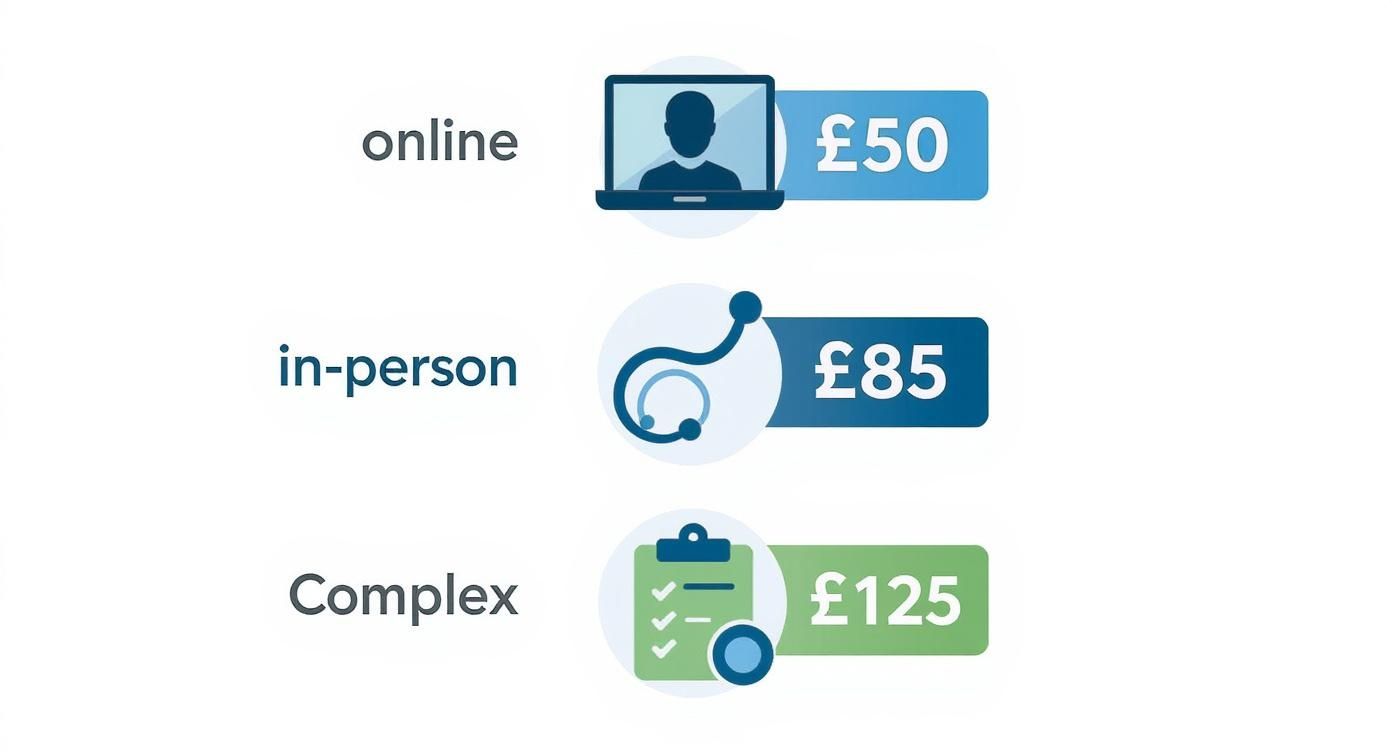
As you can see, the price scales with how involved the consultation is, from a straightforward online video call to a more comprehensive in-person examination.
Clinic Location and Speciality Services
It might not seem obvious, but where the clinic is based can also make a difference. A practice in a major city centre like Bristol or London will have higher running costs than one in a quieter suburb, and that can sometimes be reflected in their prices.
Key Takeaway: Always ask for a clear breakdown of potential costs before you agree to any tests or procedures. A reputable clinic will be upfront about their pricing, helping you make an informed choice without any nasty surprises down the line. A good GP will also discuss the clinical reasoning behind each recommended test.
Finally, some clinics offer more advanced in-house services, like minor surgical procedures (mole removal, for example), ECG heart tracing, or therapeutic joint injections. Having these on-site is incredibly convenient, but they are specialised services that will be added to your final bill. Understanding all these moving parts means you can budget properly and invest in your health with your eyes wide open.
So, What Are You Actually Paying For? The Real Benefits of Going Private
When you look at the cost of a private GP appointment, it’s fair to ask what you’re really getting for your money. It’s about so much more than just skipping the queue. Choosing private healthcare is an investment in a faster, more personal, and preventative kind of medical support. For most people, the biggest draw is simply getting seen quickly.
Instead of waiting days—or sometimes weeks—for a slot to open up, private clinics can often see you the same day or the next. When you’re worried about a health issue, that speed can make all the difference. It means a quicker diagnosis, faster treatment, and most importantly, getting your peace of mind back.
More Time to Talk and Build a Real Doctor-Patient Relationship
One of the most valuable things private care gives you is time. A recent survey really brought home a major frustration with the NHS system: a staggering 70% of UK adults find it difficult to get a GP appointment during regular working hours. Private GPs, on the other hand, often offer evening and weekend slots to fit around a modern schedule. You can read more about what’s pushing patients towards private options over on AccessGP.co.uk.
It’s not just about when you can be seen, but for how long. Private appointments typically run for 20 to 40 minutes. Compare that to the national average for an NHS visit, which is just 9.2 minutes. That extra time isn’t a luxury; it’s fundamental to providing good, thorough care.
A longer appointment allows for a proper conversation. It creates the space to move beyond the immediate symptom and discuss your overall health, lifestyle factors, and preventative strategies for long-term wellness. This is your opportunity to receive evidence-based health advice, such as the benefits of a Mediterranean diet for heart health or mindfulness techniques for stress reduction.
Having that dedicated time lets you build a genuine partnership with your doctor. You can finally delve into topics that would feel rushed in a ten-minute slot, like:
- Preventative Health: Talking about practical, evidence-based steps to lower your risk of future illness.
- Lifestyle Medicine: Getting tailored advice on diet, sleep, and managing stress based on the latest medical science.
- Complex Concerns: Unpacking several health issues at once without feeling like you’re on a timer.
- Mental Wellbeing: Having an open, unhurried conversation about your mental health and exploring strategies like cognitive behavioural therapy (CBT) principles or exercise as medicine.
Convenience That Actually Fits Your Life
Finally, you can’t overlook the sheer convenience of it all. If you’re a busy professional or have a family, taking time off work or pulling the kids out of school for a GP visit is a huge hassle. Private clinics are built to work around your life, not the other way around.
Being able to book an appointment for an evening or a Saturday morning removes a massive barrier to getting the care you need. It means your health doesn’t have to compete with your other commitments. When you choose a private GP, you’re paying for a service designed to be as smooth and accommodating as possible, making your health journey that much easier to manage.
Choosing Between Online and In-Person Care

Deciding between a virtual chat with your doctor and a traditional clinic visit can be a bit of a head-scratcher. It’s not about one being better than the other; they just serve different purposes. The right choice really comes down to what you need at that moment – your health concern, your budget, and even just your personal preference.
Online appointments are brilliant for their sheer convenience and are usually lighter on the wallet. They’re perfect for straightforward things where a physical examination isn’t needed. Think discussing recent test results, getting a repeat prescription sorted, or asking about something simple like a skin rash. It cuts out the travel and hassle, letting you squeeze a doctor’s visit into a packed schedule.
But for many health issues, there’s simply no substitute for being in the same room as your GP. A face-to-face appointment is crucial when the doctor needs to listen to your chest, take your blood pressure, or properly examine an injury. It’s also the way to go for more complex problems or when you need a sensitive, in-depth conversation about your health and create a collaborative plan for lifestyle changes.
Comparing Your Options
Making the right choice from the start means you get the best possible care. For instance, if you need advice fast and are looking for a same-day GP appointment, a virtual service can be a lifesaver. On the other hand, an in-person visit is invaluable for building that long-term, trusting relationship with a doctor who really gets to know you, which is key for managing ongoing conditions and reinforcing positive lifestyle habits.
To make things clearer, let’s break down the key differences between seeing your GP on-screen versus in the clinic.
Online vs In-Person Private GP Appointments
This table gives you a side-by-side look to help you decide which format fits your needs.
| Feature | Online Consultation | In-Person Consultation |
|---|---|---|
| Average Cost | Lower (typically £50 – £90) | Higher (typically £85 – £200+) |
| Best For | Prescription renewals, minor issues, follow-ups | Physical exams, complex diagnosis, procedures |
| Convenience | High (no travel required) | Lower (requires travel to the clinic) |
| Doctor-Patient Bond | Good for established relationships | Excellent for building trust and rapport |
| Limitations | No physical examination possible | Requires more time and scheduling |
As you can see, each has its place. The real trick is knowing when to use which.
The smartest way to approach it is to see these options as two different tools in your healthcare toolkit. You might use an online service for a quick question about hay fever, but book a face-to-face visit to discuss a sustainable weight management plan or investigate that nagging back pain properly. It’s all about matching the appointment to the problem.
How to Get the Most Out of Your Appointment
When you book a private GP appointment, you’re not just paying for a consultation; you’re investing in your health. To make sure you get a great return on that investment, a little bit of preparation goes a very long way.
Turning up with a clear plan can completely change the dynamic of your visit. Instead of just reacting to questions, you’ll be taking a proactive role in managing your health. Before you head to the clinic, jot down a simple list. Note your symptoms in the order they appeared, write down every question that’s on your mind, and list all your current medications—don’t forget vitamins and supplements. This simple act ensures nothing gets missed and gives your doctor a complete picture right from the start.
Prepare for a Forward-Thinking Conversation
One of the biggest advantages of a private GP appointment is the time to look beyond your immediate symptoms and talk about preventative health. This is your chance to get personalised, scientifically-sound advice that can genuinely improve your long-term wellbeing.
Think about asking your doctor for guidance on lifestyle changes that could make a real difference. This moves the conversation from simply treating an illness to actively building a healthier future. You could prepare questions on topics like:
- Nutrition: “What specific dietary changes can help lower my cholesterol?” or “Is intermittent fasting safe for me?”
- Sleep: “Could my sleep patterns be affecting my mood? What is good sleep hygiene?”
- Stress Management: “Can you recommend any evidence-based techniques like mindfulness or breathing exercises for stress?”
- Exercise: “What type and amount of exercise is best for my joint pain and overall heart health?”
Think of your GP as a health partner. By preparing to discuss these wider topics, you’re not just asking for a diagnosis; you’re collaborating on a strategy for a healthier future. For example, aim for at least 150 minutes of moderate-intensity activity per week, which is proven to reduce the risk of many chronic diseases.
Use Modern Tools for a Seamless Experience
Staying organised after your appointment is just as important as preparing for it. Good communication is key, and many modern clinics now offer tools to help. For instance, exploring how SMS solutions for healthcare can improve appointment management and keep you in the loop is a smart move. These systems can send reminders for follow-ups, medication schedules, and test results, making your life much easier.
By preparing properly and having a forward-thinking conversation, you can ensure the private GP appointment cost delivers fantastic value. You’ll leave not just with answers for today, but with a clear, actionable plan for your long-term health and wellbeing.
Using Private Services Alongside the NHS
Choosing to see a private GP doesn’t mean you’re turning your back on the NHS. Far from it. Many people find that using both systems gives them the best of both worlds—a flexible, responsive healthcare setup that actually fits their life.
Think of it like this: your NHS GP is your trusted, long-term partner, the keeper of your medical history and manager of any ongoing conditions. But a private GP can be your go-to for those one-off situations—when you need a second opinion now, want to get a niggling worry checked out without the wait, or want to dedicate time to discussing preventative lifestyle strategies.
This blended approach lets you tap into the speed and convenience of private care exactly when you need it, all while keeping the safety net and continuity of the NHS firmly in place. It’s about managing your health on your own terms.
How Private and NHS Care Work Together
One of the first things people ask is how the two systems talk to each other. It’s actually quite straightforward. As long as you give your permission, your private GP can share all the notes from your consultation, along with any test results, directly with your NHS practice. This is crucial for keeping your medical records complete and ensuring everyone involved has the full picture.
So, how do diagnoses and prescriptions work in this setup?
- Private Diagnosis: A diagnosis from a private doctor is almost always recognised by the NHS, particularly if it’s backed up by solid evidence like scan results or blood tests.
- Prescriptions: A private GP can write you a prescription, but you’ll have to cover the full cost of the medicine yourself. Sometimes, your NHS GP might agree to take over the prescription, but that’s entirely up to them and their clinical judgement.
This collaborative model means you can be strategic about how you use the private GP appointment cost. You can learn more about how different services fit together in this private healthcare comparison in the UK.
By blending both systems, you put yourself in the driver’s seat. You get the speed of private care when it counts and the continuity of the NHS for everything else, building a health plan that truly works for you. This might involve seeing a private GP for an in-depth nutritional review while continuing to manage a long-term condition with your NHS doctor.
Common Questions About Private GP Costs
It’s natural to have a few last-minute questions when you’re looking into private healthcare costs. Getting a clear picture of what you’re paying for is the first step towards feeling confident in your decision. Let’s tackle some of the most common queries we hear.
A big one is whether paying for a private GP is a smart move when the NHS is “free”. While the NHS is a cornerstone of UK healthcare, the real value of a private appointment often comes down to three things: speed, time, and a focus on prevention. You’re investing in getting quick answers and dedicated, unhurried advice that can stop small health niggles from turning into major problems down the line.
Is It Really Worth the Money?
More and more people seem to think so. Frustrations with getting a timely NHS appointment have pushed many to explore private options for the first time—around 1.6 million UK adults, in fact, according to recent figures. It’s a trend we’re seeing reflected in booking numbers across the board.
Of course, costs vary. A 15-minute BUPA appointment might set you back £79, while some online services can be as low as £38.99. It just goes to show there are options out there for different needs and budgets. If you’re interested, you can explore more data on this growing trend to see the bigger picture.
Can a Private GP Help with Lifestyle Changes?
Yes, and honestly, this is where private care really shines. A private GP appointment gives you the breathing room to talk about more than just your immediate symptoms. It’s the perfect opportunity to get proper, medically-backed advice on improving your overall wellbeing.
You can work together on a realistic plan for things like:
- Nutrition: Getting beyond generic diet tips to understand the science of how food impacts your body, focusing on whole foods, fibre, and healthy fats.
- Stress Management: Learning practical, evidence-based techniques like mindfulness-based stress reduction (MBSR) to manage cortisol levels.
- Sleep Quality: Implementing cognitive behavioural therapy for insomnia (CBT-I) principles to improve your sleep without medication.
- Physical Activity: Creating a balanced exercise plan that includes cardiovascular, strength, and flexibility training tailored to your fitness level.
This forward-thinking, preventative approach is at the heart of the private model. It’s less about a quick fix for today and more about building a partnership with your doctor to map out a healthier future. Small, consistent lifestyle changes are scientifically proven to have the biggest impact on long-term health.
When you come prepared to discuss these things, the appointment becomes so much more than a simple consultation—it’s a strategy session for your long-term health.
At The Lagom Clinic, we believe healthcare should be clear, personal, and proactive. If you feel you’d benefit from having a doctor who has the time to really listen and help you plan for long-term health, we’re here for you.
Ready to get started? Book your appointment with us today.
Minor Surgery Costs
Beyond consultations, private clinics often provide same-day minor surgery. At The Lagom Clinic, procedures such as cyst, mole and lipoma removal start from £650. Learn more about minor surgery at The Lagom Clinic.


 Members Consultation