


A fit to work certificate isn’t just a standard sick note. Think of it more as a practical, medical assessment from a professional that helps you and your employer figure out the safest way for you to get back on your feet at work. Typically, you’ll need one if you’ve been off sick for more than seven days in a row.
What Exactly Is a Fit to Work Certificate?
Known officially as a ‘Statement of Fitness for Work’—or more commonly, a ‘fit note’—this document is all about bridging the gap between your health and your job. It’s a modern approach that focuses on what you can do, rather than simply what you can’t.
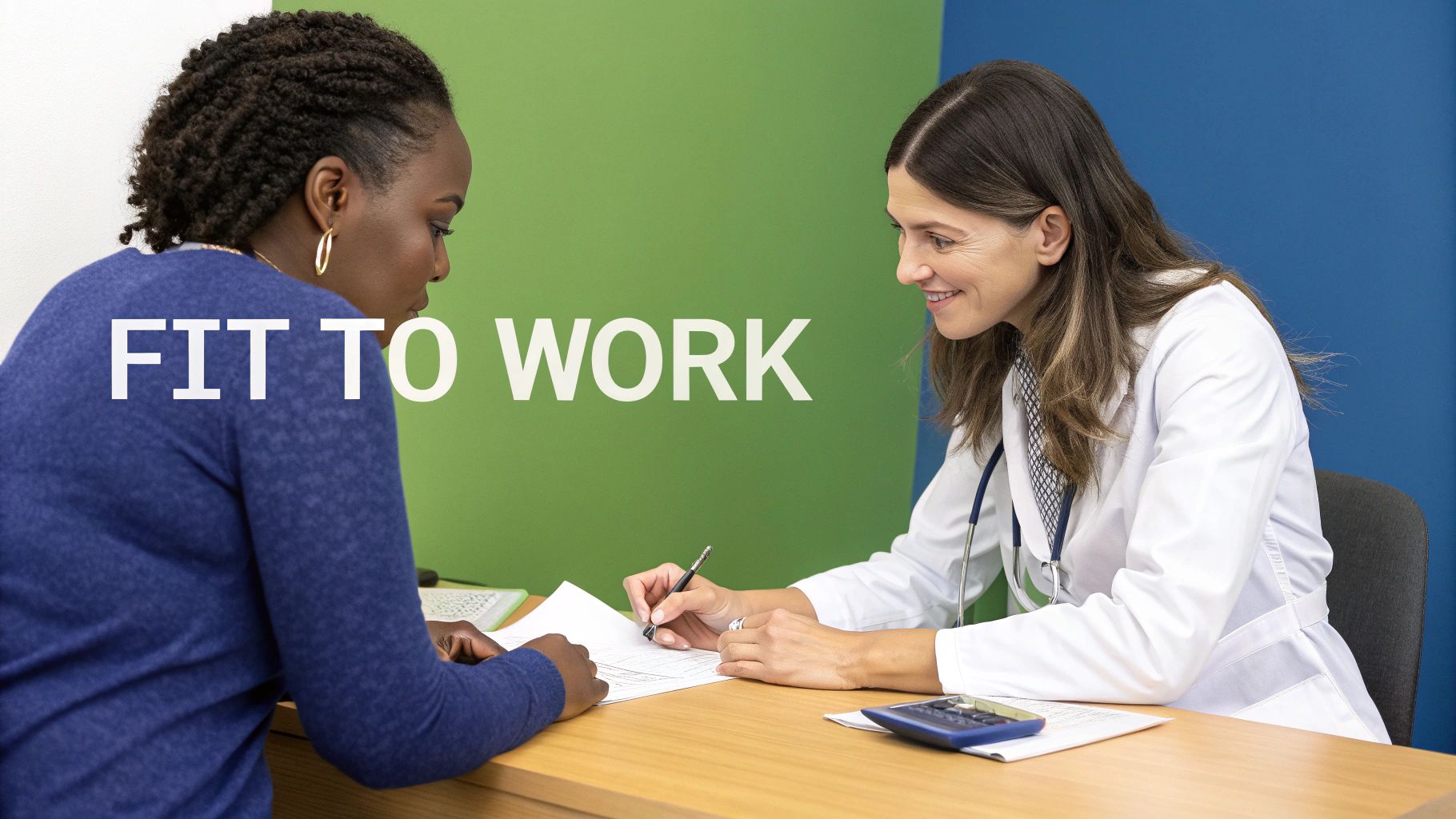
The old “sick or not sick” binary is gone. Instead, a clinician can suggest specific, practical adjustments to help you get back into the swing of things without setting back your recovery. It’s all about a safe and sustainable return.
Some of the most common recommendations you might see on a fit note include:
- A phased return, where you gradually build your hours back up over a few weeks.
- Amended duties, meaning you might temporarily avoid tasks that could strain you.
- Altered hours, which could give you the flexibility to manage appointments or fatigue.
At its heart, a fit note is designed to kick-start a productive conversation with your employer. It gives them medically-backed suggestions, making it easier to discuss what practical changes will help you ease back into your role successfully.
This ‘fit note’ system has been in place across the UK since 2010, when it replaced the old-fashioned sick note. It empowers a wider range of healthcare professionals—not just doctors, but also nurses and physiotherapists—to give more detailed advice. For employees, you must provide a fit note if you’re off for more than seven calendar days and need to claim Statutory Sick Pay.
For some jobs, a standard fit note isn’t enough. In specialised fields like commercial driving, for example, a specific type of fitness certificate like a DOT medical certificate is a legal requirement to prove you’re medically cleared for the role.
Here at The Lagom Clinic in Bristol, we carry out these assessments to give you clarity and a clear path forward. If you want to dive deeper into the details, have a look at our guide on assessing medical fitness for work.
Getting Ready for Your Assessment
Walking into your fit-to-work assessment properly prepared can make all the difference. When you’ve done a bit of homework, the conversation with your clinician is much more productive, and you’re more likely to get the support you actually need.

First things first, let’s get your medical details in order. You don’t need to bring your entire medical history, just the important stuff that gives a clear, up-to-date picture of your health.
- Medication List: Jot down everything you’re currently taking, including the dosages. It’s surprisingly easy to forget one on the spot.
- Specialist Notes: If you’ve been seeing a physiotherapist, counsellor, or another specialist, any recent reports or letters from them are incredibly helpful.
- Previous Fit Notes: If this isn’t your first assessment for this issue, bring your last fit note. It helps the clinician see how things have (or haven’t) changed.
Having this information ready means your clinician can get up to speed quickly. That leaves more time for the most important part: talking about how your health is really affecting you at work.
Think About Your Job in Detail
Now, turn your attention to your actual job. Getting a useful fit-to-work certificate isn’t just about listing what you can’t do. It’s about figuring out what you could do if a few things were different.
Before you come in, have a think about these kinds of questions:
- What specific tasks make your condition flare up? Is it lifting heavy boxes, staring at a screen for hours, or the pressure of back-to-back meetings?
- Are there certain times of the day when you feel better or worse? Maybe mornings are a struggle, but you hit your stride in the afternoon.
- What small changes might have a big impact?
The best fit notes come from a team effort between you and your clinician. When you’ve already thought about practical adjustments—like a better chair, starting your shift an hour later, or swapping a physically demanding task for an admin one for a while—you bring real-world solutions to the table. This helps us write recommendations that are genuinely useful for you and your employer.
Finally, just take a moment to organise your own thoughts. Write down any questions you have or points you’re worried you might forget to mention. The goal is for you to leave the clinic feeling heard, understood, and confident about the path forward.
Looking After Yourself: Lifestyle Changes to Help You Get Back on Your Feet
Getting that fit-to-work certificate is a massive step forward, but the journey doesn’t end there. Think of it as a green light to start rebuilding, not a finish line. The small, smart choices you make every day can make a huge difference in how quickly and strongly you recover.
It’s about giving your body the right tools to heal itself. Simple things, like what you eat and drink, are a brilliant place to start. Upping your intake of anti-inflammatory foods—think leafy greens, berries, and oily fish—can help calm things down internally. And staying hydrated? It’s fundamental. Proper hydration is key for everything from cellular repair to keeping your energy levels up.
Don’t Underestimate a Good Night’s Sleep
Sleep is your body’s prime time for repair. It’s when the real magic happens—muscles are mended, memories are sorted, and crucial healing hormones get to work. Skimp on sleep, and you’ll likely feel more pain and find it harder to think clearly. It’s that simple.
If you’re struggling to get decent rest, try a few practical things:
- Stick to a Schedule: Aim for the same bedtime and wake-up time each day. Yes, even on weekends. It helps set your internal body clock and makes falling asleep much easier.
- Get Your Bedroom Right: Make it a sanctuary. It should be dark, quiet, and cool. Blackout curtains, an eye mask, or even a white noise machine can be game-changers.
- Switch Off Before Bed: The blue light from your phone or tablet is the enemy of sleep. Put screens away an hour before bed and do something relaxing instead—read a book, do some light stretches, or listen to some calm music.
Gentle Movement and Keeping Stress in Check
You probably aren’t ready to run a marathon, and that’s completely fine. But gentle movement is one of the best things you can do. A short walk or some simple stretching gets the blood flowing, delivering all the good stuff—oxygen and nutrients—to the areas that need to heal. The golden rule is to listen to your body. If it hurts, stop. Pushing through pain will only set you back.
Stress management is just as important. It’s no secret that stress can take a heavy toll on your health, both physically and mentally. It’s a massive factor in why people are off work in the first place. In fact, an eye-watering 79% of UK workers say they commonly feel stressed, contributing to 17.1 million working days lost each year. Taking control of your stress is non-negotiable. If you’re interested in the numbers, you can read more about these workplace stress statistics.
Simple mindfulness techniques can be incredibly effective. Things like deep breathing exercises or a short meditation can lower your stress hormones and calm your entire system. You’d be surprised what just five minutes of focused breathing can do to make you feel more grounded and ready to tackle the day.
To give you some practical ideas, here are a few simple but effective changes you can make to support your recovery and build resilience for your return to work.
Actionable Lifestyle Changes for a Healthier Return to Work
| Lifestyle Area | Simple Actionable Tip | Benefit for Recovery |
|---|---|---|
| Nutrition | Add a portion of leafy greens (like spinach or kale) and a handful of berries to one meal each day. | Reduces inflammation and provides essential vitamins for cellular repair. |
| Hydration | Keep a reusable water bottle on your desk or nearby and aim to refill it 2-3 times a day. | Improves energy, aids nutrient transport, and helps flush out toxins. |
| Sleep | Set a “wind-down” alarm for 30-60 minutes before your intended bedtime as a reminder to put away screens. | Improves sleep quality, allowing for deeper physical and mental restoration. |
| Movement | Schedule a 15-20 minute walk during your lunch break or after work. Start slow and build up gradually. | Boosts circulation to healing tissues and gently improves cardiovascular health. |
| Stress | Practice a 5-minute box breathing exercise (inhale for 4, hold for 4, exhale for 4, hold for 4) when you feel overwhelmed. | Calms the nervous system, lowers cortisol levels, and improves mental clarity. |
| Social Connection | Arrange a coffee or a short phone call with a supportive friend or family member at least once a week. | Reduces feelings of isolation and provides emotional support, which is vital for mental well-being. |
These aren’t drastic overhauls; they’re small, sustainable habits. Integrating just a couple of these into your routine can create a positive ripple effect, helping you feel stronger and more prepared for your return to work.
Your Fit to Work Assessment at The Lagom Clinic
We know that coming in for any kind of medical assessment can feel a bit daunting. That’s why at The Lagom Clinic here in Bristol, we’ve made sure the entire process is less of a clinical check-up and more of a supportive, collaborative conversation. It’s all about understanding you and your specific situation.

From the moment you walk through our doors, our priority is to make you feel comfortable. The consultation itself is really just a straightforward chat with one of our experienced healthcare professionals. They’ll talk with you about your health, how it might be impacting your day-to-day life, and what the specific demands of your job involve.
This is your chance to share what’s been going on. Honestly, your perspective is the most important part of this. Hearing directly from you about the challenges you’re facing helps us build a complete, accurate picture.
A Collaborative Approach to Your Certificate
Our goal is to work with you to find practical and safe solutions. We’ll talk through different adjustments that could make all the difference when you return to work.
We often discuss things like:
- A phased return: Easing back in by gradually increasing your hours.
- Modified duties: Temporarily changing your role to avoid tasks that might get in the way of your recovery.
- Workplace adaptations: Thinking about practical changes, like ergonomic equipment or a different workstation setup.
Your own insights here are invaluable and directly influence the recommendations that go onto your fit note. For employers looking to understand this better, explore our occupational health services.
Key takeaway: Think of the assessment as a two-way street. Our clinicians bring the medical expertise, but you are the expert on your own body and your job. When we combine that knowledge, we can create a fit-to-work certificate that genuinely supports you.
When all is said and done, we want you to leave feeling confident, with a clear and realistic plan. The whole process is designed to be transparent and helpful, making sure your return to work is both safe and sustainable.
How to Use Your Fit Note for a Smooth Return to Work
So you’ve got your fit to work certificate. Great! But this piece of paper is more than just a green light; it’s the key to starting a meaningful conversation with your employer about how you’ll come back.
Often, a fit note will say you ‘may be fit for work’ as long as certain adjustments are made. This is your cue to sit down and figure out what those suggestions actually look like day-to-day in your role. Getting this right from the start is absolutely crucial.
Why? Because the longer someone is off sick, the harder it is to return successfully. We know that in 2025, an estimated 2.8 million working-age adults in the UK will be out of the workforce due to long-term sickness. Even more telling is that if someone is absent for more than a year, their chances of ever returning to that job drop below 50%. A well-handled, supportive return plan makes all the difference. For a deeper dive, the government’s keeping Britain working report has some eye-opening insights.
Turning Recommendations Into Reality
The next practical step is to schedule a meeting with your manager or HR department to go over the certificate. It helps to frame this as a collaborative effort – you both want the same thing: a safe, sustainable return that works for everyone.
Wondering what those ‘adjustments’ might actually be? Here are a couple of real-world examples:
- A phased return: This doesn’t have to be complicated. It could be as simple as starting with three half-days in your first week, then gradually building back up to your full hours over the next month.
- Amended duties: If your job involves heavy lifting but you’re recovering from a back injury, you might temporarily swap those tasks for desk-based admin work until you’re fully fit.
Think of your fit note as a professional recommendation, not a strict set of rules. It’s the perfect foundation for a practical discussion to find solutions that protect your health while still meeting the company’s needs.
Finally, remember that returning to work isn’t just about the physical tasks. You’re also stepping back into a social and professional environment. Taking some time to think about navigating workplace relationships and stress can be a huge help. This proactive approach helps create a more supportive atmosphere, making your transition back into the team feel much less daunting.
Your Fit to Work Certificate Questions Answered
When you’re sorting out a fit to work certificate, it’s completely normal to have a few questions pop up. Getting your head around the details can make the whole process feel a lot less daunting and help you focus on getting back to work safely.
Let’s tackle some of the things people often ask.
How Long is the Certificate Valid For?
This is probably the most common question we get. There’s no single answer, as your clinician will set the duration based entirely on your personal recovery needs.
For something straightforward, you might be looking at a shorter period, perhaps 1-4 weeks, which allows for a quick check-in to see how you’re progressing. If you’re dealing with a more long-term condition, the first certificate generally won’t go beyond three months. This is to make sure your situation is properly reassessed at regular intervals.
What if My Boss Can’t Make the Recommended Changes?
It’s a valid concern. You’ve got a fit note suggesting adjustments like different hours or duties, but what if your employer says it’s not possible?
Legally, they have to give your doctor’s recommendations serious thought. If they can’t implement them for a legitimate business reason, then your fit note is treated as if it says you’re ‘not fit for work’. This means your sick leave continues.
If you believe their refusal isn’t reasonable, don’t just let it go. You can get professional advice from ACAS or speak with your trade union representative.
Do I Need to Come into the Clinic in Person?
Not always. We understand that getting to an appointment isn’t always easy, especially when you’re unwell.
For many situations, particularly if it’s for a condition we’re already managing, we can often issue a fit note after a phone or video call. At The Lagom Clinic, we aim to be flexible. Of course, if we feel an in-person examination is essential for a proper assessment, we’ll let you know.
At The Lagom Clinic, our private GP services in Bristol are all about giving you clear, supportive guidance for your health at work. To chat about your fit to work certificate, just schedule a consultation with us today.


 Members Consultation