


Do you find yourself constantly battling bloating, brain fog, or a sense of fatigue that just won't shift? For millions of us here in the UK, these aren't just the side effects of a busy life. They’re often the tell-tale signs of an undiagnosed food intolerance. A scientifically-backed food intolerance test in the UK is the first real step toward finding answers, helping you move from simply managing symptoms to achieving genuine, lasting health.
The Hidden Cause of Your Daily Discomfort

Does this sound familiar? You finish a meal, and soon after, you feel bloated, sluggish, or just plain uncomfortable. Maybe you're also dealing with nagging headaches, skin problems like eczema, or a deep-seated tiredness that no amount of coffee can fix. It’s all too easy to brush these feelings aside, blaming them on a hectic schedule or simply ‘getting older’.
The truth is, these persistent symptoms are often your body’s way of signalling that a particular food isn't agreeing with you. This is the classic picture of a food intolerance.
Unlike a food allergy, which can cause a rapid and severe immune reaction, an intolerance is a much slower burn. Think of it less like a fire alarm and more like a low-level, background hum of static that gradually wears you down. The symptoms can take hours or even a couple of days to show up, which makes pinpointing the culprit food incredibly difficult on your own. This frustrating delay is exactly why so many people struggle for years without ever getting a clear diagnosis.
A Growing Concern Across the UK
If this is your experience, you are far from alone. What many once saw as a minor issue has now become a major health concern affecting a huge number of people. In the UK, it’s estimated that a staggering 1 in 4 Britons—that’s over 17 million of us—are living with an undiagnosed food intolerance. This quiet epidemic is largely fuelled by modern diets, which are often high in processed ingredients, dairy, and gluten. As a result, self-reported symptoms are on a steady rise. You can explore more data on this trend to see just how much it's affecting the nation's health.
This guide is here to help you cut through all the noise and confusion. We’ll walk you through the difference between a reliable, medical-grade diagnosis and the questionable tests frequently sold online. Consider this your roadmap to finally understanding what your body is trying to tell you and reclaiming your energy and well-being.
A food intolerance isn't just about digestive trouble; it's about your overall quality of life. Identifying and managing it can lead to improved energy, mental clarity, and a sense of control over your own health.
Moving from Guesswork to Actionable Lifestyle Changes
The first step is realising that you can't guess your way to feeling better. A proper diagnostic approach is the only way to get real answers and create a plan that works. Once you have an accurate diagnosis, simple, guided lifestyle changes can make a world of difference.
These changes are typically focused on:
- A Targeted Elimination Diet: This isn't about randomly cutting out food groups. A clinician-led plan helps you methodically identify your specific triggers without putting your nutritional health at risk.
- Mindful Food Swaps: Learning to substitute problematic foods with delicious, healthy alternatives is the key to making your new way of eating sustainable and enjoyable.
- Supporting Gut Health: Beyond just what you eat, simple habits like managing stress and getting enough sleep can dramatically improve your digestive system's resilience and calm inflammation.
By taking a structured, evidence-based approach, you can finally move beyond just coping with symptoms and start building a foundation for long-term health.
Distinguishing a Food Allergy From an Intolerance
Getting to the bottom of your symptoms starts with one crucial step: understanding the difference between a food allergy and a food intolerance. It’s easy to get them confused, as they can sometimes feel similar, but they are two completely different medical issues. They stem from different causes, show up in different ways, and most importantly, require entirely separate tests.
Figuring out which path you’re on from the beginning is key. It ensures you get the right support and don't waste time and money on tests that won’t give you the answers you need.
The Immediate Danger of a Food Allergy
Think of a true food allergy as your body’s alarm system going haywire. It wrongly flags a perfectly normal food protein, like one from peanuts or milk, as a major threat. This mistake triggers an immediate, full-blown immune system attack, driven by antibodies called Immunoglobulin E (IgE).
The reaction is fast and furious, usually happening within minutes to a couple of hours after eating. The symptoms are rarely subtle and can even be life-threatening.
Signs of an Allergic Reaction
When you’re having an allergic reaction, there’s no mistaking it. Your body is clearly in distress.
Key signs of a food allergy include:
- Rapid Onset: Symptoms show up almost instantly after eating the problem food.
- Obvious Physical Reactions: This often means hives (a red, blotchy rash), swelling around the lips, face, or throat, and trouble breathing or wheezing.
- Anaphylaxis: This is the worst-case scenario. It's a severe, whole-body reaction that can cause a dangerous drop in blood pressure and severe breathing difficulty. Anaphylaxis is a medical emergency.
Because allergies can be so severe, getting a proper diagnosis is vital. The process for this is very different from intolerance testing, so it’s helpful to understand how to test for food allergies to see what that involves.
The Slow Burn of a Food Intolerance
A food intolerance, on the other hand, isn’t a dramatic immune system attack. It’s more like a slow, nagging problem rooted in your digestive system. It happens when your body simply can't process a certain food or ingredient correctly.
A classic example is lactose intolerance. It’s not an allergy to milk; it’s just a shortage of the enzyme needed to break down lactose (milk sugar). That undigested sugar then causes chaos in your gut, leading to uncomfortable symptoms.
A food intolerance is a chronic, disruptive condition. While not life-threatening, its delayed and widespread symptoms can significantly reduce your quality of life, often going undiagnosed for years.
One of the trickiest things about intolerances is the delayed reaction. Symptoms can take hours or even up to 72 hours to appear. This makes it incredibly hard to pinpoint which food caused the problem. You might feel awful on a Wednesday because of something you ate on Monday, which is why a simple food diary often falls short. This is where a structured food intolerance test in the UK can provide much-needed clarity.
The symptoms are usually chronic and disruptive, rather than sudden and severe:
- Constant bloating, wind, and stomach pain.
- Unpredictable bowel habits, like diarrhoea or constipation (which is often labelled as IBS).
- Persistent tiredness and "brain fog."
- Headaches or even migraines that seem to come from nowhere.
- Skin problems like eczema or acne flare-ups.
Ultimately, knowing which of these pictures best describes your experience is the first step. A sudden, severe reaction likely points to an allergy that needs urgent medical attention. But if you’re dealing with nagging, long-term discomfort, an intolerance is a far more likely culprit, and that requires a different kind of investigation.
Choosing the Right Food Intolerance Test in the UK
When you’re struggling with digestive upset, bloating, or just feeling off, it's natural to want a quick fix. The internet is flooded with companies offering simple food intolerance tests that promise easy answers. But medically speaking, most of them aren't worth your time or money.
Choosing the wrong test won't just leave you frustrated—it can lead you down a rabbit hole of unnecessary and restrictive diets. To get real answers and lasting relief, you need to focus on methods backed by solid science and recommended by medical professionals here in the UK.
The Problem with Widely Marketed IgG Tests
One of the most common kits you'll find online is the IgG blood test. These companies claim they can pinpoint your trigger foods by measuring Immunoglobulin G (IgG) antibodies in your blood. The theory they present is that high levels of IgG to a certain food mean you're intolerant to it.
Here’s the catch: that’s a complete misinterpretation of what IgG antibodies actually are. Their presence is a perfectly normal, healthy immune response to foods you eat. Put simply, seeing IgG antibodies is a sign of exposure and tolerance, not a problem.
This is exactly why major UK health organisations, including the British Dietetic Association (BDA), strongly advise against using them. These tests are notorious for producing long lists of "problem" foods, which can lead people to cut out perfectly healthy items and risk nutritional deficiencies.
The Gold Standard: A Clinician-Supervised Elimination Diet
So, what actually works? The most reliable and trusted method for identifying a food intolerance is the clinician-supervised elimination diet. It takes more patience than a simple pinprick test, but its results are undeniable. It's a methodical process designed to give you clear, personal answers.
Here’s a breakdown of how this evidence-based approach works:
- Elimination Phase: With guidance from a GP or dietitian, you'll temporarily remove common trigger foods from your diet. This usually lasts 2 to 4 weeks and gives your body time to reset and your symptoms a chance to disappear.
- Reintroduction Phase: Once you're feeling much better, you start reintroducing the food groups you cut out, one at a time. This is done slowly and systematically while you keep a close eye on how your body reacts.
- Identification: If your symptoms flare up after reintroducing a specific food—bingo. You’ve successfully found a trigger.
This structured process takes all the guesswork out of the equation. While a private blood test in the UK can be brilliant for checking for things like coeliac disease or nutrient deficiencies, the elimination diet remains the benchmark for diagnosing intolerance.
Comparing Food Intolerance Testing Methods
With so much conflicting information out there, it helps to see the different methods laid out side-by-side. This table compares the most common approaches to help you understand where to place your trust.
| Test Method | Scientific Validity | What It Detects | Best For |
|---|---|---|---|
| IgG Blood Test | Not Recommended by medical bodies (NHS, BDA). | Normal IgG antibody response to food exposure, not intolerance. | Not recommended for diagnosing food intolerance. |
| Elimination Diet | Gold Standard. Highly reliable when supervised by a clinician. | Your body's direct symptomatic reaction to specific foods. | Identifying triggers for a wide range of intolerance symptoms (e.g., IBS, bloating, skin issues). |
| Hydrogen Breath Test | Clinically Valid. A recognised diagnostic tool. | Poor absorption of specific sugars (lactose, fructose) via hydrogen gas levels. | Diagnosing specific carbohydrate intolerances like lactose or fructose intolerance. |
As you can see, the methods with genuine clinical backing focus on real-world reactions and specific biological processes, not on misleading antibody markers.
Hydrogen Breath Tests for Specific Sugar Intolerances
While an elimination diet is fantastic for pinpointing sensitivities to food groups like wheat or dairy, there's another powerful tool for specific sugar intolerances. The Hydrogen Breath Test is a straightforward, non-invasive clinical test used to diagnose issues with digesting sugars like lactose (from dairy) and fructose (from fruit).
If you’re intolerant, your small intestine can’t absorb these sugars properly. Instead, they travel down to your large intestine, where gut bacteria have a feast. This fermentation process produces excess hydrogen gas, which is where the test comes in.
The Hydrogen Breath Test simply measures the amount of hydrogen on your breath after you drink a specific sugar solution. A significant spike in hydrogen levels is a clear sign that the sugar isn't being digested correctly, confirming an intolerance.
This test provides a definitive diagnosis for conditions like lactose intolerance, giving you a clear path forward without the ambiguity.
This flowchart helps visualise the crucial difference between an immediate, immune-driven allergy and a delayed, digestive intolerance.
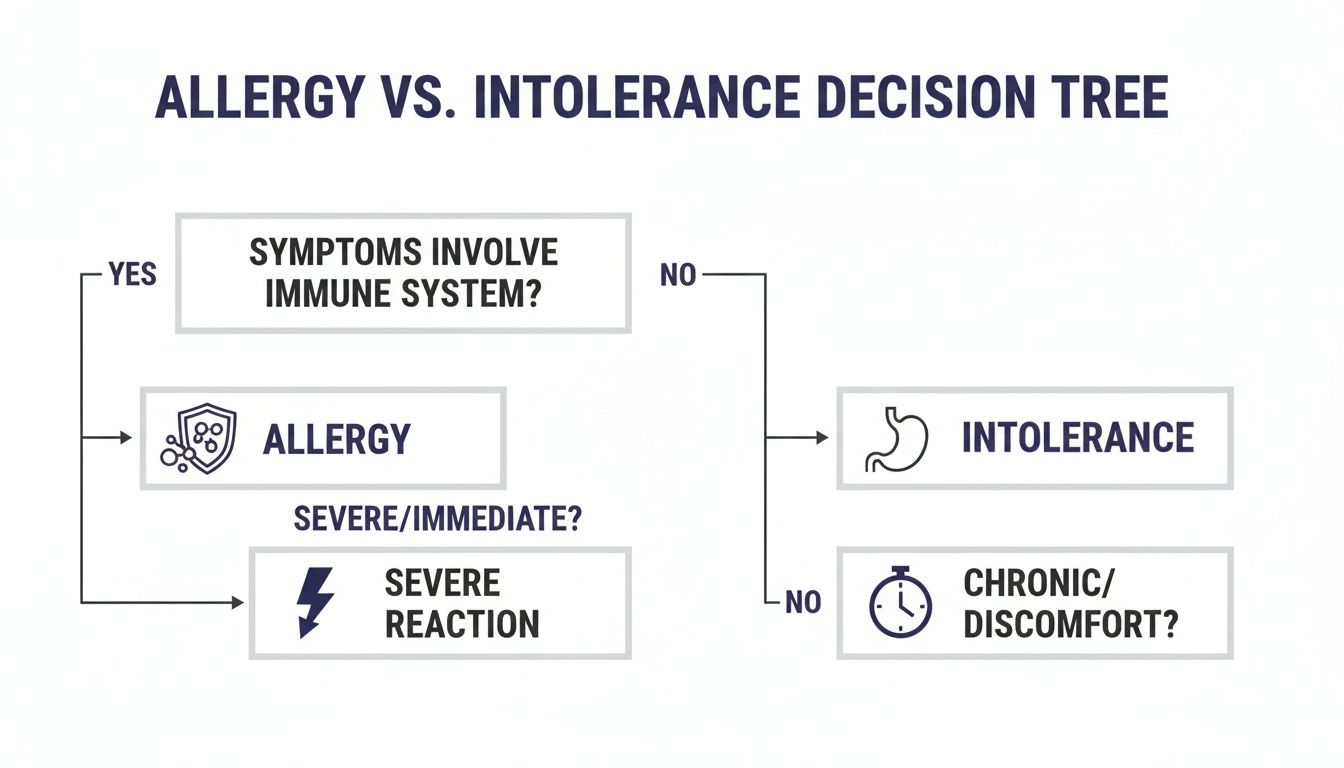
As you can see, a true allergy involves a severe immune response, whereas an intolerance typically results in digestive distress hours or even days later.
Making an Informed Choice for Your Health
Ultimately, the goal is to get accurate results you can actually rely on. Investing your effort in a medically recognised approach, like a supervised elimination diet or a Hydrogen Breath Test, ensures you're on the right track from the start.
These methods empower you to make targeted changes that solve the root cause of your symptoms. Instead of cutting out dozens of foods based on a flawed test, you can build a sustainable, nourishing diet that helps you feel your best and puts you back in control of your health. Working with a healthcare professional makes the entire process safer, clearer, and far more effective.
Navigating the NHS and Private Testing Pathways
If you’re wrestling with symptoms you think might be a food intolerance, figuring out where to turn can be just as frustrating as the symptoms themselves. In the UK, you essentially have two routes you can take: going through the National Health Service (NHS) or opting for the private healthcare sector.
There’s no single “right” answer—it really comes down to what matters most to you. Are you looking for a solution that’s free at the point of care, or is getting answers quickly your top priority? Let's break down what each path looks like in the real world.
The NHS Pathway: What to Expect
For most people, the journey starts with a trip to their GP. This is your first port of call on the NHS. You’ll sit down, talk through your symptoms, and go over your medical history. Before jumping to food intolerance, a good GP will want to rule out other potential culprits. This often means running blood tests to check for conditions like coeliac disease or looking into other medical issues that could be causing your discomfort.
If a food intolerance still seems likely, your GP has a few potential next steps. They might:
- Suggest you try an elimination diet on your own, giving you some basic guidelines to follow.
- Refer you to an NHS dietitian for more structured advice, though this often comes with a long wait.
- Refer you to a specialist, like a gastroenterologist, if your symptoms are particularly severe or complex.
The reality of the NHS pathway is that it demands patience. Waiting lists for dietitians and specialists can stretch on for months. While the care itself is solid and evidence-based, that slow pace can be a real challenge when you're feeling unwell every day and just want to get your life back.
The Private Pathway: Speed and Personalisation
This is where the private route really stands out. Instead of waiting weeks for an initial appointment, you can often see a private GP within a few days. The consultation itself is a different experience, too. We’re not talking about a rushed 10-minute slot; you can expect a much more thorough appointment, typically lasting 30 to 60 minutes.
That extended time isn't a luxury; it's essential. It allows a doctor to really dig into your health history, lifestyle, and the nuances of your symptoms to build a complete picture before recommending a plan.
This dedicated one-on-one time is invaluable. It helps your doctor get to the root of the problem and map out the most effective diagnostic steps. From there, things move quickly. If a Hydrogen Breath Test is the right tool for the job, it can be arranged promptly. If a professionally guided elimination diet is the best approach, you’ll get detailed, personalised support right away.
Many people find this efficiency a huge relief. Rather than being passed from one waiting list to another, your private GP acts as your dedicated guide, coordinating everything from start to finish. It’s a seamless process. If you’re weighing up the pros and cons, our detailed comparison can help you decide between private healthcare and the NHS for your situation.
Comparing Costs and Timelines
Ultimately, the choice between the NHS and private care often boils down to a classic trade-off: time versus money.
| Feature | NHS Pathway | Private Pathway |
|---|---|---|
| Initial Cost | Free | £150 – £300 for an in-depth GP consultation. |
| Wait for Consultation | Weeks to months | Days |
| Testing Access | Can involve long waits for referrals. | Rapid access to tests like Hydrogen Breath Tests. |
| Consultation Time | Typically 10-15 minutes. | 30-60 minutes, allowing for a detailed history. |
| Follow-Up Care | May be fragmented and involve further waits. | Integrated and continuous with the same doctor. |
While the NHS route won’t cost you anything directly, you pay for it with your time. For anyone whose work, family life, or general wellbeing is taking a hit, that wait can feel very costly. Investing in private care gives you back control, helping you get the answers you need and start feeling better, sooner.
Your Action Plan for a Healthier Lifestyle

Getting your results from a food intolerance test in the UK is a huge step forward. It gives you clarity. But it’s also just the beginning. The real work—and the real relief—comes from building a sustainable lifestyle that genuinely supports your body. This isn't about restriction; it's about making informed choices that empower you.
A solid action plan is more than just a list of foods to avoid. It’s about creating a resilient gut, calming inflammation, and discovering delicious, satisfying foods that make you feel good. Let's walk through the practical, evidence-based steps you can take.
Mastering Your New Diet Safely
Once you know which foods are causing issues, the main goal is to remove them without sacrificing your nutritional health. This needs a bit of thought and strategy—it’s not just about yanking things off your plate.
A classic mistake is cutting out whole food groups without replacing the essential nutrients they offer. For example, if you stop eating dairy, you've just lost a major source of calcium and vitamin D. To make up for it, you'll need to actively bring in things like fortified plant milks, leafy greens like kale, or tofu.
The same goes for wheat. If that's your trigger, you'll need to find other sources of fibre and B vitamins from foods like quinoa, brown rice, and a wide range of vegetables. Working with a professional ensures you make these swaps safely. Once you have a clear picture of your intolerances, making the right dietary changes is the key to a healthier life. For instance, if gluten and dairy are your triggers, you might find helpful ideas in resources like A Guide to Gluten and Dairy Free Living.
Beyond Diet: Supporting Your Gut and Mind
True wellness comes from seeing the bigger picture. Your gut health doesn't exist in a vacuum; it’s directly linked to your stress levels, sleep quality, and how much you move. Looking after these areas is just as critical as what's on your plate.
A healthy lifestyle isn't just about the food you avoid, but about the positive habits you embrace. Managing stress and prioritising sleep can dramatically reduce systemic inflammation and improve your digestive resilience, making you less susceptible to symptoms.
Think of your gut like a garden. When it’s well-tended, it can withstand the odd weed or dry spell. But chronic stress and poor sleep are like a constant drought, leaving it fragile and sensitive. Simple, supportive habits can make a world of difference.
Here are a few practical lifestyle changes to get you started:
- Stress Management: High stress can send your gut into a spin. Simple practices like mindfulness, deep breathing exercises, or even a quiet walk can calm your nervous system, which in turn soothes your digestive tract.
- Prioritise Sleep: Aim for 7-9 hours of good quality sleep a night. This is your body’s prime time for repair, and a lack of sleep is directly tied to increased inflammation.
- Gentle Movement: Regular, gentle exercise like walking, yoga, or swimming is fantastic for aiding digestion and reducing stress. You don't need punishing workouts; consistency is what counts.
Practical Tips for Everyday Success
Switching up your diet can feel like a lot at first, but with a few key skills, it'll soon become second nature. First, become an expert label-reader. In the UK, the law requires major allergens to be highlighted in bold on ingredients lists, which is a massive help. Still, you need to keep an eye out for hidden sources of your trigger foods.
Meal planning is another game-changer. Just taking an hour at the weekend to map out your meals removes that daily "what can I eat?" stress. It ensures you always have safe, tasty options ready to go, so you’re not tempted to grab something convenient that might set off your symptoms. Focus on building your meals around whole, unprocessed foods—it's the easiest way to create a diet that’s naturally lower in potential irritants and packed with nutrients.
How a Private GP Can Support Your Journey
Figuring out a food intolerance can often feel like detective work, but you're trying to solve the case with half the clues missing. While the NHS is an incredible resource, the reality of long waiting lists and brief appointments can sometimes leave you feeling like you're not getting anywhere fast. This is where turning to a private GP can make a world of difference, offering a more direct and thorough path to getting answers.
This isn’t just about ordering a test. It's about having a doctor who has the time to be your dedicated health partner. The process usually starts with an in-depth consultation, often lasting anywhere from 30 to 60 minutes. This extended time allows your GP to really listen, build a complete picture of your health, and understand exactly how your symptoms are affecting your day-to-day life.
A Coordinated and Personalised Experience
A private GP acts as your single point of contact, coordinating your entire care journey from start to finish. Instead of navigating separate appointments and different waiting lists, you have one person who sees the whole picture, ensuring nothing falls through the cracks.
Here’s what that looks like in practice. Your GP will:
- Carry out a detailed initial assessment to make sure other medical conditions aren't the root cause.
- Arrange any immediate on-site tests needed, like blood work or ECGs, to investigate things straight away.
- Organise quick referrals to specialists, such as a gastroenterologist, or for specific diagnostics like a Hydrogen Breath Test, cutting out the long delays.
- Provide consistent follow-up care to see how you're getting on and fine-tune your plan as you progress.
This model is built to give you clarity and keep things moving. The aim is to get you from just managing symptoms to having a clear diagnosis and a solid plan of action as efficiently as possible. That speed is invaluable when you've been putting up with discomfort for a long time.
A private GP doesn't just treat symptoms; they partner with you to build a complete support system. The focus shifts from reactive care to proactive health management, empowering you with the tools and knowledge for lasting well-being.
Holistic Support for Lasting Health
Pinpointing a food intolerance is a huge step, but feeling your best often involves looking beyond just what you eat. A private GP can provide trusted medical advice on the other lifestyle factors that are key to managing your condition and improving your overall well-being.
This support often includes personalised guidance on:
- Nutrition: Helping you create a balanced, enjoyable eating plan that avoids your trigger foods without leaving you with nutritional gaps.
- Stress Management: Introducing practical techniques like mindfulness or simple breathing exercises that can help calm your nervous system and support your gut.
- Improved Sleep: Developing simple strategies to improve your sleep quality, which is crucial for reducing inflammation throughout your body.
By pairing an accurate food intolerance test in the UK with a holistic lifestyle plan, a private GP helps you find more than just symptom relief—they help you achieve lasting, genuine health. Think of it as an investment in truly understanding your body and getting your quality of life back on track.
Your Questions About Food Intolerance, Answered
When you're trying to figure out if food is the cause of your health issues, it's natural to have a lot of practical questions. Let's walk through some of the most common ones to give you the clarity you need to move forward.
What’s the Real Cost of a Private Food Intolerance Test in the UK?
A proper, medically-supervised investigation starts with a comprehensive GP consultation, which usually costs between £150 and £300. Think of this as the essential first step – it’s where a doctor looks at your entire health history to decide which, if any, tests are actually right for you.
Tests like a Hydrogen Breath Test for lactose or fructose intolerance come with an additional fee. It's wise to be cautious of the cheap, direct-to-consumer IgG test kits you see online for under £100. These aren't recommended by medical professionals because their results are often unreliable and can lead you down the wrong path.
Can Food Intolerance Really Cause More Than Just an Upset Stomach?
Yes, definitely. While gut problems like bloating, wind, and cramps are classic signs, the effects of a food intolerance can ripple out and affect your entire body. It's a common mistake to think the issue is confined to your digestive system.
In fact, many people come to us with symptoms they’d never connected to their diet, such as:
- Debilitating fatigue or 'brain fog' that makes it hard to focus.
- Recurring headaches or even full-blown migraines.
- Achy joints and general inflammation.
- Skin flare-ups like eczema, rosacea, or stubborn acne.
- Unexplained low mood or irritability.
This is exactly why seeing a doctor for a full assessment is so crucial. These wide-ranging symptoms are too often blamed on stress or other lifestyle factors, leaving the real root cause undiscovered.
A food intolerance is a whole-body issue, not just a digestive one. Recognising this is the first step toward connecting the dots between your diet and your overall well-being.
If I Have to Cut Out a Food Group, How Do I Avoid Missing Nutrients?
This is an excellent and very important question. It highlights a key risk of self-diagnosing: without professional guidance, eliminating a whole food group can leave you with significant nutritional gaps.
For example, if you stop eating dairy, you have to be deliberate about replacing lost calcium and vitamin D. You’ll need to find good alternative sources, such as fortified plant milks (like oat or soya), leafy greens like kale, and tofu. A GP or a registered dietitian can work with you to build a safe and balanced eating plan, and they can also tell you if a supplement is needed to protect your long-term health.
Ready to stop guessing and start getting real answers? The expert team at The Lagom Clinic offers in-depth consultations to investigate your symptoms and guide you toward a clear diagnosis and a sustainable, healthy lifestyle. Take the first step today by booking your private GP appointment.


 Members Consultation