


When you need answers about your health, waiting isn't always an option. A private blood test offers a direct, fast, and incredibly detailed alternative to the usual NHS route, giving you a powerful insight into what's really going on inside your body.
It’s all about taking proactive control. You get to understand your body’s unique needs without the long waiting lists or the need to secure a GP referral first, empowering you with the knowledge to make positive lifestyle changes.
Taking Charge of Your Health with Private Blood Tests
Are you facing a lengthy NHS wait? Or maybe you just want a deeper, more comprehensive look at your health markers. If so, you're not alone. More and more people are choosing private blood tests to get a clearer picture of their wellbeing, shifting from simply reacting to health problems to proactively managing them.
Think of it as getting a look at your body's own unique instruction manual. It allows you to see what’s happening beneath the surface, often long before any symptoms decide to show up.
This isn't just a small trend; it's a significant shift in how we approach our health. The UK's private blood test market is growing rapidly, fuelled by a demand for convenience, speed, and a better understanding of how to prevent chronic diseases. Thanks to advances in technology, tests are more accurate and results come back faster than ever. You can find out more about how private services are evolving from basic checks to comprehensive health screenings. Read the full research on the private blood test market.
From Data to Daily Habits
A private blood test gives you a personalised roadmap to better health. The aim isn't just to receive a page of numbers; it's to transform that data into meaningful, science-backed changes you can make to your lifestyle. By spotting potential deficiencies or imbalances early on, you can make targeted adjustments to your diet, fitness, and daily habits.
For instance, your results might highlight:
- Low Vitamin D levels: A common issue in the UK! This could be tackled by adding more oily fish and fortified foods to your diet, and getting a bit more sensible sun exposure.
- Elevated cholesterol markers: This knowledge empowers you to switch to a heart-healthy diet, focusing on soluble fibre from oats and beans, healthy fats from avocados and nuts, and plant-based foods.
- Slightly high inflammation markers: This might prompt you to try an anti-inflammatory diet, bringing in more turmeric, berries, and leafy green vegetables, and reducing processed foods.
Getting to grips with your personal health data is a crucial first step. If you want to delve deeper into why this kind of proactive monitoring is so important, we've written about the importance of health screenings. This guide is designed to walk you through the entire process, helping you choose the right tests and use the results to build a solid foundation for long-term health.
Why More People Are Choosing Private Over NHS Tests

The NHS provides an absolutely essential service, and it’s a lifesaver for so many. Its strength, however, lies in reactive care—dealing with symptoms after they’ve already shown up. But what if you don't want to wait for a problem to appear?
This is where a private blood test in the UK comes in. A growing number of us are shifting from a "wait and see" mindset to one of "know and act," taking a much more proactive role in our own wellbeing.
Think of it this way: an NHS test is like your car's annual MOT. It's brilliant for spotting the big, obvious problems that could put you in immediate danger. A private blood test, on the other hand, is the full diagnostic deep-dive. It gives you a detailed report on your engine's performance, highlighting tiny issues before they become major breakdowns and allowing you to fine-tune everything for the long road ahead.
Let's take a look at what this means in practice.
Comparing NHS vs Private Blood Testing Services
When deciding which path to take, it helps to see the differences side-by-side. While both services aim to give you health insights, the patient experience, speed, and scope can vary quite a bit.
| Feature | NHS Blood Test | Private Blood Test |
|---|---|---|
| Referral | Typically requires a GP referral based on symptoms. | No referral needed; you can book directly. |
| Speed | Can involve long waiting times for appointments and results. | Often offers same-day or next-day appointments with fast results. |
| Choice of Tests | Tests are ordered based on clinical need and specific symptoms. | You can choose from a wide range of specialised health panels. |
| Focus | Primarily reactive, diagnosing existing health conditions. | Proactive, focused on prevention and health optimisation. |
| Convenience | Appointments are at set times and locations. | Flexible booking to fit around your own schedule. |
| Cost | Free at the point of care. | Paid service with clear, upfront pricing. |
Ultimately, a private test isn't about replacing the NHS, but rather about supplementing it. It gives you an extra layer of information and control when you want to dig deeper into your health.
Speed and Convenience
Let's be honest, one of the biggest reasons people turn to private testing is to skip the queue. The stress and uncertainty of waiting weeks for an appointment, and then weeks more for the results, can be incredibly taxing.
This isn't just a feeling; it's a growing reality. Reports suggest that by 2025, 72% of NHS blood tests could take up to four weeks to return results. That kind of delay has understandably pushed many people to look for faster options. For anyone dealing with health anxiety, getting a quick, clear answer can be a huge relief, which is something you can learn more about how private tests help manage health anxiety.
Private services are built around your life. You can book an appointment that suits you—often for the same or next day—without needing to see a GP first.
Private testing puts you back in the driver's seat. Instead of waiting for a call, you actively seek out the information you need, when you need it, giving you control over your health timeline.
A Wider Range of Health Insights
Another major advantage is the sheer variety of tests you can access. The NHS usually runs tests to investigate specific symptoms. So, if you feel perfectly fine but are curious about your vitamin levels, hormone balance, or early inflammatory markers, it can be tricky to get those tests approved.
A private blood test UK service opens the door to a much broader menu of specialised panels. This lets you explore areas like:
- Optimal Nutrient Levels: Don't just check for severe deficiencies. See if you have optimal levels of crucial vitamins and minerals like Vitamin D, B12, and magnesium, which are vital for energy, mood, and overall function.
- Detailed Hormone Profiles: Get a complete overview of your thyroid, reproductive, or stress hormones. These influence everything from your metabolism and sleep to your mental clarity.
- Early Risk Markers: You can screen for subtle, early signs of conditions like heart disease or diabetes. This gives you a powerful heads-up, allowing you to make lifestyle changes long before a real problem develops.
This level of detail is empowering. It gives you the science-backed information you need to make genuinely informed decisions about your diet, fitness, and lifestyle, helping you sidestep future issues and feel your absolute best.
Decoding the Most Common Private Blood Test Panels
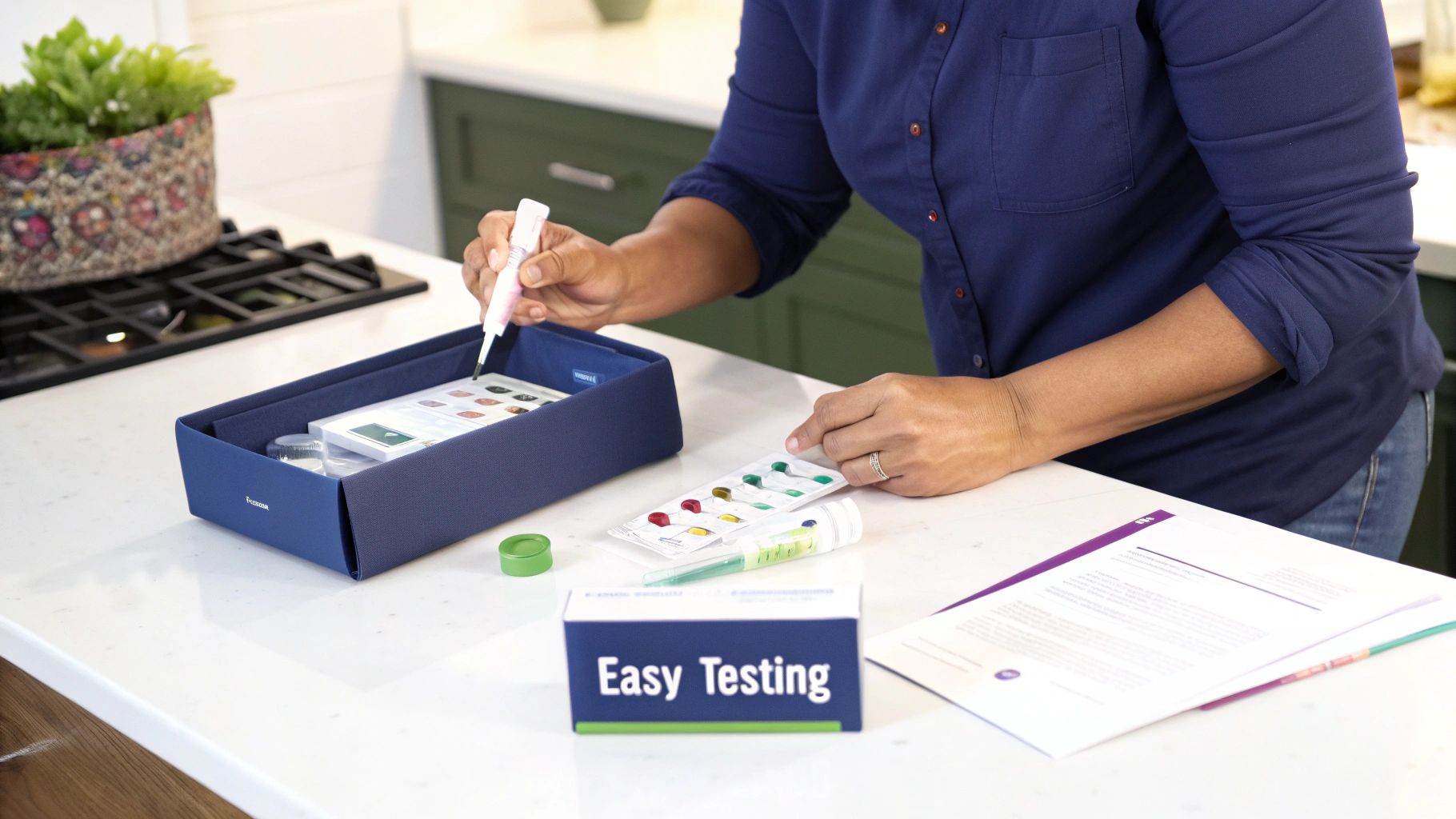
Trying to figure out which blood test you need can feel a bit like reading a different language. With so many options out there, how do you even start? The best way is to work backwards: think about your health goals first, then find a test panel that matches what you’re curious about.
Instead of testing for one thing at a time, a private blood test in the UK usually groups related markers into logical panels. Think of these panels as telling a clear, connected story about a specific area of your health. They link different biomarkers together to paint a picture that makes sense of your symptoms and goals, turning a page of numbers into a real insight into your wellbeing.
Once you understand these common groupings, you can easily zero in on the exact test that will give you the answers you’re looking for—whether that’s finding out why you’re so tired, checking on your hormonal balance, or just making sure your diet is truly hitting the mark.
The Energy and Fatigue Panel
Feeling completely wiped out is one of the top reasons people come to us for a blood test. An Energy and Fatigue panel is designed to play detective, looking into the most common culprits behind that feeling of constant tiredness.
This kind of test will typically check:
- Iron Studies: This is about more than just your iron levels. It also looks at ferritin, which is your body’s iron storage. This is often the very first thing to drop when you’re on the path to anaemia.
- Vitamin B12 and Folate: You need these two to make healthy red blood cells, which are responsible for carrying oxygen everywhere in your body. If you're low, it can directly lead to exhaustion and brain fog.
- Thyroid Function: An underactive thyroid, or hypothyroidism, is a classic cause of fatigue, unexplained weight gain, and feeling low. This test checks key thyroid hormones like TSH and T4 to see if your body's engine is running at the right speed.
If results show low levels, lifestyle changes can make a big difference. For iron, include lean red meat, lentils, and spinach in your diet, and pair them with a source of Vitamin C (like bell peppers) to boost absorption.
The Hormone Health Panel
Hormones are the body’s powerful chemical messengers, influencing everything from your mood and metabolism to your sleep and overall sense of vitality. When they’re out of balance, it can affect both men and women, though the specific hormones we look at will differ.
For women, a hormone panel might investigate the reasons behind irregular cycles or mood swings. For men, the focus is often on testosterone levels. Getting these imbalances sorted can be life-changing, and it often starts with simple, science-backed lifestyle adjustments, like managing stress through mindfulness, ensuring adequate sleep, and eating a diet rich in healthy fats and protein to support hormone production.
Understanding your hormonal baseline is key to optimising your health. It provides a snapshot of your body's internal communication system, allowing you to make targeted lifestyle changes to support it.
The Nutritional Status Panel
Even if you eat a really healthy diet, it's still possible to have nutritional gaps. A Nutritional Status panel shines a light on the key vitamins and minerals that are absolutely vital for your immune system, bone health, and general wellbeing.
A common one we check is Vitamin D, as so many people in the UK are deficient, especially during the darker winter months. Low levels can really affect your immune defences and your mood. This panel will also often check for magnesium, which is involved in over 300 bodily functions, and crucial minerals like calcium and phosphate, which keep your bones strong. To learn more about how we assess these, you can read our guide on the bone profile blood test.
Once you pinpoint a specific deficiency, you can make simple but incredibly effective changes through your diet or supplements, such as eating more dark leafy greens for magnesium or oily fish for Vitamin D.
How to Turn Your Blood Test Results into Action
So, you’ve got your results back from a private blood test in the UK. That’s the first step. You've swapped guesswork for hard data, and that's a powerful position to be in. But the report itself is just the beginning. The real magic happens when you turn those numbers into a practical, science-backed plan to improve your day-to-day life and long-term health.
The crucial shift in mindset here is moving from ‘normal’ to ‘optimal’. A ‘normal’ result often just means you’re not in the immediate red zone for a particular disease. But an ‘optimal’ result? That means your body is firing on all cylinders, giving you the best shot at great energy, a robust immune system, and sharp mental clarity.
From Normal to Optimal: A Real-World Example
Let's take a common example: Vitamin D. Say your result comes back at 55 nmol/L. Most labs would flag this as 'normal', since the deficiency line is often drawn at 50 nmol/L. You’re not technically deficient.
However, a wealth of research suggests that for truly optimal immune function and mood support, you’d be better off with levels somewhere between 75-100 nmol/L. Seeing that gap is your opportunity. It's not a diagnosis of a problem, but a clear signpost showing you the way to better health.
- Dietary Tweaks: You could start consciously adding more Vitamin D-rich foods to your weekly shop, like salmon, mackerel, and fortified milks.
- Smart Sun Exposure: During the sunnier months, getting 15-20 minutes of midday sun on your arms and legs (without sunscreen) can make a world of difference.
- Supplementation: In the UK, a sensible daily supplement is a great idea from October to March, when sunlight is a rare commodity.
This isn’t about treating sickness; it’s about fine-tuning your body to perform at its very best.
Creating Your Personalised Health Blueprint
Think of your results as a unique blueprint for making targeted, effective lifestyle changes. When you understand what each biomarker means, you can introduce small, sustainable habits that deliver big rewards. This proactive approach is a huge reason why the UK's blood testing market is booming—it generated USD 1,692.5 million in 2023 and is only set to grow. People are tired of waiting for problems to appear; they want actionable data to make smarter choices now, especially when it comes to metabolic health.
Let's look at another classic scenario: slightly elevated cholesterol.
Your results are not a diagnosis; they are a guide. They provide the 'why' behind how you feel and give you a clear direction on 'what' to do next to feel even better.
If your LDL cholesterol (the 'bad' kind) is creeping up towards the higher end of the normal range, your action plan could look something like this:
- Increase Soluble Fibre: Things like oats, beans, and apples are fantastic because they actually help bind to cholesterol and escort it out of your body.
- Choose Healthy Fats: It's often as simple as swapping saturated fats from processed foods for the unsaturated kinds you find in avocados, nuts, and good quality olive oil.
- Boost Physical Activity: Regular brisk walking or cycling is brilliant for raising your 'good' HDL cholesterol, which acts like a clean-up crew for the 'bad' LDL.
And if your results point towards a hormonal imbalance, like low testosterone, you now have a starting point. You can explore natural ways to boost testosterone through specific nutrition and exercise, armed with the knowledge that it’s an area you need to focus on. It’s all about using your personal data to make smarter, more effective health decisions, every single day.
The Private Blood Test Journey: From Booking to Results
Ever wondered how a private blood test in the UK actually works? It’s a question we hear a lot, but you’ll be pleased to know the whole process is designed to be incredibly straightforward. Let's walk through it step-by-step, from picking your test online to making sense of your results.
The entire experience is built around your convenience, sidestepping the usual need for GP referrals and long waiting times. Our aim is to make everything feel professional, efficient, and stress-free, putting you firmly in the driver's seat of your own health journey.
This quick overview shows just how simple the first few steps are, from choosing a test to securing your appointment online.
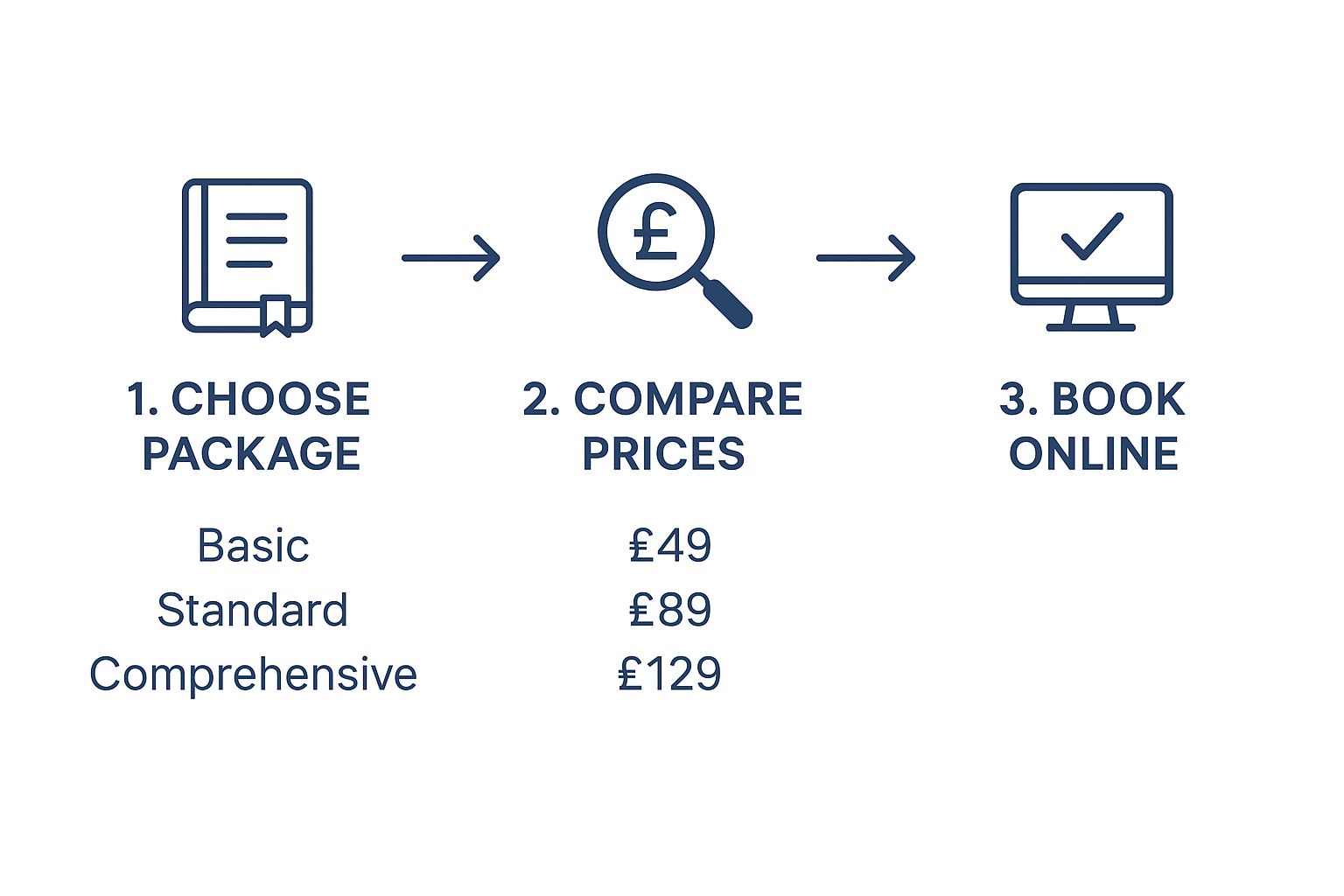
As you can see, it all begins with thinking about your health goals to find the right test, then comparing our clear pricing before booking online in just a few minutes.
Step 1: Booking Your Test and Getting Ready
First things first, you'll choose the right test panel for your needs on our website. Once you’ve selected and paid, you can book an appointment slot at our Bristol clinic that works for you. We take it from there – no waiting for a kit to arrive in the post or worrying about whether you’ve collected the sample correctly yourself.
It's worth noting that some tests require you to fast beforehand. This typically means no food or drink (except for water) for 8-12 hours before your appointment. Fasting is essential for getting an accurate picture of markers like glucose and cholesterol, and we’ll make sure you have all the specific instructions you need when you book.
Step 2: The Sample Collection
When you visit The Lagom Clinic for your appointment, a trained professional will perform a simple venous blood draw. This is the gold standard for collecting a sample, as it ensures we have a high-quality, sufficient volume of blood for a really thorough lab analysis.
The whole thing is over in minutes and is far more dependable than the at-home finger-prick tests you might have seen. Those can sometimes struggle to provide enough of a sample or give less accurate readings for certain biomarkers. Plus, our experienced team is fantastic at helping nervous patients feel completely at ease.
A venous blood draw, taken by a professional, is the most reliable way to guarantee the quality of your sample. This directly translates into getting the most accurate and trustworthy results from your private blood test.
This method simply removes any guesswork and makes sure the laboratory has a perfect sample to work with.
Step 3: Lab Analysis and Understanding Your Results
Once collected, your sample is sent straight to a fully accredited laboratory for analysis. The turnaround time is usually pretty quick – typically just a few working days, though it can vary depending on the complexity of the tests you've chosen.
As soon as your results are in, we’ll deliver them to you securely and confidentially, often through a secure online patient portal. You'll receive a detailed report that clearly lays out your levels for each biomarker, comparing them against the established 'normal' reference ranges. This makes it easy to see, at a glance, exactly where you stand. From there, you have the power to turn that data into real, positive changes.
Your Personalised Health Plan Based on Your Results
So, your blood test results are in. This is the moment where all that data becomes a clear roadmap for your health. Think of this report not as a list of scary numbers, but as a personalised instruction manual, showing you exactly what your body needs to feel its best. It’s about moving past generic health advice and making smart, targeted changes that you can actually feel working day-to-day.
This is where the real work—and the real progress—begins. We'll connect each finding to a practical, daily action, turning that report into a wellness routine that actually sticks.
From Inflammation to Action
Let's say your results show some elevated inflammatory markers, like a high-sensitivity C-Reactive Protein (hs-CRP). On its own, it’s not a diagnosis, but it’s a clear signal from your body that it’s fighting some low-grade, chronic inflammation. This is your cue to start building an anti-inflammatory lifestyle.
The best strategy is to focus on adding powerful, healing foods to your plate—it’s not about restriction, but about enrichment.
- Boost Your Omega-3s: Try to get oily fish like salmon, mackerel, or sardines on your plate at least twice a week. If you’re plant-based, flaxseeds, chia seeds, and walnuts are fantastic sources.
- Eat the Rainbow: Those bright colours in fruits and vegetables are a sign they’re packed with antioxidants that fight cellular stress. Think berries, leafy greens like spinach and kale, and deep-red beetroot.
- Spice Things Up: Turmeric is a powerhouse, thanks to its active compound, curcumin. It’s a brilliant natural anti-inflammatory you can easily add to curries, soups, or even a golden milk latte.
Making these simple shifts in your diet can, over time, help your body naturally cool down that inflammation and support your health in the long run.
Addressing Common Nutrient Deficiencies
It's amazing how often a private blood test flags up common nutrient shortfalls. For example, your report might highlight low magnesium—a very frequent finding that can be behind poor sleep, muscle cramps, and feeling wired or stressed.
Your action plan here is two-pronged: we’ll tackle it through both diet and lifestyle to get your levels back up and ease your symptoms.
“Your blood test results offer a unique window into your body’s specific needs. A magnesium deficiency, for instance, isn't just a number on a page—it's an opportunity to improve sleep, reduce stress, and enhance muscle function through targeted nutrition and relaxation.”
To replenish your magnesium, start weaving magnesium-rich foods into every meal. Almonds, spinach, black beans, and even good-quality dark chocolate are excellent choices. Alongside food, you can support your body's stress response with simple relaxation techniques like deep breathing exercises or a warm Epsom salt bath before bed—your skin absorbs magnesium beautifully.
Balancing Blood Sugar for Lasting Energy
Another common finding is an elevated HbA1c level, which gives a snapshot of your average blood sugar over the last three months. If your result is creeping towards the higher end of the normal range, it’s an early warning sign of pre-diabetes, giving you a crucial opportunity to make changes now.
The roadmap for getting your blood sugar back in balance is straightforward and totally achievable:
- Prioritise Protein and Fibre: Make sure every meal contains a source of protein (like chicken, fish, or lentils) and fibre (from plenty of vegetables and whole grains). This simple combination slows down how quickly sugar hits your bloodstream, preventing those sharp energy spikes and crashes.
- Embrace Consistent Movement: You don’t need to run a marathon. A simple 10-15 minute walk after your main meals can do wonders for your blood sugar control.
- Stay Hydrated: Drinking plenty of water is key. It helps your kidneys do their job of flushing out any excess sugar.
For many people exploring private healthcare, understanding the process for a private prescription online can also shed light on how accessible and convenient these services can be. By making these small, consistent adjustments, you can have a huge impact on stabilising your energy levels and protecting your metabolic health for years to come.
Your Questions Answered: Private Blood Tests in the UK
Stepping into the world of private health testing can feel a little new, and it's natural to have questions. To make sure you feel completely comfortable and informed, we've answered some of the most common things people ask us about getting a private blood test in the UK.
How Much Does a Private Blood Test Cost?
The price of a private blood test really depends on what you're looking to find out. A simple, single-marker test, like checking your Vitamin D levels, could start from around £50. It’s a straightforward way to check one specific thing.
If you’re after a bigger picture, more detailed panels like a full thyroid profile or a comprehensive energy and fatigue check usually fall somewhere between £80 and £200. For those wanting a complete health MOT that looks at hundreds of different markers, the cost will be higher, but the level of insight you get into your overall health is incredible.
Do I Need a Referral from My GP?
In a word, no. This is one of the biggest benefits of going private. You can book the tests you need directly, putting you in the driver's seat of your own health journey. There's no need to wait for a doctor's appointment to get the ball rolling, which saves time and lets you be proactive whenever you feel the need.
The ability to directly access tests is a huge advantage of private healthcare. It means you can investigate a health concern or just check your baseline levels without delay, putting you in control of your health timeline.
How Often Should I Get My Blood Checked?
This really comes down to your personal health and what you're trying to achieve. If you're generally well and just want to keep an eye on things, an annual comprehensive blood test is a brilliant way to track your health and spot any subtle changes over time.
However, if you're managing a specific condition, trying to balance your hormones, or working to correct a nutrient deficiency, your practitioner will likely suggest more frequent checks – maybe every 3-6 months. This allows you to track your progress and see if the diet and lifestyle changes you're making are actually working.
Are Finger-Prick Tests as Accurate as Clinic Blood Draws?
This is a really important question. While at-home finger-prick tests are convenient, they aren't quite the same as a proper venous blood draw done in a clinic. A venous draw, where a trained professional takes blood from a vein in your arm, is considered the gold standard for good reason.
- Sample Quality: You get a much larger and cleaner sample from a vein, which is crucial for getting accurate results on a wide range of complex tests.
- Accuracy: Finger-prick samples can sometimes get mixed with tissue fluid, which can throw off the results for certain markers.
- Reliability: There’s a much lower chance of the lab rejecting a sample that’s been professionally collected in a clinic.
When you need results you can truly rely on to make decisions about your health, a clinic-based blood draw is always the better choice.
Ready to get a clearer picture of what's going on inside your body? At The Lagom Clinic, we offer professional, clinic-based private blood tests in Bristol, giving you the accurate data you need to take control of your wellbeing. Book your private blood test today and start your journey towards better health.
Private blood testing at The Lagom Clinic
Walk-in blood tests in Bristol with results in 2-5 days. Hormone panels, thyroid, liver, kidney, vitamin and wellness screens available.
Considering a Testosterone Blood Test?
We offer comprehensive male hormone panels with same-week results and expert GP follow-up at our Bristol clinic. Explore our TRT service →


 Members Consultation