


A high-protein vegetarian diet is an effective lifestyle choice for improving your health. It involves intentionally building your meals around plant-based, dairy, or egg sources that pack a serious protein punch. This isn't about ditching your vegetarian principles; it's about elevating them to support health goals like building muscle, managing your weight, and achieving better appetite control.
This dietary approach advises a shift away from stereotypical carb-heavy vegetarian meals towards prioritising foods like Greek yoghurt, lentils, tofu, and quinoa with every meal. Adopting this change gives you all the benefits of a plant-focused diet without falling short on this critical macronutrient.
What Does a Protein-Focused Vegetarian Diet Actually Look Like?
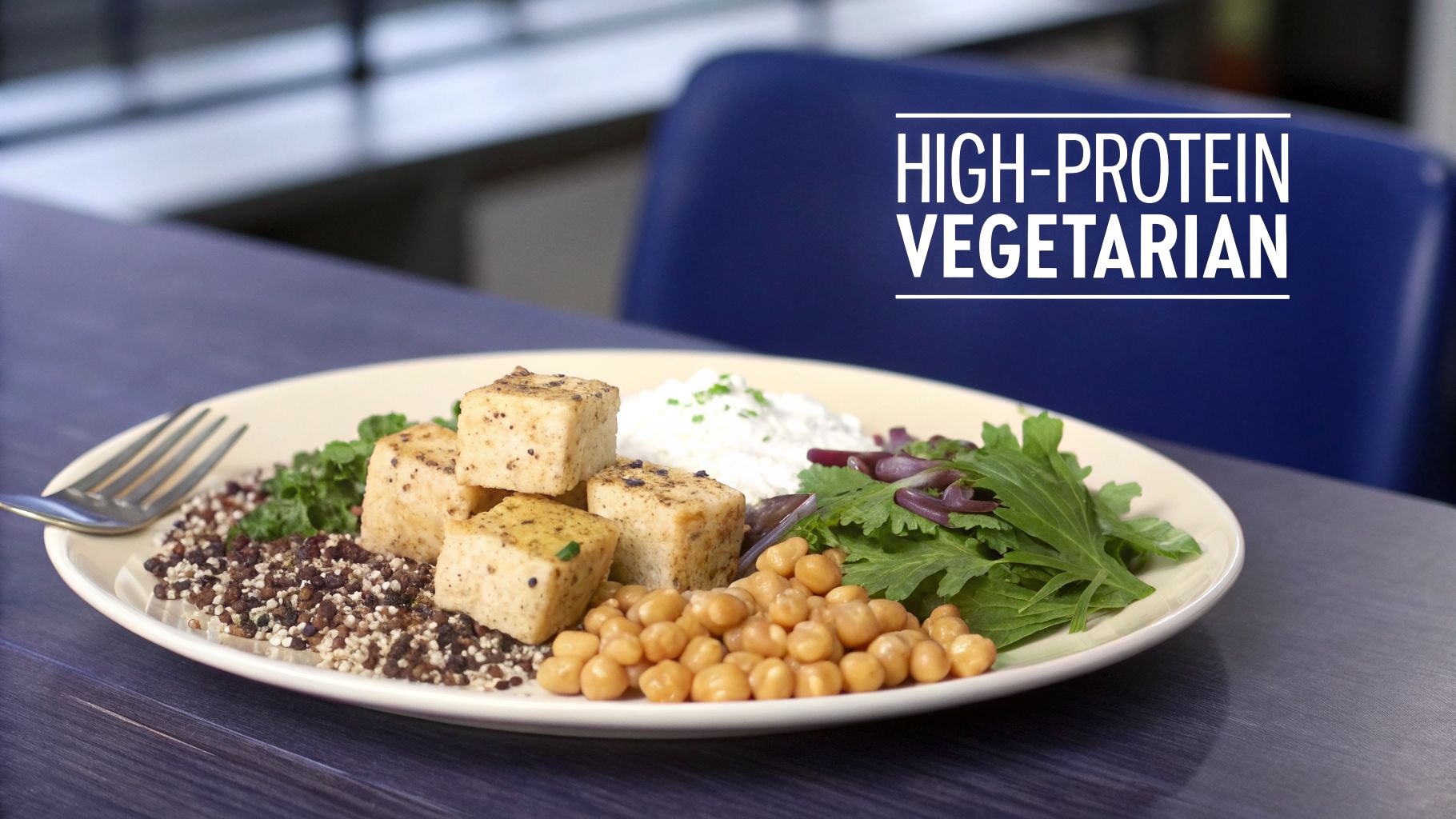
When I mention a "high-protein vegetarian diet" to new clients, they often imagine bland, restrictive meals. The reality is the complete opposite. It’s not about limiting yourself; it's about making intelligent lifestyle swaps to build flavourful, satisfying plates that support your health.
From a clinical standpoint, getting enough protein is non-negotiable for good health. Your body relies on it for everything from repairing cells and building lean muscle to producing essential hormones and keeping your immune system functioning optimally.
Why You Should Prioritise Protein
One of the most immediate benefits patients notice is enhanced satiety—that comfortable feeling of fullness after a meal. Protein keeps you feeling satisfied for much longer than carbohydrates or fats, which is a significant help if your goal is to manage your weight without feeling constantly hungry. This is a common objective for the busy professionals we work with at The Lagom Clinic.
If you lead an active lifestyle, whether you’re a weekend jogger or a dedicated athlete, getting enough protein is fundamental for recovery and performance. Exercise creates tiny tears in your muscle fibres, and protein provides the building blocks your body uses to repair them, making you stronger over time.
This is not a niche trend. A 2025 survey of 2,000 Brits revealed that 3 million people already follow a vegetarian diet, with another 2.2 million planning to make the switch in 2026. That means nearly 9.5% of the UK population is embracing vegetarianism, a shift that's especially popular with younger generations. You can dig into more of the fascinating data in Finder.com's annual survey.
A high-protein vegetarian diet is a proactive strategy for your health. It’s about making a conscious lifestyle change to give your body the high-quality fuel it needs to feel strong and resilient, all while enjoying an incredibly diverse and delicious way of eating.
Your High-Protein Shopping List: Where to Start
Getting started is far easier than most people think. Many versatile and tasty vegetarian foods are naturally packed with protein. The trick is to know which ones give you the most benefit and to learn how to weave them into your daily routine.
To help you begin, here’s a quick-reference table showing common vegetarian foods and their average protein content per standard serving. Use this as a practical tool for building your meals.
Quick Guide to High-Protein Vegetarian Foods
| Food Source | Serving Size | Approximate Protein (g) |
|---|---|---|
| Greek Yoghurt (0% Fat) | 170g (1 pot) | 17g |
| Lentils (cooked) | 1 cup | 18g |
| Tofu (firm) | 100g | 16g |
| Edamame (shelled) | 1 cup | 17g |
| Chickpeas (cooked) | 1 cup | 15g |
| Cottage Cheese | 100g (1/2 cup) | 12g |
| Large Eggs | 2 large | 12g |
| Quinoa (cooked) | 1 cup | 8g |
| Almonds | 30g (a handful) | 6g |
Use this table as a starting point. As you can see, hitting your protein targets is very achievable when you focus on including a portion or two of these foods with every meal.
Figuring Out Your Personal Protein Target
When I work with patients transitioning to a high-protein vegetarian diet, the first thing we do is discard the idea of a "magic number." There isn't one. Your ideal daily protein intake is entirely unique to you, shaped by your body, your lifestyle, and your health goals. Nailing this number is the foundational step for getting the results you want.
The most reliable, evidence-based method for calculating your protein needs is based on your body weight, adjusted by a multiplier that reflects your activity level and goals. This simple calculation ensures you're giving your body the right amount of fuel, whether your focus is on managing weight, building muscle, or recovering from a tough workout.
Find Your Baseline and Goal Multiplier
First, you'll need your weight in kilograms (kg). If you normally think in pounds, just divide that number by 2.2. Once you have your weight in kg, you can find your starting point using the same evidence-based guidelines we use at The Lagom Clinic.
Here’s a clear health tip for matching your lifestyle to a protein target:
- For a Mostly Sedentary Lifestyle: If you work at a desk and exercise is not a regular part of your week, a good target is 1.0 to 1.2 grams of protein per kilogram of body weight. This is what you need to support your body's core functions and maintain the muscle you already have.
- For Active Lifestyles & Fat Loss: If you exercise 3-5 times a week, or your main goal is to lose body fat while preserving muscle, you should aim for 1.2 to 1.6 grams of protein per kilogram. This higher intake is brilliant for satiety, helping you feel fuller for longer, which is a huge advantage when you're in a calorie deficit.
- For Muscle Gain & Serious Athletes: If you’re actively trying to build muscle or you’re an athlete in training, your body's demand for protein skyrockets. You'll need between 1.6 and 2.2 grams of protein per kilogram to properly repair and build new muscle tissue.
These ranges are your starting line, not rigid rules. The best medical advice is to start here, monitor how you feel and perform, and then adjust slightly if needed. Your body will give you feedback.
Putting it All Together: Real-World Examples
Let's see what this looks like for two very different people. You'll notice how their protein needs diverge significantly based on their goals.
Example 1: The Busy Professional
- Who: A 70kg office worker whose exercise consists of a few yoga classes and walks each week.
- Goal: To maintain a healthy weight and have steady energy levels.
- Her Calculation: 70kg x 1.2g/kg = 84g of protein per day.
Example 2: The Dedicated Cyclist
- Who: An 85kg cyclist training for a competitive race.
- Goal: To build leg strength and recover effectively after long, intense rides.
- His Calculation: 85kg x 1.8g/kg = 153g of protein per day.
As you can see, the cyclist needs almost twice as much protein as the office worker. This is precisely why a generic, one-size-fits-all meal plan rarely works. Your personal context is what matters most.
To get a really accurate picture of your targets, it helps to use a good quality tool. A reliable macro calculator can help you dial in not just your protein, but your fats and carbohydrates too. Having a clear, calculated goal from the start is the most effective way to build a diet that actually works for you.
Stocking Your Kitchen for Vegetarian Protein Success
Once you have a clear protein target in mind, it's time for the practical part: stocking your kitchen. A successful high-protein vegetarian diet is not about tracking down obscure or expensive ingredients. My clinical experience shows it's about building a reliable rotation of everyday foods that make hitting your goals feel effortless and, more importantly, enjoyable. Let's go through the core food groups you'll want on hand.
This chart helps visualise how your unique goals, body weight, and activity level all feed into calculating your daily protein requirement.
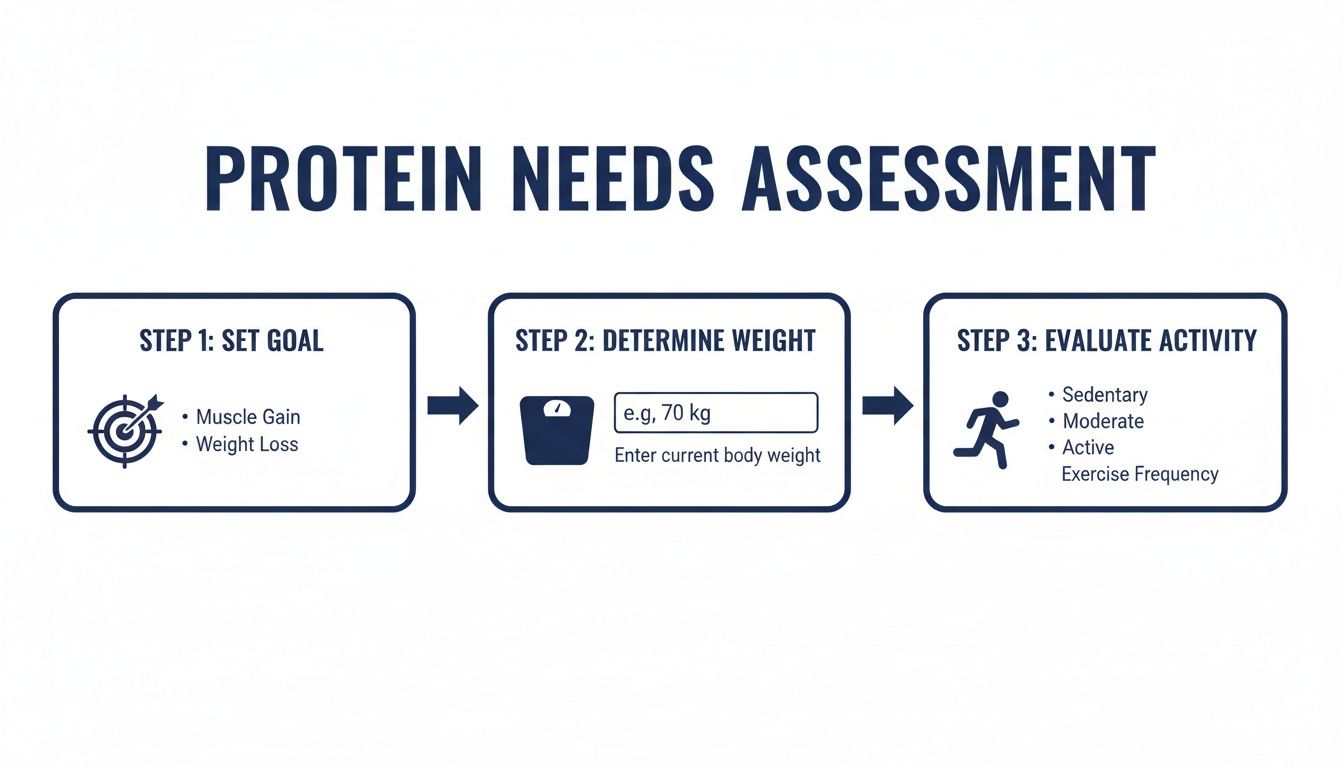
As you can see, these factors are all connected. They work together to give you a personalised protein target that genuinely supports your health and fitness ambitions.
A Quick Word on Protein Quality
Before we jump into the food lists, there's a concept I always discuss with patients: amino acids. Proteins are constructed from 20 different amino acids. Nine of these are considered "essential" because our bodies can't make them—we have to get them from food.
A "complete protein" provides all nine essential amino acids in one package. An "incomplete protein" is low in one or more. While many plant foods are incomplete on their own, this is rarely a problem in practice. Simply by eating a good variety of plant foods over the course of your day, your body easily gets all the building blocks it needs. This is a concept known as protein combining.
My advice is to not get bogged down trying to perfectly pair proteins in every single meal. As long as you're eating a diverse range of legumes, grains, nuts, and seeds throughout the day, your body will have everything it needs for muscle repair and good health.
Your High-Protein Shopping List
Let's group your shopping list into a few key categories. A good lifestyle tip is to keep a few options from each group in your pantry and fridge; you'll always have what you need to throw together a protein-packed meal. If you're looking for an exhaustive list of options, this complete high protein vegan foods list is a fantastic resource.
Legumes: The Foundation
Legumes are true workhorses in a vegetarian diet. They're affordable, versatile, and loaded with both protein and fibre, which helps you feel full and supports good digestion.
- Lentils: A staple for a reason. You'll get around 18g of protein per cooked cup. My advice is to use green or brown lentils in stews and salads as they hold their shape, while red lentils are perfect for creamy soups and curries.
- Chickpeas: Delivering about 15g of protein per cup, chickpeas are incredibly versatile. Roast them for a crunchy snack, blend them into hummus, or toss them into salads and curries for extra substance.
- Beans (Black, Kidney, Pinto): These are brilliant pantry staples, offering around 15g of protein per cup. They form the backbone of meals like chilli, tacos, and homemade veggie burgers.
Plant-Based All-Stars
Some plant-based foods are naturally complete proteins, which makes them particularly valuable additions to your weekly rotation.
- Soy Products: Tofu, tempeh, and edamame are true champions. A 100g serving of firm tofu packs in roughly 16g of protein and does a fantastic job of soaking up marinades and flavours.
- Quinoa: This is actually a seed, not a grain, and it provides 8g of complete protein per cooked cup. It's also a great source of fibre and minerals like magnesium.
- Buckwheat: Despite the name, buckwheat is a gluten-free seed. It's a great way to add a protein boost to things like pancakes or porridge.
Dairy and Eggs
For lacto-ovo vegetarians, dairy and eggs are incredibly efficient ways to increase protein intake. They're especially useful for breakfasts and snacks.
- Greek Yoghurt: This is a real powerhouse. A standard 170g pot of 0% fat Greek yoghurt can provide as much as 17g of protein.
- Cottage Cheese: Another high-yield dairy option, cottage cheese gives you about 12g of protein per 100g. It makes a great base for a savoury breakfast or a quick post-workout snack.
- Eggs: Two large eggs offer 12g of high-quality protein. They're also one of the most versatile ingredients you can have in your fridge. For more ideas on post-exercise nutrition, have a look at our guide to the best foods for muscle recovery.
It’s reassuring to see just how effective these foods are in the real world. UK Biobank research on nearly 200,000 people showed that vegetarians get about 20% of their energy from protein-rich sources like dairy, eggs, legumes, and nuts. This is remarkably close to the 25% that meat-eaters get from animal products, proving that a well-planned vegetarian diet is more than capable of supporting muscle health. You can read more about these findings on diet composition from the UK Biobank.
Rethinking When You Eat: Strategic Protein Timing
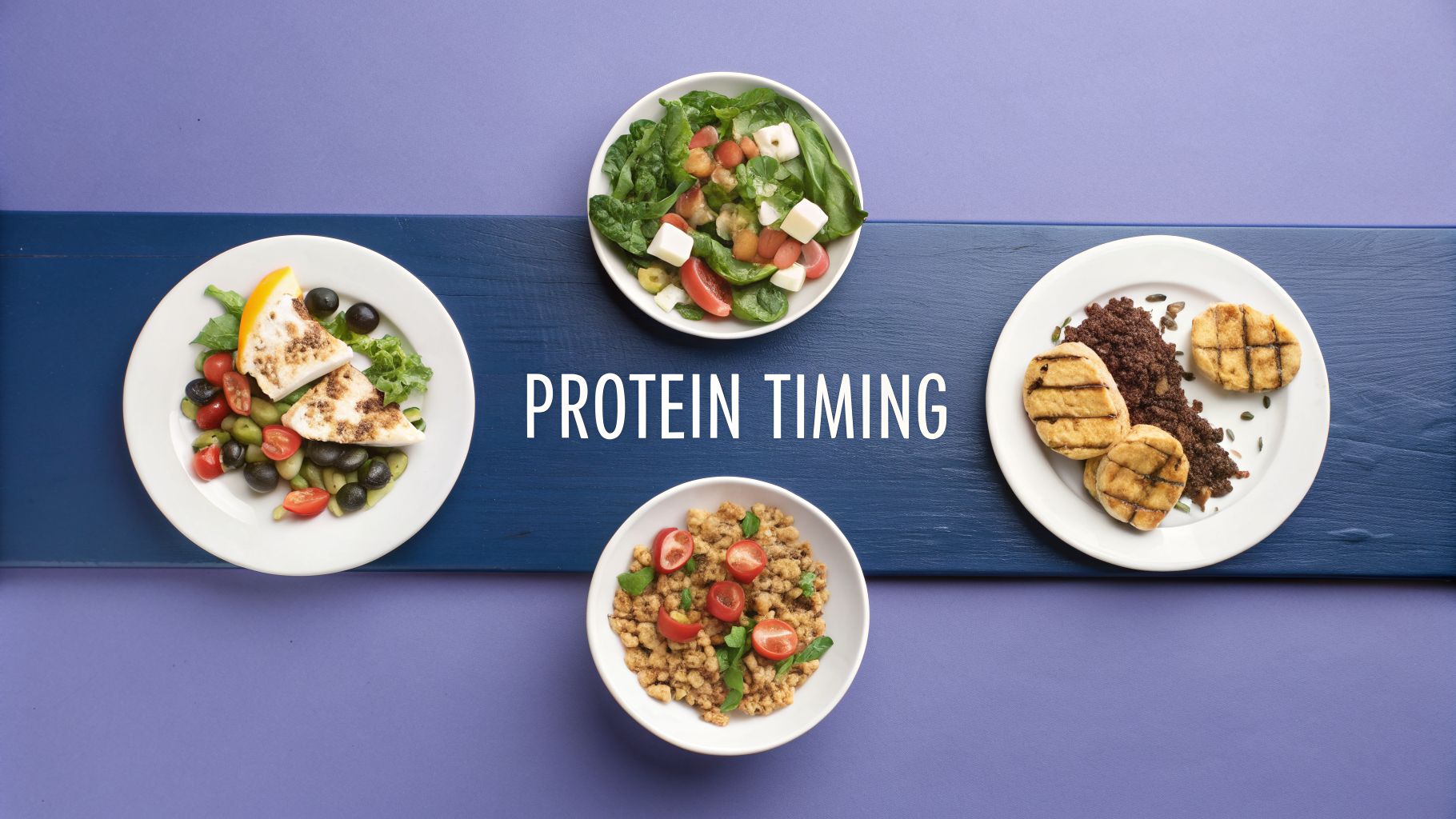
Knowing your daily protein target is just the starting line. The real game-changer, and one of the most effective lifestyle changes I guide my patients through, is focusing on when and how that protein is consumed throughout the day. It’s a classic pattern: a quick, carb-heavy breakfast, a snatched lunch, and then a huge, protein-loaded evening meal to make up for it.
Sound familiar? The problem is, your body just doesn't work that way. It can only effectively use a certain amount of protein for muscle repair and growth at any one time. When you back-load your day, a significant portion of that protein might not be put to its best use.
Evenly Spaced Doses for Better Muscle Growth
Scientific evidence is clear on this: spreading your protein intake evenly across your main meals dramatically enhances muscle protein synthesis (MPS). This is the all-important biological process your body uses to build and repair muscle tissue.
A key health tip is to aim for 20-30 grams of protein at breakfast, lunch, and dinner. This lifestyle change creates three distinct opportunities to kickstart that muscle-building process. It provides a constant, steady trickle of amino acids to your muscles, which is vital whether you're recovering from a gym session or simply looking to preserve muscle mass as you get older.
This approach does more than just feed your muscles. It has a fantastic knock-on effect on appetite and energy, helping you sidestep those afternoon energy crashes that send you reaching for sugary snacks.
Think of it like this: spreading your protein is like giving your body a consistent, reliable supply of building blocks throughout the day, rather than dumping the entire lorry-load of bricks onto the building site at 5 PM. This steady supply keeps your metabolism humming, your muscles nourished, and your hunger signals quiet.
Making It Work for Your Lifestyle
A successful diet is one you can stick to, so let's make this practical. This strategy needs to bend to your routine, not the other way around.
For the Busy Professional
In my work at The Lagom Clinic, I see so many professionals who feel lunch is a rush and breakfast is a bonus. The secret here isn't finding more time, it's planning ahead with grab-and-go options.
- Breakfast (7:30 AM): A pot of Greek yoghurt (17g protein) topped with a handful of almonds (6g protein). Zero cooking, minimal fuss, and you’ve already banked 23g of protein.
- Lunch (1:00 PM): A pre-made lentil and feta salad. You can make a big batch on Sunday to last a few days. A generous portion eaten at your desk can easily deliver 20-25g of protein.
- Afternoon Snack (4:00 PM): To beat the pre-dinner slump, a small bowl of edamame beans (~10g protein) or a quality protein bar works wonders.
- Dinner (7:00 PM): A simple tofu and vegetable stir-fry. Using 150g of firm tofu provides around 24g of protein. Serve it with some quinoa to round out the meal.
For the Dedicated Athlete
If you’re an athlete, the game changes slightly. Protein timing becomes even more critical, centred around fuelling performance and accelerating recovery.
- Pre-Workout (60-90 mins before): You want sustained energy without feeling full. A small bowl of porridge made with soy milk and a spoonful of nut butter gives you a nice ~15g protein hit that's easy to digest.
- Post-Workout (within 60 mins): This is your golden hour for recovery. A protein shake is an excellent tip here because your body can absorb it rapidly. Aim for one with a high-quality vegetarian protein powder to get 25-30g of protein straight to your muscles when they need it most.
- Main Meals: Your breakfast, lunch, and dinner should still each contain that solid 25-30g protein foundation to support ongoing repair. For instance, a post-training meal could be scrambled tofu on whole-wheat toast, with a large black bean chilli for dinner.
No matter your lifestyle, the principle holds true. Consistent, evenly spaced protein is the key to unlocking the full potential of your high-protein vegetarian diet.
Navigating Common Challenges and Health Checks
Making the switch to a high-protein vegetarian diet is a fantastic move for your health. But my clinical experience shows that any big dietary shift isn't always smooth sailing, and it’s not uncommon to hit a few bumps in the road. Knowing what to expect means you can navigate these challenges with confidence, making sure your new way of eating is sustainable for the long haul.
One of the first things patients often notice is a bit of digestive chaos. If you’ve suddenly ramped up your intake of beans, lentils, and other high-fibre foods, you might feel a bit bloated or gassy. This is completely normal—it’s just your gut microbiome adjusting to its new, fibre-rich environment.
Tummy Troubles? Here’s What to Do
The trick is to ease into this lifestyle change, not dive in headfirst. Don't feel you have to change everything overnight.
- Introduce new foods slowly. Instead of piling your plate with everything at once, try adding one new high-fibre food every couple of days. This gives your digestive system a chance to adapt.
- Drink plenty of water. Fibre needs water to do its job properly. Aiming for at least two litres of fluid a day helps keep things moving along smoothly and prevents that uncomfortable, 'stuck' feeling.
- Prep your pulses. A useful tip: if you’re using dried beans, soaking them overnight makes a world of difference. For canned varieties, always give them a good rinse before cooking. This helps wash away the compounds that often cause gas.
If that bloating and discomfort just won't budge after a few weeks, it's probably a good idea to have a chat with your GP or a registered nutritionist.
Keeping an Eye on Key Nutrients
When it's well-planned, a high-protein vegetarian diet is a nutritional powerhouse. That said, a few key nutrients are harder to come by without meat and fish, so you need to be mindful to avoid deficiencies. The main ones I advise my patients to keep on their radar are Vitamin B12, iron, and omega-3s.
And it’s a conversation we’re having more and more. In the UK, 4.5% of the population now identifies as vegetarian or vegan, a figure that's more than doubled since 2008 according to the National Diet and Nutrition Survey. As organisations like The Vegetarian Society point out, while these diets are linked to lower rates of obesity and heart disease, paying attention to nutrient details is what makes them truly successful long-term.
Your goal isn't just to eat a high-protein vegetarian diet, but to thrive on it. Proactively monitoring for potential nutrient gaps is the difference between simply following a diet and truly optimising your health.
Here's a quick rundown of what to focus on:
- Vitamin B12: This is the big one, as it's not naturally present in plant foods. B12 is crucial for healthy nerves and blood cells, so you'll need to get it from fortified foods (like nutritional yeast, plant milks, and some cereals) or, more reliably, a daily B12 supplement.
- Iron: The iron found in plants (non-heme iron) isn't as easily absorbed by our bodies. A simple but effective tip is to always pair iron-rich foods like lentils, spinach, and tofu with a source of Vitamin C. Think a squeeze of lemon over your lentil daal or some red peppers in your tofu stir-fry.
- Omega-3s: These healthy fats are essential for brain and heart health. You can get what you need from flaxseeds, chia seeds, and walnuts. Just adding a tablespoon or two to your morning porridge or smoothie is an easy lifestyle win.
When to Ask for Help
While you can manage a lot on your own, sometimes you need expert guidance. If you’re feeling constantly tired, notice your hair is thinning, or just have that nagging feeling that something isn't right, please don't ignore it. It’s worth learning to spot the early signs of a vitamin deficiency so you can take action quickly.
It is medically advisable to speak with a professional if:
- You have a pre-existing medical condition.
- You’re an athlete or have very high nutritional needs.
- You’re feeling overwhelmed and just want clear, personalised advice.
At The Lagom Clinic, we often use specific blood tests to get a clear picture of what's really going on inside. Checking your levels of iron, B12, and vitamin D takes the guesswork out of the equation. This data allows us to give you precise, targeted advice to fine-tune your diet, helping you feel your absolute best.
Your High-Protein Vegetarian Questions Answered
Switching to a high-protein vegetarian diet is a fantastic move for your health, but it's natural to have questions. At The Lagom Clinic, we've heard just about all of them. Let's walk through some of the most common concerns we address with our patients, so you can move forward with confidence.
Can I Really Build Muscle on a Vegetarian Diet?
Yes, absolutely. This is probably the number one question we get asked, and the answer is a resounding yes. Muscle growth boils down to two key things: creating a stimulus with resistance training and providing your body with the protein it needs to repair and rebuild.
For active muscle building, the clinical advice is to aim for 1.6 to 2.2 grams of protein per kilogram of body weight. The trick is to be smart about your protein sources. Focus on foods that provide all nine essential amino acids—the building blocks of protein. Things like tofu, tempeh, quinoa, eggs, and Greek yoghurt are brilliant complete proteins. We see elite athletes build and maintain incredible physiques on vegetarian diets; it’s all about having a solid, evidence-based plan.
Will I Become Deficient in Iron or B12?
This is a very sensible question, and thankfully, any risk is easy to manage with some medical and nutritional know-how.
Iron: The type of iron in plants (non-heme iron) isn't absorbed as easily as the iron from meat. The fix is simple: always pair your iron-rich foods—like lentils, spinach, and tofu—with a source of Vitamin C. It makes a huge difference. A good tip is to have a squeeze of lime over a lentil curry, or some bell peppers alongside a tofu scramble.
Vitamin B12: This is the one nutrient that isn't naturally present in plant foods, so you must be proactive. You can get it from fortified foods like some plant milks, nutritional yeast, and cereals. For peace of mind, however, we often recommend a daily Vitamin B12 supplement. It’s the most reliable way to ensure your levels are optimal. A simple blood test can check your status and help us guide you.
Are Plant-Based Protein Powders Necessary?
Not at all. A helpful tip is to think of them as a useful tool, not a mandatory part of your diet. It's entirely possible to hit your protein goals with whole foods alone if your meals are well-planned. A diet packed with legumes, tofu, Greek yoghurt, seitan, and eggs can easily get you there.
That said, powders can be incredibly convenient. If you’re an athlete with really high protein targets or a busy professional who struggles to fit in a proper meal, a scoop of vegetarian protein (like soy, pea, or hemp) is a great way to top up. They’re especially useful for that quick post-workout shake when you’re short on time.
View protein powders as a useful supplement to a solid whole-food foundation, not as a replacement for it. They are there to support your diet, not define it.
How Do I Manage Bloating from Increased Fibre?
If you've suddenly upped your intake of beans, lentils, and veggies, a bit of bloating is very common. It’s just your gut microbiome getting used to all the extra fibre. The key is to make this lifestyle change slowly.
Instead of overhauling your diet overnight, introduce high-fibre foods gradually over a few weeks. This gives the good bacteria in your gut time to adapt. Just as importantly, you need to drink more water. Fibre acts like a sponge, and it requires plenty of fluid to move through your system without causing a backup.
A practical tip I always give patients is to prepare pulses properly. Soaking dried beans overnight and giving canned beans a good rinse can wash away some of the complex sugars that often cause gas. If the bloating just won't go away, it's worth a chat with a healthcare professional.
At The Lagom Clinic, we specialise in creating personalised health plans that fit your life. If you have more questions or want to develop a strategy that's perfectly suited to your body and goals, we're here to help. To get expert guidance and take the guesswork out of your health, book a consultation with us.


 Members Consultation