


You may be reading this after something frightening happened. Perhaps you lost awareness for a moment, woke up on the floor, or were told by someone else that you stared, shook, or seemed confused. Often the hardest part at the start isn't the test itself. It's the uncertainty.
A suspected seizure can leave people feeling shaken, embarrassed, and full of questions. Was it definitely a seizure? What happens next? Will one test give a simple answer? In most cases, the process is more like careful detective work than a single yes-or-no moment.
Your Guide Through the Diagnostic Journey
A common situation goes like this. Someone has an unexplained collapse at home or at work, goes to urgent care or sees their GP, and then waits for the next step while replaying the event over and over. That waiting can feel endless, especially when you don't yet know whether this was epilepsy, a faint, a heart rhythm problem, or something else.
That uncertainty is common. In the UK, Epilepsy Action estimates that around 630,000 people are living with epilepsy, and the Epilepsy Society says about one in 100 people has the condition, with EEG typically used as the first-line test to support diagnosis, according to UK epilepsy statistics and testing overview.
What the journey usually feels like
One might hope for a single scan or blood test that settles everything. Epilepsy rarely works that neatly. Doctors usually build the answer from several pieces of information, including what happened, what a witness saw, and what supporting tests show.
Think of tests for epilepsy as tools that help sharpen the picture. One looks at brain electrical activity. Another looks at brain structure. Others help rule out conditions that can mimic seizures.
A normal early test doesn't always mean "nothing is wrong". It often means the next step matters.
What you need to know right now
If you're at the beginning of this process, focus on three reassuring truths:
- You are not expected to figure this out alone. A specialist assessment is usually needed.
- One unclear test isn't the end of the road. It may mean more targeted testing is needed.
- Your own observations matter. The details around the event often guide the whole work-up.
The process can feel technical, but it becomes much easier when you know what each test is trying to answer. Once that makes sense, the appointments feel less mysterious and much more manageable.
The Most Important Test Is Your Story
Before any machine is switched on, the most valuable evidence is often your description of what happened. That's because epilepsy isn't confirmed by one single test. Epilepsy Action states that there is no single test that can confirm epilepsy, and diagnosis usually combines history with EEG, MRI, ECG, and blood tests, as outlined in Epilepsy Action's diagnosis guidance.
A doctor wants the event broken into three parts. What happened before it started, what happened during it, and what you were like afterwards. Those details can point towards epilepsy, but they can also point away from it.
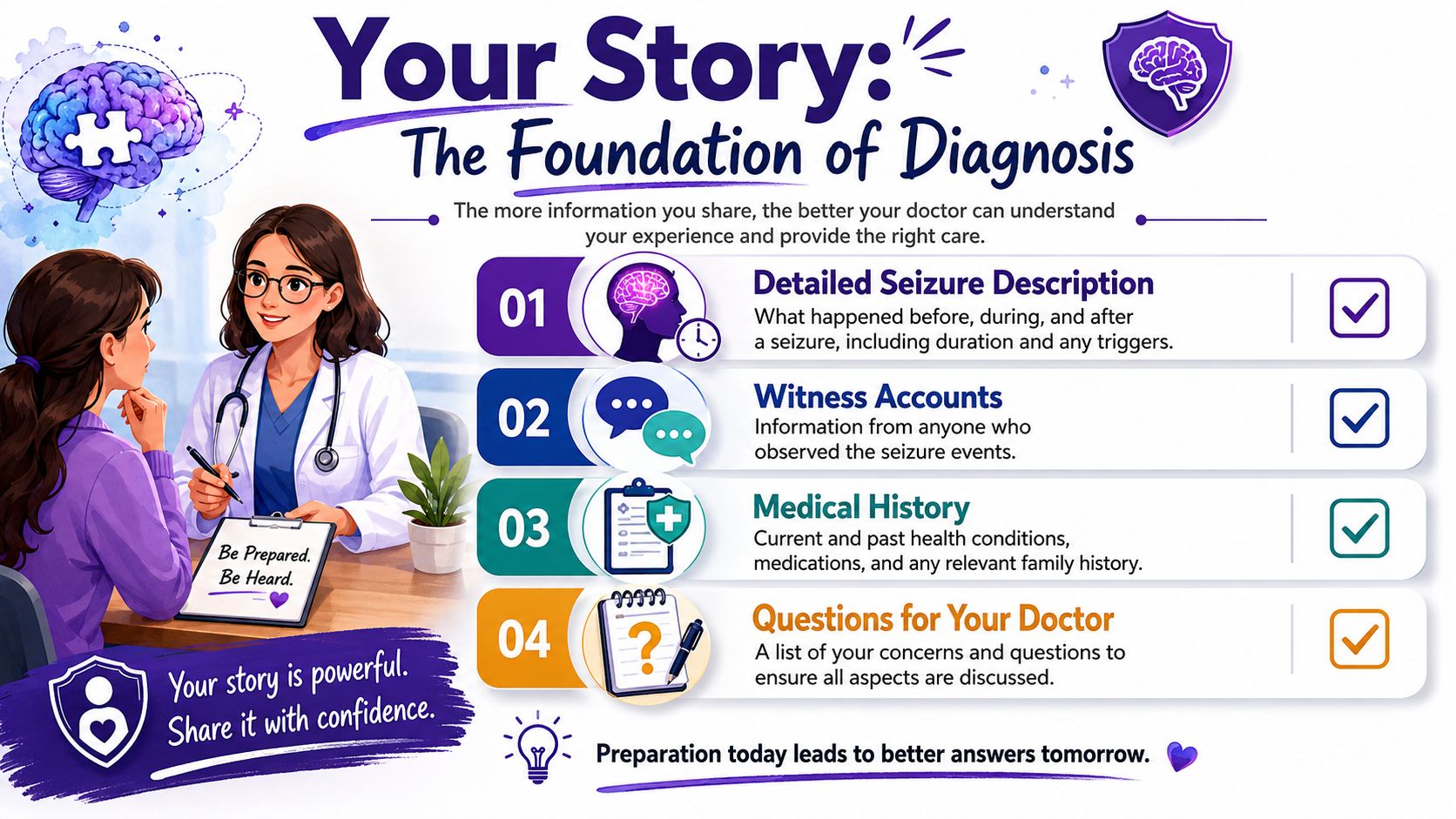
What to bring to your appointment
Good preparation can make a first neurology visit far more useful. You don't need perfect notes. You do need the most accurate picture you can gather.
- Write down the sequence. Note what you were doing beforehand, whether there was warning, how long it seemed to last, and how you felt after.
- Ask witnesses for their version. Someone else may have seen eye movements, stiffening, lip smacking, colour change, or confusion that you can't remember.
- List medicines and health conditions. Include prescriptions, supplements, recreational drugs, alcohol intake, sleep aids, and any recent changes.
- Note patterns. Missed sleep, stress, illness, heavy drinking, flashing lights, and skipped meals can all be useful clues.
- Record questions in advance. People often forget their main concerns once they are in the room.
Small details that help more than people realise
A phone video, if taken safely by someone nearby, can be surprisingly helpful. It doesn't replace an EEG or scan, but it may show movements, duration, awareness, and recovery far better than memory alone.
A seizure diary is also useful. It can be as simple as a notebook or notes app with date, time, what happened, sleep the night before, meals, stress, alcohol, and recovery.
Practical rule: If something odd happens more than once, start documenting it straight away rather than waiting for the next appointment.
Lifestyle clues matter during diagnosis
Lifestyle isn't only relevant after diagnosis. It matters at the beginning too. If events happen after poor sleep, periods of intense stress, or drinking more alcohol than usual, that pattern can help clinicians decide which tests are most useful and how urgent the review should be.
This is one of the most important ideas in tests for epilepsy. Your story isn't the informal part before proper medical investigation starts. It is the foundation of the medical assessment.
Listening to Brainwaves with an EEG
An EEG, or electroencephalogram, records the brain's electrical activity. I often describe it as putting a set of microphones on the scalp to listen to the brain's rhythm. Doctors aren't looking for thoughts. They're looking for electrical patterns that might fit with seizures or an increased tendency to have them.
For many people, this is the best known of all tests for epilepsy. It's also the one that causes the most confusion.
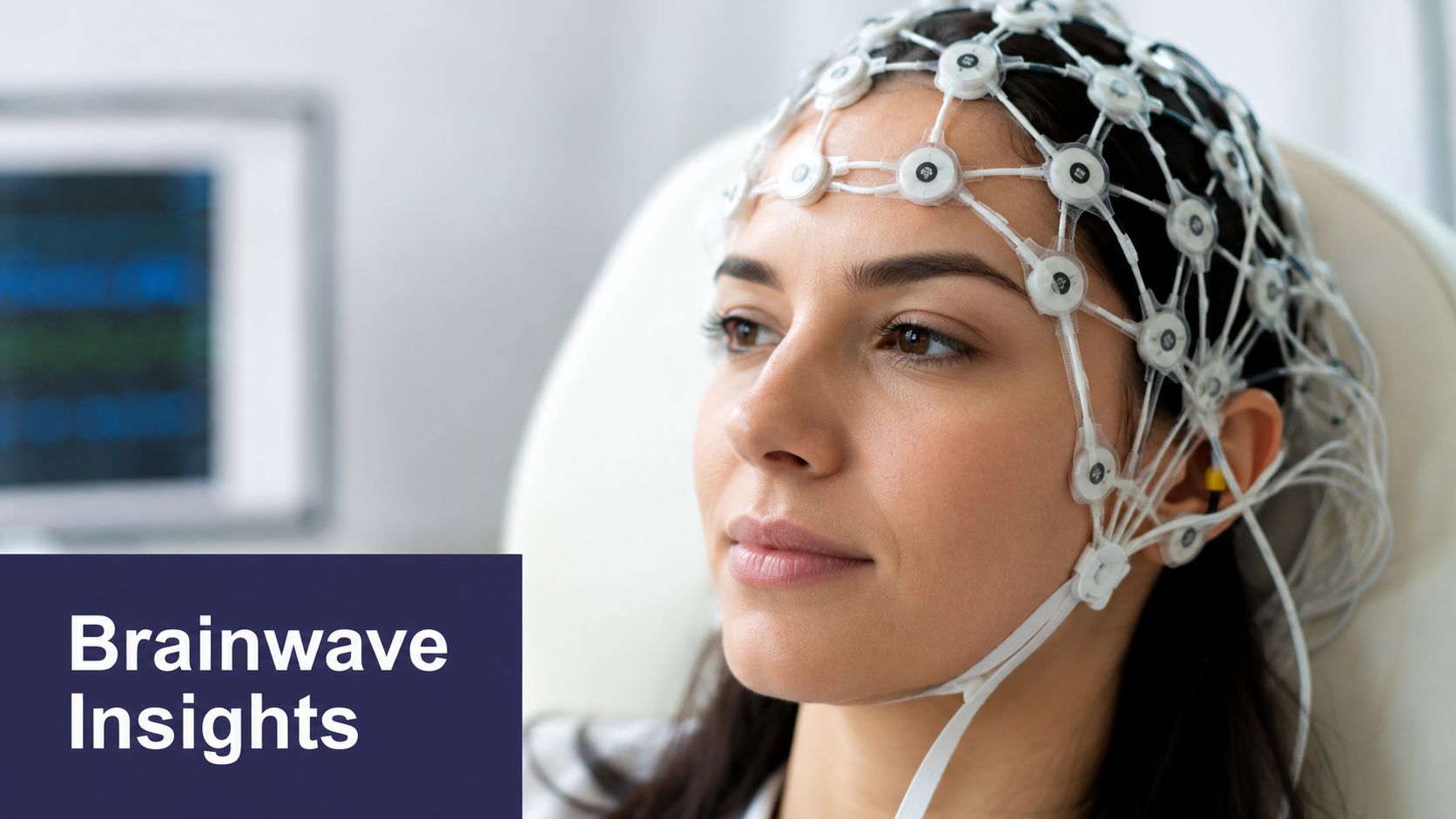
What the test is like
An EEG is painless. Small sensors are placed on your scalp with adhesive or a cap. You sit or lie still while the machine records the signals. You may be asked to breathe or look at flashing lights during part of the recording.
People often worry that the test will trigger pain or feel invasive. It doesn't. The tricky part is usually staying still and relaxed.
Preparation advice varies, so always follow the instructions from the clinic doing your test. In many cases people are asked to arrive with clean hair and avoid heavy hair products, because the sensors need good contact with the scalp.
Why there are different kinds of EEG
Not all EEGs are the same. A specialist may request a different version depending on your symptoms.
| Test type | What it tries to do | Why it may be chosen |
|---|---|---|
| Routine EEG | Records a short sample of brain activity | Often used early in the work-up |
| Sleep-deprived EEG | Records when the brain may be more likely to show abnormalities | Sometimes helpful if the first EEG was unrevealing |
| Ambulatory or prolonged EEG | Records over longer periods while you go about normal activities | Useful if episodes are infrequent or hard to capture |
The result people misread
Many people with epilepsy have a normal EEG between seizures, so a normal result does not rule out epilepsy. Doctors may recommend repeat EEGs, sleep-deprived EEGs, or other tests such as MRI after a normal result, as explained in Mayo Clinic's overview of epilepsy diagnosis.
That can feel frustrating, but it makes sense when you think of the test as a snapshot rather than a continuous film. If the abnormal electrical activity doesn't happen during the recording, the EEG may look normal.
An EEG can support a diagnosis, but it can't always settle it on its own.
What to do after the test
If your EEG is normal and your symptoms continue, don't assume the problem has been dismissed. Ask what the next step is. That might be a repeat EEG, a different type of EEG, imaging, or a specialist review of your history.
Keep updating your seizure diary in the meantime. The test result is one clue. Your real-life pattern is another.
Creating a Blueprint of the Brain with MRI and CT Scans
If EEG listens to brain activity, imaging looks at brain structure. An MRI is like a detailed blueprint of the brain. A CT scan is more like a fast sketch. Both can be helpful, but they answer slightly different questions.
Doctors use these scans to look for structural reasons why seizures might be happening. That can include scarring, an old injury, inflammation, or another visible change in the brain. Sometimes the scan helps explain the seizure pattern. Sometimes it is normal, which is useful information too.
MRI and CT side by side
MRI is usually the more detailed test when doctors want a close look at brain tissue. It takes longer and can feel noisy or enclosed, but it gives a richer picture.
CT is quicker and often used when speed matters, such as an emergency setting. If you'd like a plain-English comparison, this guide on CAT scan v MRI explains how the two differ in practice.
| Scan | Best thought of as | What patients often notice |
|---|---|---|
| MRI | A detailed blueprint | Loud noise, longer time in the scanner, close space |
| CT | A rapid sketch | Quicker scan, usually simpler in urgent situations |
What the experience is actually like
MRI scanners are noisy. You’ll usually be given ear protection. The bed moves into the scanner, and you’ll need to lie still. If you dislike enclosed spaces, tell the team beforehand. They can often talk you through it and make the experience easier.
CT scans are generally quicker. You lie on a table that passes through the scanner. Some people need contrast dye for certain scans, and the team will explain that if relevant.
Common worries before a brain scan
People often fear that the scan itself will be painful or dangerous. The test is usually more boring than painful. The main challenge is staying still and coping with the environment.
It also helps to remember what the scan can and can’t do. A scan shows structure. It doesn’t directly record the electrical event of a seizure in the way an EEG tries to. That’s why imaging sits alongside other parts of the work-up rather than replacing them.
If you have metal implants, severe claustrophobia, pregnancy concerns, or previous reactions to contrast, mention that before the appointment. Those details help the team choose the safest and most appropriate approach.
Building the Complete Diagnostic Picture
A diagnosis of epilepsy is usually made by combining clues, not by waiting for one magic result. Think of it as a jigsaw. Your account is one piece. A witness account is another. EEG adds electrical information. MRI or CT adds structural information. Blood tests and an ECG can help rule out other causes.
This combined approach matters because getting the diagnosis right affects both treatment and safety. NICE guidelines, first published in 2004, helped standardise the use of EEG and MRI in the UK’s diagnostic work-up. The same source notes that around 30% of people have uncontrolled seizures and there are about 21 epilepsy-related deaths each week in the UK, which underlines why accurate diagnosis and management matter, according to this summary of epilepsy facts and guideline context.

Why supporting tests are still useful
A person can black out for reasons other than epilepsy. Low blood sugar, infection, medication effects, dehydration, and heart rhythm problems can sometimes mimic seizures or add confusion to the picture.
That is why a doctor may request:
- Blood tests to look for metabolic or medical causes that could trigger seizure-like events
- An ECG to check whether the heart rhythm could explain collapse or loss of consciousness
- Further specialist tests if the pattern remains unclear
No single result gets to dominate. Doctors weigh the whole picture.
The role of lifestyle in the diagnostic puzzle
Lifestyle tracking can strengthen that picture. Not because lifestyle causes every seizure, but because it often affects when events happen and how often they recur.
Useful things to track include:
- Sleep pattern. Poor sleep is a frequent clue.
- Stress load. Work pressure, bereavement, anxiety, and burnout can all matter.
- Alcohol and recreational drugs. Changes in intake, withdrawal, or binges may be relevant.
- Meals and hydration. Long gaps without eating, illness, and dehydration can muddy the waters.
A simple daily log often works better than trying to remember three months of life in one clinic appointment.
What helps most: clear notes, consistent follow-up, and honesty about sleep, alcohol, stress, and medicines.
When results seem to conflict
Sometimes the story sounds highly suspicious for seizures, but the first EEG is normal. Sometimes the EEG shows abnormalities, but the clinical story isn’t typical. This doesn’t mean anyone has got it wrong. It means interpretation matters.
Neurologists don’t diagnose epilepsy by voting on test results. They judge how the pieces fit together. That’s why one person’s work-up ends quickly while another person’s takes longer and needs repeat or more specialised testing.
If you’re in that second group, try not to read delay as failure. Often it means the team is being careful, which is exactly what you want.
Life After Diagnosis Your Plan for Moving Forward
Once a diagnosis is made, individuals want the same thing. Stability. They want fewer surprises, more confidence, and a clear plan for daily life.
Medication is often the first practical step. If you’re prescribed an anti-seizure medicine, take it exactly as instructed and don’t stop it suddenly unless a clinician tells you to. Early follow-up matters because doses sometimes need adjusting and side effects need reviewing.
Daily habits that support seizure control
Lifestyle changes don’t replace prescribed treatment, but they can make the road steadier.
- Protect sleep. Keep a regular bedtime, reduce late-night screen use, and treat sleep as part of treatment rather than a luxury.
- Moderate alcohol carefully. If alcohol seems linked to events, reduce it and discuss this openly with your clinician.
- Manage stress on purpose. Simple routines such as walking, breathing exercises, counselling, and realistic work boundaries can help.
- Take medicines consistently. Phone reminders and pill organisers are often more effective than relying on memory.
Some people also find it helpful to read broader insights on daily living with epilepsy, especially when they’re trying to rebuild routine after diagnosis.
Practical next steps that matter
You’ll usually need ongoing review with a neurologist or epilepsy specialist team. Keep bringing your seizure diary, medication list, and questions to appointments. If your events change, become more frequent, or treatment doesn’t seem to help, say so clearly.
Driving is another important issue in the UK. If you’ve had a seizure or been diagnosed with epilepsy, ask promptly about DVLA rules and whether you must stop driving and notify them. This is an area where people should get specific advice early rather than making assumptions.
If you’ve just been diagnosed, your first goal isn’t to master everything at once. It’s to build a routine you can stick to.
Regaining confidence
People often feel they have lost control after a diagnosis. In practice, control usually returns in stages. Understanding your pattern, taking treatment reliably, sleeping properly, and asking for help early all make a real difference.
Your plan doesn’t need to be perfect. It needs to be workable.
Getting Answers Faster Urgent Care and Private Options
Some situations need urgent care, not a routine appointment. Seek emergency help after a first seizure, if a seizure goes on for an unusually prolonged period, if seizures repeat without full recovery, if there is serious injury, or if the person has breathing difficulty, is pregnant, or has diabetes. If you’re ever unsure and the event seems severe or different from usual, treat it as urgent.
For everything outside that emergency setting, timing still matters. Waiting for clarity can be one of the hardest parts of tests for epilepsy. NHS pathways can be very good, but access isn’t always quick. According to guidance discussing delays in specialist access and prolonged EEG availability, NHS England diagnostic waiting times can be long, and access to specialist review and prolonged EEG monitoring can vary, which is why private options are becoming more relevant for people who want quicker answers.
That may mean starting with a private GP review to organise the history properly, arrange blood tests or ECG, and help decide what needs accelerating. For some people, the next practical question is cost and sequencing of imaging, especially if the NHS route is moving slowly. This overview of private CT scan cost and access considerations can help frame that decision.
Private care isn’t about replacing good specialist medicine. It’s about reducing dead time, getting the right referrals moving, and giving you a clearer plan while symptoms are still fresh in everyone’s mind.
If you want a calm, thorough assessment with time to talk things through, The Lagom Clinic offers private GP care in Bristol with a proactive, whole-person approach. The clinic can help review suspected seizure symptoms, arrange on-site blood tests and ECGs, and support rapid referral for further investigation so you can move from uncertainty to a clear next step.


 Members Consultation