


It's completely normal to feel a bit worried when thinking about your bowel health, but getting the right information is the best way to feel back in control. In the UK, the first step is usually a straightforward at-home screening kit, while a colonoscopy is considered the 'gold standard' for getting a conclusive diagnosis if one is needed. Being proactive is everything, because finding any issues early on makes a huge difference.
Your Proactive Guide to Bowel Cancer Tests
Talking about our bowels isn't something most of us do every day, so it’s understandable if the topic feels a little strange or intimidating. This guide is here to change that. We want to give you a clear, reassuring overview of every common test for bowel cancer, explaining things in plain English. Think of it less as a reason to worry and more as a positive, powerful step in looking after yourself.
Our aim is to arm you with the knowledge you need to make decisions confidently. We'll cover everything, from the simple kits you can use at home to the more detailed procedures your doctor might recommend. When you understand what these tests are for and what they involve, they stop being something to dread and become a smart tool for your long-term health.
Why Early Detection Is Your Best Defence
The facts about bowel cancer are very clear: catching it early is the single most important factor. In fact, if diagnosed at the earliest stage, more than 9 in 10 people will survive for five years or more. That one statistic shows exactly why we place so much importance on screening. It’s like having a routine MOT for your car; you're looking for small, fixable problems before they can become serious.
Screening is designed to find cancer at an early stage when treatment is more likely to be effective. It can also prevent bowel cancer from developing in the first place by finding and removing growths called polyps.
This is a crucial point. By finding and removing these small growths, called polyps, we can often stop cancer from ever getting the chance to develop.
Taking Control of Your Bowel Health
While things like your age and family history are out of your hands, you have more influence over your bowel cancer risk than you might think. The choices you make every day can genuinely strengthen your body’s defences and improve your overall health.
Making positive lifestyle changes is a vital part of any good health strategy. Here are some evidence-based tips you can implement:
- Boost Your Fibre Intake: A fibre-rich diet is your bowel's best friend. Aim for at least 30g of fibre a day by eating plenty of fruits, vegetables, and whole grains. Swap white bread for wholegrain, choose brown rice over white, and add beans or lentils to your meals.
- Get Active Regularly: Aim for at least 150 minutes of moderate activity (like a brisk walk) or 75 minutes of vigorous activity (like jogging) per week. Consistent exercise helps keep your digestive system working well and lowers your risk.
- Reduce Red & Processed Meats: Try to limit red meat (like beef and lamb) to no more than 500g (cooked weight) per week and cut down on processed meats like bacon and sausages.
- Limit Alcohol and Stop Smoking: Both are strongly linked to a higher risk of developing bowel cancer. Reducing your alcohol intake to within recommended limits and quitting smoking are major steps forward for your overall health.
When you combine these proactive lifestyle habits with an understanding of your testing options, you create a truly effective plan for protecting your future health. This guide is here to give you the information you need to do just that.
Understanding Bowel Cancer Screening in the UK
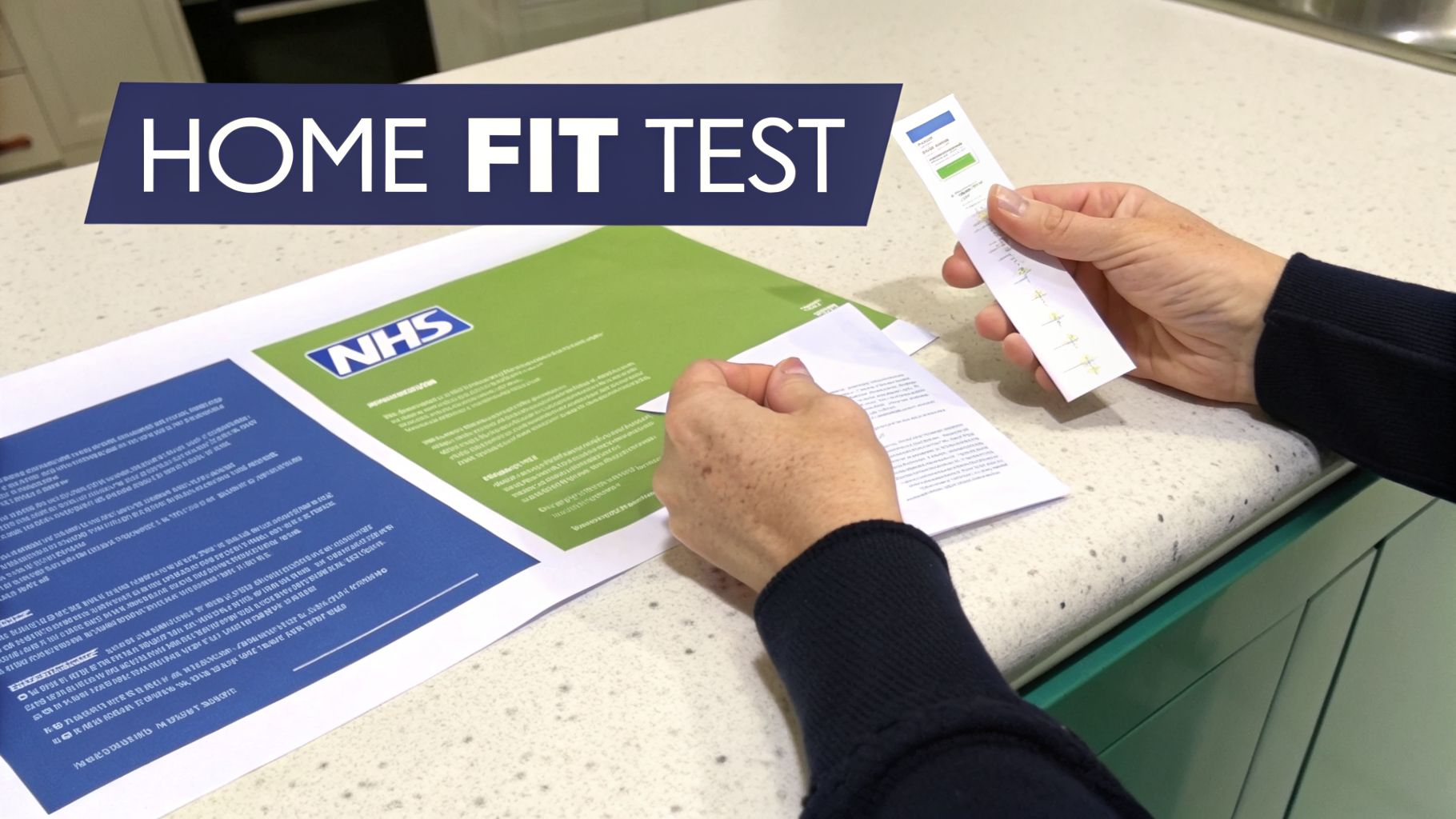
When it comes to bowel cancer, the NHS Bowel Cancer Screening Programme is our most powerful line of defence. It’s best to think of it not as a diagnostic tool, but as a highly effective early warning system. Its purpose is to spot the very first signs of trouble, often years before you might experience any symptoms yourself. This proactive approach is what makes it such a life-saver.
The programme works by automatically inviting everyone in a specific age group to take part. In England, that’s currently people between the ages of 50 and 74, who will get an invitation through their letterbox every two years.
The cornerstone of the programme is a simple test for bowel cancer you can do at home, called the Faecal Immunochemical Test, or FIT for short. The kit arrives by post, allowing you to collect a very small sample of your poo in the privacy of your own bathroom. Afterwards, you simply pop it into the prepaid envelope and send it off for analysis. The whole process has been designed to be as straightforward and non-intrusive as possible.
What Is the FIT Kit and How Does It Work?
So, what is this little kit actually looking for? Its one job is to detect microscopic traces of blood in your poo—amounts so small they are completely invisible to the naked eye. This is often called "occult blood."
While it can sound alarming, finding this blood is often the earliest sign of pre-cancerous growths called polyps. Most polyps are harmless, but some can develop into cancer over time if they aren't dealt with.
Getting it done is incredibly simple:
- Collect a Sample: The kit includes a small plastic stick. You just need to scrape a tiny amount of poo from the toilet paper after you wipe.
- Store the Sample: You then push the stick back into the collection tube, which seals it securely.
- Post It Back: Finally, place the tube into the prepaid envelope provided and pop it in any post box.
It’s completely normal to feel a bit anxious about the results, but it’s important to remember that a positive result is not a cancer diagnosis. In fact, it's rarely the case. Common and much less serious issues like haemorrhoids (piles) can also cause bleeding. A positive FIT result simply tells your doctor that a closer look is needed to find out what’s going on.
The Power of Prevention Through Screening
This is where the real magic of screening comes in. It doesn’t just find existing cancers earlier; it actively prevents them from ever starting. By identifying and removing polyps that have the potential to turn cancerous, we stop the disease in its tracks.
A positive screening result is not a diagnosis. It is an alert that tells your doctors, "Look closer." This follow-up is what allows for early intervention and, in many cases, prevents cancer from ever developing.
The numbers from the NHS Bowel Cancer Screening Programme in England speak for themselves. In a recent year, 6,969,227 people were invited to take part, and an impressive 4,710,330 sent their kits back. Of those, only a very small fraction—just 1.76%—needed further tests.
But this small percentage led to 35,039 procedures where doctors found and removed high-risk polyps, effectively preventing thousands of future cancers. Research has shown that screening this way prevents an estimated 186 bowel cancers for every 100,000 people screened over a 15-year period.
While the NHS programme is an essential public health service, some people fall outside the eligible age range or simply want the reassurance of an assessment without delay. If this sounds like you, exploring options for private cancer screening offers another valuable way to take control of your health.
Right, let's take a closer look at the diagnostic tests that give us a clear picture of what's going on inside your bowel.
Diagnostic Tests: From Symptoms to Certainty
Whether an at-home screening kit has flagged a potential issue or you're dealing with symptoms that just don’t feel right, the next step is a diagnostic test. This is where we move from a general suspicion to a definite answer. I know the thought of a hospital procedure can be daunting, but understanding exactly what to expect is the best way to feel more in control and less anxious.
These tests aren't just looking for cancer; they're designed to provide a complete and definitive picture. Think of it like this: your initial screening test was a wide-angle photograph, giving us a broad overview. A diagnostic test is the high-definition, close-up shot that lets us see every detail.
So, what happens next? Your doctor will likely recommend one of the following key diagnostic tests. We'll go through what each one involves, how you prepare, and what the experience is actually like, so you have the practical information you need.
At-a-Glance Guide to Bowel Cancer Tests
To help you quickly compare the different options, here's a simple table outlining the main tests. It gives a snapshot of what each test is for, what it involves, and who it's generally best suited for.
| Test Type | Primary Purpose | What It Involves | Best For |
|---|---|---|---|
| Colonoscopy | Diagnostic & Therapeutic (The "Gold Standard") | A flexible camera examines the entire large bowel. Polyps can be removed on the spot. | Getting a complete view of the bowel, removing polyps, and taking biopsies in a single procedure. |
| CT Colonography | Diagnostic (A "Virtual" look) | A CT scanner takes 3D images of the bowel after it's been inflated with gas. | Patients who may not be suitable for a colonoscopy or where a previous colonoscopy was incomplete. |
| Flexible Sigmoidoscopy | Diagnostic (Focused view) | A shorter camera examines only the lower third of the large bowel. | Investigating specific symptoms like rectal bleeding or when a full colonoscopy isn't immediately necessary. |
Each test has its place, and the right one for you will depend on your specific symptoms, medical history, and the results of any previous screening.
Colonoscopy: The Gold Standard Investigation
A colonoscopy is considered the most comprehensive and effective way to examine the entire large bowel—that’s your colon and rectum. There’s a good reason we call it the 'gold standard': it lets a specialist see the lining of your bowel in real-time and, crucially, deal with certain problems right there and then.
During the procedure, a very thin, flexible tube with a tiny camera on the end (a colonoscope) is gently passed into your back passage. The specialist then carefully guides it around your large bowel, watching high-quality images on a screen. If any small growths, called polyps, are found, they can usually be removed immediately, which is a painless process. The doctor can also take small tissue samples (biopsies) to be checked in a lab later.
The colonoscopy itself usually takes around 30 to 45 minutes. Most people opt for sedation to help them relax. It makes you feel sleepy and comfortable, and you often won't remember much about it afterwards. It's not a general anaesthetic, so you'll be breathing on your own, but you’ll be nicely drowsy.
A colonoscopy is unique because it’s both a diagnostic and a therapeutic procedure. It doesn’t just find problems; it allows the specialist to fix them on the spot by removing pre-cancerous polyps before they ever have a chance to grow.
For many people, the most challenging part isn't the test itself, but the preparation. To get that crystal-clear view, your bowel has to be completely empty. This means following a special low-fibre diet for a few days before and then taking a strong laxative solution the day before your appointment. For a detailed walkthrough, you can learn more about how to prepare for a colonoscopy in our article.
CT Colonography: The Virtual Colonoscopy
A CT colonography, often called a 'virtual colonoscopy', is a less invasive alternative that uses a CT scanner to build a detailed 3D model of your bowel. It’s a great option for people who might not be suited for a conventional colonoscopy for other health reasons, or if a previous attempt at a colonoscopy couldn’t be completed.
You’ll still need to do the full bowel preparation with laxatives, as the colon must be empty for the scan to work. At the appointment, a small, thin tube is placed just inside your back passage to gently inflate the bowel with harmless carbon dioxide gas. This helps to smooth out the bowel wall, creating clear images as you pass through the CT scanner.
The main benefits of a CT colonography are clear:
- Less Invasive: No endoscope is guided deep into your bowel.
- Quicker: The scan itself is fast, usually taking just 10-15 minutes.
- No Sedation Needed: You can drive yourself home and get back to your day straight away.
The one major drawback, however, is that it's purely a diagnostic tool. If any polyps or abnormalities are spotted on the scan, they can't be removed or biopsied at the same time. This means you would then need to schedule a follow-up colonoscopy to have them investigated and treated.
Flexible Sigmoidoscopy: A Focused Examination
A flexible sigmoidoscopy is a lot like a colonoscopy, but it’s designed to examine only the lower part of your large bowel—the rectum and the sigmoid colon. This is a really important area, as it's where bowel cancers and polyps are most often found.
The procedure uses a shorter, flexible camera and is much quicker, often taking just 15 minutes to complete. Because it doesn't need to travel as far into the bowel, the preparation is usually much simpler. Instead of the full laxative prep, it typically just involves using an enema shortly before the test to clear out the lower section. Sedation isn't normally needed.
This test is fantastic for investigating specific symptoms like rectal bleeding. If it uncovers anything that suggests a potential problem further up, your doctor will then recommend a full colonoscopy to check the rest of the bowel. It offers a quick, effective way to get answers for issues located in that final stretch of the digestive tract.
Navigating Your Results and Next Steps
The time spent waiting for the results of any test for bowel cancer can be one of the most stressful parts of the whole process. It’s completely natural for your mind to race during this period of uncertainty. Our goal here is to cut through that anxiety, giving you a clear and simple guide to what happens next, no matter the outcome.
This flowchart helps to visualise the testing pathway, showing how you might get from experiencing symptoms or doing a screening test to a specific diagnosis.
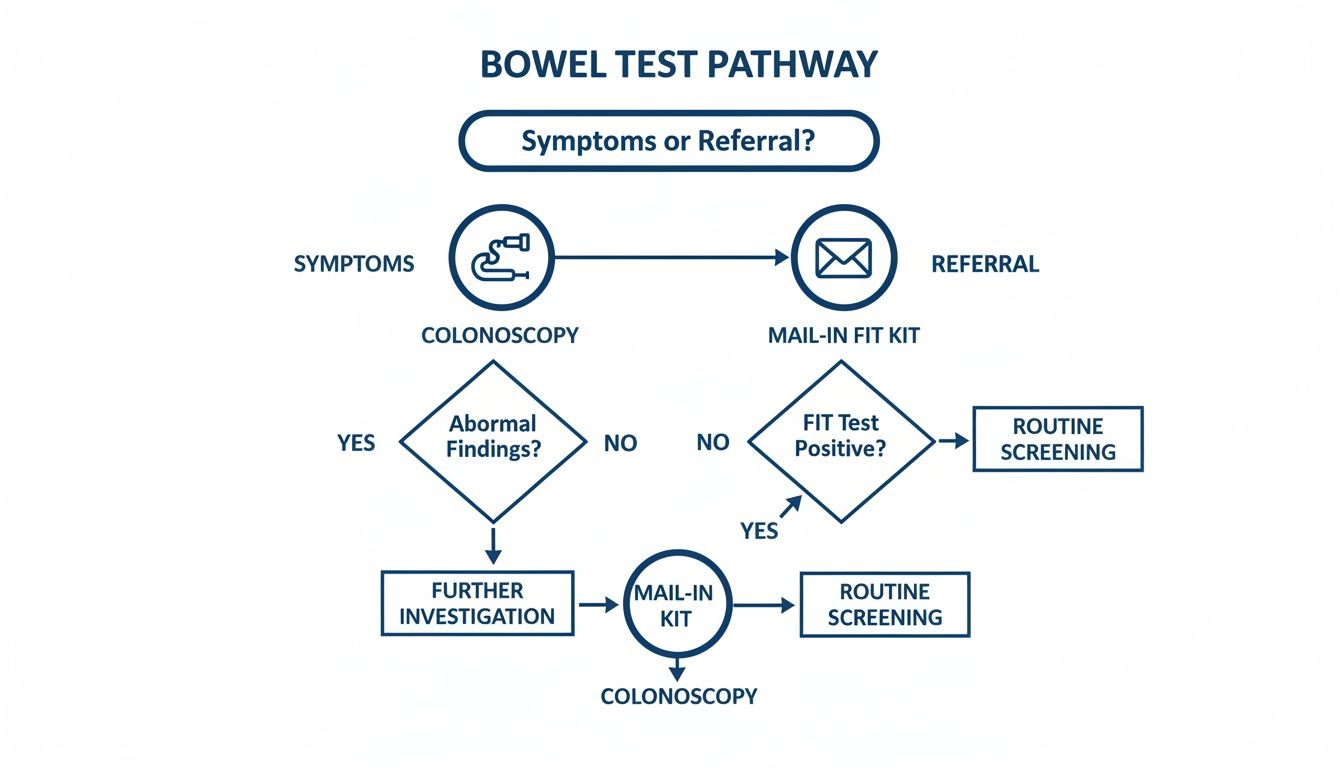
The main takeaway here is that there's a structured plan in place. Whether you started with a routine screening kit or a chat with your GP, there is always a clear next step, ensuring you’re supported and guided along the way.
Whatever your results show, remember that this information gives you power. It's the key that allows you and your healthcare team to make the right decisions to protect your health for the long term. Let's walk through the three main possibilities.
Outcome 1: A Clear or Normal Result
Getting a ‘normal’ or ‘negative’ result is, of course, the news everyone hopes for. It means that within the limits of the test you had, no problems like polyps or cancer were found.
If you had a screening FIT kit, it means no significant amount of blood was detected in your sample. If you had a colonoscopy, the specialist had a clear view of your entire bowel lining and saw nothing concerning.
What does this mean for you?
- Peace of mind: First and foremost, you can feel reassured about your current bowel health.
- Continue routine screening: You'll be invited back for your next screening test at the recommended time, which is usually every two years for the NHS programme.
- Stay vigilant: This is still crucial. A clear result is fantastic, but you know your body best. If you develop any new or persistent bowel cancer symptoms down the line, you should always speak to your doctor, regardless of when your last test was.
Outcome 2: Polyps Were Found and Removed
It's actually very common for a colonoscopy to find one or more polyps, which are small growths on the bowel lining. Hearing this might sound worrying, but finding and removing them is a huge positive.
Most polyps aren't cancerous. However, some types have the potential to turn into cancer over many years if left alone.
Finding and removing polyps is one of the most powerful forms of cancer prevention. A colonoscopy doesn’t just find potential problems; it allows the specialist to remove them on the spot, often stopping cancer before it even has a chance to begin.
Once removed, these polyps are sent to a laboratory to be analysed. The results of this analysis will shape your next steps. Depending on the number, size, and type of polyps found, your specialist will recommend a date for a future ‘surveillance’ colonoscopy. This might be in one, three, or five years' time, just to keep a close eye on things and ensure your bowel remains healthy.
Outcome 3: A Cancer Diagnosis
Hearing the words "you have cancer" is life-changing. It's perfectly normal to feel overwhelmed, frightened, and unsure of what to do next. While this is the most difficult outcome, it’s vital to know that there is a well-established and supportive path forward. You will not face this alone.
Immediately after a diagnosis, you will be referred to a specialist multi-disciplinary team (MDT). This is a group of experts—including surgeons, oncologists (cancer doctors), radiologists, and specialist nurses—who will work together to create the best treatment plan specifically for you.
One of the very first steps is a process called staging. Think of it like creating a detailed map of the situation to understand the cancer's size and if it has spread. This involves further tests, often CT scans of your chest, abdomen, and pelvis. The stage is critical information that helps your MDT recommend the most effective treatments, which might include surgery, chemotherapy, or radiotherapy.
You'll also be assigned a clinical nurse specialist who will be your main point of contact. They are there to answer your questions, offer support, and guide you through every step of your treatment. A diagnosis is the start of a new and difficult journey, but it's one you'll walk with a dedicated team beside you.
Lifestyle Changes to Support Your Bowel Health

While figuring out which test for bowel cancer is right for you is a vital step, your journey towards better bowel health doesn’t just happen inside a clinic. The choices you make every single day have a real, scientifically-backed impact on your risk of developing bowel cancer. Embracing positive lifestyle habits is a powerful way to take the reins and actively invest in your long-term wellness.
Think of it this way: screening tests are your early warning system, but your lifestyle is the bedrock of your health. By reinforcing that foundation with good nutrition, regular movement, and other sensible habits, you can create an environment where it's much harder for cancer to take hold. Here’s some practical, evidence-based advice you can start using today.
High-Impact Nutrition for a Healthy Bowel
What you eat is probably the single biggest factor you can control when it comes to bowel health. The good news is that a bowel-friendly diet isn't about harsh restrictions or giving up everything you love. It’s about making smart, consistent choices that focus on adding more of the good stuff and cutting back on things linked to higher risk.
The absolute hero of a bowel-friendly diet is fibre. You can think of fibre as a gentle "scrubbing brush" for your insides. It helps keep things moving through your bowel efficiently, which means any potentially harmful substances in your food spend less time in contact with your bowel lining.
Try to weave a variety of high-fibre foods into your meals:
- Fruits and Vegetables: Aim for at least five portions a day. Things like berries, pears, apples, broccoli, and carrots are fantastic sources.
- Whole Grains: Simply swapping white bread, pasta, and rice for their wholegrain or brown versions makes a huge difference. Oats, barley, and quinoa are also brilliant choices.
- Legumes: Don't forget beans, lentils, and chickpeas. They are fibre powerhouses and are incredibly easy to add to soups, salads, and curries.
On the other side of the coin, it's wise to reduce how much red and processed meat you eat. We’re talking about beef, lamb, and pork, as well as processed products like bacon, sausages, and ham. The research points towards limiting red meat to no more than 500g (cooked weight) per week.
The Protective Role of Physical Activity
Getting your body moving is another crucial piece of the puzzle. You absolutely don't need to train for a marathon to see the benefits; what really matters is moderate and consistent activity. Exercise helps by encouraging regular bowel movements and making it easier to maintain a healthy weight.
The goal is to get at least 150 minutes of moderate-intensity activity each week. That could look like:
- A brisk 30-minute walk, five days a week.
- A gentle cycle ride.
- A game of doubles tennis.
- Even just mowing the lawn.
Alternatively, you could opt for 75 minutes of vigorous-intensity activity, like jogging, swimming laps, or playing football. The key is to find something you actually enjoy, because that’s what you’ll stick with long-term.
Managing a Healthy Weight
Keeping your weight in a healthy range is so important, as being overweight or obese is a major risk factor for bowel cancer. Excess body fat isn't just passive; it can promote inflammation and disrupt hormone levels in ways that may encourage cancer cells to grow.
This isn't about chasing an unrealistic body image. It’s simply about reaching a weight that's healthy for your individual frame. Even a small amount of weight loss can significantly improve your risk profile. The most effective and sustainable path to managing your weight is combining a balanced, fibre-rich diet with regular physical activity.
Proactive lifestyle changes work hand-in-hand with screening programmes. While a healthy lifestyle reduces your risk, regular screening ensures that if anything does develop, it is caught at the earliest and most treatable stage.
This two-pronged approach is essential. Bowel cancer screening uptake in the UK has thankfully improved, now sitting between 66% and 71% in recent years, thanks in part to the easier-to-use FIT kit. But with Cancer Research UK projecting around 609,000 new cases in England by 2040, and a deeply concerning 52% rise in cases among adults aged 25-49 since the 1990s, the need for both screening and lifestyle management has never been more urgent. You can explore these bowel cancer screening statistics and their impact on the Cancer Research UK website.
Limiting Alcohol and Quitting Smoking
Finally, we have to talk about alcohol and smoking. The evidence linking both to an increased risk of bowel cancer is clear and convincing. Alcohol can directly damage the cells lining the bowel, and as your body processes it, it creates a chemical that can cause even more harm.
To lower your risk, the official guidance is to drink no more than 14 units of alcohol per week, spread out over the week and with several drink-free days included.
Smoking is just as damaging. The toxic chemicals in tobacco smoke get into your bloodstream and travel throughout your body, where they can damage the DNA in your cells, including those in the bowel. Quitting smoking is one of the single most positive things you can do for your health, slashing your risk of bowel cancer and a host of other diseases. If you need help, your GP is a great first port of call for advice and resources to help you stop for good.
Your Questions About Bowel Cancer Testing Answered
Thinking about any kind of health test can bring up a lot of questions, and that’s completely normal. Getting clear, straightforward answers is the best way to feel more in control and less anxious. We’ve put together answers to some of the most common queries we hear from patients about bowel cancer tests.
How Reliable Is the At-Home FIT Test?
The at-home FIT kit is an excellent screening tool for what it’s designed to do: detect tiny, invisible traces of blood in your poo. I often tell my patients to think of it like a highly sensitive smoke detector for your bowel. Its job is to pick up that specific warning sign, which might point to polyps or an early-stage cancer.
However, it's crucial to understand its limitations. A FIT test is a screening tool, not a final diagnosis. A negative result is certainly reassuring, but it isn’t a 100% guarantee that you don’t have, or won’t develop, bowel cancer in the future. That’s why you must always tell your doctor about any new or persistent symptoms, even if your FIT test came back clear.
What Symptoms Should Prompt Me to See a Doctor?
You should always book an appointment with your GP if you notice any of these changes, especially if they’ve been going on for three weeks or more:
- A persistent change in bowel habit – this could mean going to the toilet more often, or having looser, runnier stools than what’s normal for you.
- Blood in your poo, especially if there’s no obvious reason for it, like diagnosed haemorrhoids.
- Unexplained tummy pain, discomfort, or bloating that consistently happens after eating.
- Unexpected weight loss or feeling unusually tired for no apparent reason.
These symptoms can be caused by all sorts of common, less serious conditions. But it’s so important to get them checked out properly. Never let embarrassment stop you from seeking help; your doctor discusses these things every single day.
Trust your gut instinct. You know your body better than anyone. If something just doesn't feel right, even if it’s not on this list, it is always worth getting medical advice.
I Am Worried But Younger Than the Screening Age. What Are My Options?
This is a really important question, particularly as we're seeing bowel cancer rates rise in younger people. If you're below the NHS screening age but have symptoms or a strong family history that worries you, your first port of call should always be your GP.
Book an appointment and explain your concerns and symptoms clearly. Your GP will assess your personal risk and decide on the best next steps. This might involve a referral for a diagnostic test like a colonoscopy to get a definitive look at what's going on. You absolutely do not have to wait for a screening invitation to take charge of your health.
Does a Private Test for Bowel Cancer Replace the NHS Programme?
No, not at all. It’s best to see private testing as a complementary choice that works alongside the fantastic, evidence-based NHS Bowel Cancer Screening Programme.
A private test simply provides another route. It's for people who might not be eligible for NHS screening yet, those who want to investigate symptoms more quickly, or someone who simply wants the peace of mind of a thorough assessment. It’s another valuable tool in your proactive health toolkit.
At The Lagom Clinic, we understand that when you have a health concern, getting clear answers without a long wait is paramount. If you're worried about your bowel health or want to discuss your screening options, we provide the time and expertise to guide you. Find out more about our personalised healthcare approach at https://www.thelagom.co.uk.


 Members Consultation