


A single statistic changes the whole conversation about workplace screening. Approximately 43% of UK adults who underwent corporate health screening were found to have up to 75% narrowing in one or more coronary arteries, despite having no obvious symptoms, according to this UK employee screening overview.
For a business owner, that means two things. First, a person can look well, perform well, and still carry a serious hidden health risk. Second, health screening for employees isn't just an HR perk. It can be an early warning system that protects people, reduces avoidable disruption, and creates a healthier, steadier workforce.
Done properly, screening should never be a box-ticking exercise. It should lead to useful advice on sleep, stress, movement, nutrition, smoking, alcohol, and follow-up medical care where needed. That's where the core value sits. Not in collecting figures, but in turning those figures into sensible action.
The Hidden Value of a Healthy Workforce
When employers hear “health screening”, many still think of cost, paperwork, and awkward conversations. In practice, the bigger cost usually comes from delay. High blood pressure, raised glucose, unhealthy cholesterol patterns, poor sleep, inactivity, and chronic stress often build for years before they show up as sickness absence, reduced concentration, or a medical crisis.
That's why proactive screening matters. It helps identify risk before it becomes incapacity. It also tells staff something important. Your business is prepared to invest in prevention, not just react when somebody becomes unwell.
Why hidden risk matters in office and executive teams
A common misconception is that visible fitness equals low risk. It doesn't. I see busy professionals who function at a high level, travel regularly, attend every meeting, and still have warning signs that would benefit from early intervention.
A sensible programme gives those people a safe opportunity to pause and check the basics:
- Cardiovascular risk: Blood pressure, glucose, and lipid results can flag concerns early.
- Lifestyle strain: Long hours, irregular meals, alcohol, and poor sleep often leave a measurable footprint.
- Silent progression: Many important conditions don't cause pain or obvious symptoms at first.
For employers building a broader wellbeing strategy, this practical HR guide to employee well-being is a useful companion resource because it looks at how health support fits into day-to-day people management, not just policy documents.
Good screening doesn't label staff as “healthy” or “unhealthy”. It identifies modifiable risk and opens the door to change.
What employers gain beyond compliance
A healthier workforce usually means fewer surprises. Managers spend less time firefighting avoidable issues. Employees are more likely to feel supported when a company offers constructive health input rather than waiting until performance slips.
The strongest programmes also improve trust when they're transparent, voluntary where appropriate, and followed by genuine support. If an employee is told they have raised blood pressure, they should leave with a clear next step. That might mean a GP review, less salt, more walking, better sleep hygiene, reduced alcohol, and regular home monitoring. Screening is the starting point, not the intervention itself.
What Is Employee Health Screening Really
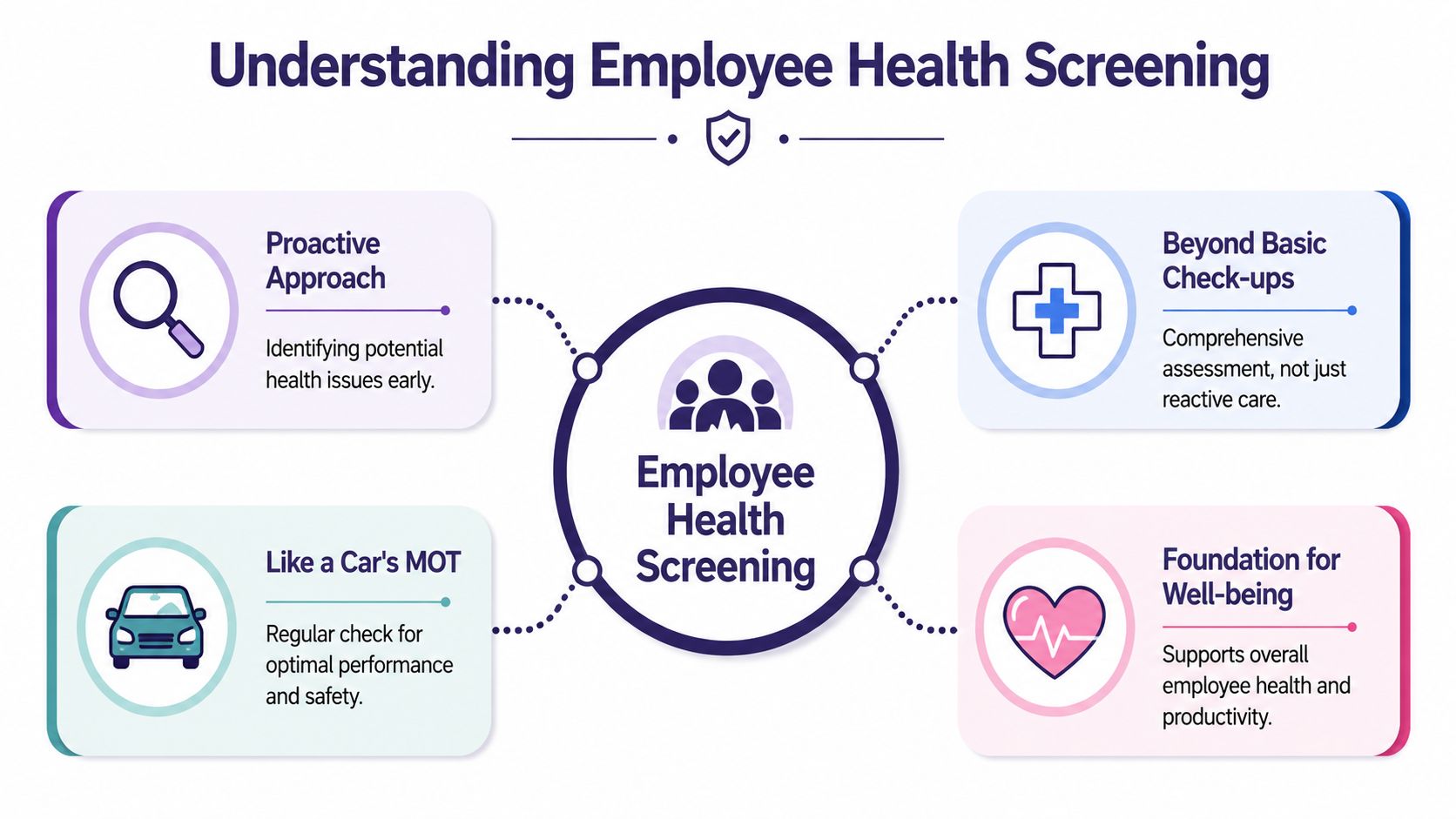
Think of employee screening as the health equivalent of an MOT. It doesn't guarantee that nothing will ever go wrong. It does help you spot problems early, deal with wear and tear, and keep performance safer and more reliable over time.
That comparison is useful because many employers accidentally frame screening as “finding illness”. A better way to think about it is preventative maintenance for people. The aim is to detect risk, guide lifestyle change, and decide when someone needs formal medical follow-up.
It's broader than a quick blood pressure check
Modern health screening for employees usually combines clinical measures with context. A reading only becomes useful when someone explains what may be driving it and what to do next.
That often includes:
- Biometric checks: Such as blood pressure, weight-related measures, and selected blood markers.
- Lifestyle review: Exercise levels, smoking, diet quality, alcohol intake, sleep, and stress.
- Risk discussion: Family history, role demands, shift work, travel patterns, and existing conditions.
A one-off test without interpretation is limited. A structured conversation that links results to practical habits is much more valuable.
Screening is different from reactive care
Reactive care starts when somebody feels unwell. Screening starts before that. It looks for patterns that may increase future risk even when a person feels completely fine.
That difference matters in business settings because employees often delay seeing their NHS GP or any clinician at all. They're busy, they minimise symptoms, or they assume they'll “deal with it later”. A workplace pathway lowers the threshold for early action.
Practical rule: If a screening result doesn't lead to a clear recommendation, the programme is unfinished.
The real purpose is behaviour change
From a medical point of view, the best screening outcome isn't just finding disease. It's helping someone avoid it. That's why every responsible programme should include advice people can use.
Useful examples include:
- Movement goals: Aim for at least 150 minutes of moderate-intensity aerobic activity per week, plus muscle-strengthening activities on two or more days.
- Diet basics: Work towards at least five portions of fruit and vegetables daily, around 400g, while cutting back on excess salt and saturated fat.
- Mental wellbeing habits: A consistent sleep routine and short daily mindfulness practice can support concentration, mood, and resilience.
These changes sound simple, but they're often the difference between a mildly abnormal result today and a significant health problem later on.
Choosing the Right Type of Screening Programme
Not every employee needs the same type of assessment. That's where many organisations get stuck. They either under-screen because they don't want complexity, or they over-screen in ways that create cost, confusion, and privacy concerns.
A better approach is to separate screening into three broad categories and decide what each group in your workforce needs.
Three common models
| Screening Type | Primary Purpose | Common Examples | Legal Context (UK) |
|---|---|---|---|
| Pre-employment | Assess fitness for a specific role after offer | Baseline health questionnaire, role-related checks, clearance for physical demands | Must be job-relevant and handled lawfully |
| Periodic or annual | Identify emerging health risks and support prevention | Blood pressure, glucose, lipid review, lifestyle assessment | Usually part of a wellbeing strategy rather than a strict legal duty |
| Role-specific or statutory | Monitor risk from workplace exposure or safety-critical work | Biological monitoring, respiratory surveillance, hearing-related occupational checks | Required where regulations and risk assessments demand it |
Pre-employment screening
This is the most misunderstood category. In the UK, pre-employment screening should relate to whether someone can safely perform the essential functions of the role, with reasonable adjustments where appropriate. It shouldn't become a fishing exercise for unrelated private medical details.
For a desk-based employee, that may mean a health questionnaire and targeted review. For a physically demanding or safety-sensitive role, the process may need to be more specific. The key principle is relevance.
Periodic screening
Annual or routine screening is usually the most helpful format for professional teams, managers, and office-based staff. It gives people a regular check-in and creates an opportunity to talk about practical change.
This type of programme often works well when combined with education. For example, if employees are using smart devices to track pulse, rhythm, or trends in recovery, it can help to give them a plain-English guide to monitoring your heart with wearables, so staff understand what consumer data can and cannot tell them.
If you want a plain explanation of how screening itself works in practice, this overview of what a health screening is is a helpful starting point.
Statutory and high-risk screening
Employers need to be precise. In the UK, the Health and Safety Executive mandates that occupational health screening must be risk-based, such as quarterly blood lead level testing for those exposed to lead above prescribed limits. That means your risk assessment drives the programme, not preference or convenience.
For high-risk settings, screening may involve:
- Exposure monitoring: Where hazardous substances create a defined need for surveillance.
- Respiratory assessment: In roles involving inhaled irritants or sensitising agents.
- Documented follow-up: Abnormal findings must trigger a clear pathway, not sit in a file.
The practical question is simple. Are you trying to support general wellbeing, meet a legal duty, or both? Once that's clear, the right screening structure usually follows.
Benefits for Your Business and Your People
The strongest argument for workplace screening is that it helps both sides of the employment relationship. Employers want a reliable workforce. Employees want to stay well, avoid nasty surprises, and feel that somebody is paying attention before a problem becomes serious.
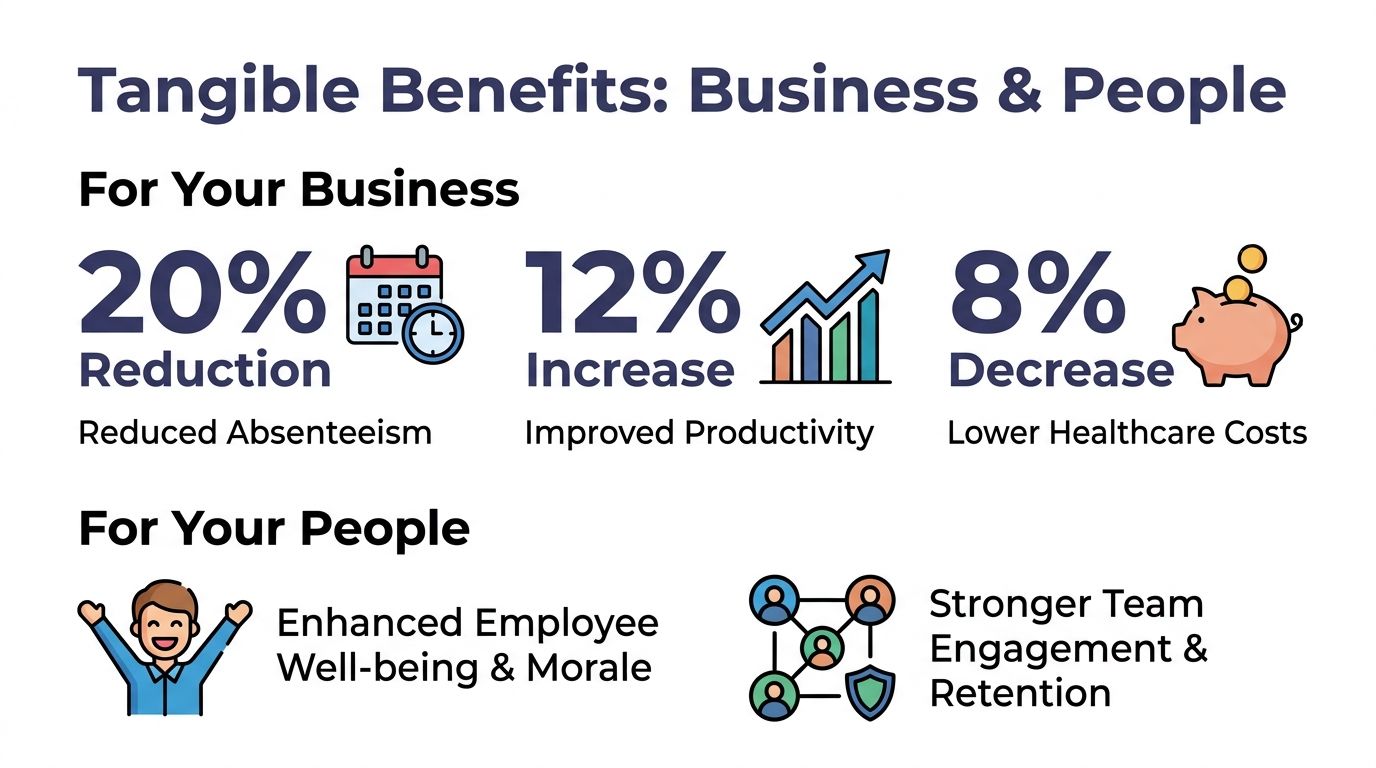
There is also a financial case when the programme is designed properly. UK workplace biometric screening programmes, when integrated with wellness initiatives, generated a median reduction of £176 per employee in annual healthcare expenditures and can yield a positive ROI of up to 3:1, according to the cited cardiovascular screening evidence.
Business gains when screening is paired with support
The phrase that matters there is integrated with wellness initiatives. Screening alone has limits. The value appears when abnormal findings lead to action, coaching, treatment, or behavioural support.
For employers, that can mean:
- Better planning: Leaders understand the health pressures affecting their workforce.
- Earlier intervention: Concerns can be addressed before they lead to prolonged absence.
- More credible wellbeing strategy: Staff can see a real pathway from data to support.
Employees benefit in more personal ways
Most employees don't wake up hoping for a medical test. What they often do want is clarity. They want to know whether their tiredness is just a busy month, whether their blood pressure is creeping up, whether their diet is affecting energy, or whether stress is now showing in physical ways.
Useful screening often leads to very practical advice:
- For cardiovascular health: Walk briskly, cycle, swim, or do similar moderate exercise until you consistently reach the weekly movement target.
- For nutrition: Build lunches around vegetables, lean protein, pulses, and whole grains rather than relying on convenience food between meetings.
- For stress and sleep: Keep a regular sleep window where possible, and use a short daily mindfulness or breathing routine to reduce mental overload.
A programme becomes worthwhile when an employee leaves with a plan they can follow on Monday morning.
A balanced view matters
There are potential downsides if screening is handled badly. Some staff may feel anxious. Others may worry about confidentiality, job security, or being judged for lifestyle choices. That doesn't mean the idea is flawed. It means the design has to be thoughtful.
In my view, the most effective employers explain three things clearly. What is being tested. Why it matters. Who will see the result. Once those questions are answered properly, participation and trust tend to improve.
Navigating UK Legal and Privacy Duties
Health screening sits at the intersection of medicine, employment law, and data protection. If that sounds heavy, the practical takeaway is straightforward. You need a programme that is clinically sensible, legally justified, and trusted by staff.
The legal side is often where good intentions drift off course. A company may want to support wellbeing but then collects too much information, communicates poorly, or blurs the line between voluntary support and managerial pressure.
Consent and purpose
Employees should understand what the screening involves, what information is being collected, and how the result will be used. That's especially important when screening is part of a broader wellbeing offer rather than a role-specific legal duty.
Clear language matters. People are more likely to take part when they know whether the employer receives full medical detail or a work-relevant outcome and recommendation. In most cases, the latter is the safer and more appropriate model.
Data privacy and trust
Health information is sensitive. Treating it casually is one of the fastest ways to damage confidence in a programme. In practical terms, that means using secure systems, limiting who can access data, and separating clinical information from routine line management wherever possible.
There's also an important equity issue. The available UK evidence highlights a trust barrier among some groups. A 2024 study by the Runnymede Foundation found that 34% of UK migrant workers in the logistics sector avoid mandatory health checks due to fears of their data being shared with immigration authorities. That matters because a programme can be technically compliant and still fail if employees don't trust it.
If staff fear misuse of their data, low participation is not a mystery. It's a predictable response.
Equality and reasonable adjustment
One-size-fits-all screening is rarely ideal. Some employees need communication support, quiet appointments, extra processing time, or alternative formats. That's not a special favour. It's part of making access fair.
This is particularly relevant for neurodivergent staff. A 2025 Shaw Trust report found that 47% of UK neurodivergent employees in professional services skip annual health screenings because standard clinic environments are physically distressing and inaccessible. Employers should take that seriously.
Practical adjustments can include:
- Quiet scheduling: Offer low-stimulation appointment times where possible.
- Clear structure: Explain each step in advance so the process feels predictable.
- Flexible format: Consider remote history-taking or staggered appointments when suitable.
Why specialist input helps
General practice and occupational health overlap, but they're not identical. Workplace screening should be linked to job risk, confidentiality, legal duties, and fitness-for-work questions. That's why many employers choose an independent occupational health or private clinical provider to run the process and report only what's necessary.
The safest principle is simple. Collect less, explain more, and tailor the process to the person and the role.
Your Implementation Checklist for Success
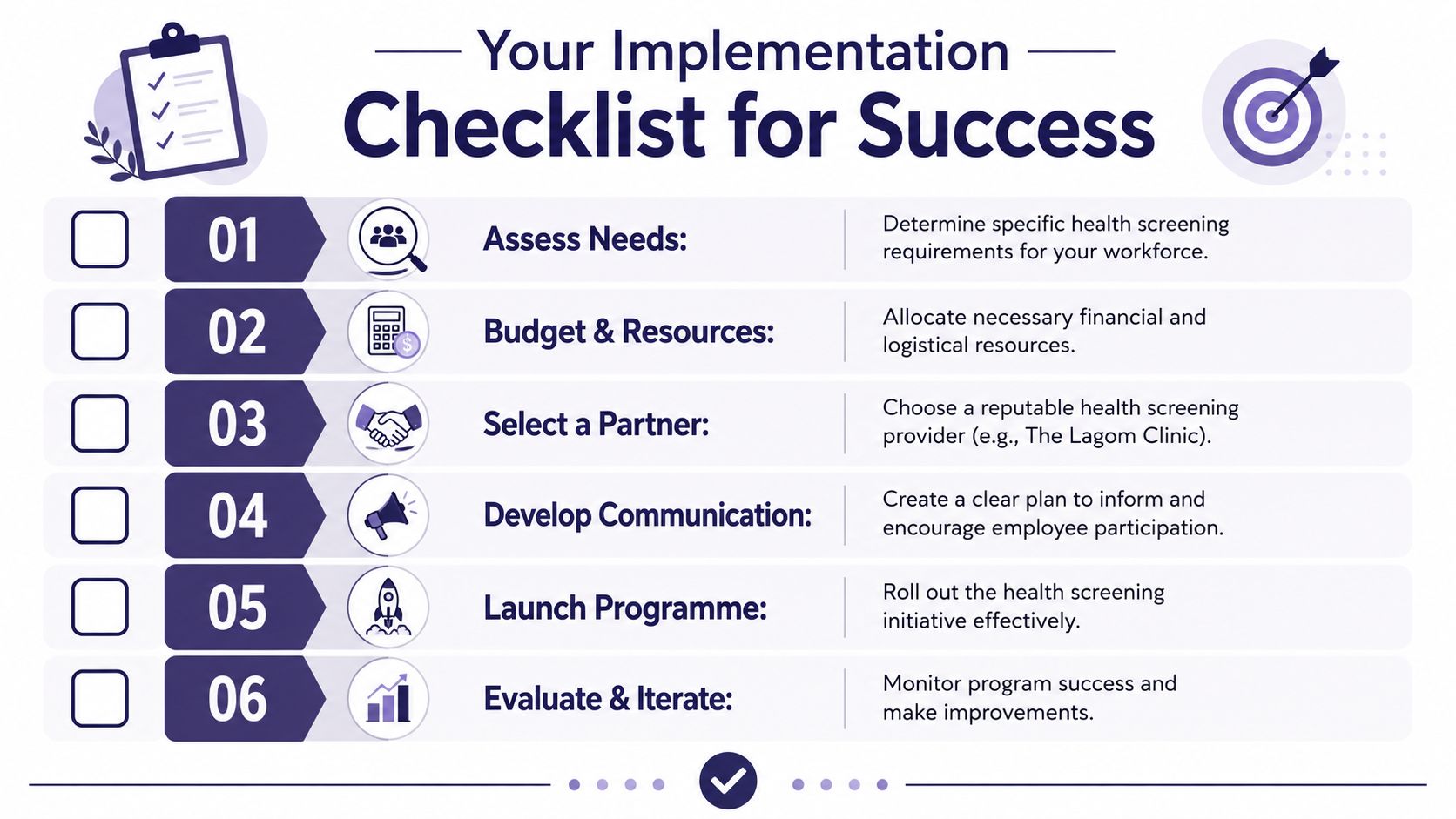
A good programme starts long before the first appointment. If you rush into testing without deciding what problem you're solving, you'll end up with data but no clear benefit.
The most effective health screening for employees follows a sequence. The sequence matters because each step protects the quality of the next one.
Start with purpose, not tests
Ask what you want the programme to achieve. Are you focusing on executive prevention, high-risk regulatory surveillance, general wellbeing, or sickness absence trends? Each aim points to a different design.
Then decide who needs what. A mixed workforce may need more than one pathway.
- Map risk groups: Separate desk-based staff, travelling executives, shift workers, and high-risk operational roles.
- Choose the right provider: Use a clinician or occupational health team that understands confidentiality, reporting boundaries, and follow-up.
- Set reporting rules early: Decide what goes to the employee, what goes to the employer, and in what format.
Use a recognised clinical framework
The screening content should be structured rather than improvised. The UK's National Institute for Health and Care Excellence guideline NG238 establishes that workplace health screening must include seven core indicators: blood pressure, fasting glucose, lipid profile, BMI, physical activity, diet quality, and tobacco use.
That framework is useful because it covers both measurements and behaviour. It recognises that a cholesterol result without discussion of diet, exercise, smoking, and weight-related risk is incomplete.
If you're reviewing options for broader UK employee well-being programs, make sure any provider can connect screening results to practical interventions rather than stopping at the assessment itself.
Build follow-up into the programme from day one
Many schemes fail when a person receives abnormal results, feels worried for a week, and then hears nothing useful. That's poor medicine and poor business.
A sensible pathway should include:
- Clinical follow-up: Repeat tests, GP referral, or specialist review where appropriate.
- Lifestyle support: Nutrition advice, smoking cessation help, exercise planning, and weight management.
- Mental wellbeing support: Guidance on stress, sleep, and coping strategies.
For lifestyle advice, keep it concrete. Encourage staff to schedule activity like a meeting. A brisk walk before work, a lunchtime gym session, or cycling part of the commute can all count towards the weekly exercise goal. For food, suggest simple upgrades such as adding vegetables to lunch, reducing heavily salted snacks, and planning healthier options on busy days.
Screening without follow-up is like spotting a warning light and never opening the bonnet.
Communicate in a way people can trust
Participation improves when staff know the process is respectful and useful. Explain the benefits in plain English. Avoid jargon. Be honest that screening can uncover issues people didn't expect, but make it equally clear that support will follow.
A practical communication plan should answer:
- What will happen: Appointment steps, expected duration, and any preparation.
- Why it matters: Early detection, prevention, and personalized health advice.
- How privacy works: Who sees what, and how confidential data is protected.
One provider that offers workplace screening, corporate blood testing, and occupational health assessments is The Lagom Clinic. In any local or national shortlist, the important question isn't branding. It's whether the provider can deliver clinical interpretation, reasonable adjustments, and proper post-screening support.
Review and refine
After the first cycle, look at participation patterns, common risk themes, and practical barriers. If uptake is low in one team, ask why. If staff say appointments felt rushed, change the format. If many results point to poor sleep or inactivity, build more targeted wellbeing support around those themes.
A screening programme should improve with use. The first year gives you information. The next phase should use that information wisely.
Bespoke Screening Programmes in Bristol
For Bristol employers, the challenge is rarely deciding whether prevention matters. It's turning a good idea into a programme that is clinically sound, practical for busy teams, and respectful of privacy.
That often means choosing a local clinical partner who can handle more than the test itself. Employees may need bloods, blood pressure checks, ECGs, lifestyle discussion, onward referral, or occupational documentation. Managers may need a clear, limited report that helps them act without seeing confidential medical detail.

A bespoke approach works best because no two organisations have the same workforce profile. A professional services firm may want preventative screening for executives and managers. A logistics or manufacturing business may need a blend of statutory surveillance and general health checks. A growing company may start with blood testing and lifestyle review, then add more structured follow-up later.
For employers considering blood-based occupational checks, this guide to an occupational health blood test is a useful next read because it explains how blood testing fits into workplace assessment more broadly.
In Bristol, private GP input can also help when employees need time, continuity, and personalized advice. That's often the difference between a result being filed away and a result leading to healthier food choices, more regular exercise, smoking reduction, better sleep, and timely medical review.
If you'd like a practical conversation about employee screening, follow-up care, or workplace health support, The Lagom Clinic can help you design a clear, sensible programme for your team.
Employee Health Screening in Bristol
The Lagom Clinic offers tailored health screening packages for teams and individuals, from £500. Each screen includes a comprehensive blood panel, full medical examination, and a one-on-one consultation with a doctor. Contact us to discuss a programme for your workplace.


 Members Consultation