


You’re probably already collecting health data, even if you don’t think of it that way. Your watch logs steps and sleep. Your phone reminds you to stand. You might check your blood pressure after a stressful week, or weigh yourself after a holiday. But many individuals still experience healthcare as occasional and reactive. Something feels off, so they book an appointment. Between those moments, the picture is incomplete.
That gap is where remote health monitoring becomes useful. Done well, it isn’t about turning life into a spreadsheet. It’s about noticing patterns early, connecting home measurements to clinical judgement, and making small, timely changes before a problem grows.
Your Health Partner Beyond the Clinic Walls
You wake after another broken night, glance at your watch, and see your resting heart rate has been creeping up for days. Your home blood pressure readings are a little higher than usual. You still feel well enough to work, train, and carry on, but you know something is drifting in the wrong direction.
That is often the point at which proactive care should begin, not the point at which symptoms become impossible to ignore.
Remote health monitoring gives your GP a better view of what is happening between appointments. For a patient with borderline blood pressure, inconsistent sleep, changing training load, or early metabolic risk, one clinic reading rarely tells the full story. A series of home measurements, taken under normal conditions, is usually more useful for deciding whether we are seeing a temporary fluctuation, a lifestyle pattern, or the early stages of a problem worth addressing.
Used properly, this goes well beyond basic health tracking. It helps turn consumer data into something clinically useful. A wearable may show poor recovery, a smart scale may show gradual weight gain, and a blood pressure monitor may show morning readings are consistently higher than evening ones. When those patterns are reviewed alongside your medical history, symptoms, medication, and goals, they can guide specific decisions about treatment, training, nutrition, alcohol intake, stress management, and follow-up.
For patients who want to stay well, this supports a more preventative style of care. The aim is not to collect data for its own sake. The aim is to answer practical questions early, often with enough time to make small changes that matter. That approach sits at the centre of preventive healthcare in general practice.
Remote monitoring works best when it answers a specific clinical question. Is your blood pressure genuinely controlled at home? Are you recovering well from training, or carrying more fatigue than you realise? Is a long-term condition stable, or changing slowly enough to be missed in routine appointments?
In day-to-day practice, that partnership can be very effective. Someone managing hypertension may avoid overtreatment caused by isolated high clinic readings. An athlete may spot the effect of poor sleep, under-fuelling, or excessive training before performance drops. A patient focused on prevention may identify rising cardiovascular risk early enough to correct course with targeted lifestyle changes rather than waiting for abnormal blood tests or persistent symptoms.
The clinic is still important. It is no longer the only place where good medicine happens.
Understanding Remote Health Monitoring
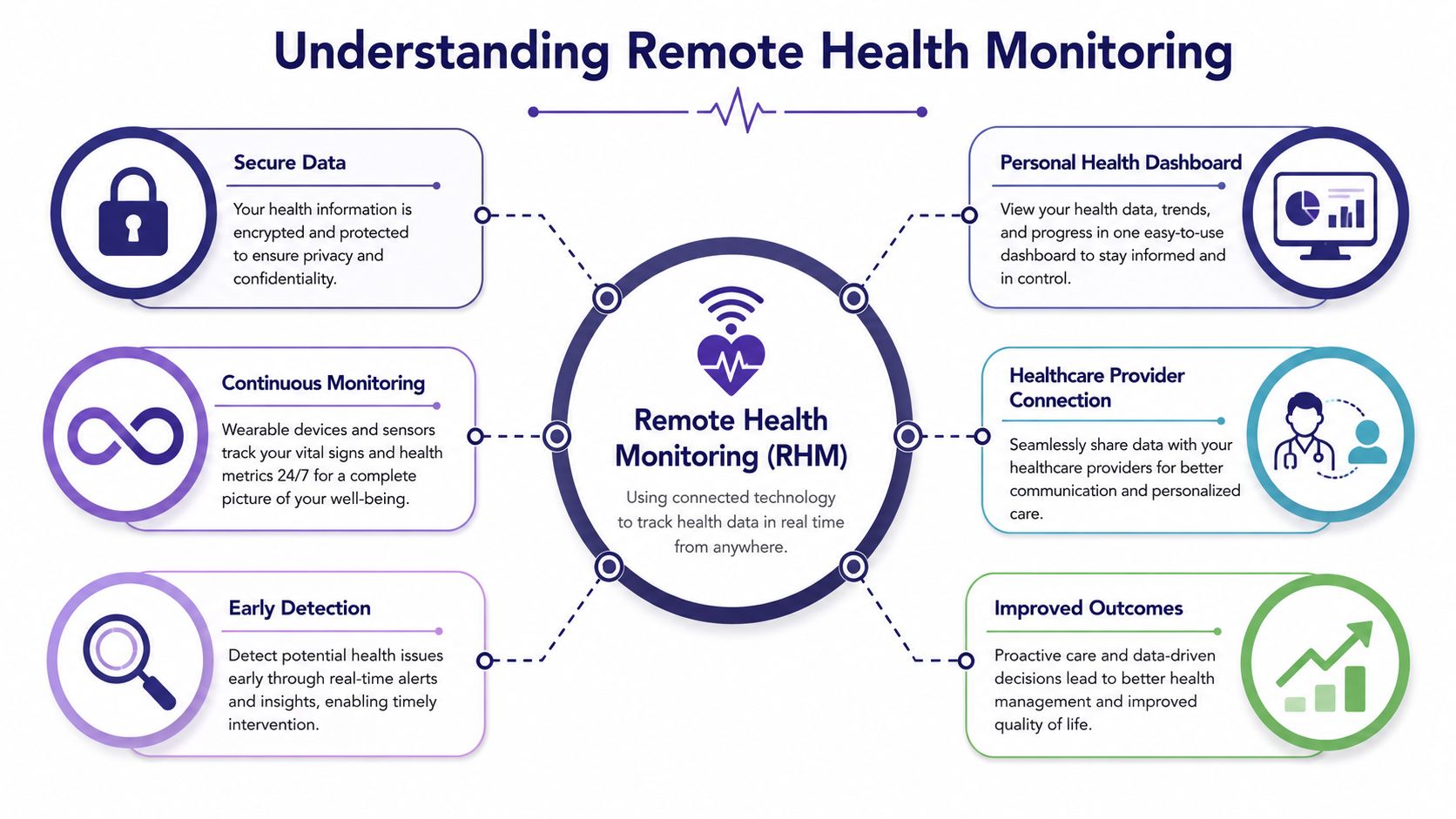
Think of remote health monitoring as a secure, private line from your body to your GP. It collects health data at home, sends it through a clinical platform, and lets a healthcare professional review trends, not just one-off readings.
That’s very different from using a wearable for curiosity alone. Consumer devices can be helpful, but clinical remote monitoring has a clearer purpose. It’s set up around a health goal, a condition, or a risk. The measurements are chosen deliberately, the thresholds are defined in advance, and the results are interpreted in context.
What it actually includes
At its simplest, remote monitoring has four parts:
- A validated device: such as a blood pressure monitor, pulse oximeter, glucose sensor, smart scale, or ECG-enabled wearable.
- A way to transmit data: often Bluetooth from the device to an app or tablet, then securely to a clinical dashboard.
- Clinical rules: agreed parameters for what’s normal, what needs review, and what requires urgent action.
- Human interpretation: a clinician who understands your history, medication, symptoms, and goals.
Without that final step, data can create noise instead of clarity.
Why it’s medically useful
Home data often reveals what clinic data misses. Blood pressure may be high in a surgery but normal at home. Sleep disruption may explain stubborn fatigue. Daily oxygen saturation and symptoms can show early deterioration after a respiratory infection. Weight and activity trends can reveal whether a health plan is realistic or not.
Clinical monitoring is also about timing. If a reading drifts steadily in the wrong direction, intervention can happen earlier. That might mean adjusting a training block, tightening salt intake, reviewing inhaler technique, improving sleep routines, or changing medication before symptoms become severe.
Practical rule: Good monitoring reduces uncertainty. If it doesn’t change advice, behaviour, or treatment, it probably isn’t worth doing.
What it is not
It isn’t passive surveillance. It isn’t an instruction to obsess over every number. And it isn’t a substitute for proper medical assessment when symptoms are concerning.
Used badly, monitoring can increase anxiety. Patients sometimes over-check, misread normal variation, or buy devices that produce poor-quality data. Used well, it creates a more objective conversation. Instead of “I think I’m getting worse”, you can say “my morning readings, sleep, and symptoms have all changed over the last week”.
That makes decisions more precise. It also makes lifestyle advice far easier to personalise.
The Technology Powering Your Proactive Health
A patient may feel well on a Tuesday, train as usual on Wednesday, and only realise on Friday that sleep, recovery, blood pressure, or oxygen levels have been drifting in the wrong direction all week. Good remote monitoring closes that gap. It gives your private GP useful information between appointments, so decisions are based on patterns rather than guesswork.
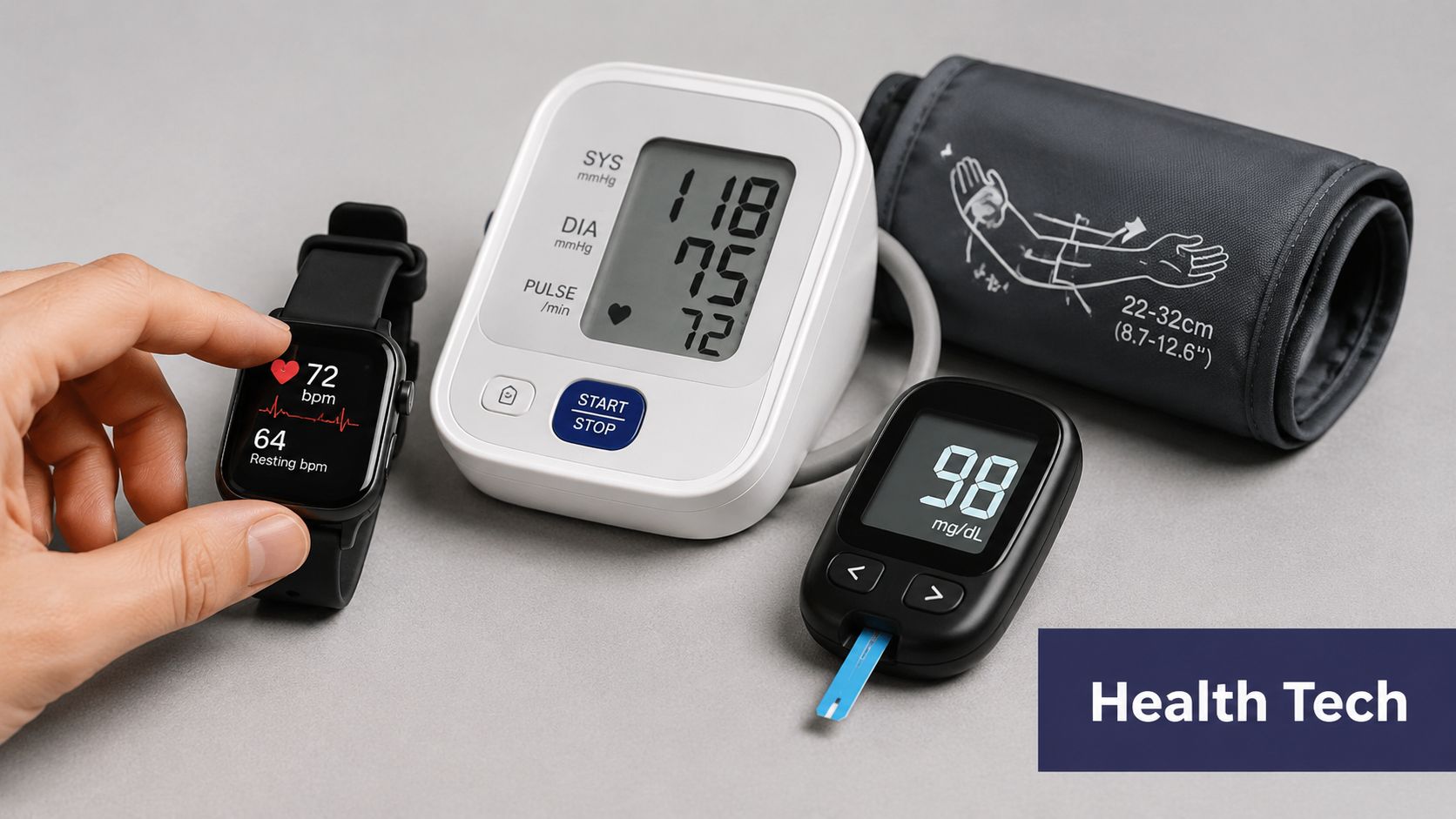
The devices that help most are usually the ones that do one job well. Accuracy matters. Repeatability matters. So does choosing a metric that answers a real clinical question, whether that is blood pressure control, glucose response to training, recovery after illness, or symptom change in a chronic condition.
Cardiovascular monitoring
Home blood pressure monitors remain one of the most useful tools in preventive medicine. For hypertension, cardiovascular risk review, and medication checks, a validated home cuff often gives a clearer picture than occasional readings taken in clinic. Technique still matters. Sit, keep both feet on the floor, support your back, rest the arm at heart level, and avoid checking straight after caffeine, exercise, or stress.
Some patients also use ECG-capable wearables. These can help correlate palpitations, dizziness, or irregular pulse symptoms with a rhythm strip recorded at the time. They are helpful for triage and follow-up, but they do not replace a formal ECG, ambulatory monitor, or specialist cardiac assessment when symptoms or risk factors justify it.
Metabolic and recovery data
Continuous glucose monitors have changed how many people understand their metabolism. In diabetes care, they can improve day-to-day management. In selected non-diabetic patients, they can also show how meal timing, training load, poor sleep, alcohol, and stress affect glucose variability. The value is not in chasing perfect numbers. It is in spotting habits that repeatedly push glucose in the wrong direction.
Smart scales can add context too, especially where body composition, weight trends, or fluid shifts matter. For some patients, that supports structured weight loss. For others, it helps monitor recovery, medication effects, or changes in hydration.
Sleep and activity trackers sit in a middle ground between wellness tech and medical support. Used sensibly, they help answer practical questions. Are you recovering enough to tolerate your current training block? Has step count fallen during a pain flare or after a viral illness? Is poor sleep likely to be contributing to appetite, concentration problems, or blood pressure variability? Those are useful discussions in clinic because they connect daily habits to measurable outcomes.
Respiratory and symptom tracking
Pulse oximeters and structured symptom logs are often helpful in respiratory care, especially during recovery from infection or in long-term conditions such as asthma and COPD. In the NHS COPD telemonitoring example described in the Prevounce guide to remote patient monitoring, clinicians used home oxygen readings, symptom thresholds, and regular review to identify deterioration early and manage many alerts without hospital admission.
That reflects what I see in practice. The benefit is rarely the device alone. The benefit comes from having clear thresholds, a plan for what happens when readings change, and a GP who can judge whether the pattern suggests reassurance, treatment adjustment, or urgent assessment.
Common remote monitoring devices and their purpose
| Device Type | What It Measures | Primarily Used For |
|---|---|---|
| Home blood pressure monitor | Blood pressure and pulse | Hypertension management, cardiovascular risk review |
| Pulse oximeter | Oxygen saturation and heart rate | Respiratory illness, COPD monitoring, post-illness recovery |
| Continuous glucose monitor | Interstitial glucose trends | Diabetes care, glucose pattern review |
| Smart scale | Weight trends | Weight management, fluid balance, lifestyle change tracking |
| Activity tracker or smartwatch | Steps, heart rate, sleep, activity load | Recovery, training balance, general wellness |
| ECG-enabled wearable | Single-lead rhythm recording | Palpitations review, symptom correlation |
| Symptom diary app | Symptoms, triggers, medication use | Asthma, migraines, pain, recovery monitoring |
For patients who are curious about how readings move from a device into a clinical platform, this practical guide to device APIs explains the technical side clearly.
Real-World Applications for Your Health Goals
A patient trains three times a week, eats well, and still feels flat by Thursday. Another has blood pressure that looks acceptable in clinic but creeps up at home after poor sleep, extra alcohol, and too many salty convenience meals. Remote monitoring helps both of them, but only if we are clear about the goal.
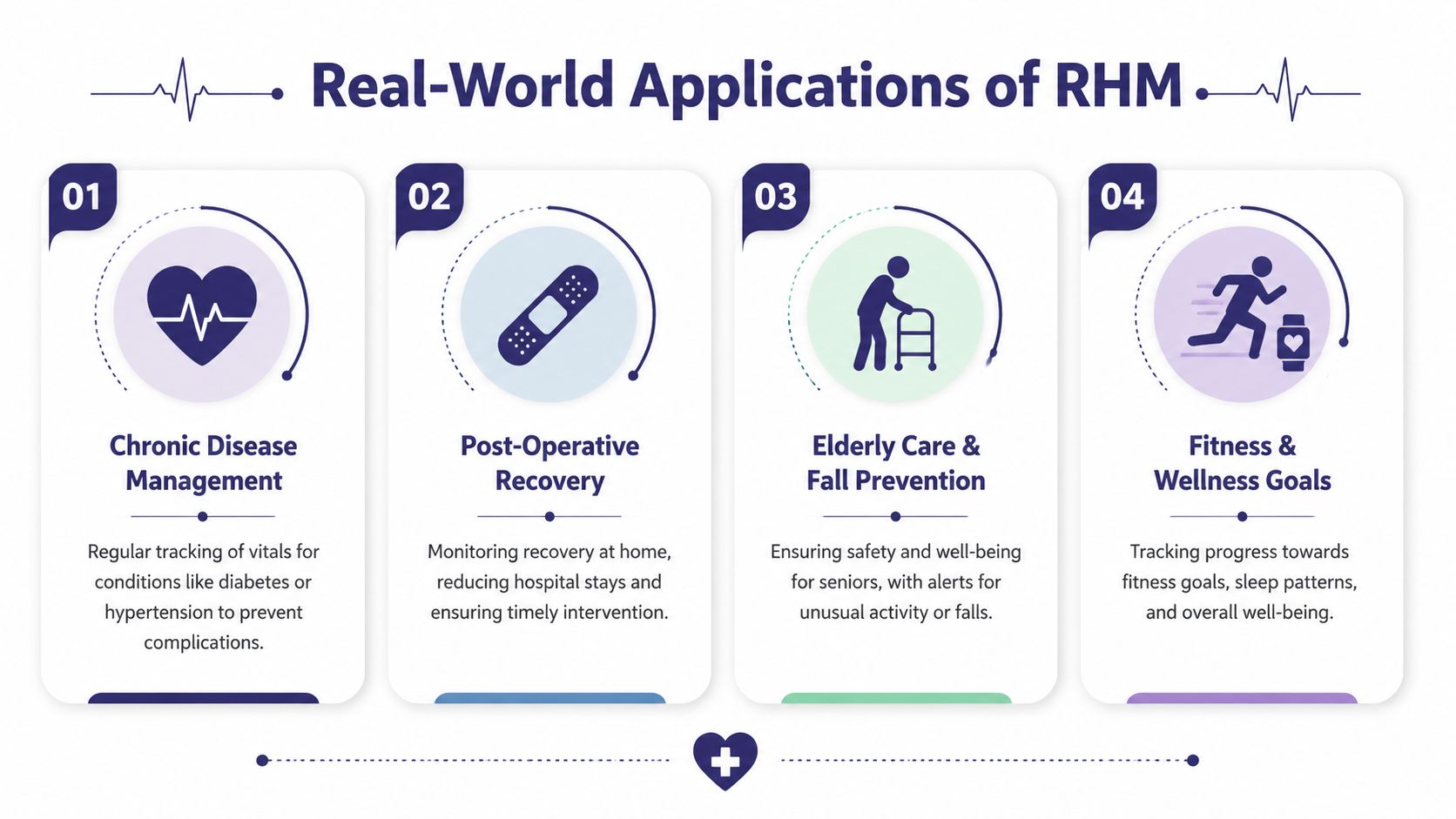
Used properly, remote monitoring turns scattered readings into something clinically useful. It gives proactive patients and their private GP a shared view of what is happening between appointments, whether the aim is tighter blood pressure control, steadier glucose, better recovery from training, or earlier action on preventable risk.
Hypertension and cardiovascular prevention
Blood pressure is one of the best examples of home monitoring improving treatment. In the TASMINH4 trial published in The Lancet31990-3/fulltext), patients using self-monitoring with telemonitoring achieved around 4 to 5 mmHg greater reduction in systolic blood pressure over 12 months than those receiving usual care.
In practice, that matters because clinic readings can miss the pattern. Some people run high at home and normal in surgery. Others do the opposite. A week of structured readings usually gives a better basis for decisions than one isolated number.
The practical gains often come from simple adjustments:
- Consistent timing: morning and evening readings over several days are more useful than occasional checks.
- Lifestyle feedback: salt intake, alcohol, weight gain, poor sleep, and stress often show up in the numbers within days.
- More precise reviews: medication changes are easier to judge when there is a home trend rather than guesswork.
Proactive care becomes more useful than generic tracking. Instead of collecting numbers for their own sake, patients can test a specific change and review the result with their GP. If blood pressure improves after better sleep, more walking, and fewer restaurant meals, that is useful. If it stays high despite good habits, treatment can be stepped up earlier.
Cardiovascular prevention also overlaps with metabolic health. If you are reviewing weight, alcohol intake, or fatty liver risk alongside blood pressure, this guide on how to check liver function at home gives a sensible wider view of preventative monitoring.
Chronic disease management at home
Remote monitoring is often most valuable for people who need regular follow-up without frequent trips into clinic. That includes patients recovering after illness, people with COPD or heart failure, and anyone whose condition can worsen gradually before symptoms become obvious.
The NHS England virtual wards programme reported that over 100,000 patients across England were monitored at home in 2022. A separate National Institute for Health and Care Research review of virtual wards describes reductions in bed use and shorter hospital stays in selected services using remote monitoring.
Those results should be interpreted carefully. Remote monitoring is not a substitute for examination, imaging, or urgent assessment when red flags appear. It works best in the middle ground, where regular measurements help us spot deterioration before it becomes a crisis.
That is the clinical advantage. A rising resting pulse, falling oxygen saturation, sudden weight gain in heart failure, or a run of very high home blood pressure readings can trigger treatment changes sooner. For many patients, that means fewer disruptions to work, training, travel, and family life.
Athletic performance and recovery
Health-conscious patients often sit between consumer wellness and medical care. They are not trying to diagnose disease every week. They want clearer answers about fatigue, recovery, training load, sleep, or why performance has plateaued.
Remote monitoring can help, provided the data is interpreted in context. Resting heart rate, sleep duration, menstrual cycle patterns where relevant, body weight, heart rhythm recordings during symptoms, and simple wellbeing scores can all be useful. On their own, they are noisy. Reviewed together over time, they can show whether the body is adapting well or accumulating strain.
I often advise patients to watch for trends rather than chase perfect daily scores. A short-lived bad night of sleep is rarely important. A pattern of poor sleep, rising resting heart rate, falling motivation, and persistent soreness is more meaningful. In that situation, the answer is often better recovery, more food, or a temporary reduction in training intensity, not another hard session.
This is one of the clearest ways a private GP can add value. Consumer wearables generate plenty of numbers. Clinical interpretation helps separate normal fluctuation from under-fuelling, illness, iron deficiency, overtraining, arrhythmia, or medication effects.
Weight, prediabetes, and behaviour change
Prevention works better when progress is visible. Weight trends, step counts, glucose patterns, meal timing, and waist measurements can all help patients see whether a plan is working before annual blood tests come around again.
Digital support can improve results. In a systematic review in Obesity Reviews, digital interventions for weight management were associated with a greater likelihood of achieving clinically meaningful weight loss, including at least 5% body weight in some programmes.
The trade-off is that more data does not automatically mean better habits. Some patients become more consistent because daily feedback keeps them engaged. Others become preoccupied by every fluctuation on the scale. The answer is usually a narrower plan. Track the few measures that change decisions, then review them at sensible intervals.
For prediabetes and early metabolic risk, that usually means steady routines rather than aggressive resets. Regular walking after meals, enough protein and fibre, fewer ultra-processed snacks, alcohol in check, and realistic calorie control tend to outperform short bursts of strict dieting. Remote monitoring helps by showing whether those boring but effective habits are shifting the trend.
Your Journey with Remote Monitoring at The Lagom Clinic
You check your blood pressure at home for a week. Some readings are reassuring. Others are higher than expected. The useful question is not whether the device can collect more numbers. It is what those numbers mean for your treatment, your training, or your long-term risk.
Starting with the clinical question
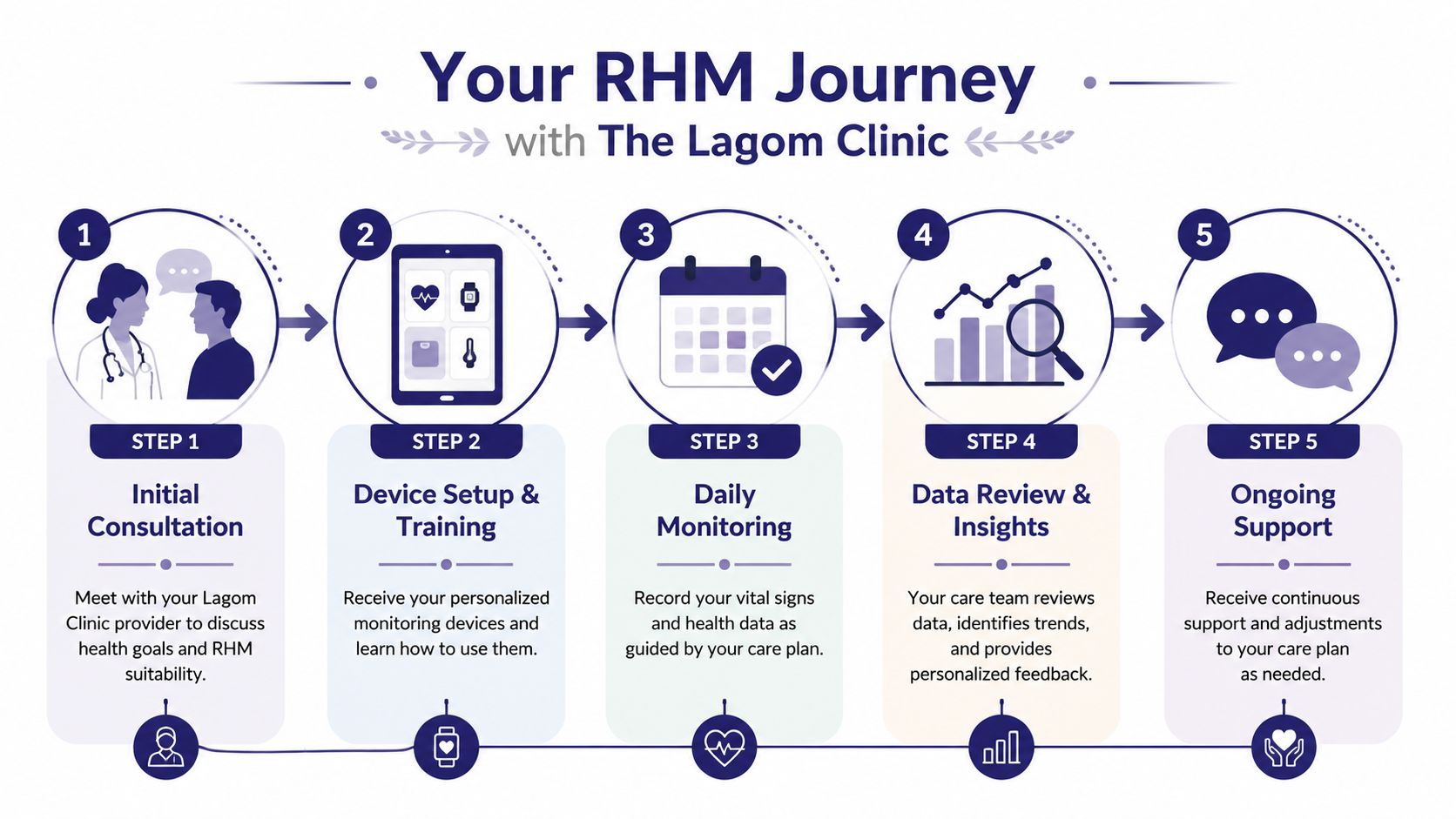
Remote monitoring works best when it starts with a clear goal. For one patient, that may be confirming whether clinic blood pressure readings reflect life at home. For another, it may be spotting patterns during menopause, adjusting asthma treatment, managing recovery after illness, or checking whether marathon training is improving fitness or increasing strain.
The first appointment is usually about defining the question properly. We decide what to measure, how often to measure it, how long the monitoring period needs to be, and what would count as a meaningful change. That keeps the process focused and stops health tracking turning into background noise.
A good plan is specific:
- What are we measuring?
- When and how often will you check it?
- What decision will those results help us make?
That last point matters most. If a metric will not change advice, treatment, or further testing, it often does not need to be tracked.
Choosing devices that fit real life
The right setup depends on the problem in front of us. Some patients already own a validated home blood pressure monitor or a wearable that gives useful trend data. Others need a medical-grade device because precision matters more than convenience. That is often the case for blood pressure, oxygen saturation, rhythm assessment, or glucose monitoring.
Ease of use matters as much as technical capability. A monitoring plan that fits around commuting, family life, travel, and training is far more likely to work than one that asks for perfect adherence at awkward times of day.
In practice, the strongest plans are usually simple. A short morning routine, symptom notes beside the readings, and a review schedule that suits the patient tend to produce better data than an ambitious protocol that lasts six days.
Turning readings into decisions
Raw data rarely answers the clinical question on its own. Trends need interpretation in context. A rising resting heart rate might reflect poor sleep, alcohol, infection, under-recovery from training, anxiety, or a medication effect. The value of working with your GP is that the response can be proportionate.
Sometimes the next step is treatment. Sometimes it is restraint.
For example, repeated home blood pressure readings may show that a patient needs medication adjusted sooner rather than waiting for the next in-person review. In another case, symptom tracking may show that headaches blamed on blood pressure are found to cluster around dehydration, missed meals, and late nights. For health-conscious patients, remote monitoring thus offers more than passive tracking. It serves as a method for testing a plan’s efficacy.
That applies across very different goals. In chronic disease management, it can support safer titration and earlier correction when control drifts. In athletic performance, it can help separate productive training load from accumulating fatigue. In preventative health, it can show whether sleep, alcohol reduction, exercise consistency, and nutrition changes are shifting the markers that matter.
For readers interested in the technical side of how connected devices should be built and handled safely in healthcare, this overview of secure IoT medical device development is a useful reference.
Making the process accessible
Remote monitoring has to be usable, not just available. Smartphone ownership is common, but confidence with apps and connected devices varies widely, especially among older adults, people with limited digital experience, and patients who are already managing several health issues at once.
That is why setup support matters. Clear instructions, a sensible monitoring schedule, and plain-language explanations of what counts as urgent, routine, or irrelevant all make a difference. If someone feels unsure every time the app opens, they are much less likely to keep using it.
A good service also leaves room for low-tech alternatives. Some patients do well with automatic uploads. Others do better with a written log, a simple message check-in, or a shorter monitoring window with a clear end point.
What patients can expect from the process
At The Lagom Clinic, remote monitoring is usually a defined clinical partnership rather than open-ended self-tracking. We agree the aim, choose the minimum useful data, review it at planned intervals, and adjust the plan if the information starts to add little value.
That approach keeps monitoring practical. It also protects patients from a common problem with wearables and health apps. More information can create more uncertainty if nobody is interpreting it properly.
Used well, remote monitoring gives patients and their private GP a clearer shared picture between appointments. That often leads to earlier action, fewer assumptions, and advice that fits day-to-day life rather than a single snapshot taken in clinic.
Navigating Data Security and Access
A common scenario in private practice is a patient arriving with months of wearable data on their phone, but no clear answer to three basic questions. Who else can see it? Where is it stored? What happens if a reading looks worrying on a Sunday evening?
Those details matter as much as the readings themselves.
Health data should be treated with the same care as any other part of your medical record. If a device is recording blood pressure, glucose trends, oxygen saturation, heart rhythm, sleep, or symptoms, the system around that device needs to be clinically organised rather than left to app settings and generic terms of service.
The UK Information Commissioner’s Office has set out clear expectations for how health information should be handled, and a 2024 King’s Fund briefing also highlighted a persistent problem in employer-provided health technology. In many cases, data-sharing arrangements with GPs were poorly defined. In practice, that can leave patients caught between a consumer platform, an employer benefit, and a clinician who cannot easily verify the data source, the monitoring standard, or the threshold for action.
Why the clinical setting matters
In a proper monitoring arrangement, consent is specific, access is limited, and each metric has a clinical purpose. That sounds basic, but it is the difference between useful monitoring and background noise.
A private GP should be able to explain why a measurement is being tracked, how often it will be reviewed, who reviews it, and what would trigger a call, a medication change, or a face-to-face appointment. That is particularly important for proactive patients using remote monitoring for more than general wellness. Someone managing hypertension, fine-tuning marathon recovery, or trying to spot early metabolic changes needs interpretation that fits the goal, not a stream of isolated numbers.
The technical standard matters too. Data should be encrypted, stored through GDPR-compliant systems, and handled in a way that keeps an auditable clinical record. Consumer wearables can still play a useful part here, but they are most valuable when their data is reviewed alongside symptoms, examination findings, blood results, and the patient’s wider history.
For readers who want a technical sense of the engineering principles behind safer connected devices, this overview of secure IoT medical device development is a useful companion read.
More data does not produce better care on its own. Better care comes from relevant data, reliable handling, and a clinician who knows what to ignore as well as what to act on.
Staying in control of your information
Patients should be told, in plain language, what is being collected, who can access it, and what the response plan is if results fall outside the agreed range. That level of clarity helps people use remote monitoring with confidence rather than second-guessing every alert.
It also protects against a problem I see often. Self-tracking without clinical guardrails can lead to repeated checking, false alarms, and avoidable anxiety, especially in people who are already trying hard to stay on top of their health. A well-run system gives patients access to their own information while keeping interpretation and escalation grounded in clinical judgment.
Embracing a Healthier Future Together
You wake up, train before work, and notice your recovery has been slipping for two weeks. Or your home blood pressure readings are drifting up even though you feel well. Those are the moments remote monitoring becomes useful. It gives you and your private GP a clearer view of what is changing between appointments, while there is still time to adjust the plan.
Used well, it turns health goals into decisions. A patient managing hypertension may need a medication review based on a pattern of home readings rather than a single clinic result. Someone focused on performance may benefit more from trends in sleep, recovery, and resting heart rate than from chasing daily fluctuations. A person interested in prevention may use regular monitoring to spot early changes, tighten routines, and stay well for longer.
Good monitoring is selective. It focuses on a few measures that matter, links them to symptoms and lifestyle, and reviews them in clinical context. That is how consumer wearables become more useful, because their data can support a proper medical conversation instead of sitting in an app with no clear next step.
The aim is practical. Fewer guesswork appointments, earlier course correction, and better day-to-day habits that fit real life.
If you want a more informed, proactive way to manage blood pressure, chronic disease, recovery, or preventative health, book a consultation with The Lagom Clinic.

 Members Consultation