


You may have been told to book a glucose tolerance test after a routine blood result, because diabetes runs in your family, or during pregnancy when a midwife wants a clearer picture of how your body is handling sugar. That can feel inconvenient and a little worrying, especially if you're not quite sure what the test is looking for.
The good news is that the test is straightforward. It gives a more dynamic view of blood sugar control than a single fasting sample because it shows what happens after your body is challenged with a measured glucose drink. For some people, that helps uncover a problem that isn't obvious on a standard blood test.
A glucose tolerance test is most often used in pregnancy, where it remains the main test for diagnosing gestational diabetes in the UK. It can also be used more selectively outside pregnancy when a clinician wants more detail about possible prediabetes or type 2 diabetes. Beyond diagnosis, the result is useful because it can point you towards practical changes in food, movement, sleep, and daily routine that protect your long-term health.
Understanding Your Blood Sugar Health
You may arrive for this test because you have been feeling unusually thirsty, tired, or foggy, or you may feel perfectly well and still have been asked to come in. Both are common. Blood sugar problems do not always cause obvious symptoms, which is one reason this test can be so helpful.
Your body is constantly trying to keep glucose in a safe range. After you eat, carbohydrate is broken down into glucose, which enters the bloodstream. Insulin then acts like a key, helping that glucose move from the blood into your cells to be used as fuel. A glucose tolerance test checks how smoothly that process happens after a set glucose drink, so it gives a clearer picture of how your body responds under pressure rather than at rest.

Why this test can be useful
A single fasting blood test is a bit like checking traffic on a road at dawn. Everything may look calm then, but the full strain appears later when the road is busy. In the same way, some people have blood sugar levels that look acceptable when fasting, but rise higher than they should after glucose enters the system. The glucose tolerance test is designed to spot that pattern.
That matters most in pregnancy. During pregnancy, hormonal changes can make it harder for insulin to work properly, even in people with no previous history of diabetes. The oral glucose tolerance test is therefore the main test used in the UK to diagnose gestational diabetes, usually in the second half of pregnancy. It is chosen because it answers a very specific question. Is your body coping with the extra metabolic demands of pregnancy well enough, or does it need support?
This is also why the test is about more than diagnosis. It helps your clinician decide whether simple changes to meals, activity, and routine are likely to be enough, or whether closer monitoring is needed to protect both your current and longer-term health.
A result is not a judgment. It is a guide to what your body needs now.
What people often misunderstand
Patients often assume the test is only looking for diabetes. In reality, it can also identify a stage where blood sugar handling is starting to become less efficient, which gives you a chance to act early.
The result can be useful in several ways:
- It shows how your body responds after glucose, not only before food.
- It can pick up problems that a fasting test may miss.
- It is especially helpful in pregnancy, where even mild glucose rises can affect care.
- It gives you a practical starting point for change, including food choices, physical activity, sleep, and weight management if needed.
Whatever your result shows, the same basics usually matter. Eating regular, balanced meals helps avoid large glucose swings. Walking after meals can improve how your body uses glucose. Good sleep and stress management also play a part, because both affect hormones involved in blood sugar control.
If you feel anxious about the appointment, keep the purpose simple. The test is there to explain how your body is handling sugar right now, and that information can help you make sensible decisions early, especially during pregnancy when timing matters most.
When Is This Test Recommended?
You might be told your HbA1c is borderline, yet you still feel thirsty, tired, or washed out after meals. Or you may be pregnant and surprised that your midwife has booked a longer test instead of a single blood sample. Those are the situations where a glucose tolerance test can answer a more specific question: how well your body handles a measured sugar load over time.
Outside pregnancy, clinicians use this test more selectively than they once did. It used to be common in diagnosing diabetes, but UK practice changed because the test takes longer, costs more, and can vary if repeated. Patient's professional reference on glucose tolerance tests explains why HbA1c and fasting glucose are now often used first. That helps explain why one person is diagnosed with a simple blood test, while another is asked to come in for a glucose drink and serial blood samples.
Pregnancy is the clearest reason to use it.
During pregnancy, the body becomes more resistant to insulin as hormones from the placenta rise. That is normal to a degree, but in some women the pancreas cannot keep up. A glucose tolerance test checks for that strain in a way that fasting tests alone may miss. If your maternity team offers it, they are usually trying to answer a practical care question early enough to protect both you and your baby.
You are more likely to be offered the test in pregnancy if you have risk factors such as a previous history of gestational diabetes, a close family history of diabetes, a higher body weight, or certain findings in the current pregnancy, such as a larger-than-expected baby on scan. As noted earlier, gaps in attendance and follow-up can mean some cases are picked up later than they should be. So if you are invited, it is sensible to go.
For adults who are not pregnant, the test is usually chosen when simpler tests do not quite match the story. Blood sugar behaves a bit like a car that idles normally but struggles on a hill. A fasting test checks the idle. A glucose tolerance test checks the hill climb. If symptoms appear after eating, or if fasting glucose and HbA1c sit near the borderline without giving a clear answer, this test can be useful.
Your GP may recommend it in situations such as:
- Borderline or conflicting results. Your fasting glucose or HbA1c does not fully explain your symptoms.
- Possible impaired glucose tolerance. Your body may cope reasonably well when fasting but struggle after a glucose challenge.
- Assessment during pregnancy. Gestational diabetes needs a test suited to the changes of pregnancy.
- Ongoing clinical suspicion. You have symptoms or risk factors that make your doctor want a clearer picture.
There is also a timing question. The right test depends on what your clinician is trying to rule in or rule out. If the concern is long-term average blood sugar, HbA1c may be enough. If the concern is how your body responds in the two hours after glucose, an oral glucose tolerance test gives more direct information.
A practical point matters here too. Because the result depends on how your body responds under controlled conditions, the instructions before the appointment are not just admin. They affect the accuracy of the answer. If you are unsure about fasting rules, this guide on how long to fast before a blood test can help you avoid common mistakes. Drinks can confuse people in particular, and if you have been wondering what counts as breaking a fast, a coconut water fasting guide shows why even drinks that seem harmless may interfere.
Whatever prompts the test, the bigger picture stays the same. If your result is normal, habits still matter. If it shows impaired glucose tolerance or gestational diabetes, those same habits matter even more. Regular meals, fewer sugary drinks, walking after food, better sleep, and steady weight management if needed can all improve how your body handles glucose. The test helps choose the right level of support. It does not define your future.
Preparing for an Accurate Glucose Test Result
You can do everything right on the test day and still get a less reliable result if the days beforehand are unusual. The oral glucose tolerance test is trying to answer a simple question: how does your body handle a glucose load under normal conditions? If you have been eating far less than usual, exercising much harder than usual, or fasting in the wrong way, the test may measure that disruption rather than your everyday glucose control.
A helpful way to view preparation is this. Your body needs to arrive at the test in its usual gear, not in “diet mode,” “training mode,” or “I skipped breakfast and rushed here” mode. That matters even more in pregnancy, where the aim is to spot gestational diabetes at the right time and make decisions that protect both you and the baby.
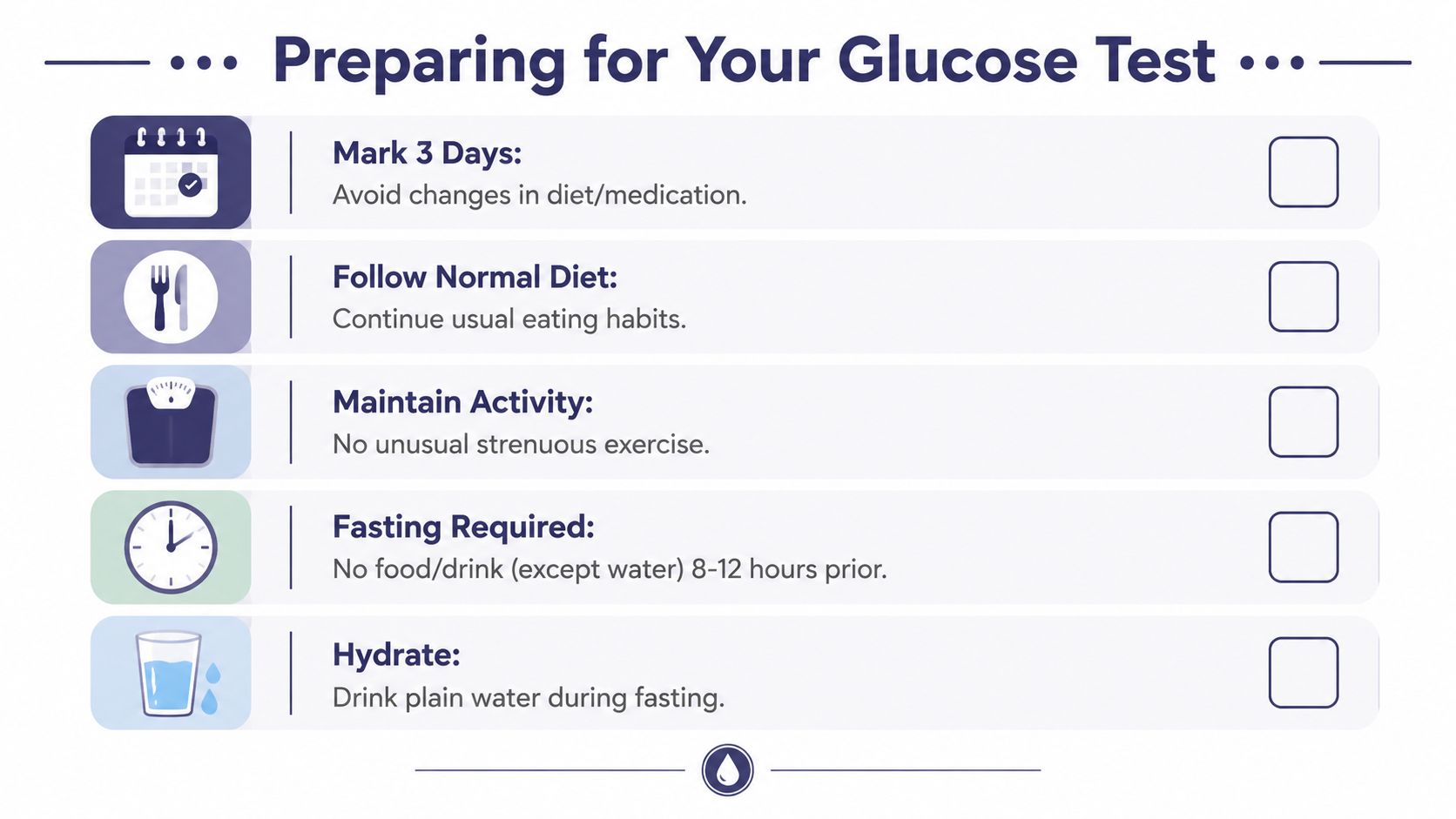
The point that often catches people out is carbohydrate intake. Cleveland Clinic guidance on the glucose tolerance test advises eating at least 150 grams of carbohydrate a day for the three days before the test, along with following the rest of the preparation instructions given by your clinician. In plain terms, this means eating normally enough for the test to reflect real life.
The three days before
Keep your routine steady. This is not the week to try low carb, skip meals, start a cleanse, or push through a hard training block.
A simple checklist helps:
- Eat regular meals with enough carbohydrate. Bread, oats, rice, potatoes, pasta, fruit, beans, and similar everyday foods all count.
- Avoid sudden diet changes. If you usually eat breakfast, eat breakfast. If you usually include carbs with meals, keep doing that.
- Keep exercise moderate and familiar. Normal walking and day-to-day activity are fine. Unusually intense exercise can change glucose handling.
- Ask about medicines early. Some medications can affect blood sugar or the test process, so check with the clinician who arranged the test rather than guessing.
That last point is important for pregnant women as well. If your test is being done to check for gestational diabetes, the goal is not to “pass.” The goal is to get a clear answer so the right support can start early if needed.
The night before and the morning of the test
Most adult protocols ask for an overnight fast. Follow the instructions from your clinic exactly, because local protocols can differ.
For many people, the easiest approach is practical rather than technical:
- Have your evening meal in good time.
- Start fasting when instructed.
- Drink plain water only unless your clinic says otherwise.
- Avoid coffee, tea, juice, chewing gum, and snacks.
- Plan a calm journey so you are not arriving stressed, overheated, or dehydrated.
If you want a clearer explanation of the usual rules, this guide on fasting before a blood test can help. People often ask about drinks that seem harmless, especially if they are marketed as natural or hydrating. Plain water is still the safest choice, and this coconut water fasting guide explains why calorie-containing drinks can interfere with fasting.
Practical rule: If you are unsure whether something is allowed, ask the clinic before the appointment.
Food choices that make preparation easier
You do not need to force down sugary foods to prepare properly. Ordinary balanced meals are usually the easiest way to get enough carbohydrate without overthinking it.
Examples include:
- Breakfast: porridge, wholegrain toast, fruit, cereal
- Lunch: rice, wraps, potatoes, lentil soup, sandwiches
- Evening meal: pasta, beans, grains, root vegetables
- Snacks if needed: yoghurt with oats, crackers, fruit
The aim is consistency. A normal pattern of eating gives the test the best chance of answering the question: whether your body is handling glucose as it should, and whether any change in diet, activity, or follow-up care would help your long-term health.
A Step-by-Step Guide to the Test Procedure
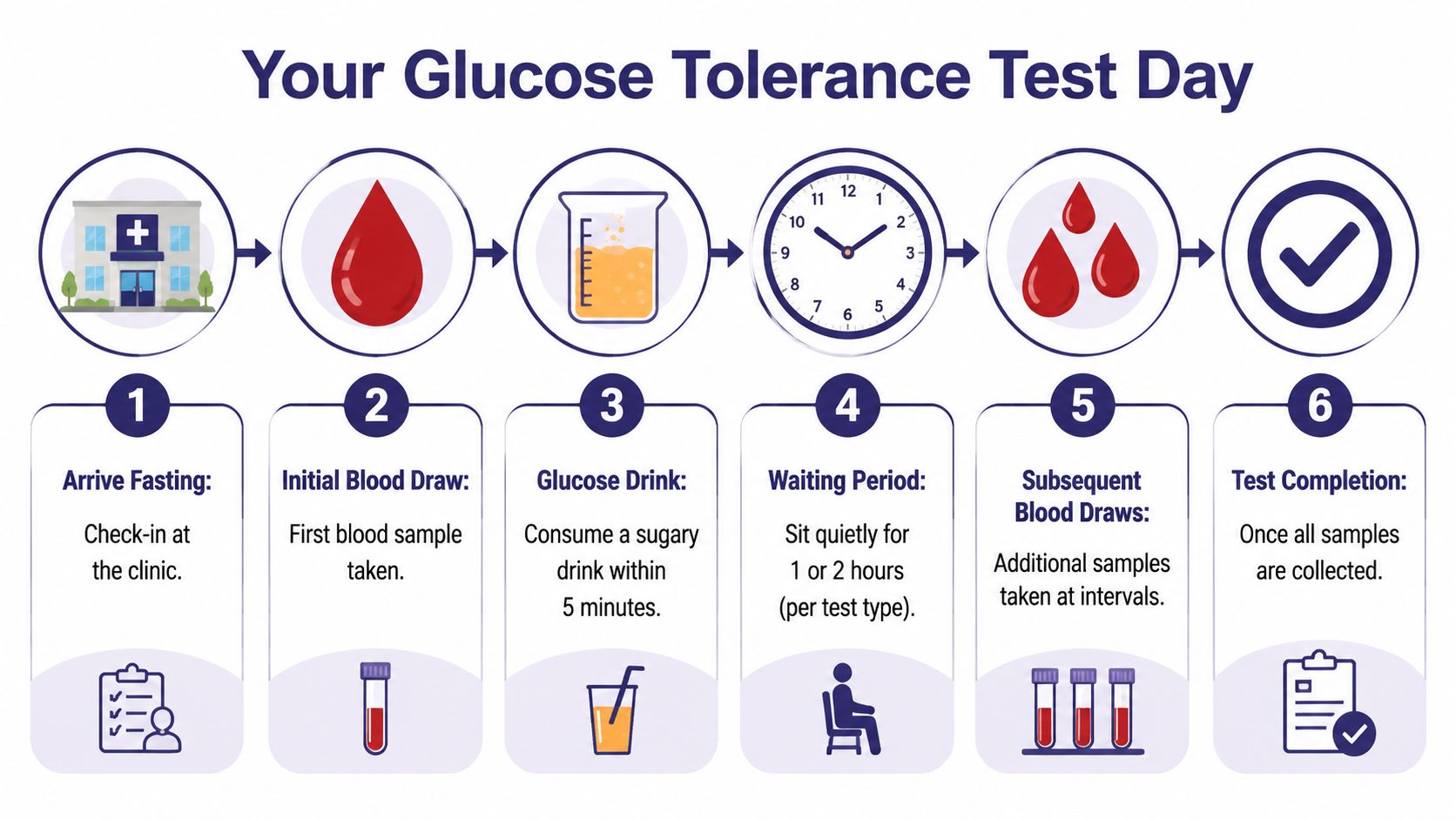
You arrive in the morning, a bit hungry, and wonder whether this will be uncomfortable or complicated. In practice, the test is straightforward. The hard part for many people is the waiting, which is why it helps to know the order of events before you go.
What happens first
After check-in, a clinician or phlebotomist takes a blood sample to measure your fasting glucose. This is the starting point. It shows what your blood sugar is doing before any glucose is introduced.
You are then given a very sweet glucose drink. The test works like a timed stress test for your sugar-control system. Instead of asking, "What is your glucose level right now?", it asks, "How well does your body cope with a measured sugar load, and how quickly does it bring that level back down?" That is why this test is often chosen when a fasting blood test alone does not answer the full question, including in pregnancy when gestational diabetes needs a clearer yes-or-no answer.
The drink and the waiting period
The drink is often described as similar to concentrated squash or flat syrup. It can feel unpleasantly sweet, but it is over quickly.
Once you have finished it, you usually stay at the clinic and rest until the next blood sample. During that period, avoid eating, avoid exercise, and only drink what the clinic allows. The reason is simple. The test is trying to measure your body's response to one controlled glucose load. Food, brisk walking, or even hurrying about can blur the picture.
Bring something easy to focus on while you wait:
- A book or Kindle
- Headphones and a podcast
- Light admin or messages
- A jumper or extra layer
If you are pregnant, this waiting period can feel longer, especially if you are already dealing with nausea or tiredness. Let the team know if you feel faint, sick, or unusually uncomfortable. They would rather help early than have you struggle through the appointment.
The final blood sample
At the end of the waiting period, another blood sample is taken. That second result shows whether your glucose has returned to the expected range or is still higher than it should be.
For many adults, this is the key part of the test because it helps show whether the body is handling sugar normally, showing early strain, or meeting the criteria for diabetes. In pregnancy, clinicians interpret the result differently because even smaller rises in glucose can matter for both mother and baby, so the test is often the right choice when gestational diabetes is being considered.
Typical adult oral glucose tolerance testing uses an overnight fast, a 75 g glucose drink, and a blood sample taken 2 hours later. Adult interpretation commonly groups the 2-hour result into normal, impaired glucose tolerance, or diabetes using standard diagnostic cut-offs, as noted earlier.
Some people feel completely well during the test. Others feel mildly nauseated, shaky, or tired after the drink, especially on an empty stomach. Tell staff if you feel unwell rather than trying to push through.
Once the final sample has been taken, you can usually eat and drink normally again unless your clinician has advised otherwise. A snack for afterwards is a good idea. However the result turns out, the next steps usually come back to the same foundations: regular meals, fewer sugary drinks, more daily movement, and a weight pattern that supports healthy blood sugar over time.
What Your Glucose Test Results Mean
You have done the hard part. Now you are looking at a few numbers and trying to work out what they mean for your health, your pregnancy, or your next step.
The simplest way to read an oral glucose tolerance test is this. It checks how well your body clears sugar from the bloodstream after a measured glucose drink. A healthy response works like a well-timed traffic system. Glucose rises, insulin is released, and the sugar is moved out of the blood and into the cells. If that process is slower than expected, the result can point to prediabetes, diabetes, or gestational diabetes.
Pregnancy is assessed differently from non-pregnant adults because smaller rises in blood glucose can still affect the baby's growth and the pregnancy itself. That is why the oral glucose tolerance test is often the right choice when gestational diabetes is suspected. It can pick up a problem that a single fasting test might miss.
How to read the categories
For non-pregnant adults, clinicians usually focus on the 2-hour glucose result after a 75 g glucose drink. For pregnancy, the fasting level and the 2-hour level are both used.
In women being assessed for gestational diabetes in the UK, NICE-based hospital guidance diagnoses gestational diabetes if the fasting glucose is 5.6 mmol/L or above or the 2-hour glucose is 7.8 mmol/L or above, according to the Royal United Hospitals pathology guideline. For non-pregnant adults, standard interpretation of the 2-hour value uses the cut-offs described by Patient.info guidance on the glucose tolerance test.
Oral Glucose Tolerance Test Results Interpretation (mmol/L)
| Diagnosis | Fasting Glucose | 2-Hour Glucose (after 75g load) | Applies To |
|---|---|---|---|
| Normal | Not the main threshold stated here | <7.8 mmol/L | Non-pregnant adults |
| Impaired glucose tolerance | Not the main threshold stated here | 7.8 to 11.0 mmol/L | Non-pregnant adults |
| Diabetes | Not the main threshold stated here | ≥11.1 mmol/L | Non-pregnant adults |
| Gestational diabetes | ≥5.6 mmol/L | ≥7.8 mmol/L | Pregnant women at increased risk |
What the result means in real life
A normal result is reassuring. It means your body handled the glucose load within the expected range. If the test was done in pregnancy, it also means gestational diabetes was not shown on this test. That said, normal does not mean future-proof. Daily habits still shape your blood sugar health over time, especially if you have a family history of diabetes, have had borderline results before, or have features linked with metabolic syndrome and the lifestyle changes that can make a real difference.
An impaired glucose tolerance result means your body is starting to struggle after a sugar challenge, even if your fasting level or day-to-day symptoms have not raised alarm bells. I often explain this as an early warning light on the dashboard. The engine is still running, but it deserves attention now, while change is often more effective.
A result in the diabetes range or a diagnosis of gestational diabetes gives you an answer, and that is useful. It tells you why this test was the right one to do. From there, treatment becomes more practical. You may be asked to monitor glucose, review your meals, increase activity after eating, or have extra follow-up during pregnancy.
Whatever the category, the lifestyle advice is broadly similar. Aim for regular meals, fewer sugary drinks, more fibre, and movement most days, especially a walk after meals if you can manage it. Protein and slower-digesting carbohydrates can help reduce sharp glucose spikes. Some people also look at food options such as seeds, pulses, yoghurt, eggs, fish, or supplements and recipes that discuss the benefits of hemp protein for diabetes, though any change is best kept practical and sustainable.
One result does not define you. It gives you a clearer map.
Your Health Journey After the Test
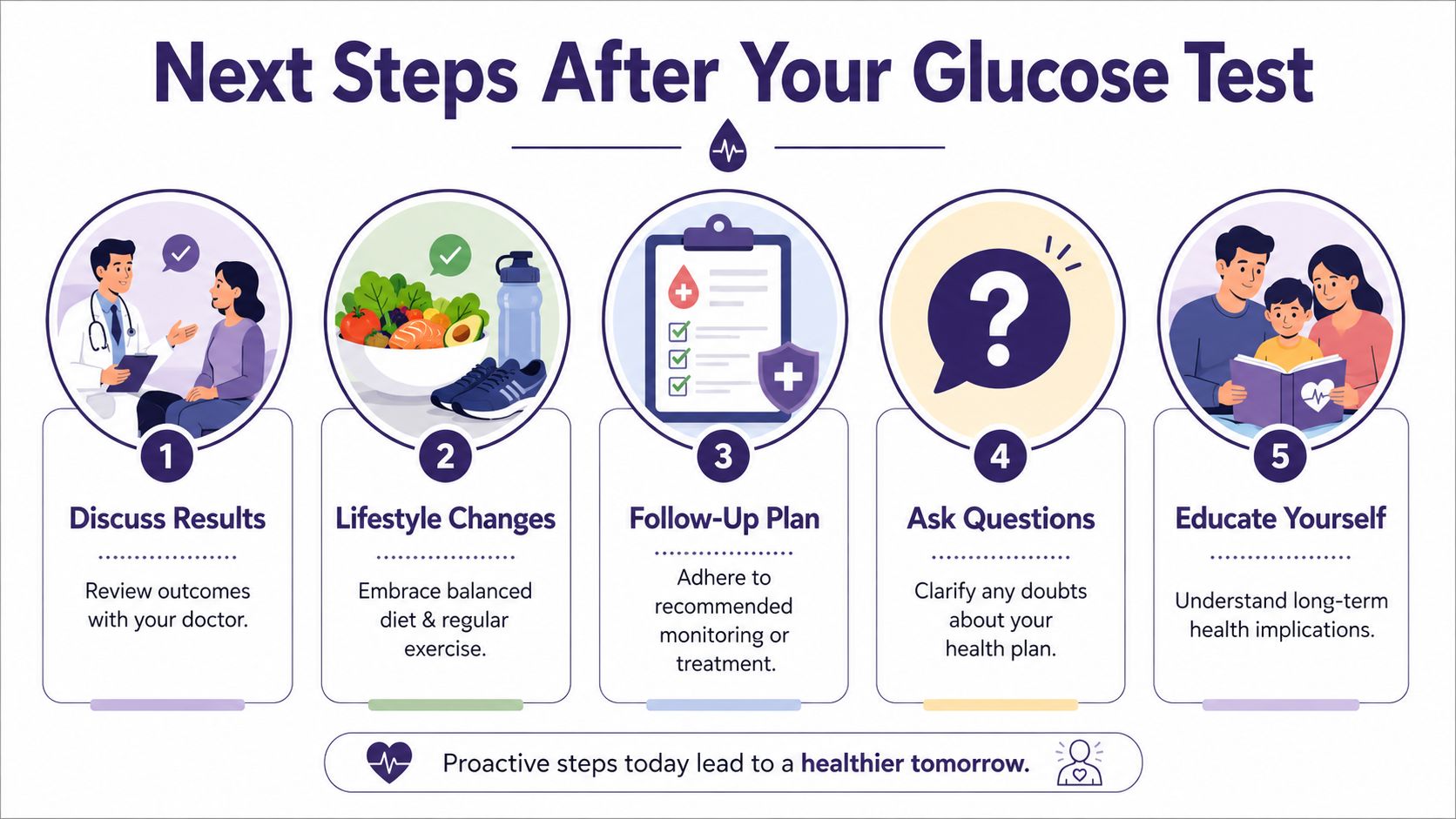
Whatever the result shows, this is the point where your day-to-day habits matter most. A glucose tolerance test is useful because it turns uncertainty into a plan.
If your result is normal, treat that as encouragement to protect what's working. Keep your meals balanced, stay active, and don't wait for symptoms before paying attention to your metabolic health. If your result shows prediabetes or gestational diabetes, lifestyle measures are often the foundation of treatment.
If you've been diagnosed
After a confirmed diagnosis of gestational diabetes or prediabetes, patients should monitor blood glucose four times daily, checking fasting and one hour after each meal, with target levels of 3.5 to 5.2 mmol/L fasting and 3.5 to 7.7 mmol/L post-meal, according to Chelsea and Westminster Hospital guidance on diabetes in pregnancy. The same guidance stresses that dietary changes and increased physical activity such as walking or swimming are often enough to control blood glucose without medication.
That's an encouraging message. Many patients assume a diagnosis automatically means tablets or insulin straight away. Sometimes medication is needed, but often the first and most effective step is improving the routine that shapes your glucose levels every day.
The lifestyle changes that matter most
I encourage patients to avoid extremes. You don't need a punishing diet or a perfect exercise regime. You need a pattern you can keep going.
- Build meals around fibre and protein: Pair carbohydrate with foods that help you feel full and slow glucose absorption, such as eggs, Greek yoghurt, beans, fish, chicken, tofu, nuts, and lentils.
- Choose steadier carbohydrates more often: Oats, whole grains, potatoes with the skin on, beans, and pulses are usually more helpful than highly refined snacks or sugary drinks.
- Move after meals when you can: A brisk walk after lunch or dinner can be more realistic than chasing an ideal gym schedule.
- Protect sleep: Short or broken sleep can make appetite and glucose control harder to manage the next day.
- Reduce “all-or-nothing” thinking: One takeaway or one difficult week doesn't undo everything. What counts is your usual pattern.
A practical food approach
Patients often hear “cut sugar” and are left with no clear plan. A better goal is to make meals more balanced.
Try this structure:
- Start with a source of protein.
- Add vegetables or salad.
- Include a sensible portion of carbohydrate rather than removing it completely.
- Use snacks strategically so you don't swing from restriction to overeating.
If you're exploring higher-protein options, some people find it helpful to read broadly about different ingredients and how they may fit into blood sugar-friendly meals. This overview of the benefits of hemp protein for diabetes can be a useful starting point for thinking about protein choices, though it's still worth discussing supplements and powders with your own clinician.
The bigger picture of metabolic health
Blood sugar doesn't exist in isolation. Waist circumference, blood pressure, cholesterol, sleep quality, stress load, and physical activity all interact. If you've had an abnormal glucose result, it's worth understanding the broader metabolic picture too. This guide to metabolic syndrome and how lifestyle changes can help is a helpful companion read.
Small repeatable actions beat dramatic short-lived efforts. The patients who do best usually aren't the ones who overhaul everything in one day. They're the ones who make a few good decisions consistently.
Questions worth asking after your appointment
Patients often leave with the headline result but not the practical follow-up. If you've had the test, make sure you understand:
- What category your result falls into
- Whether you need home glucose monitoring
- What eating pattern suits your situation
- How often you need repeat testing
- What symptoms should prompt earlier review
If you're pregnant, ask specifically how your result changes your maternity care. If you're not pregnant, ask what this means for your longer-term risk and which lifestyle changes are most relevant for you personally.
The most useful mindset is steady and proactive. You don't need fear to improve your health. You need clear information, a sensible plan, and support that fits real life.
If you'd like personalised advice, The Lagom Clinic offers private GP care in Bristol with time to discuss results properly, look at the full metabolic picture, and help you turn a glucose tolerance test result into practical changes you can sustain.


 Members Consultation