


Most plantar fasciitis cases start to improve within 6 to 8 weeks of consistent conservative care, and 80 to 90% of people recover fully within 12 months when they follow a structured plan. But plantar fasciitis recovery time is highly individual, and if your symptoms are already chronic or your job keeps you on your feet, recovery can stretch to 12 to 18 months or longer.
If you're reading this while dreading the first step out of bed, you're in familiar territory. That sharp heel pain in the morning, the ache after standing in clinic, on a shop floor, in a classroom, or during a long commute, often leads to one question: how long is this going to last? The honest answer is that recovery depends less on a headline statistic and more on how long you've had it, what you do each day, and whether your foot ever gets a real chance to calm down.
A desk-based worker with recent symptoms and sensible footwear often has a very different path from a nurse doing long shifts, a teacher moving all day, or a runner trying to train through pain. The tissue may have the same name, but the daily load isn't the same. That's why good advice has to be practical, not generic.
Your Plantar Fasciitis Recovery Journey
For many people, the story begins gradually. A tight sole. A sore heel after a busy week. Then one morning, you put your foot down and feel a sharp stab near the heel that makes you pause on the bedroom floor.
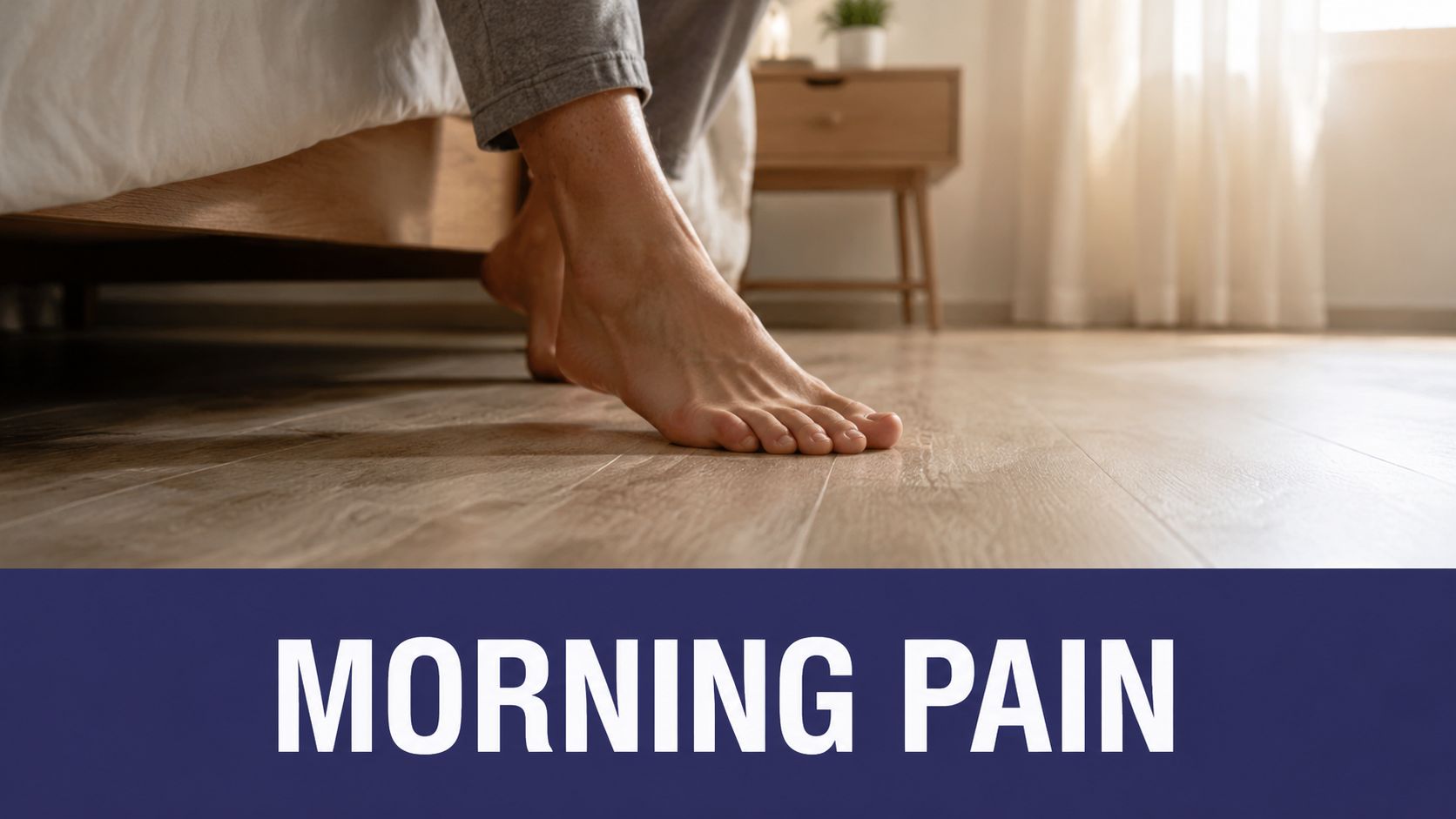
That pattern matters. Pain that's worst with the first few steps in the morning, or after sitting and then standing, is classic for plantar fasciitis. It doesn't always mean severe damage. It often means the tissue is irritated and repeatedly re-stressed before it has a chance to recover.
Why one timeline doesn't fit everyone
A common mistake is to treat plantar fasciitis as a single problem with a single recovery date. It isn't. Someone who developed symptoms a few weeks ago after a change in training load may improve quickly with stretching, better shoes, and reduced impact. Someone who's been limping for months while working on hard floors usually needs a longer and more deliberate plan.
Clinical reality: The earlier you act, the more options you usually have, and the less disruption the condition causes to work, sleep, exercise, and mood.
People also recover at different speeds because their lives ask different things of their feet. You might be trying to heal while still doing school runs, carrying a toddler, training for an event, or standing all day at work. That isn't failure. It's the practical context that shapes recovery.
What you can control from today
You can't force the fascia to heal overnight. You can reduce the repeated strain that keeps it irritated.
Start with the basics:
- Wear supportive footwear indoors and outdoors. Hard floors and barefoot walking often keep symptoms going.
- Stretch daily. Calf and plantar fascia flexibility matter more than is commonly understood.
- Modify, don't ignore. If an activity reliably worsens pain, it needs adjusting for now.
- Respect morning pain. It's useful feedback, not something to push through.
The rest of this guide is about setting realistic expectations, then matching treatment to your version of the problem.
What Is the Average Plantar Fasciitis Recovery Time
In UK practice, the average plantar fasciitis recovery time is best understood as a range, not a date on the calendar. According to CK Physio's plantar fasciitis overview, symptoms typically show initial improvement within 6 to 8 weeks of consistent conservative treatment, and 80 to 90% of patients achieve full recovery within 12 months when following a structured regimen. The same source notes that chronic cases lasting over 6 months can take 12 to 18 months to recover.
That headline is useful, but only if you know which group you belong to. A patient with recent-onset pain shouldn't assume they'll be symptomatic for a year. A patient who's had ongoing heel pain for many months shouldn't feel misled if recovery is slower.
Plantar fasciitis recovery timelines by severity
| Stage | Symptom Duration | Estimated Recovery Time |
|---|---|---|
| Mild | Less than 3 months | 6 to 12 weeks |
| Moderate | 3 to 6 months | 3 to 6 months |
| Chronic | 6 to 12 months | 6 to 12 months |
| Severe chronic | 12 months or more | 12 to 18 months |
This sort of staged thinking is more useful than chasing a single average. If you've had pain for a few weeks and you can still walk comfortably once you warm up, you're likely in a different category from someone who has changed their gait, stopped exercising, and developed symptoms in the other foot.
What "improvement" actually means
Patients often ask if improvement means pain-free. Usually, it doesn't at first. Early progress often looks like this:
- Morning pain eases sooner
- Standing becomes more tolerable
- You can walk farther before symptoms start
- Recovery after activity is quicker
That pattern matters. It tells you the plan is working, even before the condition has fully settled. If you've ever dealt with tendon irritation, the pacing is similar, which is why some people also find it helpful to read about broader soft tissue healing in this guide on how long tendons take to heal.
Plantar fasciitis usually improves gradually, not in a straight line. Good weeks and bad days can coexist.
The key is to judge the trend over time, not one painful morning.
Factors That Speed Up or Delay Your Recovery
Some patients do almost everything right and still improve slowly. Usually there's a reason. Plantar fasciitis recovery time isn't just about the condition itself. It's about the total load your foot absorbs each day, and whether your routine helps the fascia settle or keeps provoking it.

What tends to help
The most reliable recovery factors are rarely glamorous. They are consistent, mechanical, and boring in the best possible way.
- Daily stretching: A regular calf and plantar fascia routine reduces tension through the chain.
- Supportive shoes: Cushioned trainers or structured walking shoes often help more than minimalist or worn-out footwear.
- Load reduction: Shorter runs, fewer hill sprints, less barefoot time, or more sitting breaks can make a major difference.
- Weight management: If excess body weight is contributing, gradual weight loss reduces ongoing stress through the heel.
- Sleep and recovery: Poor recovery habits don't cause plantar fasciitis on their own, but they can make persistent pain harder to settle.
What commonly slows things down
Delay usually comes from repeated strain rather than one dramatic event. Patients often worsen the problem by trying to stay fully active without changing anything.
A major reason chronic cases are so frustrating is that long-standing symptoms don't behave like fresh ones. According to Summit Health's review of plantar fasciitis duration, in severe or mismanaged chronic cases, half of individuals still had symptoms after 5 years. That finding is especially relevant if your pain has been present for more than 3 months and your daily life keeps loading the foot.
The occupation effect
This is the piece many articles gloss over. A busy office worker may be able to sit more, change shoes, use insoles, and reduce walking volume. A nurse, teacher, retail worker, carer, or delivery worker often can't.
If your job involves prolonged standing, recovery often depends as much on workplace adaptation as on treatment itself.
Common occupational barriers include:
- Long standing shifts: The fascia never gets enough relative rest.
- Hard flooring: Hospital corridors, classrooms, kitchens, and shop floors are unforgiving.
- Barefoot or poorly cushioned environments: Some workplaces and home routines keep the heel under strain.
- Limited control over breaks: You may know what helps but still not get time to sit, stretch, or change footwear.
Athletes face a different version of the same problem. Their recovery slows when they keep testing the foot with tempo sessions, court drills, plyometrics, or repeated long walks "because it isn't that bad today". The issue isn't weakness of character. It's tissue load.
The delay that matters most
Early treatment usually gives better odds of a shorter recovery. The longer symptoms drag on, the more compensation patterns, stiffness, and re-irritation enter the picture. That's why a realistic plan doesn't just treat pain. It changes the conditions that keep pain going.
Your Phased Plan for Effective At-Home Recovery
Home treatment works best when it's structured. Random stretching when you remember, mixed with painful exercise and unsupportive shoes, usually doesn't. UK NHS guidance from Gateshead Health's plantar fasciitis patient information identifies calf and plantar fascia stretching as the mainstay of long-term resolution, alongside activity modification and appropriate cushioned footwear.

Phase 1 acute pain relief
The first job is to settle the flare, not to "push through and loosen it up".
Use these measures consistently for a short focused period:
- Ice after aggravating activity: A wrapped ice pack or cold bottle under the foot can help settle soreness.
- Gentle stretching only: Start with calf stretches and a light plantar fascia stretch, not aggressive pulling.
- Supportive footwear all day: Avoid barefoot walking, flat slippers, flip-flops, and old trainers.
- Relative rest: Cut back the activity that reliably triggers pain. Swap impact for lower-load movement where possible.
- Foot elevation when resting: Helpful if the foot feels irritated after a long day.
Phase 2 strengthening and flexibility
Once the sharpest pain settles, the goal changes. Now you want the foot and calf complex to tolerate daily load better.
A practical routine may include:
- Calf stretches against the wall done regularly through the day.
- Plantar fascia-specific stretch before getting out of bed and after long sitting.
- Foot rolling with a ball to ease stiffness in the arch.
- Simple strengthening work such as controlled heel raises, if these don't increase next-day pain.
This phase is where consistency beats intensity. Small daily input works better than occasional heroic effort.
Practical rule: If an exercise leaves you significantly worse the next morning, it was too much for where you are now.
If you want a patient-friendly walkthrough of home measures and shoe support options, this expert guide to plantar fasciitis relief is a useful companion read.
Phase 3 return and maintenance
This is the phase many people skip, then wonder why symptoms return. Once pain improves, keep the habits that got you there.
Focus on:
- Gradual activity increase: Build walking, gym work, or running slowly.
- Ongoing shoe discipline: Replace footwear that has lost cushioning or structure.
- Weight management if relevant: Even modest, steady progress can reduce repeated heel load.
- Stretching as maintenance: Especially after long periods on your feet.
For busy professionals, success often depends on practical changes, not perfect rehab. Keep a second pair of supportive shoes at work. Avoid standing still for long periods if you can move intermittently. Use your commute, coffee break, or post-shower routine to anchor stretches so they happen.
When Conservative Care Is Not Enough
Individuals often start with self-care. But if you've been diligent for weeks and the pain is still disrupting work, exercise, or sleep, it's time to reassess rather than just repeat the same plan harder.
Signs you need a proper assessment
Seek professional review if any of the following apply:
- Persistent symptoms despite good home care: Especially after several weeks of consistent stretching, footwear change, and load reduction.
- Pain that limits normal walking: If you're limping or changing how you walk, the condition is affecting more than just comfort.
- Unclear diagnosis: Not every heel pain problem is plantar fasciitis.
- Repeated flare-ups: Temporary improvement followed by frequent relapse usually means a driver has been missed.
A structured examination matters. It helps separate plantar fascia pain from Achilles problems, fat pad irritation, nerve irritation, stress injury, or referred pain. If you want to understand what that assessment usually involves, this musculoskeletal assessment guide gives a clear overview.
What professional treatment may add
NHS guidance from Gateshead Health and Milton Keynes notes that when symptoms persist beyond 6 to 12 weeks despite consistent home care, physiotherapy and advanced options such as Extracorporeal Shockwave Therapy (ESWT) may be recommended to help speed healing, as outlined in this NHS plantar fasciitis patient leaflet.
That doesn't mean everyone needs escalation. It means chronic or stubborn cases often need more than stretches alone.
Common next steps include:
- Physiotherapy: Useful for targeted loading, gait advice, and identifying weak links in the calf, ankle, or hip.
- Orthoses or insoles: These can reduce strain, especially if a shoe is otherwise suitable.
- Night splints: Sometimes helpful when morning pain is the main complaint.
- ESWT: Often considered for persistent plantar fascia pain that hasn't responded to simpler care.
- Injections: In selected cases, they may reduce pain, but they aren't a substitute for fixing load and footwear problems.
Good escalation isn't giving up on self-care. It's adding the right tool when self-care alone hasn't been enough.
How to Safely Return to Sport and Daily Life
The final stage of recovery isn't "pain gone, back to normal tomorrow". It's rebuilding confidence and capacity without causing a setback. That's where many relapses happen.
Use the 10% rule
A simple principle works well here. Increase your walking, running, gym volume, or sport load by about 10% at a time rather than making a sudden jump. This isn't a law of nature, but it's a sensible rule for pacing return.
If you're a runner, that might mean increasing total weekly distance gradually rather than adding speedwork straight away. If you're a busy professional who has cut back on commuting walks, it may mean extending walking time in stages. If you play tennis, golf, or padel, it means respecting total time on your feet, not just the match itself.
Build a return plan around symptoms
Use these checkpoints:
- During activity: Mild discomfort can happen, but sharp or escalating heel pain is a warning.
- Later that day: Some tiredness is acceptable. Marked limping isn't.
- Next morning: This is often the most useful measure. If morning pain jumps, yesterday was too much.
A safe return usually includes a proper warm-up, supportive footwear, and some form of cool-down stretching after activity. Cross-training can help maintain fitness while reducing heel load. Cycling, rowing, or swimming often fit better than repeated impact when the fascia is still sensitive.
Think long term, not just pain-free
Sport and active hobbies should be enjoyable again, but the best prevention plan is usually boringly practical:
- Keep stretching the calves and plantar fascia
- Replace worn shoes before they become part of the problem
- Avoid sudden spikes in training or step count
- Use rest days deliberately
- Treat recurring morning pain as an early signal
For people returning to long walks or golf, pacing matters more than enthusiasm. If walking-based activity is part of your routine, this piece on unmissable walking golf advantages is a useful reminder that lower-intensity movement can be beneficial when matched to your current capacity.
The goal isn't to fear activity. It's to earn it back progressively so the foot trusts the load again.
Frequently Asked Questions About Plantar Fasciitis Recovery
How do I know if my plantar fasciitis is acute or chronic
Think in timelines and behaviour. Acute plantar fasciitis usually means relatively recent symptoms and a foot that still settles reasonably well with rest, stretching, and shoe changes. Chronic plantar fasciitis means the pain has become persistent, recurrent, or resistant to sensible self-care. If you've had symptoms for months, or your pain returns whenever you increase activity, treat it as a longer-term problem that needs a more deliberate strategy.
Should I stop exercising completely
Usually, no. Total rest often isn't practical and isn't always necessary. The better approach is to modify the type, volume, and intensity of exercise. Reduce impact. Shorten sessions. Swap some running or court sport for cycling, swimming, or upper-body work. The key question is whether your exercise is calming the situation or repeatedly flaring it.
Do I need an ultrasound or MRI
Not everyone does. Plantar fasciitis is often diagnosed clinically from the history and examination. Imaging becomes more useful when the diagnosis is uncertain, symptoms aren't improving as expected, or there are red flags such as pain in an unusual location, persistent night pain, or concern about another cause of heel pain. In private practice, imaging can also be helpful when you're considering escalated treatment and want more diagnostic clarity.
Are custom orthotics better than shop-bought insoles
Sometimes, but not automatically. Off-the-shelf options can work well if they fit the shoe properly and improve comfort. Custom orthotics may help when foot mechanics are more complex or standard options haven't been enough. What matters most is whether the device reduces strain and helps function, not whether it's expensive.
Why is morning pain so much worse
Overnight, the foot rests in a position that allows the plantar fascia and calf complex to tighten. The first steps then load a stiff, sensitive structure. That's why a before-you-stand routine can help. Sit up, gently move the ankle, stretch the calf, and pull the toes back lightly before putting weight through the foot.
Can work shoes really make that much difference
Yes. In real life, shoes are treatment. If you spend hours in hard, flat, unsupportive shoes, the fascia absorbs the consequence. A well-cushioned, supportive pair won't cure plantar fasciitis on its own, but it can reduce repeated irritation enough for the rest of the plan to work.
What if I've had it for ages and it's still not improving
Don't assume you just have to live with it. Long-standing plantar fasciitis often needs a fuller review of load, footwear, strength, gait, work demands, and whether the diagnosis is correct. Persistent pain deserves a fresh look, especially if you've already been conscientious.
If heel pain is dragging on, affecting your work, or stopping you from training properly, The Lagom Clinic offers personalised private GP care in Bristol with time to assess the full picture, from lifestyle and occupation to musculoskeletal causes and rapid access to further investigation when needed.

 Members Consultation