


When we talk about being medically fit for work, we’re not just talking about being a marathon runner or a weightlifter (unless that’s your job, of course). It’s really about a simple, crucial match-up: does your personal health align with the specific demands of your role? Can you carry out your duties safely and well, without putting yourself or others at risk?
It’s a fundamental question that sits at the heart of workplace safety and your personal well-being.
What Medical Fitness for Work Really Means
Think of medical fitness for work like this: you wouldn't take a small city car on a rugged, off-road adventure. It’s just not built for the journey. In the same way, your physical and mental health needs to be a good fit for the unique terrain of your job, whether that involves heavy lifting on a construction site, long hours of intense focus in front of a screen, or navigating high-stress situations.
This isn’t just about ticking a box to avoid accidents. It's about building a sustainable foundation for your long-term health and career. When you’re medically suited to your role, you feel more capable, you’re more productive, and you’re far less likely to suffer from a work-related injury or illness. For employers, it’s the cornerstone of a safe, thriving, and efficient workplace.
The Evolution of Workplace Health
In the UK, the idea of protecting employee health isn't new. Early workplace laws were all about shielding people from obvious, immediate dangers. Over time, this evolved into a more proactive approach. The Employment Medical Advisory Service (EMAS) Act of 1972 was a real turning point, creating a dedicated body to advise on occupational health risks, from asbestos exposure to the hazards of foundry work.
That formal system has since developed into the comprehensive field of occupational health we know today. A key part of this is the occupational health assessment, which provides a structured, professional way to evaluate an individual's health in the specific context of their job duties.
A key goal of assessing medical fitness for work is proactive prevention. It’s about creating an environment where health is supported, risks are managed, and employees can thrive without compromising their well-being.
Seeing how different systems operate can offer great perspective; for instance, exploring the range of occupational health services in Australia shows how these principles are applied globally. Understanding this concept is the first step toward taking control of your health at work and building a career that lasts.
How Your Health Shapes Your Career
It’s easy to think of our health and our careers as two separate things, but in reality, they're deeply intertwined. Your well-being isn't just a personal matter; it's the very engine that powers your professional life. When you're medically fit for work, it translates directly into better focus, higher productivity, and a much more sustainable career in the long run.
On the flip side, poor health can create serious roadblocks. Common issues like chronic stress, persistent back pain, or anxiety aren't just personal struggles. They are leading causes of reduced performance and absenteeism, which can significantly slow your career progression.
The Real Cost of Poor Health at Work
The link between health and work becomes crystal clear when you look at the national statistics. In Great Britain, a staggering 33.7 million working days were lost during 2023/24 because of work-related ill health and injury.
Drilling down into those numbers, you find that stress, depression, or anxiety were behind 16.4 million of those lost days. Another 7.8 million were due to musculoskeletal problems. These aren't just abstract figures; they represent real people struggling to balance their health and their jobs. You can dive deeper into the data on working days lost in Great Britain to get the full picture.
This infographic shows how common health issues lead to absence and how proactive changes can boost productivity.
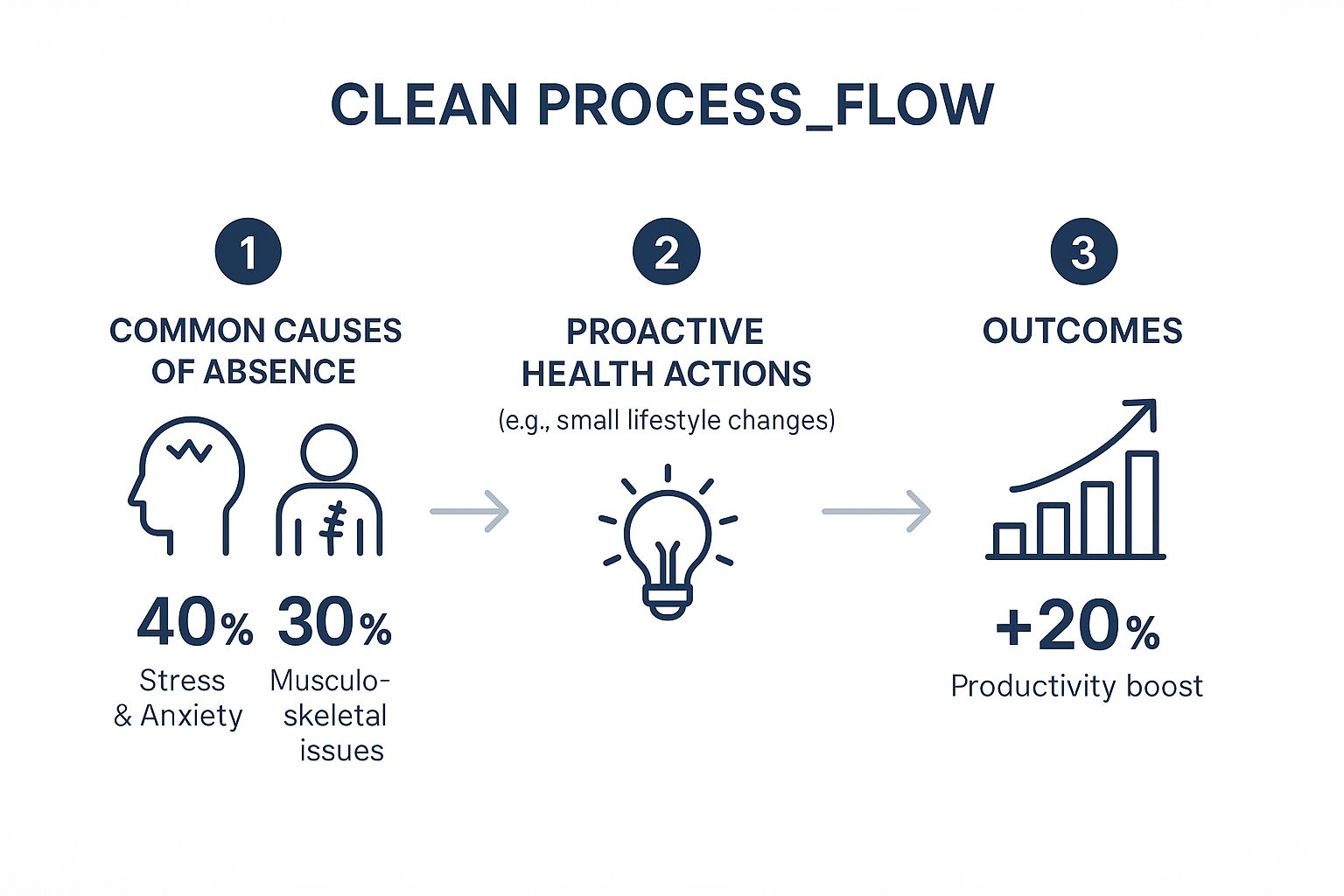
The takeaway here is pretty simple: taking small, consistent steps to look after your physical and mental health pays huge dividends for your career.
Taking Control with Small Lifestyle Changes
The good news is you don't need to completely overhaul your life to improve your fitness for work. Small, sustainable lifestyle changes can build your resilience and have a profound impact.
Investing in your health is one of the most effective career development strategies you can adopt. It’s not just about avoiding sick days; it’s about showing up as your best self every day.
By focusing on manageable habits, you lay a solid foundation for both personal well-being and professional success. It's a long-term investment in your most valuable asset: you.
Here are a few simple yet powerful changes you can start with:
- Prioritise Movement: Even if your job is sedentary, incorporate regular movement. Stand up and stretch every hour. Take a brisk walk on your lunch break. Regular physical activity boosts circulation, reduces stiffness, and clears your mind.
- Mindful Nutrition: What you eat directly fuels your brain and body. Aim for a balanced diet rich in whole foods. Swapping sugary snacks for fruit or nuts can prevent energy crashes and improve concentration.
- Protect Your Sleep: Aim for 7-9 hours of quality sleep per night. It's essential for cognitive function, emotional regulation, and physical recovery—all vital for performing well at your job. Establish a relaxing pre-sleep routine, like reading a book instead of scrolling on your phone.
Navigating a Fitness for Work Assessment

The idea of a medical assessment for work can feel daunting, but it’s crucial to see it as a supportive process, not a test you can pass or fail.
A fitness for work assessment is a collaborative tool. Its sole purpose is to ensure your job is a safe and suitable environment for your specific health needs.
Employers usually request these for a good reason. It might be when you're starting a new job, especially one with unique physical or mental demands. Or, perhaps more commonly, it’s part of the plan for returning to work after an illness, ensuring a smooth and safe transition back to your duties.
At its heart, the process is designed to protect you. The occupational health specialist isn't there to judge; they’re there to understand your health in the context of your job. Their goal is to spot potential risks and suggest practical changes that help you work safely and effectively.
What to Expect During the Assessment
This isn't just a quick physical check-up. While tests for blood pressure or vision might be part of it, the real core of the assessment is a confidential discussion with an occupational health professional.
This conversation is your chance to talk openly about your role, your health, and any concerns you have. The clinician will explore how your health might affect certain tasks and, just as importantly, how certain tasks might affect your health. It’s a two-way street.
Here’s a simple breakdown of how it usually unfolds:
- Referral: Your employer sends a confidential referral to an occupational health service, explaining your job and why the assessment is needed.
- Consultation: You'll have a private meeting with a specialist, like a doctor or a nurse, to discuss your work and health.
- Evaluation: This could involve a physical examination, a review of your medical history, or job-specific functional tests.
- Report: The specialist prepares a report for your employer. It summarises your fitness for the role and recommends any adjustments. Crucially, this report only includes relevant work-related information—your private medical details stay private.
The occupational health specialist acts as a neutral, expert advisor. Their entire focus is on finding a healthy and practical balance that works for both the employee and the employer.
Your Role in a Successful Assessment
Being open and honest is the best thing you can do. The more the specialist understands, the more accurate and helpful their advice will be. Remember, these are medical professionals who are bound by strict confidentiality.
By playing an active part, you help ensure that any recommendations truly fit your circumstances. This collaborative spirit turns what could be a stressful event into a positive step towards maintaining your long-term medical fitness for work.
If you'd like to dive deeper into what prompts these evaluations, our detailed guide on the fitness for work assessment can provide more answers.
Practical Lifestyle Habits for Better Work Fitness

While formal assessments have their place, the real power to improve your day-to-day medical fitness for work is in your own hands. It’s about the small, consistent lifestyle choices you make every day. These habits build a strong foundation of well-being, helping you handle your job's demands while boosting your overall quality of life.
The key is to focus on four areas: nourishing your body, moving regularly, sleeping well, and building mental resilience. Small, steady improvements here can make a world of difference in preventing stress, fatigue, and physical strain.
Fuel Your Body for Productivity
What you eat directly impacts your energy, focus, and cognitive function at work. Think of food as the high-quality fuel your body and mind need to perform optimally.
Instead of restrictive diets, focus on adding nutrient-dense foods. Simple swaps can have a huge impact. For example, switching a sugary breakfast cereal for oatmeal with berries provides sustained, slow-release energy, helping you avoid a mid-morning slump.
Here are a few practical tips:
- Plan Ahead: Dedicate some time on the weekend to prep healthy lunches or snacks. Having nutritious options readily available makes it easier to resist less healthy choices.
- Hydrate Smartly: Keep a reusable water bottle on your desk. Even mild dehydration can cause headaches, fatigue, and reduced concentration.
- Balance Your Plate: Aim to include a source of lean protein (like chicken, fish, or beans), complex carbohydrates (like brown rice or quinoa), and healthy fats (like avocado or nuts) in each meal to keep your blood sugar stable.
Integrate Movement into Your Workday
A sedentary job can lead to aches, pains, and other health issues. You don’t need intense gym sessions to counteract this; weaving small bursts of movement into your day is highly effective.
The main goal is to break up long periods of sitting. Even a few minutes of activity can improve circulation, relieve muscle stiffness, and boost your mood.
It's a common myth that you need to block out a full hour for a workout to see benefits. In fact, five minutes of stretching every hour can be more effective at preventing desk-related pain than a single intense gym session per week.
To make these changes last, it helps to understand the science behind building healthy habits that actually stick. This insight can help you turn small actions into effortless, automatic routines.
Prioritise Restorative Sleep
Sleep isn't a luxury; it's a biological necessity for your mind and body to recover. Lack of quality sleep impairs judgment, problem-solving skills, and immune function—all of which directly affect your performance at work.
A consistent sleep schedule is your best tool. Try to go to bed and wake up around the same time each day, even on weekends. About an hour before bed, start a "wind-down" routine. Dim the lights, put away electronic devices, and do something calming like reading a book or gentle stretching. This signals to your body that it's time to sleep.
Build Your Mental Resilience
Your mental fitness is just as important as your physical health. Learning to manage stress is a skill that strengthens with practice, allowing you to handle workplace pressures without feeling overwhelmed.
Simple mindfulness and breathing exercises are incredibly powerful tools. When you feel stress rising, try the "box breathing" technique: inhale slowly for a count of four, hold your breath for four, exhale for four, and hold again for four. Repeating this for just a few minutes can lower your heart rate and promote a sense of calm.
To help you get started, here's a sample weekly plan you can adapt to fit your schedule.
| Day | Focus Area | Morning Action (10 mins) | Midday Action (15 mins) | Evening Action (20 mins) |
|---|---|---|---|---|
| Monday | Mindful Start | Meditate or do deep breathing exercises. | Eat lunch away from your desk, without screens. | Read a chapter of a book before bed. |
| Tuesday | Movement | Do a full-body stretch routine. | Take a brisk walk outside during your lunch break. | Do a light yoga or mobility session. |
| Wednesday | Hydration & Fuel | Drink a large glass of water upon waking. | Prep healthy snacks (fruit, nuts) for the next day. | Cook a nutrient-dense dinner with lean protein & veg. |
| Thursday | Movement | Do a set of squats and push-ups. | Use the stairs instead of the lift all day. | Take a longer, relaxed walk after dinner. |
| Friday | Mental Unwind | Write down 3 things you're grateful for. | Listen to a calming playlist while finishing work. | Disconnect from work emails and notifications completely. |
| Saturday | Active Recovery | Go for a long walk, hike, or bike ride. | Plan and shop for the upcoming week's healthy meals. | Engage in a hobby you enjoy. |
| Sunday | Rest & Reset | Enjoy a slow, relaxed morning. No rushing. | Gentle stretching session. | Plan your week and set a calming wind-down routine for bed. |
This table isn't a rigid prescription, but a blueprint to show how small, manageable actions can add up over a week. The goal is progress, not perfection. Listen to your body and find what works for you.
Know Your Rights as an Employee
When your employer starts asking questions about your health, it’s completely normal to feel a bit on edge. Knowing where you stand with medical fitness for work is crucial, not just for legal reasons, but to make sure you're being treated fairly and with the respect you deserve. Thankfully, the UK has a solid legal framework designed to balance your employer's duty to maintain a safe workplace with your fundamental right to privacy.
This protection rests on two main pillars. First, there's the Equality Act 2010, which shields you from discrimination linked to a disability. Then, the General Data Protection Regulation (GDPR) lays down strict rules on how your personal health data can be collected, used, and stored.
Your Right to Privacy and Confidentiality
Let's be clear: your health information is your business. GDPR treats it as special category data for a reason—it's incredibly personal. This means your employer can't just ask for your entire medical history on a whim.
Any request for health information has to be directly related to your ability to do your job safely. For instance, if your job involves heavy lifting, it’s reasonable for them to ask about a serious back problem. It's not reasonable for them to probe into unrelated health matters. Any information you do provide must be kept under lock and key, handled with the utmost confidentiality.
An employer’s request for medical information must be necessary and proportionate. The goal is to ensure safety and make reasonable adjustments, not to pry into your private life.
In most cases, this process is handled by an occupational health professional. They act as an impartial expert, assessing your fitness for the role. Their report to your employer will stick to the essentials: whether you’re fit for the job, fit with specific adjustments, or temporarily unfit. The clinical details of your diagnosis stay private, just between you and the clinician.
Protection from Discrimination
The Equality Act 2010 is your key protection against being treated unfairly because of a health condition. Under the Act, a disability is defined as a physical or mental impairment that has a ‘substantial’ and ‘long-term’ negative effect on your ability to do normal daily activities.
If your condition fits this description, your employer isn't just encouraged to help—they have a legal duty to make reasonable adjustments. This isn't a vague concept; it means taking practical steps to remove any barriers you face.
These adjustments could look like:
- Getting you specialised kit, like a proper ergonomic chair.
- Offering flexible hours so you can get to medical appointments.
- Changing your duties to take away tasks that are no longer safe for you.
An employer can't just let you go because of a health condition. They are legally required to explore every possible reasonable adjustment first. If they don't, it could be a clear case of discrimination.
Of course, this is a two-way street. You have a responsibility to be upfront about any health issue that could genuinely affect your safety or the safety of your colleagues. When you understand your rights, you can have an open, honest conversation with your employer, creating a workplace that is both supportive and legally sound.
Building a Healthier Career for the Long Term
It’s easy to think of medical fitness for work as just a box-ticking exercise, a one-off assessment you have to pass. But in reality, it's much more than that. Think of it as an ongoing commitment—a conscious decision to align your health with your career goals, ensuring you can build something that lasts. Your well-being truly is the engine that powers a long, successful, and sustainable career.
The best way to invest in this is through small, consistent changes to your lifestyle. These are the things that really add up. A brisk walk on your lunch break, swapping sugary drinks for water, or even just taking five minutes to practise a bit of mindfulness can have a huge compounding effect over time. These simple habits build resilience, sharpen your focus, and give you the physical and mental stamina you need to not just get by, but to actually thrive at work.
Taking Control Through Action and Awareness
It's also crucial to understand your rights. Getting to grips with the protections offered by laws like the Equality Act 2010 and GDPR can be incredibly empowering. It gives you the confidence to have open, honest conversations about your health needs without worrying about being treated unfairly. It’s about knowing you have a right to the support you need to do your job well.
Your health isn't separate from your career; it’s the very foundation it's built on. Taking ownership of your well-being allows you to construct a professional life that isn't just productive, but genuinely rewarding and resilient.
Why not start with one small, manageable change today? It could be as simple as grabbing a piece of fruit instead of a biscuit or taking the stairs instead of the lift. That single step is where it all begins. This isn’t just about health; it’s a direct investment in your future success and a commitment to creating a healthier, more fulfilling professional life for yourself.
Got Questions? We've Got Answers
It's completely normal to have questions when you're dealing with medical fitness for work assessments. Let's break down some of the most common queries to give you a clearer picture of your rights and what to expect.
Can I Be Dismissed if Found Unfit for My Job?
This is a big worry for many people, but the short answer is no, not automatically. Being found medically unfit for your current role doesn't mean your P45 is on its way.
Under UK law, especially the Equality Act 2010, your employer has a legal responsibility to explore reasonable adjustments if your health condition qualifies as a disability. Dismissal is very much a last resort. It would only be considered if, after trying every possible adjustment, you still can't perform your duties safely and there are no other suitable roles for you in the company.
What Exactly Are "Reasonable Adjustments"?
Think of reasonable adjustments as practical changes that level the playing field, removing or reducing any disadvantages you face at work because of a health issue. The whole point is to help you do your job safely and effectively.
What's "reasonable" isn't a one-size-fits-all answer. It's a balance – the adjustment needs to be effective for you without creating an unreasonable burden (like a huge cost) for your employer.
These adjustments are tailored to your specific situation. They might look like:
- Changes to your workspace: This could be an ergonomic chair for a back problem or special software for a visual impairment.
- More flexible hours: Perhaps adjusting your start and finish times to help you manage fatigue or fit in medical appointments.
- Tweaking your duties: Sometimes, it’s as simple as reassigning a minor task you can no longer manage to another member of the team.
Is My Medical Information Kept Confidential?
Absolutely. Your medical details are sensitive personal data, and they're protected by strict laws like GDPR. The occupational health professionals handling your case are bound by the same code of confidentiality as your GP.
When a report goes to your employer, it won't be filled with your private clinical history or specific diagnosis. Instead, it focuses on the practical stuff: how your health impacts your ability to work, your overall fitness for the role, and any adjustments needed to support you.
At The Lagom Clinic, we specialise in comprehensive occupational health services, from medical certifications to fitness for work assessments. If you need expert guidance, book a consultation with our private GP practice in Bristol. You can learn more at The Lagom Clinic's website.


 Members Consultation