


Waking up feeling unwell and needing to see a GP today can be a stressful scramble. But getting a same day GP appointment is far from impossible—it just requires the right game plan. The secret? A little preparation, acting fast, and knowing all the avenues for urgent care.
Why Securing a Same Day GP Appointment Feels So Difficult
When you're hit with a sudden illness, the last thing you want is a long wait to see a doctor. The reality is, demand for immediate medical attention has skyrocketed, placing immense pressure on local surgeries.
This isn't just a feeling; the numbers back it up. In a single recent month, general practices across the UK delivered around 31.4 million consultations. That figure is up by nearly a third compared to pre-pandemic levels. What’s really telling is that a staggering 44.2% of those were same-day consultations. It shows just how many people are in the same boat, all competing for those urgent slots.
This guide is here to walk you through the process, giving you the confidence to navigate the system when it matters most. We'll cover everything from getting prepared ahead of time to making the most of your consultation once you've got it.
Your Same-Day Booking Success Checklist
To cut through the noise, here's a quick rundown of the factors that genuinely boost your chances. Think of it as your game plan for getting seen promptly.
| Factor | Why It's Crucial | Actionable Tip |
|---|---|---|
| Timing is Everything | Most appointments are released first thing in the morning and get snapped up fast. | Be ready to call or go online the moment the clinic's phone lines open. |
| Know Your Options | Relying on just one method (like the phone) can be limiting. | Familiarise yourself with your clinic's app, online portal, and walk-in policy before you need them. |
| Be Clear & Concise | Receptionists need to quickly understand your issue to triage you correctly. | Have a short, clear summary of your main symptom and its severity ready to go. |
| Flexibility Helps | Being open to seeing any available GP, or considering a phone call, opens up more slots. | Let them know you're happy with a teleconsultation or an appointment with any doctor if it means being seen sooner. |
Focusing on these key areas can make a real difference between a frustrating morning and getting the timely care you need.
How Clinics Are Adapting to High Demand
To keep up, many modern clinics are now using medical patient scheduling AI systems that significantly reduce wait times, which helps make more same-day appointments possible. Understanding how these systems work can give you a slight edge.
Of course, the best way to avoid the morning rush is to focus on preventative health to reduce your need for urgent care in the first place. Simple lifestyle habits are your best defence:
- Prioritise Sleep: Aim for a solid 7-9 hours of quality sleep each night. This is when your body repairs itself and strengthens the immune system.
- Stay Hydrated: Drinking plenty of water is fundamental for all bodily functions, including fighting off infections. Proper hydration helps your body flush out toxins.
- Manage Stress: Chronic stress weakens your body's defences by increasing cortisol levels. Building in small habits like a daily walk, deep breathing exercises, or mindfulness can work wonders for your physical and mental health.
By combining smart booking tactics with these proactive health habits, you can take much better control of your wellbeing.
Prepare Before You Feel Unwell
The secret to getting a same day GP appointment isn't about what you do when you’re ill—it’s about the groundwork you lay when you're feeling perfectly fine. A few simple steps now can save you a world of stress later.
First things first, make sure you're actually registered with a local GP practice. It sounds obvious, but you’d be surprised how many people realise they aren’t registered right when they need an appointment most. While you’re at it, find your NHS number and save it in your phone. You’ll need it.
Next, get your digital ducks in a row. Most surgeries now funnel everything through online portals or the NHS App. Take ten minutes on a quiet afternoon to download the app, get logged in, and have a poke around. Figure out where the appointment booking section is. Save your password. When you’re trying to book at 8 am, the last thing you want is a frantic password reset delaying you.
Start a Symptom Log Early
The moment you feel that first twinge of something being off—a nagging headache, a bit of fatigue—start making a few notes. It doesn’t need to be an essay; a simple log on your phone or in a notebook is perfect.
Jotting down what you feel, when it started, and what makes it better or worse gives you a clear, factual record to share. This information is gold dust for the receptionist trying to triage your call and gives the doctor a head start on figuring out what’s going on.
Key Takeaway: A detailed symptom log makes your consultation far more effective. It helps your GP spot patterns and make a more accurate diagnosis, ensuring you get the most out of your brief appointment.
Saying you have a "sharp pain on my right side that gets worse after eating" is infinitely more helpful than just "my stomach hurts." This kind of clarity is what turns a rushed, frustrating chat into a productive consultation.
It’s also worth remembering that not every symptom needs an urgent appointment. Sometimes, managing minor issues at home can make a real difference. For example, there are many effective ways to manage headaches without medication, such as ensuring proper hydration, gentle neck stretches, or applying a cool compress. These lifestyle tweaks can often ease symptoms, freeing up appointments for those who need them most.
Mastering the 8 AM Appointment Scramble
We all know the feeling. The clock ticks towards 8 am, and you’re poised, phone in hand, ready for the daily GP appointment scramble. It can feel like you’re trying to get tickets to a sell-out concert. But getting it right often comes down to a simple strategy of speed and preparation, whether you're calling, clicking, or filling out an e-consult form.
If you're going the traditional route and picking up the phone, the game starts the second the clock strikes eight. Have the surgery’s number on speed dial and hit call the moment the lines open. To make the process smoother, have your NHS number, date of birth, and a clear, brief summary of your symptoms ready to go. You want to give the receptionist everything they need in one go.
Choosing Your Booking Channel Wisely
Sometimes, the digital route is a savvier choice, letting you bypass a jammed phone line entirely. If your practice uses an online portal or the NHS App, log in a few minutes before the appointments are released. Keep refreshing the page right on the hour, as new slots often pop up in real-time. Speed is just as crucial here, so make sure your details are pre-saved if the system allows it.
This visual guide shows the ideal, streamlined path from feeling unwell to getting the care you need.
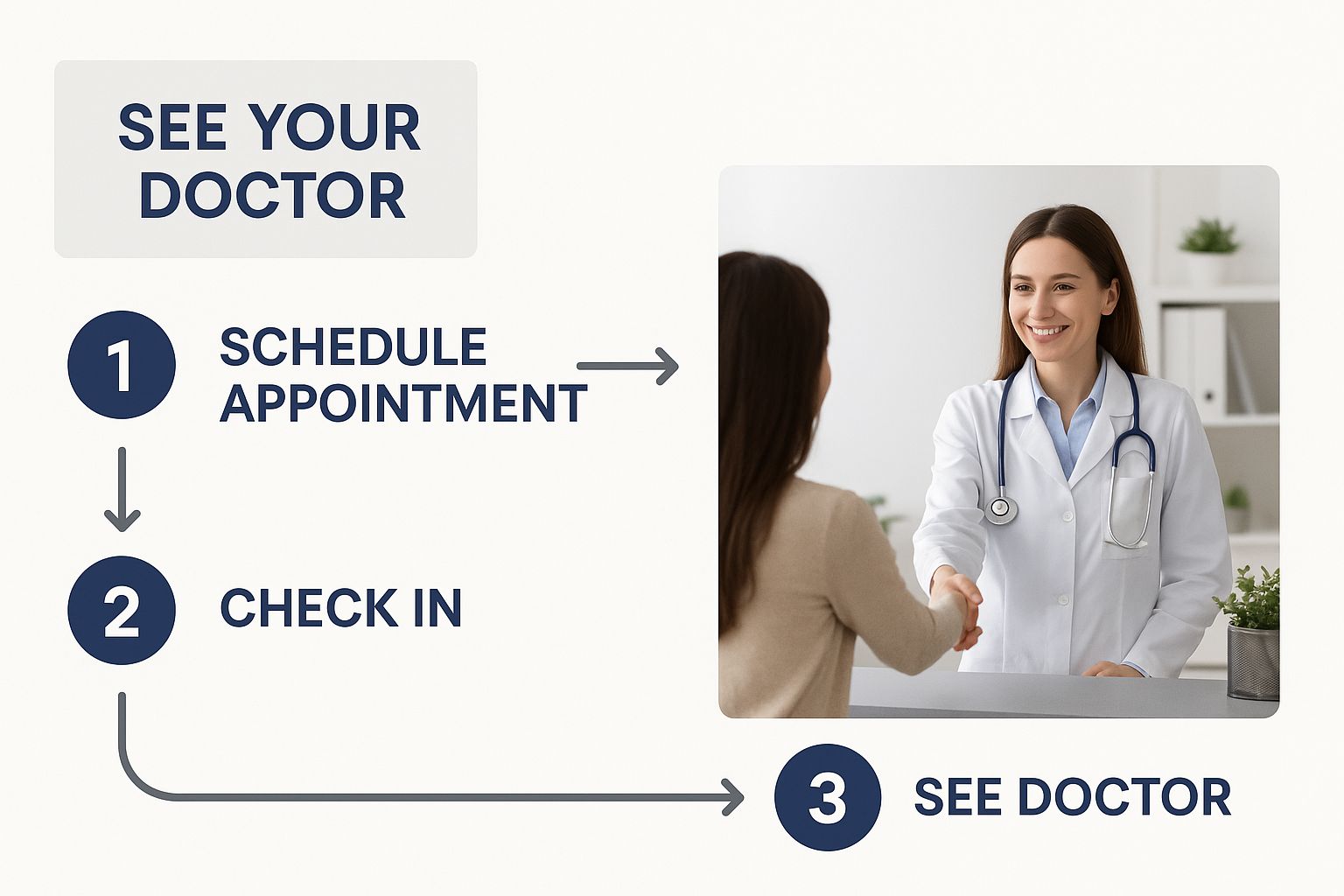
While this looks wonderfully stress-free, the reality is that the urgent care route is becoming the norm for many.
Recent data is quite revealing: 56% of general practice appointments in England happened on the same day they were booked. This isn't just a random statistic; it highlights how vital these on-the-day slots are for both patients and doctors. It shows a clear shift towards addressing health concerns as soon as they arise. You can dig deeper into these GP appointment wait times in the official report.
Pro Tip: If you're using an online form or e-consult, be concise but specific. Don't just write "stomach ache." Instead, try something like, "sharp, localised pain in the lower right abdomen since last night." That extra bit of detail helps the clinical team triage your request far more effectively.
Ultimately, the best method really depends on your surgery's system. Some practices prioritise their online bookings, while others still have more capacity for phone calls. A little bit of homework to figure out your clinic’s preferred method can give you a real advantage in that daily race for an appointment.
Lifestyle Choices to Bolster Your Health
Knowing how to book a same-day GP appointment is a great skill to have, but the real goal is to need one less often. Building a resilient immune system through smart, consistent lifestyle choices is your best long-term strategy for staying well. This isn’t about a massive, sudden overhaul; it’s about the small, sustainable habits that give your body’s natural defences the support they need.
A balanced diet is the cornerstone of good health. Think of your plate as a toolkit for your immune system. Foods packed with Vitamin C (like oranges, peppers, and broccoli), Vitamin D (found in oily fish and fortified foods), and Zinc (abundant in nuts and seeds) are particularly vital for immune function. Every time you prioritise whole foods over processed options, you're giving your body the high-quality fuel it needs to operate at its best.
The Pillars of Preventative Wellness
Beyond what you eat, a few other factors play a massive role in keeping you healthy and out of the doctor's office. Weaving these into your routine can make all the difference.
- Embrace Regular Movement: You don’t need to be a gym hero. Just 30 minutes of moderate exercise, like a brisk walk, on most days is enough to get your immune cells circulating. When it comes to exercise, consistency always trumps intensity.
- Prioritise Quality Sleep: Sleep is when your body gets down to the serious business of repair. Getting a solid 7-9 hours of quality, uninterrupted sleep each night is non-negotiable for a robust immune response. It's no coincidence that we often get sick when we're run down—poor sleep has been directly linked to being more susceptible to illness.
- Manage Your Stress Levels: Chronic stress is a saboteur. It floods your body with hormones like cortisol, which can suppress your immune system over time. Finding healthy ways to unwind, whether it’s a hobby, a bit of mindfulness, or just spending time in nature, helps keep that stress response in check.
Don't forget your gut—it's a major player in your overall immunity. A huge portion of your immune system actually lives in your gut, making a healthy microbiome essential for fighting off pathogens.
Exploring various strategies to boost your immunity can proactively strengthen your body's defences and cut down on how often you get ill.
Focusing on these proactive health habits empowers you to stay healthier and manage minor illnesses at home, saving those urgent appointments for when you truly need them. By taking control of these lifestyle factors, you're not just dodging colds; you're building a foundation for lasting wellbeing.
Making Your GP Consultation Count
So, you’ve managed to book a same day GP appointment. Fantastic. Now, the goal is to make those precious few minutes as productive as possible. Whether you’re seeing your doctor in person, on a call, or over video, a little preparation goes a long way.
Before the appointment, try to jot down a quick summary of what’s going on. List your main symptoms, when they started, and anything that seems to make them better or worse. This isn’t about diagnosing yourself; it’s about giving your GP clear, factual information so they can connect the dots and help you properly.
Be Open and Honest
Your doctor needs the full picture to give you the right advice. It’s vital to be completely upfront about your lifestyle habits, any home remedies you’ve tried, or over-the-counter medicines you’ve taken. For example, mention your typical diet, exercise routine, alcohol consumption, and smoking status, as these factors are crucial for an accurate assessment.
Everything you say is confidential, and this information is crucial for an accurate diagnosis and a safe treatment plan. Holding back key details can sometimes lead to the wrong conclusions or a treatment that just doesn’t work.
A good consultation is a partnership. Your honesty and preparation give your GP the tools they need to provide the best possible care, so you can leave with a clear plan and the confidence to move forward.
If you’re having a remote consultation, a couple of extra steps can make a huge difference. Find a quiet, private spot where you won’t be disturbed. Give your camera and microphone a quick test beforehand to avoid any last-minute technical hitches. A smooth, clear conversation means you and your GP can focus entirely on your health, which is exactly what you want.
Your GP Appointment Questions, Answered
Trying to book a same day GP appointment when you’re feeling unwell can be stressful, and it's natural to have questions. Knowing what to expect and what your options are can make all the difference.
Here are some of the most common queries we hear from patients.
What If All Same-Day Appointments Are Gone?
It’s the moment we all dread: you call or log on, only to find all the urgent slots for the day have been snapped up. Don’t panic. The first thing to do is calmly explain the urgency of your symptoms to the receptionist. They are trained to triage these situations and might be able to get a duty doctor or nurse to give you a call back for an assessment.
If you feel your condition simply can't wait, your next step should be NHS 111. Their advisors are trained to assess your situation over the phone.
Based on their assessment, they can direct you to an urgent treatment centre, book an out-of-hours appointment, or advise you to go to A&E if your symptoms are serious. Trust your instincts—if you believe your condition needs immediate attention, don't hesitate to seek it.
Phone Call or Online App: Which Is Better?
Honestly, there’s no single right answer here, as it really does vary from one GP practice to another. Many surgeries now release their appointments at the same time on their phone lines and online systems, like the NHS App.
- Online/App: This can be a game-changer. You get to completely bypass a jammed phone line, see what's available in real-time, and book a slot instantly. It's often the quickest route.
- Phone Call: Sometimes, you just need to speak to a person. A direct conversation lets you explain the nuances of your symptoms, which is crucial if they don't neatly fit into an online form. This human touch can make a real difference in getting the right triage.
The best tactic? Get to know your surgery's system before you get sick. Have a quick look at their website or ask the reception team next time you're in.
Can I See My Usual GP?
When you need a same-day urgent appointment, it’s highly unlikely you’ll see your regular doctor. These slots are reserved for immediate problems and are handled by whichever GP is on duty for urgent care that day. Their focus is purely on sorting out the acute issue at hand.
If you need continuity of care—say, for managing a long-term condition or for a follow-up—it's always best to book a routine, non-urgent appointment in advance with your preferred GP.
At The Lagom Clinic, we know your time is precious and your health is everything. We offer flexible, patient-focused appointments designed to fit your busy life, so you can get the care you need, right when you need it. Discover a more balanced approach to healthcare by visiting us at https://www.thelagom.co.uk.
Need a same-day GP appointment?
The Lagom Clinic offers same-week (and often same-day) private GP appointments in Bristol. 30-minute consultations from £125.

 Members Consultation