


A heart echo scan is essentially an ultrasound for your heart. It’s officially called an echocardiogram, and it's a completely painless and safe way to get a live video of your heart in action. If you’ve ever seen an ultrasound scan for a pregnancy, it’s the exact same idea—but instead of a baby, we get a detailed, real-time picture of your heart's chambers, valves, and how well it's pumping.
Why Your Doctor May Recommend a Heart Echo Scan
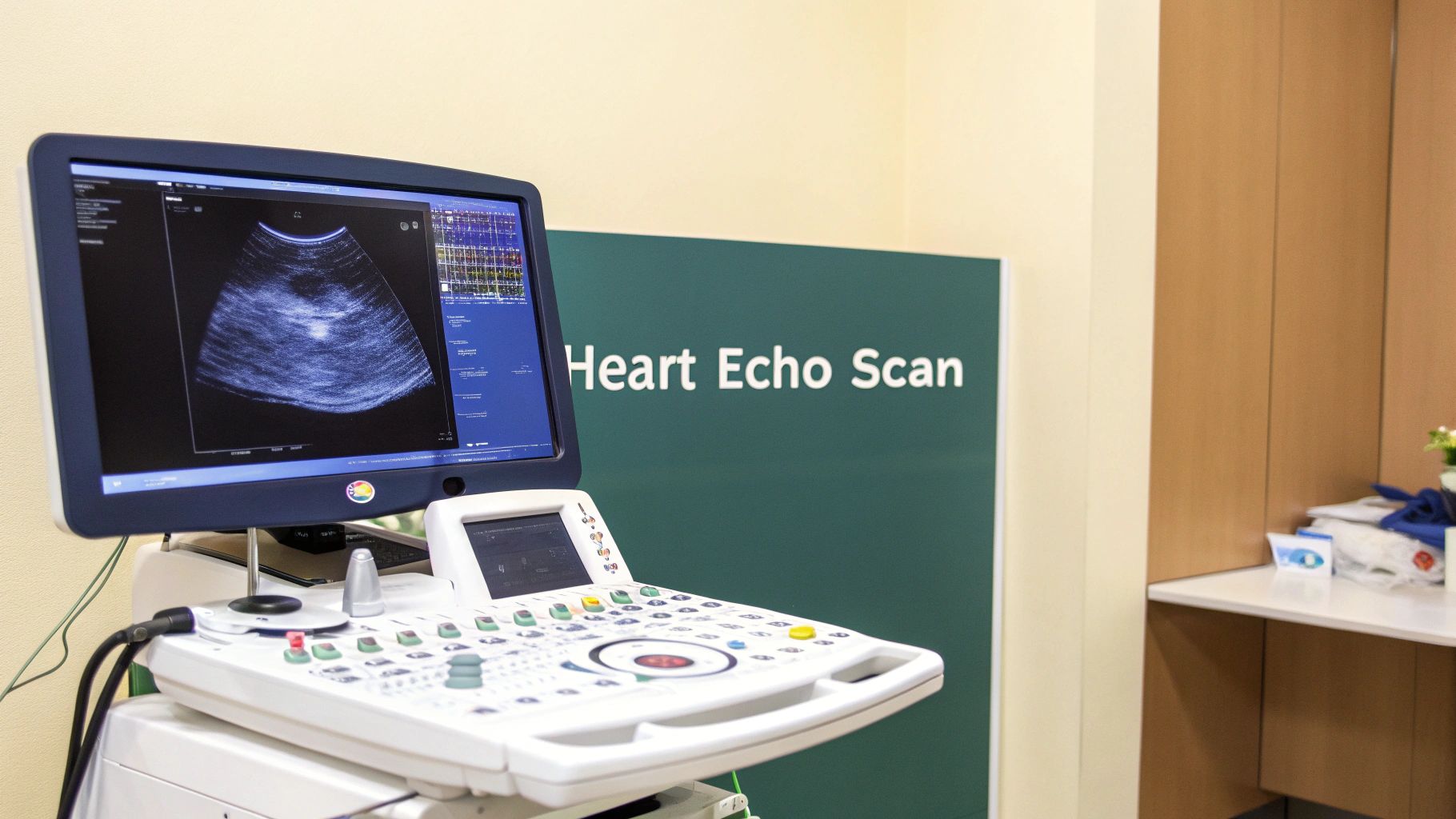
If your doctor has suggested a heart echo scan, it’s a positive and proactive step towards getting a clear picture of your cardiovascular health. This is an incredibly useful diagnostic tool. It lets your GP or cardiologist see your heart's structure and function up close, all without any invasive procedures or radiation. The entire scan simply uses sound waves, making it one of the safest medical imaging tests around.
A doctor might order this scan for a few key reasons. Most often, it's the next logical move when looking into symptoms that might point to a heart condition. For anyone wanting a deeper dive into the procedure, you can find detailed information on echocardiograms from reliable patient guides.
Investigating Symptoms
Certain symptoms are like warning lights, signalling that your heart might need a closer inspection. An echo scan is one of the best ways to get to the root of these concerns.
- Shortness of Breath: If you’re finding yourself out of breath much more easily than usual, an echo can check if your heart is struggling to pump blood effectively.
- Chest Pain or Discomfort: While lots of things can cause chest pain, a scan is a straightforward way to rule out any structural problems with your heart.
- Heart Murmurs: That unusual "whooshing" sound a doctor might hear through a stethoscope often points to a faulty valve, which an echo can see directly.
- Dizziness or Fainting Spells: These episodes can sometimes be tied to problems with blood flow or heart rhythm, and the scan helps assess that.
A heart echo scan provides a window into your heart's health, offering crucial information that guides diagnosis and treatment. It transforms sound waves into a dynamic image, allowing doctors to see precisely how your heart is working.
Monitoring Existing Conditions
For people who already have a diagnosed heart condition, a heart echo scan is a cornerstone of their ongoing care. It helps your medical team see how well treatments are working—like medication for high blood pressure or heart failure—and keep an eye on any changes over time. It's also routinely used after a heart attack to see how much, if any, damage was done to the heart muscle.
It's helpful to remember that an echo scan shows the heart's mechanical function. Other tests, like an ECG, are used to check its electrical activity. Understanding both gives you a much fuller picture of your overall heart health. Taking proactive steps, such as adopting a heart-healthy diet and engaging in regular, gentle exercise, can positively influence the factors these tests measure, supporting your overall treatment plan.
How to Prepare for Your Echocardiogram Appointment

One of the best things about a standard echocardiogram is just how little you need to do to prepare. The whole process is designed to be as straightforward and stress-free as possible.
For a transthoracic echo—the most common kind—there are no special rules about eating or drinking. You can simply eat, drink, and take your usual medications just as you would on any other day. Your comfort is what matters most.
What to Wear and Bring
When it comes to your outfit, think simple and comfortable. Loose-fitting clothing is always a good choice. Since you'll likely need to undress from the waist up and put on a hospital gown, a two-piece outfit (like a top with trousers or a skirt) makes things much easier.
To help your appointment run smoothly, it's a good idea to have a few things with you:
- Your appointment letter or referral form.
- A list of any medications you're currently taking, including prescriptions, over-the-counter remedies, and supplements.
- Any details about your medical history, if your doctor has asked for them.
Having these bits and pieces ready helps the clinical team get a clear picture of your health without any delays.
Remember, these small preparations are all about making the experience calm and efficient for you. Choosing the right clothes and having your documents handy can make a real difference on the day.
Preparations for Other Types of Echo Scans
While the standard echo scan is simple to prepare for, some of the more specialised types do come with their own instructions. Don't worry, the hospital will give you clear guidance well in advance if this is the case.
For instance, a transoesophageal echo (TEE) involves passing a small probe down your throat, so you'll usually be asked to fast for several hours beforehand to make sure your stomach is empty.
If you're booked for a stress echocardiogram, you'll be exercising on a treadmill. For this, you’ll need comfortable walking shoes and clothes you can move in easily. The key takeaway? Always follow the specific instructions provided for your particular scan.
A Step-by-Step Guide to the Heart Echo Scan Procedure
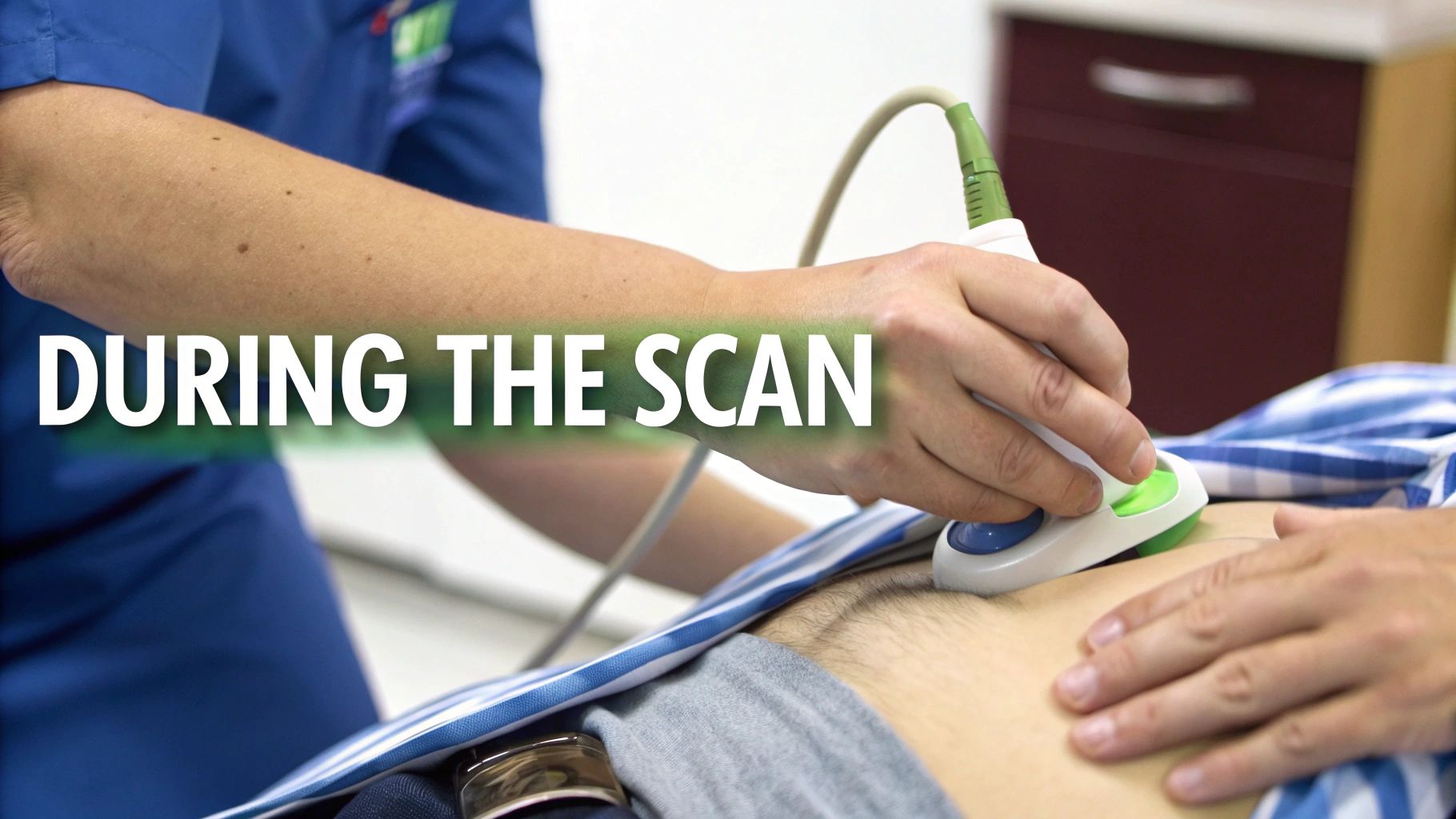
Knowing what to expect can really take the anxiety out of a medical appointment. A heart echo scan is designed to be a straightforward and painless experience. Let’s walk through the whole process, from the moment you step into the room to the final scan, so you can feel completely prepared and at ease.
The scan itself happens in a quiet, dimly lit room. This isn't just for atmosphere – it helps the sonographer get a much clearer view of the monitor. You’ll be looked after by a highly trained specialist, usually a cardiac sonographer, whose job is to get the best possible images of your heart while making sure you’re comfortable.
Getting You Ready for the Scan
First things first, you'll be asked to undress from the waist up and slip into a hospital gown. Once you're settled and lying down on the examination couch, the sonographer will attach a few small, sticky patches, called electrodes, to your chest.
These electrodes are hooked up to an electrocardiograph (ECG) machine. Now, this bit doesn't take any pictures. Instead, it monitors your heart's electrical rhythm, which gives the doctor crucial context when they look at the ultrasound images later. It’s completely painless, feeling a bit like having plasters put on.
The sonographer will then ask you to lie on your left side. This simple change in position actually brings your heart a little closer to the chest wall, making it much easier to get sharp, detailed images.
What Happens During the Scan
With you in position, the sonographer will squeeze a clear, cool gel onto your chest. This water-based gel is essential because it helps the sound waves from the probe travel smoothly into your body, getting rid of any air pockets between the probe and your skin.
Next comes the main tool: a small, handheld device called a transducer. This is the probe that sends and receives the high-frequency sound waves. The sonographer will gently press it against your skin, moving it around different parts of your chest to see your heart from every possible angle.
It's a non-invasive procedure, so there's nothing to worry about. You might feel a little bit of pressure from the transducer, but you shouldn't feel any pain at all. The sonographer might also ask you to hold your breath for a few seconds here and there to help them capture a still, clear picture.
The whole thing usually takes between 30 and 60 minutes. Throughout this time, the transducer is capturing live video clips and still photos of your heart, all displayed on a monitor. The sonographer will be concentrating on the screen to make sure they get all the views the cardiologist needs. You won’t get any results on the day, as a specialist needs to carefully analyse all the images first.
Making Sense of Your Heart Echo Scan Results

After your heart echo scan is finished, the wait for the results can feel a little daunting. It's good to know that the sonographer who performs the scan is an expert in getting the best possible images, but they won't be able to give you a diagnosis on the day. Their job is to capture the pictures; the analysis comes next.
These detailed images are then passed to a cardiologist, a heart specialist, for a thorough review. They'll put together a comprehensive report and send it on to your GP or the doctor who originally referred you. This is a crucial step, as it means the person who understands your full medical history can put the results into context and discuss them with you properly.
While you're waiting, it can be helpful to focus on what you can control. This is an excellent time to empower yourself by making positive lifestyle choices. Gentle exercise, such as a daily walk, and small dietary tweaks, like reducing salt intake, are great ways to actively support your heart health, regardless of the scan's outcome.
What Your Doctor Looks For in the Results
The pictures from your echo give your doctor a huge amount of information. Think of it as them getting both a detailed blueprint of your heart's structure and a live video of it in action. They'll be looking closely at several key things to build up a clear picture of your heart's health.
Here’s a breakdown of what a cardiologist is looking for:
- Heart Size and Shape: They'll measure the four chambers of your heart and check the thickness of the muscle walls. If a chamber is enlarged or a wall is too thick, it might point to issues like high blood pressure.
- Pumping Strength: This is all about how well your heart is doing its main job—pumping blood. It’s one of the best indicators of how strong the heart muscle is.
- Valve Function: The scan shows exactly how your four heart valves are opening and closing. They can easily spot if a valve is leaky (regurgitation) or too narrow (stenosis).
- Areas of Muscle Damage: If one part of the heart muscle isn't contracting properly, it can be a sign of damage from a past heart attack or a problem with blood flow.
One of the most critical measurements from an echo is the ejection fraction (EF). This figure, given as a percentage, tells your doctor how much blood the left ventricle pumps out with each beat. For a healthy heart, the EF is usually somewhere between 55% and 70%.
Understanding Key Heart Health Metrics
It can be tricky to get your head around some of these terms, but an analogy might help.
Think about squeezing a wet sponge. The total amount of water you force out is like your heart's "stroke volume." The ejection fraction is the percentage of water you squeezed out compared to how much the sponge held in the first place. A healthy heart gives a good, strong squeeze every single time.
Ultimately, your results give your doctor the solid information they need to map out the best path forward. This could mean starting a new medication, tweaking an existing one, or recommending specific lifestyle changes. Whatever the plan, it will be designed specifically for you, with your long-term heart health as the number one priority.
Lifestyle Changes That Support a Healthy Heart
An echocardiogram gives us a fantastic, detailed snapshot of your heart's health at one specific moment. But the story doesn't stop when the scan is over. The good news is, you hold a lot of power to shape your heart's future through simple, positive daily choices.
Making small, consistent changes is always more powerful than attempting a sudden, dramatic overhaul. The real goal here is to build habits that will protect your heart for years to come.
Nourish Your Heart with the Right Foods
What you put on your plate has a direct and surprisingly quick impact on your entire cardiovascular system. A heart-healthy diet is all about focusing on whole, unprocessed foods – the kind of stuff that’s packed with nutrients and low in things that can cause damage over time.
Think of it as choosing the best possible fuel for your heart's engine.
- Pile on the Fruit and Veg: A great rule of thumb is to fill half your plate with a rainbow of colourful fruits and vegetables. They’re loaded with vitamins, minerals, and antioxidants that help keep your arteries healthy.
- Go for Whole Grains: Try swapping white bread, pasta, and rice for their whole grain versions like oats, brown rice, and quinoa. The fibre in these is brilliant for helping manage your cholesterol levels.
- Focus on Healthy Fats: Not all fats are the enemy! Foods like avocados, nuts, seeds, and oily fish (think salmon and mackerel) are full of omega-3 fatty acids, which are known to lower the risk of abnormal heart rhythms.
A huge part of this is also cutting back on sodium (salt) and unhealthy fats. Too much salt is a key driver of high blood pressure, which forces your heart to work much harder than it should. You can learn more about practical steps in our guide on how to manage high blood pressure.
A balanced, heart-friendly diet isn't about deprivation. It's about abundance. When you focus on adding more of the good stuff, you naturally leave less room for the less healthy options. It’s a much more positive and sustainable way to approach eating well.
Get Moving: The Power of Regular Activity
Your heart is a muscle. Just like any other muscle, it gets stronger when you use it. Regular physical activity is fantastic for improving circulation, lowering blood pressure, and maintaining a healthy weight – all things that take a significant strain off your heart.
The NHS recommends at least 150 minutes of moderate-intensity activity each week. That might sound like a lot, but you can easily break it down. A brisk 30-minute walk five days a week gets you there perfectly. Other great choices include swimming, cycling, or even a good session of gardening. Honestly, the best exercise is simply the one you enjoy enough to do consistently.
Manage Stress to Protect Your Heart
We often underestimate the physical toll of chronic stress. It can directly lead to high blood pressure and push us towards unhealthy coping habits like emotional eating or smoking. Finding healthy ways to manage that stress is a non-negotiable part of looking after your heart.
Simple techniques like mindfulness, deep breathing exercises, yoga, or just spending time in nature can make a huge difference. Even setting aside 10-15 minutes each day for a quiet activity you enjoy can lower your stress levels.
Finally, quitting smoking and cutting back on alcohol are two of the most powerful changes you can possibly make. Smoking is a direct cause of heart disease, and drinking too much can raise blood pressure and lead to weight gain. Your GP is an excellent first stop for support and resources to help you with both.
Coping with Long NHS Waiting Times for Heart Scans
Let's be honest, waiting for any kind of medical test is stressful. When it's a heart scan, that anxiety can be particularly intense. Knowing you need an echocardiogram but being stuck on a long waiting list can make you feel completely powerless. It's a tough spot to be in, but there are absolutely things you can do to take back some control and look after your health.
The unfortunate reality is that waiting times for these crucial scans have stretched significantly. A 2022 report painted a stark picture, revealing that around 155,000 people in England were waiting for an echo. Of those, a staggering 66,000 had been waiting for more than the six-week NHS standard. This isn't a new problem—long-standing workforce shortages have been an issue for years, and the pandemic certainly didn't help. You can read the full BSE workforce survey report on these echocardiography workforce challenges if you want to dig deeper into the numbers.
Staying Proactive While You Wait
While the system does its work, your focus should be on what you can influence: your day-to-day wellbeing and your communication with your medical team. This is the perfect time to adopt heart-healthy habits and keep a clear line of communication open.
- Keep in Touch: It is perfectly reasonable to call your GP's surgery or the hospital department to ask for an update. A polite check-in can offer some peace of mind and confirm you are still on the list.
- Track Your Symptoms: Start a simple diary. Jot down any symptoms you experience, noting the time of day, what you were doing, and how it felt. This kind of detailed record is gold dust for your doctor.
- Embrace Lifestyle Changes Now: Don't wait for a diagnosis to start looking after your heart. Begin by making small, manageable changes. Reduce your salt intake, go for a short walk each day, and find healthy ways to manage stress. These actions empower you and can have a real impact on your wellbeing.
Understanding how modern imaging centres are trying to tackle these delays can also be helpful. The growing use of teleradiology services and specialists is one of the key ways they are working to manage the demand.
When to Seek Immediate Medical Advice
Waiting patiently is one thing, but ignoring new or worsening symptoms is another. There are some definite red flags that mean you need to get in touch with your GP, call NHS 111, or in a serious emergency, dial 999.
It is vital to act if you experience a sudden change in your condition. Trust your instincts—if something feels seriously wrong, it's always better to get it checked out immediately rather than waiting for your scheduled scan.
Be on high alert for these symptoms:
- Sudden or Severe Chest Pain: Especially if it radiates into your arms, back, neck, or jaw.
- Increased Shortness of Breath: Pay close attention if this happens even when you’re resting.
- Fainting or Loss of Consciousness: Any time you black out, it warrants an urgent medical review.
- Sudden Swelling in Your Legs or Ankles: This can be a sign that your heart's pumping function has changed.
By staying vigilant about your symptoms and proactive in your approach, you can navigate this waiting period more safely and feel better prepared when your heart echo scan appointment finally comes through.
Your Questions Answered: What to Expect with a Heart Echo Scan
It’s completely natural to have a few questions buzzing around your mind as your appointment gets closer. Knowing the practical ins and outs of the scan can make a world of difference, helping you feel more comfortable and prepared.
First things first, let’s talk about safety. A heart echo scan is one of the safest diagnostic tools we have. It uses harmless sound waves—not radiation—to build a picture of your heart. This makes it completely safe for everyone, including expectant mothers.
Practicalities on the Day
Many of our patients ask about the simple logistics, so let's clear those up.
-
How long will it take? You can expect a standard transthoracic echocardiogram to last between 30 and 60 minutes. The sonographer needs this time to carefully move the probe around to get clear views of your heart from every important angle.
-
Do I get the results right away? The sonographer is a specialist in capturing these detailed images, but they aren't the one who interprets them. Your scan images will be sent to a cardiologist for an expert review. A detailed report is then sent back to your doctor, who will go through the findings with you at a follow-up appointment.
Life After Your Scan
What happens once the gel is wiped off and you're ready to leave? This is another common question.
For a standard echo, there’s no downtime at all. You can walk out of the clinic and get straight back to your day.
You’re fine to drive home, go back to work, or carry on with any other plans. The only time this changes is if you've had a more specialised transoesophageal echo (TEE), which involves light sedation. If that’s the case, you'll need someone to drive you home and should plan to take it easy for the rest of the day.
At The Lagom Clinic, our goal is to give you clear, straightforward information to support your health. If you have any more questions or are looking for proactive, personalised healthcare in Bristol, please visit our website.


 Members Consultation