


The road back from an ACL reconstruction is a long one, but it's a well-trodden path. Knowing what to expect makes the whole journey feel less daunting. Generally, you’re looking at a 9 to 12-month commitment to get back to full strength, moving through very specific phases of healing and rebuilding.
This isn't just about waiting for time to pass; it's an active process. Let's break down the roadmap, stage by stage, with practical health advice to support your recovery.
Mapping Your ACL Recovery Journey
An ACL tear is a massive disruption, not just physically but mentally too. It takes a serious amount of patience and hard work to get back on your feet. Here in the UK, it's a surprisingly common injury, with around 52,000 cases each year, and about half of those end up needing surgery.
The recovery after that surgery typically lasts anywhere from 6 to 12 months. The single most important factor for success? A structured, consistent physiotherapy programme. You can dig deeper into the stats and standard procedures in this in-depth overview on ACL reconstruction.
Think of your recovery like building a house. You have to lay the foundations properly before you can even think about putting the roof on. Rushing a stage or skipping a step will only cause problems down the line.
The Foundational Phases of Healing
Right after surgery, the first job is simple: create the best possible environment for your new ligament graft to heal. This means getting the swelling down, managing pain, and starting to introduce very gentle movement to stop things from stiffening up. Your lifestyle choices are medically crucial here. A diet rich in anti-inflammatory foods (like leafy greens, berries, and oily fish) and staying well-hydrated provide your body with the essential building blocks for repair.
Once the initial healing is underway, the focus shifts to building strength. We're talking about progressively loading the muscles around the knee, especially your quadriceps and hamstrings. These muscles are your knee's personal bodyguards; rebuilding their strength is absolutely critical for keeping your knee stable long-term.
"Patience is your greatest asset during ACL recovery. Rushing back too soon is the single biggest risk for re-injury. Trust the process, follow your physiotherapist's guidance, and celebrate the small victories along the way."
The infographic below gives you a great visual of how this all comes together, from those early healing days right through to sport-specific training.
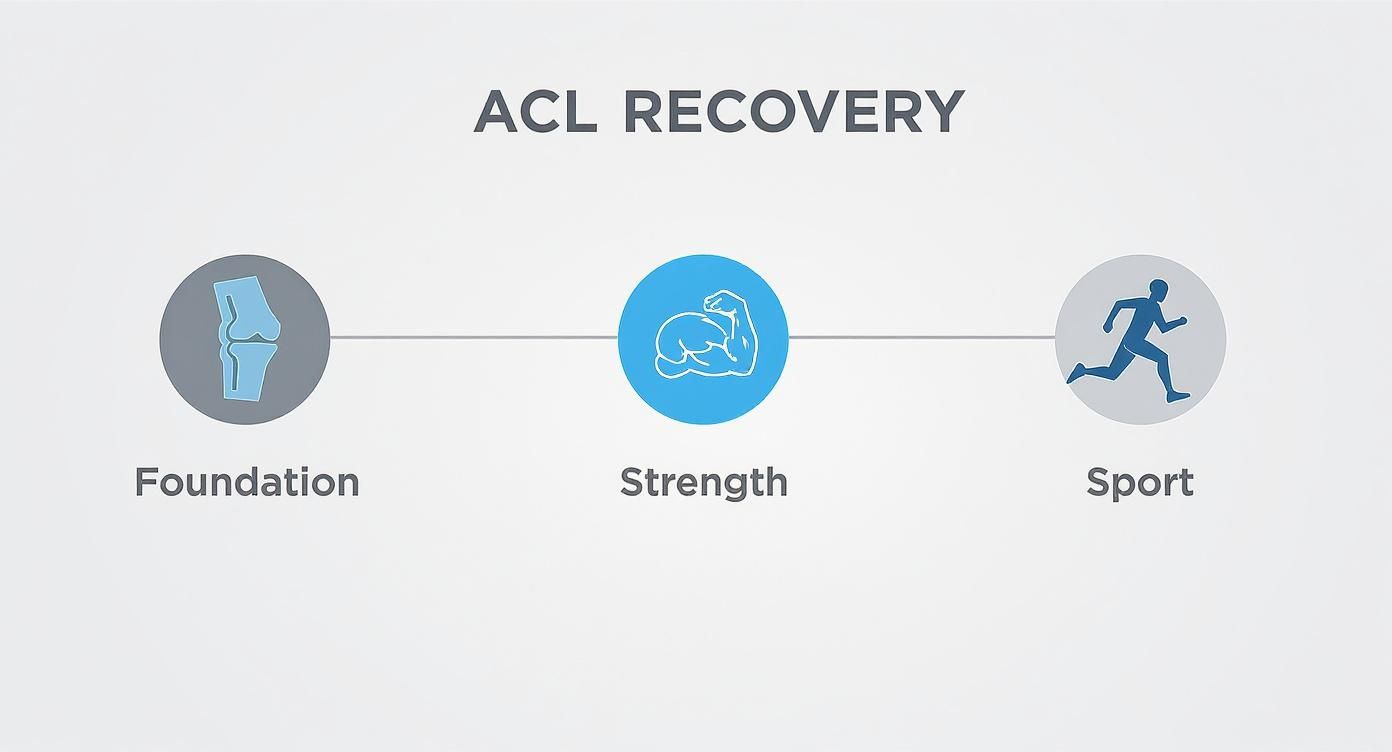
As you can see, each stage logically builds on the one before it, slowly preparing your knee for the demands you'll eventually place on it.
Your ACL Recovery Journey at a Glance
To give you a clearer picture of the entire acl recovery timeline, this table breaks down the main phases, their goals, and the typical timeframes you can expect.
| Recovery Phase | Typical Timeline | Primary Goals |
|---|---|---|
| Phase 1 Foundation | 0-6 Weeks | Reduce swelling, regain full knee extension, and begin light muscle activation. |
| Phase 2 Strength | 6 Weeks – 3 Months | Normalise walking, build foundational leg strength, and improve balance. |
| Phase 3 Sport | 3-9+ Months | Introduce sport-specific movements, build power, and prepare for return-to-play. |
Of course, this is just a guide. Everyone's journey is a little different. Your pre-injury fitness, how well you stick to your rehab plan, and your general health will all play a part. Your physiotherapist is there to create a programme that’s right for you, guiding you from one milestone to the next.
The First Two Weeks Post-Surgery

Let’s be honest, the first two weeks after ACL surgery are tough. This initial period is the foundation for everything that comes next, and your body is working overtime to heal. The main mission here isn't about pushing your limits; it’s about creating the ideal environment for that new graft to settle in and for the surgical trauma to calm down.
Expect your knee to be swollen, stiff, and sore. That’s your body’s natural inflammatory response kicking in. The game plan is simple but absolutely crucial: get the pain and swelling under control, work diligently on getting your leg completely straight (full knee extension), and start some very gentle movements to stop it from seizing up.
Mastering Early Stage Recovery
Getting a handle on the swelling is non-negotiable. It’s not just about comfort; swelling actively inhibits your muscles, especially your quadriceps, from firing properly. This is where your daily habits will make all the difference.
Make gravity your best friend by keeping your leg elevated above your heart as much as you can. This helps drain all that excess fluid away from the knee. Pair this with consistent icing—the gold standard is about 20 minutes every two hours. The cold helps constrict blood vessels, which further tackles both swelling and pain.
It's also vital to stay on top of the pain medication schedule your surgeon gave you. Keeping the pain at a manageable level makes it far easier to do the simple, yet essential, exercises your physio will show you.
Your main goals for the first two weeks are not about strength, but control. Focus on two things above all else: reducing swelling and achieving a fully straight knee. A straight knee now prevents walking problems later.
Essential Movements and Lifestyle Tweaks
It might feel counterintuitive when you're in pain, but gentle movement is your ally. Your physiotherapist will walk you through a few basic exercises designed to wake up your muscles and get blood flowing without putting any real strain on the new graft.
These exercises might seem small, but they are incredibly powerful at this stage:
- Ankle Pumps: Simply pointing and flexing your foot is a great way to keep blood circulating, which is important for healing and reducing the risk of clots.
- Quad Sets: This is about re-establishing that mind-muscle connection. Just focus on tensing the big muscle on the front of your thigh and holding it.
- Heel Slides: By gently sliding your heel towards your bum, you’ll begin the slow and steady process of regaining your knee bend (flexion).
As you move through these first crucial weeks, the focus is on protecting the graft while encouraging safe movement. Once your physio gives you the go-ahead for more activity, looking into low-impact exercises for beginners can be a great next step.
Finally, don't overlook the simple things like nutrition and hydration. Your body is a construction site right now, rebuilding tissue and recovering from major surgery. A diet full of anti-inflammatory foods like leafy greens, berries, and oily fish can help, and drinking plenty of water is fundamental for cellular repair. Getting this right sets a positive tone for the entire acl recovery timeline.
Building Your Foundation for Strength
Once you’re through the first couple of weeks, your ACL recovery timeline starts to feel a lot more proactive. This next phase, usually spanning from week two to week six, is where we shift gears from simply healing to actively laying the groundwork for proper strength. The initial trauma of surgery is over, and now the real rebuilding work begins.
The focus here is crystal clear. We want to get you off those crutches for good, help you find a normal walking rhythm again (what we call your 'gait'), and steadily get your knee bending and straightening like it used to. Your physiotherapist is your best friend during this stage, pushing you just enough to make progress without ever putting the new graft at risk.
Reintroducing Movement and Strength
Your exercises will start to feel less like post-op chores and more like actual training. Everything is still low-impact, of course, but the goal is to wake up the key muscles that support and protect your knee. This isn't about lifting heavy weights; it’s about reteaching your quads and hamstrings how to fire properly and building up their endurance.
Some foundational exercises you'll likely be doing include:
- Stationary Cycling: This is an absolute gem for improving your range of motion and building muscle endurance without hammering the joint.
- Mini-Squats: These small, controlled movements are the first step in the crucial process of rebuilding the quadriceps strength that's so vital for knee stability.
- Balance Work: It might sound simple, but just standing on one leg does wonders for retraining the mind-body connection to your knee, improving what we call proprioception.
This deliberate, structured approach to reintroducing movement is the very essence of musculoskeletal physiotherapy—restoring function and strength to the body’s framework. If you're interested in the specifics, we have a detailed guide on what musculoskeletal physiotherapy is.
Think of this phase as learning to walk again, both literally and figuratively. Every step you take without a crutch, every extra degree of bend you get back in the knee—it’s a massive win. It’s all about building confidence in your knee's ability to support you.
Lifestyle Adjustments for a Safer Recovery
How you manage your day-to-day life is just as important as the exercises you do. Making your home a 'safe zone' is non-negotiable, as a simple trip or twist could be a major setback. This means getting rid of any trip hazards like loose rugs, trailing cables, or anything else cluttering the floor.
Try to get up and walk around for short periods throughout the day. It’s brilliant for mobility, helps fight off stiffness, and gets you back into a normal walking pattern. You'll also need to manage any lingering soreness as the muscles around your knee get stronger. Many people find that specific foam rolling techniques for knee pain relief can be incredibly helpful for releasing tightness in the quads and hamstrings. Taking these steps keeps you comfortable, focused, and firmly on the path to recovery.
Developing Strength and Neuromuscular Control
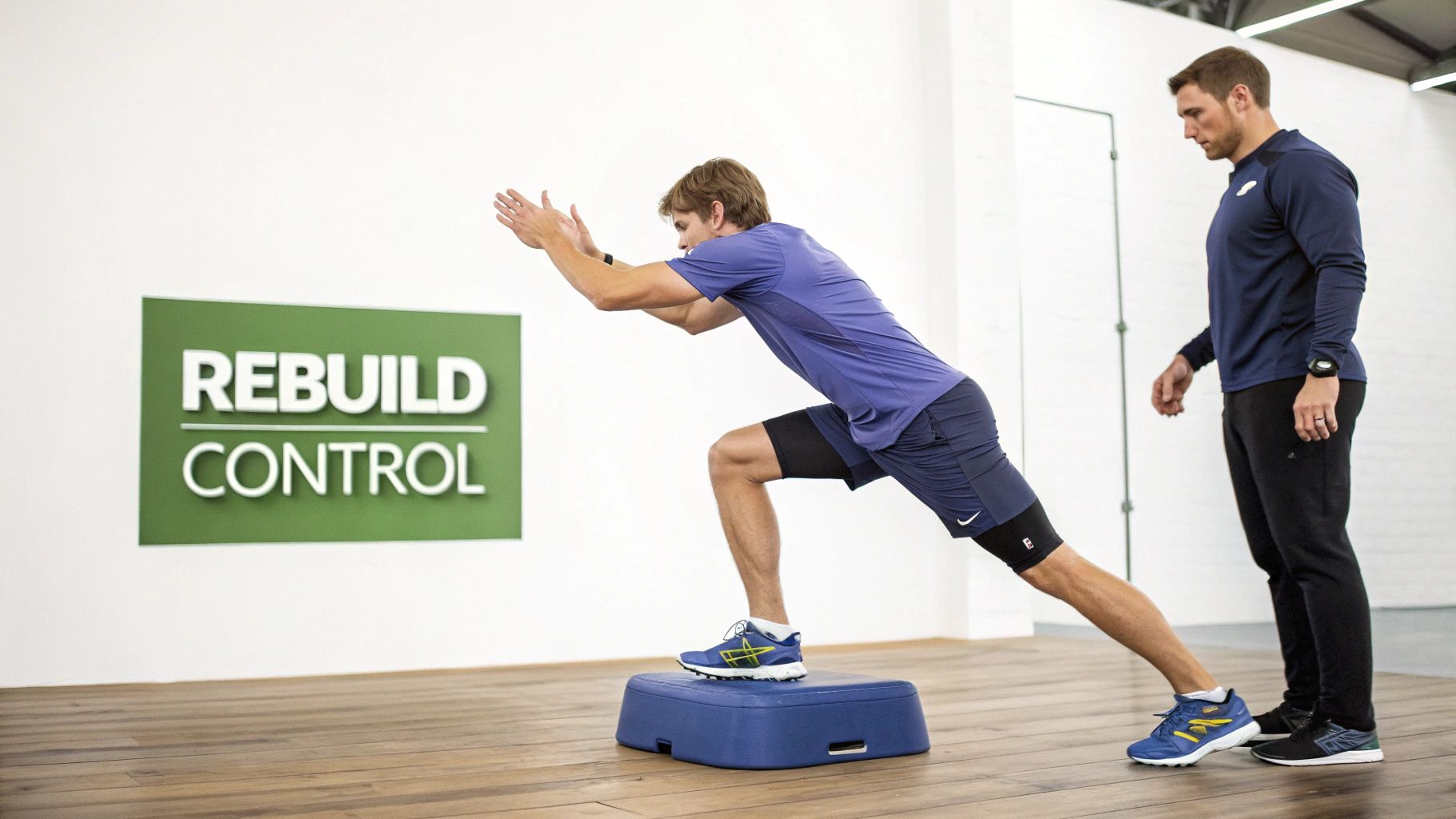
Welcome to the hard graft. This phase of your ACL recovery timeline, usually hitting between three to six months post-op, is where you really start to build back serious, functional strength. The early groundwork is behind you; now, the focus sharpens, moving away from simple two-legged movements to exercises that really challenge your operated leg on its own.
This shift is absolutely critical. After any major knee surgery, it's almost a given that your non-operated leg will have become the dominant, stronger one. Single-leg exercises are the key to exposing and fixing these imbalances, making sure both legs are pulling their weight for stability and power.
Retraining Your Brain-Knee Connection
More than just building bigger muscles, this stage is all about reclaiming your neuromuscular control. Think of it as re-establishing the communication line between your brain and your knee. The injury and surgery disrupted that connection, making your brain wary of trusting the joint. Your job now is to prove that your knee is stable, strong, and ready for action again.
We do this through specific drills that challenge your balance and your body's awareness of where it is in space—a sense called proprioception. These exercises are what rebuild the lightning-fast, automatic control you need for sports, or even just sidestepping a puddle on the street.
Here’s a taste of what your physio might have you working on:
- Single-Leg Stance: This might start on a solid floor but will likely progress to an unstable surface, like a wobble cushion, to really fire up those stabiliser muscles.
- Controlled Lunges: The focus here is on slow, deliberate movements—forward, backward, and sideways—to challenge your stability from all angles.
- Box Jumps and Landings: You'll start with a very low box, focusing entirely on absorbing the impact with perfect form, not on height.
For a deeper dive into safe and effective movements, our guide to exercises for knee injury recovery has plenty of progressions perfect for this stage.
This part of your recovery is less about how much you can lift and all about how well you can control the movement. A perfectly executed single-leg squat is worth far more than a wobbly, heavily loaded one.
Fuelling Your Workouts and Staying Resilient
With this ramp-up in intensity, your lifestyle choices become a massive part of the equation. Medically, a protein-rich diet is essential; aim to include a good source of protein (e.g., chicken, fish, tofu, legumes) with every meal to provide the amino acids your muscles need for repair and growth. Establishing a consistent routine—with proper warm-ups, clear goals, and dedicated cool-downs—is also scientifically proven to enhance results and prevent secondary injuries.
Don’t be surprised if you hit a plateau during these months. It can feel like your progress has ground to a halt, but this is a completely normal part of the process. The key is to stay mentally tough. Focus on your long-term goals and celebrate the small wins, like better form or more control, not just lifting heavier weights.
This hard work really does pay off. Data from the UK National Ligament Registry shows that ACL reconstruction delivers excellent long-term results, with people reporting lasting improvements for years. But that same data reminds us that full graft healing and neuromuscular recovery can take up to 18 months, which is why patience is just as important as persistence.
Preparing for a Safe Return to Sport
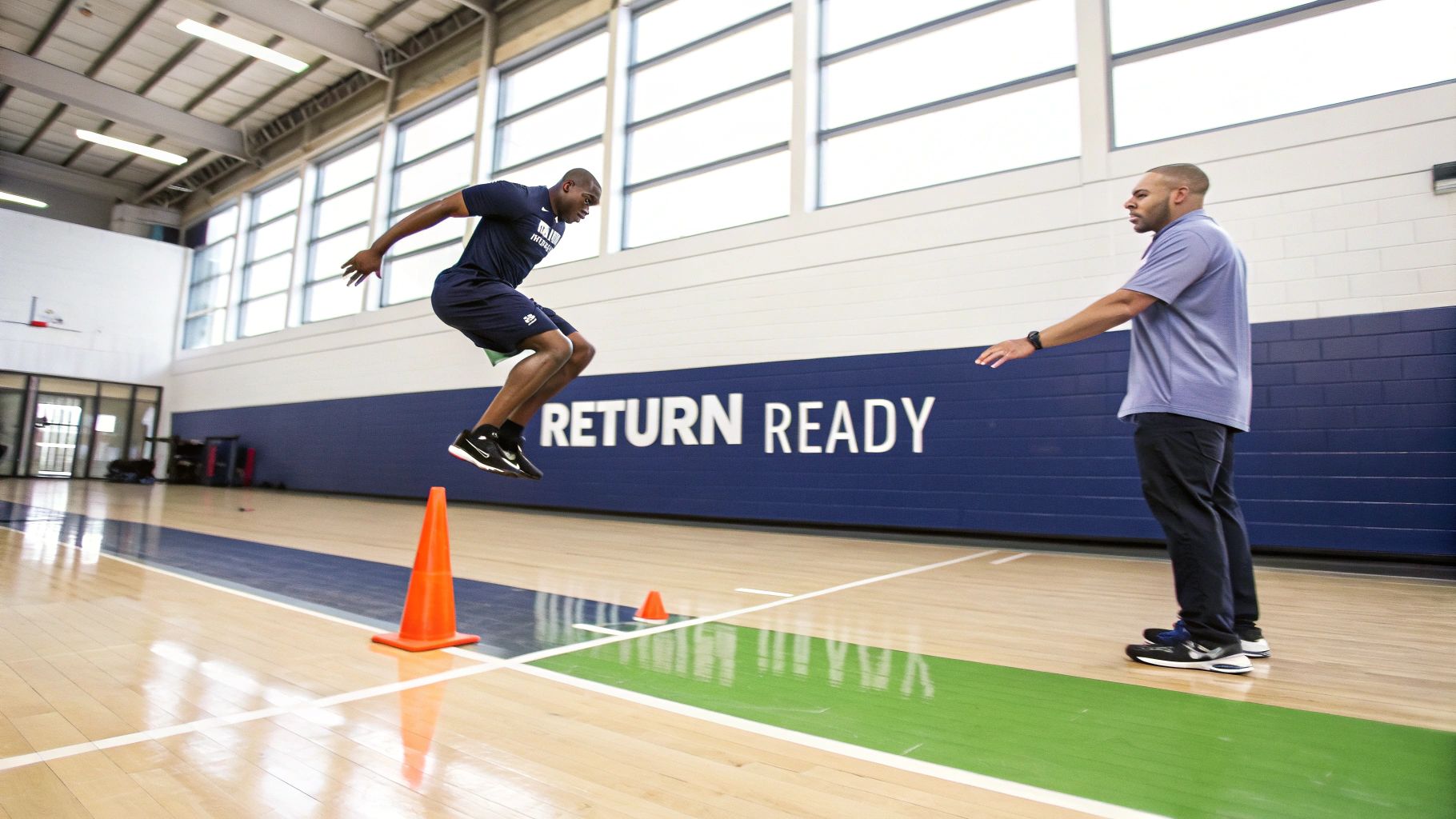
This is it. The final, dynamic phase of your ACL recovery timeline, kicking off from around six months post-op, is what all the hard work has been leading up to. You're making the leap from the controlled setting of the gym back to the chaotic, unpredictable world of your favourite sport. The goal now is to close the gap between raw strength and on-field skill, getting both your body and your mind ready for the real thing.
This stage is all about smart, sport-specific training. You'll slowly graduate from simple, straight-line jogging to the complex, multi-directional movements that your sport demands. This is where patience really is a virtue; trying to rush this last hurdle is one of the most common reasons for re-injury.
Progressing to Sport-Specific Movements
The training now becomes far more specialised, as we methodically bring back the very movements that challenge the ACL. Your physio will lead you through a carefully structured sequence of drills, all designed to build your knee's resilience and, just as importantly, your confidence in its stability.
A typical progression might look something like this:
- Agility Drills: We often start with controlled changes of direction, like weaving through cones, to remind your body how to move efficiently and safely again.
- Cutting and Pivoting: These exercises start slow and steady. Over time, we’ll ramp up the speed and intensity, retraining your ability to plant your foot and explode in a new direction.
- Plyometrics: This is all about explosive movements like jumping, bounding, and hopping – essential for generating the power needed in almost any sport.
Throughout all of this, the mantra is quality over quantity. Every landing needs to be soft, controlled, and with perfect form. This protects the new graft while drilling good movement patterns into your muscle memory. You're not just learning to play again; you're learning how to play in a way that minimises the risk of future injuries.
Meeting Objective Criteria, Not Just the Calendar
One of the biggest mistakes people make is fixating on a date. Thinking you're automatically ready at the nine-month mark is old-school. Modern rehab rightly puts the focus on meeting objective, functional criteria. Your physio will run you through a whole battery of tests to properly measure your strength, power, and stability.
Passing these return-to-sport tests is your true green light. It’s data, not a date, confirming that your operated leg is just as strong and capable as your other one, and that you have the control needed to handle the demands of your sport.
Managing your lifestyle during this period means training smart. A key tip is to learn to listen to your body, balancing high-intensity days with adequate rest to prevent overtraining and burnout. Proper nutrition remains vital; complex carbohydrates will fuel your sessions, while protein continues to support muscle repair. This holistic approach is crucial for performance and recovery.
This entire journey is a marathon, not a sprint, and it's different for everyone. A UK-based study really brought this home, showing the median time from injury to being discharged from care was around 14 months. Crucially, the study also found that when standardised discharge criteria were used, 61% of patients got back to their sport successfully. This just goes to show how vital a structured, criteria-led approach is. You can read more in this study on ACL recovery pathways.
Getting this phase right is your best defence against another injury. It's about more than just stepping back onto the pitch; it's about returning with the physical strength and mental confidence to play at your best, without hesitation.
Got Questions About Your ACL Recovery? Let's Get Them Answered.
The road back from an ACL injury is long, and it's completely normal to have a ton of questions pop up along the way. Getting solid, straight-up answers can make all the difference, helping you feel more in control of your rehabilitation. Let’s dive into some of the things we get asked most often.
How Can I Tell if My Recovery Is on Track?
This is a big one. The key is to trust the process and, most importantly, trust your physio. They aren't just guessing; they're tracking your progress against very specific milestones.
We look for things like getting your knee perfectly straight (full extension), seeing the swelling go down, and measuring how your strength is returning. Later on, we use functional tests—think single-leg squats or controlled hopping—to get hard data on how you’re doing. This tells us objectively when you're ready to move on. Remember, progress isn't a straight line. You'll have amazing weeks and others that feel like a real slog. That’s all part of it.
What Lifestyle Changes Make the Biggest Difference?
What you do outside the clinic is just as important as the exercises you do with your physio. Certain habits are absolutely crucial for giving your body the best chance to heal.
Getting enough sleep is non-negotiable. It's when your body gets down to the serious business of tissue repair. Fuelling yourself with a diet high in protein and anti-inflammatory foods gives your body the raw materials it needs. And don't forget your head game; staying positive and engaged is a massive factor in getting you over the finish line.
Your commitment outside the clinic is just as important as the work you do inside it. Consistent sleep, good nutrition, and a resilient mindset are powerful recovery tools.
Is It Possible to Recover Without Surgery?
For some people, absolutely. If you have a partial tear, don't have high demands on your knee (no pivoting sports, for instance), or are a bit older, a non-surgical approach can work well. The goal here is to build up the muscles around the knee—your quads, hamstrings, and glutes—so they can take over and provide stability.
However, for most active people who want to get back to sports like football, rugby, or netball, surgery is still the gold standard. It’s the most reliable way to restore the knee's stability for those high-impact, twisting movements.
How High Is the Risk of Re-injury?
It’s a valid concern. The risk is definitely highest in that first year after surgery, particularly from nine months onwards when people start returning to sport. The good news is that you have a huge amount of control over lowering that risk.
The single best thing you can do is not return to your sport until you have passed a full battery of objective, criteria-based tests with your physio. Beyond that, it's about following their guidance to the letter, really dialling in your landing and cutting technique, and sticking with a strength programme long after you're back on the pitch. Think of it as your ongoing insurance policy.
At The Lagom Clinic, our expert team is here to guide you through every single stage of your recovery, from initial musculoskeletal assessments right through to sports performance advice. If you're in Bristol and need proactive, personalised healthcare to support your journey, you can explore our services.

 Members Consultation