


A tennis elbow injection is a treatment designed to get medication right where it's needed – directly into the painful, damaged tendon on the outside of your elbow. It's not a first-line treatment, but rather an option when things like rest, physiotherapy, and painkillers haven't brought the relief you need. The goal is either to calm down inflammation or to kick-start the body's own repair processes.
Understanding Tennis Elbow Before Considering an Injection
It's that relentless, nagging ache on the outside of your elbow that turns simple daily tasks into a real ordeal. Picking up a cup of tea, opening a jar, or even a simple handshake can trigger a sharp, shooting pain down your forearm. This is the reality for anyone struggling with tennis elbow, or what doctors call lateral epicondylitis.
And no, you don't have to be a tennis player to get it. It's a classic overuse injury, common in anyone who repeatedly uses their forearm muscles – think decorators, carpenters, or people who spend all day at a keyboard. Imagine the tendon that attaches your forearm muscles to that bony lump on your outer elbow is like a thick, sturdy rope. With repetitive strain, that rope starts to fray. Tiny micro-tears appear, leading to inflammation and, ultimately, pain.
Why Initial Treatments Come First
In the UK, the approach to treating tennis elbow always starts with the simplest and least invasive options first. Your GP or physio will want you to try a period of conservative management before even thinking about an injection. This scientifically-backed approach is the foundation for any good recovery plan.
This initial phase usually looks something like this:
- Activity Modification: Identifying which movements trigger the pain and adapting your daily routine to rest the tendon. This might mean changing your grip on tools or taking more frequent breaks from typing.
- Physiotherapy: Working with a specialist on specific exercises to gently stretch and strengthen your forearm muscles, which helps the tendon become more robust and resilient.
- Pain Management: Using cold packs after activity to reduce inflammation and taking over-the-counter anti-inflammatory medicine (like ibuprofen, if appropriate for you) to manage discomfort.
For many people, these proactive steps are enough. The body is given a chance to heal itself, and the problem resolves without needing more invasive treatment.
When Is a Tennis Elbow Injection the Right Next Step?
An injection for tennis elbow isn't where your treatment journey begins. It’s a tool we consider when you've given the conservative methods a proper go for a decent amount of time, but the pain just isn't shifting. If your elbow still hurts and it's getting in the way of your life despite diligent physio and rest, an injection might be the logical next step.
An injection can be a circuit-breaker. By tackling the pain and inflammation, it creates a window of opportunity where you can properly engage with your physiotherapy – and that's the real key to a long-term fix and stopping the problem from coming back.
Tennis elbow is incredibly common in the UK, affecting roughly 1% to 3% of people. The good news is that most cases get better with the simple treatments mentioned above. But for that small group with stubborn, persistent symptoms, a tennis elbow injection can be an invaluable part of a wider treatment strategy. You can discover more insights about tennis elbow prevalence in the UK.
Comparing Your Tennis Elbow Injection Options
Deciding on a tennis elbow injection isn't a one-size-fits-all situation. It helps to think of it as having different tools in a toolbox, each designed for a specific job. In the UK, the two most common options you'll likely discuss with your specialist are Corticosteroid injections and Platelet-Rich Plasma (PRP) therapy.
These two approaches tackle elbow pain from completely different angles. Understanding how they work, what they're good at, and where they fall short is the key to having a meaningful conversation with your doctor and choosing the right path for you.
Corticosteroid Injections: The Potent Fire Extinguisher
Imagine the pain and irritation in your elbow as a small fire raging in the tendon. A corticosteroid injection is like a powerful, fast-acting fire extinguisher. Corticosteroids are potent anti-inflammatory drugs that, when injected right at the source of the problem, can quickly put out that inflammatory fire.
The main goal here is rapid relief. By calming everything down, the pain often reduces dramatically, opening up a crucial window of opportunity. This pain-free period is your chance to properly engage with physiotherapy—the exercises that are vital for fixing the problem for good.
But it’s not a silver bullet. While brilliant for short-term relief, the effects can be temporary. Once the medication wears off, that "fire" can sometimes flare up again.
Think of a steroid injection less as a cure and more as a circuit breaker. It’s a strategic move to stop a vicious pain cycle, giving you the breathing room to do the real work of strengthening and repairing that frayed tendon.
It's also worth noting that repeated steroid injections into the same spot are generally avoided. There's some evidence to suggest they might weaken the tendon tissue over time, so it's a treatment your clinician will consider carefully.
This infographic gives a great overview of tennis elbow, from what causes it to the treatments available.
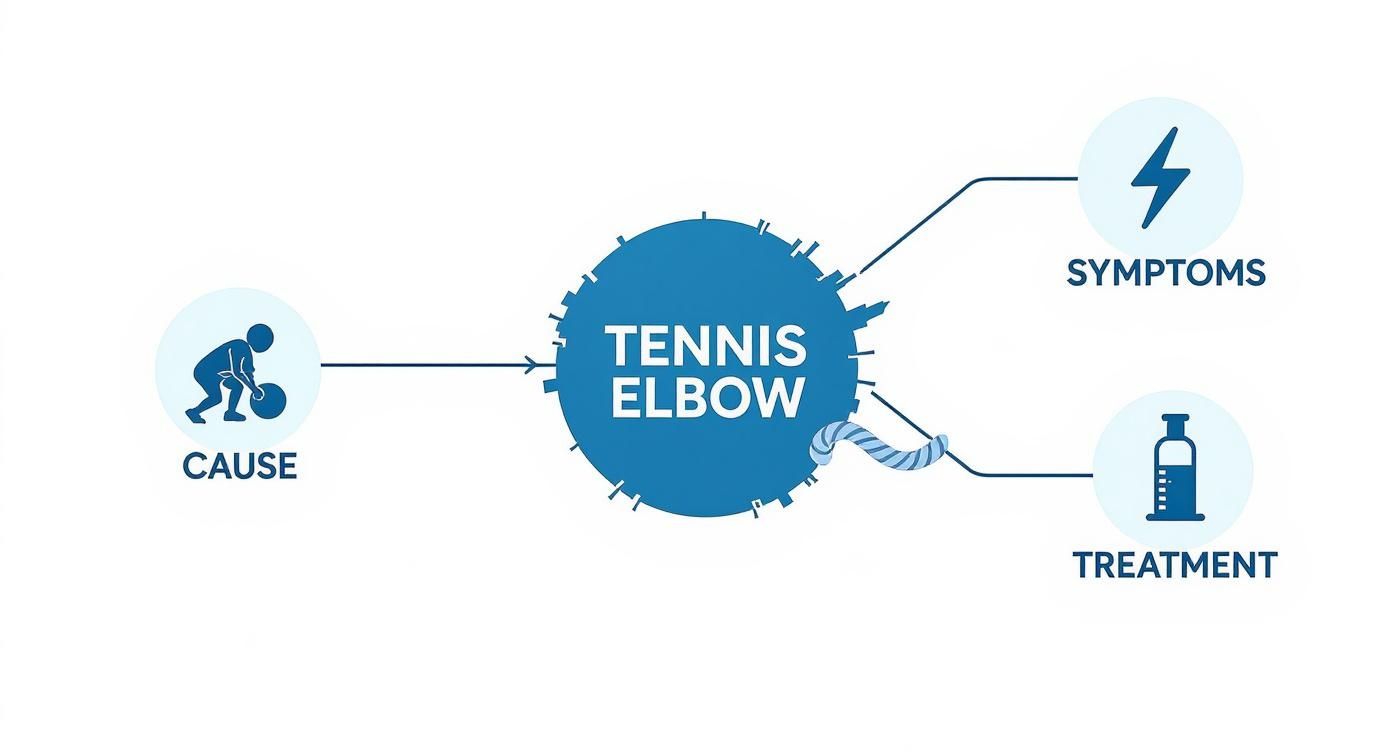
As you can see, an injection is designed to directly target the symptoms that stem from the overuse of the tendon.
Platelet-Rich Plasma (PRP): The Tissue Repair Crew
If a corticosteroid is the fire extinguisher, then PRP is like calling in a specialist repair crew to rebuild the damaged structure from the ground up. This innovative treatment harnesses your body's own healing power to mend the tendon.
The process itself is quite straightforward:
- First, a small amount of your blood is drawn, just like a normal blood test.
- This sample is then spun in a machine called a centrifuge, which separates the blood into its different parts.
- The process isolates and concentrates the platelets—tiny cell fragments packed with powerful growth factors.
- Finally, this "platelet-rich plasma" is carefully injected back into the damaged area of your elbow tendon, often using ultrasound to guide it to the exact spot.
These growth factors act like a foreman on a building site, signalling to your body to kickstart a powerful healing response. They encourage new, healthy tendon tissue to grow, aiming to fix the underlying structural issue, not just mask the pain. Exploring the Platelet-Rich Plasma results in sports therapy can offer a broader perspective on its regenerative potential.
The big difference here is patience. Unlike the rapid relief from a steroid shot, PRP works on nature's timeline. It can take several weeks, or even a couple of months, to notice a real improvement as the tissue rebuilds. The trade-off is that the results are often more permanent because they address the root of the problem.
Comparison of Common Tennis Elbow Injections
To make the choice clearer, let's put these two main injection types side-by-side. Seeing their core differences can really help you understand which might be more suitable for your specific situation.
| Feature | Corticosteroid Injection | Platelet-Rich Plasma (PRP) Injection |
|---|---|---|
| How It Works | A powerful anti-inflammatory that rapidly reduces pain and swelling. Acts like a "fire extinguisher". | Uses your own concentrated platelets to stimulate natural tissue repair. Acts like a "repair crew". |
| Main Goal | Fast, short-term pain relief to enable effective physiotherapy. | Long-term healing of the damaged tendon tissue. |
| Speed of Results | Quick. Relief often felt within 24-72 hours. | Slow. Improvement is gradual over several weeks to months. |
| Pros | – Very fast-acting – Excellent for acute pain – Widely available in the UK |
– Addresses the root cause – Aims for permanent repair – Uses your body's own healing system |
| Cons | – Effects can be temporary – May weaken tendons with repeated use – Doesn't heal tissue |
– Slower to work – Can cause initial soreness – Often more expensive |
| Typical UK Usage | Often used to break a severe pain cycle when physiotherapy alone isn't possible. | Increasingly used for chronic cases that haven't responded to other treatments like physio or steroids. |
Ultimately, both injections have their place in managing tennis elbow. The best one depends entirely on your specific circumstances and treatment goals.
Making an Informed Choice With Your Clinician
Here in the UK, the starting point for almost everyone with tennis elbow is physiotherapy. It's the foundation of a solid recovery. Injections are usually considered when physio alone isn't cutting it.
Your doctor will be your guide, helping you weigh up the pros and cons. They’ll look at how severe your symptoms are, how long you've been struggling, and what you want to get back to doing. Together, you can decide on the best strategy to get your elbow back on track.
What to Expect During the Injection Procedure
The thought of any injection can be a little unnerving, but knowing exactly what’s going to happen on the day can make a world of difference. A tennis elbow injection is a very common and quick procedure, usually done right there in the clinic, and understanding the process helps take the mystery—and a lot of the anxiety—out of it.
Let's walk through it step by step, from the moment you sit down to the aftercare advice you'll get before you head home. This way, you’ll feel more prepared and in control of your treatment.
Before the Injection Begins
First things first, you'll have a quick chat with your clinician. They'll confirm your details, double-check your symptoms and medical history, and make sure you’ve had all your questions answered before you give your final consent.
Next, you’ll get comfortable on the examination couch, making sure your elbow is accessible. The clinician will then thoroughly clean the skin over the bony part on the outside of your elbow with an antiseptic wipe. This is a standard step to prevent any chance of infection.
To make the main injection as comfortable as possible, a local anaesthetic is usually given first. You’ll feel a small, sharp sting for a moment, but this quickly gives way to a dull, numb sensation in the area.
During the Tennis Elbow Injection
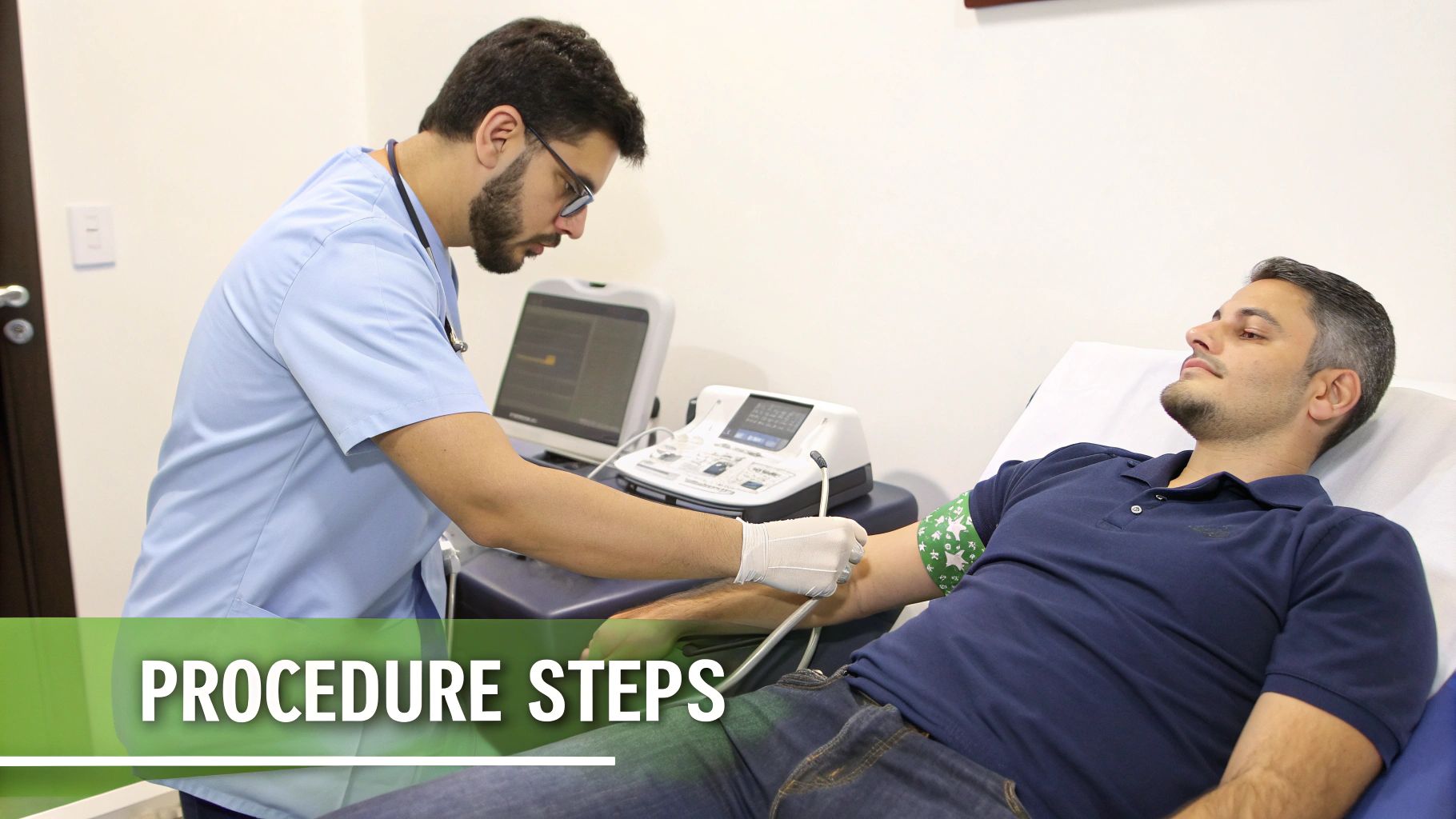
Getting the medication into the right place is absolutely critical for it to work effectively. That’s why many specialists now rely on an ultrasound scanner to guide the needle.
It's the very same technology used to look at babies during pregnancy. A small probe is passed over your skin, creating a live image of the tissues beneath. This allows your clinician to see the damaged part of the tendon and guide the needle with incredible precision.
Think of it like a GPS for your elbow. Ultrasound guidance turns the procedure from an educated guess based on anatomy into a highly targeted treatment, ensuring the medicine goes exactly where it’s needed most.
With the target locked in, the needle is gently guided into place. Thanks to the anaesthetic, you shouldn't feel any sharp pain, though you might notice a bit of pressure or a dull ache as the medication is administered. The injection itself is over in a matter of seconds.
From start to finish, the entire hands-on part of the procedure typically takes no more than 10-15 minutes.
Immediately After the Procedure
Once the needle is out, a small plaster will be popped over the injection site. Your clinician will then run through some clear aftercare instructions, which are really important to follow to get the best outcome.
It’s normal for your arm to feel a bit numb or heavy for a few hours while the anaesthetic wears off. You might also have some soreness around the injection site for the next day or two; this is a normal response and can usually be managed with over-the-counter painkillers and an ice pack.
It’s a good idea to take it easy for the rest of the day. Here are a few key things to remember:
- Arrange a lift home: Driving isn’t recommended straight after, as your arm might feel weak or numb, especially if it's your dominant side.
- Rest your arm: For at least the first 24-48 hours, avoid any heavy lifting, forceful gripping, or demanding tasks that put a strain on your elbow.
- Follow the plan: Stick closely to the advice given by your clinician, particularly regarding when to start any recommended physiotherapy exercises.
By knowing what to expect, you can walk into your appointment with confidence, seeing the injection not as an ordeal, but as a well-managed step towards getting back to a pain-free life.
Your Recovery and Aftercare Plan
Getting a tennis elbow injection isn't the finish line; think of it more as the starting pistol for your real recovery. While the injection is a powerful tool for knocking back pain and inflammation, its true value is the window of opportunity it opens up. What you do in the following days and weeks is what really turns this temporary relief into long-term elbow health.
Think of it like this: the injection silences a noisy fire alarm. The immediate danger signal is gone, but you still need to figure out what caused the fire in the first place and fix it. This aftercare plan is your guide to doing just that, putting you in the driver's seat of your own healing journey.

The First 48 Hours: Managing Initial Soreness
It’s completely normal to feel some soreness at the injection site for the first day or two. Some people even feel a temporary spike in pain. This is often called a "post-injection flare," and it's just your body's initial reaction to the procedure. During this time, the key is to protect the area and let things settle down.
Here’s what you need to do straight away:
- Prioritise Rest: For at least 48 hours, avoid any heavy lifting, forceful gripping, or repetitive wrist movements. That means putting down the power tools, skipping the gym, and taking a break from activities like gardening or spending hours at the keyboard.
- Use Cold Therapy: Apply a cold pack (wrapped in a thin tea towel to protect your skin) to your elbow for 15-20 minutes at a time, several times a day. This is great for managing discomfort and reducing any local swelling.
- Simple Pain Relief: If you need it, over-the-counter painkillers like paracetamol can help take the edge off. Just be sure to follow the dosage instructions on the packet.
This initial rest period is non-negotiable. It gives the medication the best possible chance to get to work without being disturbed by more strain on the tendon.
The Crucial Role of Physiotherapy
This is where the real magic happens. The pain relief from the injection finally allows you to engage properly with physiotherapy, which might have been too painful to even consider before. This is, without a doubt, the cornerstone of preventing the problem from coming back.
Working with a physio is essential because they do more than just hand you a sheet of generic exercises. They'll carry out a full assessment to pinpoint the specific weaknesses or imbalances that led to your tennis elbow. From there, they create a targeted programme to rebuild strength and resilience in that tendon. If you're new to this, learning what musculoskeletal physiotherapy involves is a great place to start.
While a corticosteroid injection can provide excellent short-term relief, the long-term data points clearly towards physiotherapy as the key to sustained recovery. Without strengthening the tendon, the original problem remains, and the pain is likely to return once the injection wears off.
Clinical research has repeatedly shown that while steroid injections offer better pain relief at the six-week mark, these benefits are often temporary. Over a full year, physiotherapy consistently proves more effective for lasting improvement in both pain and function.
Reintroducing Activity and Building Strength
Your physiotherapist will be your guide for safely and gradually reintroducing activity. This process is carefully structured to load the tendon progressively, encouraging it to heal and become stronger than it was before. It’s a delicate balance—doing too much too soon can cause a flare-up, but doing too little won’t provide the stimulus needed for proper healing.
Your rehabilitation programme will likely include a mix of the following:
- Gentle Stretching: To improve flexibility in your forearm muscles and ease the tension on that overworked tendon.
- Isometric Exercises: This involves contracting the muscle without actually moving the joint. It's a safe way to activate the muscles and can help reduce pain in the early stages.
- Eccentric Strengthening: These are the big one. Eccentric exercises are where the muscle lengthens under tension (imagine slowly lowering a weight). This method has been proven to be one of the most effective ways to stimulate tendon repair.
- Functional Movements: Finally, you'll start incorporating movements that mimic your daily life or sport, making sure your elbow is ready to handle real-world demands again.
For the best chance at a full recovery, adding specific exercises for tennis elbow relief and recovery to your routine is a must. By committing to this structured aftercare, you’ll turn your injection from a temporary fix into a catalyst for long-term healing.
Potential Risks and When an Injection Might Not Be for You
While tennis elbow injections can bring welcome relief, it's smart to go into any medical procedure with your eyes wide open. Understanding the potential downsides isn't about creating worry; it's about having an honest conversation with your clinician so you can make a decision you feel confident about.
Think of it this way: most side effects are minor and short-lived, a bit like the temporary muscle ache after a new workout. Knowing what to expect simply means you're better prepared.
The Common, Minor Hiccups
After an injection, especially a corticosteroid one, it's fairly normal to notice a few temporary changes as your body gets used to the medication. These usually sort themselves out within a day or two.
Here’s what you might experience:
- A Brief Pain Flare-Up: This can seem a bit odd, but your elbow might actually feel more sore for the first 24 to 48 hours. This is a known reaction and a sign that your body is responding to the treatment, just before the relief kicks in.
- Skin Changes: You might see some minor changes right at the injection spot. This could be a little thinning of the skin (atrophy) or a small, pale patch where the skin loses a bit of its pigment.
- A Bit of Bruising: A small bruise where the needle went in is very common and nothing to worry about. It's just a standard response to the procedure.
For most people, these issues are mild and are just a temporary part of the healing journey.
Rarer, More Serious Concerns
Though much less likely, it's important to know about the more serious risks so you can spot the warning signs and get help quickly if needed.
The chance of a serious complication like an infection is incredibly low—somewhere between 1 in 20,000 and 1 in 50,000. This is thanks to the strict sterilisation protocols clinicians follow before every injection.
Here are the key risks to discuss with your doctor:
- Infection: Anytime the skin barrier is broken, there's a tiny risk of bacteria sneaking in. Be on the lookout for signs like growing redness, warmth, swelling, pain that keeps getting worse, or if you start feeling feverish and unwell.
- Tendon Damage: This is the main reason clinicians are careful about giving too many corticosteroid injections in the same spot. There’s a concern that steroids can weaken the tendon tissue over time, which might make it more prone to tearing.
If you notice any signs of infection or experience a sudden, sharp increase in pain after the initial 48-hour flare has passed, you must contact your doctor straight away.
When to Reconsider an Injection
A tennis elbow injection isn't a one-size-fits-all solution. In some situations, it might not be the safest or most effective option, and you and your doctor will need to explore alternatives.
A tennis elbow injection might not be the right path if you:
- Have an active infection, either on the skin over your elbow or elsewhere in your body.
- Live with diabetes that isn't well-managed, as steroid shots can cause a temporary spike in blood sugar levels.
- Have a known allergy to the anaesthetic or the steroid itself.
- Are pregnant, as injections are typically avoided during pregnancy unless absolutely essential.
- Have already had several steroid injections in your elbow in the past.
Making the right choice is a team effort between you and your healthcare provider. By having an open chat about your medical history and lifestyle, you can work together to find the best approach for getting your elbow back on track for the long haul.
Lifestyle Changes for Long-Term Elbow Health
A tennis elbow injection can feel like a godsend, offering a much-needed break from persistent pain. But it's crucial to see it for what it is: a window of opportunity. The injection calms things down, but lasting relief comes from tackling the root causes of the strain.
Think of it this way: the injection clears the path, but it’s the lifestyle changes that rebuild the road for the long journey ahead. By focusing on how you move, work, and strengthen your body, you can take back control and drastically reduce the chances of that nagging pain coming back.
Optimise Your Ergonomics and Daily Tasks
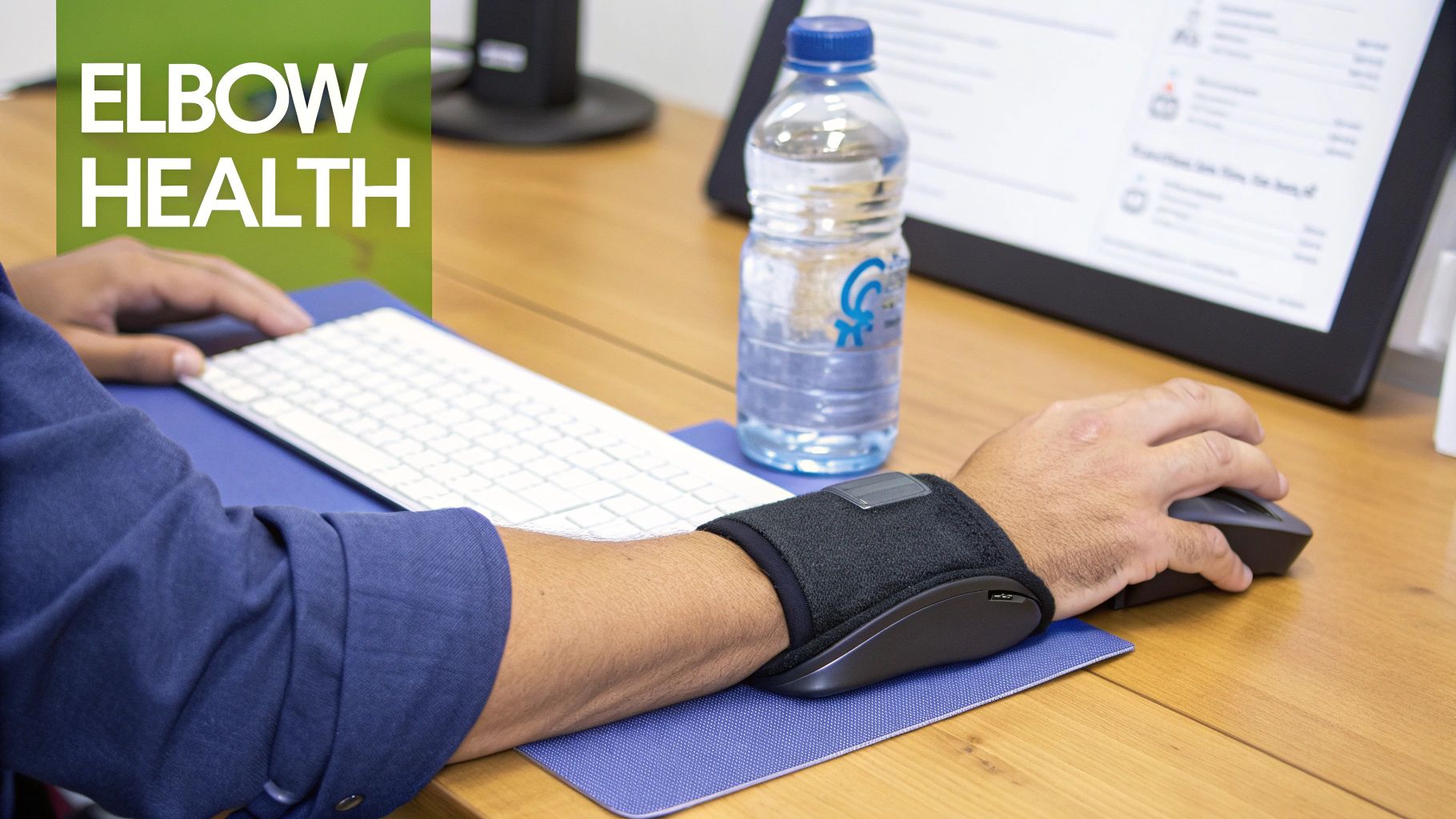
It's a common misconception that tennis elbow only affects tennis players. The reality is, many cases stem from the cumulative strain of everyday life, especially at our desks. Your workspace can be a silent contributor, and a few simple ergonomic tweaks can make a world of difference by easing the constant load on your forearm tendons.
Here are a few small but powerful changes to consider:
- Adjust Your Chair and Desk: Aim for your elbows to be bent at a comfortable 90-degree angle, keeping your wrists straight and neutral as you type. Your feet should be flat on the floor.
- Use an Ergonomic Keyboard and Mouse: These are specifically designed to minimise the wrist extension that so often aggravates tennis elbow.
- Vary Your Tasks: Don't get locked into hours of the same repetitive motion. Set a timer to remind yourself to take a short break every hour to stretch and move around.
Think of your daily movements as a "load budget" for your tendons. Poor ergonomics and improper technique spend this budget very quickly. By optimising your setup, you're making smarter, more efficient use of your body's capacity, leaving plenty in reserve for healing.
Strengthen Your Entire Arm and Core
It's easy to fixate on the elbow, but that’s often a mistake. Your arm is a connected chain, and weakness elsewhere—in your shoulder, upper back, or even your core—forces the smaller forearm muscles to pick up the slack. This overcompensation is a direct route to tendon strain.
A balanced strengthening programme, ideally guided by a physiotherapist, is the key to building resilience. It should include:
- Eccentric Forearm Exercises: This is the gold standard for tendon healing. It involves the slow, controlled lowering of a light weight, which helps to remodel and strengthen damaged tendon fibres.
- Shoulder and Rotator Cuff Strengthening: Moves like external rotations and rows build stability at the shoulder joint, which takes a huge amount of pressure off the elbow.
- Core Stability Work: A strong core is the foundation for all arm movements. It ensures power comes from your centre, not from straining your elbow.
Embrace Alternatives That Promote Healing
While an injection is one tool in the toolbox, there are plenty of powerful, non-invasive alternatives that support your body's own healing processes. These methods are all about addressing the underlying mechanical issues and improving tissue quality from the inside out.
Three key alternatives include:
- Specialised Physiotherapy: A targeted programme of manual therapy and eccentric exercises is the absolute cornerstone of long-term recovery.
- Bracing or Strapping: Wearing a counterforce brace just below the elbow can help dissipate forces away from the injured tendon, giving you relief during activities.
- Correcting Technique: Whether you’re playing a sport or just lifting groceries, learning the right form is vital. Using your whole body to lift something, rather than just your arm, can prevent re-injury.
By weaving these strategies into your life, you become an active participant in your own recovery. To learn more about building a robust foundation for all your joints, you can read our guide on how to improve joint health. This proactive approach transforms you from someone just receiving treatment into the architect of your own lasting elbow wellness.
Answering Your Questions About Tennis Elbow Injections
It's completely normal to have questions before going ahead with any medical procedure. Let's walk through some of the most common ones about tennis elbow injections so you can feel confident and well-informed.
How Quickly Will the Injection Work?
This really depends on the type of injection you have. A corticosteroid injection is all about speed. You should start to feel some real pain relief within 24 to 72 hours as the powerful anti-inflammatory gets straight to work on calming down that angry tendon.
Platelet-Rich Plasma (PRP) injections, on the other hand, play a longer game. Because PRP is designed to kick-start your body's own healing and repair mechanisms, the improvements are much more gradual. You'll likely notice changes over several weeks or even a few months, so a bit of patience is needed with this approach.
Can I Drive Myself Home?
It's always a good idea to arrange for someone else to drive you home. Your arm might feel numb from the local anaesthetic at first, but it can become quite sore once that wears off. Putting safety and comfort first right after the injection is definitely the smartest move.
Is There a Limit to How Many Injections I Can Have?
When it comes to corticosteroids, clinicians are rightly cautious. Too many in one spot can weaken the tendon over time. For that reason, you'll generally be advised to have no more than two or three injections in the same area over your lifetime.
The limit for PRP is a different story. The number of treatments is less about a hard-and-fast rule and more about how your body responds and how your healing is progressing. Your doctor will tailor the plan specifically to you.
Expert treatment for tennis elbow
Our musculoskeletal medicine team offers injection therapy, rehabilitation planning and ongoing management for elbow conditions.


 Members Consultation