


So, what exactly is a full body scan?
In simple terms, it’s a comprehensive health check that uses sophisticated imaging technology – usually MRI or CT – to take a detailed look inside your body. The goal is to get a clear picture of your organs, bones, and soft tissues to spot potential issues like tumours or aneurysms long before they cause any symptoms. Think of it as being proactive, not reactive, about your health.
Demystifying the Full Body Scan
Imagine your GP check-up gives you clues about your health from the outside in, using things like blood pressure readings and blood tests. A full body scan does the opposite: it gives you a direct look from the inside out. It’s not something you’d typically have if you’re already feeling ill; it’s a screening tool for people without symptoms who want a much deeper insight into their current health.
Of course, deciding to have a scan is a big step. It’s about balancing the huge potential benefit of catching something early against other factors. You have to consider the cost, the possibility of finding something minor that causes unnecessary worry, and, with certain types of scans, the exposure to a small amount of radiation.
The infographic below gives you a quick visual rundown of the main technologies used.
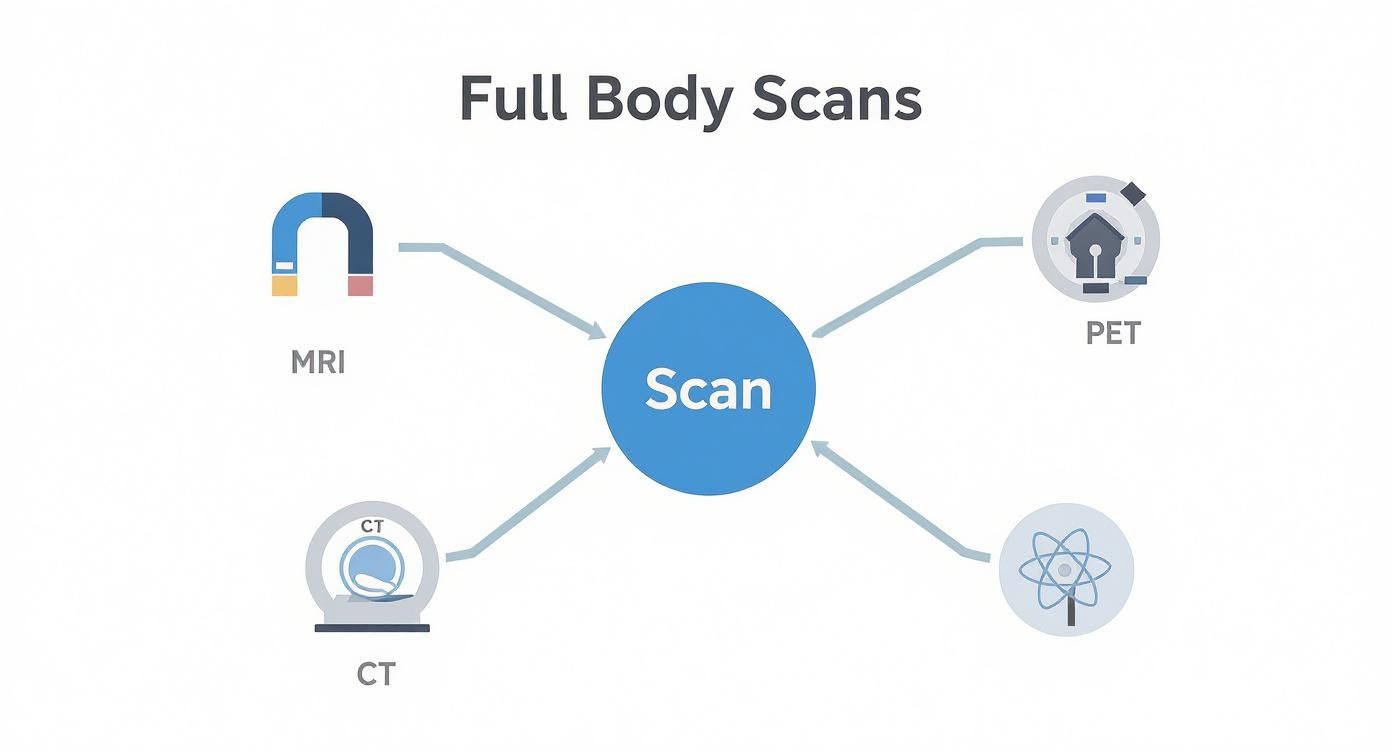
As you can see, while MRI, CT, and PET scans all provide an internal snapshot, they each work in very different ways to get that picture.
Understanding Your Scan Options
Each imaging technology has its own specialism. An MRI, for instance, uses powerful magnets to create incredibly detailed images of soft tissues like your brain, muscles, and internal organs – all without using any radiation.
A CT scan, on the other hand, uses X-rays to build a cross-sectional view of your body. It’s brilliant for looking at bones, chest issues, and certain types of tumours. Then there’s the PET scan, a more specialised tool that tracks metabolic activity, making it particularly good at highlighting cancerous cells.
Getting to grips with these basics is the first step in having a productive chat with a specialist about whether a full body scan makes sense for you. While the technology is remarkable, it’s just one piece of the puzzle.
Your lifestyle is, and always will be, your most powerful tool for staying healthy. A scientifically-backed, balanced diet, regular exercise, and effective stress management are fundamental to reducing your risk of many diseases these scans are designed to find.
Eating well and staying active builds a solid foundation for your health. A preventive scan is a fantastic addition to a healthy lifestyle, but it’s never a replacement for it.
To make things a bit clearer, here’s a straightforward comparison of the main imaging technologies you might encounter.
Quick Comparison of Full Body Scan Technologies
This table provides a high-level overview of the most common imaging technologies used for full body scans.
| Scan Type | Technology Used | Best For Detecting | Key Consideration |
|---|---|---|---|
| MRI Scan | Magnetic fields and radio waves | Soft tissue, brain, joints, tumours | No ionising radiation |
| CT Scan | Multiple X-ray images | Bone injuries, lung/chest issues, cancers | Involves ionising radiation |
| PET Scan | Radioactive tracer and gamma rays | Cancerous cells, metabolic changes | Highly specialised, involves radiation |
Ultimately, the right scan depends entirely on what you're hoping to learn about your health, which is why a professional recommendation is so important.
Exploring The Different Types Of Full Body Scans
When you book a full body scan, you’re stepping into a suite of technologies that act like specialised detectives. Each one is trained to uncover different clues inside your body.
MRI, CT and PET scans may all fall under the same umbrella, but they use very different tools—magnetic fields, X-rays or tracers—to solve distinct puzzles. Knowing how they differ helps you work with your doctor to choose the right approach for your health goals.
Each scan gives you a unique window into what’s happening inside. That means each has its own set of strengths, limitations and safety considerations that are worth understanding before you go under the scanner.
MRI The Radiation-Free Option
Imagine a cartographer mapping every valley and ridge of a landscape—but instead of landforms, an Magnetic Resonance Imaging (MRI) scan charts your soft tissues. It uses a strong magnet and radio waves (no ionising radiation) to track water molecules in muscles, organs and the brain.
Because it zeroes in on soft tissue contrast, MRI is outstanding at spotting:
- Tumours and cysts
- Degenerative spine changes
- Subtle organ abnormalities
Key Benefit: High-contrast images of soft tissues without any ionising radiation. This makes MRI a safe and effective choice for proactive health screening.
This radiation-free approach makes MRI a go-to choice if you plan regular check-ups and want to keep cumulative exposure low.
CT Scans A Detailed Cross-Section
Think of a loaf of bread: a Computed Tomography (CT) scan slices through your body in narrow sections, then stitches those X-ray “slices” together into a detailed three-dimensional view.
This technique works wonders for:
- Examining bones and fractures
- Detecting lung nodules
- Spotting certain tumours in the chest and abdomen
CT scans are faster than MRI, making them invaluable in urgent situations—yet they do involve a dose of ionising radiation. Radiologists follow the principle of ALARA (As Low As Reasonably Achievable) to ensure each scan’s benefits outweigh any risks.
PET Scans Focusing On Function
Positron Emission Tomography (PET) flips the script: instead of structure, it maps your body’s metabolic activity. You’ll receive a small injection of a safe, radioactive tracer that travels to areas of high energy use—often tumours.
When you lie in the scanner:
- Active cells “light up” on the images
- Doctors can see if cancer has spread
- Treatment effectiveness can be monitored
PET scans do expose you to radiation, so they’re usually reserved for very specific diagnostic or monitoring tasks.
Comparing Your Full Body Scan Choices
| Scan Type | How It Works | Best For Visualising | Radiation Involved? |
|---|---|---|---|
| MRI | Strong magnetic field + radio waves | Soft tissues, brain, spine, joints | No |
| CT | Multiple X-ray images combined | Bones, chest, lung nodules, some tumours | Yes |
| PET | Radioactive tracer + metabolic activity | Cancer cells, organ function | Yes |
As you explore these options, bear in mind that each technique has its own sweet spot. For instance, you might read more about understanding how ultrasound shows cancer to see how ultrasound adds another layer to your diagnostic toolkit.
Find out more about a dedicated heart echo scan: https://thelagom.co.uk/2025/10/31/heart-echo-scan/.
The Potential Benefits and Significant Risks of Screening
Deciding to have a full body scan is a big step, and it’s all about weighing the remarkable potential against some very real and significant risks. You’re essentially balancing the promise of early detection with the challenges that can come from peering so deeply inside your own body.
The most compelling reason to consider a scan is its power to find serious conditions long before you'd ever feel a symptom. Think of it as an early warning system. It can be truly life-changing, spotting things like cancers, aneurysms, or organ abnormalities at their earliest, most treatable stages. Finding a small lung nodule or a kidney tumour when it's still contained can make all the difference to your treatment and outcome.
This proactive approach can give you a powerful sense of control over your health, replacing guesswork with a direct look at what’s going on internally. For many people, that knowledge provides invaluable peace of mind.
The Challenge of False Positives
But there’s a flip side. This incredible level of detail comes with a major downside: the false positive. This is when a scan flags something that looks suspicious but, after further investigation, turns out to be completely harmless. While the final result is good news, the journey to get there can be filled with intense anxiety and stress.
A questionable finding on your scan can set off a chain reaction of follow-up appointments. You might need more imaging, blood tests, or even invasive procedures like biopsies. Each step carries its own set of risks and an emotional weight, creating a period of limbo that can be incredibly tough on you and your family. In fact, research shows the psychological impact of a false positive can stick with you even after you get the all-clear.
A key term to know is the 'incidentaloma'. This is a harmless little oddity, like a benign cyst or some old scar tissue, that's found by chance during a scan. While not dangerous, these findings often kick off the same stressful cycle of follow-up tests just to confirm they’re nothing to worry about.
It really highlights the double-edged sword of highly sensitive screening technology.
Understanding Radiation Exposure
Another crucial point to consider, specifically with CT scans, is radiation. While MRI scans are entirely radiation-free, a full body CT scan does expose you to ionising radiation. Now, the dose from a single scan is low and generally considered safe for adults, but the risk is cumulative.
This means that repeated CT scans over your lifetime can slightly increase your overall lifetime risk of developing cancer. This is why doctors and radiologists operate on the ALARA principle—"As Low As Reasonably Achievable." They work to ensure the diagnostic benefit of any scan involving radiation clearly outweighs the potential risk, which is why it’s so important that these scans are only done when they're truly medically justified.
Weaving Prevention into Your Health Strategy
At the end of the day, a full body scan is a tool, not a magic wand. It can provide a valuable snapshot in time, but it’s no substitute for the foundations of good health. The single most powerful way to lower your risk of many chronic diseases is through your everyday lifestyle choices.
Here are some of the cornerstones of preventive health that really work:
- Adopt a Nutrient-Rich Diet: Focus on whole foods—plenty of fruits, vegetables, lean proteins, and whole grains. They give your body the vitamins, minerals, and antioxidants it needs to function at its best and fight inflammation.
- Prioritise Regular Movement: Aim for at least 150 minutes of moderate-intensity activity, like brisk walking or cycling, each week. Keeping active strengthens your heart, boosts circulation, and is a huge help in maintaining a healthy weight.
- Manage Stress Effectively: Don't underestimate the physical impact of chronic stress. Finding healthy outlets is key, whether it's through mindfulness, deep breathing exercises, or simply getting out in nature.
- Ensure Quality Sleep: Most adults need 7-9 hours of good quality sleep per night. It’s when your body does its most important repair work, consolidates memories, and regulates crucial hormones.
These habits work together to build a strong defence against illness from the inside out. While a scan might help spot problems, these daily choices are what actively build a healthier you, making it less likely for those problems to develop in the first place.
Your Scan is a Map, Not the Destination: Building a Proactive Lifestyle
A full body scan gives you an incredible, detailed look under the bonnet. It’s a powerful tool, no doubt. But it’s crucial to see it for what it is: a single snapshot in time. True, lasting health isn't something you find in a scanner; it's something you build, day in and day out, with every choice you make.
Think of it this way. The scan can alert you to a small pothole forming on the road ahead. But your daily habits—what you eat, how you move, the way you handle stress—are what determine the quality of the road itself. By focusing on these foundations, you're not just waiting to fix problems; you're actively building a healthier, more resilient body from the ground up. This is the shift from simply detecting disease to genuinely creating health.
Feed Your Body Like It Matters
The old saying, "you are what you eat," is more accurate than we often realise. The food you consume directly influences everything from inflammation levels to your risk of chronic disease. The goal isn't about deprivation or strict diets; it's about crowding out the bad stuff by piling your plate high with vibrant, nutrient-packed foods.
It all starts with small, sustainable swaps. Could you switch that sugary breakfast cereal for a bowl of porridge topped with berries and seeds? Instead of grabbing a packet of crisps for a snack, could you reach for an apple and a handful of almonds?
Try to build your meals around these cornerstones:
- A Rainbow on Your Plate: Aim for at least five portions of varied fruits and vegetables a day. Their antioxidants are your body's personal defence force against cellular damage.
- Quality Protein: Things like chicken, fish, beans, and lentils are essential for repairing tissues and keeping you feeling satisfied.
- Smarter Carbs: Choose whole grains like brown rice, quinoa, and wholewheat bread. They provide steady energy and the fibre your gut loves.
- The Right Fats: Don't fear fat! Avocados, nuts, seeds, and a good olive oil are brilliant for your brain and help keep inflammation in check.
At the same time, it’s wise to slowly reduce your intake of things that we know cause trouble over the long term, like heavily processed foods, sugary drinks, and excessive saturated fats.
Adopting a more plant-forward way of eating doesn't mean you have to become a vegetarian. It's simply about making plants the star of the show on your plate—one of the most powerful, evidence-backed moves you can make for your long-term health.
Get Moving: Your Body Was Designed For It
Movement truly is medicine. You simply cannot achieve optimal health without it. Regular physical activity is your best defence for maintaining a strong heart, sturdy bones, a healthy weight, and even a sharp mind. The NHS guidance is clear: adults should aim for at least 150 minutes of moderate-intensity activity each week.
But this doesn't mean you're chained to a treadmill. The key is finding something you actually enjoy, because that's what you'll stick with.
For the best results, try to get a mix of different types of movement:
- Get Your Heart Pumping: Brisk walking, cycling, swimming, even dancing—anything that raises your heart rate strengthens your most important muscle.
- Build Your Strength: Using weights, resistance bands, or even just your own body weight helps maintain muscle mass, which is vital for your metabolism and bone density as you age.
- Stay Flexible: Activities like yoga or Pilates are fantastic for keeping your joints mobile and improving your balance, which can dramatically reduce your risk of injury.
Remember, every little bit counts. Taking the stairs instead of the lift or getting out for a quick walk on your lunch break all adds up and makes a real difference.
Master Your Stress, Protect Your Sleep
Chronic stress and a lack of quality sleep are the silent partners in crime when it comes to poor health. They can throw your hormones out of whack, weaken your immune system, and fuel inflammation, essentially creating the perfect internal environment for problems to develop.
Learning to manage stress is a non-negotiable life skill. Simple techniques like mindfulness, meditation, or even just a few deep breaths can lower your stress hormone, cortisol, and bring a sense of calm. Never underestimate the power of getting outside; spending time in nature is one of the most effective ways to reset your nervous system.
Sleep is just as vital. Most adults need a solid 7 to 9 hours a night. This is when your body does its most important repair work. To set yourself up for success, try to stick to a regular sleep schedule, make your bedroom a dark, quiet sanctuary, and switch off all screens at least an hour before you turn in. Making these changes isn't just a nice idea—it’s the ultimate form of proactive healthcare.
Getting Ready for Your Full Body Scan
Knowing what to do before your appointment can make the entire experience much smoother and less daunting. Good preparation not only helps the imaging team get the clearest possible pictures but also puts you more at ease. It's all about a few simple steps, from what you eat to what you wear.
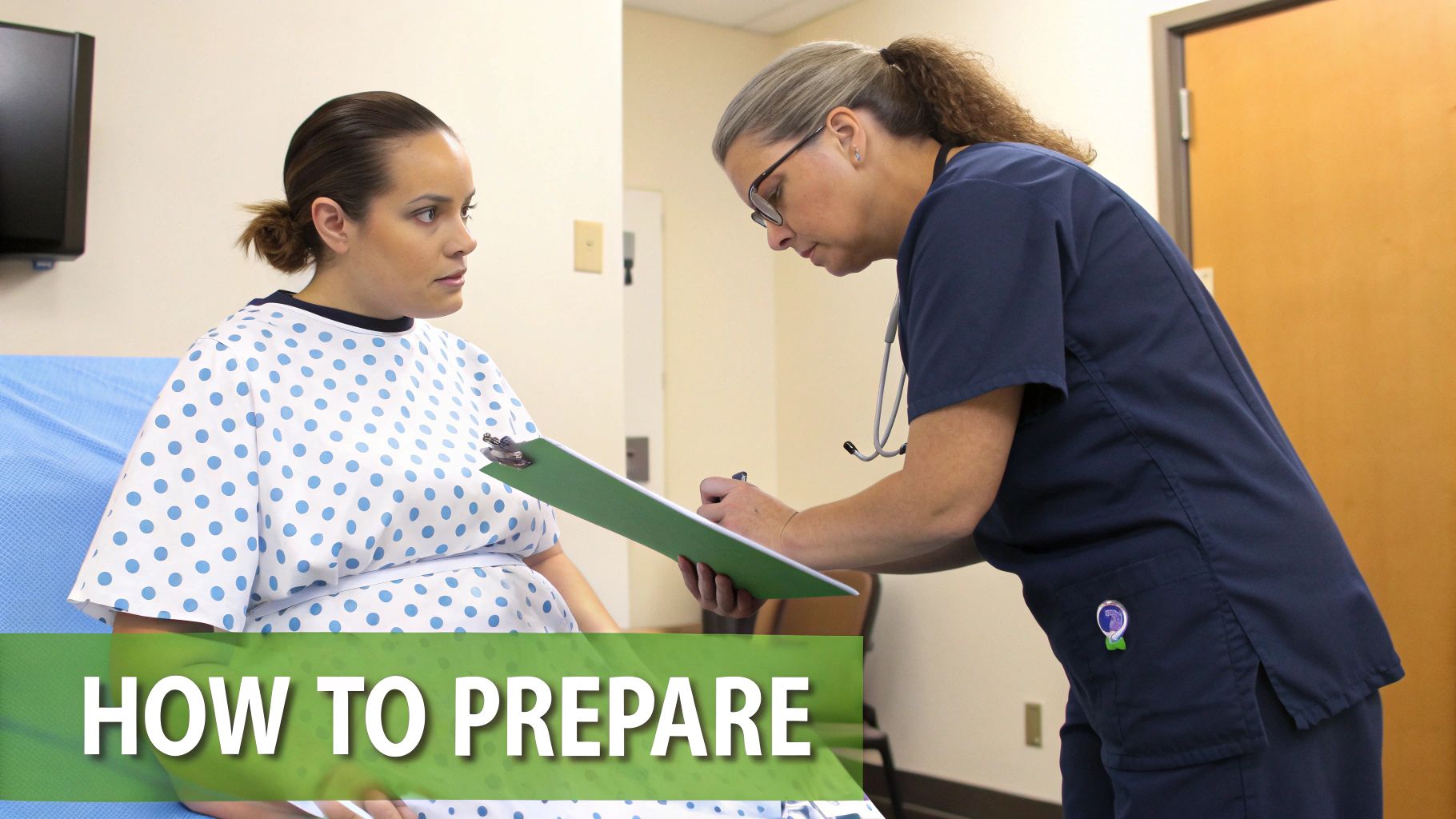
Of course, the clinic will give you a specific set of instructions based on your scan, and you should always follow their advice first. Still, there are some common guidelines that almost always apply.
Before the Day of Your Scan
A little planning in the days leading up to your scan goes a long way. You’ll likely be asked to avoid eating or drinking for a few hours beforehand, particularly if the scan is focusing on your abdomen. Food and even some drinks can get in the way of a clear view.
It’s also really important to let the clinic know about any medications you’re on. While you can usually continue taking them, some might need to be paused. You absolutely must tell them about any metal in your body—things like pacemakers, artificial joints, or cochlear implants are critical information, especially for an MRI.
On the day itself, think about these practical tips:
- Go for comfort: Choose loose clothing without any metal parts like zips, buttons, or underwiring. Don't worry too much though, as most clinics (including ours) will give you a gown or clean pyjamas to wear.
- Remove all metal: It’s best to leave jewellery, watches, and piercings at home. You’ll need to take them off before the scan anyway.
- Drink water: Unless your instructions say otherwise, staying hydrated is generally a good idea.
During the Scan Itself
When it’s time, a radiographer will meet you and lead you into the scanning room. They’ll help you get settled on a motorised bed, which will then gently slide into the middle of the scanner—a large machine that looks like a giant doughnut. Once it starts, the scanner can be quite noisy, making a series of loud thumps, clicks, and whirring sounds.
What to Expect: Don't worry about the noise. You’ll be given earplugs or headphones to make it much more comfortable. The radiographer will be in the next room, but they can see you and talk to you through an intercom the entire time. You're never truly alone.
Your main job during the scan? Stay as still as you can. Even small movements can blur the images, a bit like taking a photo of a moving target. The whole process can take a while; you can find more detail in our guide on how long an MRI takes.
After Your Scan is Complete
Once the last image is taken, the bed slides back out, and you’re all done. You can get dressed and get on with your day right away. There are no recovery periods or side effects to worry about, so you can eat, drink, and go about your business as normal.
The images themselves now go to a specialist radiologist for careful review. This isn’t an instant process—they need time to meticulously examine the hundreds of detailed pictures taken during your scan. They will put together a full report, which is then sent to the doctor who arranged your scan.
The final, and arguably most important, part is your follow-up consultation. This is when your doctor will sit down with you to go through the results, explain what everything means in the context of your health, and discuss what, if anything, should happen next.
Your Questions About Full Body Scans, Answered
It’s completely normal to have a lot of questions before considering something like a full body scan. This is a significant step to take for your health, and feeling confident and well-informed is the only way to make the right choice for you.
Here, I’ll walk you through clear, medically-sound answers to some of the most common queries we hear from patients. Think of this as a conversation to clear up any confusion about the safety, cost, and true capabilities of this technology.
Does a Full Body Scan Hurt and Is It Safe?
Let’s tackle the first part head-on: the scan itself is completely painless. You simply lie still on a comfortable, flatbed that slides through the scanner. There are no needles or anything invasive involved in the actual imaging process.
When it comes to safety, the answer really depends on which type of scan we’re talking about.
- An MRI scan uses powerful magnets and radio waves, which is why it’s considered very safe—it does not involve any ionising radiation.
- CT and PET scans, on the other hand, do use a small, very controlled amount of ionising radiation to create their detailed images.
While the dose from a single scan is low and considered safe for adults, it’s worth knowing that radiation exposure adds up over your lifetime. This cumulative exposure can slightly increase the long-term risk of developing cancer. It’s for this very reason that scans using radiation should only be performed when there’s a clear medical justification. For most people, the benefit of spotting a potential problem early far outweighs this small risk.
How Much Does a Private Full Body Scan Cost in the UK?
The cost of a private full body scan in the UK can vary quite a bit. The final price tag depends on the type of scanner being used, the clinic's location and reputation, and exactly how much of the body is being examined.
As a general guide, you can expect a full-body MRI scan—often the preferred choice as it’s radiation-free—to range from £1,500 to over £3,000. In some cases, a CT scan might come in at a slightly lower price point.
It’s crucial to remember that this initial figure might not be the total cost. You’ll also need to factor in the consultation to discuss your results and any potential follow-up tests that might be recommended. Before you commit, always ask for a clear, itemised quote that spells out exactly what’s included.
Can a Full Body Scan Detect Every Type of Cancer?
This is a really important question. The answer is no, a full body scan cannot reliably detect every single type of cancer. It’s an incredibly powerful tool, but it’s not infallible and it has its limitations.
While these scans are very good at spotting certain solid tumours in organs like the liver, kidneys, or lungs, some cancers are much harder to see. Blood cancers like leukaemia, for instance, or some lymphomas and certain types of stomach cancer might not show up clearly on these images.
What’s more, very small or extremely early-stage cancers can still be missed. This is precisely why a full body scan is not a substitute for established, targeted screening programmes. Mammograms for breast cancer and colonoscopies for bowel cancer are still the gold standard for catching those specific diseases.
What Lifestyle Changes Are Most Important for Preventing Disease?
A scan gives you an incredible snapshot of your health at one moment in time, but it’s your daily habits that truly build your long-term wellbeing. While no single change can guarantee you’ll never get ill, weaving healthy habits into your life offers a powerful protective effect.
The most impactful changes aren't complicated or expensive. They are the consistent, daily choices that build a strong foundation of health from the inside out, significantly reducing your risk of chronic disease.
If you want the best return on your efforts, science tells us to focus here:
- Eat a Balanced Diet: Centre your meals around whole foods. A diet packed with fruits, vegetables, whole grains, and lean proteins gives your body the antioxidants and nutrients it needs to fight inflammation and cell damage. At the same time, try to minimise processed foods, sugary drinks, and unhealthy fats.
- Get Regular Physical Activity: Aim for at least 150 minutes of moderate-intensity exercise, like a brisk walk or a bike ride, every week. Movement isn't just for your body; it strengthens your heart, helps you maintain a healthy weight, and is brilliant for mental clarity.
- Maintain a Healthy Weight: Being overweight is a significant risk factor for many serious conditions, from heart disease and type 2 diabetes to several types of cancer. A healthy diet and regular exercise are your best tools here.
- Don't Smoke: It’s simple: tobacco use is the leading cause of preventable death. If you smoke, quitting is the single most important thing you can do for your health and longevity.
- Limit Alcohol: Keeping your alcohol intake moderate reduces your risk of liver disease, heart problems, and a number of cancers.
- Manage Stress: Chronic stress takes a very real physical toll. Finding healthy outlets, whether that’s mindfulness, yoga, or just spending time in nature, is vital for your overall health.
These aren't separate checkboxes; they all work together. By making small, consistent improvements in these areas, you are actively building a more resilient body and a healthier future.
At The Lagom Clinic, we believe in creating a complete picture of your health by combining advanced diagnostics with personalised, practical lifestyle guidance. If you're ready to take a proactive approach to your wellbeing, we can arrange rapid access to private imaging and provide the expert follow-up you need to make sense of it all.
Discover a balanced approach to your long-term health by visiting us at https://www.thelagom.co.uk.


 Members Consultation