


You've got an important meeting, a family event, or a week of poor sleep behind you. You look in the mirror and there it is. A sore cluster of spots that seemed to arrive exactly when life got harder. One often notices this pattern long before hearing a medical explanation for it.
The short answer is yes, stress can play a real part in breakouts. But the more accurate answer is that stress usually worsens acne-prone skin rather than acting as the single root cause. In practice, I often explain it as your body turning up the volume on oil production and inflammation at the same time.
That matters because stress is common, not unusual. The ONS reported that around one in four adults in Great Britain experienced “high” or “very high” levels of anxiety in recent waves of its Opinions and Lifestyle Survey, as discussed in this Bupa overview of stress and skin problems. If your skin seems to flare during busy periods, you're not imagining it.
As a GP, I'd take a balanced view. Good skincare helps. Better sleep helps. Managing stress helps. And if you're also looking at barrier-supporting products for stressed-looking skin, some people like browsing practical round-ups such as Kirei Gel at Buy Me Japan alongside medical advice, so you can make calmer, more informed choices instead of panic-buying five products at once.
Your Guide to Understanding Stress and Skin
Stress and skin often move together in a way that feels frustratingly predictable. You're coping with deadlines, sleeping badly, eating on the go, and then your face joins the protest. That doesn't mean your skin problem is “all in your head”. It means your skin is responding to signals from the rest of your body.
A lot of confusion comes from the wording. People ask, can stress cause spots, when they're really asking one of three things:
- Did stress trigger this flare-up if I'm already acne-prone?
- Did stress make my spots angrier and slower to settle?
- Is this even acne at all, or something else that's appeared during a stressful period?
Those are different questions, and they don't all have the same answer.
Stress is often a skin amplifier. It can push mild, manageable skin into a more inflamed state.
The useful mindset is this. Don't blame yourself, and don't reduce the problem to a single face wash. Skin health sits at the intersection of hormones, inflammation, sleep, habits, and products. Once you see that clearly, the next steps become much easier.
The Scientific Link Between Stress and Spots
What happens inside the body
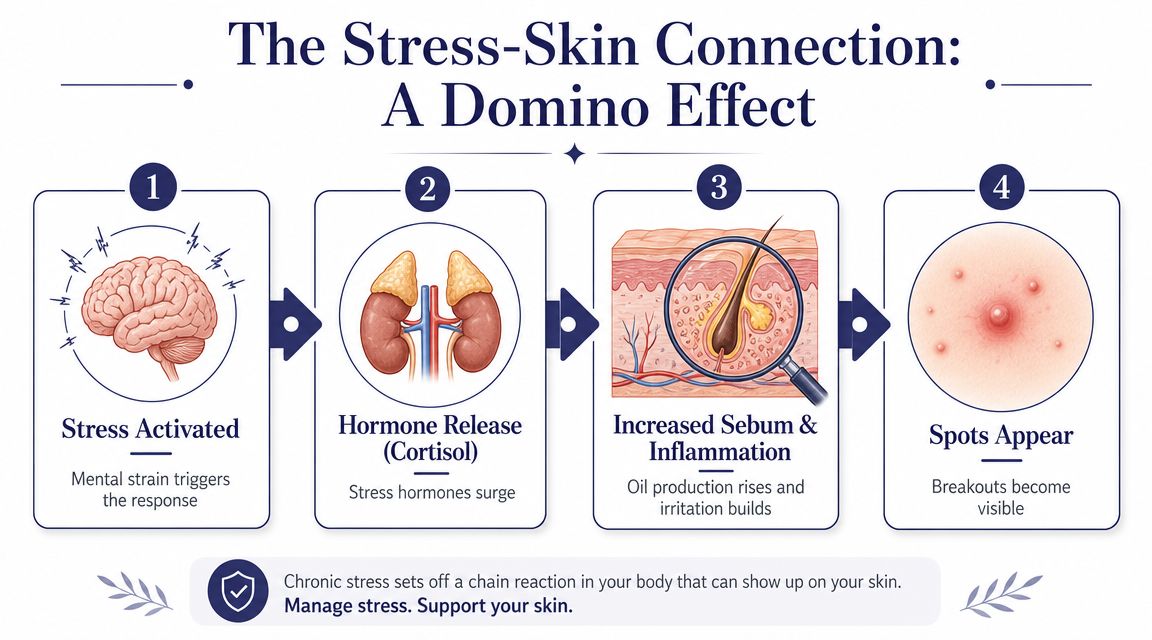
When you're stressed, your body switches into a protective response. One key part of that response is the HPA axis, which is shorthand for the hypothalamic-pituitary-adrenal axis. You don't need to memorise the term. What matters is its job. It helps your body respond to pressure.
That system increases stress signals, including cortisol. In the skin, that can mean more oil production, more inflammation, and a higher chance that pores become clogged. A peer-reviewed review explains that stress can worsen acne and other inflammatory skin conditions by activating the HPA axis, increasing cortisol, and shifting skin toward higher inflammation and sebum production. It also notes that stress-related oil production can clog pores and promote acne flares, as outlined in this review on stress and skin disorders.
A simple way to think about it is this. Stress hits the accelerator on your skin's oil factory while also making the surrounding tissue more reactive.
Why breakouts look redder and linger longer
More oil is only part of the story. Stress can also make existing spots look angrier. The area becomes more inflamed, more noticeable, and sometimes more tender. That's one reason a breakout during a difficult week often feels different from a few ordinary blocked pores.
Common changes people notice include:
- Extra oiliness that seems to appear quickly
- Redder spots that are harder to ignore
- Slower settling after the initial flare
- More touching or picking, especially when stress is high
There's often a second layer too. Poor sleep, irregular meals, and rushing your skincare routine can all pile on when life gets hectic. If you're interested in the wider body picture, this guide on what causes chronic inflammation helps connect skin changes with the rest of the stress response.
The skin and nervous system don't operate separately. When your body feels under threat, your skin often shows it.
Practical Lifestyle Changes to Calm Your Skin
A UK study of 100 female medical students and doctors found that higher perceived stress was significantly associated with worse acne severity, with r = 0.23 and p < 0.01, as reported in this study on stress and acne severity. That doesn't mean stress is the only factor. It does support what many people notice in real life. When stress rises, acne-prone skin often becomes harder to control.
The most useful response is to lower the body's stress load in practical ways. Not perfectly. Consistently.
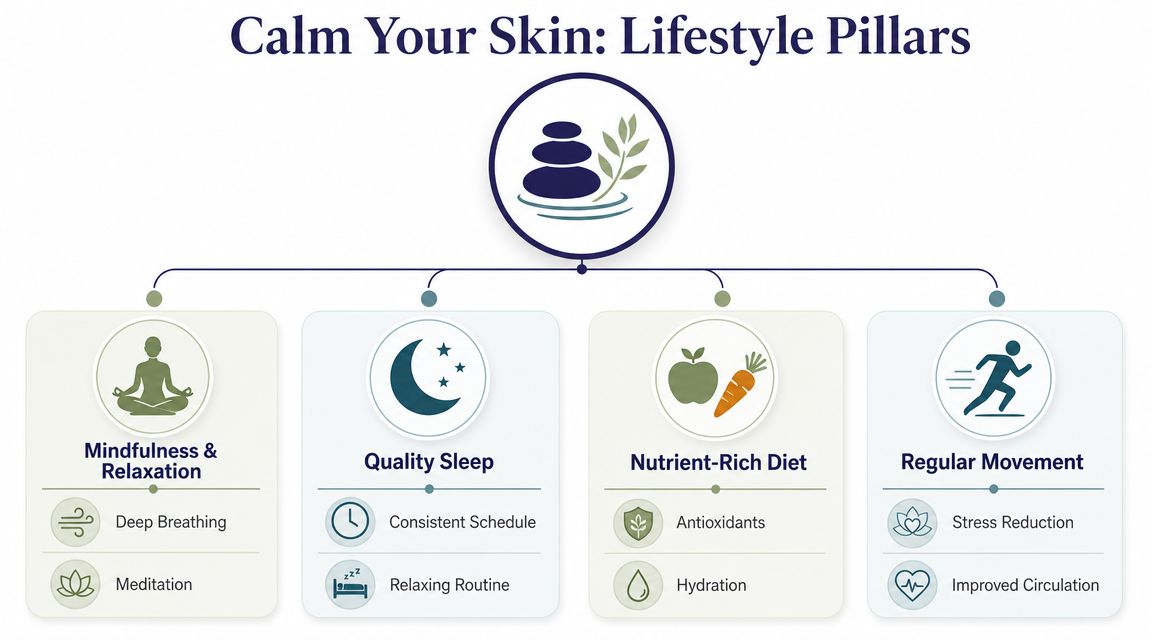
Sleep that protects the skin
If your sleep is erratic, your skin often pays for it first. Aim for a consistent sleep-wake time, even if your workdays vary.
A good evening routine doesn't need to be elaborate:
- Keep lights lower in the hour before bed
- Stop “revenge bedtime scrolling” and charge your phone away from the bed
- Use a short wind-down cue such as reading, stretching, or a shower
- Avoid harsh late-night cleansing if you're exhausted. A gentle cleanse and moisturiser are better than scrubbing half-asleep
Food and hydration that reduce chaos
There isn't one magic anti-spot diet. What helps most is reducing the body's sense of instability. Long gaps between meals, high-sugar snacking when stressed, and dehydration can all make you feel worse overall, which often shows up in the skin.
Try this instead:
| Habit | Why it helps |
|---|---|
| Regular meals | Keeps energy steadier and reduces stress-driven grazing |
| Protein with meals | Helps you feel fuller and more stable through the day |
| Fibre-rich foods | Supports more even digestion and routine |
| Water nearby | Makes hydration easier when you're distracted |
If you're already thinking about the hormonal side of stress, this article on how to lower cortisol levels naturally gives sensible lifestyle measures that fit into a busy week.
Calm the nervous system in short bursts
Many people assume stress management means long meditation sessions. It doesn't. Small, repeatable actions are often more realistic and more effective.
A few options that work well in real life:
- Box breathing for a few minutes before a meeting
- A brisk walk at lunch instead of eating at your desk every day
- Gentle yoga or stretching after work to signal that the workday has ended
- A brief written brain dump before bed if your mind keeps looping
Practical rule: choose one stress habit you can do on your busiest day, not your ideal day.
Move without making stress worse
Exercise helps many people, but the type matters. If you're already wired, exhausted, and sleeping badly, punishing yourself with intense sessions can feel like another stressor. Often, regular moderate movement is more sustainable.
Good options include walking, cycling, swimming, mobility work, or a short strength session. The aim is rhythm, not punishment.
Protect your skin from your hands
Stress doesn't just change hormones. It changes behaviour. People touch, squeeze, and pick more when anxious, distracted, or overwhelmed.
If that sounds familiar, make the habit harder:
- Keep mirrors for skincare, not inspection
- Use pimple patches to create a barrier
- Keep hands busy during calls if you tend to pick unconsciously
- Notice the trigger such as boredom, deadlines, or late-night fatigue
Effective Skincare and Treatment Options
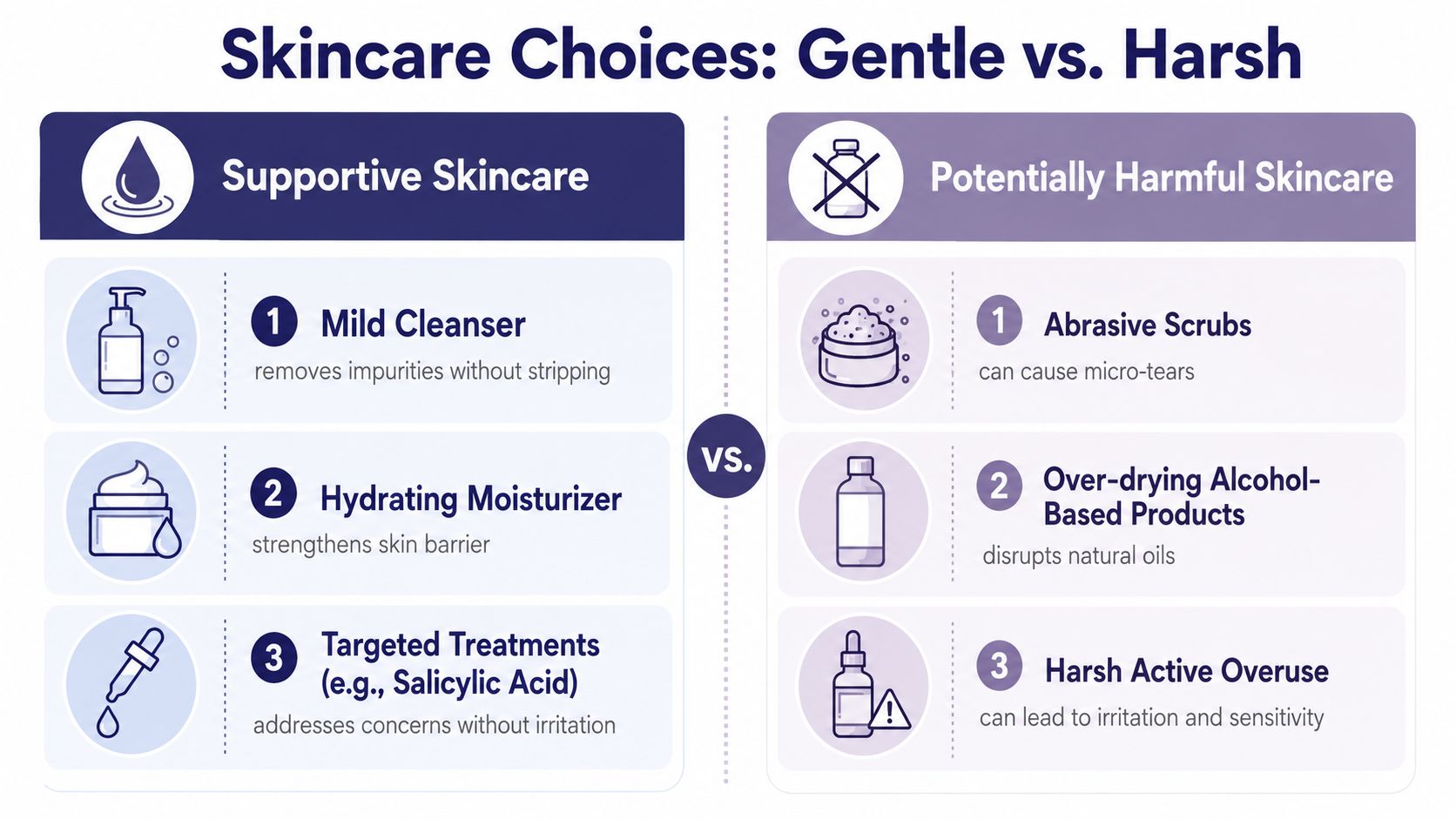
When skin is stressed, many people respond by doing more. More scrubs, more acids, more cleansing, more products. That often backfires. Irritated skin usually needs a calmer routine, not an aggressive one.
Start with a simple base routine
A sensible routine has three core parts:
- Gentle cleanser that removes sweat, sunscreen, and grime without leaving your skin tight
- Non-comedogenic moisturiser to support the barrier
- Daily sunscreen because inflamed skin marks more easily and treatments can increase sensitivity
If your skin stings after every wash, that's a clue to scale back.
Compare common active ingredients
Different products do different jobs. Choosing well matters more than choosing lots.
| Ingredient | Best suited to | Main role | Watch out for |
|---|---|---|---|
| Salicylic acid | Congested, oily skin | Helps unclog pores | Can dry out sensitive skin if overused |
| Benzoyl peroxide | Inflamed acne spots | Targets acne-causing bacteria and inflammation | Can irritate skin and bleach fabrics |
| Niacinamide | Redness, oiliness, barrier support | Helps calm skin and support balance | Usually well tolerated, but keep routines simple |
| Azelaic acid | Blemishes plus redness or post-spot marks | Helps with inflammation and uneven tone | Can tingle at first |
If a product burns, peels, and leaves you shiny but sore, it isn't “working harder”. It may just be irritating your skin.
When extra support makes sense
If you like adding occasional professional skin support alongside home care, some people explore options such as a tailored acne facial in Leamington Spa to understand what a more structured treatment approach can look like. The key is to avoid combining too many new treatments at once, especially during an active flare.
For persistent acne, prescription options may be more appropriate than repeatedly changing over-the-counter products. That's especially true if the spots are deep, painful, or leaving marks.
When to See a GP About Stress-Related Spots
Not every “stress breakout” is acne. That's where self-diagnosis can go wrong. UK guidance from the British Association of Dermatologists makes an important distinction. Stress can worsen acne by increasing oil production, but it does not cause conditions like eczema or psoriasis, though it can aggravate flares, as discussed in this review covering UK-facing dermatology guidance.
That matters because rosacea, perioral dermatitis, eczema, folliculitis, and acne can all be mistaken for one another. A serum that helps one person may be completely wrong for another. If you've been researching products such as Axis Y serum for blemishes, that can be useful background, but products can't replace a diagnosis.
Red flags that deserve medical advice
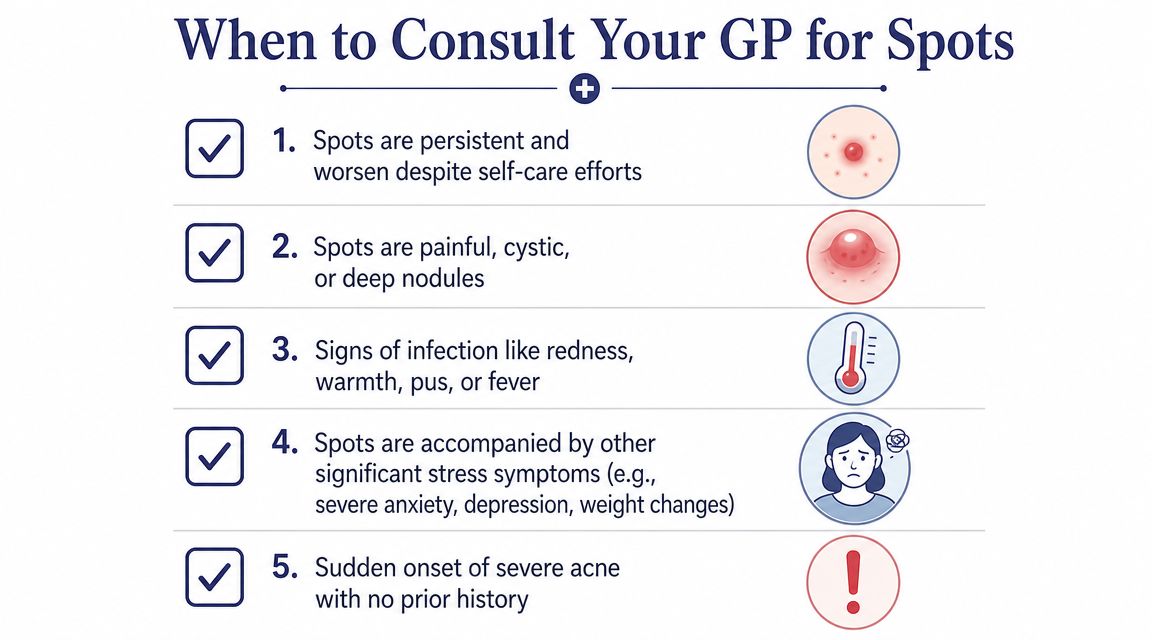
Please get assessed if any of these apply:
- Painful deep spots that feel cystic or leave marks
- A rash around the mouth or nose that isn't behaving like acne
- Persistent breakouts despite sensible self-care
- Visible scarring or dark marks that are building up
- Significant distress about your skin, especially if it's affecting work, confidence, or social life
- Signs of infection such as spreading redness, warmth, or pus
Why a GP review helps
A GP can step back and look at the whole pattern. Timing. Medications. Hormonal clues. Skin distribution. Stress levels. Sleep. Picking. Other symptoms.
Sometimes the answer is acne made worse by stress. Sometimes it's something different entirely, and the treatment changes because the diagnosis changes.
Achieve Clearer Skin with a Holistic Health Plan
Better skin usually comes from several small changes working together. Less inflammation. Better sleep. A calmer routine. Fewer harsh products. Earlier treatment when self-care isn't enough. That's a more realistic and more useful approach than trying to find one miracle cream.
If you've been asking can stress cause spots, the most helpful answer is this. Stress can be a genuine driver of flare-ups, but it's rarely the whole story. Your skin responds to what your body is carrying.
A whole-person review is often the turning point. In practice, that may include discussing sleep, workload, mental wellbeing, exercise, diet, skincare habits, and whether there could be another explanation for the rash or breakout pattern. At The Lagom Clinic, private GP appointments, lifestyle discussions, health screening, and blood tests can be part of that wider assessment when skin problems seem linked to stress, hormones, or general health.
If stress-related spots are becoming persistent, painful, or confusing, a clear medical plan can save you time and frustration. The Lagom Clinic offers private GP care in Bristol with longer appointments, lifestyle-focused support, and practical assessment for skin concerns that may be tied to stress, routine, or underlying health factors.


 Members Consultation