


A biochemistry blood test is one of the most common and powerful tools for assessing your health. It works by measuring the levels of different chemicals and enzymes circulating in your blood, giving a clear picture of what’s happening inside your body.
Your Proactive Guide to Internal Health
Think of a biochemistry profile as an MOT for your body. Your doctor analyses key substances in your blood to see how well your internal systems are running. This allows you to shift from reacting to illness towards proactively managing your long-term health.
By looking at these specific markers, your doctor gets a detailed snapshot of your current health. This isn’t just about finding things that are wrong; it’s about spotting small imbalances before they have a chance to become bigger problems, allowing for early and effective lifestyle interventions.
What Does the Test Reveal?
A biochemistry profile provides hard data on several core areas of your health. This gives you and your doctor concrete numbers to work with, empowering you to make genuinely informed decisions about your well-being.
Here’s a quick rundown of what we can learn:
- Organ Function: The test gives crucial insight into how well your vital organs, especially your liver and kidneys, are carrying out their essential jobs.
- Metabolic Health: By measuring your blood sugar, we can spot the early warning signs of metabolic conditions like diabetes, providing a chance to make lifestyle changes.
- Heart Disease Risk: It checks your cholesterol and other fats (lipids) in the blood, which are key indicators of your cardiovascular risk.
- Nutritional Status: The results can also show if you have an imbalance of essential electrolytes, like sodium and potassium, which are vital for hydration, nerve function, and muscle health.
A biochemistry blood test isn’t just a report card on your current health—it’s a roadmap for your future. The data helps you turn wellness goals into a clear, actionable plan focusing on diet, exercise, and other positive lifestyle habits.
Ultimately, this straightforward blood draw provides a wealth of information. The results create a valuable baseline, allowing you to track your health over time and see the real-world impact of positive lifestyle changes. Whether you’re focused on improving your diet, getting more active, or managing stress, a biochemistry test gives you the feedback you need to stay on track and take meaningful steps to protect your health.
Decoding Your Key Biochemistry Markers
Getting a biochemistry blood test report back can feel a bit overwhelming at first glance. It’s often a page full of acronyms, numbers, and ranges that don’t mean much on their own.
But once you know what to look for, that page transforms. It stops being a complex code and starts telling a detailed story about your body’s inner workings. Each group of markers is like a chapter, focusing on a specific organ and giving you a snapshot of your current health.
Your Liver’s Performance Review
Think of your liver as the body’s main processing plant. It filters out toxins, manufactures vital proteins, and helps you digest food. A liver function test (LFT) is essentially its performance review, checking key enzymes and proteins to see how well it’s coping.
- Alanine Aminotransferase (ALT) and Aspartate Aminotransferase (AST): These are enzymes inside liver cells. If the liver is inflamed or damaged, these can leak into your bloodstream. A rise in these numbers is often a first sign that lifestyle changes, such as reducing alcohol and improving your diet, are needed.
- Alkaline Phosphatase (ALP) and Gamma-GT (GGT): These enzymes are linked to your bile ducts. If there’s a blockage or issue here, you’ll often see ALP and GGT levels increase.
- Bilirubin and Albumin: These two give us a direct look at the liver’s core jobs. Bilirubin is a waste product a healthy liver clears away, while Albumin is a crucial protein it produces. Abnormal levels can indicate if the liver is struggling with its cleaning or manufacturing duties.
Checking Your Kidney and Electrolyte Balance
Your kidneys are your body’s master filters, removing waste while maintaining a perfect balance of water and essential minerals. A kidney function test, often called a Urea and Electrolytes (U&E) test, checks how efficiently they’re doing their job.
This test also looks at your electrolytes—the minerals that manage your body’s electrical systems.
To support your kidneys and electrolyte balance, stay well-hydrated with water and eat a diet rich in fresh fruits and vegetables. Limiting processed foods high in sodium can also significantly ease the burden on your kidneys.
Key markers your doctor will look at include:
- Creatinine and Urea: These are waste products that healthy kidneys filter out. If their levels creep up, it can suggest the kidneys aren’t filtering blood as well as they should be.
- eGFR (estimated Glomerular Filtration Rate): This is a calculation based on your creatinine level, age, and other factors. It gives a better overall picture of your kidney function than creatinine alone.
- Sodium, Potassium, and Chloride: These are the main electrolytes. Your body needs them within a tight range to manage hydration, nerve signals, and muscle contractions.
Assessing Your Heart and Diabetes Risk
A biochemistry blood test is also one of the most powerful tools for looking at your risk for heart disease and type 2 diabetes. The markers in this part of the test give a clear window into how your body is handling sugars and fats.
Here is a quick reference guide to the key components measured in a standard biochemistry blood test and their importance for your well-being.
Common Biochemistry Markers and What They Mean for Your Health
| Marker Group | Key Tests | What It Measures | Why It’s Important for Your Health |
|---|---|---|---|
| Diabetes Risk | Glucose, HbA1c | Your immediate blood sugar level and your average sugar level over the past 3 months. | Helps detect pre-diabetes and diabetes, allowing for early intervention through diet and exercise. |
| Heart Health | Total Cholesterol, LDL, HDL, Triglycerides | The different types of fats (lipids) circulating in your blood. | High levels of “bad” LDL cholesterol and triglycerides are linked to an increased risk of heart attacks and strokes. |
Having this information empowers you to make targeted lifestyle changes.
For instance, if your HbA1c is on the rise, it’s a clear signal to cut back on sugar and refined carbs and increase physical activity. If your LDL cholesterol is high, you know you need to bring in more soluble fibre (like oats and beans) and healthy fats from sources like avocados and nuts. This information even has a knock-on effect on other areas of your health, like bone density. You can learn more about this connection in our guide on the bone profile blood test, which is closely linked to your body’s overall biochemistry.
How to Prepare for Your Biochemistry Blood Test
Believe it or not, getting an accurate biochemistry blood test result begins long before you even see a needle. How you prepare is simple but crucial. What you eat, drink, and the medications you take in the hours leading up to your appointment can significantly sway the results.
Think of it like this: if you have a sugary snack just before a glucose test, the reading will be high, but that doesn’t give a true picture of how your body normally manages sugar. A little preparation ensures the data we get is a reliable snapshot of your day-to-day health.
This infographic gives you a glimpse into just how much information we can gather about your key organs from a single blood sample.
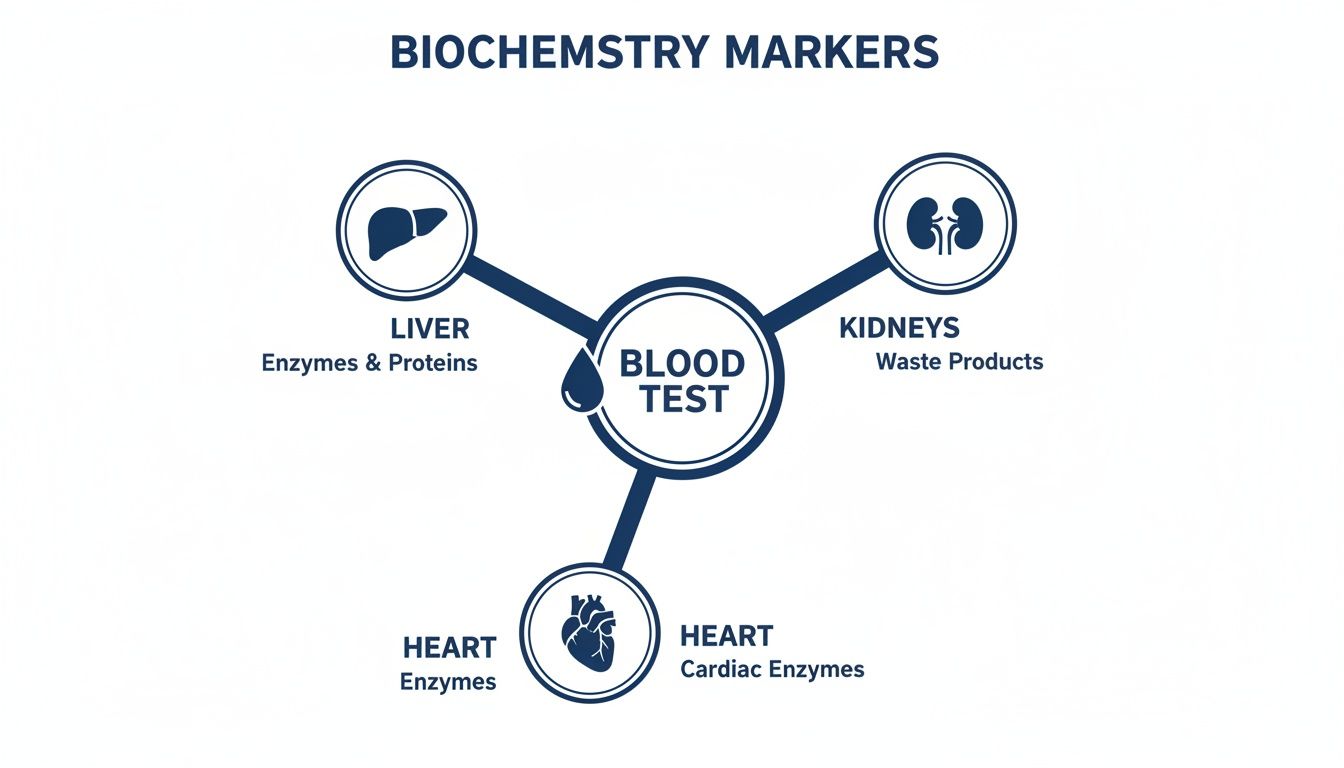
As you can see, your body’s systems are deeply interconnected, and your blood chemistry is the common language that tells us how well your liver, kidneys, and heart are communicating.
Fasting and Hydration Guidelines
One of the most common and important preparation steps is fasting. For most biochemistry panels, this simply means avoiding all food and drink (except plain water) for 8-12 hours before your appointment.
Why is this so important? It’s essential for tests that measure your glucose (sugar) and lipids (cholesterol and triglycerides). Eating causes these levels to spike temporarily. Fasting allows those levels to settle, so we can measure your body’s baseline state, not just its reaction to your last meal.
Health Tip: Stay well-hydrated with plain water. Being hydrated makes your veins plumper and easier to access, which makes for a much smoother, quicker, and more comfortable blood draw. Stick to just water, though—no tea, coffee, or juice.
Managing Medications and Your Appointment
It’s a common question: “Should I take my daily medication?” In most cases, you should continue with your regular medication schedule, but always follow the specific advice from your doctor. The key is to let the clinician performing the blood draw know exactly what you’ve taken.
Here’s a simple checklist to run through before you head to the clinic:
- Confirm Fasting: Have you been told to fast? If so, double-check for how long.
- Stay Hydrated: Sip plenty of plain water in the 24 hours before your test.
- Medication List: Jot down a quick list of your current medications and their dosages.
- Wear Comfortable Clothing: A top with sleeves that can be rolled up easily is perfect.
Following these simple preparation steps helps us get the clearest possible insights into your health. If you’d like to know more about the logistics, our guide to private blood testing in the UK explains what you can expect on the day.
Turning Your Results Into Actionable Health Goals

Getting your biochemistry blood test report back is where vague feelings about your health meet hard data. But the numbers aren’t the end of the story—they’re the beginning. Think of your results as a personalised map, showing you exactly which areas of your health need attention.
Now, let’s talk about how to turn that map into a clear, manageable plan. We’ll look at what some common out-of-range results might mean and focus on practical, evidence-based lifestyle changes you can discuss with your doctor.
Addressing Elevated Blood Sugar
One of the key insights from a biochemistry profile is how well your body manages blood sugar, seen in your glucose and HbA1c levels. If a reading is high, it doesn’t automatically mean you have diabetes. Often, it’s an early warning of insulin resistance, a sign that your body’s cells are struggling to respond to insulin.
This is a fantastic opportunity to be proactive. If your blood test shows high sugar levels, adopting a structured eating approach like a diabetic meal plan can be a great place to start.
Simple lifestyle tweaks can make a real difference in improving your body’s sensitivity to insulin:
- Prioritise Whole Foods: Swap refined carbs like white bread and sugary snacks for complex carbohydrates found in vegetables, beans, and whole grains like quinoa and brown rice.
- Increase Soluble Fibre: Foods such as oats, apples, nuts, and beans are packed with soluble fibre. This helps slow sugar absorption, giving you better control over your blood glucose.
- Move After Meals: It might sound simple, but even a brisk 10-minute walk after eating can significantly improve how your body handles sugar from your food.
Supporting Your Liver Health
If your liver function tests (LFTs) show raised enzyme levels like ALT or AST, it’s a hint that your liver is under stress. This can happen for many reasons, including diet, alcohol, or non-alcoholic fatty liver disease (NAFLD).
Your liver is incredibly resilient and can repair itself. Seeing raised enzymes isn’t a reason to panic, but a clear signal from your body that it’s time to ease its workload with positive lifestyle changes.
Here are a few targeted, scientifically-backed ways to help your liver recover:
- Reduce Alcohol Intake: This is one of the most effective things you can do. Cutting back or eliminating alcohol gives your liver the space it needs to heal.
- Focus on a “Liver-Friendly” Diet: Fill your plate with antioxidant-rich foods like berries, leafy greens (spinach, kale), and cruciferous vegetables (broccoli, cauliflower). Coffee, in moderation, has also been shown to have a protective effect on the liver.
- Achieve a Healthy Weight: Excess weight, especially around the midsection, is a major contributor to NAFLD. Losing even 5-10% of your body weight can dramatically improve liver enzyme levels and reduce liver fat.
Improving Your Cardiovascular Profile
Your lipid panel—which measures LDL (“bad”) cholesterol, HDL (“good”) cholesterol, and triglycerides—gives you a direct snapshot of your heart health. High LDL cholesterol or triglycerides can lead to plaque building up in your arteries, increasing heart disease risk.
The great news? These numbers respond very well to lifestyle adjustments.
Here’s how you can take action to improve your profile:
- Incorporate Healthy Fats: Switch saturated and trans fats (common in processed foods, fatty meats) for unsaturated fats found in avocados, olive oil, nuts, and seeds.
- Boost Your Omega-3s: Fatty fish like salmon, mackerel, and sardines are brilliant sources of omega-3 fatty acids, which are proven to lower triglycerides and reduce inflammation. Aim for two servings per week.
- Embrace Regular Exercise: Aim for at least 150 minutes of moderate aerobic activity (like brisk walking, cycling, or swimming) each week. Regular exercise is one of the best ways to boost protective HDL cholesterol while lowering harmful LDL and triglycerides.
Your biochemistry results are a powerful tool. By working with your GP, you can use these insights to build a targeted health plan and turn data into lasting, positive change.
Why Getting Your Results Quickly Matters
When you’re worried about your health, waiting is the hardest part. Getting your biochemistry blood test results back promptly isn’t just about convenience; it’s about breaking through the uncertainty. A fast turnaround gives you and your doctor the clarity needed to make decisions right away, whether that’s starting lifestyle changes, tweaking medication, or simply getting the all-clear.
On the other hand, a long wait can be incredibly stressful. Weeks can go by, leaving you in limbo and filled with anxiety. This delay doesn’t just affect your peace of mind; it can postpone crucial next steps and slow down your entire path to feeling better.
The Reality of NHS Waiting Lists
Unfortunately, significant delays for diagnostic tests are a well-known challenge across the UK. The waiting lists have been growing for years, and while the pandemic certainly didn’t help, the problem was already there.
In England, the number of people waiting for essential diagnostic tests like biochemistry panels has soared. As of November 2024, that figure hit a staggering 1.6 million—more than double what it was when records first began. That’s millions of people waiting longer than they should for vital information about their health. You can see the full breakdown for yourself on the BMA’s diagnostic pressures data page.
“In healthcare, momentum is everything. A delay in getting results can interrupt the crucial window for early intervention. Prompt testing allows you to take control of your health narrative when it matters most.”
This is a problem we’ve tackled head-on at The Lagom Clinic. By having our own on-site testing facilities, we completely sidestep the long queues and logistical delays that come with sending samples off to overloaded external labs.
What this means for you is a smooth and swift journey from test to action. Instead of spending weeks waiting and worrying, you can be having a productive conversation with your GP just days later, equipped with the data you need to move forward. It’s about getting you answers, and peace of mind, without the agonising wait.
Your Biochemistry Blood Test Questions Answered
It’s natural to have questions after getting your blood test results. Let’s walk through some of the most common ones we hear, giving you the clarity you need to feel confident about your health.
Why Do My Results Fluctuate Slightly?
First off, it’s completely normal for your biochemistry numbers to shift a little between tests. Your body is dynamic and constantly reacting to your hydration, stress levels, a recent meal, or even the time of day. These factors can cause small, temporary changes.
This is exactly why your doctor is more interested in the overall trend of your results over time, rather than one isolated figure. A minor blip is rarely a cause for alarm. It’s the consistent or significant changes that really tell a story and guide lifestyle advice or further investigation.
What Should I Ask My Doctor?
Your follow-up appointment is the perfect time to translate those numbers into a meaningful action plan. To make the most of this conversation, come prepared with a few questions.
You might want to ask things like:
- “What do these specific results mean for my health in the long run?”
- “Based on this test, what are the top 2-3 lifestyle changes I should prioritise?”
- “What specific dietary or exercise goals would be most beneficial for me?”
- “Do we need to re-test these markers, and if so, when?”
Think of this discussion as a partnership. Your doctor brings the medical expertise, but you are the expert on your own body and lifestyle. Working together is the best way to build a health plan that is effective and sustainable for you.
How Is This Different from a Full Blood Count?
This is another great question. While both are fundamental blood tests, they’re looking at entirely different things. A biochemistry blood test measures the chemical substances in your blood to check on organ function, like your liver and kidneys, and your overall metabolic health.
A Full Blood Count (FBC), on the other hand, focuses on the actual cells floating in your blood—red cells, white cells, and platelets. An FBC is what we use to look for signs of conditions like anaemia, infection, or inflammation. Think of it this way: biochemistry checks the engine’s oil and coolant levels, while the FBC counts the different types of vehicles on the road.
At The Lagom Clinic, we believe in giving you direct and timely information about your health. If you’re ready to get a clearer picture of what’s going on inside your body, our on-site testing ensures you get the answers you need without delay. Find out more about our private GP services.
Get the Full Picture With a Health Screening
A full biochemistry panel is included in all our private health screening packages in Bristol. Starting from £500, our screens cover 30 to 150+ blood markers, a full medical examination, and a detailed consultation with a GP. Same-week appointments — no referral needed.


 Members Consultation