


When you’re dealing with a persistent sore throat, crushing fatigue, and a lingering fever, it’s easy to assume you just have a bad case of the flu or tonsillitis. But what if it’s something else? The only way to know for sure if the Epstein-Barr virus (EBV) is the culprit is with a glandular fever blood test. Getting that clear diagnosis is the essential first step towards a recovery plan that’s both safe and effective.
Why a Glandular Fever Blood Test Is Your First Step to Clarity
That miserable combination of symptoms can leave you feeling dreadful and completely in the dark. These symptoms are classic signs of glandular fever, but they also overlap significantly with other common illnesses, which is why it’s so often misdiagnosed.

The confusion between glandular fever and tonsillitis, in particular, is a real problem. In fact, a study conducted at Lincoln County Hospital found that among patients tested for glandular fever because they presented with tonsillitis, 31.3% were actually positive for EBV. This just goes to show how easily the condition can be missed without the right diagnostic tests.
Moving Beyond Uncertainty with a Clear Diagnosis
Getting a definitive answer isn’t just about satisfying your curiosity—it’s about protecting your health. A confirmed diagnosis provides peace of mind and, more importantly, a clear path forward with medically sound advice.
A blood test gives us the crucial evidence needed to map out a safe recovery, especially when it comes to physical activity. Glandular fever can cause the spleen to swell, making it fragile and at risk of rupturing during contact sports or even just heavy lifting. Without a proper diagnosis, you simply wouldn’t be aware of this serious risk.
Knowing what you’re up against empowers you to make the necessary lifestyle changes for a smooth recovery. These informed choices are the cornerstone of getting better and typically include:
- Prioritising deep, restorative rest: This is not optional. Sleep gives your immune system the time and energy it needs to fight off the virus. Cancel non-essential plans and allow yourself to sleep as much as your body demands.
- Avoiding all contact sports and strenuous exercise: This is a strict medical instruction to protect your spleen. This includes team sports, heavy lifting, and high-impact workouts for a recommended period.
- Staying well-hydrated and focusing on nutrition: Sip water, herbal teas, or clear broths throughout the day. Opt for nutrient-rich foods like soups, smoothies, and soft fruits to give your body the fuel it needs without stressing your digestive system.
Ultimately, a glandular fever blood test swaps guesswork for facts. It’s the first step toward taking control, understanding your body’s needs, and creating a concrete plan to get back to feeling yourself again. Taking a proactive approach with a full health screening can also offer a wider look at your overall wellbeing during this time.
How We Test for Glandular Fever: A Look at the Blood Tests
When you suspect you have glandular fever, figuring out the right blood test can seem a bit confusing. But it’s actually quite straightforward once you understand the two main approaches we use. Think of it as having a quick screening tool and then a more detailed diagnostic investigation.
The first, the Monospot test, is like a fast-acting smoke alarm. It’s great for getting a rapid signal that there’s likely an infection, but it doesn’t give you the whole picture.
The second type, the Epstein-Barr virus (EBV) antibody panel, is more like a full forensic analysis. These tests don’t just confirm the virus is present; they tell us whether the infection is happening right now, happened recently, or is a relic from the past. This level of detail is crucial for getting the diagnosis spot on.
The Quick Screen: The Monospot Test
More often than not, the Monospot test is the first port of call. It’s designed to look for a general type of antibody, called a heterophile antibody, that the body often churns out when fighting off an EBV infection.
The biggest plus here is speed; we can get results back very quickly. The downside? It’s not perfectly reliable. The test can come back with a false negative, especially if it’s done too early in the illness before your body has had a chance to produce enough of these antibodies. That’s why a doctor will always weigh up your symptoms and the timing alongside any Monospot result.
A positive Monospot test, when you have all the classic symptoms like exhaustion and a raging sore throat, is a very strong pointer towards glandular fever. But remember, a negative result doesn’t give you the all-clear, particularly if you’ve only been unwell for a week or so.
The Definitive Diagnosis: EBV-Specific Antibody Tests
If the Monospot is negative, or if we need a much clearer picture of what’s going on, we turn to the EBV-specific antibody panel. This is the gold standard for diagnosing glandular fever. Instead of looking for general antibodies, these tests hunt for antibodies made specifically to fight the Epstein-Barr virus itself – it’s like matching a suspect to their unique fingerprint.
Here’s what these highly specific tests are looking for:
-
Viral Capsid Antigen (VCA) IgM: These are the ‘first responder’ antibodies. They show up early in an infection and typically fade away after a few months. Seeing a positive VCA IgM result is a very strong sign you have a current or extremely recent infection.
-
Viral Capsid Antigen (VCA) IgG: These antibodies also arrive during the initial fight, but the key difference is they stick around for life, giving you permanent immunity.
-
Epstein-Barr Nuclear Antigen (EBNA): These are the ‘veteran’ antibodies. They only develop much later, usually six to twelve weeks after your symptoms begin, and they also stay with you for life. If we see VCA antibodies but no EBNA antibodies, it confirms the infection is recent.
By analysing the unique combination of these results, we can pinpoint exactly where you are in the lifecycle of the infection. This allows us to distinguish a brand new case from an old, past infection with absolute confidence, which is vital for guiding your recovery.
Glandular Fever Blood Tests at a Glance
To help simplify things, this table breaks down the common blood tests, what they look for, and when we typically use them.
| Test Name | What It Detects | Best For | Typical Use |
|---|---|---|---|
| Monospot (Heterophile) Test | General antibodies produced during an EBV infection | Quick screening with classic symptoms | A first-line test for a fast, initial indication. |
| VCA-IgM | Early antibodies specific to EBV | Confirming a current or very recent infection | Used when a definitive diagnosis of an active infection is needed. |
| VCA-IgG | Lifelong antibodies specific to EBV | Identifying a past or current infection | Helps build a picture of the infection timeline alongside other markers. |
| EBNA | Late-stage, lifelong antibodies | Distinguishing a recent infection from a past one | A positive result indicates the infection happened months ago or longer. |
Ultimately, piecing together the results from these tests gives us a complete and accurate story of your body’s encounter with the Epstein-Barr virus, ensuring you get the right advice and care.
Right, let’s talk about timing. When you’re trying to pin down a case of glandular fever, getting the blood test done at the right moment is absolutely crucial. It’s a common frustration: you feel dreadful, get tested straight away, but the result comes back negative, leaving you right back at square one.
The reason for this is all about your immune system. When the Epstein-Barr virus first gets going, your body needs a bit of time to recognise the invader and build a proper defence. The antibodies produced during this fight are exactly what the blood tests are looking for. Testing too early is a bit like arriving at a party before the host has had a chance to put out the drinks and nibbles – there’s just not enough evidence to prove anything is happening.
The Best Window for an Accurate Test
That first week of feeling ill is usually the worst, but it’s also the least reliable time for a blood test, especially the common Monospot test. While your immune system is kicking into gear, the level of antibodies in your blood is often too low to be picked up. This is what we call the “window period”.
During this initial phase, a false negative is a very real possibility. In fact, the standard Monospot test has a false-negative rate of about 25% in the first week of symptoms. This drops dramatically to just 5-10% by the second or third week as your antibody levels really ramp up. It’s also worth knowing that false-negative rates can be even higher in young children, which is why timing is so important. You can read more about the diagnostic accuracy of these tests.
Health Tip: To ensure an accurate result, wait until at least the second week of symptoms before getting tested. A few extra days of patience can save you from the confusion of a false negative and get you a clear diagnosis faster.
What if Your First Test Comes Back Negative?
If you had a glandular fever blood test in the first week and it was negative, but you’re still wrestling with the symptoms, don’t just ignore it. A negative result that early on doesn’t give you the all-clear.
Here’s what to do next:
- Focus on symptom relief: While you wait, manage your symptoms with rest, hydration, and gentle nutrition. Gargling with warm salt water can soothe a sore throat, and over-the-counter pain relief like paracetamol or ibuprofen can help with fever and aches (always follow the package instructions).
- Consult your doctor: Let your GP know your symptoms haven’t improved. Based on your condition, they might suggest repeating the test in another week or so.
- Request an EBV-specific panel: If the picture is still muddled, a more detailed set of EBV antibody tests (VCA-IgM, VCA-IgG, and EBNA) is the next logical step. These are more sensitive and can provide a definitive answer when a Monospot test is inconclusive.
By understanding the importance of timing, you and your doctor can get the most accurate glandular fever blood test result, getting you a solid diagnosis and a clear plan for recovery.
How to Read Your Glandular Fever Blood Test Results
When you get your blood test results back, all those acronyms and numbers can feel a bit like trying to crack a code. But don’t worry, figuring out what they mean for glandular fever is more straightforward than it looks. It’s all about understanding the story your immune system is telling us.
A simple ‘positive’ or ‘negative’ result is just the headline. If you had a Monospot test and it came back positive alongside classic symptoms, that’s a strong pointer towards an active infection. A negative result, on the other hand, doesn’t always rule it out—it could just be too soon. For the full story, we need to dig into the specific EBV antibody results.
The key, as this flowchart shows, is timing.
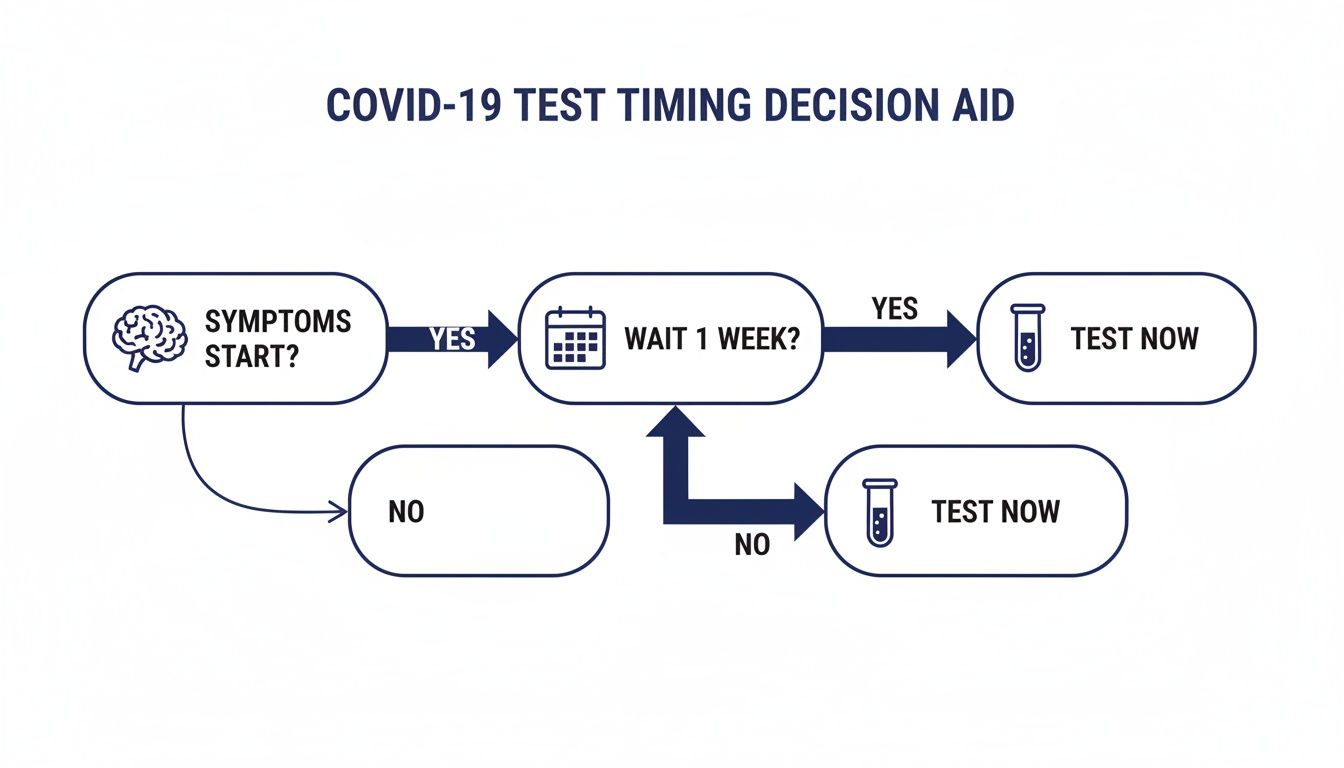
As you can see, waiting at least a week after your symptoms start is vital. This gives your body enough time to produce the antibodies we’re looking for, which is essential for getting an accurate result.
Interpreting Your EBV Antibody Panel
This is where the real detective work begins. By looking at the combination of different EBV antibodies, we can build a precise timeline of the infection.
Here’s what a typical result for a current, active infection looks like:
- VCA-IgM: Positive – Think of these as the ‘first responders’. Their presence means your immune system is in the middle of fighting the virus right now.
- VCA-IgG: Positive – These antibodies also appear during the active phase, but unlike IgM, they stick around for life, providing long-term immunity.
- EBNA: Negative – This is the crucial clue. The absence of these ‘veteran’ antibodies confirms the infection is recent, as they take several weeks or even months to show up.
What if the pattern is different? If your results show VCA-IgG and EBNA are positive, but VCA-IgM is negative, it tells us you’ve had glandular fever in the past. You’re now immune, and EBV isn’t the cause of your current symptoms.
For a more general breakdown of how to make sense of the terms and figures in your reports, this guide on how to interpret lab results is an excellent resource.
Looking Beyond the Main Results
A glandular fever test often includes other important markers that give us a much fuller picture of what’s going on inside your body. One of the first things we look at is a Full Blood Count (FBC).
In cases of glandular fever, we almost always see a high number of white blood cells, specifically lymphocytes. What’s really telling is the presence of ‘atypical lymphocytes’—these are unusually shaped immune cells that are a classic calling card of the body’s fight against EBV. Spotting these provides powerful supporting evidence for the diagnosis.
On top of that, we’ll check your Liver Function Tests (LFTs). It’s very common for glandular fever to cause mild, temporary inflammation of the liver, which we can see as elevated liver enzymes in your blood. This finding often explains why people feel nauseous or have tummy pain. It also reinforces why it’s so important to avoid alcohol while you’re recovering—you need to give your liver a break and let it heal properly.
Your Action Plan for Glandular Fever Recovery
Getting that positive glandular fever blood test result finally gives you an answer, but it’s also where the real work of recovery begins. While there’s no specific medicine to kill the Epstein-Barr virus, you can take control of your recovery by actively making lifestyle choices that support your body as it fights back.
This isn’t just a case of waiting it out. It’s about being strategic with your rest, nutrition, and activity levels to get back on your feet properly.

First things first: listen to your body and embrace rest. The bone-deep exhaustion that comes with glandular fever is a signal to stop. Pushing through it will only prolong your recovery. During the initial two to four weeks, prioritise sleep, cancel social obligations, and allow your body the downtime it needs to heal.
Protect Your Spleen and Nourish Your Body
One of the most serious considerations with glandular fever is its effect on the spleen. The virus often causes this organ, which sits just under your left rib cage, to swell. A swollen spleen is fragile and at risk of rupturing, which is a genuine medical emergency.
To keep it safe, you must avoid:
- All contact sports – think rugby, football, martial arts.
- Strenuous activities like heavy weightlifting or high-intensity workouts.
- Anything that carries a risk of a knock or jolt to your abdomen.
This is non-negotiable. Your doctor will advise when it’s safe to resume these activities, but you should expect to hold off for at least four to six weeks.
At the same time, fuel your immune system with smart nutrition.
- Hydration is key: Drink plenty of water, soothing herbal teas, or warm broths.
- Soothe your throat: A viciously sore throat can make eating difficult. Ice lollies, cold drinks, honey, and gargling with warm salt water can provide real relief.
- Focus on nutrient-dense foods: Stick to easy-to-eat foods like soups, smoothies, yoghurt, and soft fruits. These provide vitamins and minerals without requiring much energy to digest.
Managing Lingering Fatigue and a Safe Return
Even after the sore throat and fever have gone, the profound fatigue can hang around for weeks or sometimes months. This is frustratingly common and requires a patient, structured approach to your lifestyle. For those who find the tiredness is dragging on, reading up on the best supplements for chronic fatigue might offer some helpful ideas, but always chat with your GP before starting anything new.
Recovery Tip: Reintroduce activity gradually. Think of it like using a dimmer switch, not flicking a light switch. Going from zero to one hundred is a recipe for a relapse, which often brings the fatigue crashing back.
Ease back into your routine slowly. Start with short walks and see how you feel the next day. A phased return to work or study, perhaps starting with half-days, is a sensible way to rebuild your stamina without overdoing it. This gradual, mindful approach is your ticket to a full and lasting recovery.
Getting Your Private Glandular Fever Test in Bristol
When you’re feeling unwell and glandular fever is a possibility, the last thing you want is a long, anxious wait for answers. Going down the private route with a GP can get you a clear diagnosis much faster, putting you on the path to recovery without the frustrating delays. At a clinic like The Lagom Clinic in Bristol, the whole experience is designed to be straightforward and reassuring.
The first step is simple: book a consultation. You can find a time that works for you, so you don’t have to rearrange your entire life. During your appointment, the GP will take the time to really listen, going through your symptoms and health history properly before any tests are even considered.
The Testing Process and Follow-Up Care
The glandular fever blood test itself is quick and happens right there in the clinic. Having your blood taken in a calm, private setting can make a world of difference. The results come back fast, usually within just a few days, which really helps to shorten that period of uncertainty. If you’re curious about the different kinds of tests, our private blood testing page has more detail.
But perhaps the most valuable part of the entire process is the follow-up consultation. This isn’t just a quick phone call with your results. It’s a dedicated appointment where your doctor sits down with you to explain what everything means, breaking down the medical jargon into plain English. They’ll cover whether the test is positive or negative, and point out any other important findings from your bloodwork, like signs of liver inflammation or the presence of atypical white blood cells.
Think of this conversation as getting a personalised roadmap for your recovery. Your doctor will explain how the diagnosis affects you directly, including crucial advice like avoiding certain physical activities to protect your spleen.
From there, you’ll work together to create a practical, evidence-based recovery plan. This will include expert advice on managing fatigue, staying hydrated, and how to safely and gradually return to your normal routine. It’s a supportive approach that provides clarity and empowers you to get back on your feet.
Common Questions About Glandular Fever
Even after you get a clear diagnosis from a glandular fever blood test, you’re bound to have more questions. It’s completely normal. Let’s walk through some of the most common queries we hear from patients about what comes next.
How Long Does Glandular Fever Last and Am I Still Contagious?
The acute phase of the illness—the high fever and severe sore throat—usually improves within a couple of weeks. The fatigue, however, is a different story. That deep, draining tiredness can linger for several weeks or, in some cases, even a few months. Patience and a focus on gradual recovery are essential.
As for being contagious, you are most infectious when your symptoms are at their worst. However, the Epstein-Barr virus can remain in your saliva for months after you feel better. To protect others, it is medically advisable to avoid sharing drinks, cutlery, or kissing for at least a few months after the infection.
Can I Get Glandular Fever More Than Once?
This is a common worry, but the good news is that getting true glandular fever twice is incredibly rare. Once you’ve had it, your immune system develops a “memory” by creating specific antibodies, giving you lifelong immunity. The virus itself will remain dormant in your body, but your immune system is now perfectly equipped to stop it from causing trouble again.
If you get similar symptoms years down the line, it’s almost certainly a different bug. Your body’s defences are already primed to keep the Epstein-Barr virus in check.
Do I Need to Avoid Alcohol If I Have Glandular Fever?
Yes, absolutely. It is a firm medical recommendation that you strictly avoid all alcohol while you are ill and for several weeks after you start to recover. Glandular fever often causes the liver to become inflamed, which will be visible on your blood test results.
Your liver is already working overtime to help fight the infection. Adding alcohol puts significant extra stress on it, which can impair liver function and slow down your overall recovery. Your GP will provide specific advice on when it is safe to have a drink again, often based on follow-up blood tests and your clinical recovery.
Getting through glandular fever requires clear, expert guidance and a bit of patience. At The Lagom Clinic, our private GPs in Bristol are here to give you the time and support you need, from accurate testing to a personalised recovery plan. Book a consultation with us to get the answers and care you deserve. https://www.thelagom.co.uk


 Members Consultation