


It's completely normal to notice some vaginal discharge in the days after your period finishes. What you're seeing is simply a sign that your body is getting back to business – cleaning itself out and preparing for the next phase of your menstrual cycle. It’s mostly your system clearing away the last remnants of old blood and shifting gears towards ovulation.
What Is Normal Discharge After a Period?
Think of it as your body’s own natural clean-up process kicking in. Once your period is over, your cervix starts producing mucus again to help flush out any lingering blood from your uterus and vagina. This is an essential part of keeping your vaginal environment healthy and balanced.
This post-period discharge is a brilliant, visible sign of the hormonal shifts happening behind the scenes. As your period ends, your oestrogen levels begin to climb, which is the signal for your body to start preparing for potential ovulation. It’s this hormonal nudge that triggers the changes in your cervical mucus.
Understanding Different Types of Normal Discharge
The look and feel of this discharge can change from one day to the next, and it’s different for everyone. Getting to know your body's unique patterns is a great way to feel more in tune with your cycle and take control of your health.
Here are a few common, completely healthy types of discharge you might see:
- Brownish or Pinkish Tinge: This is very common, especially in the first day or two after your period seems to have stopped. It’s just old blood that took a little longer to leave the uterus, mixing with your normal mucus.
- Creamy or Milky White: As your oestrogen levels continue to rise, you might notice a lotion-like, creamy white discharge. This is a classic sign that your body is moving into its follicular phase, the run-up to ovulation.
- Clear and Watery: After the creamy stage, your discharge might become much clearer and more watery. This happens as you get closer to your most fertile time, and it’s a sign of increasing hydration in your cervical mucus.
Your discharge is like a built-in feedback system. It gives you real-time updates on what your hormones are doing and where you are in your cycle, all without any special gadgets – you just have to pay attention.
Quick Guide to Normal Post-Period Discharge
To help you feel confident about what you’re seeing, we've put together a simple guide. This table breaks down the common types of normal discharge you might see after your period and what they typically mean.
| Type of Discharge | Typical Appearance and Consistency | What It Usually Means |
|---|---|---|
| Brownish Discharge | Can be light brown to dark brown, often thick or stringy. | This is old blood mixing with mucus, signifying the very end of your period and your body's final 'clean-up' phase. |
| Creamy White Discharge | Often looks like a thin lotion; can be white or off-white. | This indicates that your oestrogen levels are starting to rise as your body begins preparing for the next ovulation cycle. |
| Clear, Watery Discharge | Transparent and thin, similar to water. | This shows that your body is becoming more fertile. The discharge helps to cleanse the vagina as you approach ovulation. |
Recognising these patterns can be incredibly reassuring. It confirms that your body is working just as it should be, transitioning smoothly from one part of your cycle to the next.
The Hormonal Rhythm Behind Your Cycle and Discharge
To really get to grips with why you have discharge after your period, we need to look at the powerful hormones that run the show. Think of oestrogen and progesterone as the two main directors of your monthly cycle. When your period finishes, your body doesn't just switch off; it’s already getting ready for the next act.
As soon as your period ends, you enter what’s known as the follicular phase. At this point, progesterone levels are low, but oestrogen starts to steadily climb. This rise in oestrogen is the main signal that changes your cervical mucus. It’s essentially telling your cervix to start producing more fluid.
And this isn't for nothing—it serves a very practical purpose. This first wave of discharge helps to cleanse the vaginal canal, clearing out the last of the old blood and cells from your period. It’s your body’s natural way of spring cleaning, creating a healthy environment for what comes next.
Oestrogen’s Role in Preparing for Ovulation
As your oestrogen levels continue to ramp up, the discharge itself starts to change. It might begin as a bit creamy or whitish, but it will gradually become clearer and more watery as you get closer to ovulation. This is your body cleverly preparing for a potential pregnancy. The changing texture makes the environment much more welcoming for sperm, if you happen to have intercourse.
You can almost think of this hormonal shift as your own built-in fertility tracker. The discharge you notice after your period is direct feedback on what your oestrogen is up to. Paying attention to these small changes gives you a fantastic insight into your body's unique rhythm and helps you pinpoint where you are in your cycle.
The changing patterns of discharge after a period are not just normal—they are a sign of a healthy, functioning reproductive system. Each change in colour and consistency tells a story about the hormonal shifts happening inside you.
This timeline gives a great visual of how your discharge might look in the days right after your period.
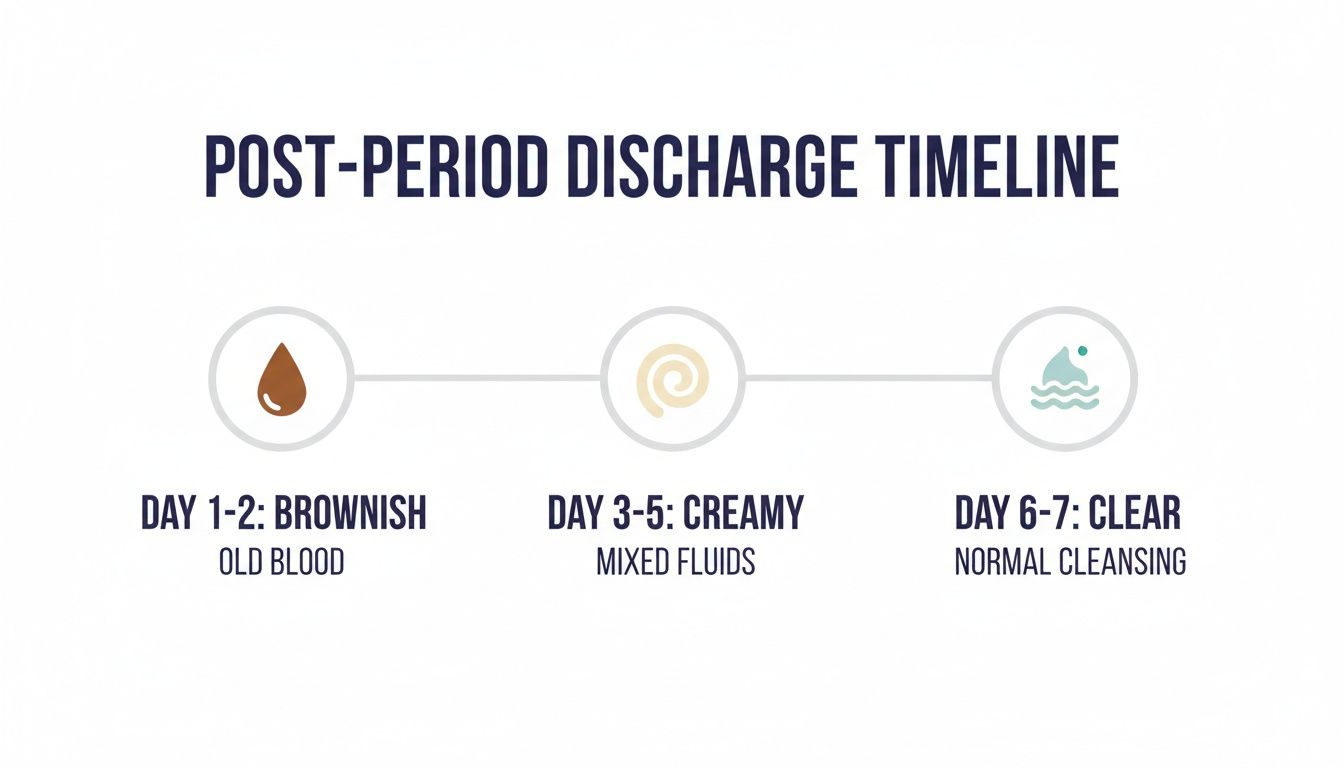
As you can see, it often starts with the last of the old brownish blood, moves into a creamy phase, and then becomes clear as your body gears up for its most fertile time.
Lifestyle Tips for Maintaining Hormonal Balance
This hormonal dance is a delicate one, affecting everything from your discharge to your mood, energy, and general wellbeing. Things like your diet, how much stress you’re under, and your sleep patterns can all throw things off-kilter. Looking after your overall health through positive lifestyle choices is one of the best things you can do to support your body's natural cycle.
Here are a few simple lifestyle habits that can make a real difference:
- Eat a Balanced Diet: Focus on whole foods to nourish your body. Fill your plate with leafy greens, healthy fats from sources like avocados and nuts, and high-quality protein. Reducing your intake of processed foods and refined sugar helps maintain stable blood sugar levels, which is crucial for hormonal regulation.
- Prioritise Sleep: Aiming for 7-9 hours of quality sleep a night is non-negotiable for hormonal health. Your body regulates and produces key hormones while you rest, so chronic sleep deprivation can significantly disrupt your cycle.
- Manage Stress: When you’re chronically stressed, your body produces more cortisol, a hormone that can interfere with oestrogen and progesterone. Finding a stress-management technique that works for you—whether it's mindfulness, yoga, or just a quick daily walk—can have a massive impact on your hormonal balance.
Getting to know this intricate hormonal dance is key to understanding your body's signals. For some women, keeping everything in sync might involve exploring how hormone balance supplements for women could offer extra support. By learning to read these cues, you’re much more empowered to take charge of your own health.
A Detailed Look at Healthy Post-Period Discharge
So, we know that some discharge after your period is completely normal. But what does ‘normal’ actually look like? Getting familiar with the different colours and textures you might see can be incredibly reassuring. These changes aren't random; they're your body's way of telling you what's happening with your cycle and your reproductive health.
Think of it as learning your body’s unique language. Once you understand what these different signals mean, you can feel much more in tune with your cycle and confident that everything is ticking along just as it should.
Brown Discharge: The Final Farewell to Your Period
It’s very common to see some brown discharge for a day or two, right after you think your period has finished. Don't worry, this isn't another period starting. It’s simply the last of the old menstrual blood making its final exit.
So, why brown? It all comes down to oxidation. This is just a scientific term for what happens when blood is exposed to air. Because this blood has taken longer to travel out of your uterus, it has had time to react with oxygen, turning it from red to a brownish shade. Seeing this is actually a good sign that your uterus has done a thorough job of cleaning itself out after your period.
Creamy White Discharge: Oestrogen on the Rise
After any lingering brown discharge fades, you’ll probably notice things shift to a creamy or milky white consistency. It can look a bit like thin lotion and shouldn't have much of a smell.
This is a classic sign that your oestrogen levels are starting to climb. As your body moves into the follicular phase (the time between your period and ovulation), oestrogen gives your cervical glands the nudge to start producing this mucus. It’s the first real signal that your body is getting ready for your next fertile window.
Think of it this way: if brown discharge is the final clean-up from your last cycle, creamy white discharge is the first step in preparing for the next one. It’s a healthy, forward-looking sign of your body getting ready for potential ovulation.
Clear and Stretchy Mucus: Nearing Peak Fertility
As you get closer to ovulation, your discharge will likely change again. You’ll notice it becomes clearer, more watery, and develops a slippery, stretchy texture—many people compare it to raw egg whites.
This is what’s known as fertile mucus, and it has a very specific job: to create the perfect environment for sperm to travel through the cervix and meet an egg. The appearance of this ‘egg-white’ discharge is one of the most reliable clues that you’re in your most fertile phase. When you see it, you know your hormones are working in perfect harmony to maximise the chances of conception.
Actionable Health Tips for Daily Comfort and Vaginal Health
Looking after your vaginal health and managing daily discharge doesn’t have to be complicated. A few simple, science-backed habits can make a huge difference in supporting your body’s natural balance without causing any disruption.
Healthy Hygiene Practices:
- Wipe from front to back: This is a simple but vital habit. It prevents bacteria from the anal region from being transferred to the vagina, which is a major cause of urinary tract infections (UTIs) and other irritations.
- Wash gently: Warm water is often all you need. If you choose to use a wash, stick to a plain, unscented, pH-balanced soap and only use it on the external vulva. Your vagina is self-cleaning on the inside.
- Avoid douching and scented products: Douching, harsh soaps, perfumed wipes, and vaginal deodorants are not recommended. They can disrupt the natural pH of your vagina, killing the beneficial bacteria and allowing harmful bacteria or yeast to overgrow, leading to infections and discomfort.
By sticking to these simple tips, you’re helping your body’s natural defences do their job. Other lifestyle choices, like choosing breathable cotton underwear, improve air circulation and reduce moisture, which helps prevent irritation. Staying well-hydrated by drinking plenty of water also supports your body's overall cleansing processes, including the production of healthy cervical mucus. It’s these small, consistent actions that make the biggest difference in feeling comfortable and healthy all month long.
When Discharge After Your Period Signals a Health Issue
While a bit of discharge after your period is usually just your body getting back to its regular rhythm, it's also smart to know when a change might be a sign to pay closer attention. Think of your discharge as one of your body’s key communicators. Learning to spot the difference between normal and not-so-normal is the first step in looking after your health.

You get to know your body's typical patterns over time. So, when something changes—like the colour, smell, or amount of discharge—it naturally catches your attention. This isn't about causing alarm; it's about being informed.
And if you do notice something off, you’re certainly not alone. NHS England statistics show that roughly 1 in 8 women seek medical advice for issues like abnormal discharge or heavy bleeding that get in the way of their daily lives. You can read more about the research on the NHS England website.
Decoding Unusual Discharge Colours and Odours
Perhaps the most straightforward clue that something’s up is a sudden change in what your discharge looks, feels, or smells like. Healthy discharge is generally clear to white and doesn't have a strong odour, but certain changes can point to specific things.
Greyish-White and Fishy Odour: If you're seeing thin, greyish discharge with a noticeable fishy smell (especially after sex), it could be bacterial vaginosis (BV). It’s incredibly common and happens when the natural balance of bacteria in the vagina is disrupted.
Thick, White, and Clumpy: Discharge that’s thick, white, and lumpy—often compared to cottage cheese—is the hallmark of a yeast infection, or thrush. This almost always comes with significant itching and soreness.
Yellow-Green or Frothy: Discharge that looks yellowish-green or even a bit bubbly can be a symptom of trichomoniasis, a common sexually transmitted infection (STI). Other STIs like chlamydia or gonorrhoea might also cause yellow or greenish discharge, but it's worth noting they often have no symptoms at all.
Try to see an unusual discharge for what it is: information. It’s your body’s way of letting you know that its delicate internal environment is out of balance and needs a bit of attention.
When Itching, Burning, or Pain Accompanies Discharge
Often, a change in discharge doesn’t happen in isolation. The other symptoms that come along with it can give you a much clearer picture of what’s going on. It’s really important to take note if the new discharge is paired with any kind of discomfort.
Signs that Warrant a Doctor's Visit:
- Persistent Itching or Burning: A relentless itch or a burning feeling around your vulva or inside the vagina strongly suggests an infection like thrush.
- Pain or Discomfort: Any new pain in your pelvic region, lower tummy, or when you wee, should be investigated. It could be anything from a simple urinary tract infection (UTI) to something more serious like pelvic inflammatory disease (PID).
- Soreness, Redness, or Swelling: If the area around your vulva looks red, swollen, or just feels sore, that’s another clear sign of irritation or infection.
For persistent problems like thrush, getting a professional opinion is key. If you find yourself in a frustrating cycle of repeat infections, our guide on why you keep getting thrush is a great read for understanding triggers and how to manage them.
Before you see a doctor, it can be really useful to jot down a few notes about your symptoms—what the discharge is like, when it started, and any other discomfort you’re feeling. This gives your doctor a head start and helps them make a more accurate diagnosis, faster.
How Lifestyle and Contraception Can Affect Your Discharge
It might surprise you just how much your daily life can influence what's happening 'down there', especially the discharge you notice after your period. Your body isn't a machine operating in isolation; it responds to everything from the contraception you use to your stress levels and what you eat. Understanding these connections is the first step to decoding any changes you see.

Many aspects of our lives can subtly shift our hormonal balance and the delicate environment of the vagina. The good news is, once you're aware of these influences, you can take simple, proactive steps to support your health.
How Hormonal Contraception Changes Things
If you're on hormonal contraception – like the combined pill, the mini-pill, the hormonal coil (IUS), implant, or injection – you’ve probably already noticed that your discharge pattern doesn't follow the 'textbook' cycle. That’s completely normal. These methods introduce synthetic hormones that essentially override your body’s natural rhythm of oestrogen and progesterone.
For instance, many women on the combined pill find their discharge is more consistent throughout the month, often appearing thicker and whiter. This happens because the pill holds your hormone levels steady, preventing the oestrogen surge that causes clear, stretchy 'egg-white' mucus around ovulation. The progestin in these contraceptives also works to thicken cervical mucus (which is what you see as discharge) to help prevent pregnancy.
It’s also quite common to experience spotting or breakthrough bleeding, particularly when you first start a new contraceptive. This can easily be mistaken for an unusual discharge after a period. In fact, it's a widespread issue; heavy periods followed by abnormal discharge affect roughly 1 in 4 UK women. NHS England data even shows that between 15 and 55 out of every 100 people using certain treatments report intermenstrual bleeding.
The Surprising Impact of Stress and Diet
Your vaginal health is deeply connected to your overall wellbeing, with stress and diet being two of the biggest players. Your vagina maintains a carefully balanced ecosystem of bacteria, the 'vaginal microbiome', which is dominated by beneficial lactobacilli that keep things healthy and slightly acidic.
When you're chronically stressed, your body pumps out the stress hormone cortisol. High cortisol levels can throw your main reproductive hormones out of whack and suppress your immune system, making it harder for your body to maintain that healthy vaginal flora. This can leave you more vulnerable to infections like bacterial vaginosis (BV) or thrush, both of which cause very distinct changes in discharge.
What you eat is just as crucial. A diet high in sugar and processed foods can feed the 'bad' bacteria and yeasts, disrupting the balance of your vaginal microbiome and potentially leading to infections.
Think of your vaginal microbiome like a garden. To help the good plants (lactobacilli) flourish, you need to provide the right environment—a balanced diet—and protect it from weeds that thrive on stress and sugar.
Actionable Health Tips for a Balanced System
The best part is that you have a huge amount of influence over these lifestyle factors. Small, consistent changes can make a world of difference in supporting your hormonal balance and promoting a healthy vaginal microbiome, leading to more predictable and 'normal' discharge for you.
Simple Lifestyle Adjustments:
- Manage Your Stress: Find what genuinely helps you unwind. It could be daily walks, using mindfulness apps, yoga, or just carving out 15 minutes for a hobby you love. Lowering your cortisol levels helps your entire body, including your reproductive system, run more smoothly.
- Prioritise Hydration: Drinking plenty of water is fundamental. It helps to flush out toxins and supports the production of healthy cervical mucus, which keeps the vaginal tissues hydrated and comfortable.
- Embrace a Balanced Diet: Focus on building your meals around whole foods. A diet rich in fruits, vegetables, and fibre provides the essential nutrients your body needs for balanced hormonal function.
- Incorporate Probiotics: To actively support your vaginal flora, consider adding probiotic-rich foods to your diet. Live yoghurts, kefir, kimchi, and sauerkraut are fantastic sources of beneficial bacteria that help maintain an ideal vaginal pH.
By focusing on these areas, you're not just 'managing' your discharge; you’re taking a holistic and positive approach to your health. These habits work in harmony to create a stable internal environment, allowing your body’s natural systems to do their job properly.
When to See a Doctor for Your Concerns
While most changes in discharge are just your body doing its thing, it’s just as important to know when to seek professional advice. The key is to trust your instincts. If something feels off, it’s always better to get it checked out.
Think of it this way: you are the expert on your own body. A noticeable and persistent change from your personal ‘normal’ is often the first and most important signal that it’s time to speak to a doctor. This section will walk you through the specific signs to watch for and what you can expect from an appointment.
Specific Red Flags That Warrant a Visit
Sometimes, your body sends very clear signals that it needs a bit of medical help. If your discharge is accompanied by other symptoms, it’s a definite sign to book an appointment. It's easy to dismiss these things, but you don't have to just put up with them.
Pay close attention if you notice any of the following:
- Discharge that persists for more than a week: If an unusual discharge (different in colour, smell, or consistency) doesn’t clear up on its own after a few days, it's worth investigating.
- Fever or chills: A high temperature alongside pelvic discomfort and unusual discharge can be a sign of a more serious infection that needs prompt treatment.
- Pain during urination or sex: A burning or stinging sensation when you wee, or pain during intercourse, is never normal and should always be looked into.
- Persistent pelvic or lower abdominal pain: A dull ache or sharp pains in your lower tummy that aren’t your usual period cramps are a significant red flag.
Trusting your gut feeling is essential. If you are worried or anxious about any changes in your discharge, that in itself is a perfectly valid reason to see a doctor. You don’t need to wait for severe symptoms to seek reassurance.
If there’s any chance you could have a sexually transmitted infection (STI), getting tested is a crucial step for your long-term health. If you’re unsure what’s involved, our guide explains what to expect from a sexual health screening.
What to Expect During Your Doctor's Appointment
Walking into a doctor's surgery to discuss personal health concerns can feel a little daunting. Knowing what to expect can help you feel more prepared and in control. The main goal of the consultation is for your doctor to understand what's going on and work out the cause.
Your appointment will usually involve a few key steps:
- A Detailed Discussion: Your doctor will start by asking about your symptoms. Be ready to chat about when the changes started, what the discharge looks and smells like, and any other symptoms you’re experiencing, like itching or pain. They’ll also ask about your menstrual cycle, sexual activity, and contraception.
- A Physical Examination: Depending on your symptoms, your doctor might suggest a gentle examination. This may include an external look at your vulva and possibly a simple internal pelvic exam to check your vagina and cervix. You can always ask for a chaperone to be present if it makes you feel more comfortable.
- Taking a Sample: To get a clear diagnosis for things like BV, thrush, or an STI, your doctor will likely need to take a sample of the discharge. This is usually done with a small, soft cotton swab during the internal exam. The process is very quick and shouldn't be painful, though it might feel slightly odd for a moment.
Potential Tests and Getting a Diagnosis
The sample taken during your appointment is then sent to a lab for analysis. This is the most reliable way to pinpoint the specific bacteria, yeast, or organism causing the issue.
The results will tell your doctor exactly what treatment is needed. For example, bacterial vaginosis is typically treated with antibiotics, while thrush requires antifungal medication. Getting the right diagnosis is crucial, as using the wrong treatment can sometimes make the problem worse or cause it to come back.
In some situations, if your symptoms point to something other than a simple infection, your doctor might recommend further tests. This could involve a blood test to check other health markers or an ultrasound scan to get a better look at your pelvic organs.
Seeking timely medical care is never an overreaction. It’s a proactive step towards looking after your long-term wellbeing and sorting out any underlying issues before they become more complicated. A clear diagnosis brings not only an effective treatment plan but also invaluable peace of mind.
Your Questions Answered: Post-Period Discharge
We get a lot of questions about what’s normal and what isn’t when it comes to discharge after a period. Let's clear up some of the most common concerns.
Is It Normal to Have No Discharge After My Period?
Yes, absolutely. It's quite common to have a few 'dry' days right after your period finishes. Think of your menstrual cycle as having different phases; this is simply one of them.
As long as you’re not experiencing any other symptoms, like uncomfortable vaginal dryness, itching, or pain during sex, a brief break in discharge is nothing to worry about.
Can Exercise Affect My Discharge After My Period?
It certainly can. You might notice a bit more discharge during or after a workout, and that’s perfectly normal. When you exercise, you increase blood flow and muscle contractions, which can encourage the glands in your cervix and vagina to release more fluid.
This is usually just a temporary increase in your body's normal, healthy discharge. Staying well-hydrated can also lead to more clear, watery discharge, so it’s not a sign that something is wrong.
Remember, a bit more discharge linked to exercise is fine. The key is to pay attention to the quality, not just the quantity. A significant change in colour or odour is what warrants a closer look.
Why Does My Discharge Sometimes Have an Odour?
Healthy discharge naturally has a very mild, slightly musky scent that can change a little throughout your cycle. This is completely natural and shouldn't be strong or unpleasant.
A strong, 'fishy', or foul odour, however, is your body's way of telling you something is off. It often points to a pH imbalance or an infection like bacterial vaginosis (BV). If you notice a persistent, unpleasant smell, especially if it comes with a change in discharge colour or texture, it’s wise to speak with a doctor to find out what's going on.
At The Lagom Clinic, we know that you are the expert on your own body. If anything about your cycle or discharge feels off, our private GPs are here to provide unhurried, personalised care. Book a consultation today to get the clarity and reassurance you deserve.
Noticing changes in your cycle?
Hormonal shifts during perimenopause can alter discharge patterns, cycle length, and flow. Our menopause clinic in Bristol offers private hormone testing and expert guidance through every stage.


 Members Consultation