


You finish a meal, then within minutes your face feels hot, your chest flushes, and you're suddenly wondering whether this is normal, hormonal, dietary, or something more serious. It's a common experience, and it can be surprisingly unsettling, especially if the meal wasn't particularly spicy or large.
In practice, hot flushes after eating usually fall into a few broad patterns. Sometimes they're part of menopause and are made worse by common food triggers. Sometimes they're linked to the act of eating itself, particularly if you go long stretches without food and then have a meal. And sometimes they point to something more specific, such as a food intolerance pattern, diabetes-related autonomic symptoms, or another condition that deserves proper assessment.
The useful question isn't just “what food caused this?” It's “what pattern does this fit?” Once you look at timing, triggers, associated symptoms, and your wider health picture, the situation usually becomes much clearer.
Why Do I Get Hot Flushes After Eating
A post-meal flush often feels dramatic, but the cause is frequently straightforward. Eating changes blood flow, digestion, blood sugar handling, and body temperature. If your system is already sensitive, that shift can be enough to trigger a wave of heat, redness, or sweating.
For many women in midlife, the most likely explanation is a vasomotor symptom linked to perimenopause or menopause. In that setting, food doesn't always create the problem from scratch. It often acts as the spark that sets off an already sensitive temperature-control system.
Other people notice a more selective pattern. The flush only happens after wine, coffee, very hot drinks, aged foods, or certain restaurant meals. That raises the possibility of a trigger response rather than a general hormonal one. A third group gets flushing with sweating focused on the face or scalp during meals, which can suggest a different mechanism again.
The first clues to look for
A few details usually help narrow it down quickly:
- Timing matters: If it starts during the meal or soon after, food or the act of eating may be involved.
- Food pattern matters: If the same items set it off repeatedly, a trigger is more likely than chance.
- Life stage matters: If you're in your forties or fifties and also noticing sleep disruption, cycle changes, or night sweats, hormones move higher up the list.
- Associated symptoms matter: Rash, wheeze, diarrhoea, pounding heartbeat, or dizziness make the picture less routine.
Practical rule: If you can identify a repeatable pattern, you're already halfway to solving it.
Most cases can be managed with careful observation and lifestyle changes. The key is not to dismiss it, but also not to panic. A clear pattern usually emerges once you stop treating every flush as random.
Understanding the Science of a Hot Flush
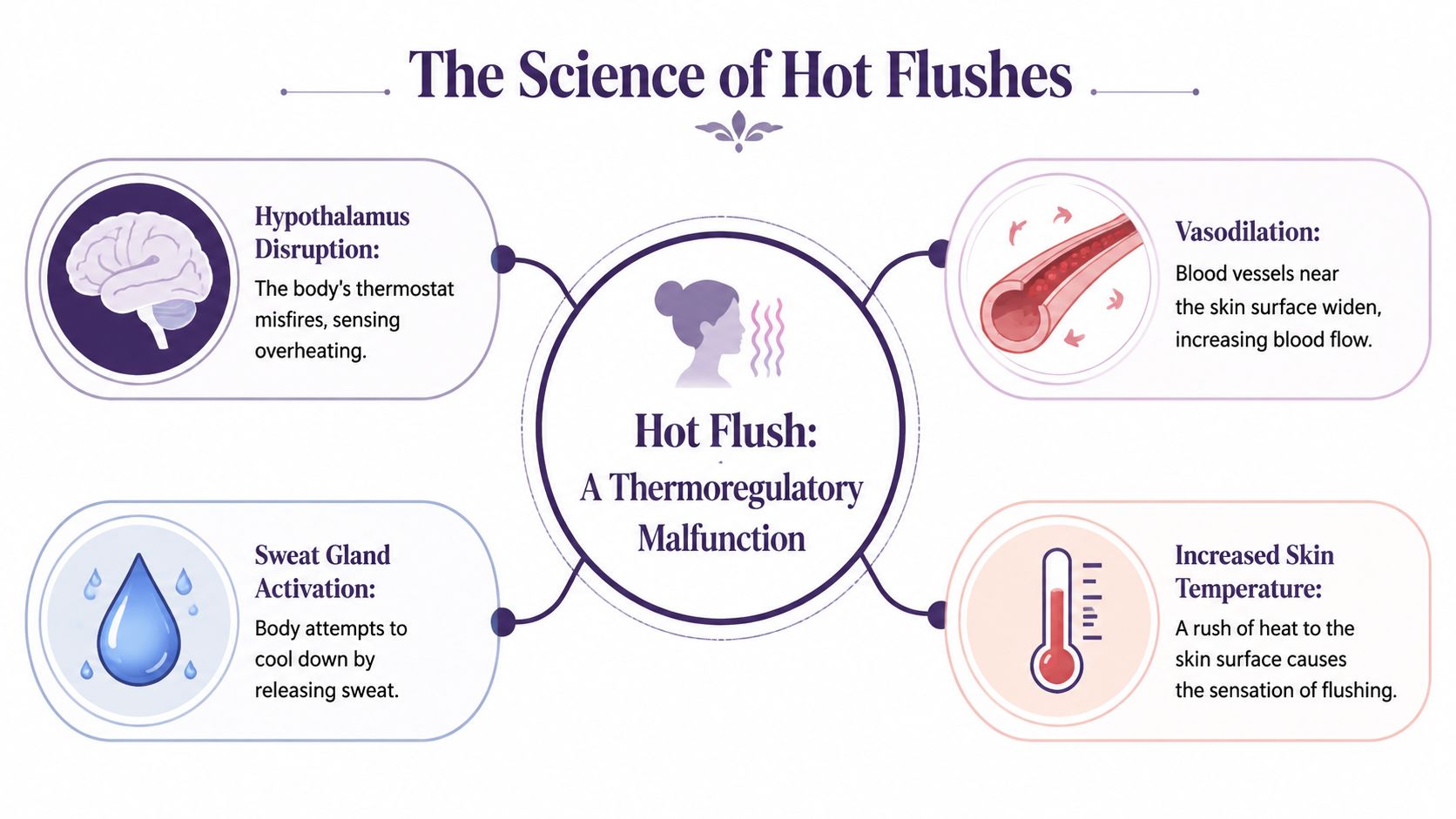
A hot flush is best understood as a thermoregulatory misfire. Your body has an internal temperature-control centre in the brain called the hypothalamus. When that system becomes oversensitive, it can react as if you're overheating even when your actual temperature hasn't risen very much.
That false alarm triggers a cooling response. Blood vessels near the skin widen, more blood moves to the surface, and you feel sudden warmth in the face, neck, chest, or whole body. Sweating may follow as your body tries to lose heat quickly. That's why a flush can arrive fast and then leave you feeling clammy or chilled afterwards.
Why eating can trigger it
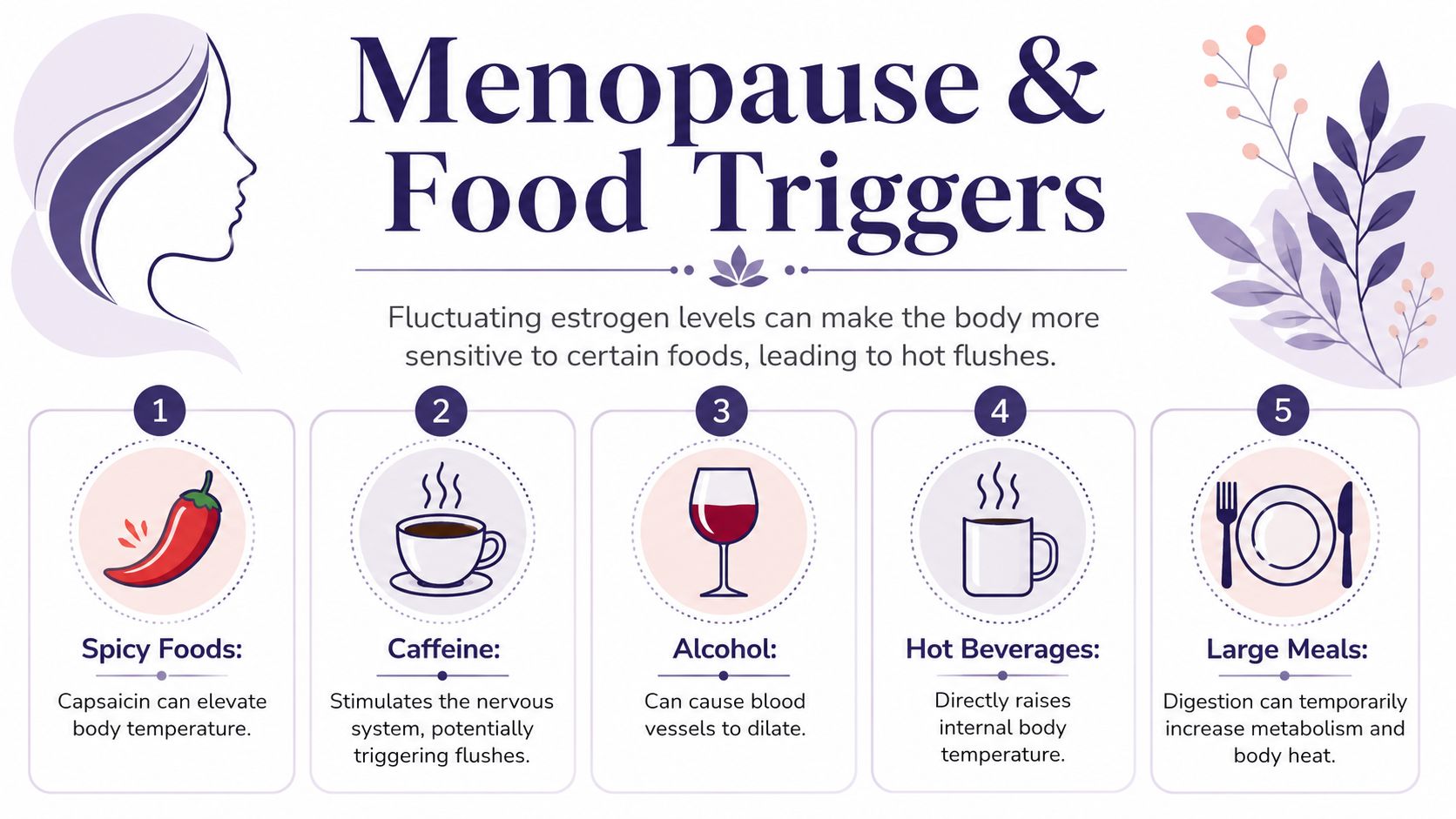
Meals affect several systems at once. Digestion increases activity in the gut, shifts blood flow, and can alter how warm you feel. Hot drinks raise internal warmth directly. Alcohol widens blood vessels. Caffeine stimulates the nervous system. Spices activate heat receptors. None of that guarantees a flush, but it can be enough in someone whose thermostat is already running narrowly.
The symptom is real, even when the trigger seems modest.
A hot flush doesn't mean your body is failing. It means your temperature-control system has become easier to trip.
Why the same symptom can have different causes
People often get confused because the physical feeling of flushing can look similar whether the trigger is menopause, alcohol, histamine-rich food, or another medical issue. The difference lies in the pattern.
A menopause-related flush tends to fit into a broader vasomotor picture. A food-related flush may be more tightly linked to specific meals. Diabetes-related gustatory sweating often has a more localised face-and-head pattern. That's why symptom tracking is more useful than guessing from one isolated episode.
The Link Between Menopause and Common Food Triggers
For women over 40, menopause is the commonest explanation for hot flushes that seem to happen after meals. The Menopause Society states that hot flashes occur in up to 80% of women during menopause and last a mean of 7 to 10 years (Menopause Society guidance on hot flashes). That matters because these aren't rare or fleeting symptoms. They can become a long-running quality-of-life issue.
When oestrogen levels fluctuate, the hypothalamus becomes more sensitive. Small triggers that your body once handled easily can now set off a noticeable flush. That's why some women suddenly find that their usual flat white, glass of wine, curry, or even a steaming bowl of soup starts provoking symptoms.
The classic trigger pattern
The established offenders are familiar, but the reason they matter is practical:
- Alcohol: often causes vasodilation, so the skin feels hotter quickly.
- Caffeine: can make the nervous system more reactive.
- Spicy foods: can stimulate heat receptors and mimic overheating.
- Hot foods and drinks: add direct thermal load.
- Large or sugary meals: may leave some people feeling hotter and more physiologically “switched on” after eating.
If this sounds familiar, it's worth reading about broader perimenopause symptoms, because post-meal flushing often sits alongside sleep change, anxiety, cycle disruption, or brain fog rather than appearing completely alone.
Meal timing matters more than many people realise
There's another detail many generic articles miss. A controlled study found that eating created a hot-flash-free period averaging 90 minutes, and hot-flash frequency increased as the time between meals got longer (clinical study on meal timing and hot flashes). That suggests some women do worse when they leave long gaps between meals.
In practical terms, that means the problem isn't always “what did I eat?” Sometimes it's also “how long had I gone without eating before this?”
Clinical takeaway: If you tend to skip lunch, delay dinner, or rely on coffee until late morning, regular meal timing may help as much as avoiding obvious trigger foods.
What tends to work and what usually doesn't
What works is pattern-based adjustment. Reduce one likely trigger at a time. Eat regularly. Notice whether hot drinks are worse than the food itself. Pair carbohydrates with more balanced meals rather than swinging between long fasting periods and large portions.
What usually doesn't work is cutting out half your diet in a panic. Over-restriction makes life harder and often doesn't identify the true trigger. If weight changes are also part of the wider menopausal picture, sensible support around food quality, appetite, and consistency is often more useful than crash dieting. Some women also find practical guidance on menopause weight management solutions helpful when symptoms and weight regulation seem to worsen together.
When Your Diet Is the Underlying Cause
Not every meal-related flush is menopause. If the pattern is highly specific, or if you also get sweating, itching, bowel symptoms, or reactions to foods that aren't spicy, it's worth thinking more broadly.
Gustatory sweating and diabetes-related flushing
One overlooked cause is gustatory hyperhidrosis. This describes sweating or flushing triggered by eating, often affecting the face, scalp, or upper body more than the rest of the body. In people with diabetes, it can reflect autonomic dysfunction. A clinical review notes that it is about twice as common in diabetics as in non-diabetics (overview of diabetes and feeling hot after eating).
That's a very different pattern from a general menopausal flush. If you have diabetes and notice facial sweating during meals, particularly without obvious food triggers, it's worth arranging a proper review rather than assuming it's harmless.
Histamine-style reactions and food intolerance patterns
Another group gets flushing after foods such as wine, aged cheese, cured meats, or heavily processed meals. These episodes may come with a sense that the meal “shouldn't” have triggered anything because it wasn't spicy. In those cases, think less about heat and more about food chemistry.
This doesn't always mean a classic allergy. It may be a food intolerance pattern, a histamine sensitivity pattern, or a mast-cell-type reaction. The clue is the company the flush keeps.
| Pattern | More suggestive features |
|---|---|
| Menopausal trigger | Heat wave feeling, often broad chest/neck/face flush, linked with other menopausal symptoms |
| Gustatory sweating | Sweating focused on face, scalp, or upper body during meals |
| Food intolerance pattern | Repeat reaction to certain foods, sometimes with bloating, bowel upset, itching, or headache |
| Mast-cell-type concern | Flushing with rash, wheeze, palpitations, or marked diarrhoea |
If you're trying to work out whether this looks dietary, a structured elimination plan is more helpful than random restriction. A detailed symptom diary, ingredient lists, and meal timing are often enough to reveal a pattern. For people who want a simple way to improve label-reading and spot hidden additives or trigger ingredients, PlateBird for smarter nutrition is a practical starting point. If your symptoms are pointing towards intolerance rather than a straightforward flush, this guide on a food intolerance test in the UK can also help you think about next steps more clearly.
If the same “healthy” meal keeps causing trouble, don't assume you're imagining it. Repetition is a clue.
Practical Lifestyle Changes to Manage Hot Flushes
A common pattern in clinic is this. Someone notices flushing after meals, assumes every food is suspect, and starts cutting things out at random. That usually creates more confusion than clarity. A better first step is to make the pattern easier to see.
Keep a simple record for two weeks. Note the meal, time, drinks, portion size, how quickly you ate, and what happened afterwards. As noted earlier, long gaps between meals can make flushes more likely in some people, so timing matters just as much as ingredients.
A realistic management plan
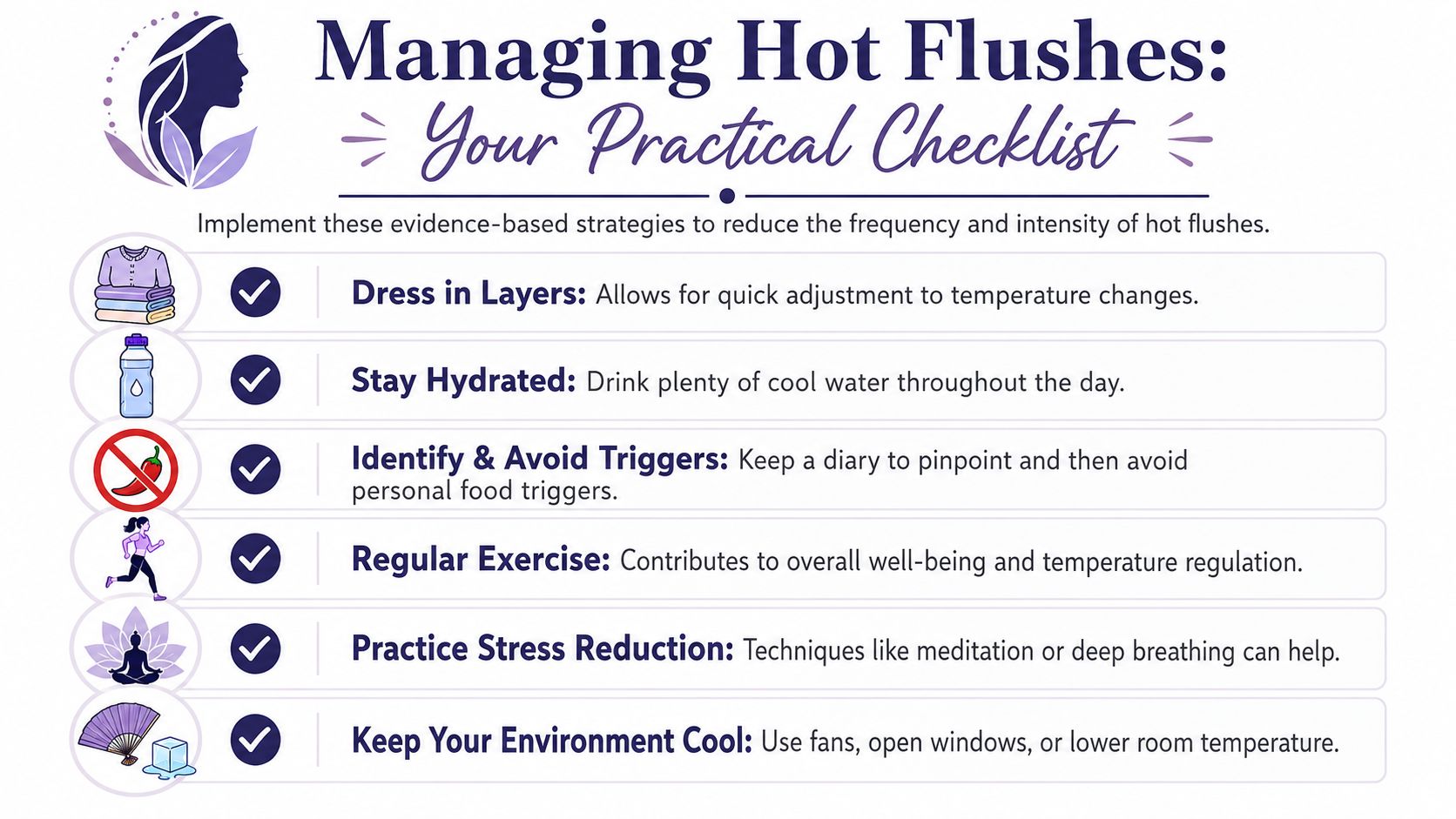
Start with changes that are easy to test and easy to reverse.
- Eat smaller, more regular meals: Large meals can provoke a stronger heat response, especially after a long gap without food.
- Lower the temperature of drinks: Very hot tea, coffee, or soup can trigger flushing by heat alone, even when the ingredients are not the main problem.
- Adjust caffeine rather than banning it outright: Some people improve with a smaller coffee, a weaker brew, or by avoiding coffee on an empty stomach. If coffee seems to be part of the problem but you want to keep it in your routine, guidance on choosing coffee for sensitive stomachs can be a practical place to start.
- Go easy on alcohol with meals: Wine and other alcoholic drinks can amplify flushing, particularly in menopause or in people who react to histamine-rich foods.
- Stay ahead with fluids: Dehydration does not cause every flush, but it can make heat symptoms feel more intense.
- Dress for predictability: Layers, breathable fabrics, and a cooler eating environment can make episodes shorter and easier to tolerate.
Stress and pace matter as well. If symptoms happen when meals are rushed, eaten standing up, or squeezed between meetings, the trigger may be the whole situation rather than one specific food.
For one week, keep the plan narrow. Sit down to eat. Slow the first few minutes. Change one likely trigger at a time, not five. Review the overall pattern at the end of the week.
That approach helps you separate three very different situations. A menopausal flush often improves with cooler, steadier eating habits. A food intolerance pattern usually shows up with the same ingredients again and again. Symptoms that keep breaking the rules, or start coming with palpitations, diarrhoea, rash, or wheeze, need medical assessment rather than more self-experimenting.
Supplements and highly restrictive diets are rarely the best starting point. In practice, the simple changes are often the ones that give the clearest answers.
When to See Your GP Red Flags and Next Steps
Most hot flushes after eating are uncomfortable rather than dangerous, but some patterns shouldn't be brushed aside. If flushing is recurrent, severe, or joined by palpitations, diarrhoea, rash, or wheeze, it needs proper medical assessment (Cedars-Sinai overview of hot flash patterns and concerning symptoms).
Red flags worth acting on
- Breathing symptoms: wheeze, throat tightness, or swelling
- Skin symptoms beyond simple flushing: hives, widespread itching, facial swelling
- Gut symptoms with the flush: urgent diarrhoea, repeated vomiting, marked abdominal cramping
- Cardiovascular symptoms: strong palpitations, dizziness, near-fainting
- A new unexplained pattern: especially if you're not in the typical menopausal age group, or if symptoms have changed suddenly
A GP appointment usually starts with history more than tests. The useful details are timing, trigger foods, medication use, menstrual status, alcohol and caffeine intake, diabetes history, and what else happens during the episode. Depending on the pattern, your GP may suggest lifestyle measures alone, menopause-focused treatment discussion, blood tests, or assessment for intolerance, allergy-type reactions, or other underlying causes.
If you're having regular post-meal flushing and you're not sure whether it's hormonal, dietary, or something else, getting clarity is often far more reassuring than continued guesswork.
If you'd like a longer, unhurried assessment of hot flushes after eating, The Lagom Clinic offers private GP appointments in Bristol with time to review symptom patterns, menopause concerns, diet, lifestyle, and any red flags properly.
Experiencing menopausal hot flushes?
Hot flushes are one of the most common perimenopause and menopause symptoms. Our menopause clinic in Bristol offers expert hormone assessment, treatment options, and ongoing support.


 Members Consultation