


You might be reading this after another rushed cigarette outside the office, or after coughing on the stairs and thinking, enough. For many people, the decision to stop smoking arrives in a very ordinary moment. School drop-off. A late train. A walk back from work. The feeling is often mixed. There's determination, but also worry about cravings, stress, weight change, sleep, concentration, and whether this attempt will turn into another false start.
That mix of hope and apprehension is normal.
As a GP, I'd frame quitting less as “giving something up” and more as regaining control. You're not trying to become a different person overnight. You're building a system that makes it easier to do what you already want to do, which is to live with more energy, fewer symptoms, and less dependence on nicotine to get through the day.
The Decision to Quit and the Path to Success
A patient often comes in with a story like this. They've smoked for years, sometimes heavily, sometimes only “socially” in the evenings or under pressure at work. They've tried before. One attempt lasted a weekend. Another lasted months until a stressful period, a holiday, or a few drinks brought smoking back into the picture. What they usually need isn't a lecture. They need a plan that fits real life.
That matters because smoking doesn't just attach itself to nicotine. It attaches itself to routines. Coffee. Commutes. Deadlines. Phone calls. Stepping outside. A sense of pause. If you only remove the cigarette and don't replace the routine, the day can feel strangely exposed. That's one reason people who want to quit still struggle.
Quitting works best when you prepare for the pattern of smoking, not only the chemistry of nicotine.
A good quit plan takes both sides seriously. It addresses withdrawal and habit. It also allows for setbacks without turning them into failure. If you smoke once after your quit date, that doesn't mean the whole attempt is over. It means something triggered you, and that trigger can be understood and managed.
There are several routes into smoking cessation support. Some people do well with nicotine replacement therapy such as patches, gum, or lozenges. Some need prescription treatment. Some choose vaping as a harm-reduction option. Many do best when medication is paired with behavioural support, follow-up, and practical lifestyle changes that make cravings more manageable.
The key point is simple. You don't need to do this alone, and you don't need a perfect personality to quit. You need a realistic method, a bit of structure, and support that matches the life you live.
Why Smoking Cessation Support Dramatically Works
Trying to quit on willpower alone sounds admirable, but it often underestimates what nicotine dependence does to the body and mind. Withdrawal can affect concentration, mood, sleep, appetite, and your sense of calm. At the same time, smoking is tied to learned behaviours that repeat throughout the day. Support helps because it tackles both.
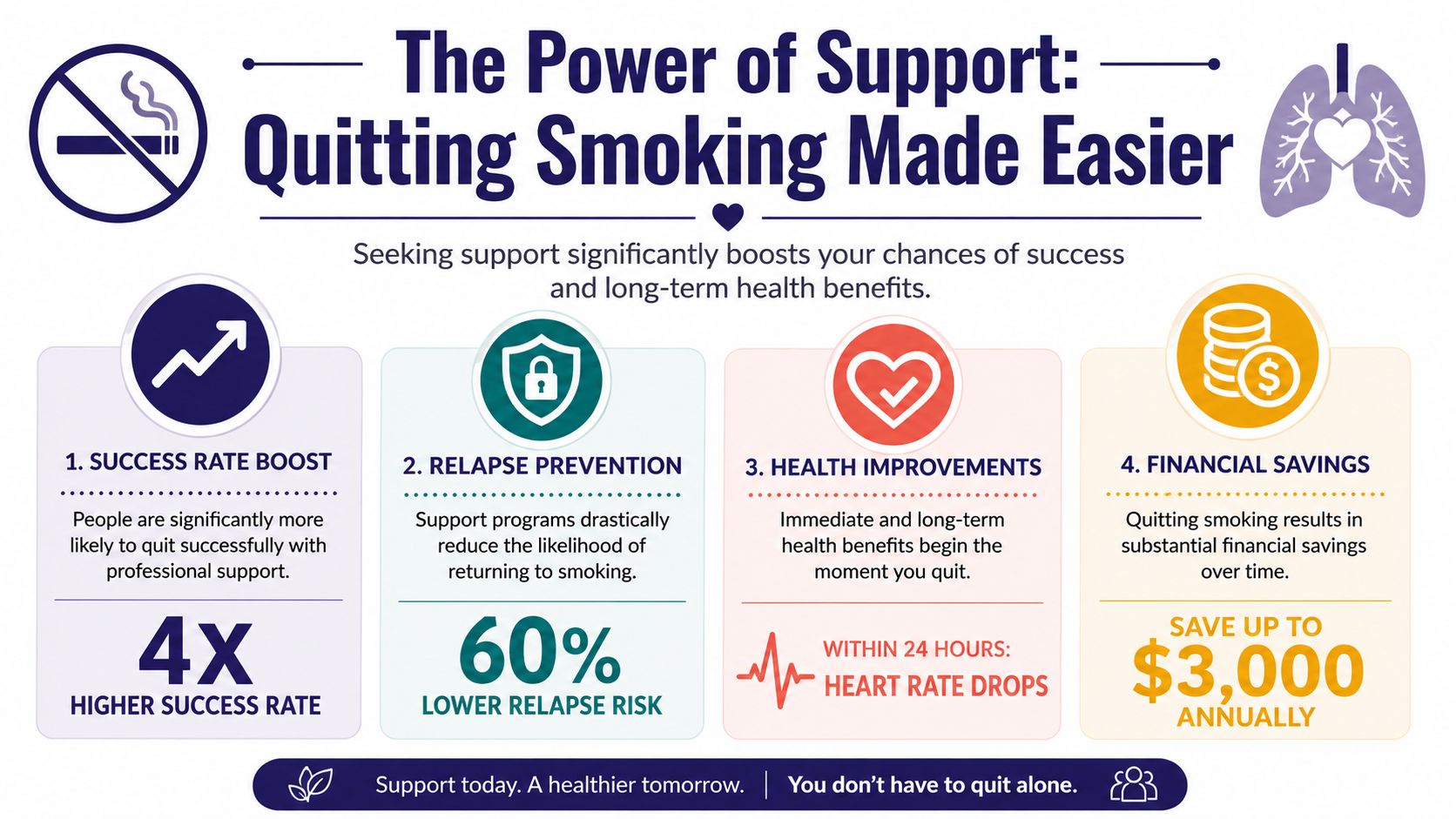
A foundational English survey published in 2000 found that 19.9% of quit attempts used some form of assistance, and the 12-month abstinence rate was 15.2% among people who used assistance compared with 7.0% among those who tried to quit without help. That difference helped establish structured support as a core public-health intervention in the UK, not just an optional extra (English smoking-cessation survey findings).
Support changes more than motivation
When people hear “support”, they sometimes imagine a generic pep talk. Effective smoking cessation support is much more practical than that. It can include choosing the right medication, setting a quit date, identifying risk situations, adjusting treatment when cravings break through, and building accountability in the first few weeks when relapse is most common.
That matters because motivation is unstable. You may feel committed in the morning and depleted by late afternoon. A plan protects you during the hours when motivation drops.
What support actually does
- Reduces withdrawal strain by using treatments that ease nicotine cravings.
- Improves adherence because someone checks in, helps you troubleshoot, and keeps the quit attempt active.
- Makes lapses manageable so one cigarette doesn't automatically become a return to regular smoking.
- Addresses your context such as stress at work, poor sleep, alcohol, or social triggers.
Practical rule: Don't judge the strength of your quit attempt by how hard it feels on day three. Judge it by whether your plan is strong enough to carry you through day three.
People often assume needing help means they lack discipline. Clinically, that's the wrong interpretation. Nicotine addiction has biological, behavioural, and environmental components. Seeking support is a strategic decision. It gives you more levers to pull when one approach isn't enough.
There's also a longer-term reason to get help. The first successful smoke-free week is important, but so is staying smoke-free after the initial burst of motivation wears off. Structured follow-up matters because it catches problems early. If your treatment is causing nausea, if your patch dose seems too low, if evenings are your weak spot, support allows those issues to be adjusted rather than ignored.
Exploring Your Smoking Cessation Support Options
A busy Bristol professional often comes in saying the same thing. They want to stop, they have tried before, and they do not want another generic plan that falls apart on a stressful Wednesday evening. That is usually the right starting point. The best option is the one that fits your actual week, your smoking pattern, and the points where previous quit attempts have broken down.
Different forms of support solve different problems. Some reduce withdrawal. Some replace the ritual of smoking. Some add structure for people whose smoking is woven into deadlines, commuting, alcohol, or poor sleep. Good care is less about picking the single “best” method on paper and more about building a personalised plan you can stick with.
Behavioural support and why it still matters
Behavioural support gives quitting a practical framework. It helps identify triggers, set a realistic quit date, plan for difficult situations, and review what is or is not working. For patients who smoke automatically during stress or at predictable points in the day, this part often makes the difference between a short attempt and a sustained one.
Format matters too. Some people do well with regular face-to-face reviews. Others need phone follow-up or digital check-ins that fit around work. If your days are full and your schedule changes week to week, a structured plan with accountability is often more useful than a long list of advice you read once and never revisit.
Nicotine replacement therapy
Nicotine replacement therapy, or NRT, includes patches, gum, lozenges, sprays, and inhalator-style products. The aim is simple. Remove tobacco smoke while using cleaner nicotine delivery to make cravings and withdrawal more manageable.
The right format depends on the pattern of your smoking. Patches suit people who need steady nicotine cover through the day. Fast-acting products such as gum, lozenges, or spray are often better for predictable flashpoints, such as after meals, during the drive home, or with a drink in the evening.
In clinic, combination NRT is often the most practical option. A patch can provide baseline control, with a faster product added for breakthrough cravings. That tends to work well for people who say they can cope for hours, then suddenly feel overwhelmed.
Prescription medicines
Prescription medicines can be a good next step if NRT alone has not been enough, or if previous quit attempts have failed early despite strong motivation. Varenicline and, in selected cases, bupropion remain recognised options in UK smoking cessation care. They need proper prescribing review, not because they are unusual, but because the choice should reflect your medical history, current medicines, sleep, mental health, and any previous side effects.
Individual trade-offs matter. One patient may want the strongest possible craving reduction. Another may be more concerned about sleep disturbance, nausea, or how a medicine will fit around an already demanding routine. A clinician-led discussion helps you choose an option that is both effective and realistic.
E-cigarettes and harm reduction
For some smokers, e-cigarettes are the most workable route away from combustible tobacco. The recent Smoking Toolkit Study findings in England reported that e-cigarettes were the most commonly used cessation aid in quit attempts and were associated with higher odds of successful quitting. The same study also found better results when people used more than one aid.
That helps explain why vaping can be useful in practice. It addresses nicotine withdrawal, but it can also replace the familiar action of smoking, which matters for patients who miss the ritual as much as the nicotine. It is not the right first choice for everyone, and non-smokers should not start vaping, but for an adult smoker who has struggled with other methods, it can be a sensible harm-reduction option.
The aim is not to choose the method that sounds nicest in theory. The aim is to stop inhaling burnt tobacco and stay off it.
Digital tools and referral pathways
Digital support can work well if it matches your habits. Apps, text reminders, and online programmes can reinforce a quit attempt, especially for people who like prompts, tracking, and brief check-ins between appointments. They are less useful if they sit unopened on your phone after the first weekend.
For some patients, wider support improves the odds of staying on course. A structured wellbeing coaching service for behaviour change and stress management can help if smoking has become bound up with burnout, poor boundaries, or low mood. Better routine, movement, and recovery also support quit success, and some patients find it helpful to read insights into metabolic health and exercise while they rebuild healthier patterns.
A quick comparison
| Method | How It Works | Best For | Evidence Level |
|---|---|---|---|
| Behavioural support | Identifies triggers, builds coping strategies, adds accountability and follow-up | People with stress-linked smoking, repeated relapses, or strong routine-based habits | Strong UK clinical support when combined with treatment |
| NRT | Replaces nicotine without tobacco smoke through patches, gum, lozenges, spray, or inhalator-style products | Smokers who want flexible craving control or a gradual step away from cigarettes | Established part of evidence-based treatment pathways |
| Prescription medication | Reduces cravings and supports abstinence through clinician-guided treatment | People who have struggled with previous quit attempts or need stronger pharmacological support | Strong when used with behavioural support |
| E-cigarettes | Provides nicotine in a non-combustible form as a harm-reduction aid | Smokers who have not succeeded with other methods or want a practical substitute for smoking | Strong real-world relevance in England |
| Digital support | Uses prompts, check-ins, and structured encouragement | Busy people who benefit from reminders and accessible support | More useful when integrated with care rather than standalone |
Matching the method to the person
A plan should fit your pattern of smoking, not an idealised version of your life.
- The executive who smokes under pressure may do best with a patch for steady control, a fast-acting NRT product for late-day cravings, and regular review to deal with stress points before they trigger a lapse.
- The smoker who misses the ritual may prefer vaping to gum because it replaces both nicotine and the hand-to-mouth habit.
- The person who gets through the first week and then relapses often needs longer follow-up and adjustments to treatment, rather than more self-blame.
- The patient with other health conditions or multiple medicines usually benefits from clinician-led planning so the quit strategy is safe, practical, and sustainable.
In practice, success often comes from combining methods rather than relying on one. The strongest plan is usually the one you can keep using on an ordinary Tuesday, not just on the day you feel highly motivated.
The Role of Lifestyle in a Successful Quit Journey
The medications matter, but day-to-day habits often decide whether a quit attempt holds under pressure. Nicotine has usually become woven into eating patterns, movement, stress response, and even how you structure breaks. If you change those routines early, cravings become easier to ride out.

Food and cravings
Many people worry that quitting means inevitable weight gain. It doesn’t have to. The practical aim isn’t strict dieting during withdrawal. It’s to make food choices that reduce chaos.
Keep simple options within reach. Fruit, yoghurt, nuts, chopped vegetables, wholegrain crackers, and sugar-free gum can help when the urge is oral as much as chemical. Try not to let yourself get overtired and overly hungry at the same time. That combination lowers tolerance and makes cigarettes feel falsely “necessary”.
A few helpful adjustments:
- Change your coffee pairing if coffee and cigarettes are tightly linked. Try drinking it in a different place or switching the timing for a couple of weeks.
- Prepare a hand-to-mouth substitute such as a water bottle with a straw, mints, or gum.
- Avoid all-or-nothing thinking around food. One unplanned snack doesn’t derail the quit attempt.
Movement as a craving interrupter
Short bursts of physical activity can break the momentum of a craving. A brisk walk, climbing stairs, a few minutes of cycling, or a quick mobility routine can shift your physiology and attention. For many people, that’s more realistic than trying to “sit through” every urge with gritted teeth.
If you want a broader view of how movement supports recovery and resilience, these insights into metabolic health and exercise are a useful companion read.
You don’t need a perfect fitness plan. You need repeatable actions. A ten-minute walk after lunch may do more for your quit attempt than an ambitious gym schedule you abandon by Thursday.
Stress management that works in real life
Stress is one of the biggest relapse triggers because smoking often acts as a learned pause button. The pause is real. The cigarette isn’t the only way to create it.
Try building a replacement pattern:
- Stop physically and step away from the trigger if possible.
- Breathe slowly for a minute or two, with a longer exhale than inhale.
- Do something with your hands such as making tea, stretching, or writing a short note.
- Delay the decision. Tell yourself you can reassess in ten minutes.
A craving usually feels permanent while it’s happening. It isn’t. Most urges rise, peak, and pass.
If stress, sleep, and behavioural habits are all tangled together, some people benefit from structured support around routines and accountability. A guided approach to wellbeing coaching can be useful when quitting is part of a bigger reset in health, work-life balance, and self-care.
What to Expect at a Smoking Cessation Clinic
It is 7:30 on a Tuesday morning. You have a full inbox, a commute ahead, and you are already negotiating with yourself about whether today is really the day to stop. A good smoking cessation clinic appointment starts with that reality. It should feel practical, respectful, and suited to your life, not like a lecture about risks you already understand.

The first appointment
The first consultation is usually an assessment, but in a useful clinic it is also the start of treatment. The aim is to work out what nicotine is doing for you, where the pressure points are, and which support is realistic enough to use on an ordinary workday.
Expect questions about:
- Your smoking pattern, including how soon you smoke after waking, whether certain cigarettes feel harder to lose, and how your routine changes on weekends or stressful days
- Previous quit attempts, including what gave you a few good days, what led to relapse, and whether withdrawal, habit, mood, or social situations were the main problem
- Your health and medication, especially anxiety, depression, sleep, blood pressure, pregnancy, asthma, COPD, and any medicines that could affect treatment choices
- Your daily routine, such as commuting, shift work, alcohol, social smoking, childcare, and the times of day when you are least able to think about quitting
These details shape the plan. A person who smokes to structure work breaks needs a different approach from someone whose smoking is tied to driving, evenings, or drinking with friends.
Building a plan that fits real life
A good clinic does more than suggest that you “try harder”. It helps you choose a treatment plan with enough support to cover both withdrawal and habit. As noted earlier, quit rates are generally better when behavioural support is paired with medication, but the best option on paper is not always the best option for the person sitting in front of me.
That trade-off matters. Some patients want the simplest route and will reliably use nicotine patches and a short-acting product. Others have done better with prescription treatment, or with vaping as a step away from cigarettes when previous quit attempts have repeatedly stalled. The right plan depends on your history, your preferences, and what you are willing to use consistently.
Your plan will usually include:
- a quit date, or a staged reduction plan if that is more realistic
- the treatment option you will start with
- a shortlist of high-risk situations
- one clear response for each trigger
- follow-up points before the attempt starts to wobble
For busy patients in Bristol, flexibility often makes the difference between a plan that survives and one that falls apart by the second difficult week. Longer appointments with a private GP in Bristol can give you more space to sort through medication choices, mental health factors, and the timing of follow-up.
Follow-up is where the plan gets stronger
The first appointment matters. The follow-up appointments often matter more.
The plan is adjusted based on current circumstances. If cravings are breaking through at 4 pm, treatment can be changed. If weekends are the problem, the strategy can shift there. If you have had a lapse, the review should focus on recovery, not blame.
A follow-up appointment may involve:
- adjusting the dose, type, or timing of nicotine replacement
- checking for side effects or practical problems with medication
- working out whether a lapse was triggered by stress, alcohol, fatigue, or routine
- tightening plans for travel, social events, or demanding work periods
- reviewing changes in appetite, mood, concentration, and sleep
In clinical practice, the strongest quit attempts are rarely the most rigid. They are the ones that can be reviewed early, adapted quickly, and carried by a plan that still works on an ordinary difficult Tuesday.
Finding Smoking Cessation Support in Bristol
It is 7:30 on a Wednesday evening. You have finished work late, your phone is still buzzing, and the plan to quit already feels harder to fit around real life than it did on Sunday. In Bristol, the best support is often the support you can access when pressure, routine, and cravings collide.

Start with the route that fits your real week
Bristol offers several ways into stop-smoking support. NHS services suit many patients well. Pharmacies can work if you want something local and practical. Digital programmes can help if prompts, tracking, and structure keep you on course better than memory alone.
The right choice depends less on what sounds ideal and more on what you will keep using after a demanding day.
Smoking is also not distributed evenly across the population. It remains closely linked with social disadvantage, which is one reason flexible, individualized support matters for people whose work, caring responsibilities, finances, or stress levels do not fit neatly into standard clinic models (social patterning of smoking and the case for individualized support).
When private support makes sense
In practice, I often see Bristol patients who are not short on motivation. They are short on time, privacy, continuity, or space to think properly.
That is where private care can help. Longer appointments make it easier to review what has happened in previous quit attempts, which treatment options are realistic, and whether stress, anxiety, poor sleep, weight concerns, or alcohol are likely to trip things up. For busy professionals, that often means a plan built around actual working patterns rather than standard appointment slots. If you want that kind of continuity, a private general practitioner in Bristol can offer more room for joined-up support.
What often matters most in Bristol
A good stop-smoking plan is not defined by postcode. It is defined by fit.
Patients usually need one or more of the following:
- appointment times that work around long or unpredictable hours
- enough continuity to review what happened in earlier quit attempts
- one conversation that covers medication, stress, sleep, and relapse risk together
- discretion, particularly for people in leadership, healthcare, education, or public-facing roles
- support that can adapt if the first approach helps only partly
That last point matters. Population-level evidence can tell us which methods tend to work better on average, but quitting still happens one person at a time. The best Bristol support is the option that matches your history, your routine, and the points in the week where smoking still feels tied to relief.
Your Practical Next Steps to a Smoke-Free Life
Monday morning in Bristol. You have slept badly, your inbox is already filling up, and you are tired of cigarettes deciding when you take a break. The next step is not to build a perfect plan. It is to make a workable one that fits this week, your routine, and the situations that usually catch you out.
English stop-smoking support now reaches people through community services, pharmacies, maternity pathways, and digital routes, rather than one standard clinic model, as described in this review of evolving routes into English stop-smoking support. For patients, that gives more than one way in. The best starting point is the route you are prepared to use, consistently, with follow-up built in.
A practical checklist
-
Write down your reason for quitting
Make it personal and concrete. Better breathing on stairs. Fewer interruptions in the workday. More control over stress. More energy at home. A reason with real weight stands up better during a difficult afternoon than a vague intention to “be healthier”. -
Pick a quit date or a reduction start date
Some people do well with a clear stop date. Others need a structured reduction over a short period, especially if work stress is high or smoking is woven through the day. What matters is choosing a date you can prepare for properly, not one you set impulsively and abandon. -
Map your trigger moments
Identify the cigarettes that feel fixed in place. First thing in the morning. With coffee. In the car. After a difficult call. Drinking alcohol on Friday night. Your plan should focus on these pressure points first, because they usually drive relapse. -
Choose the support method that matches your pattern of smoking
Heavy morning cravings often point towards stronger nicotine replacement or a prescription option. Habit-driven smoking at work may respond better to combination support, such as treatment plus behavioural strategies. Some patients do well with vaping as a harm-reduction route. Others prefer to avoid it. Average success rates are useful, but the better plan is the one that suits your dependence level, previous quit attempts, and daily routine. -
Prepare your environment before the quit date
Remove cigarettes, lighters, and ashtrays. Change the small routines linked to smoking. If you always smoke before getting into the car, keep nicotine replacement or sugar-free gum there instead. If the smoking break at work is social, plan what you will do at that same time so the gap does not catch you off guard. -
Decide what you will do when a craving hits
Cravings pass more easily when the response is ready. Keep water, gum, mints, snacks, a brief walk, or a paced breathing exercise within reach. The practical question is simple. What will you do in the first three minutes when smoking feels automatic? -
Book follow-up now
Review works best when it is arranged before motivation dips. That is often the difference between a lapse that is contained and a relapse that runs on for weeks.
If you slip, respond quickly
One cigarette does not erase the work already done. It gives useful information.
Look at the setting. Were you tired, hungry, drinking alcohol, under pressure, caught in an old routine, or using too little treatment for the level of craving? Then adjust the plan. In clinic, this is often the turning point. Patients who recover quickly from a wobble usually do better than patients who treat one lapse as failure and stop trying.
Keep the plan firm, but realistic
Quitting works better with structure than with willpower alone. Good support, suitable treatment, and a plan for ordinary trigger moments usually matter more than trying to “stay strong” through every craving.
If you are ready to start, choose one action today. Set the date. Get the nicotine replacement. Arrange an appointment. Tell one person who will support you. Small actions count, provided they lead to a plan you can follow.
If you want personalised support to stop smoking, The Lagom Clinic offers thoughtful private GP care in Bristol, with time to build a quit plan around your work, lifestyle, stress levels, and overall health. For people who want continuity, flexible appointments, and a practical approach that looks beyond a single prescription, this kind of individualized support can make the process feel clearer and far more manageable.


 Members Consultation