


When you hear the term ‘fitness for work assessment’, it might sound a bit intimidating. But in reality, it’s a supportive medical check-in to see if a health condition might be affecting your ability to do your job safely and well. Think of it less as a test and more as a collaborative conversation to protect your wellbeing and help you thrive at work.
What a Fitness for Work Assessment Really Means

Let's use an analogy. Imagine your health is the engine of a car and your job is the journey it needs to complete. A fitness for work assessment is like having an expert mechanic—an occupational health specialist—take a look under the bonnet. They aren't there to find fault, but to ensure you can handle the road ahead safely and suggest tune-ups that could make your journey smoother and more sustainable.
It’s really a check-in, designed to find the best way forward for both you and your role, especially when you're returning to work after an illness or managing a long-term health condition. The whole point is making sure you can carry out your duties without putting your own health, or that of others, at risk.
A Supportive and Proactive Process
At its core, the assessment is about building a bridge of understanding between you, your employer, and a qualified health professional. It’s all geared towards creating a working environment that’s both sustainable and healthy for you. These assessments often come into play when employees face health issues, like navigating the challenges posed by chronic illnesses.
The main goals are to:
- Ensure Safety: First and foremost, to confirm your health doesn't create any risks for you or your colleagues.
- Identify Support: To figure out if any reasonable adjustments, like changing your hours, providing ergonomic equipment, or modifying tasks, could help you thrive in your role.
- Guide Recovery & Wellbeing: To map out a clear, medically-sound plan for your return to work after sick leave and offer advice on lifestyle changes that can support your long-term health.
A fitness for work assessment is fundamentally a tool for proactive care. It shifts the conversation from what you can’t do to what you can do with the right support, paving the way for a healthier, more productive work life.
This kind of medical review is a key part of modern occupational health. If you want to explore the topic more broadly, our guide on what an occupational health assessment involves is a great place to start.
Ultimately, the process stems from an employer's duty of care, but it’s just as much about empowering you. It ensures decisions about your ability to work are based on expert medical advice, not guesswork. It's a confidential process designed to bring clarity and reassurance.
Common Reasons for a Workplace Health Assessment

A fitness for work assessment rarely happens out of the blue. It’s a supportive process, usually triggered when there's a need to make sure your health and your job demands are in sync for everyone’s safety and wellbeing. Getting to grips with the common triggers can demystify the process and show just how helpful it can be.
Perhaps the most common reason is to plan a return to work after you've been off sick. If you’ve been away for a while recovering from an illness or injury, the assessment helps map out a safe and sensible return. It’s all about preventing a relapse by coming back too soon or without the right support.
Managing Ongoing Health Conditions
Another key trigger is when you're managing a long-term or chronic health condition. This could be anything from a physical issue like persistent back pain to a mental health condition like anxiety or depression. The goal isn’t to question your capability, but to understand how your condition affects your work and figure out what reasonable adjustments could make a real difference.
Someone with arthritis, for instance, might benefit from an ergonomic chair and specific hand-strengthening exercises, while a colleague managing anxiety could find flexible hours and mindfulness techniques a game-changer. A fitness for work assessment brings in the clinical expertise needed to make these recommendations both effective and fair.
The need for this kind of proactive support is becoming more obvious. In the UK, over 800,000 working-age adults are economically inactive for health reasons, a staggering 40% rise since 2019. With around 8.7 million people reporting health conditions that limit their work, these assessments are essential for keeping talented people in their jobs. You can find more on the UK's workforce health challenges in recent reports.
When the Job Itself Poses Risks
Sometimes, it’s the nature of the job that calls for an assessment. This is particularly true for 'safety-critical' roles, where the physical or psychological demands are high and mistakes could have serious consequences.
A fitness for work assessment acts as a crucial safety net. It ensures that an individual’s health status does not create an unacceptable risk to themselves, their colleagues, or the public. This is a cornerstone of an employer’s legal and ethical duty of care.
Think about jobs like these, where an assessment might be vital:
- Operating heavy machinery: To ensure conditions like epilepsy or poor eyesight are managed safely.
- Working at heights: Checking that balance and mobility are sufficient to prevent falls.
- Exposure to hazardous substances: Looking for any respiratory or skin conditions that could be aggravated by the work environment.
At the end of the day, these assessments are a positive, protective measure. They’re about finding practical solutions, safeguarding your health, and helping you do your job safely and well, whatever your circumstances.
Navigating the Assessment Process Step by Step
Knowing what to expect during a fitness for work assessment can take a lot of the anxiety out of the equation. It's helpful to see it less as a formal test and more as a structured, supportive conversation. The entire process is built to be transparent, confidential, and completely focused on one thing: figuring out a safe and sustainable way for you to succeed at work.
It all starts when your employer makes a referral to an occupational health specialist, like our team here at The Lagom Clinic. From there, we'll schedule a private consultation for you. This meeting is simply a chance to talk through your situation – it's a discussion, not an interrogation.
This infographic breaks down the typical flow of an assessment into three clear stages.
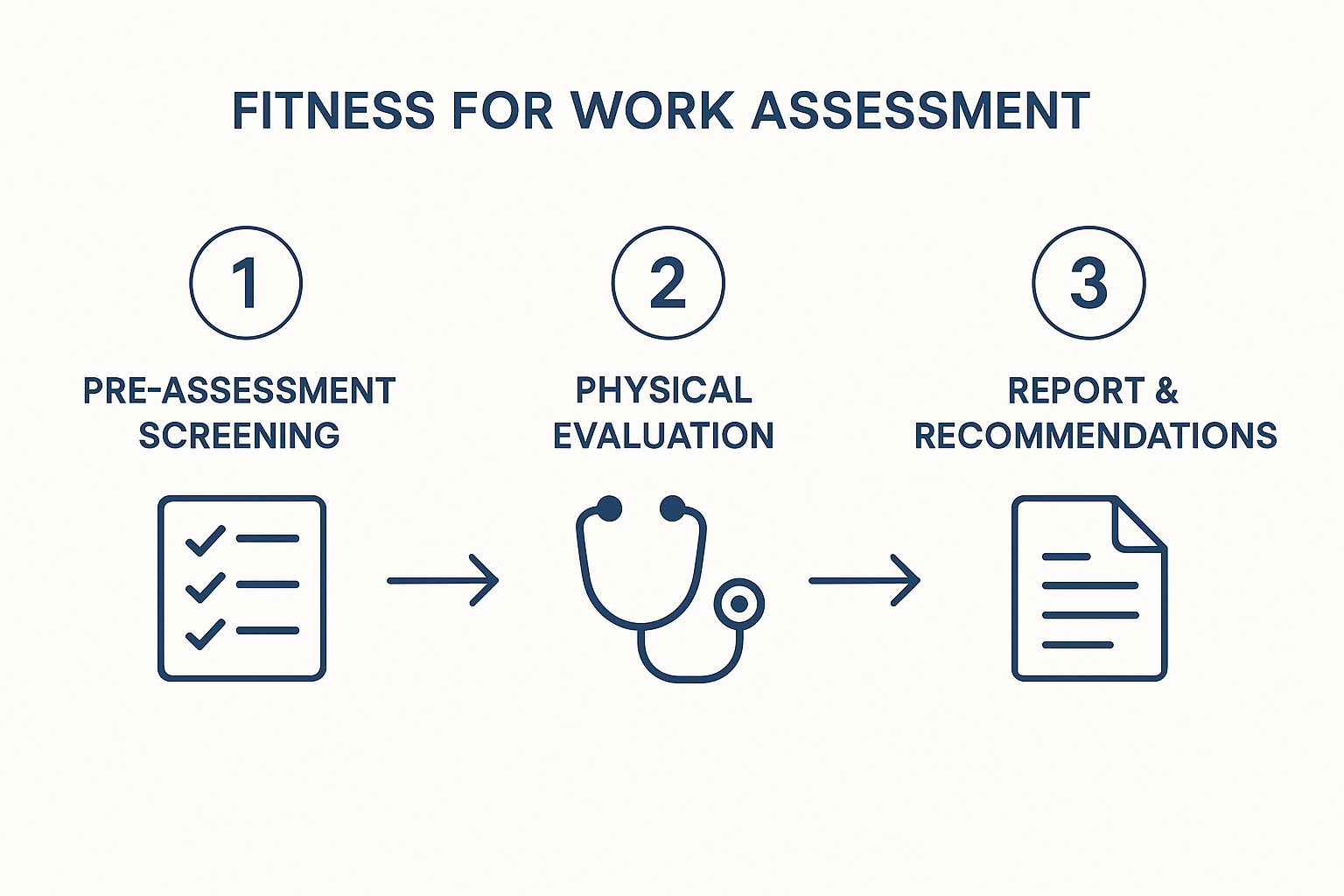
As you can see, the process moves logically from gathering the initial information to a thorough evaluation, and finally to clear, practical recommendations. It's a joint effort, designed to champion your health within your workplace.
What to Expect During Your Consultation
When you come in for your appointment, the occupational health clinician’s goal is to understand the whole picture. They'll ask questions that link your health condition directly to your specific work tasks.
For instance, if you’re dealing with back pain, the conversation won't just be about a medical diagnosis. It will be about practical realities: does your job involve heavy lifting? Do you sit for long periods? How do these activities actually affect you day-to-day? You may also receive advice on specific exercises or lifestyle adjustments to manage your symptoms.
The assessment will be shaped around your individual needs, but it might include:
- A physical check-up to look at things like mobility, strength, or other relevant physical abilities.
- A confidential discussion about your mental and emotional wellbeing and how you're coping.
- A review of your job description to get a clear picture of its physical and mental demands.
Your privacy is paramount. The report that goes back to your employer will only contain information directly related to your fitness for work and any recommended adjustments. It will not include sensitive, private medical details.
The sheer scale of work-related health issues in the UK really brings home why these assessments are so important. Between April 2022 and March 2023, a staggering 11,011,137 fit notes were issued in England alone. Of those, 93.5% declared the person 'not fit for work,' which shows just how many people are struggling to balance their health with their job.
You can learn more about the official statistics and challenges from the UK's fitness for work data. This context makes it clear why a detailed, professional assessment is so vital for getting people the right support when they need it most.
Practical Lifestyle Tips to Improve Your Work Fitness

Preparing for a fitness for work assessment goes far beyond the appointment itself. Think of it as a fantastic opportunity to invest in your long-term health and wellbeing. Even small, sustainable tweaks to your lifestyle can make a huge difference to your physical and mental resilience, leaving you feeling more capable and energised at work.
This isn’t about a complete overhaul overnight. It’s about making scientifically sound adjustments to your daily habits. By focusing on four key pillars—movement, nutrition, sleep, and stress management—you can build a solid foundation that will not only help you in your assessment but benefit your health for years to come.
Embrace Gentle and Consistent Movement
It’s no secret that many of us spend too much time sitting down, and this has a direct impact on our readiness for work. The 2025 "State of the Nation" report painted a stark picture, revealing that 62.3% of UK adults between 19 and 64 aren't meeting the NHS's minimum physical activity guidelines. Modern work habits, especially increased screen time, only make this worse, affecting productivity and overall health. You can discover more insights about UK physical activity levels in the full report.
You don't need to run a marathon to counteract a sedentary job. The key is to weave gentle movement into your day.
- Desk Stretches: Every hour, take five minutes for neck rolls, shoulder shrugs, and spinal twists. This improves circulation and prevents musculoskeletal strain.
- Walking Breaks: Use part of your lunch break for a brisk 15-minute walk. This boosts cardiovascular health, improves mood, and aids digestion.
- Stair Climbing: Ditch the lift and take the stairs. It’s a simple, effective form of resistance training that strengthens leg muscles and improves heart function.
These small actions prevent stiffness, boost circulation, and sharpen your focus. For more ideas, have a look at our guide on finding the right kind of exercise for your wellness.
Fuel Your Body and Mind
What you eat has a massive impact on your energy levels and cognitive function. A balanced diet isn't just a "nice-to-have"; it's essential for sustaining your performance throughout the working day.
Aim for meals rich in whole foods: colourful vegetables provide antioxidants, lean proteins (like chicken, fish, or legumes) support muscle repair, and complex carbohydrates (like brown rice or oats) ensure a slow, steady release of energy. Avoid sugary snacks that cause energy spikes and crashes. Staying hydrated by drinking 6-8 glasses of water daily is crucial for concentration and preventing headaches.
Prioritising a nutrient-dense diet is like giving your brain and body premium fuel. It improves your ability to handle stress, enhances mental clarity, and supports physical stamina, all of which are vital for your fitness for work.
Master Your Sleep and Stress
Poor sleep and chronic stress are a damaging duo, and they can seriously undermine your ability to function well at work. Improving your sleep hygiene is one of the most powerful changes you can make.
Medically-sound strategies include:
- A Consistent Schedule: Go to bed and wake up at the same time daily, even on weekends, to regulate your body's internal clock (circadian rhythm).
- A Digital Detox: Avoid screens for at least an hour before bed. The blue light emitted can suppress the production of melatonin, the sleep hormone.
- A Relaxing Routine: Wind down with calming activities like reading, a warm bath, or listening to quiet music to signal to your body that it's time to sleep.
To manage stress, try evidence-based techniques like mindfulness or deep diaphragmatic breathing. Taking just 5-10 minutes to focus on your breath can activate the parasympathetic nervous system, lowering cortisol levels and promoting a sense of calm.
Making small, conscious changes in these areas can have a surprisingly big impact on your overall fitness for work. The table below breaks down some simple actions you can start taking today.
Practical Lifestyle Changes to Enhance Fitness for Work
| Lifestyle Area | Recommended Action | Benefit for Work Fitness |
|---|---|---|
| Physical Activity | Incorporate 20-30 minutes of gentle movement, like walking or stretching, daily. | Improves energy, reduces physical strain, and boosts mood. |
| Nutrition | Eat balanced meals with whole foods and stay hydrated. | Sustains energy levels and enhances cognitive function. |
| Sleep Hygiene | Maintain a regular sleep schedule and create a relaxing bedtime routine. | Restores the body and mind, improving focus and decision-making. |
| Stress Management | Practise daily mindfulness or deep breathing exercises for 5-10 minutes. | Increases mental resilience and reduces the impact of workplace stress. |
By adopting these habits, you're not just preparing for an assessment; you're building a healthier, more resilient version of yourself, ready to thrive both in and out of the workplace.
So, What Happens After the Assessment?
Once you’ve had your fitness for work assessment, you’ll naturally be wondering, "what's next?". It’s helpful to think of the assessment itself not as the final step, but as the start of a constructive conversation about how to best support you in your role. The report that follows is the key to unlocking practical, positive solutions for your health and your career.
After your consultation, the occupational health specialist takes the time to carefully review your situation. They'll then prepare a detailed report that outlines their professional opinion on your fitness for your specific job. It's really important to know that this isn't a simple pass/fail test; it’s a much more thoughtful evaluation of your circumstances.
Understanding the Report's Recommendations
The report will generally land on one of three main outcomes. Each one is designed to balance your wellbeing with the demands of your job, and the recommendation will be based entirely on what was discussed during your confidential assessment.
Here’s what you can expect to see:
- Fit for Work: This outcome means the clinician sees no health-related reasons that would stop you from safely carrying out your full range of duties. The report might still include general health advice to help you maintain this status.
- Fit for Work with Adjustments: This is a very common and incredibly helpful outcome. It means you’re able to work, but with specific changes to help you manage your health. These could be things like adjusted working hours, different duties for a while, providing ergonomic equipment like a specialised chair, or a phased plan to ease you back into your role.
- Temporarily Unfit for Work: This recommendation is made when it's clear you need more time to recover before you can return safely. The report will almost always suggest a timeframe for a review and may include advice on lifestyle changes to support your recovery.
At its heart, an occupational health report is about providing clear, practical advice that helps both you and your employer move forward. Think of it as a bridge, ensuring that any decisions about your job are guided by expert medical insight, not guesswork.
Your Privacy and The Path Forward
It's completely normal to feel a bit concerned about who sees this report and what it contains. Let me put your mind at ease: your medical details are kept strictly confidential.
The version of the report that goes to your employer focuses only on what’s relevant to your job—your ability to perform certain tasks and the adjustments that could help. It won’t disclose your specific diagnosis or any sensitive clinical details unless you give your explicit consent.
From here, the next step is usually a conversation with your manager or HR. This is your chance to use the report as a guide to talk through what you need. It’s all about working together to map out a plan that allows you to succeed. This collaborative approach is what makes the process work, ensuring you have the support you need to contribute effectively while looking after your health.
Taking a Proactive Role in Your Workplace Health
Think of a fitness for work assessment not as a finish line, but as a supportive checkpoint in your career. It's a fantastic chance to take stock and prioritise your long-term wellbeing. The ultimate goal, after all, is to look after your health – your most valuable asset – so you can thrive for years to come.
This really begins with a simple shift in mindset: from reactive to proactive. Don't wait for a health issue to reach a crisis point before you speak up. Having an open, honest conversation with your employer early on can stop a small problem from snowballing, and it helps build an environment where you feel supported and heard.
Building Your Support Network
Most companies have some great resources available to help you stay well, and it's up to you to take the first step and use them. It's a powerful way to take ownership of your health.
Your support network at work could include:
- Employee Assistance Programmes (EAPs): These are confidential, free services that can help with all sorts of personal and professional challenges, from managing stress to getting financial advice.
- Mental Health First Aiders: Many workplaces now have trained colleagues you can talk to. They're there to listen and can point you in the direction of professional mental health support if you need it.
- Occupational Health Services: They do more than just assessments. They can offer ongoing advice about workplace adjustments and strategies for managing your health at work.
Taking a patient-centred approach is key. You know your body and your experiences better than anyone. When you actively participate in conversations about your wellbeing, you're in a much better position to find solutions that genuinely work for you.
Adopting Continuous Healthy Habits
Finally, remember those healthy lifestyle habits we talked about? They aren't just for getting ready for an assessment. They're the building blocks for staying fit for work long-term. Weaving gentle movement, mindful nutrition, and stress management into your daily routine is an ongoing practice, not a one-off effort.
By communicating openly, making use of the support available, and consistently investing in your health, you can turn the insights from a fitness for work assessment into a lasting plan for a healthy, fulfilling career. Your health isn't separate from your job; it's the very thing that fuels your success.
Frequently Asked Questions
It's completely normal to have questions swirling around when you're facing a fitness for work assessment. Let's clear up a few of the most common worries we hear about.
Will My Medical Information Be Kept Confidential?
Yes, absolutely. We operate under strict confidentiality rules, just like your GP. Think of it this way: the report we send to your employer is focused purely on the practical side of things.
It will only contain information that’s directly relevant to your job and any adjustments that might help you. Your specific diagnosis and sensitive clinical details stay private, unless you give explicit permission to share them.
Can a Fitness for Work Assessment Affect My Job Security?
This is a big concern for many, but the answer is no. This assessment is designed to be a supportive tool, not a way to penalise anyone.
Its entire purpose is to find a safe and sustainable way for you to continue working. It’s about making informed, helpful decisions—like what adjustments could be made—to help you thrive in your role while looking after your health. It’s about keeping you in work, safely.
What If I Disagree with the Assessment Outcome?
It’s your health, and you have a voice. If the report doesn't feel right to you, the first step is to raise your concerns with your employer or HR team.
You have the right to provide more information from your own doctor or specialist to support your view. This opens up a conversation to find a fair and reasonable way forward for everyone.
At The Lagom Clinic, we provide expert, confidential occupational health services to support both employees and employers. To learn more or to book an assessment, please visit us at https://www.thelagom.co.uk.
Book a fitness-for-work assessment
Fast, thorough fitness-for-work assessments at our Bristol clinic. Reports delivered promptly to employers.


 Members Consultation