


Private blood testing in the UK is all about giving you a direct line to understanding your own health. Think of it as a personal health MOT, one you can book yourself whenever you feel the need, without having to go through a GP first. It offers fast access to a huge range of tests that can tell you what's really going on inside your body, empowering you to make positive, proactive lifestyle changes.
What Is Private Blood Testing and Is It Worth It?

Let's use an analogy. Imagine your body is a high-performance car. The NHS is brilliant at stepping in when a warning light flashes on the dashboard – they’re there to diagnose and fix a problem once symptoms have appeared. A private blood test, on the other hand, is like booking a full diagnostic check whenever you want. It gives you a detailed report on everything from your engine’s oil levels (think nutrient deficiencies) to its performance stats (like hormone and cholesterol levels).
This proactive approach puts you firmly in the driver's seat of your health. It gives you the power to spot potential issues long before they become serious problems, so you can make informed choices about your diet, exercise, and overall lifestyle. It’s a powerful shift from reactive sick-care to proactive healthcare.
Why Are More People Choosing This Route?
The surge in popularity for private blood tests isn't just about skipping a queue; it's about gaining control and clarity over your own body. People are turning to private services for a few solid reasons:
- Speed and Accessibility: NHS waiting times can be a real hurdle. Private tests offer a way to get answers fast, with results often landing in your inbox within a few days.
- Broader Test Selection: You can choose from a massive menu of specialised tests that might not be available on the NHS unless you're showing specific clinical symptoms.
- Actionable Health Insights: Seeing your health data in black and white can be incredibly motivating. It can be the evidence-based push you need to improve your diet, get more sleep, or start a new fitness routine.
A private blood test provides a personal health baseline. By understanding your unique biological markers, you can track changes over time and make smarter, data-driven decisions about your diet, exercise, and overall wellness strategy.
It's no secret that demand for private blood testing in the UK has shot up, partly driven by longer NHS waiting lists. Many people are happy to invest in their health for the reassurance that quick results bring. In fact, some people report spending around £500 for the peace of mind that comes with fast, detailed insights, which can be particularly helpful for managing health anxiety. You can find more personal stories and perspectives on this trend over at Cosmopolitan.
Ultimately, whether a private blood test is "worth it" comes down to you. It's a balance between the cost and the value you place on speed, control, and the detailed health data you'll receive. For anyone serious about proactive wellness, understanding the importance of health screenings makes it a very compelling investment in long-term wellbeing.
The Real Benefits of Taking Control of Your Health Data
Going private for a blood test isn’t just about skipping a queue. It's about getting your hands on the raw data of your own body. This is a game-changer. Suddenly, vague wellness goals like "feeling more energetic" transform into something you can actually measure, track, and improve with targeted lifestyle adjustments.
When you see your specific biomarkers—your vitamin D levels, your cholesterol profile, your thyroid function—you get a clear starting point. Instead of just guessing what your body might need, you have a detailed map showing exactly where to focus your efforts. Honestly, there's no better motivation for making real, lasting changes.
For instance, finding out you have low iron gives you a specific problem to solve. Your action plan could be to add more iron-rich foods like spinach, lentils, or lean red meat to your diet. Likewise, a high cholesterol reading is a clear signal to introduce heart-healthy habits, like daily walks and incorporating more oats and healthy fats into your meals.
Establishing Your Personal Health Baseline
One of the most powerful things you can do is establish your own personal health baseline. Think of it as finding out what's 'normal' for your body, not just for the general population. By testing from time to time, you can spot subtle shifts long before they grow into bigger problems.
This is the very heart of preventative wellbeing. You're not waiting for symptoms to show up; you're spotting trends early. This allows you to make small, targeted lifestyle adjustments to get your health back on track, a core idea in modern preventive healthcare.
By monitoring key health indicators, you shift from a reactive to a proactive mindset. You're no longer just reacting to illness when it happens—you're actively managing your health for the long run.
Peace of Mind and Proactive Screening
Let's be honest, health anxiety is real, and waiting weeks for tests and results only makes it worse. Private blood testing services in the UK cut right through that uncertainty. With results often back in as little as four days, you're not left worrying for ages.
Getting quick answers on key markers, like hormone levels or vitamin deficiencies, provides incredible peace of mind. As you start to build this picture of your health, tools like medical voice recognition software can even help you keep track of your progress effortlessly. This control puts you firmly in the driver's seat, ready to take meaningful steps towards a healthier future.
Popular Blood Tests and What They Tell You
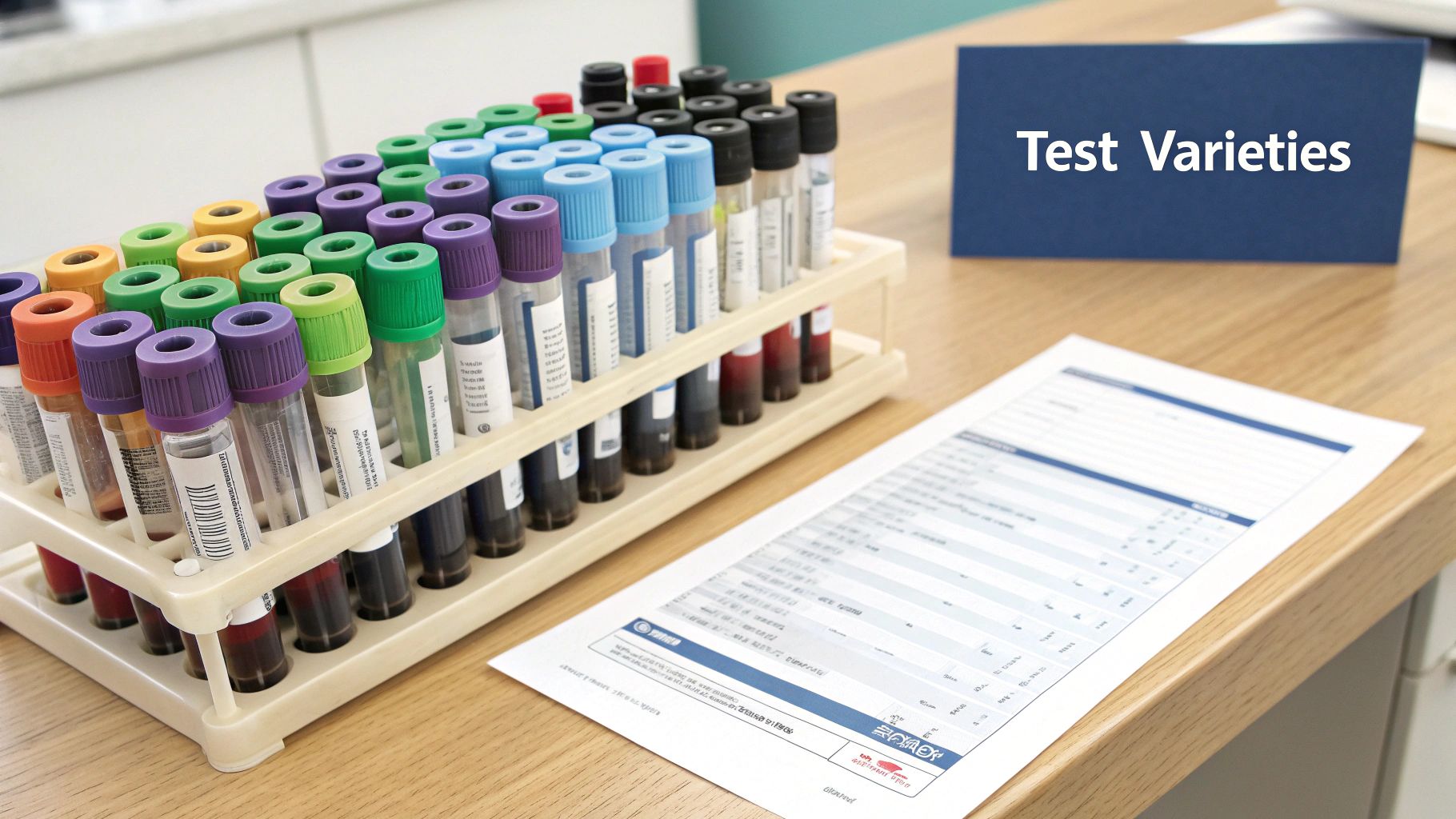
When you opt for a private blood test in the UK, you’re not just getting a list of numbers; you’re gaining a unique window into how your body is functioning. Think of these tests as clues that tell a story about your health, giving you the power to make genuinely informed decisions about your lifestyle. By understanding what these popular tests measure, you can translate that data into meaningful, everyday action.
Rather than picking tests off a list one by one, many people choose wellness panels that bundle together key markers related to a specific health goal. It's a much smarter approach, giving you a holistic picture of what's going on inside and helping you connect the dots between different systems in your body. Let's dig into some of the most common test groups and the powerful insights they offer.
Unlocking Your Energy and Vitality
That feeling of being constantly tired is more common than you might think, affecting around 1 in 8 people here in the UK. While life's stresses are often the culprit, a simple blood test can sometimes pinpoint a straightforward biological reason for your fatigue, pointing you directly towards a solution.
- Iron Studies: Low iron is a classic cause of both exhaustion and that frustrating brain fog. If your levels are dipping, it's a clear signal to boost your intake of iron-rich foods like lean red meat, lentils, and dark leafy greens such as spinach and kale. To maximise absorption, always pair these foods with a source of vitamin C, like a glass of orange juice or some bell peppers.
- Vitamin B12: This vitamin is crucial for energy production and nerve function, so a shortfall can leave you feeling completely drained. Since B12 is mainly found in animal products, this test is especially useful if you follow a plant-based diet. A low result might mean it's time to consciously include fortified foods (like nutritional yeast or certain plant milks) or consider a high-quality supplement.
- Vitamin D: We call it the "sunshine vitamin" for a reason, and in the UK, it’s no surprise that many of us are deficient, particularly in the autumn and winter. Low levels are often linked to a low mood and general lethargy. A test result can be the nudge you need to get outside for a daily walk (even on cloudy days), eat more oily fish and mushrooms, or take a daily supplement as recommended by Public Health England during the darker months.
Assessing Your Metabolic and Heart Health
Your long-term wellness really hinges on keeping your metabolic system running smoothly. These next tests give you a vital sneak peek into your future health, flagging potential risks early enough for you to do something about them. One of the most important markers is HbA1c, which cleverly shows your average blood sugar levels over the past three months.
An HbA1c test gives you a clear picture of how your body manages sugar over time. Elevated levels act as an early warning for pre-diabetes, empowering you to make immediate lifestyle changes—like reducing sugar intake and increasing physical activity—to protect your long-term health.
The other cornerstone is the lipid profile. This panel measures the different kinds of cholesterol and fats circulating in your blood, which are direct indicators of your cardiovascular risk. If your results show high levels of 'bad' LDL cholesterol, it is a clear call to action. You can improve these numbers by adopting a Mediterranean-style diet rich in fibre, fruits, vegetables, and healthy fats from avocados, nuts, and olive oil. Regular aerobic exercise, such as brisk walking or cycling, is also scientifically proven to help manage cholesterol levels effectively.
Your Step-By-Step Guide to Getting a Private Blood Test
Thinking about getting a private blood test for the first time? It might sound complicated, but it’s actually a surprisingly simple process. We’ll break it down into a few easy stages, putting you firmly in the driver's seat of your own health journey.
From picking a test to making sense of your results, here’s what you can expect.
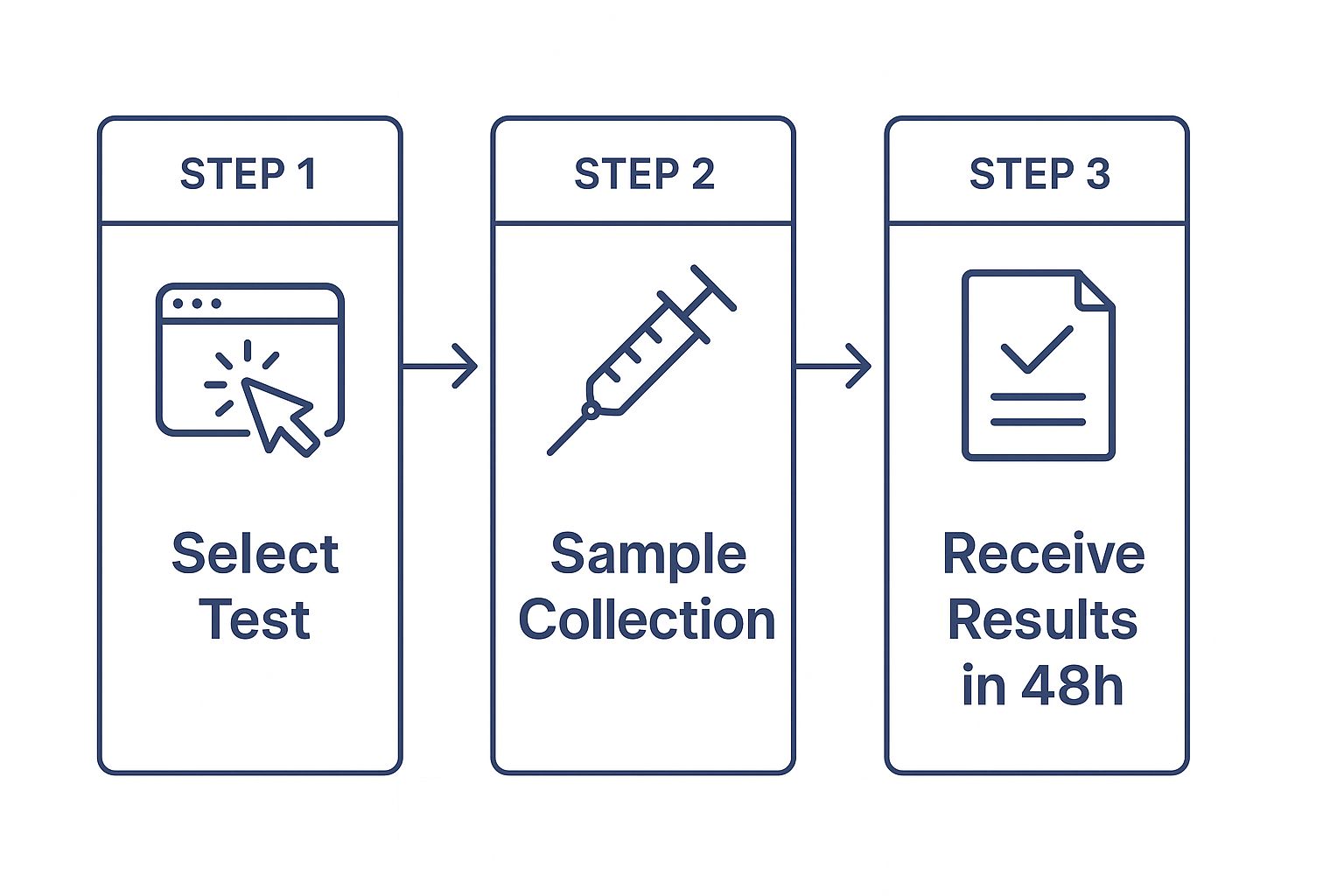
As you can see, the whole thing is designed to be straightforward. You choose your test, collect a sample, and your digital results can land in your inbox in as little as 48 hours.
Step 1: Choose Your Test and Provider
First things first: you need to decide which test is right for you. Think about what you want to learn. Are you trying to get to the bottom of persistent tiredness, or are you just curious about your overall health? Good providers give clear, detailed descriptions of what each test covers, so you can make a properly informed choice.
Before you check out, you'll fill in some details online. This is pretty standard stuff, and good companies have effective patient intake processes to make it quick and secure. Once that’s done, just add your chosen test to the basket and pay.
Step 2: Collect Your Sample
Now it’s time to give your sample. You’ve usually got a couple of choices here, and both have their perks.
- At-Home Finger-Prick Test: This is convenience at its best. A full kit arrives at your door with everything you need. A top tip: warm your hands for a few minutes before you start, as it really helps the blood flow. Just follow the included instructions carefully.
- Venous Draw at a Clinic: Some tests require a bit more blood, or you might just prefer to have a professional do it. You can book an appointment to have a phlebotomist draw blood from a vein in your arm. This is often seen as the gold standard for getting a high-quality sample.
Step 3: Receive and Understand Your Results
This is where it all comes together. In just a few days, you’ll get a secure link to your digital report. It won’t just be a wall of numbers and medical jargon. A quality provider will present everything in a clear, easy-to-read format.
Think colour-coded charts showing what’s optimal (green) or borderline (amber), complete with a GP’s commentary explaining what it all means for you.
Your results are a starting point, not a final diagnosis. Think of them as a powerful tool to kickstart positive changes and have more productive conversations with your doctor about your health.
The final, and most important, part is taking action. If your results flag a vitamin D deficiency, that's your cue to increase your intake of oily fish and get more safe sun exposure. If your cholesterol is a touch high, it’s a prompt to incorporate daily heart-healthy activities like a brisk 30-minute walk and to add more soluble fibre, such as oats and beans, to your diet.
Always remember to discuss any concerning results with your NHS GP to get their full clinical advice.
How to Choose the Right Blood Testing Service
With more and more people turning to private blood testing in the UK, picking the right provider has become a really important decision. It’s not just about getting a test done; the quality of your results, and what you do with them, all hinge on the service you choose. Let's be honest, not all companies are the same, so knowing what to look for is key to making sure you're working with a provider that genuinely cares about accuracy and your health.
It's a bit like choosing a trusted mechanic. You wouldn't just leave your car with the first garage you see. You'd want to know they're qualified, their pricing is fair, and they can explain things clearly. Your health is infinitely more important, so doing your homework on a testing provider is an absolute must.
Always Check for Laboratory Accreditation
If there’s one thing you absolutely must check, it's laboratory accreditation. This is your non-negotiable stamp of quality. In the UK, you should only consider services that use labs accredited by UKAS (United Kingdom Accreditation Service) or regulated by the CQC (Care Quality Commission).
These are the exact same standards the NHS follows, which means your sample will be handled and analysed with the highest level of clinical care. Any provider worth their salt will have these credentials displayed prominently on their website. If you have to dig around to find this information, that’s a pretty big red flag.
Make Sure You Get Proper Result Interpretation and Support
Receiving a list of numbers and ranges without any context is practically useless. A top-tier service does much more than just send you the raw data. They should provide a clear, easy-to-understand report that explains what your results actually mean for you.
A good report will always include a doctor’s commentary or a GP’s summary. This expert interpretation is what turns a page of numbers into real, actionable health advice, helping you understand what your biomarkers mean and what you should do next.
This guidance is what allows you to make real changes. For instance, if your results show your cholesterol is a bit on the high side, a good report won't just state the fact. It should suggest practical, evidence-based steps, like adding more soluble fibre from oats and apples to your diet or aiming for 150 minutes of moderate-intensity exercise per week. This is what turns a simple test into a powerful tool for improving your health.
The market for this is getting bigger all the time. Back in 2023, the UK blood testing market was already valued at around £1.4 billion, and it's expected to keep growing. While more choice is great for us, it also means we need to be careful to stick with established, high-quality providers. You can find out more about the industry from UK blood testing market research.
A Quick Checklist for Choosing Your Provider
Before you make a decision, run through these simple questions. It'll help you feel confident you're making a smart choice.
- Is the laboratory UKAS accredited or CQC regulated? This is your first and most important quality check.
- Is the pricing totally transparent? Look out for any hidden extras, like fees for the blood draw or having to pay separately for the report.
- Will a qualified doctor or GP review and comment on my results? That expert insight is what makes the test truly valuable.
- Is their data privacy policy clear and solid? Your health data is sensitive, and you need to know it’s being kept safe and secure.
Your Questions Answered
Stepping into the world of private blood testing in the UK for the first time? It's natural to have a few questions. Let’s walk through the most common queries we hear, so you can feel completely confident about the process.
Are Private Blood Tests as Accurate as NHS Tests?
In a word, yes—as long as you choose a credible provider. Reputable private services use the very same UKAS-accredited laboratories that the NHS relies on. This means your sample is analysed to the highest clinical standards, making the results just as trustworthy.
If you're using an at-home finger-prick kit, the accuracy is also in your hands. It's vital to follow the collection instructions to the letter to get a clean, viable sample. For certain markers or simply for peace of mind, a venous sample taken by a professional phlebotomist is still considered the gold standard.
I Have My Results – Now What?
Think of your results as the starting point for a conversation about your health, not the final word. A good report will always come with a doctor's commentary, putting your biomarker levels into a real-world context and suggesting initial lifestyle changes.
For instance, if your results show low vitamin D, a concrete action is to take a daily 10-microgram supplement during autumn and winter, as recommended by UK health guidelines. If your cholesterol is a bit high, a practical step is to swap saturated fats like butter and coconut oil for unsaturated fats found in olive oil and avocados.
It's absolutely crucial to discuss any concerning or abnormal results with your NHS GP. They can see the bigger picture, organise more tests if necessary, and provide an official diagnosis. Never change your prescribed medication based on a private test without speaking to your doctor first.
How Much Can I Expect to Pay?
The cost really depends on what you're testing for. A straightforward, single-marker test, like checking your vitamin D, will likely set you back between £30 and £50.
For a broader look at your health, wellness panels that check things like liver function, cholesterol, and key vitamins usually fall in the £100 to £250 range. More specialised tests, such as in-depth hormone profiles or allergy panels, will cost more. Always double-check that the price covers everything: the kit, the lab analysis, and a proper report with a doctor’s review. Sometimes, a home visit from a phlebotomist for a venous sample will be an extra charge.
Can I Use a Private Blood Test to Diagnose Myself?
No, and it's important to understand why. These tests are fantastic tools for monitoring your health and flagging potential issues early, but they aren't a shortcut to a medical diagnosis.
A blood test is great at highlighting a biomarker that's outside the normal range, giving you an early heads-up. But a proper diagnosis can only come from a doctor who considers your entire medical history, current symptoms, and often a physical exam. Use the results to become an informed patient who can make positive lifestyle changes, but always work with your GP to get a definitive diagnosis and treatment plan.
At The Lagom Clinic, we're here to help you take an active role in your health with our full range of private blood tests and GP consultations. Book your appointment today and start building a clearer picture of your wellbeing.
Book a private blood test in Bristol
Comprehensive blood panels with results in 2-5 days. No GP referral needed. Same-week appointments available.


 Members Consultation