


When you opt for a private thyroid test, you're essentially getting a more detailed look at how your thyroid is functioning, often measuring a wider range of markers than you might get with a standard NHS test. Think of it as a proactive step, especially if you're dealing with persistent symptoms like fatigue or weight gain even after being told your levels are "normal."
When to Consider a Private Thyroid Test

Have you ever felt completely exhausted, noticed your weight creeping up for no reason, or struggled with a persistently low mood, only for your GP to tell you your standard thyroid test looks fine? It’s an incredibly common and deeply frustrating experience for so many people.
The NHS provides fantastic and essential care, but its initial thyroid screening usually focuses on just one thing: your Thyroid-Stimulating Hormone (TSH). While TSH is a crucial piece of the puzzle, it doesn’t always paint the complete picture of your thyroid health.
This is exactly where a private thyroid test can be so helpful. It lets you lift the bonnet and take a proper look at the engine, moving beyond a single number to get a much fuller understanding of what’s really going on inside your body.
Gaining Clarity on Lingering Symptoms
Persistent, nagging symptoms are easily the number one reason people start looking into private testing. If you’re consistently dealing with issues that get in the way of your daily life, it’s only natural to want clear answers. For instance, an overactive thyroid can sometimes cause excessive sweating, which might even lead to changes in body odour.
Common symptoms that often warrant a deeper look include:
- Unexplained fatigue that just doesn't shift, no matter how much you rest
- Struggling to manage your weight, whether it’s unexpected gain or loss
- Mood swings, heightened anxiety, or feelings of depression
- Brain fog and finding it hard to concentrate
- Noticeable changes in the health of your skin, hair, or nails
Seeking a More Detailed Picture
For many people, getting a quicker, more thorough analysis than what's typically available is a huge driver. This is why private thyroid testing in the UK has become such a popular choice. Whether it's the desire for faster results or a more detailed panel of tests, people are taking the initiative. You can find out more about this patient-led trend and its value by reading the insights from Thyroid UK.
A private test can arm you with comprehensive data, giving you the confidence to have a more informed, productive conversation with your doctor about your symptoms and what to do next.
Ultimately, taking charge of your health often starts with having the right information. A private test gives you that detailed information, empowering you to make the best decisions for your health journey. Proactive checks are key, which is why it's so important to understand the role of health screenings in looking after your long-term wellness.
So, What Does a Full Thyroid Panel Actually Tell You?
Think of your thyroid system like a thermostat controlling your home's heating. Your brain (the thermostat) senses the temperature and sends a signal to the furnace (your thyroid) to produce heat (thyroid hormones). A private thyroid test that includes a full panel lets you check the thermostat, the furnace, and the amount of heat being produced, giving you a complete picture of how the whole system is running.
A standard test often just checks the thermostat's signal, which can leave huge gaps in the story. A comprehensive panel, on the other hand, gives you a much richer, more complete picture of what's really going on inside your body. This detailed view is precisely why so many people decide to go down the private testing route.
Beyond the Basic TSH Test
The first stop for almost any thyroid check is Thyroid-Stimulating Hormone (TSH). This hormone is made by your pituitary gland—a little command centre in your brain—and its entire job is to tell your thyroid gland to start making thyroid hormones.
Imagine TSH as the volume control on a stereo. If your TSH is high, your brain is turning the volume way up, trying to get a response from a thyroid that isn't listening. If it's low, your brain is turning the volume down because there's already plenty of hormone floating around.
The thing is, just looking at TSH can be a bit deceptive. It tells you how loud the signal is, but not whether the speakers are actually working. In fact, data shows that around 80% of GP-requested thyroid blood tests in England rely solely on a TSH profile. While this can be a good initial screen, it doesn't always show the full picture. You can read more about the NHS testing approach to see why this is a common practice.
The Real Stars: T4 and T3 Hormones
This is where we get to the hormones your thyroid actually produces. A full panel measures these, giving you a clear idea of your thyroid's output.
-
Free T4 (FT4) – The 'Storage' Hormone: This is the primary hormone your thyroid makes. Think of it as stockpiled energy, ready and waiting to be used. It’s not active yet, but it’s crucial because your body converts it into the active form it needs.
-
Free T3 (FT3) – The 'Active' Hormone: This is the form of the hormone your cells can actually use to power your metabolism and keep you energised. It’s the energy that’s actively being used. If your FT3 is low, you can feel symptomatic even if your T4 levels look fine.
Checking for an Internal Mix-Up: Thyroid Antibodies
A truly complete panel will also check for thyroid antibodies. These are proteins your immune system can produce that mistakenly attack your own thyroid gland.
Measuring antibodies is like checking if your body’s own security team is accidentally attacking the staff. If they are, it points to an autoimmune issue, such as Hashimoto's disease—the number one cause of an underactive thyroid.
The two key antibodies to look for are:
- Thyroid Peroxidase Antibodies (TPOAb)
- Thyroglobulin Antibodies (TgAb)
By piecing together the results for TSH, FT4, FT3, and antibodies, a private thyroid test delivers a far more detailed and useful understanding of your thyroid health than a single test ever could.
Navigating the Testing Process
So, you’ve decided to take the first step and get a private thyroid test. That’s great. The good news is that the whole process is usually far more straightforward than most people think, designed to fit around you and your schedule. You’ve got options, whether you prefer doing things at home or having a professional take your blood sample.
The first choice you'll make is how and where to give your sample. Most services give you two clear paths: you can either use an at-home finger-prick test kit or pop into a partner clinic for a traditional blood draw from a vein, done by a phlebotomist. Both methods get the job done and send your sample off for the same accurate lab analysis, so it really just boils down to what you’re most comfortable with.
This simple infographic breaks down the core steps involved, from the moment you choose your test right through to receiving your results.
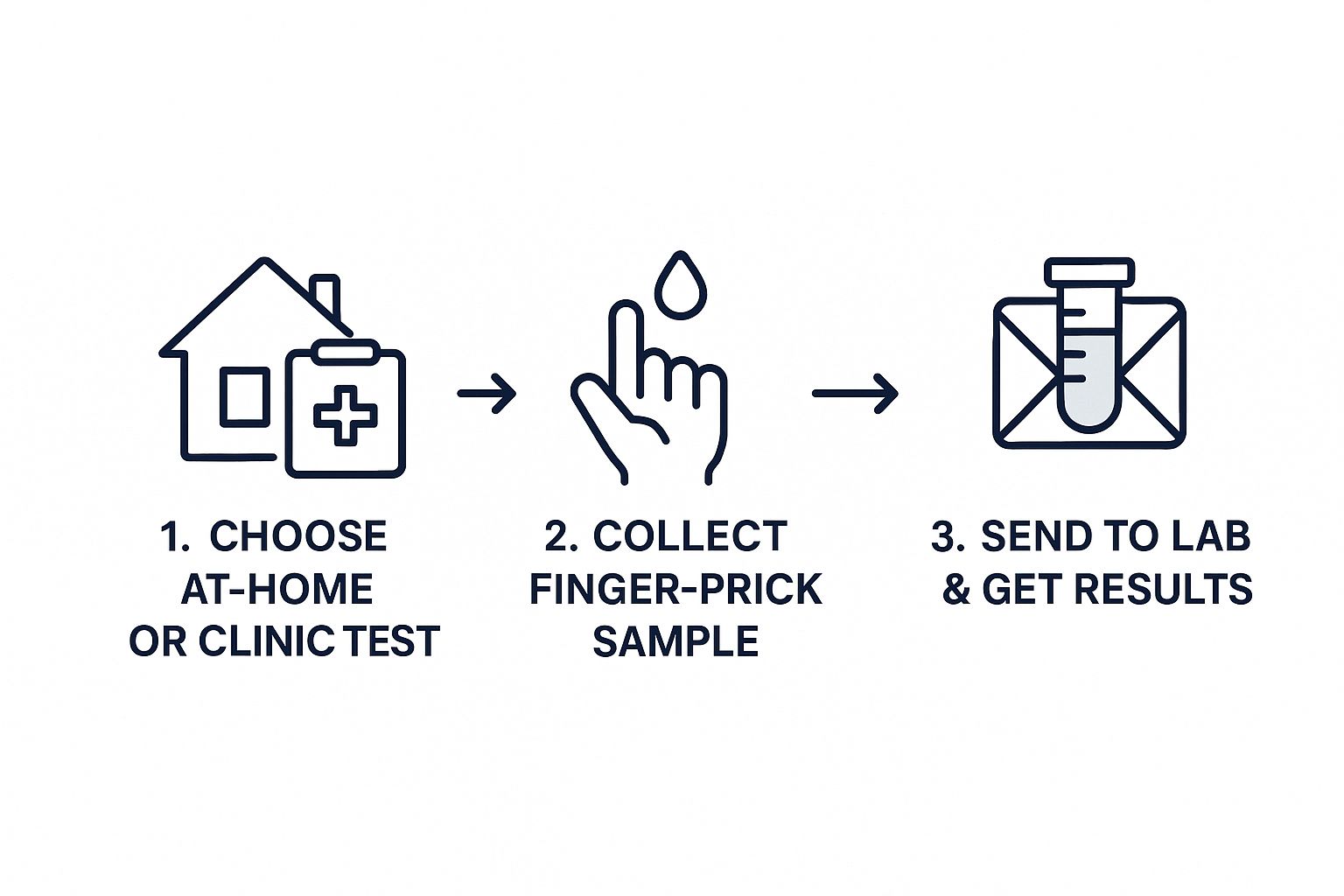
As you can see, it’s a clear, three-stage journey that puts you firmly in the driver's seat when it comes to your health.
Taking an At-Home Finger-Prick Test
If you opt for the convenience of an at-home kit, it will arrive in the post with everything you need: lancets, a small collection tube, and a full set of instructions. The absolute key to success here is collecting enough blood for a good quality sample. A little bit of prep work can make all the difference and help you avoid the disappointment of the lab rejecting your sample.
To get the blood flowing well and make the collection process a breeze, just follow these simple, practical tips:
- Hydrate Well: About an hour before you do the test, drink a big glass of water. Being properly hydrated really helps your blood flow more easily.
- Get Warm: A warm shower just before, or even just washing your hands in warm water for a few minutes, will boost circulation to your fingertips.
- Encourage Blood Flow: Get your body moving. A few star jumps or swinging your arms by your side for a minute can make a surprising difference.
- Use Gravity: Don’t sit down for this. Stand up and let gravity help the blood flow down into your fingers.
- Choose the Right Finger: Go for the middle or ring finger on your non-dominant hand. The skin is usually a bit softer there. Aim for the side of the fingertip, not the pad—it’s less sensitive and has a better blood supply.
Top Tip: Once you've collected your sample, pop it in the post on the same day. Try to aim for Monday to Thursday to sidestep any potential delays over the weekend, either in the post or at the lab. This gives your sample the best chance of arriving in great condition for a swift analysis.
As soon as your sample reaches the lab, it’s analysed by the experts. You’ll usually get your results back securely online within just a few working days. The whole setup is designed to empower you to check in on your thyroid health, all from the comfort of your own home.
Making Sense of Your Test Results
Getting your private thyroid test results back can feel like a big step forward. But then you open the report, and it looks like a page of gobbledygook – a jumble of abbreviations, numbers, and ranges. It's completely normal to feel a bit lost at first.
The real aim here isn't to diagnose yourself. It's about empowering you to turn that data into genuine understanding. Learning to read these results means you can walk into your doctor's appointment ready to have a far more productive and meaningful conversation about your health.
Lab Reference Ranges vs Optimal Ranges
The first thing you’ll probably spot on your report is a 'reference range' listed next to each of your results. This is the spectrum of values the laboratory considers 'normal' for the general population. If your number falls inside this window, it gets a tick.
But here’s a crucial point: 'normal' doesn't always mean 'optimal'. Many forward-thinking GPs, endocrinologists, and functional medicine experts believe that the sweet spot for feeling well is often much narrower than the broad lab ranges suggest.
Think of it like this: the lab reference range is like saying the average UK shoe size is anything between a 3 and a 12. While technically true, the 'optimal' range is finding that perfect size 7 that fits you without pinching. Just because you fall within the broad average doesn't mean it's the right fit for you.
This is a really important distinction. You could have a TSH level that’s technically ‘in-range’ but sits at the very highest end, which could be the very reason you still feel sluggish and cold despite your 'normal' test result.
How to Spot Common Patterns
The real story of your thyroid health is told in the relationship between the different markers. How TSH, FT4, and FT3 interact can reveal what’s really going on beneath the surface. While your doctor is the expert who will put all the pieces together, having a basic grasp of the patterns helps you follow along.
To give you an idea, a healthcare professional will look for certain combinations of results. The table below outlines a few simplified, common patterns they might investigate further.
| TSH Level | Free T4 (FT4) Level | Free T3 (FT3) Level | Potential Indication |
|---|---|---|---|
| High | Low or Normal | Low or Normal | This could suggest an underactive thyroid (primary hypothyroidism). |
| Low | High or Normal | High or Normal | Often points towards an overactive thyroid (hyperthyroidism). |
| Normal or Low | Low or Normal | Low | May indicate a problem with converting T4 into the active T3 hormone. |
| Normal | Normal | Normal | Usually indicates normal thyroid function, but symptoms should still be considered. |
This is just a starting point, of course, and a proper interpretation requires looking at the full clinical picture, including your symptoms.
Seeing these patterns in your own results helps you move beyond just listing symptoms. You can start asking specific, informed questions, like, "I've noticed my TSH is high while my FT4 is on the low side; could this be connected to my fatigue?"
It completely changes the conversation. You’re no longer just a passive patient; you’re an active, informed partner in managing your own health journey.
Lifestyle Changes to Support Thyroid Function
Getting a private thyroid test is a fantastic starting point—it gives you the data, the hard facts about your hormone levels. However, medical treatment is only part of the solution. The real story unfolds in how you support your body’s natural rhythm through your daily habits. Small, consistent lifestyle adjustments can make a surprisingly big difference to your thyroid health and how you feel every day.
Imagine your thyroid is like a highly sensitive orchestra conductor. For it to perform at its best, it needs the right environment. Providing it with specific nutrients, managing stress, and ensuring quality sleep helps it orchestrate your body's energy and metabolism perfectly.
Fuel Your Thyroid with Key Nutrients
Your diet is one of the most powerful levers you can pull to support your thyroid. Certain foods contain the exact building blocks your body needs to make and use thyroid hormones effectively.
- Selenium: This mineral is a true thyroid champion. It’s essential for converting the T4 'storage' hormone into the T3 'active' hormone and acts as an antioxidant, protecting the thyroid gland from damage. Incredibly, just one or two Brazil nuts a day is often enough to meet your daily selenium requirement.
- Zinc: Zinc is vital for hormone production. It helps your pituitary gland regulate TSH—the messenger hormone that tells your thyroid it’s time to get to work. You can find it in lean meats, shellfish, pumpkin seeds, and lentils.
- Iodine: You can't make thyroid hormones without iodine—it’s a fundamental ingredient. But this is one nutrient where balance is everything; both too little and too much can disrupt thyroid function. Great natural sources include seaweed, cod, and dairy products.
- Iron: Low iron levels have been linked to reduced thyroid efficiency. Ensure you get enough through lean red meat, spinach, and legumes, and pair them with vitamin C-rich foods like citrus fruits to enhance absorption.
Manage Stress to Soothe Your System
If there's one thing that can really throw a spanner in the works, it’s chronic stress. When you're constantly running on adrenaline, your body pumps out cortisol, a stress hormone that can directly interfere with both the production and activation of your thyroid hormones.
Bringing stress-management practices into your daily life isn't just a nice-to-have; it's a critical part of looking after your entire endocrine system. Simple habits can lower cortisol and create a much friendlier internal environment for your thyroid to do its job.
Try carving out just five or ten minutes for mindfulness or deep breathing exercises. Gentle, moderate exercise like a brisk walk, yoga, or a swim is also brilliant for de-stressing without putting your body under more strain. It’s also vital to protect your 7-8 hours of quality sleep a night—it’s when crucial repair and regulation happens.
Finally, don’t overlook your gut. A healthy gut is deeply connected to a balanced immune system, which is especially important given that many thyroid issues are autoimmune. If you're dealing with an autoimmune thyroid condition, looking into gut health can be a game-changer. You can dig deeper into this by understanding probiotics for immunity. When you combine these lifestyle shifts with the knowledge from your test results, you're no longer a passenger—you're in the driver's seat of your health journey.
Choosing the Right Provider and Understanding Costs
Dipping your toe into the world of private healthcare can feel like a big decision. The good news is that finding a great company for your private thyroid test is actually quite simple once you know what to look for. Not all providers are created equal, so it's worth doing a little homework to make sure you're making a smart investment in your health.
If there’s one thing you absolutely must check, it's UKAS accreditation. This is the gold standard for labs in the UK. It means the facility handling your sample is regularly and rigorously checked against internationally recognised standards. Think of it as your guarantee of accuracy – it ensures the results you get back are genuinely reliable. While you're looking, it can also be useful to browse general health platforms like Salthea's services to get a feel for the broader services on offer.
Evaluating a Provider Beyond Accreditation
A lab's credentials are vital, but the service you receive is just as important. A top-notch provider will give you more than just a page of numbers.
Here are a few things I always recommend looking out for when choosing:
- Clear, Understandable Reports: Are their reports designed for real people? Look for providers who offer plain English explanations, visual guides, or summaries to help you grasp what your results actually mean.
- Post-Test Support: What happens after you get your results? The best services offer a follow-up consultation with a qualified professional to talk you through everything. This can be invaluable for figuring out your next steps.
- Transparent Pricing: You should know exactly what you're paying for upfront, with no surprise fees later on. A reputable company will clearly list what's included in each test panel.
The demand for private testing has absolutely soared. In fact, the UK thyroid function testing market, which includes both NHS and private options, recently pulled in revenues of around £320 million. That number is only expected to grow, showing just how many people are now taking a more hands-on approach to managing their health.
The price tag on a private thyroid test can differ quite a bit, and it usually comes down to how comprehensive the panel is. A basic TSH and T4 test will naturally cost less than a full workup that includes T3 and thyroid antibodies.
To get a better sense of the overall picture, have a read of our guide to private blood testing in the UK. By weighing up these factors, you can find a provider that gives you real value and confidence on your health journey.
A Few Final Questions About Private Thyroid Tests
Deciding to go ahead with a private thyroid test is a big step, and it’s completely normal to have a few last-minute questions. Getting clear, simple answers can make all the difference, helping you feel confident you're making the right choice for your health.
We've gathered some of the most common queries we hear from people thinking about taking a test.
Can I Still Test If I’m Already on Thyroid Medication?
Absolutely, but consistency is key. If you're taking a medication like levothyroxine, the standard medical advice is to take your blood sample before you've had your daily dose.
Doing it this way gives you and your doctor a clearer picture of your baseline thyroid levels. It shows how your body is functioning before the medication kicks in for the day, which is invaluable for assessing if your current treatment is on the right track. Always double-check the specific instructions that come with your test kit and, if you can, chat about the timing with your doctor.
Will My GP Actually Look at Private Test Results?
There’s no hard and fast rule, but we're finding that more and more GPs are willing to review results from accredited private labs. The trick is how you present them.
It's best to approach the conversation as a partnership. Bring your results to your GP not as a finished diagnosis, but as a piece of the puzzle that might help explain the symptoms you're experiencing. A report from a UKAS-accredited laboratory carries real credibility and can be a great starting point for a more productive conversation about your health.
Finger-Prick vs. Vein Draw: Is One Better Than the Other?
Both collection methods are extremely accurate, as the samples end up being analysed in the very same accredited labs. Really, it just boils down to what works best for you.
- Finger-prick tests are a game-changer for convenience. You can collect your sample in a few minutes from the comfort of your own home, no appointment needed.
- Venous blood draws, taken from a vein in your arm by a trained phlebotomist, are a fantastic option if you're a bit nervous about doing it yourself or if you know you have trouble getting enough blood from a finger prick.
At the end of the day, both routes will give you the same reliable, high-quality insights into your thyroid's performance.
At The Lagom Clinic, our goal is to give you the clarity and information you need to feel in control of your well-being. If you're ready to get a deeper understanding of your thyroid health, take a look at our private GP services and health screening options at https://www.thelagom.co.uk.
Book a thyroid function test
We offer comprehensive thyroid panels (TSH, T3, T4, thyroid antibodies) as part of our private blood testing service in Bristol.


 Members Consultation