


You're at your desk in Bristol, your energy's been off for weeks, and the question keeps circling back. Is this just work, winter, poor sleep, or something that needs a vitamin deficiency test UK clinicians would take seriously?
That's the point where many get stuck. The internet pushes symptom checklists and broad panels, while NHS pathways stay deliberately selective. In practice, the right answer usually starts with a simple rule, test when there's a clear reason, don't test just because you feel vaguely tired.
The catch is that vitamin testing has become much more common, not necessarily much smarter. In a major UK primary-care study, testing for vitamin D deficiency rose from 0.29 per 1,000 PYAR in 2005 to 16.1 per 1,000 PYAR in 2015, a more than 50-fold increase over the decade, yet only 32.1% of the 210,502 patients tested had a repeat test and women were tested more often than men, at 8.77 per 1,000 PYAR versus 3.44 per 1,000 PYAR (BMJ Open). That's useful because it shows how easy it is to over-order bloods without getting a clearer diagnosis.
A better approach is to ask three questions before you book anything. What symptom pattern are you trying to explain, which vitamin marker would change management, and would a result lead to treatment, supplementation, or reassurance? If you're comparing vitamin D concerns with broader hormonal or menstrual symptoms, the vitamin D and menopause guide is a sensible companion read because fatigue and low mood can sit in more than one clinical bucket.
I'm comfortable saying this plainly. Some testing is worthwhile. Some isn't. And the job of a good private GP is to help you tell the difference without turning every tired week into a full lab panel.
Why Vitamin Testing Feels So Confusing Right Now
A lot of Bristol professionals arrive with the same story. You've been dragging through afternoons, your sleep's patchy, your workouts feel harder, and your instinct is to “just get everything checked.” That instinct is understandable, but it's also exactly how people end up paying for blood tests that don't answer the main question.
Vitamin D is the clearest example. UK data show deficiency remains common and strongly seasonal, with 23.1% in winter and 20.0% in spring in one UK Biobank analysis, and the highest prevalence in Scotland at 23.5% compared with southern centres (PMC review). At the same time, testing is often ordered in people who don't have a strong indication, which is why low yield and overtesting can coexist.
Practical rule: if the result won't change what you do next, the test probably isn't the first move.
The decision rule matters more than the checklist
The most useful split is not “symptoms or no symptoms”. It's whether the symptom pattern matches a nutrient problem closely enough to justify testing. Vitamin D testing makes sense when there's musculoskeletal pain, proximal weakness, osteomalacia concern, osteoporosis workup, malabsorption, or potent anti-resorptive therapy in the picture, while routine screening in asymptomatic people isn't necessary in NHS-linked guidance (NHS laboratory guidance).
That's where private care can help if it's used properly. A good consultation doesn't start with a panel menu. It starts with a history, medicines review, diet, sun exposure, and whether there's a lifestyle change that should happen even if every blood test comes back normal.
For busy people, that's often the core value. You don't need more data for the sake of it. You need a clinician to tell you whether your fatigue is a test-now problem, a supplement-now problem, or a sleep, diet, and workload problem.
Why indiscriminate testing causes confusion
Broad panels can create noise. A mildly low result may look alarming when it isn't clinically important, while a normal result can falsely reassure you if the wrong marker was used or the symptoms point elsewhere. That's why the rest of this guide keeps coming back to the same idea, ask what the test is for before you order it.
In Bristol private practice, I see people spend time and money chasing panels when a narrower, targeted approach would've been clearer. The aim isn't to deny testing, it's to use it well, so you leave with a plan instead of a printout.
What a Vitamin Deficiency Test Measures
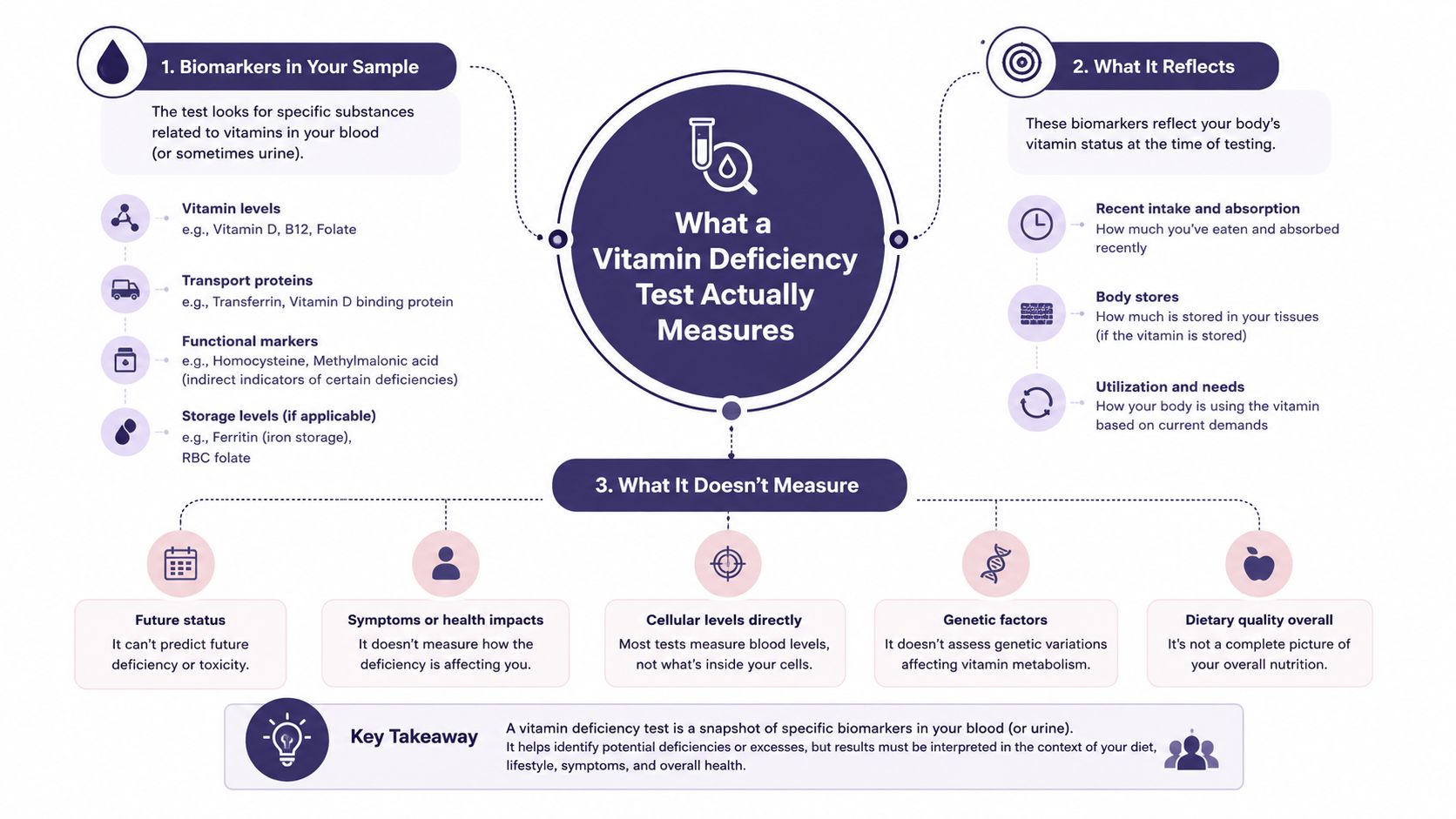
A vitamin test is usually a routine blood draw. The lab processes the sample using standard pathology methods, and that is why results in NHS settings often take several days to return. The sample collection is simple. The interpretation is the part that needs judgement.
A blood result is a snapshot, not a full diagnosis
A vitamin blood test shows what is circulating in the blood at that point in time. It does not show the whole picture of absorption, body stores, inflammation, or whether the symptom you are worried about is caused by a vitamin problem at all. That is why a single result should never be read on its own.
For vitamin D, the usual marker is serum 25-hydroxyvitamin D, 25(OH)D. This is the most stable measure because it reflects skin production and dietary intake, rather than the active hormone form that changes more quickly (NHS laboratory guidance). In practice, this is the figure most clinics use when they discuss vitamin D deficiency.
For vitamin B12, the picture is more nuanced. A single serum B12 level is imperfect, and UK pathways recognise that there is no gold standard. One NHS-integrated pathway notes that serum cobalamin testing may miss about 5% of true disease, so symptoms still need to be weighed alongside the lab result (South West London ICB guidance).
Common UK panels and what they tell you
A targeted NHS panel usually focuses on the marker most likely to answer the question in front of you. A broader private panel may add folate, ferritin, and sometimes a full blood count, along with other markers that can help explain tiredness or reduced intake. That wider approach can be useful when symptoms overlap, but it is not automatically the better choice.
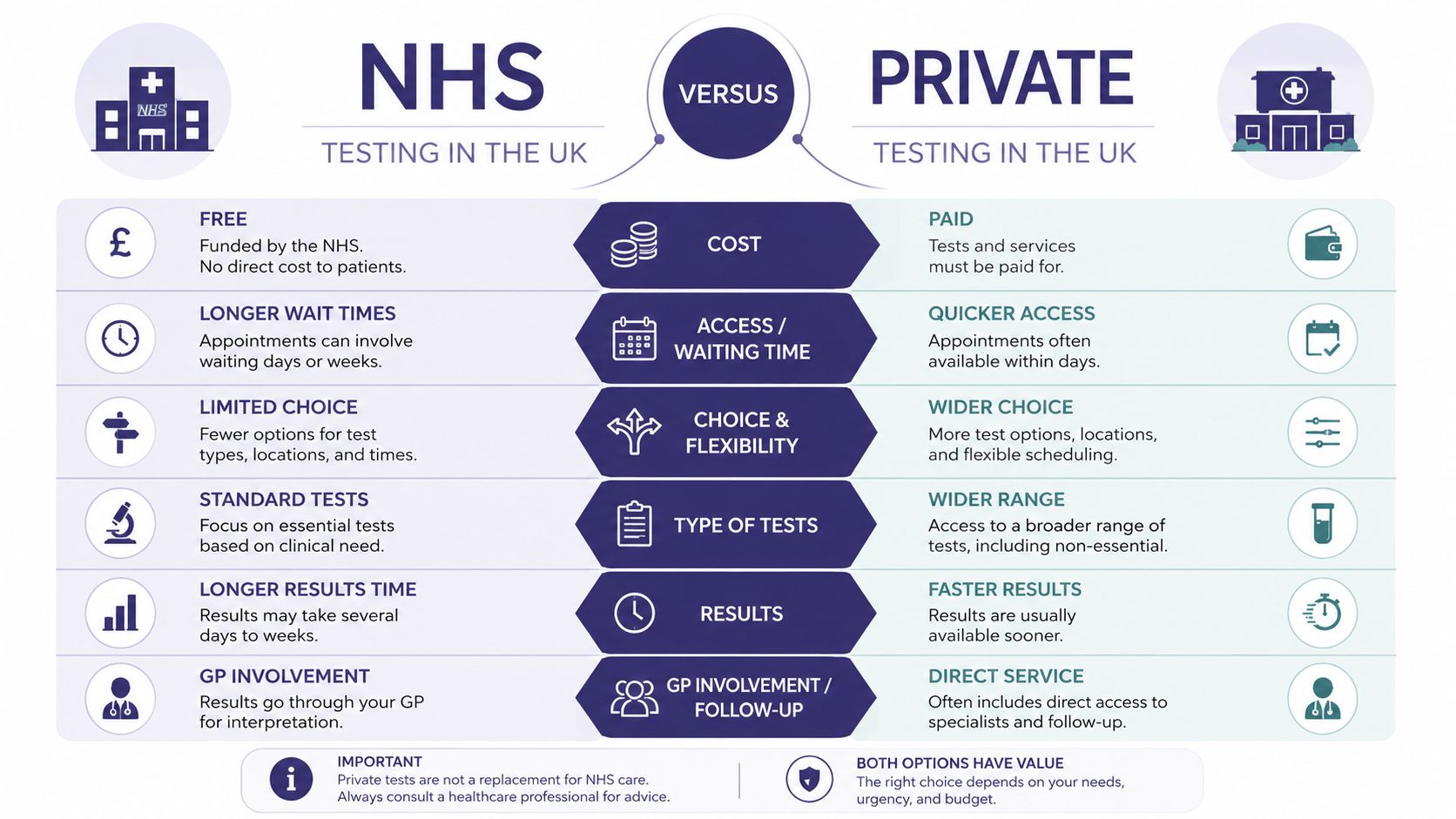
The practical difference is straightforward:
| Test type | What it usually reflects | What it doesn't tell you |
|---|---|---|
| Vitamin D, 25(OH)D | Overall vitamin D status | The cause of bone pain, an absorption problem, or the source of symptoms on its own |
| Vitamin B12 | Likely B12 status | Whether the cause is dietary, pernicious anaemia, or something else |
| Folate | Folate status | Why intake is low or whether another deficiency is present as well |
| Ferritin | Iron stores | The full reason for anaemia or breathlessness |
The honest way to read a vitamin result is simple. It gives a snapshot, not a diagnosis. The diagnosis comes from matching that snapshot with symptoms, medicines, diet, and risk profile. For a broader overview of warning signs, see this guide to signs of vitamin deficiency.
Symptoms That Justify Testing
A tired person does not automatically need a vitamin panel. Fatigue on its own is too vague, and testing every case is rarely a good use of time or money. The question is whether the symptom pattern fits a deficiency closely enough that a blood test is likely to change what happens next.
The symptom patterns that matter most
Vitamin D matters more when there is bone pain, proximal muscle weakness, or concern about osteomalacia or osteoporosis. In UK practice, a result below 25 nmol/L is used to indicate risk of deficiency (PMC review). If the result sits between 25 and 50 nmol/L, it is usually treated as insufficiency in regional NHS pathways, so symptoms and risk factors guide whether treatment or repeat testing is sensible.
Vitamin B12 deserves more attention when there is glossitis, macrocytosis, neuropathy, cognitive change, or anaemia. A commonly used trigger is serum B12 <200 ng/L, while one regional reference interval is 180 to 914 ng/L (South West London ICB guidance). A result inside range does not always end the discussion if the symptoms still fit, especially where neurological features are present.
Folate becomes more relevant when mouth ulcers, macrocytosis, or low energy sit alongside a poor diet or alcohol excess. Iron is often overlooked, yet hair loss, breathlessness, and exercise intolerance can justify ferritin testing even when the vitamin picture itself looks quiet.
A broader symptom map can help before you book anything. The guide on signs of vitamin deficiency is useful if you want to check the pattern without drifting into unnecessary panel shopping. For people on plant-based diets, the partner resource on symptoms to watch on plant-based diets is a practical add-on, especially where B12 intake is already a concern.
Red flags need GP review, not a casual blood test
Unexplained neurological symptoms, suspected pernicious anaemia, or possible osteomalacia deserve prompt clinical review. A private test can still help in selected cases, but it should not delay assessment when symptoms are significant, progressive, or affecting function.
If numbness is spreading, gait is changing, or anaemia is part of the picture, do not shop for a panel. Get examined.
The best single rule is simple, symptoms decide whether testing is justified, and the result then shapes treatment. That matters because B12 testing can miss true disease, so a normal result does not always close the case.
| UK Symptom, Test and Action Thresholds | |||
|---|---|---|---|
| Symptom cluster | Key marker | UK trigger threshold | Recommended action |
| Bone pain or proximal weakness | 25(OH)D | <25 nmol/L | Treat deficiency and assess risk factors |
| Tiredness with poor sun exposure | 25(OH)D | 25 to 50 nmol/L | Consider supplementation and lifestyle change |
| Glossitis, neuropathy, macrocytosis | Serum B12 | <200 ng/L | Review promptly, consider confirmatory testing |
| Low energy with poor diet | Folate | Clinical suspicion | Test if the pattern fits, then correct intake |
| Hair loss or breathlessness | Ferritin | Clinical suspicion | Check iron status and look for a cause |
A test is worth doing when the symptom pattern, diet, and risk factors point in the same direction. If they do not, the result is often hard to interpret and rarely changes management.
NHS Versus Private Testing in the UK
The NHS and private routes solve different problems, which is why they are easy to confuse. The NHS is set up for targeted testing with clinical thresholds, so care is funded but the testing is narrower and often less immediate. Private testing is set up for access and speed, but it works best when the test is tied to a sensible consultation rather than bought in isolation.

How the two pathways differ in practice
On the NHS side, vitamin D testing is usually reserved for people with symptoms or clear risk factors, and repeat testing is often avoided for at least 6 months unless there is a strong reason to check again. That approach is sensible, but it can feel slow if you are trying to settle a problem around work, travel, or training.
Private testing works differently. You can usually book directly, ask for a broader panel, and get results more quickly, but that only helps if the test choice is sensible in the first place. For B12, NICE evidence reviews give a realistic sense of the cost range seen in practice, with figures such as £30.35, and a spread from £11.00 to £49.41, which helps explain why private menu pricing varies (NICE evidence review). That does not mean every panel is worth buying.
Why interpretation matters as much as access
A one-off online blood test can be fine when the question is narrow. A private GP consultation makes more sense when symptoms overlap, the medicines list is long, or you are unsure whether to prioritise vitamin D, B12, folate, or iron. In Bristol, that discussion is often more useful than a raw result file, because the follow-up can connect the numbers to sleep, diet, training load, and work stress.
If you follow a plant-based diet, B12 risk often comes into the conversation. The symptoms to watch on plant-based diets article is a useful extra read if you want a diet-specific lens on that issue.
Choosing the right route
Use the NHS if the problem is clear, urgent, and already being handled in the system. Use private testing if you want faster access, a more personalised conversation, or a same-week answer that fits around work and family life. The smart choice is not about principle, it is about matching the pathway to the clinical complexity.
If you want a practical overview of what a private blood test usually includes, the private blood test UK guide gives a useful starting point. The Lagom Clinic offers private blood tests in Bristol and health screening appointments that include blood tests plus a follow-up discussion of results in clinic. That setup suits people who want the numbers interpreted, not just delivered.
Booking a Private Vitamin Test in Bristol
A clear process is what matters. In a Bristol private clinic, booking usually starts online or by phone, and the first conversation should establish whether you need a blood test only or a longer consultation with interpretation built in.
What the appointment usually looks like
A proper private GP appointment is often 30 to 60 minutes, which matters because the extra time is spent on context, not just paperwork. That context includes symptoms, supplements, dietary pattern, travel, sun exposure, medicines, and whether you need vitamin D, B12, folate, ferritin, or a broader screen. The on-site blood draw itself is usually quick, a single venous sample from the inner elbow that takes under five minutes.
After that, the sample is handled through standard lab pathways and the results are sent back securely, often by email, patient portal, or follow-up call. Routine private labs commonly return results faster than NHS pathology, and in many cases the window is around 24 to 72 hours rather than days, which can be helpful if you're trying to make a decision before a deadline, trip, or training block.
Useful rule: book the consultation for the thinking, not just the needle.
What to do before you go
You usually don't need to overhaul your morning. Wear sleeves you can roll up easily, bring a list of supplements and medicines, and be ready to explain any recent changes in diet, especially if you've cut out animal products or spent little time outdoors. Fasting is not usually the point for vitamin testing, unless you've been told otherwise for a broader panel.
The main practical benefit of a private appointment is rhythm. You can fit it between meetings, get the result reviewed in one place, and avoid the common frustration of receiving an isolated number without any next-step advice.
If you want to see how a private consultation is structured before booking, the page on private blood test UK gives a useful overview of the process.
What makes Bristol logistics easier
In real life, convenience matters. A clinic appointment that includes phlebotomy and interpretation can save several separate steps. For busy professionals, that often turns a vague health worry into a same-week plan, which is usually more valuable than opening a box of home kits and trying to interpret the result alone.
How to Read Your Results and What to Do Next
A lab report is useful only if you know what to do with it. The number on its own does not decide anything. You have to match it to symptoms, the test that was used, and the next step that makes sense in practice.
Read the result in plain English
For vitamin D, a result below 25 nmol/L is the UK deficiency threshold, 25 to 50 nmol/L is usually treated as insufficiency, and above 50 nmol/L is generally regarded as adequate in NHS lab pathways. If the result is below the threshold, the usual plan is a correction phase followed by maintenance, not indefinite high-dose supplementation.
For B12, a result around 180 to 200 ng/L needs context. It can support deficiency, but it does not tell you whether the cause is dietary shortfall, malabsorption, or pernicious anaemia. A reference interval such as 180 to 914 ng/L can still include people with symptoms that matter, so a normal number does not always close the case.
What happens if the result is indeterminate
NICE's B12 guidance includes serum cobalamin, holotranscobalamin, methylmalonic acid, and homocysteine as possible tests, and says that if the result is indeterminate in someone without signs or symptoms, the first test should be repeated in about six months or sooner if symptoms appear. That is a useful reminder that a borderline result is not an emergency, but it does need a plan.
If the picture suggests suspected osteomalacia, significant neuropathy, or pernicious anaemia, referral matters more than repeated self-directed supplementation. Those are cases where the symptom pattern matters more than the neatness of the lab printout.
What to do after the number
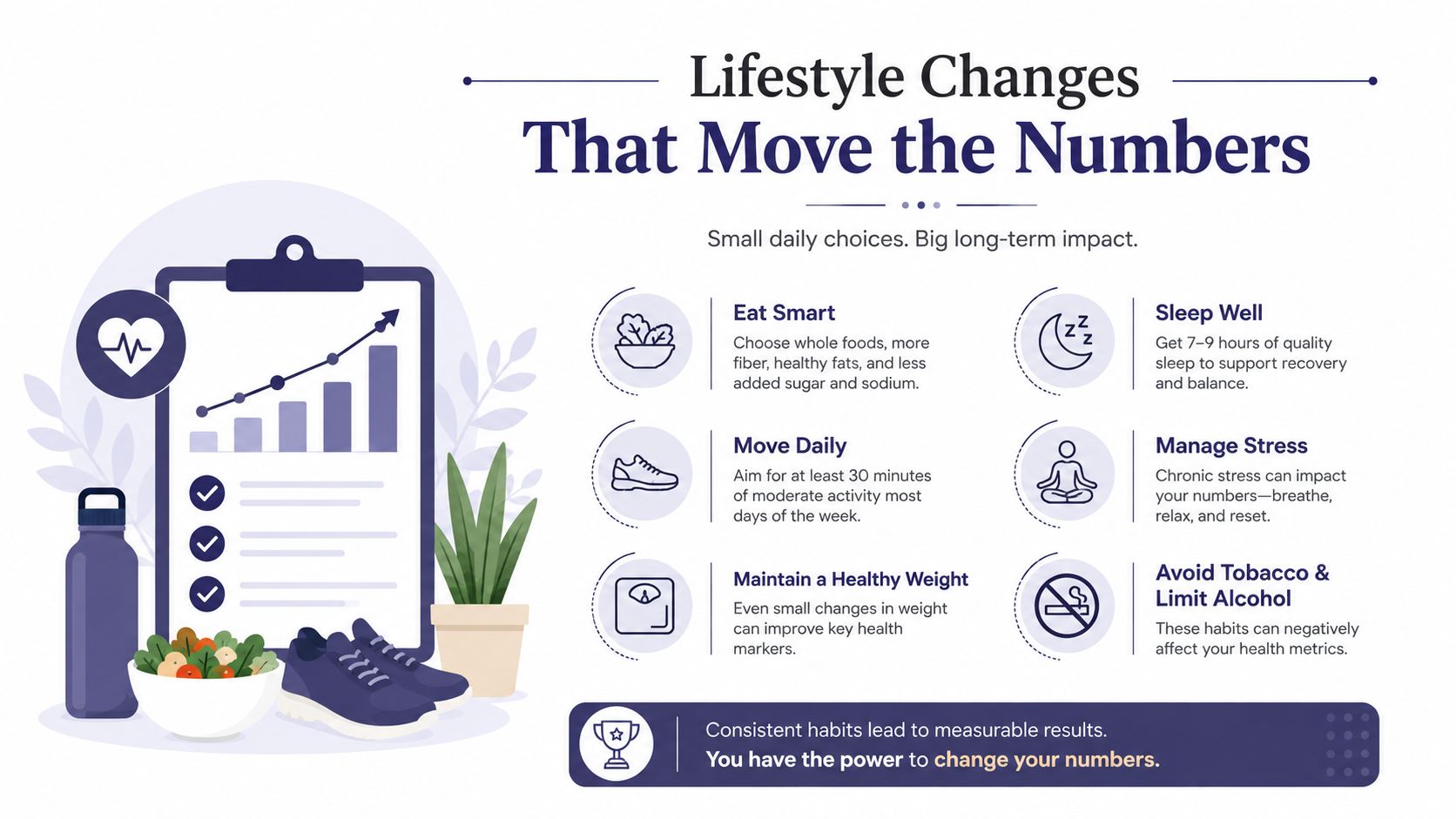
The first move is usually to address lifestyle, because diet, sunlight exposure, sleep, and movement all affect how you feel, even when the blood result is only mildly off. If the result or the clinical picture supports it, supplementation comes next. If the cause is still unclear, or the symptoms are red-flagged, specialist review follows.
In practice, a well-run consultation saves time. You leave with one of three answers, reassure, correct, or refer. If you want the next step to be more specific, it can help to find a nutrition plan that fits rather than guessing from a single number.
Lifestyle Changes That Move the Numbers
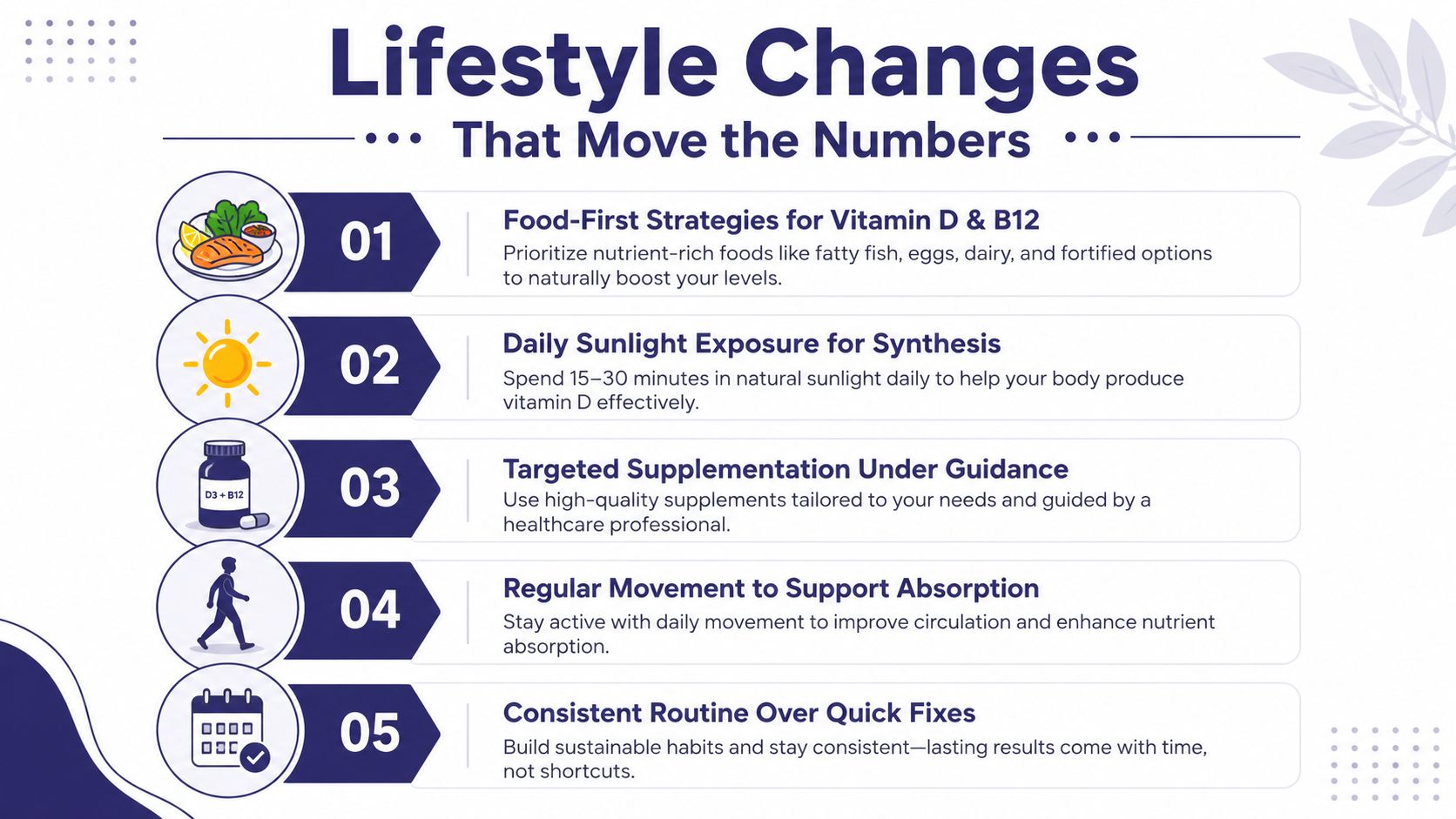
A vitamin result can guide treatment, but daily habits shape the underlying problem. In UK practice, that matters because autumn-to-spring sun is limited, and seasonal deficiency is common enough that clinicians see the pattern again and again. If you want a result to improve and stay improved, lifestyle has to do some of the work.
Food first, then targeted supplementation
For vitamin D, food alone usually isn't enough, but oily fish, eggs, and fortified spreads still matter. For B12, animal proteins are the most straightforward source, while fortified plant milks and nutritional yeast can help people who eat less meat or no meat at all. Folate comes back to leafy greens and legumes, and iron status improves when iron-rich foods are paired with vitamin C at the same meal.
That 25 nmol/L threshold is the point where UK guidance starts treating deficiency as a real risk rather than a vague possibility. I use it as a practical marker, not a lifestyle obsession. The aim is to get you above the risk zone and keep you there.
Sunlight, movement, sleep, and routine
In Bristol, sunlight exposure is part of the conversation for half the year. Safe, regular outdoor time helps, but it has to be realistic enough to stick, not idealised to the point of being useless. A lunchtime walk, time outdoors before work, or weekend daylight exposure can be more practical than waiting for the perfect exercise routine.
Movement also matters because low energy is not always a vitamin problem. Deconditioning, poor sleep, and stress load can all feel like deficiency. Regular exercise, consistent bedtimes, and a more stable eating pattern can improve how you feel before the blood results change.
Patients I see most often don't need a perfect plan. They need a repeatable one.
If you want a more personalised approach to diet rather than a one-size-fits-all supplement habit, find a nutrition plan that fits is a useful example of how personalised nutrition can complement medical testing rather than replace it.
The practical takeaway
Test when the symptoms or risk factors justify it. Treat the cause rather than the anxiety around the number. Use food, sun, sleep, and movement as the foundation, because supplementation works best when it sits on top of habits that support vitamin status.


 Members Consultation