


Individuals asking about the best protein foods are really asking the wrong question. They focus on the highest protein number on the label, then end up with a diet that's repetitive, hard to sustain, and often less healthy than it looks.
Protein does far more than support gym performance. It helps maintain muscle, supports recovery, contributes to hormone and enzyme production, and makes meals more filling, which matters if you're trying to manage appetite during a busy workweek. In UK guidance, adult protein needs are built around the Reference Nutrient Intake of 0.75 g per kilogram of body weight per day, according to the SACN protein position statement. That works out at about 52.5 g a day for a 70 kg adult, and about 45 g a day for a 60 kg adult, as summarised in this overview of high-protein foods and UK guidance.
At The Lagom Clinic, the more useful question is this: which protein foods fit your goal, your appetite, your schedule, and your long-term health? The answer isn't one food. It's a shortlist you can rotate without relying on ultra-processed snacks or supplements you don't need. If you're using appetite-suppressing medication and want to protect muscle while eating less, practical rehab-focused advice such as Peak Physical Therapy's GLP-1 advice can be a useful complement to medical guidance.
1. Lean Chicken Breast

Chicken breast stays on almost every sensible list of best protein foods for one reason. It works. It's lean, easy to portion, widely available, and simple to build into lunches that don't leave you sleepy at 3 pm.
For busy professionals, this is often the easiest “default protein”. A tray of roasted or grilled chicken can become a work lunch with quinoa and greens, a wrap with salad, or a quick evening stir-fry when you've got no time left to think about dinner.
Who it suits best
If your goal is weight management or preserving muscle while keeping meals straightforward, chicken is hard to beat. I often suggest it to patients who need structure rather than novelty, especially those who skip lunch and then overeat in the evening.
Athletes also use it well because it pairs easily with carbohydrate after training. It's far more practical to eat regularly than to chase perfection with powders and bars.
Practical rule: If your weekdays are chaotic, cook protein before you need it. Motivation is unreliable. A ready-to-eat container of chicken in the fridge is reliable.
A few points make it much better in real life:
- Cook evenly: Pound thicker parts so the breast cooks through without drying at the edges.
- Use flavour early: Marinades, yoghurt-based spice rubs, lemon, garlic, or smoked paprika make meal prep feel less repetitive.
- Build a real meal: Chicken alone isn't the answer. Add vegetables, olive oil, and a sensible carbohydrate source.
If you want ideas that are practical rather than faddy, these high-protein low-carb meals from The Lagom Clinic show the sort of combinations that tend to work best for professionals.
2. Eggs
What protein food still works when breakfast is rushed, lunch slips, and dinner ends up later than planned? Eggs usually do.
In clinic, I often suggest eggs to patients who need something reliable rather than elaborate. They cook quickly, travel well, and fit into meals at almost any time of day. They also suit people with lower morning appetite, because a couple of eggs is often easier to manage than a large breakfast.
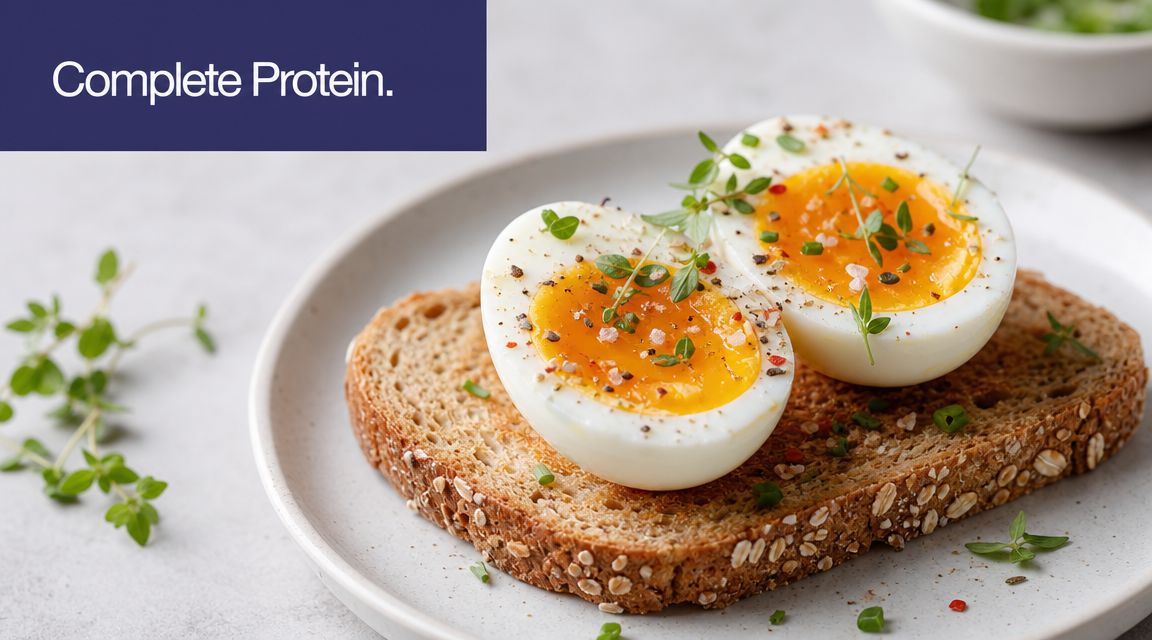
They earn their place for another reason. Eggs are one of the few protein foods that can move between roles without much effort. A boiled egg can sit in a work bag or office fridge. An omelette can become a late supper in ten minutes. Poached eggs on wholegrain toast can turn a poor breakfast habit into something more balanced and filling.
Whole eggs or egg whites
Both can be useful. The British Dietetic Association's guide to protein foods includes eggs as a practical protein source, and in everyday primary care, the better choice usually depends on the person in front of you.
For athletes, whole eggs are often the more realistic option because they bring protein plus a wider nutrient mix in one food. For weight loss, eggs work well when they replace a less filling breakfast, not when they are added on top of an already calorie-heavy meal. For busy professionals, convenience usually matters more than perfection, so boiled eggs, egg muffins, or a quick scramble are often the options that stick.
A few practical patterns tend to work best:
- For busy mornings: Keep boiled eggs ready in the fridge for a fast breakfast with fruit or toast.
- For appetite control: Pair eggs with vegetables and a high-fibre carbohydrate so the meal keeps you going.
- For higher protein needs: Add extra egg whites to an omelette if you want more protein without making the meal much larger.
The main trade-off is how eggs are served. Eggs themselves are rarely the problem. The issue is the full breakfast built around them. Regularly adding processed meats, fried sides, and oversized portions changes the health picture quickly.
Used well, eggs are one of the simplest ways to make a day of eating more stable. That matters for the patient who trains before work, the executive who misses lunch, and the person trying to stop the evening cycle of snacking because they have under-eaten all day.
3. Greek Yogurt
Need a protein option that takes less time than making coffee?
Greek yogurt is one of the most practical foods I recommend in clinic for exactly that reason. It suits patients who want better protein intake without another round of meal prep, and it fits real working days. Breakfast at a desk, a quick post-gym snack, or something to stop the 5 pm dip before a late dinner.
Plain Greek yogurt is usually the better buy. Sweetened pots often add enough sugar to shift it from a useful staple to something closer to a pudding. Add your own berries, chopped nuts, cinnamon, or seeds and you keep the flavour while keeping control of the ingredient list.
Best use for busy mornings
The USDA FoodData Central entry for Greek yogurt shows why it earns a place on this list. It provides a meaningful amount of protein in a small portion, so it works well for people who struggle with large breakfasts but still need something filling.
For busy professionals, that matters more than nutrition theory. A pot of Greek yogurt with fruit and nuts is quick, portable, and far more realistic than a breakfast plan that needs chopping, frying, or perfect timing. In practice, the best protein food is often the one you can eat consistently between the school run, commute, and first meeting.
It also works well for different goals. Athletes can add oats, banana, and nut butter to make it more substantial after training. Patients focused on weight loss often do better with Greek yogurt than a pastry or sugary cereal because it is more filling and easier to portion. For office workers who graze through the afternoon, it can steady appetite without making lunch feel heavy.
One more advantage is flexibility in cooking.
Greek yogurt can replace cream, mayonnaise, or sour cream in dips, dressings, and sauces, which lets you improve the protein content of a meal without creating a separate "healthy eating" routine. The trade-off is that not every product is equal. Some low-fat versions are excellent, while others rely on added sugar or starches to improve texture, so checking the label is still worth the effort.
4. Salmon and Fatty Fish
Need a protein option that does more than help you hit a daily target?
Salmon earns its place because it gives you a solid serving of protein and brings nutrients that support cardiovascular and brain health at the same time. In clinic, I often suggest it to patients whose meals are built almost entirely around chicken, shakes, and snack bars. That approach can work for protein intake, but it often leaves diet quality looking narrow and repetitive.

Where salmon shines
The USDA FoodData Central entry for Atlantic salmon shows why it works well as a main protein at lunch or dinner. A normal fillet gives a meaningful amount of protein without needing a large portion, which helps busy professionals build a satisfying meal around something realistic.
It is especially useful for a few groups:
- Busy professionals: Salmon feels substantial without the post-lunch heaviness some people get from larger meat-based meals.
- Active adults and gym-goers: It is a practical whole-food recovery option for those who do not want to rely on powders after every session.
- People focused on weight loss: A salmon meal with vegetables and potatoes, rice, or beans tends to be more filling than a light salad with too little protein.
- Patients trying to improve overall diet quality: Fatty fish helps move the conversation beyond macros and towards a pattern of eating that supports long-term health.
There is a trade-off. Salmon is more expensive than eggs, yogurt, or lentils, and fresh fillets are not always practical in the middle of a working week. That is why I often suggest using a mix of fresh, frozen, and tinned fish rather than treating salmon as an all-or-nothing “healthy” food.
Keep the preparation simple. Oven-bake a fillet with olive oil, lemon, and pepper. Add it to a grain bowl for lunch the next day. Or keep tinned salmon or mackerel in the cupboard for a quick meal with crackers, salad, or a microwaved potato. For many patients, that level of convenience is what turns good advice into something they will do.
5. Lentils and Legumes
Want a protein source that is inexpensive, practical, and helps the rest of your diet improve? Lentils and legumes are one of the first foods I raise in clinic, especially for patients who want better appetite control, more fibre, and fewer default takeaway meals.
According to the British Nutrition Foundation's guide to pulses, lentils contribute both protein and fibre, which is part of why they are so useful in real life. They do not match chicken or fish for protein density gram for gram, but that is not the whole story. For weight loss patients, the combination of protein, fibre, and volume often makes a meal more satisfying. For busy professionals, they are affordable, easy to batch-cook, and far less perishable than fresh meat or fish.
They suit a few groups particularly well:
- Weight loss patients: Lentil-based meals tend to be filling, which can make it easier to avoid grazing later in the day.
- Busy professionals: A pot of lentil soup, dhal, or bean chilli can cover several lunches with very little weekday effort.
- People reducing meat intake: Lentils offer a realistic middle ground for those who want a more plant-forward diet without trying to change everything at once.
- Patients focused on digestive health: Many adults eat far too little fibre. Pulses can help, provided intake is increased gradually.
There is a trade-off. Lentils and legumes are nutritious and budget-friendly, but some patients expect them to work like a chicken breast. They do not. If you have higher protein targets because you train hard, are trying to maintain muscle while losing weight, or feel better on a higher-protein intake, lentils often work best alongside another protein source such as Greek yogurt, eggs, tofu, or fish rather than as the only protein in the meal.
Preparation matters.
A few approaches usually work well:
- Start with red lentils: They cook quickly and are the easiest option for soups, curries, and simple weeknight meals.
- Build the meal properly: Add rice, wholegrains, tofu, dairy, or eggs if you need something more substantial.
- Increase intake gradually: Going from very little fibre to large bean-based meals every day often causes bloating.
- Use convenience wisely: Tinned lentils, beans, and mixed pulses are often the difference between good intentions and a meal that gets made.
In clinic, I often tell patients not to judge lentils by one oversized desk lunch that leaves them uncomfortable all afternoon. Start with sensible portions, use them consistently, and they become one of the most useful protein staples in a busy week.
6. Beef (Lean Cuts)
Lean beef still has a place, but it shouldn't dominate the list. That's the honest clinical answer. For some patients, especially those with high activity levels, reduced appetite, or iron concerns, lean beef can be a useful option. For others, it's better kept as one part of a varied rotation rather than the foundation of every lunch and dinner.
The point isn't that beef is “bad” or “good”. The point is context. If your diet is already low in fibre and high in saturated fat, adding more red meat won't fix that. If you eat it thoughtfully, in sensible portions, and alongside vegetables and whole-food carbohydrates, it can fit well.
Use it strategically
A lean beef stir-fry is often a better real-world choice than a large restaurant burger. It gives you control over the cut, the cooking method, and the rest of the plate.
Patients usually do best when they follow a few simple principles:
- Choose leaner cuts: Go for options such as sirloin or other visibly lean cuts.
- Keep it occasional: Use beef for variety, not as the only protein source you trust.
- Balance the meal: Add vegetables generously and don't let the meat crowd everything else out.
This is also where sustainability deserves an honest mention. Best protein foods aren't only about protein density. For many households, beans, pulses, tofu, eggs, and dairy can support health goals with a lower environmental impact and often at lower cost than frequent red meat meals.
7. Cottage Cheese
Could one of the most useful high-protein foods also be one of the least glamorous? Cottage cheese often gets overlooked, yet in clinic it is one of the more practical options for patients who need protein without much effort. It is chilled, ready to eat, and easy to build into a working day.
According to the USDA FoodData Central entry for cottage cheese, it provides a meaningful amount of protein in a modest serving. That makes it useful for busy professionals who skip lunch, for patients trying to manage hunger between meals, and for people who want a non-meat protein option that does not need cooking.
Best for appetite control and easy meal assembly
Cottage cheese suits weight-loss plans because it is filling and simple. The patients who do well with it are usually the ones who need less friction, not more variety. A bowl with berries after dinner, or cottage cheese on toast with sliced tomato at lunch, is often more sustainable than buying “high-protein” snacks that cost more and satisfy less.
It also works well for recovery when appetite is poor after exercise. I often suggest pairing it with fruit, oats, or a few nuts so the snack does more than provide protein alone. For more realistic post-exercise meal ideas, see these best foods for muscle recovery.
The main drawback is taste fatigue. Plain cottage cheese can feel repetitive after a few days, so it helps to use it with purpose. Add pepper and cucumber for a savoury lunch, or cinnamon and fruit for a quick evening option. If a food is nutritionally good but never gets eaten, it is not the best protein food for that patient.
8. Whey Protein Powder
Whey protein powder is useful, but it's often overused. That's the fairest way to frame it. It can help when time is tight, appetite is low, or training volume is high, but it shouldn't replace meals that ought to contain proper food.
The protein ingredients category is now mainstream enough that patients are choosing between dairy, soy, pea, and blended options every day. A market analysis reports the global protein ingredients market at USD 61.0 billion in 2023, projected to reach USD 85.6 billion by 2028 with a 7.0% CAGR. That growth explains why supermarket shelves are crowded with products labelled “high protein”, but labelling doesn't tell you whether something is a good dietary choice.
When powder earns its place
Whey is most helpful when convenience is the main obstacle. If you finish training late, commute immediately afterwards, or miss breakfast repeatedly, a shake can be better than nothing.
Good uses include:
- Post-training convenience: A shake is practical when a meal isn't immediately available.
- Breakfast support: Add it to yogurt or porridge if mornings are rushed.
- Consistency tool: It helps people hit intake targets on hard days, not every day.
For recovery-focused meal ideas that go beyond shaking powder into water, these best foods for muscle recovery from The Lagom Clinic are a better place to start.
Animal proteins are still considered the highest-quality food sources, but soy is the strongest plant alternative in technical terms because it's a complete protein. That matters if you're choosing between powders as well as whole foods.
9. Tofu and Tempeh
Want a plant-based protein that can hold its own in a real meal, not just on a wellness checklist? Tofu and tempeh are two of the best options I suggest in clinic because they are practical, protein-rich, and far easier to build into a working week than many patients expect.
Soy stands out among plant proteins because it provides all essential amino acids. Tofu is the softer, more adaptable option. Tempeh is firmer, nuttier, and usually more satisfying for people who want a protein with more bite. The British Dietetic Association includes soya beans, tofu and other soya products among useful plant protein choices in a balanced diet.
Best for vegetarians, flexitarians, and busy professionals
For vegetarian patients, tofu and tempeh offer a reliable way to raise protein intake without depending on ultra-processed meat substitutes at every meal. For busy professionals, they solve a different problem. They cook quickly, keep well in the fridge, and absorb flavour properly, so they work in lunches you will want to eat the next day.
They are also useful for weight management. A tofu or tempeh meal with vegetables, wholegrains, and a flavourful sauce is usually more filling than a low-protein salad that leaves you hunting for snacks an hour later.
Making tofu work in normal life
Preparation matters. Poorly cooked tofu is bland and forgettable, which is why many people dismiss it too early.
A few practical pointers I give patients:
- Choose the right type: Firm or extra-firm tofu works best for stir-fries, trays, and pan-frying.
- Press it if you can: Removing excess water helps it brown and improves texture.
- Marinate with purpose: Soy sauce, garlic, ginger, chilli, miso, or harissa give it direction.
- Use tempeh where texture matters: It works well in grain bowls, wraps, and quick savoury lunches.
- Build a full meal around it: Add vegetables, fibre, and a carbohydrate source rather than treating it as a stand-alone health food.
For athletes eating plant-based diets, tofu and tempeh can contribute meaningfully to daily intake, but portion size matters more than people think. For patients trying to lose weight, they are often a better choice than beige vegetarian convenience food. For households trying to eat less meat without making dinner complicated, they are one of the simplest swaps to start with.
The trade-off is straightforward. They need some seasoning and a bit of technique. Once that is in place, they are among the most useful protein staples to keep at home.
10. Chickpeas and Pulses
Need a protein option that is affordable, quick, and realistic for a busy week? Chickpeas and other pulses are often one of the easiest answers I give in clinic.
They do not match chicken, fish, or whey for protein density, but that is not their main strength. Their value is that they are inexpensive, filling, high in fibre, and easy to keep in the cupboard or fridge. For busy professionals, that usually means fewer missed lunches and fewer late-afternoon snack raids. For patients focused on weight loss, they help meals feel substantial. For households trying to eat less meat, they are one of the simplest foods to use more often.
The British Nutrition Foundation lists beans, pulses, fish, eggs, meat and other proteins as part of a healthy, balanced diet, and NHS guidance places beans and pulses within the protein food group alongside fruit, vegetables, and other staple foods: NHS Eatwell Guide and British Nutrition Foundation guidance on pulses and beans. That practical mix matters more than chasing a single “best” food.
Best for cost-conscious healthy eating
Canned chickpeas are usually the best starting point. Rinse them and use them.
Add them to a salad with feta and olive oil. Stir them into a tomato-based pasta sauce. Roast them with paprika for a higher-fibre snack. Fold them into soup to make it more filling. If someone has ten minutes between meetings, these options are far more realistic than cooking dried pulses from scratch.
There is a trade-off. Pulses can cause bloating in some people, especially if intake rises too quickly. Start with modest portions, rinse canned beans well, and increase gradually if your gut is not used to them.
The best protein food is often the one you will still be eating three months from now.
For athletes, pulses work best as part of a broader protein plan rather than the whole answer. For weight loss, they are useful because fibre and protein together tend to improve fullness. For busy professionals, they are one of the lowest-effort ways to build a better lunch without spending much or overthinking it.
Top 10 Protein Foods Comparison
| Item | Implementation complexity | Resource requirements | Expected outcomes | Ideal use cases | Key advantages |
|---|---|---|---|---|---|
| Lean Chicken Breast | Moderate, simple cooking but risk of dryness; suitable for batch prep | Low cost, widely available, basic cookware | High protein, muscle maintenance, supports weight management | Meal prep, athletes, busy professionals | High protein-to-calorie ratio; versatile and affordable |
| Eggs (Whole & Egg Whites) | Very low, quick cooking (boil, poach, scramble) | Very low cost, minimal equipment, widely available | Complete protein, choline for cognition, good satiety | Quick breakfasts, post-workout, budget protein | Complete amino acid profile; fast and inexpensive |
| Greek Yogurt | Very low, ready-to-eat; minimal prep | Moderate cost, refrigeration; choose plain unsweetened | High protein, probiotics for gut health, bone support | Grab-and-go breakfasts, gut health focus, snacks | High protein density and probiotics; versatile base |
| Salmon & Fatty Fish | Moderate, gentle cooking, temperature-sensitive | Higher cost, sourcing/sustainability considerations | Protein plus EPA/DHA for heart, brain, and inflammation control | Cardiovascular-focused diets, recovery, anti-inflammatory protocols | Rich source of omega‑3s and fat‑soluble nutrients |
| Lentils & Legumes | Moderate to high, longer cook times unless canned; pressure-cooker friendly | Very low cost, pantry staple, minimal equipment | Plant protein with high fibre, stable blood glucose | Sustainable meal prep, weight management, budget nutrition | Affordable, fibre-rich, environmentally sustainable |
| Beef (Lean Cuts) | Moderate, requires correct cooking temperature for tenderness | Higher cost, quality sourcing advisable | Protein with bioavailable iron, zinc, B12; performance support | Athletes needing micronutrients, strength-focused meals | Superior micronutrient density and natural creatine |
| Cottage Cheese | Very low, ready-to-eat | Moderate cost, refrigeration; watch sodium on labels | Casein-rich slow-release protein, sustained satiety, overnight recovery | Before-bed snack, weight management, office snack | Slow-digesting casein for overnight muscle support; convenient |
| Whey Protein Powder | Very low, mix and consume | Purchase supplement, shelf-stable; variable cost and quality | Rapid amino acid delivery, strong support for post-workout MPS | Post-training shakes, time-pressed professionals, travel | Highly convenient, fast absorption, high leucine content |
| Tofu & Tempeh | Low–moderate, press/marinate and cook for best texture | Moderate cost, refrigeration; plant-based sourcing | Complete plant protein (esp. tempeh), sustainable nutrients, isoflavones | Vegan/plant-based diets, sustainable meal planning | Complete plant protein, environmentally friendly; tempeh fermented benefits |
| Chickpeas & Pulses | Moderate to high, soak and cook unless canned; simple processing | Very low cost, pantry staple, canned options for convenience | Plant protein with very high fibre, satiety, digestive benefits | Hummus/snacks, family meals, budget plant-based protein | High fibre and affordability; versatile culinary uses |
Your Personalised Protein Strategy
A good high-protein diet doesn't start with supplements, and it doesn't start with obsession. It starts with a realistic look at your day. When do you get hungry? Which meals do you skip? What do you reach for when work overruns? The best protein foods are the ones that solve those real-life problems while still supporting your wider health.
In practice, a radically different diet is often not necessary. Instead, better structure is needed. That usually means putting a meaningful protein source into breakfast, avoiding lunches built entirely around refined carbohydrates, and keeping one or two reliable fallback foods at home or at work. Eggs, Greek yogurt, chicken, cottage cheese, lentils, tofu, salmon, and chickpeas all do that job in different ways.
It also helps to stop thinking in extremes. You don't need to choose between meat and plants, or between whole food and convenience. A strong routine often mixes both. You might have eggs in the morning, Greek yogurt as an afternoon option, salmon one evening, lentil dhal another, and chicken or tofu for quick lunches. That kind of rotation is usually better for nutrition, taste, and long-term consistency than eating the same “perfect” protein every day.
Different goals need different emphasis. If you're trying to lose weight, protein works best when it improves satiety and stops the cycle of grazing. If you're training, consistency across the week matters more than a single post-gym shake. If you're older, busy, or recovering from illness, smaller but more deliberate protein choices can be more useful than one large protein-heavy dinner. The same applies if appetite is reduced by stress, shift work, or medication.
There's also value in remembering that not every protein-labelled product deserves a place in your diet. Many are expensive, heavily processed, and less satisfying than ordinary food. A supermarket yogurt, tin of salmon, boiled eggs, or tub of cottage cheese will often serve you better than a fashionable snack bar. If you are curious about where bars fit, these Rip Van protein bar insights are useful as part of the broader conversation, but they shouldn't replace the basics.
At The Lagom Clinic, nutrition advice works best when it matches your health profile, schedule, and goals. A corporate executive with irregular meals, a parent juggling family dinners, and an athlete protecting recovery all need slightly different strategies. The aim isn't a rigid meal plan. It's a way of eating that supports energy, muscle health, weight management, and long-term prevention without becoming another source of stress.
If you want help turning general advice into a plan that fits your body, lifestyle, and medical history, book a lifestyle and wellness consultation with The Lagom Clinic. We help busy professionals, families, and active adults build practical nutrition strategies they can follow, with personalised support grounded in private GP care.


 Members Consultation