


When it comes to your health, being proactive is everything. While private cancer screening offers a powerful tool for early detection, it's most effective when combined with healthy lifestyle choices. This guide explains how screening works and provides scientifically-backed advice on lifestyle changes you can make to lower your risk, giving you control and invaluable peace of mind about your long-term wellbeing.
Understanding Private Cancer Screening
Think of the NHS screening programmes as a wide-angle lens. They’re designed to capture the big picture, protecting the entire population by focusing on the most common cancers within specific age groups. It's a vital and effective public health strategy.
Private cancer screening, on the other hand, is like switching to a zoom lens. It lets you zero in on your unique health profile, offering a more detailed and personalised view.
This is a service you choose to pay for, either out-of-pocket or sometimes through a private medical insurance plan. Going private opens the door to a wider array of tests, often letting you have them earlier or more frequently than public health initiatives might recommend.
Key Differences from NHS Programmes
The main things that set private screening apart from the NHS are choice, timing, and eligibility. The NHS provides excellent, evidence-based programmes for breast, bowel, and cervical cancer, but these are generally offered at set times to specific age groups.
With private screening, you have the freedom to:
- Book tests when it suits you, often getting an appointment much faster.
- Get screened outside the standard NHS age brackets, a key benefit if you have a family history of cancer or other specific concerns.
- Look into a broader range of tests, such as advanced imaging or genetic assessments that aren't typically offered on a routine basis.
Ultimately, this approach puts you in control. If, for example, you have a strong family history of a certain cancer, you might decide it's wise to start screening much earlier than the national guidelines suggest.
It's worth noting the significant role private healthcare plays in cancer care throughout the UK. Private providers deliver around 350,000 episodes of care for cancer patients every year, from diagnostic scans to full treatment. You can find out more about the private sector's contribution to ancer care.
Why People Choose a Private Option
There are many reasons someone might go down the private route. For a lot of people, it's about gaining a clearer picture of their personal risk and taking decisive steps to manage it. This sense of empowerment can be a real driving force.
A family history of cancer is a common motivator, as are lifestyle factors that might increase risk. Sometimes, it's simply the desire for a comprehensive health MOT that offers reassurance. By providing personalised assessments and direct access to specialists, private clinics offer a tailored approach to managing your health for the long run.
Why Early Detection Is Gaining Urgency
The way we think about our health is changing. We’re moving away from simply reacting to illness and towards a more proactive mindset—wanting to understand our bodies and take control of our long-term wellbeing. This fundamental shift is what’s driving the growing interest in private cancer screening.
It’s not about scaremongering. It’s about being realistic and taking informed action. When cancer is caught at its earliest stage, treatment is often simpler, less invasive, and far more likely to be successful. That simple fact is the whole reason early detection is so important.
Waiting for symptoms to show up can mean that the best window for treatment has already closed. Proactive screening is designed to spot potential problems long before you'd ever notice them, giving you and your doctors a critical head start.
The Shifting Demographics of Cancer
Recent data has highlighted a particularly compelling reason for this urgency, especially for younger adults. While national screening programmes are invaluable, their age-based criteria can create a blind spot for people who don't fit the typical demographic but are still at risk.
The numbers tell a stark story. Projections from Cancer Research UK suggest that by 2040, the UK will see over 500,000 new cancer diagnoses each year. What's really caught our attention is that cancer incidence rates among those aged 20-49 have jumped by 23% since the early 1990s. This isn't just a statistic; it's a clear signal that we need to think differently about who is at risk. You can learn more about the evolving trends in UK cancer diagnoses.
This trend challenges the old-fashioned view of cancer as a disease that only affects older people. It shows why a "one-size-fits-all" approach to screening isn't always enough, pushing more of us to look into private screening options that can be tailored to our individual lives.
This infographic shows how these factors come together to increase the demand for early detection.
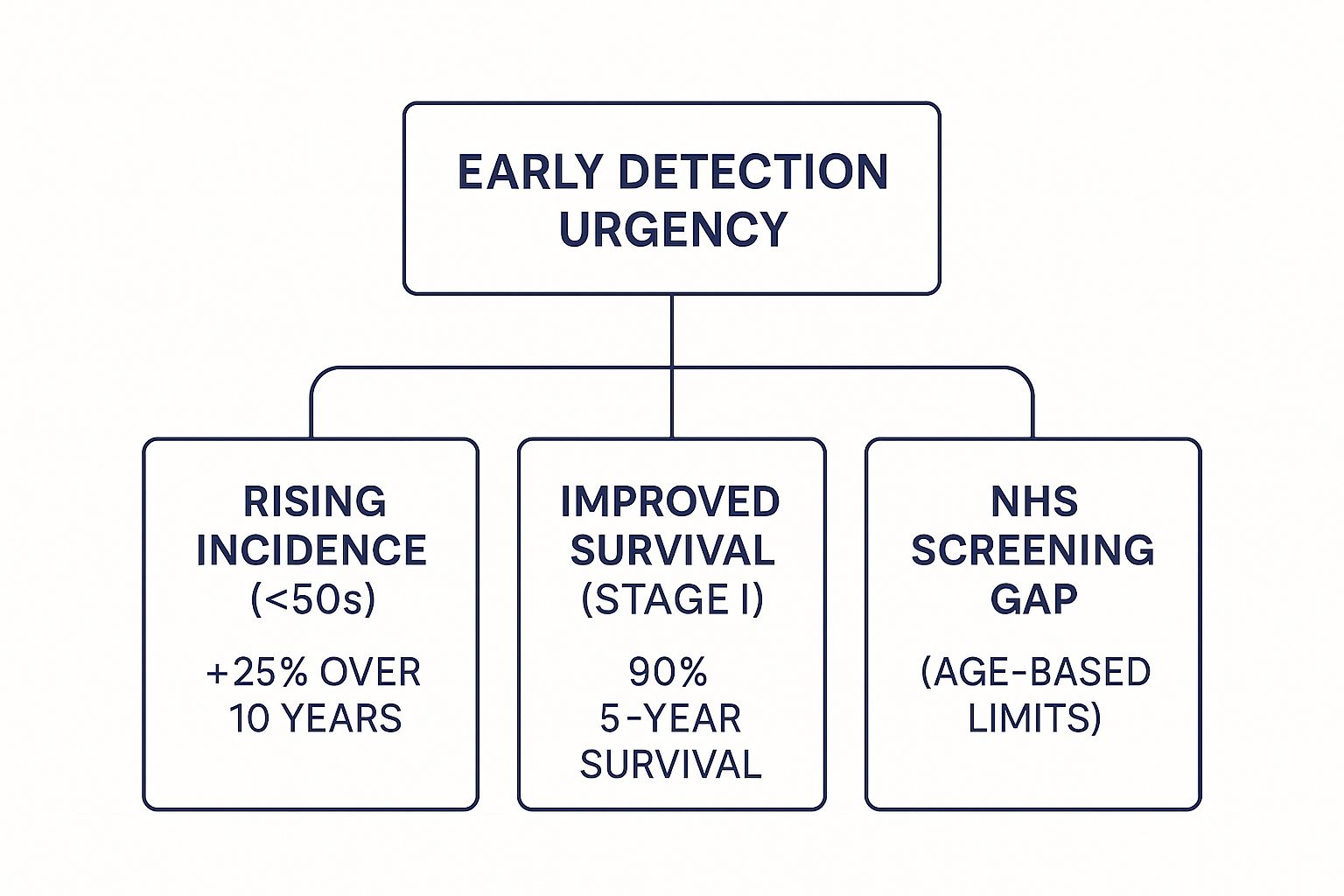
As you can see, the combination of rising cancer rates in younger people and the proven link between early detection and better outcomes makes a powerful case for being proactive about your health.
Empowering Yourself with Knowledge
Ultimately, the move towards private screening is all about empowerment. It’s about taking the reins of your own health journey by arming yourself with the best information you can get.
Understanding your personal risk factors—whether from family history, lifestyle choices, or even your genetics—is the first step. A private screening can give you the clarity you need to move forward, whether that’s the reassurance of a clean bill of health or a clear, actionable plan. Our guide on the importance of health screenings dives deeper into this proactive approach.
The link between early diagnosis and survival is undeniable. For many common cancers, the five-year survival rate is over 90% when the disease is caught at Stage 1. This figure drops dramatically in later stages, making early intervention the single most powerful factor in a positive outcome.
By taking a proactive stance, you can turn vague anxiety about the unknown into a structured plan for your health. This is where private screening really shows its value—it offers not just advanced tests, but also invaluable peace of mind.
Exploring Your Private Screening Options
When you choose private cancer screening, you're not just getting a test; you're getting access to a wider range of options that can be matched to your specific health concerns and history. It's quite different from the one-size-fits-all public health approach. Think of it as having the freedom to choose exactly the right tool for the job—some are highly specialised, while others provide a much broader perspective.
At first glance, the variety can seem a bit overwhelming. But most tests fall into a few distinct categories. Once you understand what each one does and who it's designed for, you’ll be in a much better position to decide what feels right for you.
Targeted Single-Cancer Screenings
These are the tests most people are familiar with. They’re designed to look for one specific type of cancer and are often recommended based on your age, gender, or particular risk factors. They act like a spotlight, shining a bright light on a single area of concern with impressive accuracy.
A few common examples include:
- Mammograms for Breast Cancer: A mammogram uses specialised X-rays to create a detailed image of the breast tissue. It remains the best tool we have for spotting breast cancer early, sometimes years before a lump can even be felt.
- PSA Tests for Prostate Cancer: The Prostate-Specific Antigen (PSA) test is a straightforward blood test that checks the level of a protein made by the prostate gland. Raised levels can be an early warning sign of prostate cancer.
- Colonoscopies for Bowel Cancer: In this procedure, a doctor uses a thin, flexible camera to get a clear view of the entire colon. It’s incredibly effective because it can find and remove pre-cancerous growths, known as polyps, stopping them before they ever have a chance to turn into cancer.
The power of these tests lies in their specificity. If you have a strong family history of breast cancer, for example, a private mammogram gives you direct and highly relevant information.
While the NHS screening programmes are vital, they don't always reach everyone. In the UK, about 70.05% of those eligible take part in the NHS breast screening programme, which is below the 80% target. Private screening can offer a valuable alternative, sometimes providing access to newer technologies like AI-assisted mammogram analysis to improve detection. You can find more data on this in a report on the state of breast cancer care and screening in the UK.
Comprehensive and Multi-Cancer Screening
Moving beyond single-cancer tests, the private health sector also offers more sweeping checks that can look for multiple problems at the same time. These are less like a spotlight and more like floodlights, designed to give you a comprehensive picture of your overall health.
One of the most talked-about options is the full-body MRI scan. Using powerful magnets and radio waves, an MRI creates incredibly detailed images of your organs and tissues from head to toe. In one non-invasive session, it can spot abnormalities across the body, making it a popular choice for a thorough health MOT.
Another game-changing option on the horizon is the Multi-Cancer Early Detection (MCED) test. These are advanced blood tests that can screen for signs of dozens of different cancers from a single sample, often long before any symptoms emerge. They work by detecting tiny fragments of cancer DNA circulating in your bloodstream. We take a closer look at these and other types in our article on private blood tests available in the UK.
To help clarify these different approaches, here’s a quick comparison of some common screening methods you might encounter.
Comparison of Common Private Cancer Screening Methods
| Screening Test | Primary Target Cancer(s) | Procedure Type | Ideal Candidate Profile |
|---|---|---|---|
| Full-Body MRI | Various solid tumours (e.g., brain, liver, kidney) | Non-invasive imaging scan | Individuals seeking a comprehensive, head-to-toe health assessment without specific symptoms. |
| Mammogram | Breast Cancer | Specialised X-ray | Women, particularly over 40 or those with a family history or other risk factors. |
| Colonoscopy | Bowel (Colorectal) Cancer | Invasive endoscopic procedure | Adults over 45, or younger individuals with a strong family history or symptoms like bowel changes. |
| MCED Blood Test | 50+ types of cancer | Simple blood draw | Proactive individuals looking for the broadest possible early detection screen, especially with no specific risk factors. |
| Genetic Test | Cancers with hereditary links (e.g., BRCA for breast/ovarian) | Blood or saliva sample | People with a significant family history of a specific cancer, suggesting a potential genetic link. |
This table shows there isn't one "best" test—the right choice really depends on your personal health profile and what you hope to achieve.
Genetic Testing for Hereditary Risk
Sometimes, the most important clues about your cancer risk aren't in a scan, but in your DNA. Genetic tests analyse your genes for specific inherited mutations, like BRCA1 and BRCA2, which are known to dramatically increase the risk of certain cancers, including breast and ovarian cancer.
This type of screening isn’t for just anyone. It’s generally best for people who have a strong pattern of cancer in their family, which suggests there might be a hereditary element at play.
Finding out you have a genetic predisposition doesn't mean you will definitely get cancer. What it does is give you invaluable knowledge. Armed with this information, you and your doctor can build a truly personalised screening strategy, perhaps starting checks much earlier or having them more often than standard guidelines recommend. It shifts your healthcare from being reactive to being genuinely preventative.
Your Private Screening Journey, Step by Step
Deciding to go for private cancer screening is a significant decision, and it’s completely normal to feel a little apprehensive. The good news is that the process is designed to be supportive and straightforward, putting you at the centre of every decision. Knowing what happens at each stage can really help demystify the experience.
It’s less of a clinical procedure and more of a collaborative health journey. It starts with a simple conversation and finishes with a clear path forward, whatever the findings. This structured approach means you’re always informed and never left in the dark.
The Initial Consultation and Risk Assessment
Your first step isn’t a scan or a blood test, but a thorough chat with an experienced clinician. This initial consultation is probably the most crucial part of the whole process, as it’s where everything is personalised to you.
The aim is to build a complete picture of your health by looking at several key areas:
- Family history: Have certain cancers appeared in your family tree?
- Lifestyle choices: This covers everything from your diet and exercise routine to whether you smoke or drink.
- Personal medical history: Any past health conditions or symptoms you're currently experiencing.
- Age and gender: These are fundamental risk factors for many types of cancer.
This isn’t just a tick-box exercise. It's an in-depth risk assessment that allows the clinician to recommend a screening programme that makes sense for you. It’s all about making sure you get the right tests, for the right reasons.
Preparing for Your Screening Tests
After you’ve settled on a plan with your clinician, the next stage is getting ready for the tests. The preparation really depends on which screenings you’ll be having.
For example, some blood tests require you to fast for a set number of hours to get a clean reading. For imaging like a mammogram or MRI scan, you might be asked not to use certain lotions or deodorants on the day.
A good private clinic will always prioritise making this stage as straightforward as possible. You’ll get clear, easy-to-understand instructions well ahead of your appointment, so you’ll feel confident and know exactly what to do.
Following these simple guidelines is a small but vital part of ensuring your results are as accurate as they can possibly be.
Receiving Your Results and Follow-Up Plan
The wait for results can be tough, which is why private providers focus on communicating clearly and quickly. You’ll be given a clear timeline for when to expect your results, which are usually shared during a dedicated follow-up appointment.
This consultation is a chance for the clinician to walk you through the findings without any rush, answering any questions you have. If everything comes back clear, it’s an incredible source of peace of mind.
However, if a test does flag something unusual, a quality provider will have an immediate action plan ready. This is where the real value lies. They’ll explain the result, discuss what the next diagnostic steps are, and arrange a swift referral to the right specialist. You won't be left with unanswered questions—you'll leave with a clear, concrete plan, whether you choose to continue privately or go back to your NHS GP.
How to Choose a Reputable Screening Provider
Deciding where to get a private cancer screening is a big step. With more and more clinics popping up, it's vital to know what to look for so you can be sure you're in safe hands. Choosing the right provider isn't just about the tests on offer; it’s about finding a clinical team you can trust to look after your health and wellbeing.
Making an informed choice means you can feel confident in the care you'll receive. A good provider is transparent, clinically sound, and puts you first—from the initial chat all the way through to any follow-up care. Here’s a practical checklist to help you weigh up your options.
Verify Regulatory Approval and Clinical Expertise
First things first: check their credentials. In the UK, every independent healthcare service must be registered with and inspected by the Care Quality Commission (CQC). The CQC is the independent regulator for health and social care in England, making sure services are safe, effective, and properly managed.
It’s easy to look up a clinic's rating on the CQC website. You'll want to see a rating of ‘Good’ or ‘Outstanding’, as this is a solid stamp of approval.
Beyond the CQC rating, dig a little deeper into the team's expertise. You should be looking for:
- Qualified Clinicians: Screenings should always be led by experienced doctors, specialist nurses, or consultants. Don't be shy about checking their qualifications and registrations (for example, with the General Medical Council).
- Specialist Radiologists: If you’re having an MRI or mammogram, it's crucial that the scans are read by a consultant radiologist who specialises in that specific area. This isn't a job for a generalist.
Assess Technology and Diagnostic Pathways
The quality of the equipment used for your screening directly affects how accurate your results will be. A clinic worth its salt will invest in modern, high-quality diagnostic technology. Ask about the scanners they use—for instance, whether their MRI is a 3T or 1.5T model, as this can make a real difference to the clarity of the images.
Just as important is what happens after the test. A responsible provider will have a clear, well-trodden path for any necessary follow-up care.
A major red flag is any clinic offering scans without a concrete plan for explaining the results and managing any potential findings. A professional service will always include a follow-up consultation and arrange a specialist referral if needed.
Before you commit, make sure you ask these questions:
- Who will be interpreting my scan results?
- How and when will I get my results?
- If you find something abnormal, what happens next?
- Do you have partnerships with specialists for urgent referrals?
Evaluate Transparency and Patient Support
Finally, a reputable provider is always upfront about costs and what the process involves. There should be no hidden fees. The price you're quoted should clearly break down everything it covers, from the tests and consultations to the final report. Be wary of any provider who is vague about pricing or tries to push you into expensive packages.
From the moment you first get in touch, the communication should feel professional, supportive, and clear. The team should be happy to answer all your questions without resorting to confusing jargon. A clinic that genuinely cares will make sure you feel informed and comfortable every step of the way.
Lifestyle Choices: Your First Line of Defence Against Cancer
While state-of-the-art private cancer screening gives you a powerful, detailed look at your health at a specific moment, it's your daily habits that truly build the foundation for long-term prevention. Thinking proactively about your lifestyle isn’t just about lowering risk; it's about taking real, tangible control of your wellbeing, day in and day out.
Think of it this way: a screening is like your car's annual MOT, while your lifestyle is the day-to-day driving and maintenance that keeps the engine in good shape. Solid, science-backed habits can genuinely lower your risk for many cancers, creating a powerful partnership with regular check-ups to safeguard your health.
Getting the Basics Right
A cancer-aware lifestyle really begins with what’s on your plate. The food you eat can either fuel inflammation—a known accomplice in cancer development—or help to calm it. A diet packed with colourful fruits and vegetables, along with plenty of whole grains, floods your body with antioxidants and other compounds that act as cellular bodyguards, protecting them from damage.
It's well worth exploring the benefits of a plant-based diet, as this approach naturally boosts your fibre intake while cutting down on processed meats, which have been clearly linked to a higher risk of cancers like bowel cancer.
Regular movement is the other non-negotiable. You don’t have to train for a marathon—it’s the consistency that counts. Just aiming for at least 150 minutes of moderate activity a week, like a brisk walk, a bike ride, or a swim, can make a huge impact.
Exercise is crucial for maintaining a healthy weight. This matters because excess body fat can produce hormones that actually encourage cancer cells to grow. It also helps keep your insulin levels stable and bolsters your immune system—your body's built-in defence force.
Key Lifestyle Tweaks for a Healthier Future
Beyond the big two of diet and exercise, a few other habits are absolutely vital for tipping the scales in your favour. Making conscious choices in these areas can have a profound effect over the long run.
- Be Sun Smart: Skin cancer is incredibly common in the UK, but it's also one of the most preventable. Make a habit of using a broad-spectrum, high-SPF sunscreen, covering up with clothing, and staying in the shade when the sun is at its strongest.
- Cut Back on Alcohol and Quit Tobacco: The connection between smoking and cancer is rock-solid; it's a cause of at least 15 different types. If you smoke, stopping is the single most powerful step you can take for your health. Cutting down on alcohol is also key, as it’s linked to several cancers, including breast, liver, and bowel.
- Make Sleep a Priority: The science is still evolving, but we know that chronic poor sleep can weaken your immune function and disrupt hormones, potentially increasing cancer risk. Aiming for a solid 7-9 hours of quality sleep each night is fundamental for your body’s resilience.
Your Questions Answered
Stepping into the world of private health checks can naturally bring up a lot of questions. To help you get a clearer picture, I've answered some of the queries we hear most often about private cancer screening.
Is private screening covered by insurance?
This is probably the most common question we get, and the truth is, it really depends on your specific policy. Most insurance plans are set up to cover diagnostic tests – that is, tests you need because you have symptoms and a GP has referred you.
Screening when you feel perfectly healthy, however, often falls outside of standard cover. It's always best to check your policy documents or, even better, give your provider a call to see exactly where you stand. Some of the more comprehensive corporate or personal health plans do include an allowance for preventative health checks, so it's definitely worth checking.
What happens if the screening finds something?
First, don't panic. A good private clinic will have a clear and supportive plan in place. A clinician will sit down with you to go through the results in detail, explaining what they've found and what the next logical steps are.
This might mean more specific diagnostic tests, like a biopsy or a different type of scan, to get a better look. From there, you're in control. You can choose to continue your care privately, often for speed, or your provider will prepare a detailed referral letter for you to take to your NHS GP. This ensures a smooth transition into the NHS for further investigation and treatment if that's what you decide.
How often should I get screened?
There’s no one-size-fits-all answer here; the right frequency is completely down to you and your personal circumstances. The best schedule depends on a handful of factors that build your individual risk profile.
We always look at a few key things:
- Your age and gender, as these are major risk factors for many cancers.
- Your family's medical history, particularly if certain cancers run in the family.
- Lifestyle factors like your diet, how active you are, and whether you smoke.
- The specific test itself, as some are advised annually, while others are needed less often.
This isn't a decision you should make alone. During a proper consultation, a clinician will carry out a full risk assessment and work with you to recommend a screening schedule that makes sense for you.
At The Lagom Clinic, our focus is on creating a proactive health plan that's built around you. If you have more questions or want to chat about your options, we'd be happy to help. You can book a consultation with our experienced clinical team to learn more about our approach at https://www.thelagom.co.uk.
Book a cancer screening
TruCheck early cancer screening at The Lagom Clinic can detect up to 70 types of solid tumours from a simple blood test.

 Members Consultation