


Shoulder pain often starts in an ordinary moment. You reach into the back seat for a bag, lift a suitcase into the boot, throw a ball, or wake in the night because rolling onto one side suddenly hurts. A few days later, your arm still feels weak. Reaching up to a shelf is awkward. Putting on a coat becomes a small battle.
If that sounds familiar, you’re not overreacting. Shoulder pain can be stubborn, tiring, and surprisingly disruptive. It affects sleep, work, exercise, driving, and even simple things like washing your hair or fastening a bra. Many people keep hoping it will settle on its own, only to find that the pain lingers or the weakness becomes more obvious.
A common reason is a problem with the rotator cuff, the group of tendons that helps lift and steady your shoulder. Rotator cuff problems are increasingly common. Repair rates showed annual growth of 1.2%, and incidence rises sharply with age, from 8 repairs per 100,000 people aged 18 to 34 to 423 per 100,000 in the 50 to 64 age group, according to epidemiological data on rotator cuff repair rates. That matters because many people affected are still working, exercising, caring for family, and trying to stay active.
Introduction Navigating Your Shoulder Pain Journey
Some people develop symptoms after one clear injury. They fall onto an outstretched hand, catch a heavy object awkwardly, or feel a sudden sharp pain while lifting. Others notice a slower pattern. The shoulder starts as an ache, then sleep becomes difficult, then overhead tasks become unreliable.
Both patterns can lead to the same question. Do I need surgery, or can this be managed without it?
That question is where people often feel lost. They may hear terms like tendinopathy, impingement, partial tear, full-thickness tear, anchor repair, and rehab protocol, without anyone translating what those words mean in real life. The result is anxiety, delay, and sometimes poor decisions made out of frustration rather than understanding.
Practical rule: A painful shoulder isn’t just a pain problem. It’s often a sleep problem, a work problem, and a confidence problem too.
Rotator cuff repair can be very effective for the right person, but surgery is only one part of the story. Good decisions depend on the tear itself, your age, your job, your sport, your goals, your general health, and how well you can commit to rehabilitation. Lifestyle factors matter more than many patients realise.
This guide takes you through the whole journey in plain English. You’ll learn what the rotator cuff does, why it tears, when surgery makes sense, what the operation usually involves, how to prepare well, and what recovery really looks like. My aim is simple. I want you to understand enough to ask better questions, set realistic expectations, and play an active role in your own recovery.
What Is the Rotator Cuff and Why Does It Tear
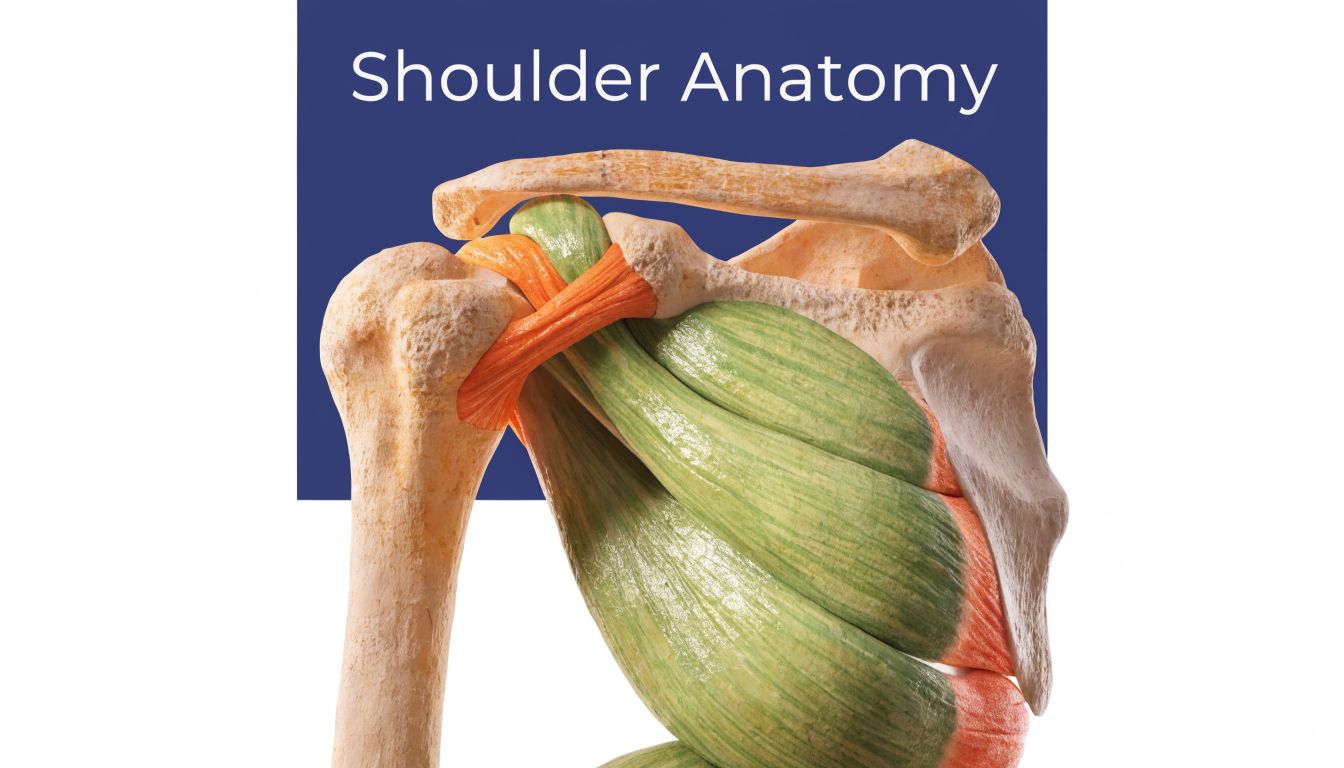
The shoulder is a remarkable joint because it gives you a huge range of movement. The trade-off is that it needs a lot of muscular control to stay stable. That’s where the rotator cuff comes in.
Think of it as four guiding ropes
A simple way to picture the rotator cuff is to imagine a tent pole held steady by four strong ropes. The pole is your upper arm bone. The ropes are the cuff muscles and tendons. They don’t just move the arm. They keep the ball of the shoulder centred in the socket while you move.
If those ropes are irritated, frayed, or torn, the shoulder can become painful, weak, or poorly coordinated. You may still be able to move the arm, but it often feels unreliable. That’s why patients say things like “I can get my arm up there, but it feels wrong” or “it suddenly drops when I try to lower it”.
The rotator cuff helps with:
- Lifting the arm for reaching, dressing, swimming, and gym work
- Rotating the arm for tasks like washing your hair or fastening a seatbelt
- Stabilising the joint so bigger muscles can work efficiently
- Controlling overhead movement in sport and manual work
Two common ways tears happen
Rotator cuff tears usually fall into two broad patterns.
Acute tears
These happen after a more obvious event. A fall, a sudden pull, or lifting something unexpectedly heavy can overload the tendon. Patients often describe a sharp pain followed by marked weakness, especially if the arm was fine before.
Consider that an acute tear in a previously strong shoulder may be treated differently from a long-standing wear-and-tear problem.
Degenerative tears
These are more gradual. Over time, the tendon can become weaker and more vulnerable to overload. You might have had minor symptoms for months, then one ordinary movement makes things worse.
This is why people are often confused. They say, “How can such a small movement do so much damage?” Usually the movement wasn’t the whole story. It was the final stress on a tendon that had already been struggling.
Why some shoulders are more vulnerable
Several factors can increase the chance of rotator cuff problems:
- Ageing tissue can become less resilient
- Repeated overhead work such as painting, plastering, or some gym routines
- Overhead sport including tennis, swimming, and throwing sports
- Poor shoulder blade control and posture which can change how load is shared
- Smoking and general health issues which can reduce tissue healing capacity
Your shoulder works best when movement, strength, posture, sleep, and recovery habits all support one another. Rotator cuff pain rarely sits in isolation from the rest of your health.
Should I Have Surgery Deciding Between Repair and Conservative Care
This is usually the biggest decision. It’s also the point where many people want a yes or no answer when the actual answer is, “it depends”.
What conservative care actually means
Conservative care doesn’t mean doing nothing and hoping for the best. When it’s done properly, it’s an active treatment plan. That often includes physiotherapy, temporary activity modification, pain relief, and sometimes an injection if a clinician feels it’s appropriate.
A structured non-surgical plan usually aims to do three things:
- Calm pain down so sleep and daily function improve
- Restore movement and control around the shoulder blade and upper arm
- Build capacity so the tissues can tolerate work, exercise, and sport again
For some tears, especially smaller or partial tears, that approach can work well. It can also be the right first step when pain is the main issue but strength loss is less dramatic.
When surgery is more likely to be considered
Surgery enters the conversation more strongly when there is a full-thickness tear, an obvious loss of strength, a traumatic injury, or ongoing limitation despite a good trial of rehabilitation. Younger and more active patients often discuss surgery earlier because the demand on the shoulder is higher.
This isn’t only about scan findings. A scan may show a tear, but treatment still depends on the person attached to the shoulder. A sedentary person with manageable symptoms may make a different choice from a tennis player, builder, or parent of young children who needs repeated overhead function.
A careful assessment matters. Imaging such as ultrasound or MRI helps clarify whether the tendon is irritated, partially torn, or fully detached, and whether the tear looks small, medium, or large in practical terms.
A useful question patients often miss
Instead of asking only “Do I need surgery?”, ask this:
“Given my work, sport, age, sleep, pain, and weakness, what is the best path to a shoulder I can trust?”
That question tends to produce better conversations.
How anatomy affects the decision
Individual anatomy can influence outcomes after rotator cuff repair. International data shows that a higher critical shoulder angle, often over 35 degrees, can increase the risk of a tear coming back after surgery, according to research on critical shoulder angle and rotator cuff retear risk. In simple terms, the shape of your shoulder may alter how force travels through the tendon.
That doesn’t mean surgery won’t work if your anatomy is less favourable. It means your surgeon and rehab team may need a more personalised discussion about risk, timing, and recovery expectations.
A balanced way to think about it
Here’s a practical comparison:
| Situation | Conservative care may suit | Surgery may be discussed sooner |
|---|---|---|
| Pain without major weakness | Often yes | Sometimes |
| Recent traumatic injury with sudden weakness | Less often as the only plan | Often yes |
| Partial tear | Common first-line option | Sometimes |
| Full-thickness tear in an active person | Sometimes tried first | Common discussion |
| Symptoms persisting despite rehab | Less likely to remain the only plan | More likely |
If you’re unsure what assessment should include, a good starting point is understanding what a musculoskeletal assessment involves. Good decisions usually come from combining your story, the examination, and the scan, rather than relying on any one of them alone.
Types of Rotator Cuff Repair Surgery Explained
Once surgery is chosen, many patients imagine one standard operation. In reality, surgeons can repair the tendon in different ways depending on the tear and the quality of the tissue.
Arthroscopic repair
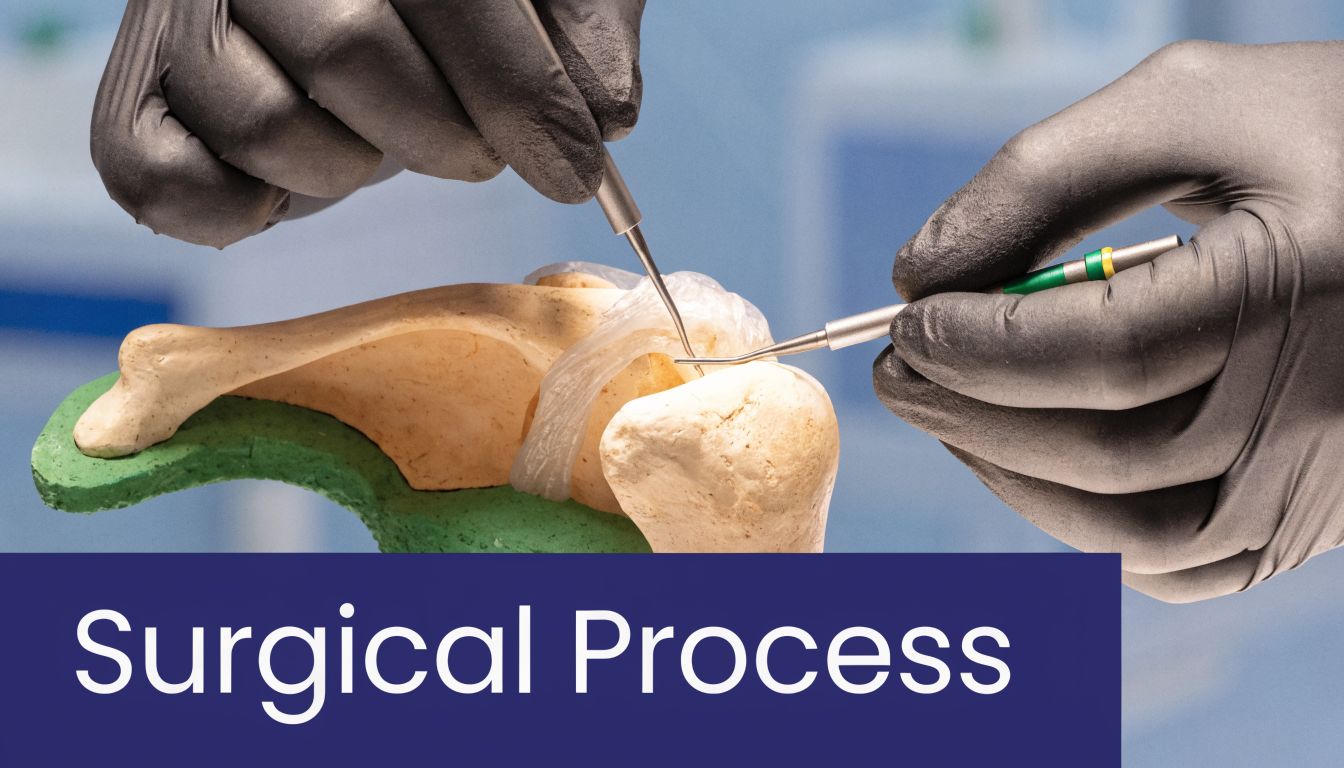
This is the keyhole approach and is now the common method in the UK for many tears. The surgeon uses a camera and fine instruments through small incisions to reattach the tendon to bone.
From the patient’s point of view, arthroscopic surgery usually means smaller scars and less disruption to surrounding tissue. It still counts as major surgery for the tendon, so don’t let the small incisions fool you into expecting a quick fix.
Mini-open repair
This combines arthroscopy with a slightly larger incision. A surgeon may use it when part of the procedure is easier or safer through a limited open approach.
Patients sometimes hear this term and worry it means something has gone wrong. It doesn’t. It reflects a surgical choice based on the tear pattern and what gives the best repair.
Traditional open repair
This involves a larger incision and is less commonly used for many routine tears now, though it still has a place in selected cases. Some complex tears or revision cases may need a more open approach.
Why the repair method matters
The operation isn’t just about stitching a tendon. It’s about how securely that tendon is brought back to its footprint on the bone so it can heal.
In the UK, advanced arthroscopic methods such as double-row or suture-bridge repairs are often preferred for medium to large tears in active patients. Biomechanical studies show these methods can create 20 to 30% greater contact area for healing than traditional single-row techniques, according to UK-relevant evidence on double-row and suture-bridge rotator cuff repair.
What those terms mean in plain language
- Single-row repair fixes the tendon back with one line of anchors
- Double-row repair uses a broader fixation pattern
- Suture-bridge repair spreads compression across the tendon footprint
Picture securing carpet at the edge versus smoothing it down across a broader area. More contact doesn’t guarantee success on its own, but it helps explain why surgeons may favour these techniques in larger tears or more active people.
A stronger-looking repair on the operating table still needs patient discipline afterwards. The surgery gives the tendon a chance. Rehab protects that chance.
Your Surgical Pathway and Pre-op Optimisation
The time before surgery is more useful than many people expect. It’s not just waiting. It’s preparation.
What the pathway usually looks like
Most patients move through a sequence like this:
- Clinical assessment with a GP, musculoskeletal clinician, or physiotherapist
- Imaging such as ultrasound or MRI to clarify the tendon injury
- Orthopaedic consultation to discuss whether repair is appropriate
- Pre-operative checks covering medical history, medications, and anaesthetic planning
- The operation day followed by a clear rehabilitation plan
That pathway sounds straightforward on paper. In real life, people often get stuck because they don’t know which symptoms need urgent assessment, whether they should keep training, or how to prepare home and work life for a one-armed period after surgery.
Pre-hab matters more than people think
If surgery is likely, your job before the operation is to become the best possible healing environment for the repair.
Focus on these areas:
- Keep the rest of the body active. Walking, lower-body exercise, and gentle cardiovascular work support general health and mood.
- Maintain shoulder movement within advice. If your clinician gives specific exercises, do them consistently rather than randomly.
- Protect sleep. Use pillows, avoid aggravating positions, and treat sleep as part of treatment, not a luxury.
- Eat for healing. Regular meals with enough protein, fruit, vegetables, and fluids support recovery better than skipping meals and relying on convenience food.
- Stop smoking if you smoke. Tendons and surgical wounds heal better in a healthier internal environment.
- Get other health conditions organised. Good control of blood pressure, blood sugar, and medication routines makes the surgical period smoother.
Practical home planning
The best-prepared patients make home easier before the operation. Set up frequently used items at waist height. Choose loose or button-front clothing. Batch-cook meals. Arrange help for shopping, lifting, childcare, and hair washing if needed.
A few simple questions can prevent a difficult first week:
| Task | Helpful preparation |
|---|---|
| Dressing | Choose front-opening tops |
| Sleeping | Prepare extra pillows or a recliner-style setup |
| Cooking | Make easy meals in advance |
| Work | Plan reduced duties or time away |
| Transport | Arrange lifts for appointments |
Pre-op preparation doesn’t guarantee an easy recovery, but it reduces friction. That matters when pain, poor sleep, and one-handed living are already taking up your energy.
The Road to Recovery Your Rehab Timeline and Milestones
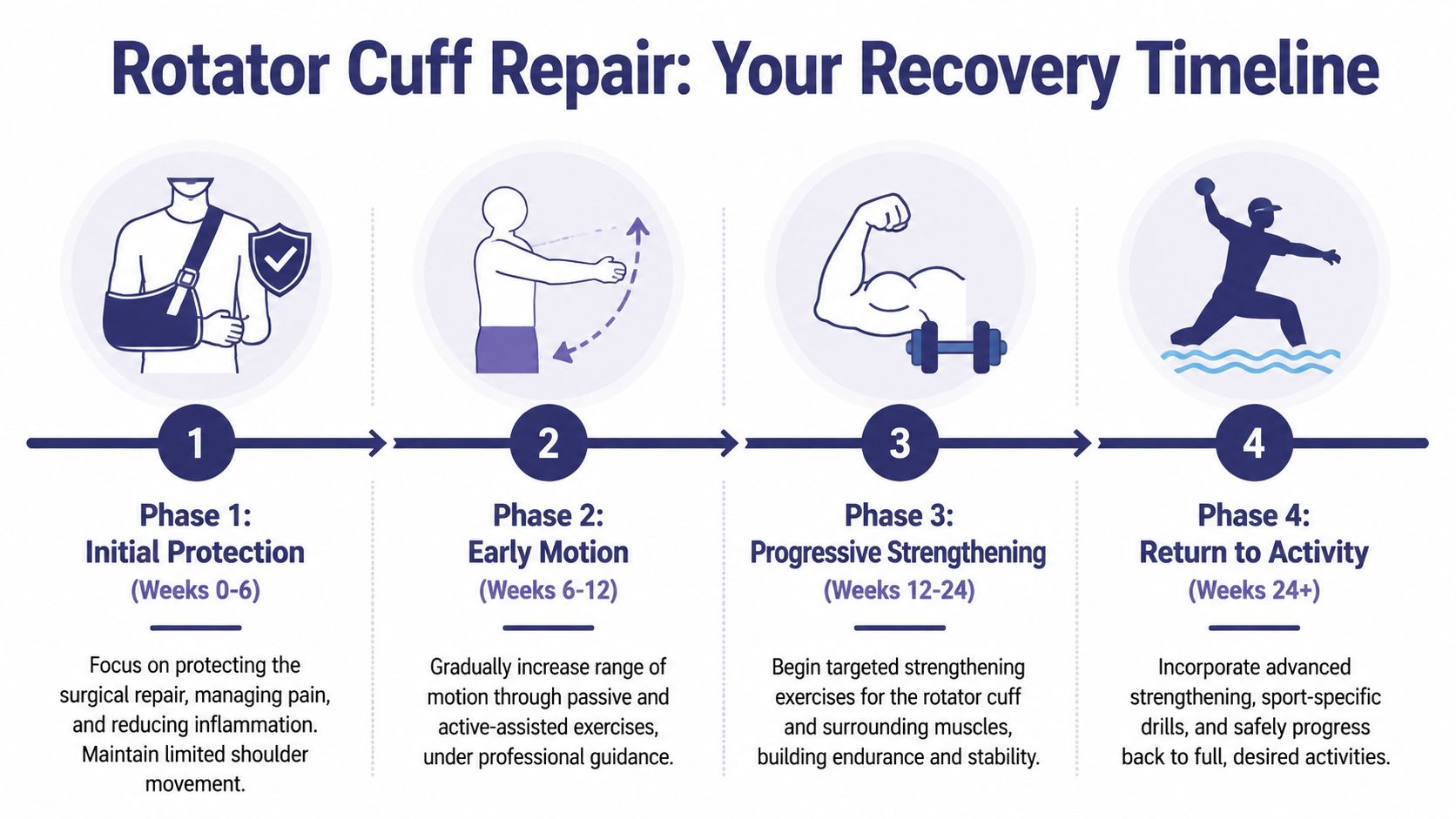
Recovery after rotator cuff repair is usually a long game. The tendon has to heal back to bone, and that process doesn’t respect impatience. Most setbacks happen because someone feels better before the repair is ready for load.
Phase one weeks zero to six
This is the protection phase. Patients should expect to wear a sling for around 6 weeks, and data suggests that premature strengthening or unrestricted motion in the first 6 to 8 weeks can raise re-tear risk by 1.5 to 2 times, based on rehabilitation guidance for large to massive rotator cuff repair.
Your main jobs are simple, but not easy:
- Protect the repair by wearing the sling as instructed
- Control pain and swelling with medication guidance, pacing, and ice if advised
- Avoid active lifting with the operated arm
- Do only the exercises prescribed by your team
This phase often frustrates people because the shoulder can feel stiff, awkward, and vulnerable. That’s normal. Your job isn’t to get fit yet. Your job is to avoid sabotaging the repair.
Early motion isn’t always better motion. Healing tissue needs protection before it needs ambition.
Phase two weeks six to twelve
This phase usually introduces more passive, active-assisted, and then active movement. In plain language, that means the shoulder begins moving more, but under control and in stages.
A physiotherapist may guide you through:
- Table slides
- Assisted arm elevation
- Gentle external rotation work
- Early shoulder blade control exercises
Daily life often improves here. The sling may be reduced depending on your protocol. Sleep may start to settle. You can usually do more, but this is also when people overestimate progress and try to rush.
If you want a useful overview of what patients often experience during this period, this guide to post-rotator cuff repair physical therapy explains the importance of patience and consistency in a very practical way.
Phase three around twelve weeks to six months
Strengthening usually becomes more meaningful in this phase. The exact timing depends on the size of the tear, tissue quality, and your surgeon’s protocol.
Common goals include:
| Focus | What it may involve |
|---|---|
| Restoring strength | Light resistance work for cuff and shoulder blade muscles |
| Improving control | Better movement quality during reaching and lifting |
| Building endurance | Repeated daily tasks without pain flare |
| Returning to function | Job-specific or sport-specific movement patterns |
At this point, many people feel emotionally better because they’re doing more active rehab. That said, the shoulder can still get sore and tired. Progress is rarely perfectly linear.
Phase four beyond six months
Heavier lifting, sport, swimming, racquet sports, and overhead gym work usually belong later in the process. Return to these activities should be earned through strength, movement quality, and confidence, not guessed from the calendar.
Brace position can also be worth discussing in selected large tears. Some research suggests that 45° abduction bracing may support better early passive range of motion and lower re-tear rates than 30° bracing in certain high-strain repairs, as discussed in research on abduction brace angle after arthroscopic repair of large tears. You don’t need to memorise that. You just need to know it’s reasonable to ask your surgeon why a particular brace angle has been chosen.
For a broader patient-friendly view of timelines and expectations, this article on shoulder surgery recovery time can help you place your recovery in context.
Outcomes Risks and When to Seek Help
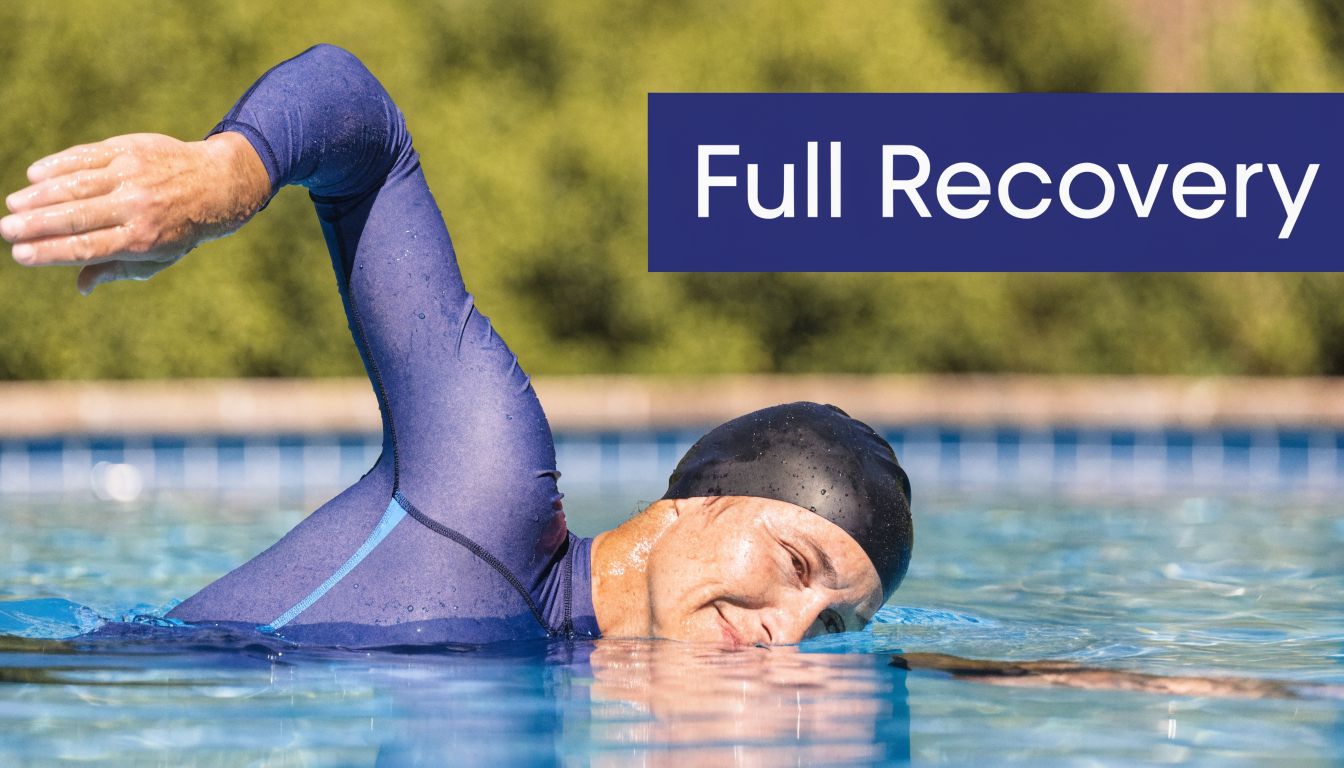
The long-term picture after rotator cuff repair is often encouraging. Many patients get meaningful pain relief, better function, and a return to activities that had become difficult or impossible.
Specialist centre data shows that patients rated their shoulder function at 37% of normal before surgery and 79% of normal at two-year follow-up. Pain scores improved from 5 out of 10 before surgery to 1 out of 10 afterwards, according to outcome data summarised in rotator cuff repair market analysis.
What good outcomes usually depend on
Successful recovery tends to rely on a combination of factors:
- The right indication for surgery
- A well-executed repair
- Commitment to rehabilitation
- Realistic pacing during recovery
- Attention to sleep, activity, nutrition, and general health
Patients sometimes focus entirely on the operation and underestimate the months that follow. In practice, the rehab period often has as much influence on daily function as the procedure itself.
The risks worth knowing about
Every operation has risks. With rotator cuff repair, the main concerns include stiffness, infection, ongoing pain, tendon re-tear, and less commonly nerve irritation or problems related to surgery and anaesthetic care.
This list is not meant to alarm you. It’s meant to help you recognise what deserves a phone call rather than reassurance from social media or guesswork from friends.
Normal symptoms versus red flags
Some discomfort is expected. So is disturbed sleep, temporary weakness, and stiffness in the early months. These are common parts of the journey.
Contact your surgical team, physiotherapist, or GP if you notice:
- Fever or feeling unwell with increasing shoulder pain
- Redness, warmth, or discharge around the wound
- A sudden change in pain after a specific movement or incident
- A new marked loss of function such as not being able to lift the arm at all when you could before
- Progressive swelling or severe calf pain, which may need urgent medical advice depending on the wider picture
If something changes sharply rather than gradually, don’t wait and hope. Ask.
Most patients don’t need emergency intervention, but prompt review can prevent a small problem becoming a bigger one.
Frequently Asked Questions About Rotator Cuff Repair
When can I drive again
Driving depends on pain, control, the sling, and whether you can safely perform an emergency stop. Many patients can’t drive while they’re still in a sling. Always follow your surgeon’s advice and check your insurer if needed.
When can I return to work
Desk-based work often returns sooner than manual work, but timing varies widely. A home-based desk worker may manage earlier than someone commuting, carrying equipment, or doing frequent reaching. Jobs involving lifting, climbing, overhead work, or physical contact usually need a longer build-up.
Will the anchors stay in my shoulder forever
Often, the small anchors used to secure the tendon are designed to remain in place or be absorbed depending on the system used. Your surgeon can tell you exactly what type was used. Patients are often more aware of the sling than the anchors themselves.
How much pain should I expect
Some pain is normal, especially in the first few days and at night. Many people find sleep more difficult than daytime function early on. Good pain management usually includes prescribed medication, sensible pacing, pillow positioning, and not doing too much too soon.
What can I do to help recovery go well
The most helpful habits are boring but effective:
- Wear the sling as advised
- Do the exercises you were given, not extra ones
- Protect sleep
- Eat regular, nourishing meals
- Avoid smoking
- Keep follow-up appointments
- Tell your team if something changes
Will my shoulder ever feel normal again
Many people regain a shoulder that feels strong, useful, and much less painful. “Normal” can mean different things depending on your age, sport, work, and the size of the tear. The most satisfied patients usually measure success by what they can do again, not by whether the shoulder feels identical to how it felt years earlier.
If shoulder pain is affecting your sleep, work, training, or confidence, The Lagom Clinic offers a calm, personalised route into assessment, lifestyle support, and next-step guidance. For patients in Bristol looking for a proactive private GP approach to musculoskeletal care, the clinic can help you make sense of symptoms, arrange appropriate investigations, and support you through the decisions around recovery and return to activity.


 Members Consultation