


If you have diabetes, blood pressure deserves as much attention as blood sugar. In the UK, approximately two-thirds of adults with diabetes also have high blood pressure or take blood pressure medication, and that combination makes them four times more likely to develop heart disease than people with neither condition, according to this overview of diabetes and high blood pressure.
That's the part many people miss. They focus on glucose, understandably, but diabetes blood pressure is often where long-term risk builds. The good news is that it's also an area where daily habits, careful monitoring, and personalised care can make a meaningful difference.
The Critical Link Between Diabetes and Blood Pressure
Diabetes and high blood pressure often travel together because they stress the same organs. Your blood vessels, heart, kidneys, eyes, and brain all depend on steady blood flow and healthy vessel walls. When blood sugar stays high over time, those tissues become more vulnerable. When blood pressure is also high, the strain increases further.
Think of it as a dual threat. Diabetes can make your circulation system more fragile. High blood pressure adds extra force against that already vulnerable system. That's why managing diabetes well isn't only about avoiding sugar spikes. It's also about protecting the body from the pressure load that drives heart disease, stroke, kidney damage, and eye complications.
Many patients find this frustrating at first. They're already trying to eat better, move more, and stay on top of medication. Then they're told they must watch blood pressure too. I usually reframe it this way: you're not managing two unrelated problems. You're managing one shared cardiovascular risk picture.
Practical rule: If you have diabetes, treat blood pressure as part of the same conversation, not a separate issue.
This matters even more if you're busy and tend to run on stress, convenience food, poor sleep, or long sedentary workdays. Those patterns can worsen both blood glucose and blood pressure at the same time. Small improvements often help both. Better meal planning is a good example, and many people find structured ideas such as healthy recipes for people with diabetes useful when they need realistic weekday options.
A full review also shouldn't stop at the cuff reading in clinic. Kidney health matters, because blood pressure and diabetes often affect the kidneys long before symptoms appear. If you're not familiar with it, an ACR blood test explained simply can help you understand why urine albumin testing is often part of good diabetes blood pressure care.
How Diabetes Raises Your Blood Pressure
The biology sounds complicated, but the pattern is easier to understand if you picture your circulation as a plumbing system with an overactive alarm panel.
When diabetes is driven by insulin resistance, the body doesn't respond to insulin as efficiently as it should. That doesn't just affect blood sugar. It also changes how blood vessels behave, how much salt and fluid the body holds on to, and how strongly the nervous system pushes the heart and arteries.
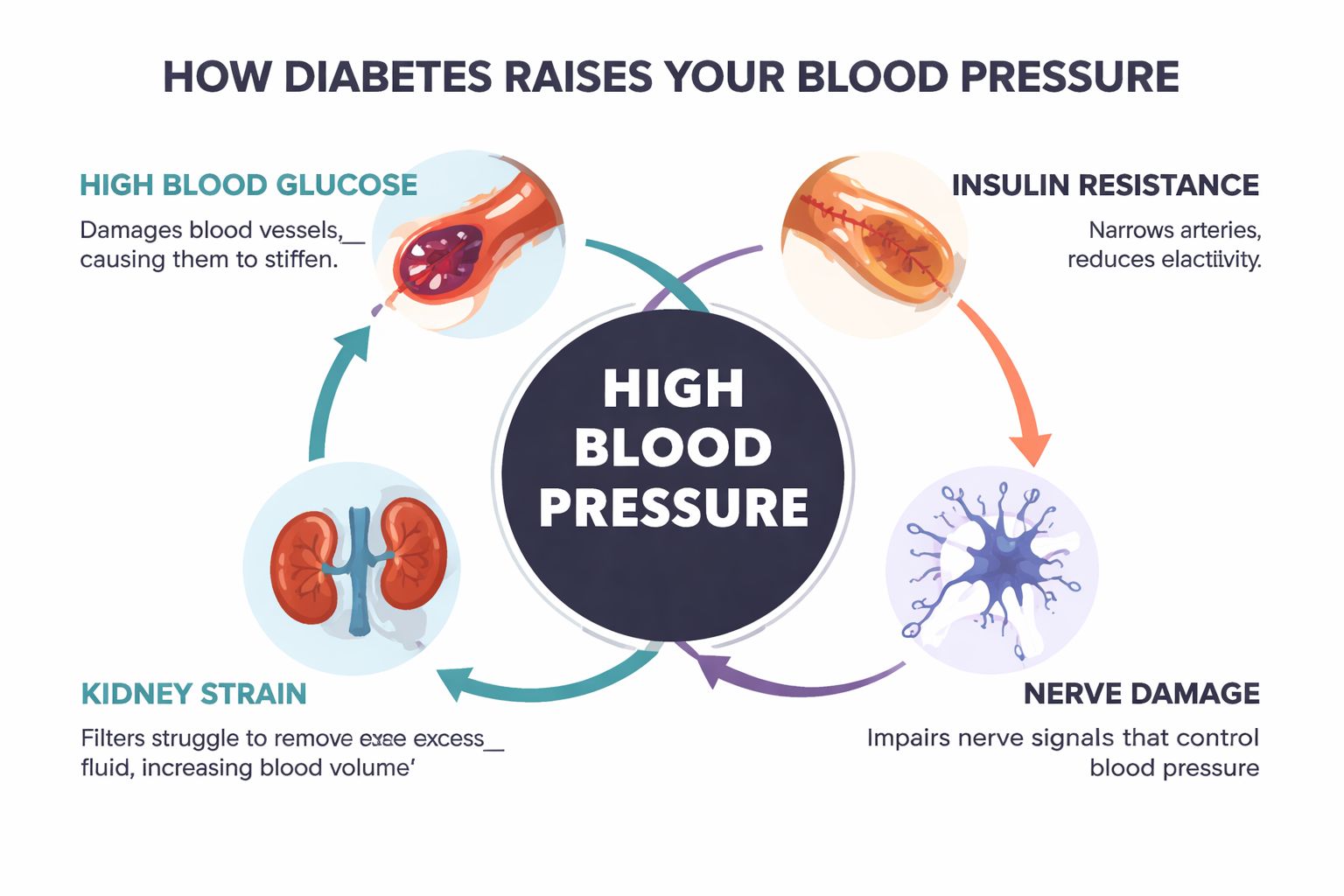
The nervous system presses the accelerator
One key pathway involves the sympathetic nervous system, often called the body's fight-or-flight system. In insulin resistance, that system can become more active than it should be. The result is a body that behaves as if it needs to stay on alert. Heart rate rises, blood vessels tighten, and blood pressure trends upward.
That helps explain why stress, poor sleep, overwork, and metabolic health often overlap in the same person. The body isn't separating them neatly, even if we do.
Hormones tell the kidneys to retain more fluid
Another pathway is the renin-angiotensin-aldosterone system, usually shortened to RAAS. This is a hormone network that helps control blood pressure and fluid balance. In diabetes, especially with insulin resistance, this system can become overactive.
A simple way to think about RAAS is that it acts like a thermostat set too high. It tells the blood vessels to narrow and the kidneys to hold on to more salt and water. More fluid in the circulation means more pressure in the pipes. Narrower pipes increase that pressure further.
The link isn't theoretical. According to research published in Hypertension, insulin resistance can predict a 1.8-fold increase in new hypertension cases over 16 years.
High blood pressure in diabetes isn't usually caused by one thing. It's the combined effect of vessel stiffness, hormone signalling, kidney strain, and lifestyle patterns that keep the system under pressure.
Blood vessels lose flexibility
Healthy arteries are meant to expand and relax. In diabetes, they can become less elastic. That makes each heartbeat push against a stiffer system. You can think of the difference between watering a garden with a soft hose versus pushing water through a rigid tube. The same pump creates more pressure in the stiffer setup.
This is why some people with diabetes blood pressure problems say, “But I don't feel stressed.” They may not feel tense, yet their vascular system is still under load from insulin resistance, inflammation, weight gain around the abdomen, inactivity, or disrupted sleep.
Why the cycle can feed itself
High blood pressure can then worsen the very organs that help regulate it, especially the kidneys. Once the kidneys are under strain, fluid and hormone balance can become even less stable. That creates a loop where diabetes promotes hypertension, and hypertension makes diabetes complications more likely.
For patients exploring broader weight and metabolic treatment options, questions often come up about GLP-1 medicines and cardiovascular risk. If that's relevant to you, this article on Mounjaro for high blood pressure gives a useful overview of the issue in plain language.
Know Your Numbers BP Targets and Home Monitoring
Targets matter because vague advice rarely changes behaviour. “Keep an eye on it” isn't enough. You need to know what number you're aiming for, what your home readings mean, and when a pattern needs review.
Following evidence from major trials, NICE guideline updates in 2017 lowered targets to below 130/80 mmHg for many people with diabetes, yet a significant share of patients still have uncontrolled readings, as summarised by Diabetes UK's blood pressure guidance. That's one reason home monitoring is so valuable. It shows your usual pattern, not just a snapshot in clinic.
A simple target table
| Patient Group | Clinic Blood Pressure Target | Home/Ambulatory Target |
|---|---|---|
| Many adults with diabetes | Below 130/80 mmHg | Usually a little lower than clinic readings, interpreted with your clinician |
| Adults with diabetes using standard hypertension thresholds | Below 140/90 mmHg may still be used in some situations | Home trends should be reviewed in context, rather than judged from a single reading |
| People with diabetes and higher cardiovascular risk | Often individualised, commonly aiming below 130/80 mmHg | Personalised target based on risk, medication, symptoms, and overall health |
The exact target for you depends on the whole picture. Age, kidney function, symptoms like dizziness, other medication, and cardiovascular risk all matter. A more intensive target isn't automatically better if it makes you light-headed, exhausted, or prone to falls.
What the two numbers mean
The top number, systolic pressure, is the pressure when the heart pumps.
The bottom number, diastolic pressure, is the pressure when the heart relaxes between beats.
Both matter. Many people look only at the top figure because it changes more obviously. In diabetes blood pressure care, the pattern as a whole matters more than one dramatic reading.
Home monitoring works best when you track trends. A single stressful morning tells you very little. A repeated pattern over days and weeks tells you much more.
How to measure blood pressure properly at home
People often get inaccurate readings because they rush. The machine may be fine. The method isn't.
Rest first Sit for a few minutes before taking a reading. Don't measure straight after climbing stairs, arguing, or drinking coffee.
Sit well
Support your back. Keep your feet flat on the floor. Don't cross your legs.Position the cuff correctly
The cuff should sit on the upper arm and be at roughly heart level.Stay still and silent
Talking can alter the reading.Take more than one reading
If the first is high, wait briefly and repeat. Patterns are more useful than isolated numbers.Log the result
Record the date, time, reading, and anything relevant such as poor sleep, stress, or a missed tablet.
If you'd like a fuller explanation of what your numbers mean, this guide to understanding blood pressure readings is a practical place to start.
Some people also prefer a more structured check that combines readings with wider cardiovascular review. In that situation, a blood pressure screening package can be a useful way to organise testing and follow-up.
Lifestyle The Foundation of Diabetes and BP Control
Medication can help. Lifestyle does the daily work.
That's especially true in diabetes blood pressure management, because the same habits that improve glucose regulation often improve blood pressure too. Food quality, body composition, movement, stress load, alcohol, and sleep all influence the same internal systems.
The strongest message I give patients is this: lifestyle change isn't a soft option. It's often the most powerful lever you have. A UK cohort study reported in 2025 found that community-based holistic programmes focused on exercise and mental wellbeing achieved 25% better blood pressure reduction to below 130/80 mmHg than medication alone in some groups, according to this published summary.

Food that helps both blood sugar and blood pressure
You don't need a perfect diet. You need a repeatable one.
For many individuals, that means building meals around foods that are less processed and more filling. A useful approach combines low-glycaemic choices with principles often seen in DASH-style and Mediterranean-style eating. In practice, that usually looks like vegetables, beans, pulses, nuts, yoghurt, eggs, fish, olive oil, and higher-fibre carbohydrates in sensible portions.
A few practical rules help:
Start with the plate
Fill a large part of it with non-starchy vegetables before adding the carbohydrate portion.Choose slower carbs
Swap refined cereals, white bread, and sugary snacks for oats, beans, lentils, or wholegrain options you enjoy.Watch for sodium's hidden presence
Many people don't add much salt at the table but still eat large amounts through sauces, ready meals, takeaway food, deli meats, and packaged snacks.Pair carbs with protein or fibre
This often steadies appetite and reduces sharp glucose swings.
Food doesn't need to be joyless. It does need to become less automatic.
Movement that lowers pressure without taking over your week
Exercise improves insulin sensitivity, supports weight management, helps the arteries work better, and often lowers stress. But the best plan isn't the ambitious one you abandon after ten days. It's the one you can repeat during busy weeks.
Some people do well with brisk walking, cycling, swimming, or short gym sessions. Others prefer resistance training because it feels efficient and measurable. The ideal is a mixture. Aerobic work supports cardiovascular health, while strength training helps muscle use glucose more effectively.
A realistic weekly pattern might include:
Brisk daily movement
Walking after meals can be especially practical for desk-based workers.Two or more strength sessions
Bodyweight work, resistance bands, or supervised gym sessions all count.Less uninterrupted sitting
Stand up, stretch, or walk briefly during long work blocks.
The body responds to consistency more than intensity. A regular thirty-minute walk often beats a heroic weekend workout followed by five sedentary days.
Stress and sleep are not side issues
Many professionals underestimate these because they feel less tangible than food and exercise. Physiologically, they matter.
Chronic stress can keep the body in a more activated state. Poor sleep can worsen hunger cues, insulin resistance, and blood pressure regulation. If you sleep badly, feel wired at night, and start most days tired, that pattern may be part of your diabetes blood pressure problem.
Try the basics first:
Set a wind-down routine
Dim screens, reduce work late in the evening, and create a regular sleep window.Use short stress resets
Slow breathing, a midday walk, or a few minutes away from the laptop can interrupt the constant pressure state.Be honest about alcohol
Many people use it to switch off, but it can disrupt sleep and raise blood pressure.
Lifestyle medicine works best when it's personalised. A parent with young children, a shift worker, and a competitive amateur cyclist won't need the same plan. That's why broad advice often fails. The habit has to fit the life.
When Lifestyle Is Not Enough Medical Treatments
Sometimes people feel disappointed when blood pressure tablets enter the conversation. They think it means they've failed. It doesn't. It means your body needs extra support.
In diabetes, doctors often choose medicines that lower blood pressure and also help protect organs that are vulnerable, especially the kidneys. That's why ACE inhibitors and ARBs are commonly discussed. Their value isn't only in lowering the cuff reading. They also work on the hormone pathways that can be overactive in diabetes.
Why these medicines are often chosen first
ACE inhibitors and ARBs act on the RAAS pathway discussed earlier. In plain terms, they help relax blood vessels and reduce the hormone signals that encourage tightening and fluid retention. That can be particularly useful when diabetes and blood pressure are interacting through kidney and vascular stress.
They're often considered when a patient has diabetes because kidney protection matters so much. Your clinician may also monitor kidney blood tests and potassium while using them, because safe prescribing depends on follow-up, not just the initial prescription.
Other medicines may be added
Some people need more than one tablet. That's common, not unusual.
Depending on your readings, symptoms, and wider health picture, clinicians may also use medicines such as:
Calcium channel blockers
These help blood vessels relax.Diuretics
These help the body remove excess salt and water.Other add-on treatments
These may be considered if blood pressure remains above target despite a sensible first-line plan.
The key point is that treatment is individual. The “best” medicine depends on kidney function, age, ethnicity, side effects, other conditions, and what's already been tried.
Medication and lifestyle are a team
Tablets can lower the pressure. They can't choose your lunch, reduce your work stress, improve your sleep, or get you out for a walk.
That's why the strongest plans combine both. Medication lowers risk in the background while lifestyle changes reduce the daily drivers that pushed blood pressure up in the first place. When patients understand that partnership, they usually feel less resistant to treatment and more in control of it.
If you need medication, aim to be informed rather than discouraged. Ask what the medicine does, why it was chosen, what blood tests are needed, and what side effects should prompt review.
Take Control with Proactive, Personalised Care
A standard threshold-based model of care has limits. It often waits until blood pressure is clearly in the hypertension range before acting decisively. But research suggests that blood pressure over 120/80 mmHg already increases diabetes-related complications, while standard guidance often focuses on treatment once it reaches 140/90 mmHg, as discussed in this review on proactive management gaps.
That gap matters for people who want to stay ahead of problems rather than react once damage has already started. It also matters for busy professionals, because early warning signs are easy to miss when you're functioning well enough to keep going.

What proactive care looks like in practice
Proactive diabetes blood pressure care usually means looking beyond a single clinic reading. It asks wider questions.
What's happening at home
Are morning readings different from evening ones? Is work stress pushing numbers up during the week?What else is contributing
Weight changes, poor sleep, alcohol, pain, stimulant use, menopause, kidney issues, and medication side effects can all matter.What target makes sense for you
One person may need a cautious, stepped approach. Another may benefit from tighter optimisation because cardiovascular risk is higher.
This is where longer appointments can be useful. Instead of only deciding whether to prescribe or increase medication, a clinician can review home readings, symptoms, blood tests, kidney markers, exercise patterns, and nutrition in one joined-up plan. In Bristol, options such as The Lagom Clinic can provide that type of review with longer GP appointments, lifestyle consultations, blood tests, and on-site ECGs when clinically appropriate.
The goal is better control before complications appear
The most effective approach is often the least dramatic. You notice a pattern early, adjust habits, monitor regularly, and escalate treatment if needed. That's very different from waiting until readings are repeatedly high, symptoms appear, or organ damage is picked up later.
If you have diabetes, don't treat blood pressure as an afterthought. Treat it as one of the clearest signals of how much strain your system is under, and one of the most actionable ways to protect your long-term health.
If you want a more joined-up review of your diabetes, blood pressure, lifestyle, and cardiovascular risk, The Lagom Clinic offers private GP care in Bristol with time for individual assessment, practical lifestyle guidance, and appropriate monitoring to help you act early rather than wait for complications.


 Members Consultation