


You've probably had the same moment many busy people do. You reach for a seatbelt, lift a mug from a high shelf, or roll onto your side at night, and a sharp, stubborn pain catches the front or outer part of the shoulder. That's the point where people start searching for shoulder impingement exercises, hoping for a quick list that'll sort it out. What usually works better is a staged loading programme, where the shoulder is calmed down first, then rebuilt with the right mix of mobility, rotator cuff work, scapular control, and day-to-day changes that stop the same irritation from coming straight back.
Modern UK practice has moved away from treating this as a simple “pinching” problem. The 2025 NICE guideline for rotator cuff disorders reflects that shift, placing exercise therapy, education, and activity modification at the centre of first-line care, with progressive rehabilitation rather than immediate invasive treatment (HSS overview of the UK approach). That matters in real life, because many people don't need heroic fixes, they need a programme they can fit around work, sleep, commuting, and training.
Understanding Shoulder Impingement and Why Exercise Works
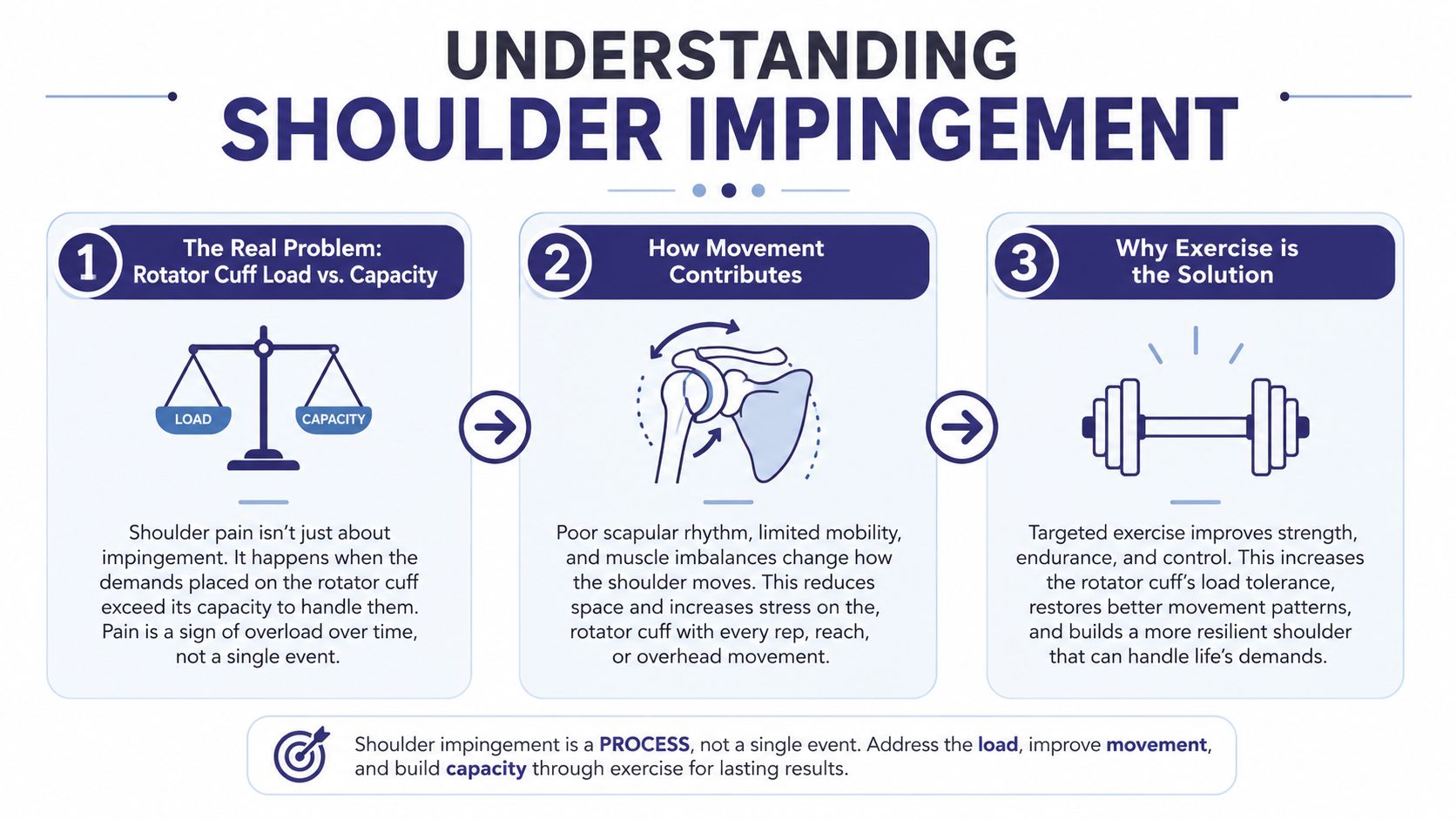
A painful shoulder often starts with a familiar pattern. You lift the arm, reach behind you, or sleep on that side, and the pain feels like something is being squeezed. In clinic, that picture is usually more useful when framed as a rotator cuff-related load problem, where the tissues' current capacity does not match what the shoulder is being asked to do. A bad night on the affected side, repeated overhead work, or reaching across the body can expose that mismatch.
What the shoulder is signalling
Pain during arm elevation, especially in the familiar painful arc, usually means the shoulder is not tolerating the current movement strategy well. That can happen when the rotator cuff is underpowered, when the muscles around the shoulder blade are not contributing enough, or when the front of the shoulder is too tight to let the arm move smoothly. Harvard's clinical guidance also points to poor posture, rotator cuff weakness, and tightness in the front of the shoulder as common contributors (Harvard Health).
Practical rule: if a movement reliably reproduces the same sharp shoulder pain, the problem is not that the shoulder is fragile. The current load is too high for the current capacity.
That is why exercise works better than resting and hoping the problem settles on its own. Tissue tolerance improves when the shoulder is exposed to the right dose of work, then given time to adapt. The 2025 NICE guideline aligns with that logic, putting progressive rehabilitation at the centre of care rather than treating exercise as an optional extra (HSS overview of the UK approach).
Why the mechanics matter
For many people, the mistake is forcing overhead range too early. That tends to irritate the same painful arc again, especially if external rotator strength and posterior shoulder flexibility have not caught up. The better approach is staged, starting with pain-limited mobility and controlled loading, then building towards more demanding patterns once symptoms are settled.
A clearer explanation of the tendon side of the problem helps here too. If you want a plain-language guide to the difference between pain, irritation, and structural injury, read what a rotator cuff injury means.
Quick Self-Assessment Before You Start
Don't begin by picking exercises at random. Start by checking what the shoulder will tolerate today, because that gives you a baseline and stops you guessing later.
Check the basics first
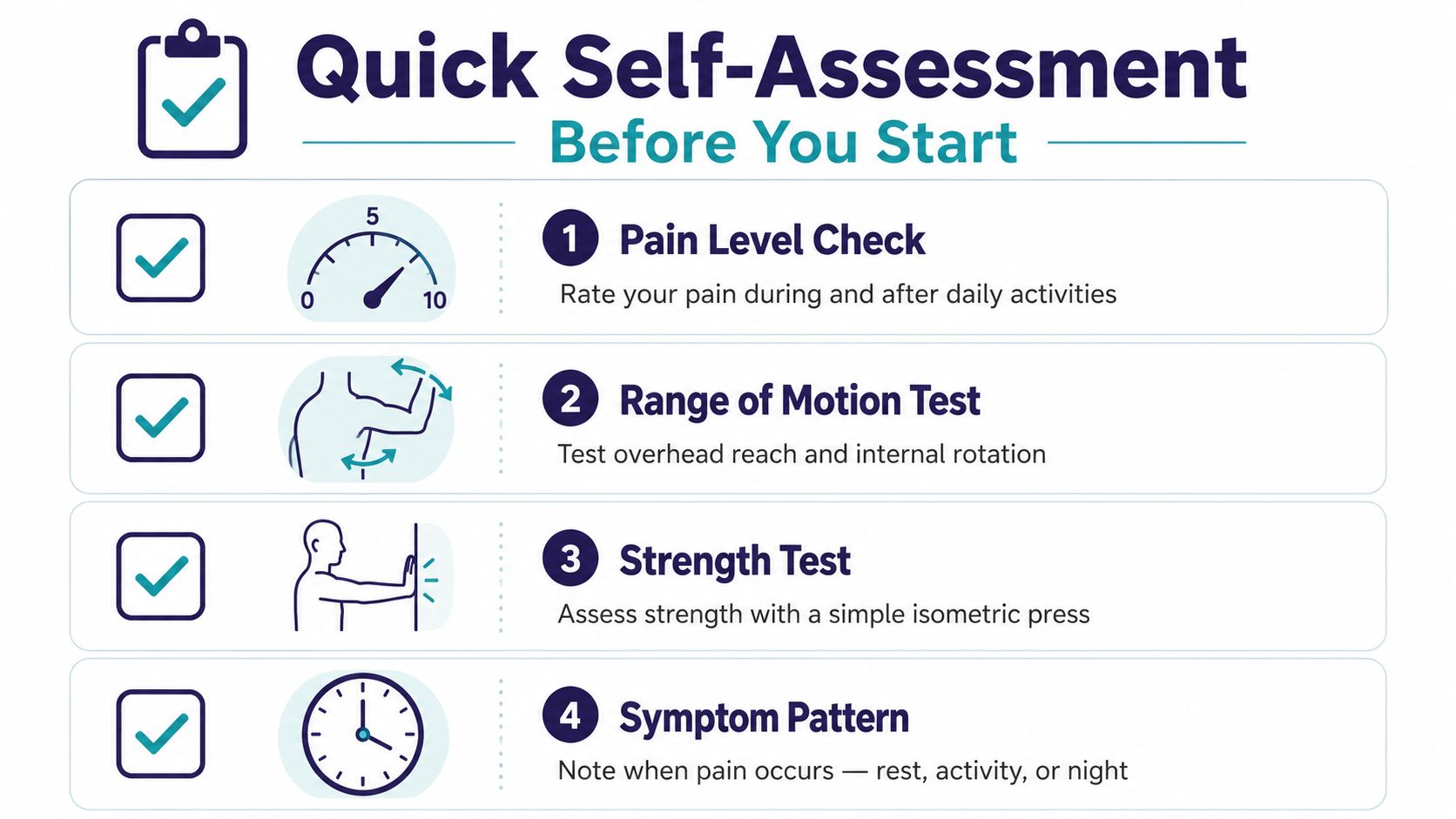
Look at three movements without equipment. Raise the arm overhead, reach behind your back, and rotate the forearm outward with the elbow tucked into your side. You're not trying to “push through” anything here, you're checking which pattern brings on the familiar pain, where the restriction sits, and whether one side clearly lags behind the other.
A simple scorecard helps. Note whether pain appears during the movement, after you've rested, or at night. Also notice whether the shoulder feels weak, stiff, or merely irritated. That distinction matters, because a stiff shoulder and a painful shoulder don't always need the same starting point.
Good self-check: if you can move the shoulder with only mild discomfort that settles quickly, you've got room to begin. If the pain is sharp, escalating, or leaving the shoulder worse for the rest of the day, the starting load is too much.
Set a goal that matters to your life
The best rehab goal is specific. For one person it's getting back to the gym press bench without flaring the shoulder. For another it's serving in tennis, fastening a bra strap, or reaching for a seatbelt without wincing. If the goal isn't tied to a real activity, people usually stop the programme once the pain calms down, then the problem returns when normal life gets busy again.
The point of the self-assessment is simple. It gives you a baseline, shows you what counts as an acceptable response, and tells you whether you should start with mobility, isometrics, or light band work. It also helps you track progress without relying on memory, which is unreliable once symptoms start to drift day by day.
Core Shoulder Impingement Exercises with Technique Cues
The most useful shoulder impingement exercises are the ones you can perform cleanly at home, with the shoulder staying calm enough to adapt. I am interested in whether the movement is controlled, repeatable, and tolerable, not whether it looks impressive.

Build the programme from the joint outward
Resistance-band external rotation is one of the best places to begin. Tuck the elbow into your side with a small towel roll between the elbow and ribs, keep the chest open, and rotate the forearm outward slowly. Keep the range comfortable and the return controlled, because the aim is to load the rotator cuff without provoking the front of the shoulder. If the movement feels jerky, the band is too heavy or the range is too large.
Shoulder-blade squeezes are less glamorous, but they matter. Hold each squeeze briefly, then release, and work through a smooth set of repetitions. The cue I give is simple, bring the shoulder blades back and slightly down without jutting the ribcage forward. If the neck takes over, the exercise has drifted into compensation rather than control.
Keep the chest open without provoking the shoulder
Doorway chest stretches can help if the front of the shoulder is stiff. Keep the stretch gentle and stop well before the point where the shoulder starts to pinch or the upper arm rolls forward. A small, repeatable stretch is usually more useful than forcing range and then spending the rest of the day irritated.
Isometric wall rotations are useful when movement still feels edgy. Press the hand into a wall without letting the shoulder move, then hold the effort steady before relaxing. That gives the cuff some work without asking it to travel through the full range too soon.
Dosage that fits ordinary life
A sensible home session often combines these pieces. The shoulder impingement rehabilitation approach works best when the loading is steady, symptoms settle between sessions, and the exercise choice matches the shoulder's current tolerance. That is the practical version of rehabilitation most busy people can stick to, because it fits around work, driving, and day-to-day use instead of fighting them.
For form reference, the orthopaedic exercise guide video is useful as a visual demonstration of the movement patterns, provided you use it as a technique check rather than a target to chase. In practice, the shoulder should feel challenged but not repeatedly irritated. If you want to use the guidance from Harvard Health, keep the focus on consistent work, symptom response, and adjusting the exercise selection to match how the shoulder behaves that day.
Progressing and Regressing Your Programme
Recovery rarely follows a straight line. One day the shoulder is comfortable enough for band work, the next it is more sensitive after a poor night's sleep, a long drive, or a heavy day at the desk. The answer is not to scrap the programme. It is to match the load to the shoulder's current tolerance and keep the work in the useful zone.
Know when to press forward
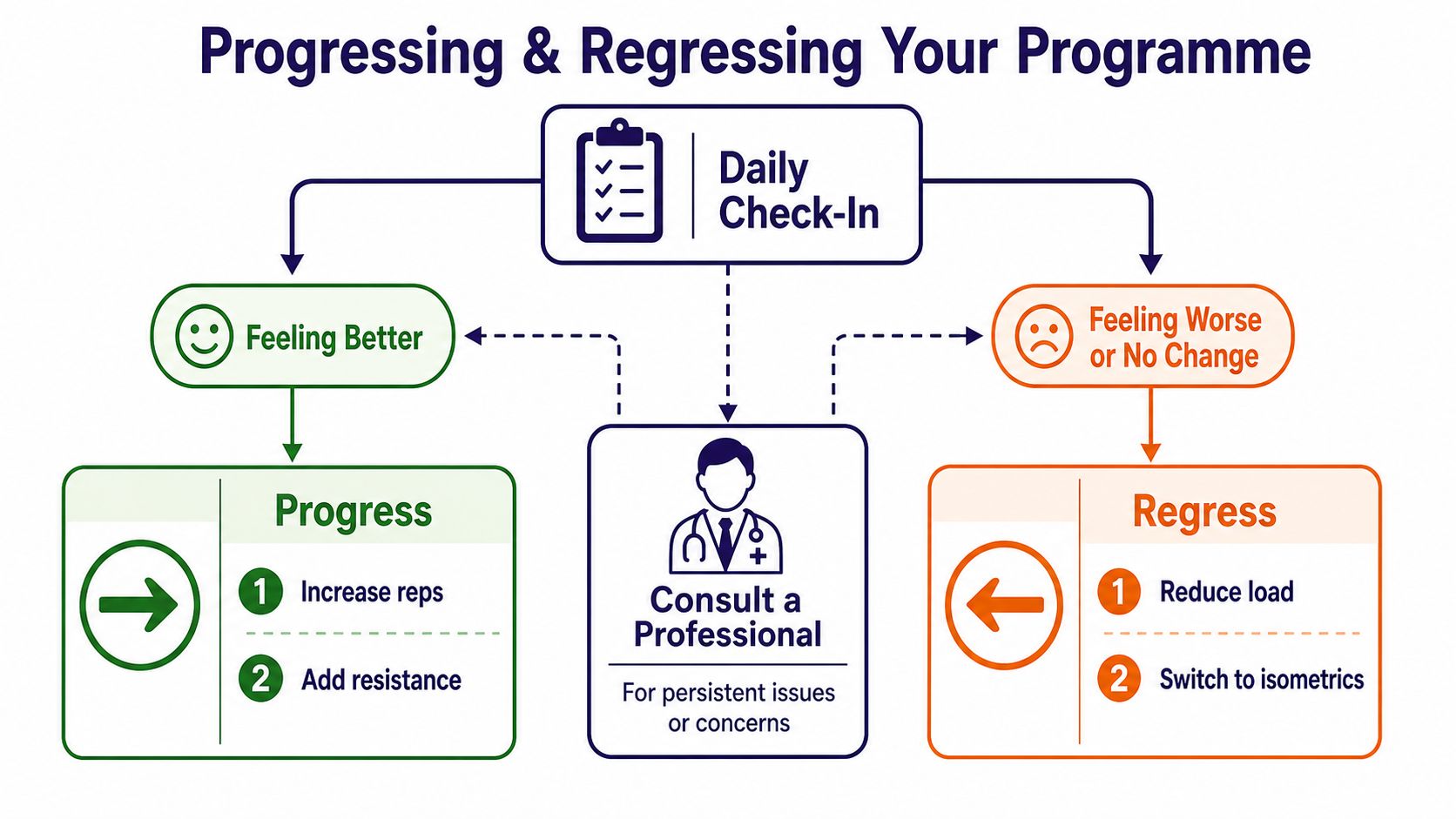
Progression should be based on clear signs that the shoulder is accepting the current workload. If the exercise feels controlled, symptoms are not ramping up, and ordinary daily tasks are a little easier, it is reasonable to increase the challenge in a small way. That might mean moving from isometrics to banded movement, adding a little resistance, or taking the arm through a slightly larger range.
Keep the change small. One variable at a time is the safest way to progress. If resistance, range, and tempo all change together, it becomes hard to tell what helped and what irritated the joint. In rehab, that uncertainty usually leads to overcorrection.
Back off before you dig a hole
Pain that worsens during exercise, or lingers more strongly afterwards, is a sign to simplify the session. Cut the band tension, shorten the range, or return to wall isometrics for a few sessions. That is usually better than pushing through overhead or abduction-based work before the cuff and shoulder blade muscles are ready, because forcing it can keep the same painful mechanics in play.
If the shoulder is sore but settling, you can usually stay the course. If it is getting more irritable, the programme needs to get simpler, not harder.
A practical rehab plan starts with what the shoulder can handle, then increases demand once the response is clearly positive. That staged approach fits modern UK guidance, and it is why conservative care usually starts with exercise before any procedure-led pathway. The same principle shows up across rehab, including low strain exercise for sensitive joints, where the tissue is respected first and built up later.
Use your daily check-in
Busy people do better when decisions are quick and repeatable. Ask yourself three things each day. Did the shoulder feel easier, the same, or worse after yesterday's work? Was sleep interrupted? Can you lift the arm without the same catching pain?
If the answers are mostly favourable, progress a little. If they are mixed or clearly worse, regress for a few sessions and strip the programme back to the parts the shoulder handles well. That kind of daily check-in keeps the loading honest, which is the point of staged rehabilitation.
Lifestyle Modifications and Self-Management Strategies
Exercise matters, but lifestyle often decides whether the shoulder settles. A carefully chosen programme can be undone by eight hours at a desk, a bad sleeping position, or repeated awkward reaching through the day.
Make the day less hostile to the shoulder
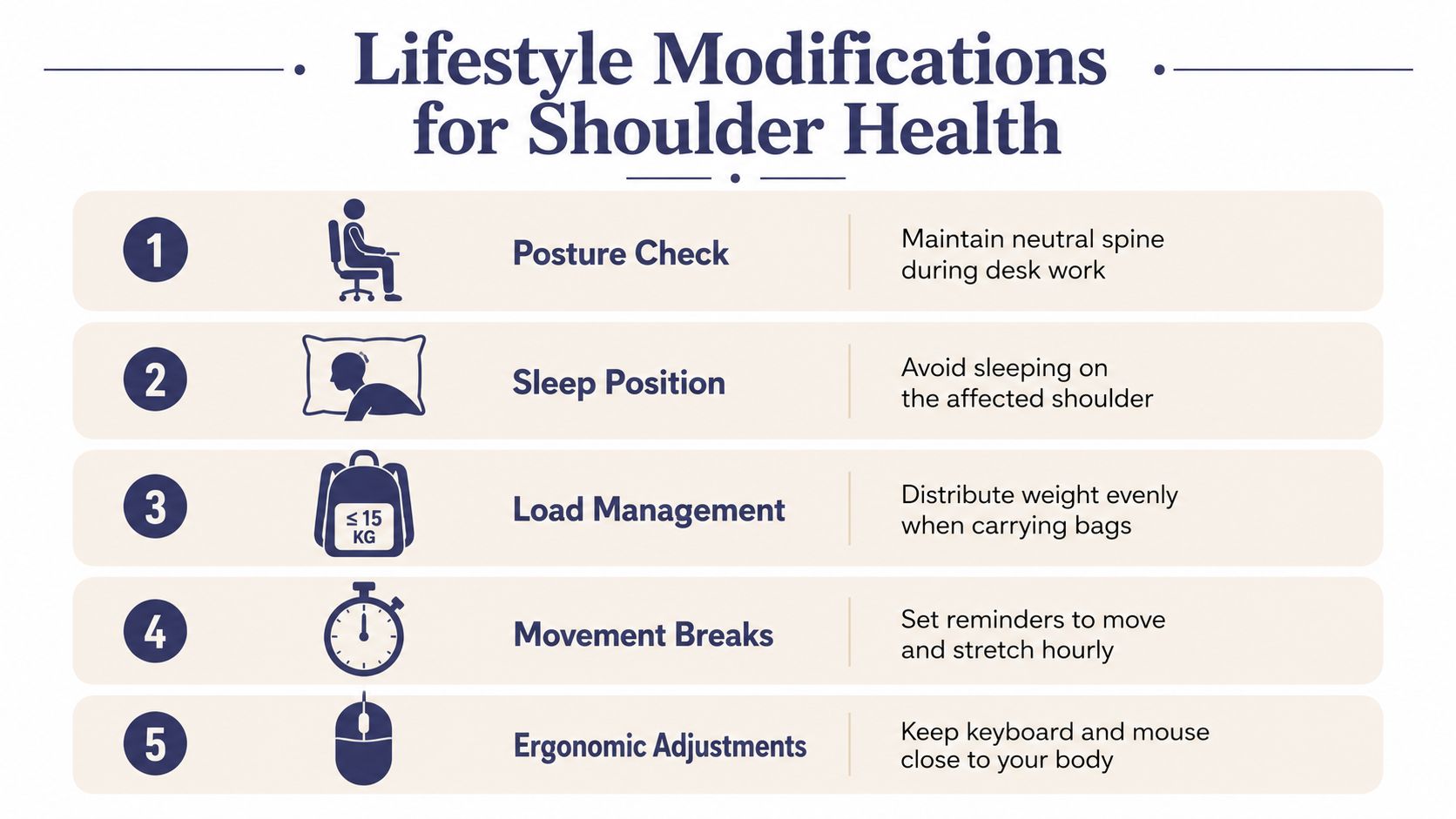
Posture matters because rounded shoulders and a hunched thorax make the arm harder to lift comfortably. Sit with the screen at a sensible height, keep the keyboard and mouse close, and avoid drifting into a forward head posture for long stretches. That doesn't mean sitting bolt upright all day, it means avoiding the long static positions that keep the shoulder blade stuck in a poor rhythm.
Sleep position is another easy win. If the affected side is compressed every night, the shoulder keeps getting poked before it's had a chance to recover. Many people do better lying on the opposite side with the arm supported, or on the back with the arm cushioned so it isn't pulling across the chest.
Pacing beats boom and bust
Overhead lifting, repetitive reaching, carrying heavy bags on one side, and long blocks of desk work all pile on load. Spread the work out, change sides, and build in short movement breaks before the shoulder gets irritated. That pacing approach is especially important if you're the sort of person who tends to ignore symptoms until they're loud.
A practical habit is to break up long sessions of sitting, reaching, or training rather than waiting for pain to force a reset. Small changes done consistently tend to beat heroic changes done once. Stress and poor sleep also make rehab feel harder than it should, so the basics matter more than people often expect.
Useful shortcut: if your shoulder always feels worse after one repeated habit, whether that's sleeping on it, carrying the laptop bag, or reaching overhead at work, treat that habit as part of the rehab problem.
Red Flags and When to Consult a GP or Physiotherapist
Most shoulder impingement cases improve with conservative care, but not every shoulder pain story is simple. Some symptoms need a proper assessment rather than more home exercises.
Know what shouldn't be ignored
Sudden weakness is a major warning sign, especially if you can't lift the arm properly or grip things the way you normally would. Trauma matters too, a fall or collision followed by sharp pain deserves evaluation. Numbness, tingling, or pain radiating into the hand also needs a professional look, because that can point away from the shoulder itself and towards nerve involvement or another source.
Night pain that keeps disrupting sleep is worth taking seriously if it's persistent. So is a shoulder that gets worse despite a consistent, sensible exercise plan. If you've been working the programme and there's still no meaningful change, that's a sign to reassess rather than to force more of the same.
What a clinician can add
A GP or physiotherapist can check whether the pain pattern fits a rotator cuff problem, a different shoulder disorder, or something outside the shoulder entirely. They can also decide whether imaging is useful, then tailor a plan so the load matches the tissue in front of them. The broader role of musculoskeletal physiotherapy is to assess movement, guide rehabilitation, and coordinate care when symptoms don't fit the simple overuse pattern, and this overview of what musculoskeletal physiotherapy involves is a useful place to start if you're considering that route.
If you're in Bristol and want a clinician-led plan that fits around work, training, and family life, The Lagom Clinic offers private GP and musculoskeletal support with the time to look at the full picture. Book an appointment if you want a structured shoulder assessment, a clear rehabilitation plan, and practical guidance that goes beyond a generic exercise handout.


 Members Consultation