


You notice a mole that looks different when you’re drying off after a shower. Maybe it’s darker than you remember, catching on clothing, or bothering you because it’s on your face, shoulder, or back. It can be unclear what the next step should be, and that uncertainty is often the hardest part.
A good mole removal procedure should do two things. It should deal with the lesion safely, and it should give you a clear plan. That means knowing when a mole needs monitoring, when it should be removed, what method is appropriate, and how to heal well afterwards.
Your Guide to A Mole Removal Procedure at The Lagom Clinic
At The Lagom Clinic, mole removal starts with assessment, not assumptions. Some moles are harmless and best left alone. Some are irritated or awkward because of where they sit. Some need closer review because the priority is diagnosis as well as removal. Good care means sorting those groups properly, then choosing the safest and most practical next step for the person in front of us.
That patient-first approach changes the experience. Instead of waiting and wondering, you can discuss the lesion, your skin history, your work, your exercise routine, your concerns about scarring, and how quickly you want the issue resolved. If removal is appropriate, it is usually done as a planned minor procedure under local anaesthetic, with clear aftercare and follow-up rather than a rushed in-and-out experience.
Why Prompt Assessment Matters
A mole removal procedure is not just a cosmetic service. In practice, the first question is whether the lesion looks benign and stable, or whether removal is the right way to diagnose and treat it properly.
A raised mole on the neck that catches when shaving raises different issues from a darker lesion on the back that has changed over time. They may both be described as moles, but they should not be handled in the same way. The consultation needs to cover the lesion itself, relevant medical history, family history where appropriate, and practical details such as healing time, scar placement, and what the area will go through during daily life.
If a mole is new, changing, bleeding, itching, repeatedly catching, or causing ongoing concern, it should be assessed.
What A Good Pathway Looks Like
Patients usually come in wanting direct answers:
- Is it safe to monitor
- Does it need removal
- Which procedure suits this lesion
- What sort of scar is likely
- What will recovery involve
Those questions are reasonable, and they deserve specific answers. At The Lagom Clinic, the aim is to give you a decision you can act on, not vague reassurance or unnecessary alarm. That may mean monitoring a harmless lesion. It may mean arranging removal promptly. It may mean advising a different route if the mole needs specialist investigation.
The difference is not only speed. It is continuity. You are assessed as a whole patient, treated with a method that fits the clinical picture and the cosmetic goal, and supported afterwards so healing is looked after properly too.
Understanding Your Moles And When to Seek Medical Advice
A mole, or naevus, is a cluster of pigment-producing cells in the skin. Some are flat. Some are raised. Some are flesh-coloured, while others are tan, brown, or very dark. Many are harmless and stay much the same for years.
What matters most is change. A stable mole is usually less concerning than one that begins to alter in shape, colour, sensation, or surface.
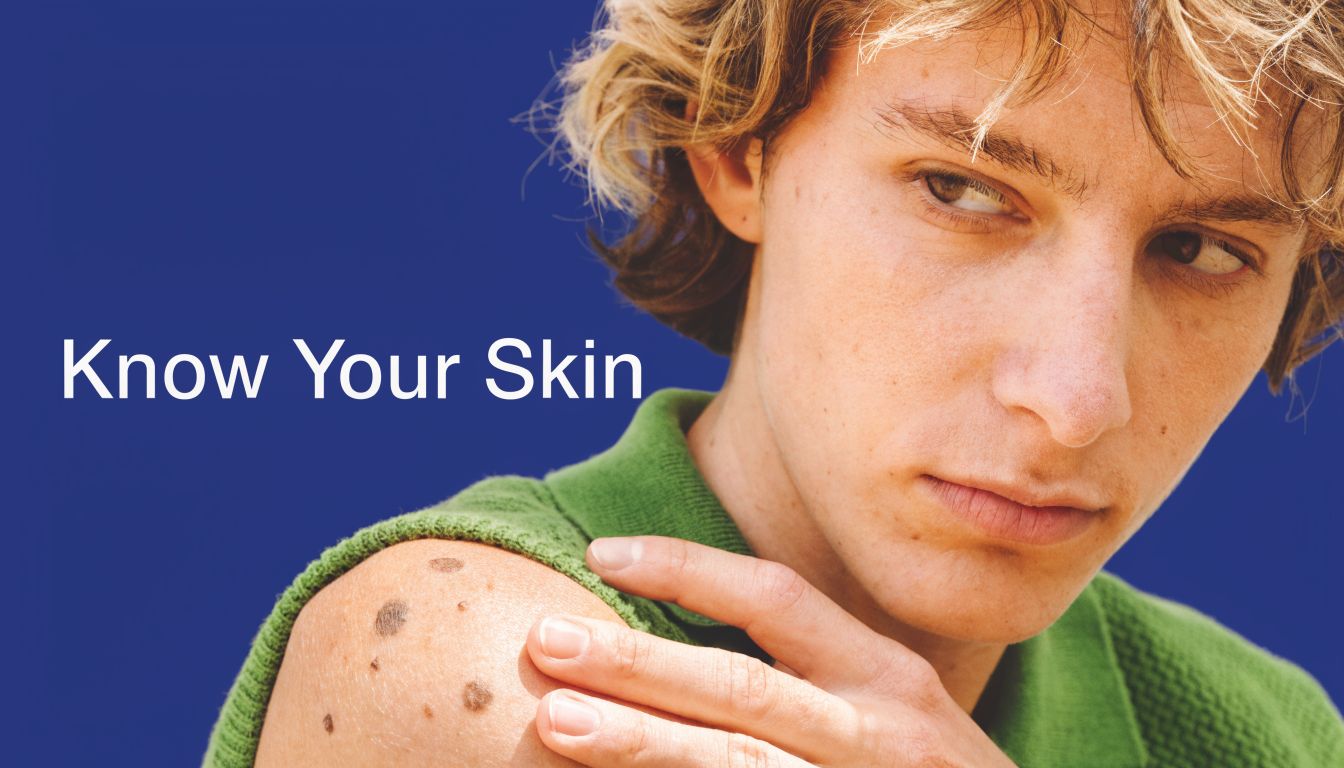
The ABCDE Check You Can Use At Home
A simple way to monitor your skin is the ABCDE checklist.
- A for asymmetry. One half of the mole doesn’t match the other. If you drew a line through the middle, the two sides would look different.
- B for border. The edges look irregular, blurred, jagged, or notched instead of smooth and clearly defined.
- C for colour. The colour isn’t even. You may notice different shades within the same lesion.
- D for diameter. Size matters less than change, but a mole that is larger or becoming larger deserves attention.
- E for evolving. This is often the most important sign. Any mole that changes in appearance, becomes raised, crusts, bleeds, or starts to itch should be reviewed.
Build Skin Checks Into Normal Life
The best self-checks are regular and simple. Don’t wait until you feel worried enough to stare at every mark under harsh bathroom lighting.
Try this approach:
- Pick a routine time. Once a month after a shower works well.
- Use good light and a mirror. A hand mirror helps with the back, scalp line, and behind the legs.
- Take photos if needed. That makes subtle change easier to spot.
- Ask for help. A partner can often notice areas you can’t see well.
- Pay attention to friction sites. Bra lines, waistbands, shaving areas, and sports kit contact points often make benign moles more noticeable because they get irritated.
For patients who want a broader preventive approach, private screening can sit alongside lesion assessment. If you’re exploring wider proactive care, our blog on private cancer screening options may be useful.
When Not To Wait
Book medical advice if a mole is changing, repeatedly irritated, visually atypical, or causing anxiety you can’t shake. Concern doesn’t have to mean something is dangerous. It means the mole deserves a proper look.
A lot of unnecessary worry comes from guessing. A consultation replaces guessing with examination.
What to Expect During Your Initial Consultation
Most patients arrive with a mixture of practical and emotional concerns. They want to know whether the mole is harmless, whether it needs to come off, and whether they’re overreacting by having it checked. They usually aren’t.
The first appointment should feel calm and unhurried. You sit down, explain what you’ve noticed, and talk through timing.
- Has the mole changed recently?
- Has it bled? Is it catching on clothing or during shaving?
- Is it on a visible area such as the face or hand?
Those details matter because they help shape the safest plan.
What The Mole Examination Involves
The lesion is examined closely with the naked eye and often with dermoscopy, which is a magnified light-based assessment tool used to inspect structures within the mole that you can’t see unaided. It helps distinguish common benign patterns from features that need more caution.
A proper consultation also looks beyond the single lesion. Sun exposure history, previous skin procedures, how your skin scars, sports or gym habits, and whether the area is under constant tension all influence what kind of mole removal procedure is sensible.
The Conversation That Follows
Once the mole has been examined, the discussion usually falls into one of three paths:
- Monitor it if it appears benign and stable.
- Remove it if it’s irritating, cosmetically troubling, or likely to keep causing problems.
- Prioritise histology if the lesion is suspicious and tissue diagnosis matters.
That last point is important. Not every removal method is equal. If there is any genuine concern about malignancy, preserving tissue for pathological examination is part of safe practice.
Questions Worth Asking About Your Mole
Patients often find it helpful to ask these directly:
- Do you think this looks benign?
- If you remove it, will it be sent for histology?
- What scar should I realistically expect in this location?
- Will I need stitches?
- How will this affect work, exercise, or sport?
A good consultation doesn’t rush those questions. It answers them in plain language and gives you a plan you can follow.
The Different Types of Mole Removal Procedures
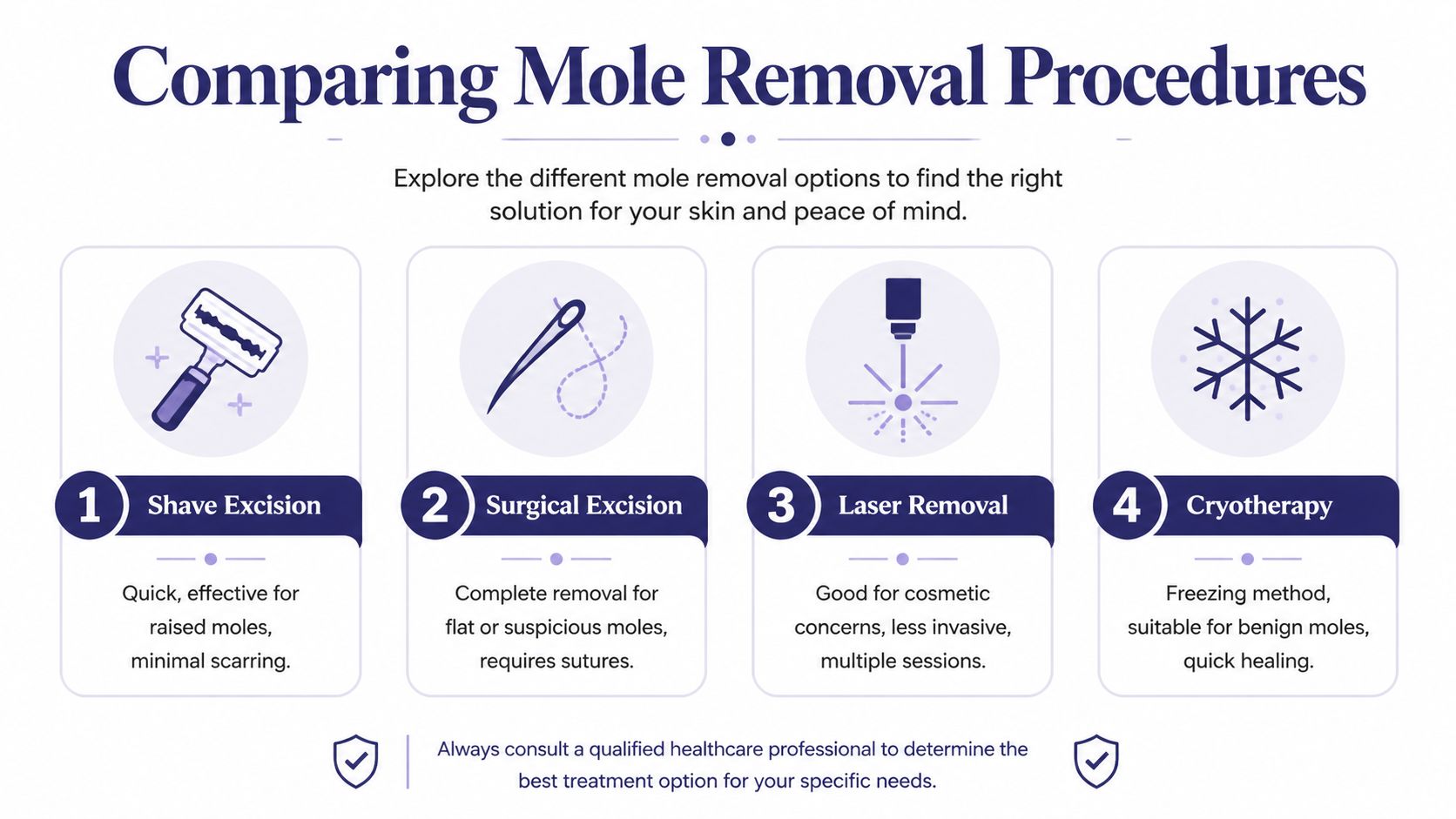
A patient will often come in wanting the quickest option because the mole catches on clothing or has become more noticeable. The safer question is different. What is the aim of removal, and what method gives the best balance of diagnosis, cosmetic outcome, healing time, and recurrence risk?
That decision is rarely one-size-fits-all. At The Lagom Clinic, the discussion is shaped by the lesion itself, where it sits on the body, how your skin tends to heal, and whether preserving tissue for histology matters.
Mole Removal Method Comparison
| Procedure | Best For | How It Works | Scarring Outcome | Recovery Time |
|---|---|---|---|---|
| Shave excision | Raised or superficial benign-looking moles | The lesion is shaved flush with the skin after local anaesthetic | Often heals with a small flat or pale mark. Some lesions can regrow if deeper cells remain | Usually a simple surface wound that settles over days to weeks |
| Surgical excision | Flat moles, deeper lesions, or suspicious moles | The whole lesion is removed through the full thickness of the skin, usually with stitches | Leaves a line scar, but gives the clearest specimen and the most complete removal | Depends on the body site, stitch care, and how much tension the wound is under |
| Laser removal | Carefully selected cosmetic, non-suspicious lesions | Light energy targets pigment or surface tissue without a scalpel excision | May suit some cosmetic cases, but residual pigment or recurrence can happen | Often a short surface-healing period |
| Cryotherapy | Some benign superficial lesions that are not typical pigmented moles | Freezing damages the tissue so it breaks down and heals over | Results are less predictable, and lighter or darker pigment change can occur | Often quick, though crusting or blistering is common |
1. Shave Excision
Shave excision is often a sensible choice for a raised benign-looking mole that sits proud of the skin. It is quick, usually done under local anaesthetic, and often gives a tidy cosmetic result.
The trade-off is depth. Because the mole is removed at or near skin level, some pigment cells may remain deeper down. That means there is a higher chance of a flat mark, some residual pigmentation, or later recurrence than with full-thickness excision.
2. Surgical Excision
Surgical excision is usually the better option when a mole is flat, extends deeper into the skin, sits in an area where complete removal matters, or needs histology. If there is any real concern about malignancy, this is generally the method that protects both diagnosis and safety.
Patients sometimes worry about the line scar. That concern is reasonable. In practice, a neat linear scar is often preferable to incomplete removal, uncertainty, or the need for a second procedure later.
3. Laser Removal
Laser has a narrower role than many people expect. It can suit selected cosmetic lesions that have already been assessed as benign, especially when avoiding a scalpel is a high priority for the patient.
It is not the right choice when the diagnosis is uncertain, because there may be little or no specimen left to send for histology. It can also leave residual pigment or allow regrowth, so convenience should be weighed against certainty. If you’re also comparing cosmetic laser approaches for other benign skin lesions, this guide to laser treatment for skin tags shows the same practical balance between appearance, healing, and the loss of tissue diagnosis.
4. Cryotherapy
Patients often ask whether a mole can be frozen off. Sometimes the lesion in question turns out to be something else entirely, such as a wart, seborrhoeic keratosis, or skin tag.
Cryotherapy can work well for some benign surface lesions, but it is used less often for pigmented moles because it does not give a specimen for histology and cosmetic healing can be less predictable.
The right procedure is the one that fits both the mole and the person attached to it.
Your Mole Removal Procedure: What To Expect
You arrive knowing what is being removed, why that method has been chosen, and what the scar is likely to look like. That clarity matters. It lowers anxiety, avoids surprises, and turns a stressful appointment into a straightforward piece of minor surgery.
When You Arrive For Your Procedure
At The Lagom Clinic, the appointment starts with a final check of the mole, the agreed procedure, and your consent. If anything has changed since the consultation, such as irritation, bleeding, or a recent increase in size, say so before treatment begins.
This is also the right time to ask practical questions. Patients often want to confirm whether stitches will be needed, how long the visit is likely to take, and whether they can drive, work, or exercise afterwards.
The skin is then cleaned and marked if needed. A local anaesthetic is injected around the area so the procedure can be done comfortably while you stay awake.
What The Anaesthetic Feels Like
The injection usually stings for a few seconds. After that, the area becomes numb quite quickly.
You may still feel pressure, touch, or movement. Sharp pain is not expected. If you feel it, more anaesthetic can be given before the procedure continues.
That pause matters. Good minor surgery is not rushed.
During The Mole Removal Procedure
What happens next depends on the method chosen at consultation.
With shave excision, the raised part of the mole is removed from the surface of the skin. With surgical excision, the mole is cut out more fully and the wound is usually closed with stitches. If laboratory testing is needed, the specimen is labelled and sent for histology.
These procedures are usually completed in a single outpatient visit. The treatment itself is often quicker than patients expect, but careful preparation, good lighting, accurate technique, and clear wound closure make more difference than speed. In private GP care, that extra attention is a distinct advantage. You are not being moved through a busy list with little time for questions.
Some patients prefer the fastest option. Others want the method that gives the clearest diagnosis or the neatest scar on a visible area. Those trade-offs should already have been discussed, but they are worth keeping in mind on the day.
Before You Leave The Clinic
Once the mole has been removed, the area is dressed and checked for bleeding. You are then given written and verbal aftercare advice that fits the site treated and the type of closure used.
You should leave knowing how to clean the wound, when to change the dressing, what level of redness or soreness is normal, and what signs mean you should contact the clinic. If stitches need to come out later, that plan will be booked or explained before you go.
Recovery and Aftercare For Mole Removal
Two patients can have the same mole removed on the same day and heal quite differently. The difference often comes down to wound care, scar care, skin type, activity level, and how quickly they can get advice if something does not look right.
That is one reason many patients choose private GP care. At The Lagom Clinic, recovery is not treated as an afterthought. You leave with a clear plan, practical guidance for your routine, and a route back to the same clinical team if you are unsure about healing. That continuity often reduces the worry that can build when you are left watching a wound and wondering whether it is normal.
The First Few Days After The Procedure
The early goal is simple. Protect the wound while the skin seals.
Keep the area clean, keep the dressing dry if you have been told to do so, and avoid pulling the skin through stretching or repeated friction. The details depend on the site. A wound on the back, shoulder, or leg usually needs different activity advice from one on the face or chest.
Mild redness, light tenderness, and a small scab or sealed surface are common early on. What needs review is a wound that becomes increasingly painful, more swollen, more red, or starts to ooze. Those changes can suggest irritation, a dressing reaction, or infection, and they are best checked promptly rather than monitored for days at home.
Scar Care That Makes A Real Difference
No careful clinician should promise invisible healing. The realistic aim is a neat scar that settles well over time.
Scar quality is shaped by the removal method, the tension on the wound, your natural healing pattern, and aftercare. Patients with a history of raised scars need a more cautious plan, especially for areas such as the chest, shoulders, and upper back, where scars can become thicker.
A few measures help consistently:
- Reduce friction on the site. Tight clothing, sports kit, bra straps, collars, and bag straps can keep a healing wound irritated.
- Protect healing skin from sun exposure. Fresh scars can darken and stay more noticeable if they are exposed to strong UV light.
- Use scar treatments regularly if advised. Silicone gel or silicone sheets are often recommended once the wound surface has healed, particularly for patients prone to thicker scars.
For broader practical ideas on scar management, this guide with tips to minimise scarring after surgery is worth reading alongside your clinician’s advice.
Facial Wounds and Other Visible Areas
Visible areas need extra planning, not false reassurance. Patients are usually less concerned about the procedure than about how the area will look six weeks or six months later.
That concern is reasonable. A small, tidy scar on the face is often preferable to a prominent mole that catches your eye every day, but it is still a trade-off. Good technique matters, and so does aftercare. Keeping the wound clean, avoiding early picking or rubbing, and protecting the area from sun exposure all improve the chance of a better cosmetic result.
I often tell patients the same thing. Skin surgery can improve appearance and remove uncertainty, but it still leaves skin healing behind it. Honest advice tends to feel more reassuring than overpromising.
Advice For Active Patients
If you run, swim, lift weights, play contact sport, or have a physically demanding job, recovery advice has to fit real life. A generic leaflet is rarely enough.
Sweat, repeated movement, and rubbing from clothing or equipment can all delay settling, particularly in the first phase of healing. That does not always mean stopping all activity. It means choosing lower-friction options for a short period and returning to full training at the right pace for the site treated.
Helpful adjustments include:
- Scale back high-sweat exercise early on if the wound is still fresh or covered.
- Avoid contact, heavy stretching, or repeated rubbing until the skin is secure.
- Prioritise sleep and adequate protein intake so the body has what it needs for tissue repair.
- Keep routines manageable so dressing changes and wound checks do not get missed on busy days.
Stress matters too. Patients who are anxious about a mole often feel a marked sense of relief once it has been removed, but recovery still tends to go better when there is a clear plan and quick access to advice.
The best aftercare plan is one you can follow. Clear instructions, sensible activity changes, and early review if something feels off usually do more for healing than a complicated routine of products.
Book Your Mole Removal Procedure At The Lagom Clinic
At The Lagom Clinic, we provide a private GP assessment, minor surgery for mole removal, and dedicated follow-up care, so you’re supported every step of the way.
With private GP mole removal, there’s no lengthy wait: you walk in and walk out, mole removed, the same day.
To book, use our online booking portal or call our office to secure your surgery slot. You can select ‘Minor Surgery Simple Lesions’ for moles under 2cm that are not on the face, or ‘Minor Surgery Complex Lesions’ for facial moles, larger moles, or those with atypical features.
Email us a photo of the mole beforehand so we can plan the procedure and confirm pricing.
Frequently Asked Questions On Mole Removal Procedures
Does mole removal hurt?
The local anaesthetic injection can sting briefly. After that, the area should be numb, and the procedure itself is usually tolerated very well. You may feel pressure or movement, but not sharp pain.
Will I always need stitches?
No. It depends on the method. Shave excision usually doesn’t require stitches. Full-thickness excision usually does.
Will the mole grow back?
Some moles can recur, especially if the chosen method removes the visible part but leaves deeper pigment cells behind. That is one reason method selection matters.
What’s the best mole removal procedure?
There isn’t one universal best method. A suspicious mole usually needs excision that preserves tissue for histology. A raised benign mole may suit shave excision. A cosmetic lesion may lead to a different discussion. The right answer depends on diagnosis, depth, site, and your healing priorities.
Is laser mole removal safer because it’s less invasive?
Not necessarily. “Less invasive” does not mean “more appropriate.” If diagnosis matters, preserving tissue is often more important than choosing the least dramatic-looking option.
How long does healing take?
Healing depends on the procedure and body site. Surface procedures often settle faster than deeper excisions, while areas under tension can take longer to become comfortable and neat-looking.
What should make me seek help after removal?
Contact us if you develop increasing redness, worsening pain, swelling, bleeding that doesn’t settle, or discharge from the wound. Those changes are more useful than checking the site repeatedly and trying to decide based on appearance alone.
Can I exercise after a mole removal procedure?
Usually yes, but not always immediately and not always at full intensity. The key issue is whether movement, sweat, or friction will pull on the wound and worsen the scar. Specific advice matters most for runners, lifters, swimmers, and contact-sport athletes.
Mole removal at The Lagom Clinic
Expert mole assessment and excision in Bristol with GMC-registered surgeons. Same-week consultations available.


 Members Consultation